


January 2, 2026

Algae: The Microscopic Powerhouse That Might Be Eating Your Roof

Author

John Esh

Share

To really grasp what algae is, you have to look back—way back. We’re talking about organisms that likely showed up 1 to 1.6 billion years ago according to AlgaeTraits. The algae meaning extends back to these little guys that predate trees, dinosaurs, and just about everything else on Earth. Yet, for most homeowners, they remain a total mystery until they show up as an uninvited, streak-causing guest on the roof.


Table of Contents


We’ve mapped out this guide to take you on a quick journey from the biological origins of algae to its high-tech applications, and finally, why it loves your asphalt shingles. Below, we’ll cover exactly what algae is, explore the algae definition, how it’s fueling the bio-economy, the dangers of toxic blooms, and what to do when it colonizes your home.


  • TL:DR
  • Defining the Organism
  • The Bio-Economy: Algae as Technology
  • The Dark Side: Harmful Algal Blooms (HABs)
  • Algae in the Built Environment
  • Final Thoughts


TL;DR


If you're short on time, here are the critical takeaways. Whether you're interested in sustainable fuel or just trying to fixcommon home exterior problems like those ugly black streaks on your roof, here is what you need to know:


  • "Algae" is actually a catch-all term for everything from microscopic bacteria to giant kelp forests.
  • They are heavy lifters for the planet, producing 50% of the oxygen we breathe.
  • Not all algae is good; harmful blooms can create toxins that threaten public health and close beaches.
  • The black streaks on your roof are caused by Gloeocapsa magma, a bacteria that actually eats the limestone in your shingles.
  • You can prevent roof damage through soft washing or, if it's time for a replacement, installing algae-resistant shingles.


Defining the Organism


Before we dive into the tech and the roofing advice, let's clarify what we are actually talking about. Most people think "plants" when they hear algae, but biologically, the algae meaning is a bit messier than that. It really depends on who you ask.


The term covers a massive group of aquatic organisms that photosynthesize. This includes simple bacteria and complex eukaryotic organisms. While they share characteristics with plants, they lack the roots, stems, and leaves we associate with the grass in your yard. Since there are so many types of algae, they basically exist in a category of their own.

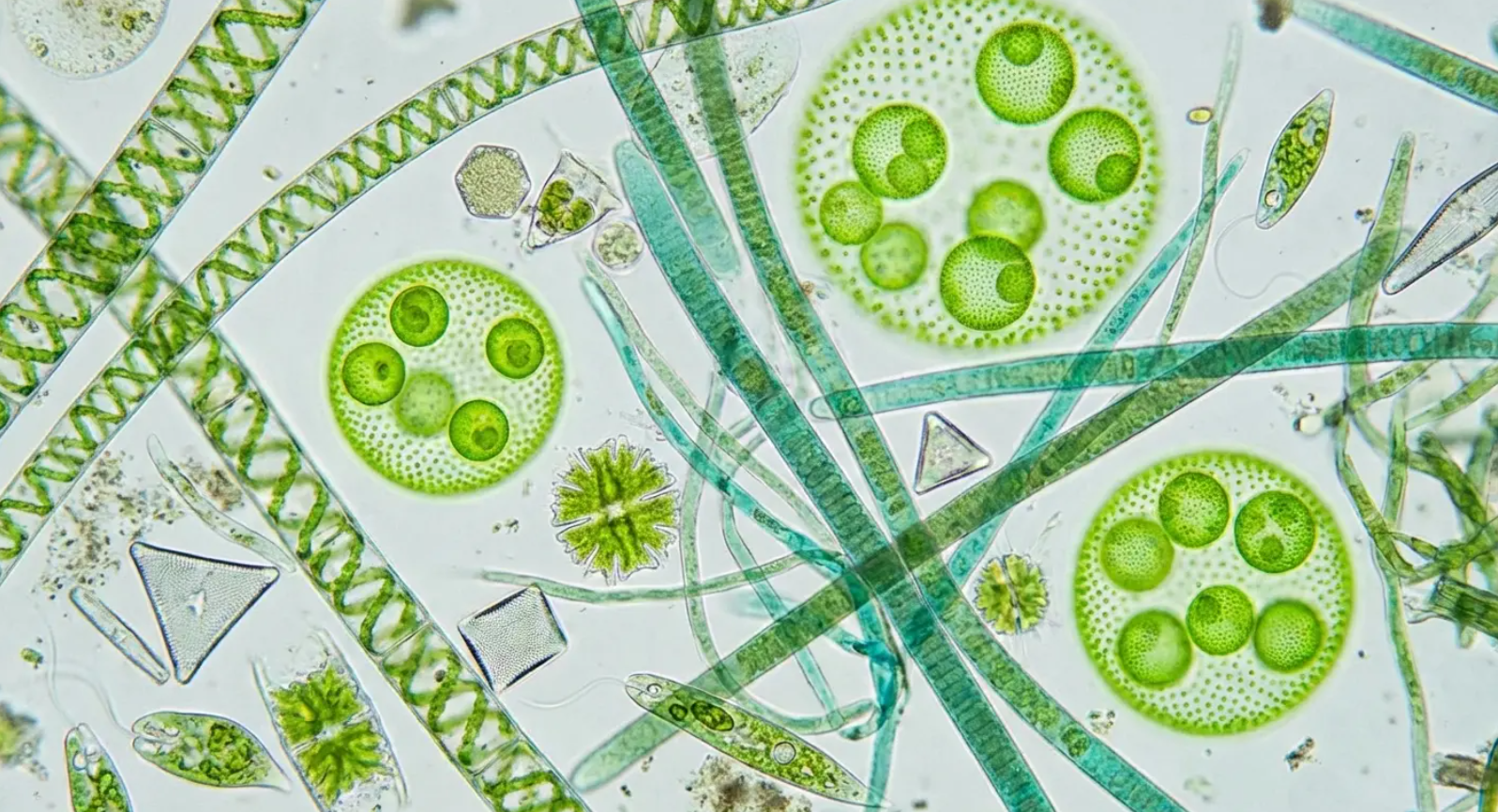
Microscopic image of diverse green algae species showing cellular structures and forms.

The Biological Definition and Scope


The algae definition serves as a functional label rather than a strict scientific one. Since the organisms in this group are so diverse, they span the gap between simple bacteria and complex multicellular life forms. In short: they are everywhere.


Prokaryotic vs. Eukaryotic


You’ve likely heard of blue green algae. Scientists call these cyanobacteria. Technically, they are bacteria that learned to photosynthesize 3.5 billion years ago. We group them with "true" algae because they live in the same places and act similarly, even though they are evolutionarily distinct. Unlike complex green algae or red algae, these are essentially the bridge between bacteria and plants.


The "Algas" Perspective


If you ever read international research papers, you might see the term "algas." Don't be confused—it's just the global standard term for the same spectrum of aquatic photosynthetic organisms. When researchers ask “what is algae”, they look at this worldwide field of study.


Distinctions from Land Plants


The main thing separating algae from your garden plants is anatomy. Algae absorb nutrients directly through their cell walls from the water surrounding them. Because they lack a vascular system to pump water around, they have to stay in moist environments to survive. This is why you find them in ponds, oceans, and yes—on damp, shaded rooftops.


Ecological Functionality


It’s easy to overlook these organisms because they are usually underwater, but they essentially run the planet's life support systems. Without them, our atmosphere would be unrecognizable.


The Oxygen and Carbon Cycle


Algae produce roughly half of the oxygen in our atmosphere. They also act as a massive carbon sink. We rely on them to scrub CO2 from the air and replace it with breathable oxygen. Recent studies cited by the Ocean Conservancy suggest that brown algae alone could be capturing more than 500 million tons of carbon dioxide every year.


Photosynthetic Efficiency


Here is where it gets interesting for scientists: Algae convert sunlight into biomass much faster than land plants. They are simply better at processing photons, which makes them a primary candidate for renewable energy research.


The Base of the Food Web


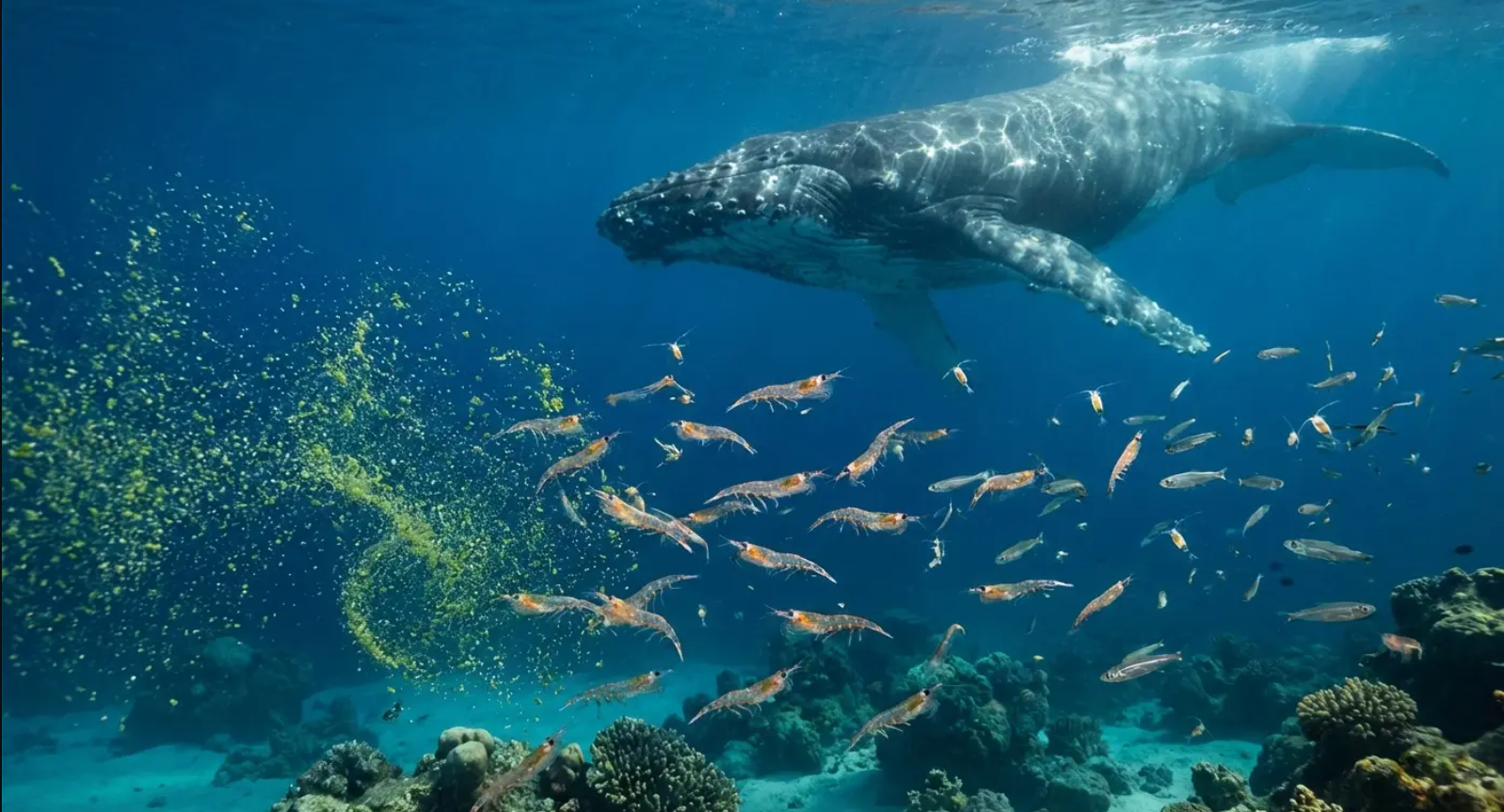
Everything in the water relies on algae. They are the primary producers. If the population shifts due to temperature changes or pollution, the entire food web feels it. Large forests of brown algae (kelp) provide essential habitats for everything from tiny krill all the way up to massive whales.

Humpback whale swims above a coral reef, surrounded by a school of fish and a bubble net.

The Bio-Economy: Algae as Technology


We are moving past biology into biotechnology here. Scientists are now engineering these organisms to create sustainable fuel, food, and materials. It’s turning into a multi-billion dollar industry involving various types of algae.

Types of Algae Primary Application Key Benefit
Microalgae (High Lipid) Biofuels (Biodiesel, Jet Fuel) Can be grown in wastewater; high yield per acre.
Macroalgae (Kelp/Brown Algae) Food & Agriculture Requires no fresh water or fertilizer; captures carbon.
Cyanobacteria Bioplastics & Pharmaceuticals Fast growth rate; can be genetically modified for specific compounds.
Spirulina/Chlorella Nutritional Supplements High protein content; rich in Omega-3s without fishing.

While green algae and brown varieties are popular, red algae is also heavily utilized to produce agar and carrageenan, which act as stabilizers in many foods.


Third-Generation Biofuels


Corn and soy were the first attempts at biofuel, but algae is the "third generation." The massive advantage is land use. We can grow algae in wastewater or saltwater, meaning it never competes with food crops for farmland. It represents a massive leap forward in energy density.


Lipid Extraction


Specific microalgae strains are surprisingly fatty. They accumulate high amounts of lipids (oils). Researchers press this oil out to create biodiesel. The goal is a fuel that works in existing engines but burns much cleaner.

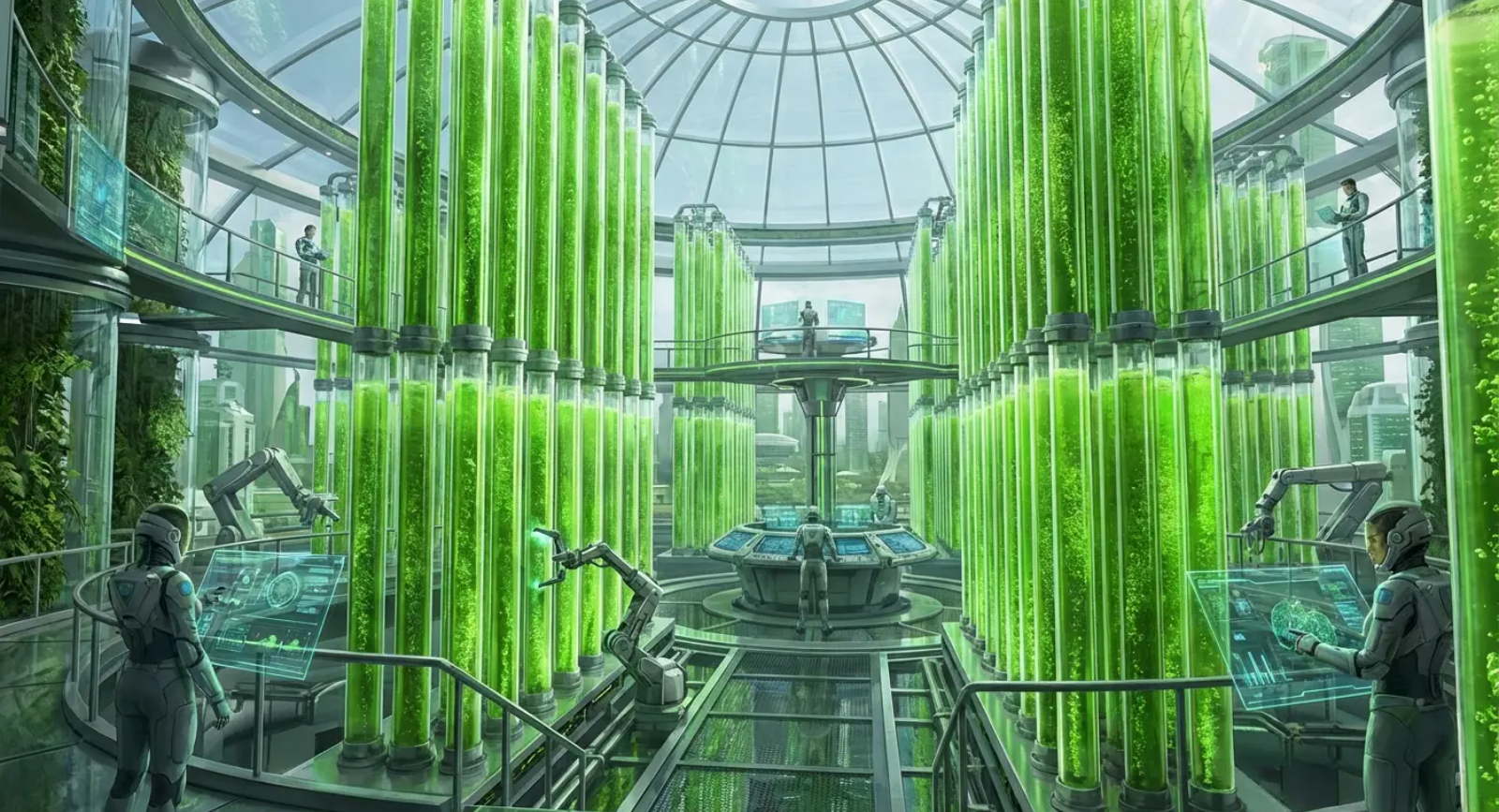
Futuristic lab with large green tubes, scientists, and robotic arms, under a glass dome.

Consumer Advocacy and Investment


You can actually support this industry by looking for B20 fuel blends at the pump. Keeping an eye on public companies investing in "green crude" helps drive the technology forward.


Future Food Systems


With global populations rising, we need protein that doesn't require massive amounts of fresh water. Algae offers a nutrient-dense solution that grows incredibly fast.


Kelp and Seaweed Aquaculture


Ocean farming is regenerative. Growing kelp requires zero fertilizer and zero fresh water. It actually de-acidifies the ocean while it grows, healing the local environment. According to the Ocean Conservancy, giant kelp can grow up to two feet per day.


Omega-3 Supplements


Here is a fun fact: Fish don't make Omega-3s; they get them from eating algae. We can skip the middleman. Companies now extract DHA and EPA directly from the source. This provides a vegan supplement option that doesn't contribute to overfishing.


Instead of buying traditional fish oil capsules—which often have that nasty aftertaste—look for "Algal Oil" on the supplement aisle. It’s cleaner, sustainable, and free from ocean-borne heavy metals like mercury.


Sourcing Algae Products


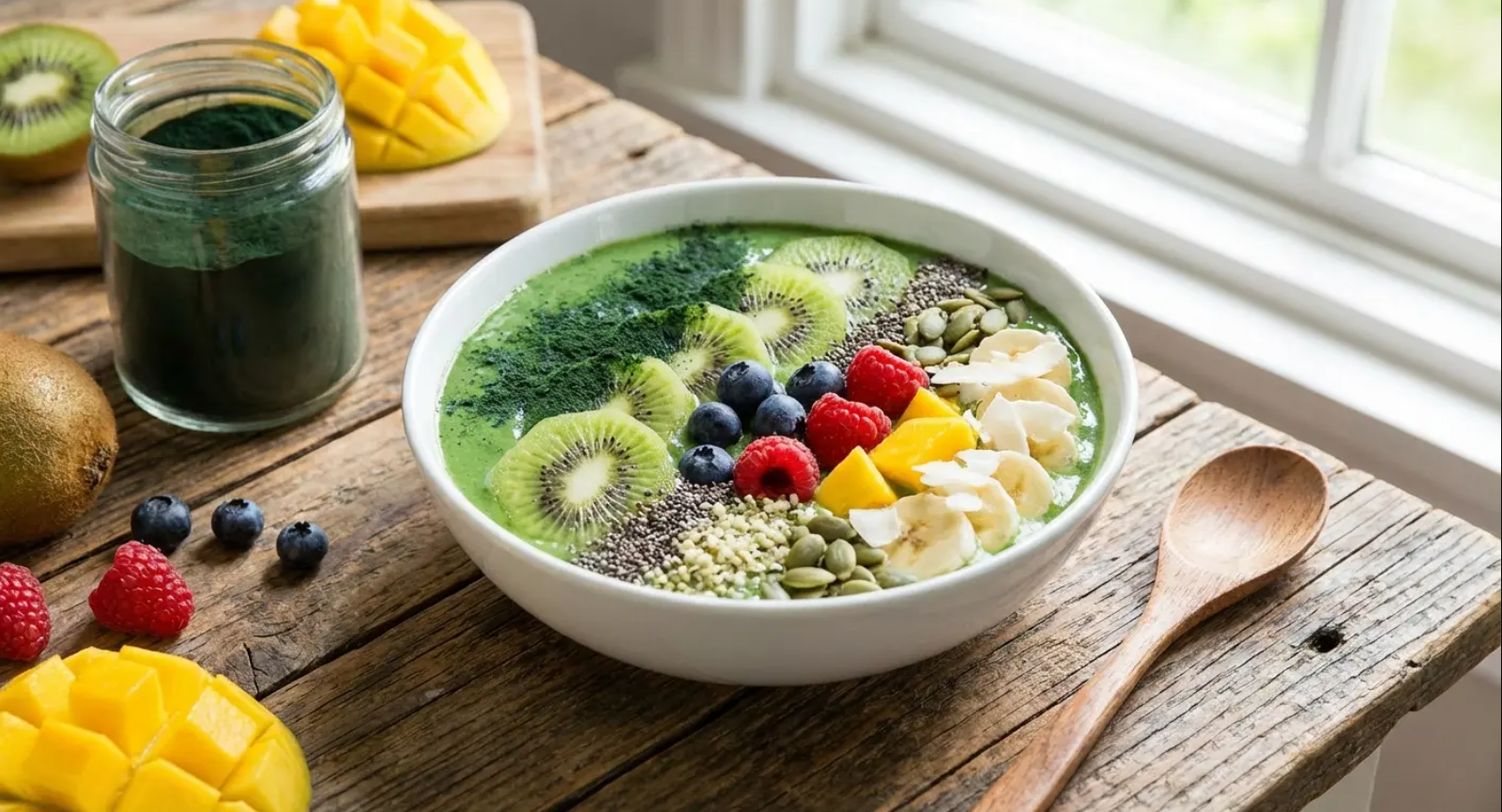
You can start small. Adding spirulina or chlorella powder to a smoothie boosts nutrient intake, and buying sustainably harvested seaweed snacks puts money directly into this growing regenerative industry.

A colorful smoothie bowl with kiwi, berries, mango, and seeds on a rustic wooden table.

Material Innovation


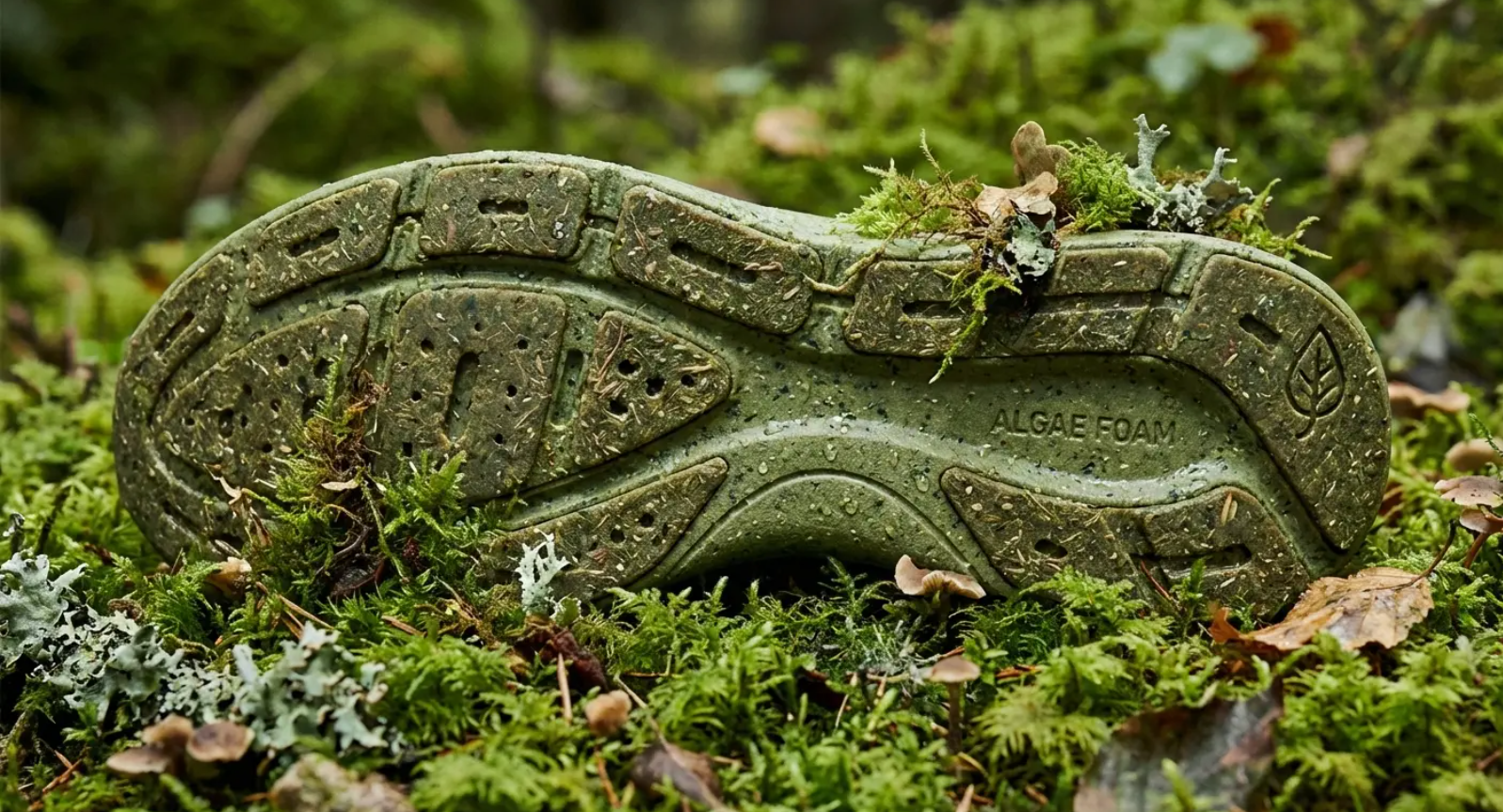
Plastic pollution is a crisis, but algae biomass is being used to create biodegradable alternatives. Manufacturers are turning blooms into consumer goods like water bottles and footwear foams. If you see the "Bloom" logo on a product, it means the manufacturer used algae biomass to reduce their reliance on petroleum-based plastics.

Green running shoe sole resting in moss.

The Dark Side: Harmful Algal Blooms (HABs)


It’s not all good news, though. We have to acknowledge the destructive potential of these organisms. Fertilizer runoff and warming waters fuel toxic events known as harmful algae blooms. These blooms hurt economies and public health. For example, the News-Journal Online recently reported on a "Blue-green algae warning issued in Volusia" highlighting the toxins in local waterways. Awareness is critical here.


Understanding the Threat


Red Tide is the most famous example. While red algae causes Red Tide, producing neurotoxins that kill marine life and cause respiratory issues, freshwater threats differ. In freshwater, blue green algae releases microcystins, which can cause liver damage in humans and are frequently fatal to dogs that swim in the water. Recently, the Florida Department of Health issued an alert for the Caloosahatchee River due to these risks.

Toxin Class Associated Algae Potential Health Effects
Microcystins Blue-Green Algae Liver damage, nausea, vomiting, skin rashes.
Anatoxins Blue-Green Algae Neurotoxicity, respiratory paralysis, convulsions (often fatal to dogs).
Brevetoxins Red Tide (Red Algae) Respiratory irritation (coughing/sneezing).
Saxitoxins Dinoflagellates Paralytic Shellfish Poisoning (numbness, paralysis).

Economic Impact and Avoidance


HABs cost coastal economies millions by shutting down beaches and fisheries. The best policy? Avoidance. Check environmental quality reports before heading to the water. If the water smells bad or looks like pea soup due to algae blooms, stay out.


Algae in the Built Environment


Algae doesn't stay in the ocean. It colonizes our infrastructure. This section details how specific bacteria attack residential roofs and what that means for your home. For a deeper dive into these stains, read our guide on dark streaks on your roof.


The "Roofing" Algae


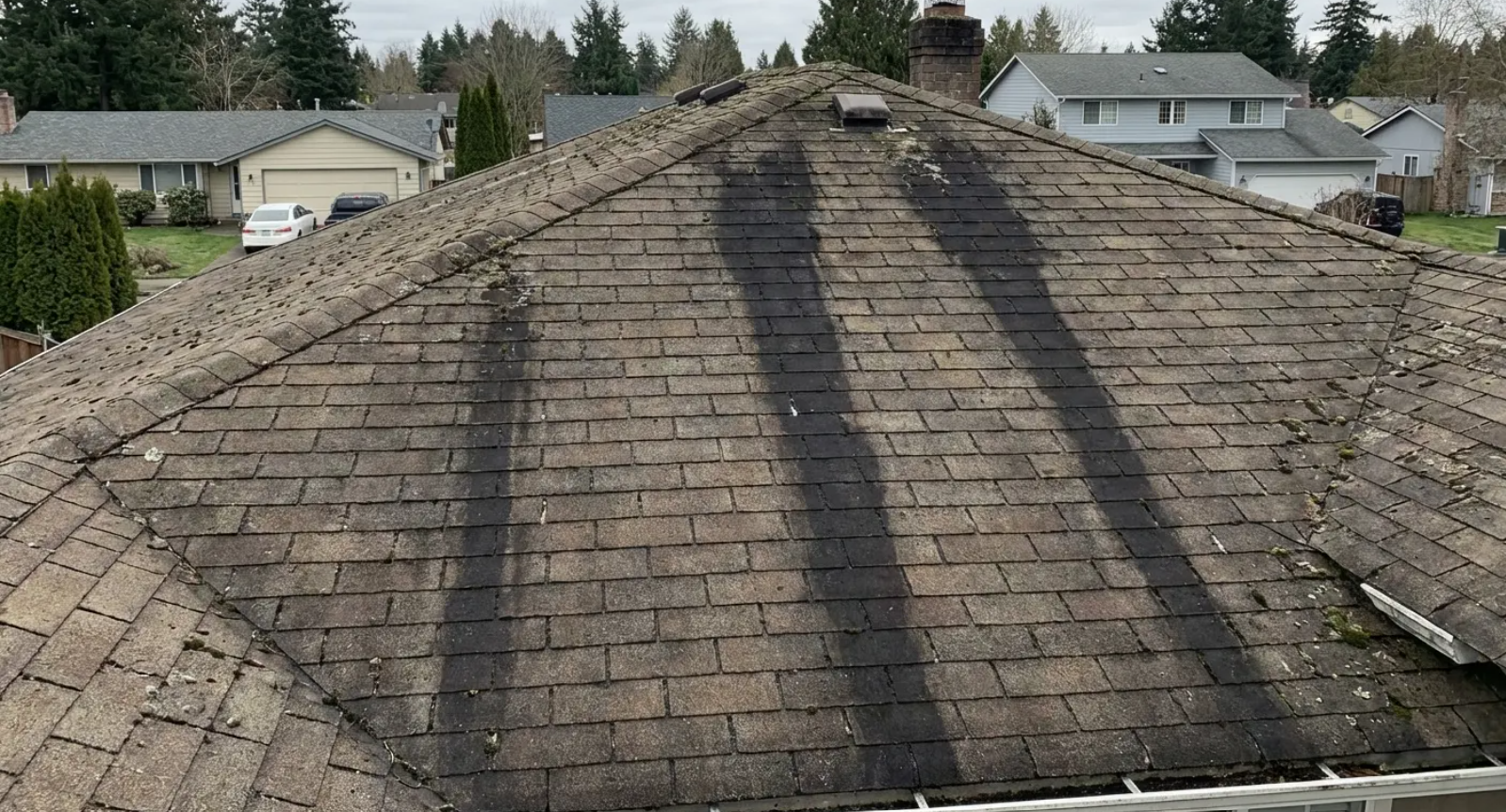
Of all the types of algae, the culprit behind those black streaks on your roof is called Gloeocapsa magma. It is a form of blue green algae (cyanobacteria). Homeowners often mistake it for mold or simple dirt, but it is a living colony. It spreads via wind and thrives on moisture.

Black algae streaks on an asphalt shingle roof causing visible surface stains.

Why It Eats Your Roof


Modern asphalt shingle roofing uses crushed limestone as a filler. This bacteria actually feeds on that limestone. If you are wondering what is algae doing up there, it is slowly eating the structural components of your roof shingles, which can eventually lead to granule loss and a weakened roof.


Why It Looks Black


The black streaks are actually a survival mechanism. The bacteria create a dark, hard shell to protect themselves from UV rays. This allows them to thrive on a scorching hot roof without dying. It fits the technical algae definition due to its photosynthetic nature, even if it looks like dirt.


How to spot it: If you see vertical, streak-like patterns that seem to "run" down the slope, particularly on the north-facing side or shaded areas, you are almost certainly looking at Gloeocapsa magma.


Remediation Strategies


You need to remove this growth to extend the life of your roof. It is about more than just curb appeal; it's about preventing algae blooms on your shingles that degrade the material.


Soft Washing


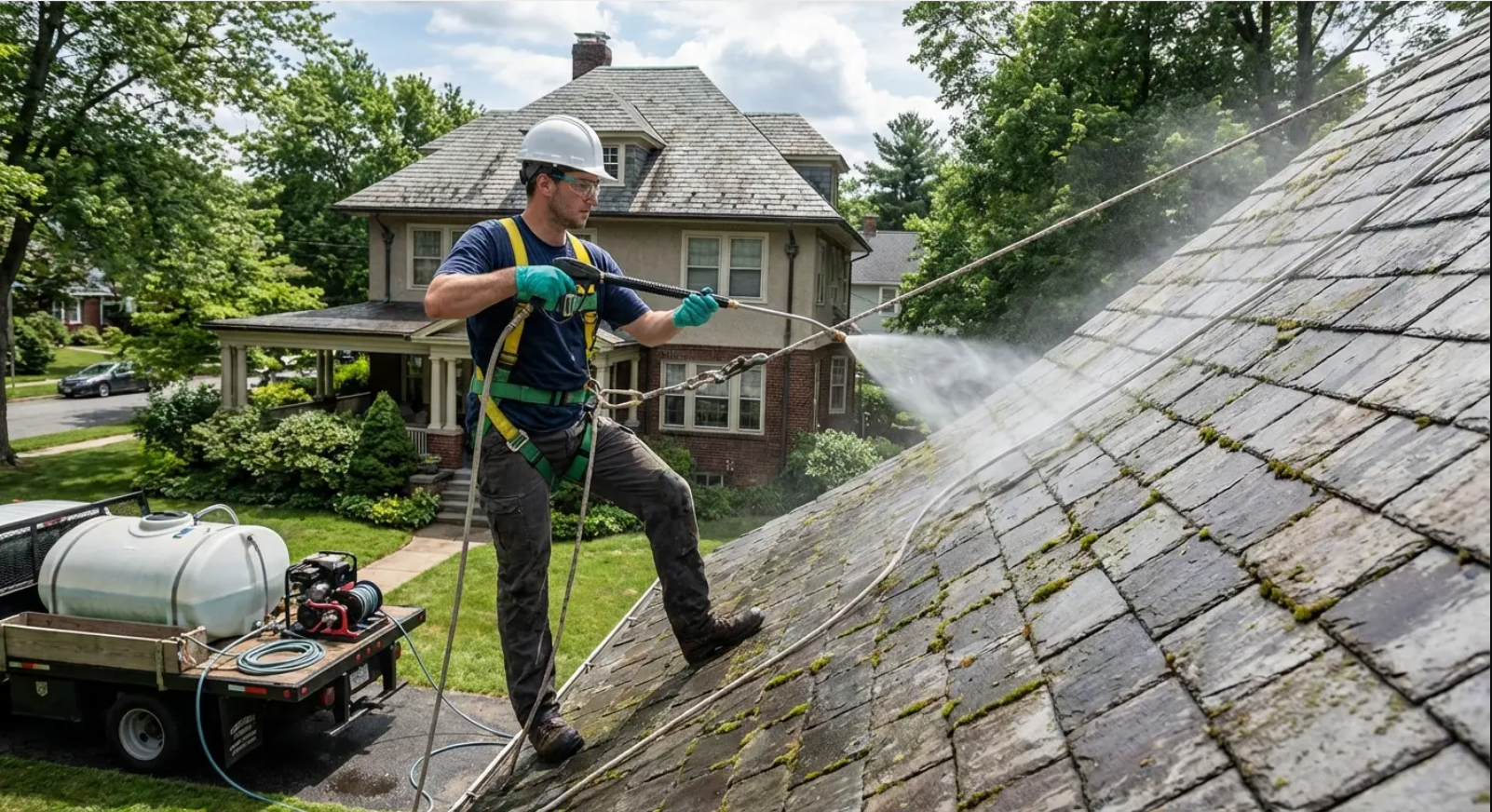
Never pressure wash your roof. High pressure strips the granules off the shingles. Instead, we use a "soft wash" method. This involves applying specialized biocides at low pressure (no stronger than a garden hose) to kill the colony at the root without damaging the material.


Prevention: Copper, Zinc, and Resistant Shingles


You can install copper or zinc strips near the roof ridge. Rainwater picks up ions from the metal and washes them down the roof, creating a "kill zone" where algae can't grow. Alternatively, modern manufacturers now mix copper granules directly into algae-resistant shingles. These usually come with a warranty specifically against this type of growth.


Visual Inspection Checklist


Look at the north-facing side of your roof once a year. This side holds moisture longer. Catching dark streaking early makes remediation easier. Use our roof maintenance checklist to ensure you don't miss other issues.


  • [ ] Check the North Side: Inspect the north-facing slope for early signs of discoloration.
  • [ ] Look for Overhanging Limbs: Trees provide shade and drop organic matter that feeds algae.
  • [ ] Inspect Gutters: Ensure gutters are draining freely; backed-up water increases humidity at the roof edge.
  • [ ] Identify Growth Type: Distinguish between black streaks (algae), fuzzy green clumps (moss), or crusty circles (lichen).

[ ] Check Metal Flashings: If the roof is clean directly below your chimney flashing, the metal ions are working—and the rest of the stains are definitely biological.

Man pressure washing a mossy roof. Safety harness, white hard hat, tank and truck visible.

Identification


You need to know what is growing to treat it effectively. Algae manifests as flat black streaks. Moss is green and fuzzy. Lichen looks like crusty, circular patches. Learn more about the fuzzy green growth in our article all about moss.


The Joyland Roofing Connection


We know the science behind the streaks. Those black marks are bacteria eating your investment. At Joyland Roofing, we provide honest assessments of your roof's condition. We can tell you if a professional cleaning will solve the issue or if the biological damage warrants a replacement with algae-resistant materials. Contact us today to protect your home from these microscopic invaders.

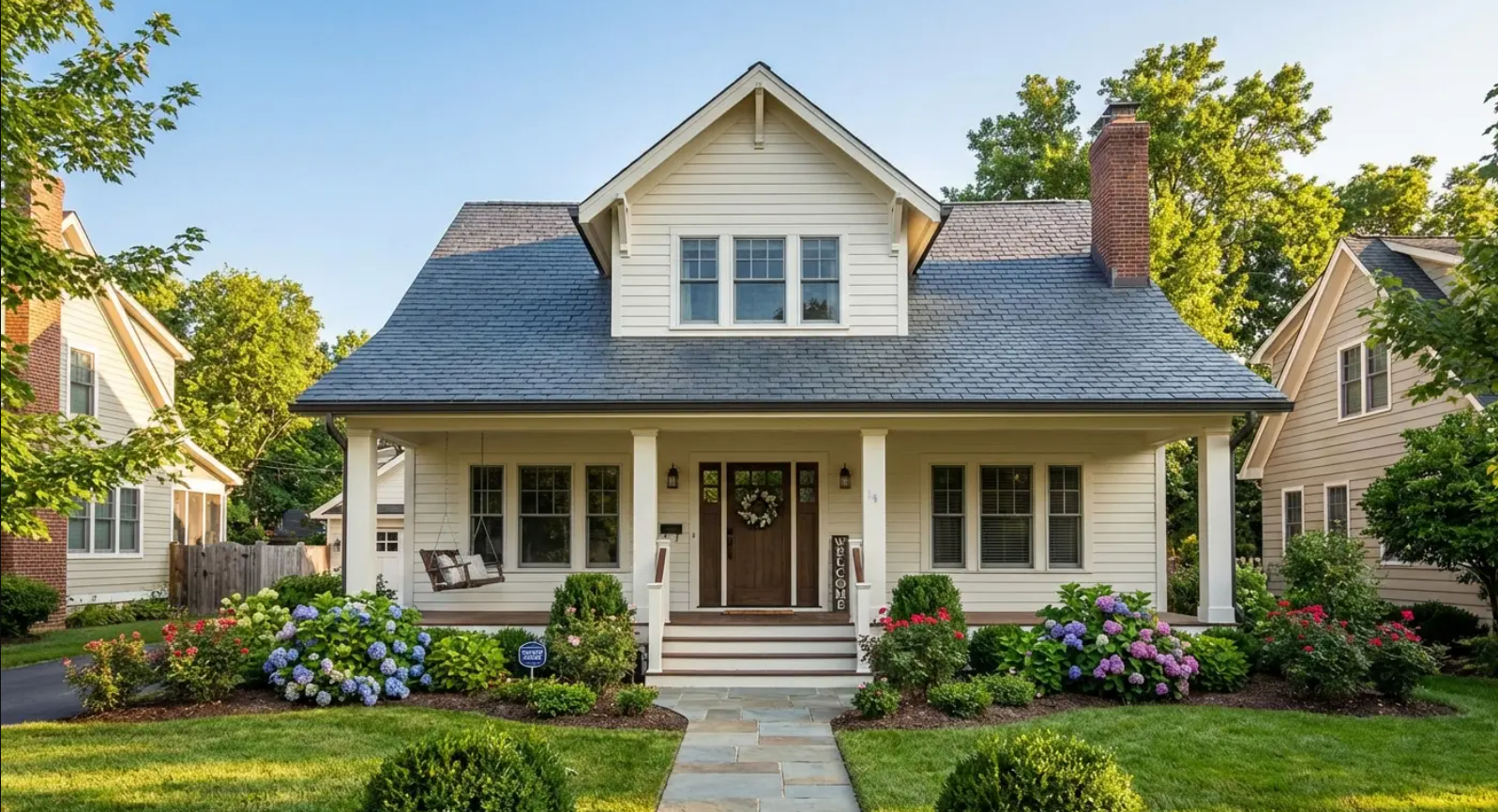
White two-story house with a porch, blue roof, brick chimney, and lush landscaping.

Final Thoughts


Algae is a complex topic. It powers our atmosphere and promises a greener future while simultaneously posing threats to our waterways and our homes. The true algae meaning balances these benefits and risks. Beyond the scientific algae definition, it is about impact. From green algae in the pond to the black streaks on the roof, these organisms are everywhere. So, what is algae? It is the bacteria that eats your roof and the plant that allows you to breathe.

Red oval with a white chat bubble saying
A smiling man stands in front of a house roof while a worker repairs shingles; branding for Joyland and Servants appears.
By James Wesser April 9, 2026
See how roof leaks led to a full roof replacement for a Lancaster County homeowner through a community partnership with Joyland Roofing and Servants.

Two men on a roof with JOYLAND logo and checklist, text saying “AVOID THE MESS!”
By James Wesser May 1, 2026
Getting a new roof? Use this 5 step roof replacement checklist to prep your home, reduce stress, protect your property, and keep project day smoother.
By Moe Marketing Agency April 28, 2026
This is a subtitle for your new post
NDL warranty promo with van, warning text, and warranty certificate on a dark background
By John Esh April 28, 2026
What does a No Dollar Limit warranty cover on a commercial roof? Joyland Roofing explains NDL warranties for flat roofs in Lancaster County and Central PA.
Worker kneeling on a sloped shingle roof, repairing with tools beside a glass building.
By John Esh April 22, 2026
Joyland Roofing stands behind our roof leak repairs with a Fix It or It’s Free guarantee. Learn how it works and what it means for homeowners.
Man standing on a grassy field beside a thumbnail with text: “JOYLAND DRAINAGE ISSUES TRAVEL”
By James Wesser April 21, 2026
See how drainage issues move from roof to wall to foundation and why small water problems can lead to bigger home repairs across South Central Pennsylvania
A person wearing dark pants and light-colored sneakers stands on the top platform of an aluminum step ladder.
By James Wesser April 13, 2026
A quick ladder check can help prevent a dangerous fall. Learn the basics of ladder setup, footing, placement, and safe climbing
A smiling man stands in front of a house roof while a worker repairs shingles; branding for Joyland and Servants appears.
By James Wesser April 9, 2026
See how roof leaks led to a full roof replacement for a Lancaster County homeowner through a community partnership with Joyland Roofing and Servants.
A person gestures toward a gap between brick and siding on a house exterior under the text
By James Wesser April 3, 2026
Winter can leave behind hidden damage. Learn what to check on your roof, gutters, windows, doors, and siding this spring before small issues get worse fast.
Stressed homeowner facing roofing costs, reflecting financial concerns in Roof Maxx reviews.
By John Esh April 1, 2026
Most Roof Maxx reviews miss the real question. Does it actually save you money? Here’s when it works, when it doesn’t, and what to do instead.
Contractor pointing out roof damage during an inspection, exposing issues a quick quote may overlook
By John Esh March 31, 2026
Instant roof quote tools are fast but often miss roof pitch, ventilation, and hidden damage that can significantly change the true cost of roof replacement.