
A water stain on your ceiling does not automatically mean your roof is leaking. Plumbing leaks, attic condensation, bathroom exhaust problems, and HVAC drainage issues can also leave stains. What is above the spot and when it changes can help narrow the search, but an inspection is needed to confirm the source.
You look up, notice a brown ring, and immediately start wondering what a new roof costs. Understandable. The ceiling has terrible timing.
Before jumping to a roof replacement, start with a better question: Where is the moisture actually coming from?
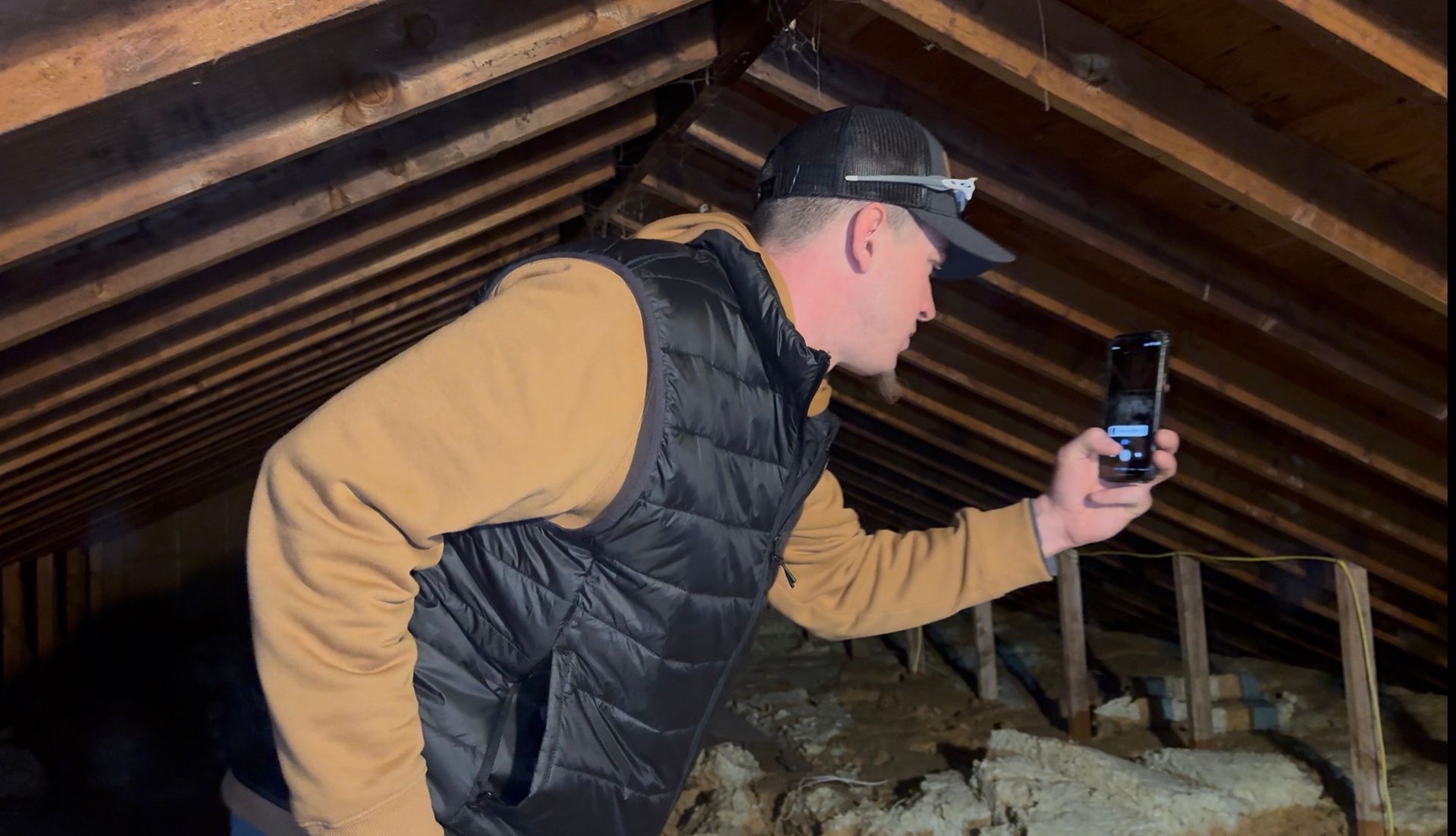
In Joyland's ceiling-stain video, John Esh walks through that starting point: consider the floor above, attic conditions, bathroom exhaust, and the timing of the stain. Those observations help guide an inspection. They do not settle the diagnosis on their own.
What is above the ceiling stain?
Start with the layout of your home. A stain beneath an upstairs bathroom raises different questions from a stain on the top-floor ceiling beneath an attic.
- Another occupied floor: Consider nearby plumbing, a tub or shower, an appliance, or a recent spill.
- An attic: The roof is one possibility, but so are condensation, exhaust ductwork, and any mechanical equipment or plumbing in that space.
- A vaulted ceiling: There may be little accessible space between the drywall and roof, so tracing the source can require closer investigation.
The floor level is a starting point, not a verdict. Water can travel along framing and other surfaces before becoming visible. The problem may not be directly above the stain.
When does the stain appear or get worse?
The timing is one of the most useful things you can tell the person inspecting your home. Take a dated photo and note whether the spot changes after rain, showers, cold weather, or air-conditioning use. If it is actively leaking, arrange help now rather than waiting to collect a perfect set of clues.
| What you notice | What to investigate | Who can help |
|---|---|---|
| The spot grows after rain or melting snow | Roofing, flashing, roof penetrations, or other exterior water entry | A roofing contractor; another exterior specialist if needed |
| The spot changes after an upstairs shower or fixture is used | Water supply lines, drains, or the tub/shower assembly | A plumber; a bathroom repair specialist if needed |
| Moisture appears during cold weather without recent rain | Attic condensation, indoor air leakage, or exhaust duct problems | A roofer and/or an insulation, building-envelope, or HVAC professional |
| Staining is near a bathroom exhaust fan | Duct connections, insulation, exterior termination, and nearby roof details | An exhaust/HVAC professional; a roofer for roof-related work |
| The problem tracks with cooling use and HVAC equipment is above it | Condensate drainage and equipment leaks | An HVAC professional |
These patterns can overlap. A stain's location, timing, or appearance alone cannot confirm the source. On smaller screens, swipe the table sideways.
Can attic condensation look like a roof leak?
Yes. Warm, moisture-carrying indoor air can escape through ceiling gaps into a cold attic. When it reaches sufficiently cold surfaces, moisture can condense on the roof decking, framing, or fasteners. During freezing conditions, it may collect as frost and later melt.
That moisture can wet materials below even though rain never came through the shingles. For a south-central Pennsylvania homeowner investigating a winter ceiling stain, this is an important possibility to check.
The Department of Energy's attic air-sealing guidance explains how ceiling air leaks and improper exhaust venting can carry humid air toward cold roof surfaces.
The solution depends on the cause. It may involve air sealing, insulation, indoor moisture control, exhaust corrections, or ventilation appropriate to the roof assembly. Simply adding a roof vent does not fix every moisture problem.
Our guide to what roof ventilation can and cannot do explains that distinction.
Could the bathroom exhaust fan be involved?
Yes. A bathroom fan needs to move humid air outdoors. A duct that ends in the attic, or has come loose from its exterior connection, can release shower moisture into that space.
There is another possibility: condensation can form in or on inadequately insulated ductwork passing through a cold attic. A fan that makes noise is not proof that moisture is reaching the outdoors.
Pacific Northwest National Laboratory's exhaust-fan guidance explains why the duct's insulation, connections, routing, and termination matter.
A stain near the fan still deserves a full inspection. The duct could be involved, but a roof leak near the exterior vent could leave moisture in the same general area. Replacing the fan without checking the route may leave the actual problem untouched.
What about plumbing or air-conditioning leaks?
If an upstairs bathroom sits above the stain, note whether the problem follows use of the shower, tub, sink, or toilet. A plumber can check the supply and drain connections. Problems with the shower enclosure or waterproofing may need a different repair.
HVAC equipment is another possibility when it is located above the affected ceiling. Cooling systems produce condensate, and drainage problems can allow water to escape. Carrier's explanation of water leaks from ductless systems describes restricted condensate drainage as one possible cause.
The useful question is whether equipment or plumbing in that area could explain the timing. You do not need to open the ceiling yourself to gather that information.
What can you safely do before an inspection?
- Photograph the stain. Get a close-up and a wider photo showing its location in the room. Record the date.
- Write down the pattern. Note recent rain, snowmelt, cold weather, showers, or cooling use. Mention whether the spot is new or has returned.
- Describe what is above it. A bathroom, attic, skylight, or mechanical unit can help the inspector decide where to begin.
- Protect belongings when safe. Move items away from an active drip. Stay clear of a sagging ceiling or wet electrical fixtures.
- Leave roof access and concealed-space investigation to the right professional. Do not climb onto the roof or step onto attic insulation or ceiling drywall to chase the stain.
Active dripping, a bulging ceiling, or water near electrical fixtures needs prompt attention. Keep people away from the affected area and arrange professional help. Do not touch wet lights, switches, wiring, or appliances, and do not puncture a bulging ceiling yourself.
The EPA recommends drying water-damaged materials within 24 to 48 hours to help prevent mold growth. That is a reason to act promptly, not a waiting period or a guarantee. Fixing the moisture source is part of the work.
For an active roof leak, our emergency roof leak guide covers the immediate next steps.
Does a dry ceiling stain mean the problem is fixed?
Not necessarily. A stain may remain after an old problem has been repaired, but a dry surface also cannot rule out an intermittent leak. The conditions that trigger it may simply not be happening at the moment.
Before painting, confirm that the source has been addressed, the affected materials are dry, and damaged materials have been evaluated. Paint can cover the evidence. It cannot repair the cause.
Should you call a roofer or a plumber?
Start with the professional whose work matches the strongest clues. A stain that changes after rain, especially beneath an attic or roof, is a reasonable starting point for a roofing inspection. A stain associated with an upstairs plumbing fixture calls for a plumber. Condensation or exhaust issues may require coordination between trades.
If the source is unclear, say that when you call. A useful inspection should explain what was found, what evidence connects it to the stain, and whether another specialist is needed. A photo of a damaged shingle alone does not explain how water reached your ceiling.
For a broader look at how the roof, attic, insulation, and ceiling work together, see our roof and ceiling assembly guide.
If you suspect a roof-related problem in Lancaster County or elsewhere in south-central Pennsylvania, Joyland Roofing & Exteriors can inspect the roofing and accessible attic conditions and explain the next step.
Start with the source. The repair should follow the evidence.
Get help with a suspected roof leakFrequently asked questions about ceiling stains
Can you have a water stain on the ceiling without a roof leak?
Yes. Plumbing leaks, attic condensation, bathroom exhaust problems, and HVAC drainage issues can also cause ceiling stains. The stain's location and timing help guide an inspection, but they do not confirm the source.
Why does my ceiling stain appear when it has not rained?
Possible causes include plumbing leaks, condensation, or mechanical equipment drainage. In cold weather, attic frost may melt and wet materials below. Delayed water movement from an earlier weather event is also possible, so the lack of recent rain does not rule out the roof.
Does a stain near the bathroom fan mean the fan is leaking?
No. The exhaust duct may be disconnected, poorly insulated, or releasing humid air into the attic. Water entering near the roof vent is another possibility. Both the exhaust route and nearby roof details may need checking.
Will replacing the roof fix a ceiling stain?
Only if the work addresses the actual source. New shingles will not repair a plumbing leak or disconnected bathroom exhaust duct. Confirm the cause before choosing a roof repair or replacement.
Can I paint over an old ceiling stain?
Wait until the moisture source has been addressed and the affected materials are confirmed dry and suitable for refinishing. An old stain can remain after a successful repair, but painting over an unexplained stain can hide a recurring problem.