
What Should Go Behind New Siding? Insulation Options Explained
James Wesser
September 24, 2026

If you are already replacing your siding, there is a pretty natural next question:


Should I add insulation while the wall is exposed?


That sounds simple until you start hearing terms like fanfold, rigid foam, insulated housewrap, insulated siding, and R-value.


They all relate to what happens underneath or alongside your siding, but they do not all do the same job.

That is why there is not one insulation product we would automatically recommend for every siding project.


Sometimes the goal is to smooth out an older wall. Sometimes it is reducing drafts. Sometimes you want to add meaningful continuous insulation. And sometimes the siding product itself already includes insulation.

So instead of asking, "Which product is best?" a better question is:


What problem are you trying to solve?

Quick Answer

Here is the simple version:


  • Fanfold: Thin underlayment that can smooth an uneven wall and provide a modest amount of insulation.
  • Rigid foam: Adds more meaningful continuous insulation, but extra thickness can affect windows, doors, trim, and flashing.
  • Insulated or reflective housewrap: Thin product that can combine weather protection with some thermal benefit, but performance depends heavily on the wall assembly.
  • Insulated siding: Vinyl siding with foam already attached to the back, giving you siding and some continuous insulation in one product.


All four can make sense. Just not necessarily on the same house.

First, housewrap and insulation are not the same thing

A traditional housewrap and insulation typically serve different purposes.

Housewrap is primarily part of the home's water-management layer. It helps protect the wall sheathing from bulk water getting behind the siding.


Insulation is there to resist heat moving through the wall.

Some modern products can contribute to both jobs, but that does not mean every layer underneath your siding is interchangeable.


That distinction becomes important when comparing products based on R-value.

What does R-value actually mean?

R-value is a measurement of resistance to heat flow.


The easy rule to remember is:

Higher R-value = greater resistance to heat flow.


So a material rated around R-5 provides more thermal resistance than one rated around R-1.


But the R-value printed on an insulation product does not automatically tell you how well your entire wall performs.


Wood framing, air leakage, windows, doors, penetrations, existing insulation, and installation details all affect the completed wall.


That is especially important with exterior continuous insulation.


The U.S. Department of Energy notes that wood framing can make up nearly one-quarter of a traditionally framed wall. Those studs create thermal bridges because they do not insulate nearly as well as the insulation between them.


A continuous layer of exterior insulation covers the framing instead of stopping at every stud, helping reduce those thermal bridges.


That is one reason replacing siding can be a good opportunity to consider exterior insulation. The siding is already coming off, giving you access to a part of the wall that is usually covered.

Option 1: Fanfold insulation

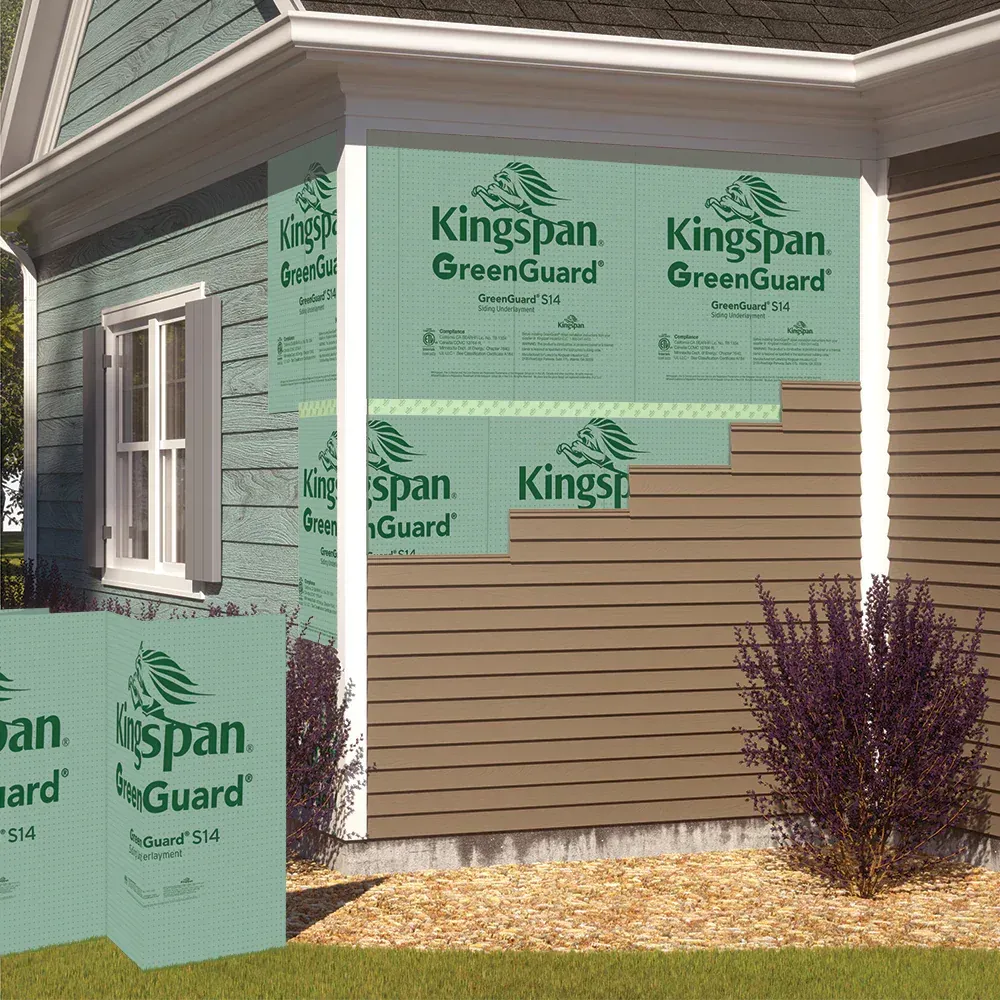
Fanfold is a thin foam underlayment that you will sometimes see installed behind vinyl siding.


For example, Kingspan's GreenGuard P1450 is a 1/4-inch XPS fanfold product specifically marketed as a leveling board for replacement siding. It adds a small amount of insulation while helping create a more consistent surface behind new siding.


That tells you a lot about where fanfold fits.

Its biggest advantage usually is not turning an older wall into a highly insulated wall.


It can make sense when the existing exterior is uneven, has bumps and irregularities, or simply needs a cleaner surface before the new siding goes on.


What about drafts?

Fanfold may also help create a more continuous layer over cracks and seams in an older exterior, particularly when joints are properly detailed and taped.


That can be useful on an older, draftier house.

But we would not install thin fanfold and tell a homeowner that we just dramatically increased the home's insulation.


That would be overselling it.


A better way to think about fanfold is:

Smoother wall + potential draft reduction + modest thermal benefit.


If your primary goal is substantially improving the insulation value of the wall, you may want to look at something thicker.

Option 2: Rigid foam insulation

This is where exterior insulation becomes more significant.


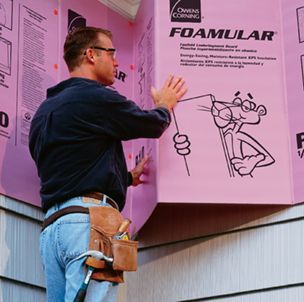
Rigid insulation is available in several forms, including EPS, XPS, and polyisocyanurate. Depending on the material and product, rigid exterior insulation can provide substantially more thermal resistance per inch than thin fanfold.


XPS stands for extruded polystyrene. It is one type of rigid foam insulation, not a separate insulation category.


For a familiar example, Owens Corning FOAMULAR XPS is rated at approximately R-5 per inch.


That is a much different insulation upgrade than thin fanfold.


Rigid foam also creates a continuous insulating layer across the wall framing, helping reduce thermal bridging through the studs.


The catch: You are making the wall thicker


This is the part that is easy to overlook.


If you install one inch of rigid foam on the exterior of your house, the new exterior surface of that wall has moved outward by approximately one inch.


That affects everything that meets the wall:

  • Windows
  • Doors
  • Exterior trim
  • Flashing
  • Fasteners
  • Other wall penetrations

The foam may be great insulation, but the foam itself is not the whole project.


Those surrounding details still need to be properly integrated so the finished wall drains water correctly, looks right, and stays secure.


That does not mean rigid foam is a bad option.


Quite the opposite.


If you are replacing siding and want to add meaningful year-round continuous insulation, rigid foam can be a very good opportunity.


You just have to plan for the additional wall thickness.
Option 2: Rigid foam insulation

There is also a category of products that sits somewhere between conventional housewrap and thicker rigid insulation.


One example is Low-E Housewrap.


Low-E Housewrap uses a polyethylene foam core with an aluminum-facing layer. The manufacturer markets it as a product that can serve behind exterior cladding while also contributing thermal resistance and reflecting radiant heat.


The interesting part is how its R-value is presented.


According to Low-E's published product label:

The core material itself is R-1.03

The product with a reflective airspace is R-3

A specific tested wall system is listed at R-4


That R-4 figure is based on a wall configuration containing vinyl siding, a 3/8-inch reflective airspace, Low-E Housewrap, and wood sheathing.

That distinction is important.


The thin housewrap itself did not magically become R-4.

The higher number is the result of how the product works as part of the complete wall assembly.


Why does the airspace matter?


Reflective insulation works differently from conventional foam insulation.

The reflective surface is designed to reduce radiant heat transfer. For that reflective surface to provide its intended benefit, the surrounding assembly matters.


Low-E says its product can reflect up to 97% of radiant heat and can be installed behind most exterior cladding without requiring the same window and door jamb extensions associated with thicker foam boards.


That makes the product interesting when you want some additional thermal performance but do not want to move the exterior wall outward by a full inch.


The tradeoff is that you need to understand exactly what R-value you are comparing.


  1. Is that number for the material?
  2. The material plus an airspace?
  3. Or the entire tested wall assembly?


Those are three different things.

What about insulated siding?

And yes, insulated siding absolutely belongs in this conversation.


Instead of installing a separate insulation layer and then installing siding over it, insulated vinyl siding has rigid foam permanently attached to the back of the siding panel.


ASTM's current specification for insulated vinyl siding requires a qualifying product to demonstrate at least R-2.0 of thermal resistance. DOE's Building America Solution Center says insulated vinyl siding products are generally rated around R-2.0 to R-2.8.


That foam backing provides another continuous layer across the exterior of the wall and can help reduce thermal bridging.


It also does something that has nothing to do with your heating bill:

It makes the siding more rigid.

That can be part of the reason someone chooses it.


John actually used insulated vinyl siding on his own house. His decision was primarily driven by the wider profile and added rigidity of the siding he wanted, rather than trying to justify the product entirely through energy savings.


We go much deeper into that decision in our existing guide, Is Insulated Siding Worth It for Pennsylvania Homeowners? Joyland's existing article also discusses why the insulation benefit is usually modest compared with larger insulation upgrades elsewhere in the home.

So which one would we choose?

So which one would we choose? Here comes the contractor answer again:


It depends.


Fanfold may make sense if:

  • The existing wall is uneven
  • Drafts are one of the main concerns
  • You want a thin siding underlayment
  • A modest insulation improvement is enough

Rigid foam may make sense if:

  • You want more meaningful continuous insulation
  • Year-round thermal performance is the priority
  • The house can accommodate the added wall thickness
  • Window, door, trim, and flashing details can be properly adjusted

Insulated or reflective housewrap may make sense if:

  • You want a very thin product behind the siding
  • Adding significant wall thickness would create problems
  • The wall assembly is designed to take advantage of the reflective product
  • You understand whether the advertised R-value applies to the product or the entire assembly

Insulated siding may make sense if:

  • You already like the siding profile
  • You want a more rigid vinyl panel
  • You want some continuous insulation without installing a completely separate exterior insulation product
  • The additional cost makes sense for the overall siding system you want

There is no prize for choosing whichever package has the largest number printed on it.


The goal is to understand what problem you are trying to solve first.


Then choose the product that actually solves it.

Three questions to ask before your siding project

You do not need to become a building scientist before replacing your siding.


But you should be able to ask your contractor three simple questions:

  • What are you putting behind my siding?
  • What is that layer supposed to do?
  • Why did you choose that particular product for my house?


Those questions can tell you a lot.


If the contractor can clearly explain the purpose of each layer and how those layers work together, you are having a much more useful conversation than simply comparing R-values on product brochures.

Not sure what should go behind your new siding?

Every house is different.


The existing wall, insulation, sheathing, windows, doors, siding choice, and the problems you are trying to solve can all affect what makes sense behind new siding.


If you are planning a siding replacement in south-central Pennsylvania, Joyland Roofing & Exteriors can look at the house you actually have, walk you through the options, and explain why we would recommend one approach over another.

Frequently asked questions

  • What is the best insulation to put behind new siding?

    There is no single best option for every house. Fanfold, rigid foam, reflective housewrap, and insulated siding solve different problems. The right choice depends on the existing wall, how much insulation you want to add, air leakage, wall thickness, windows, doors, and the siding system being installed.

  • Does fanfold insulation add much R-value?

    Usually not compared with thicker rigid insulation. A thin fanfold product is often used more for leveling an uneven wall and providing a modest thermal benefit. It may also help create a more continuous layer across cracks and seams when appropriately installed and detailed.

  • Is one inch of rigid foam worth adding behind siding?

    It can be, especially if improving continuous exterior insulation is one of the goals of the siding project. One inch of XPS can provide about R-5, but the added thickness also affects windows, doors, trim, flashing, and fastening details.

  • Does insulated housewrap really have an R-value?

    It can, but you need to understand what the advertised number represents. Low-E Housewrap, for example, lists its core at R-1.03, R-3 when combined with a reflective airspace, and R-4 for a particular tested wall assembly.

  • Is insulated siding the same as putting rigid foam behind regular siding?

    No. Insulated vinyl siding has foam permanently attached to the back of the siding panel. Separate exterior rigid foam is installed as its own continuous layer before the siding goes on. Both can add thermal resistance, but the installation details and available R-values are different.

  • Is replacing siding a good time to add insulation?

    It can be. DOE specifically notes that when continuous exterior insulation is being considered for an existing home, a siding replacement is one of the better opportunities because the exterior wall is already being exposed.

John Esh | CEO & Master Installer

  • 25+ Years Experience: From ground crew to Master Certified Installer.
  • Local Roots: Serving Lancaster, Harrisburg, and SEPA since 1991.
  • Credentials: GAF Master Certified (ME27586); Licensed in PA (PA124258) & MD (#137952).
  • The "Why": Obsessed with "radical transparency" to remove the fear factor from home improvements.

James Wesser | Content Producer

  • Background: Former local news digital producer and journalist.
  • The Mission: Turning complex roofing jargon into clear, "fluff-free" answers for homeowners.
  • Local Tie: When not filming on-site, he’s likely roaming Hersheypark or building digital worlds.

Meet The Experts