
The #1 Thing Homeowners Hate About Roofers: Poor Communication
John Esh
September 9, 2026

Most homeowners know a roof replacement is going to be loud.

There will be trucks in the driveway, people walking around the house, shingles coming off the roof, and enough banging to convince your dog that civilization is ending.


What homeowners should not expect is silence from the roofing company.


Poor communication remains one of the biggest frustrations people have when working with roofing contractors. In Roofing Contractor's 2025 Homeowner Roofing Survey, about 40% of homeowners said poor communication was the biggest challenge they faced when working with a roofer. When homeowners were choosing between two roofing companies, 67% said better communication was the most important deciding factor.


That matters because a roofing project is not just shingles, flashing, nails, and ventilation.

It is also knowing what is happening to your home.

40% of homeowners said poor communication was their biggest challenge with a roofing contractor.

67% said better communication was the most important factor when choosing between two roofing companies.

Source: Roofing Contractor 2025 Homeowner Survey.

Quick answer: What should good communication from a roofer look like?

A good roofing contractor should make it clear what happens next without forcing you to chase them for answers.

You should know who your main point of contact is, roughly when the work will happen, what materials are being installed, what the project includes, how schedule changes will be communicated, and what happens if the crew uncovers something unexpected.

You do not need a text message every time somebody moves a ladder.

You do need enough information to feel like someone is actually managing the project.

Why poor communication makes a roofing project feel worse

John Esh has spent decades working in roofing, but he has also been the homeowner hiring other contractors.

He has hired people for drywall, electrical work, kitchen remodeling, and other projects and experienced the same questions homeowners ask us:


  • When are they coming?
  • How much is this actually going to cost?
  • What materials are they using?
  • Did the schedule change?
  • Who am I supposed to ask?

Those questions are not unreasonable.

When nobody answers them, the homeowner starts doing the mental work that the contractor was hired to handle.

You start checking your phone.


You start wondering whether the crew is still coming.

You start repeating the same project detail to different people.

And eventually you start wondering whether the lack of communication is a warning sign about everything else.


A technically good roof can still feel like a terrible project if the homeowner spends the entire time wondering what is going on.

Communication should start before anybody gets on your roof

Good communication should begin before installation day.

For residential home-improvement projects covered by Pennsylvania's Home Improvement Consumer Protection Act, contracts over $500 generally need to be written and include important information such as a description of the work, the total price, and approximate start and completion dates. The Pennsylvania Office of Attorney General's contractor guidance also recommends that homeowners review contractor registration, references, and other background information before hiring.

That paperwork matters.

But a good conversation should go beyond the minimum required on the contract.

Before the job starts, you should understand things like:

  • Who your main contact will be
  • The expected schedule or scheduling process
  • What roofing system and materials are being installed
  • Where materials, trailers, or dumpsters may be placed
  • Whether you need to be home
  • How the crew will access different areas of the property
  • What happens if weather changes the schedule
  • How unexpected repairs or additional costs will be discussed

If those basic questions cannot be answered before the work begins, the project probably will not become magically clearer once half your old roof is sitting in a dumpster.

What happens when the roofing schedule changes?

Roofing companies cannot control everything.

Pennsylvania weather does not care what your calendar says.

Rain can move in. A previous project can uncover rotten decking and take longer than expected. A truck can break down. An emergency repair can affect the day's schedule.

The issue is not that plans sometimes change.

The issue is what happens after they change.

A homeowner should not have to figure out that nobody is coming because the arrival window passed two hours ago.

The contractor should explain what changed, how it affects you, and what happens next.

A delay is frustrating.

A mystery is worse.

For a closer look at the work that should happen behind the scenes after you approve a roofing project, read What Happens After You Sign a Roofing Contract? That article explains scheduling, project handoffs, materials, logistics, and the preparation that should happen before a crew arrives.

We have gotten communication wrong too

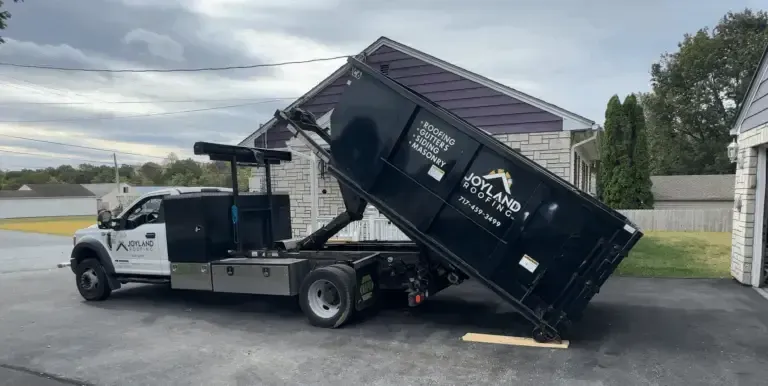
White dump truck tipping a black container to unload debris in a driveway under cloudy skies

This is where we do not want to pretend Joyland has somehow achieved perfect contractor communication.


We have not.


Earlier this year, we published "We Messed Up: What Three 1-Star Reviews Taught Us About Contractor Communication" after customers shared experiences in which our internal communication broke down.


In one case, appointment changes were not clearly communicated, and the homeowner waited for a crew that was not coming. In another, a technician experienced vehicle trouble. The customer still received an automated appointment reminder but did not receive an updated message explaining that the technician could no longer make the appointment.


The vehicle problem was not really the complaint. The silence was.
As Kevin O'Connell explained when we reviewed those situations, information existing somewhere inside the company does not help the homeowner if it never reaches them.


That is the uncomfortable part of communication.


You can have scheduling software, automated reminders, project notes, emails, text messages, and a CRM full of information.


If the customer is still standing in the driveway wondering where everybody is, the process failed.

That article goes deeper into what happened and what we learned from it.

What good roofing communication should feel like

Good communication does not mean bombarding homeowners with notifications.

It should mostly make the roofing project feel boringly organized.


You know when someone is expected.

You know who to call.

You know what the crew is doing.

You know if the weather changed something.

You know when a decision needs your approval.


And if something goes wrong, somebody tells you rather than hoping you will not notice.

Our mission at Joyland is built around three ideas: Quick service. Clear communication. Competent work.

The middle one is there for a reason.

Competent installation matters tremendously. Your roof still has to keep water out of your house.

But workmanship and communication are not competing priorities.

A homeowner deserves both.

What should happen after you sign a roofing contract?

Roofing crew moving buggies loaded with materials across a job site

Once the contract is signed, there is still plenty happening before install day.


The project details need to move from sales into production. Materials need to be confirmed. The project needs to be scheduled. Logistics need to be planned. A project manager needs the information necessary to understand your home before the crew arrives.


That handoff matters. The crew should not pull into your driveway and start asking you to explain the project from scratch.


We walk through that entire process in What Happens After You Sign a Roofing Contract?


Then, before installation day, our roof replacement preparation checklist explains what homeowners can do to prepare the property, including moving vehicles and patio furniture, planning for noise, making sure gates are accessible, and confirming the best phone number for the project manager.

Good communication works both ways.

The roofer needs to keep you informed, and you need an easy way to tell them about anything they should know.

Questions to ask a roofer before you hire them

You do not need to interrogate the salesperson under a bright lamp.

But you should ask a few practical questions.

Who will be my main point of contact?

There should be a clear answer.

Depending on the company, that person might change between the estimate and production stages. That is fine. You should still understand who handles questions at each stage.

How will you tell me if the schedule changes?

Listen for an actual process rather than "we'll let you know."

Weather delays happen. Ask whether updates typically come by phone, text, email, or through a project manager.

What happens if you find additional damage?

Roofers sometimes uncover deteriorated decking or another issue that could not be fully seen during the initial inspection.

Ask how you will be notified, how the repair will be documented, and how additional costs are approved before work moves forward.

What should I expect between signing and installation?

A good roofing company should be able to walk you through the process.

You should not sign a contract and immediately enter the witness protection program.

How do I reach someone during the project?

This is one of the simplest questions you can ask, and one of the most revealing.

There should be a clear answer.

Pay attention to communication before you sign

One of the easiest ways to evaluate a contractor's communication is simply to watch what happens while you are still deciding who to hire.

Do they show up when they said they would?

Do they answer your questions?

Can they explain the estimate without making it sound like you need a roofing dictionary?

Do they follow up when they promised?

Are materials, warranties, pricing, and next steps explained clearly?

The Federal Trade Commission's home-improvement contractor guidance recommends getting multiple written estimates and making sure the agreement clearly describes the work, materials, price, and expected completion information before hiring a home-improvement contractor.

You are not being difficult by asking questions.

It is your house.

What do Joyland customers say about communication?

Our own reviews are one reason communication remains such a focus for us.

Homeowners have specifically talked about receiving clear explanations, crews arriving when promised, projects moving quicker than expected, and our team keeping them informed throughout their work.

You can read and watch those experiences on our customer reviews page.

We also publish the negative experiences.


Both matter.


Positive reviews show when the process works.

Negative reviews show where it needs work.

That gives homeowners a much more realistic picture than pretending every project in company history has gone perfectly.

The bottom line

Your roofer is responsible for more than putting shingles on your house.

They are also responsible for managing a major project happening where you live.

You should understand what is happening, what happens next, and who you can talk to when you have a question.

Roofing is going to make some noise.


Your contractor going completely silent should not be part of it.


If you are planning a roof repair or roof replacement in Lancaster County, Harrisburg, York, Lebanon, or elsewhere in south-central Pennsylvania, ask about communication before you ask which day the dumpster is showing up. Our residential roofing services page has more on how we approach every project.

A good roofer should be able to explain both.

Frequently Asked Questions

  • What should a roofing company communicate before the job starts?

    Before installation, your roofer should explain the project scope, materials, expected schedule, property-access needs, who your point of contact is, and how changes or delays will be communicated. You should also understand how unexpected repairs or additional costs would be handled.

  • How often should my roofer update me?

    There is no universal schedule for roofing updates. You probably do not need constant messages when everything is proceeding normally. You should receive an update whenever something materially affects your project, especially changes to the schedule, materials, cost, scope of work, or expected completion.

  • Is poor communication from a roofing contractor a red flag?

    It can be. One missed phone call does not automatically mean a contractor is unreliable, but repeated unanswered questions, unexplained schedule changes, vague estimates, and uncertainty about who is managing the project deserve attention.

  • What should I do if weather delays my roof replacement?

    Ask your contractor when they expect to reassess the schedule and how you will receive the next update. Weather delays are normal in roofing, especially in Pennsylvania. Being left without any information should not be.

  • Should changes to my roofing project be documented?

    Yes. Significant changes involving the scope or cost should be clearly explained and documented. Pennsylvania home-improvement law also contains specific requirements for covered contracts and certain written change orders. If you have questions about your legal rights, review the Pennsylvania Office of Attorney General's homeowner resources.

John Esh | CEO & Master Installer

  • 25+ Years Experience: From ground crew to Master Certified Installer.
  • Local Roots: Serving Lancaster, Harrisburg, and SEPA since 1991.
  • Credentials: GAF Master Certified (ME27586); Licensed in PA (PA124258) & MD (#137952).
  • The "Why": Obsessed with "radical transparency" to remove the fear factor from home improvements.

James Wesser | Content Producer

  • Background: Former local news digital producer and journalist.
  • The Mission: Turning complex roofing jargon into clear, "fluff-free" answers for homeowners.
  • Local Tie: When not filming on-site, he’s likely roaming Hersheypark or building digital worlds.

Meet The Experts