
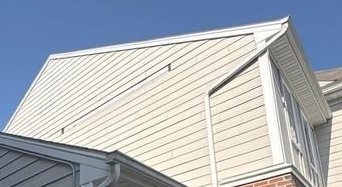
Why This James Hardie Siding Was Bowing in Mechanicsburg, PA
James Wesser
August 5, 2026

Lorem ipsum dolor sit amet

Lorem ipsum dolor sit amet, consectetur adipiscing elit. Sed do eiusmod tempor incididunt ut labore et dolore magna aliqua. 

One loose piece of siding is easy to dismiss.


When siding starts bowing, breaking, and coming loose around multiple sides of your home, it becomes harder to ignore. What looked like a small cosmetic issue starts raising bigger questions.


How many pieces are affected? Is water getting behind the siding? Does the whole exterior need to be replaced?

That was the situation at this Mechanicsburg, Pennsylvania home.


The existing Pearl Gray James Hardie siding still looked good overall, but several areas were pulling away from the house. Our repair technician, Zach, found loose, damaged, and missing siding around the exterior.

This was not a one-board repair. The project was scoped for up to 60 new pieces of 7-inch James Hardie Cedarmill Plank siding.


The frustrating part was that the siding material itself was not necessarily the problem. The way it had been fastened was allowing a good product to fail before it should.

Quick Answer

This Mechanicsburg homeowner had James Hardie siding bowing, breaking, and coming loose around the exterior because the existing fasteners were too short for the wall assembly. The planks lacked the anchorage needed to remain secure.


Roofing or shingle nails are not automatically wrong. James Hardie allows roofing nail guns when the correct fasteners and settings are used for the specific installation, as explained in its official Hardie product installation guidance.


The repair was designed to remove the loose and damaged siding, install up to 60 properly fastened Pearl Gray replacement pieces, secure other loose areas, and add caulk and flashing where needed.


Homeowners can learn more about Joyland’s fiber cement siding services and exterior services in Mechanicsburg, PA.

This Was More Than One Loose Piece of Siding

A single damaged plank can sometimes be handled with a simple repair.


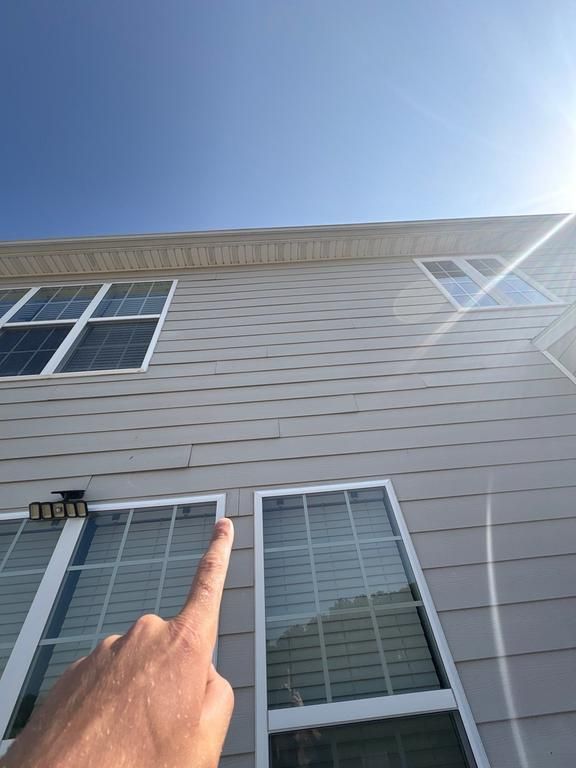
This home had problems in several places. Zach found affected siding on the gable, around the back of the house, and along another wall. Some pieces were already missing. Others were loose, bowing outward, or beginning to break under pressure.


That changed the question from “Can you replace this one piece?” to “Why is this happening around the house?”


That is the question a siding repair should answer.


Replacing a loose plank without finding out why it moved may make the wall look better temporarily. If the fastening problem remains, the replacement piece can eventually develop the same issue.
What Caused the James Hardie Siding to Bow?

The first clue was how much movement Zach found in the siding.


Fiber cement siding is a heavier and more rigid material than vinyl siding. It depends on the correct fasteners and fastening pattern to hold each plank securely against the wall.


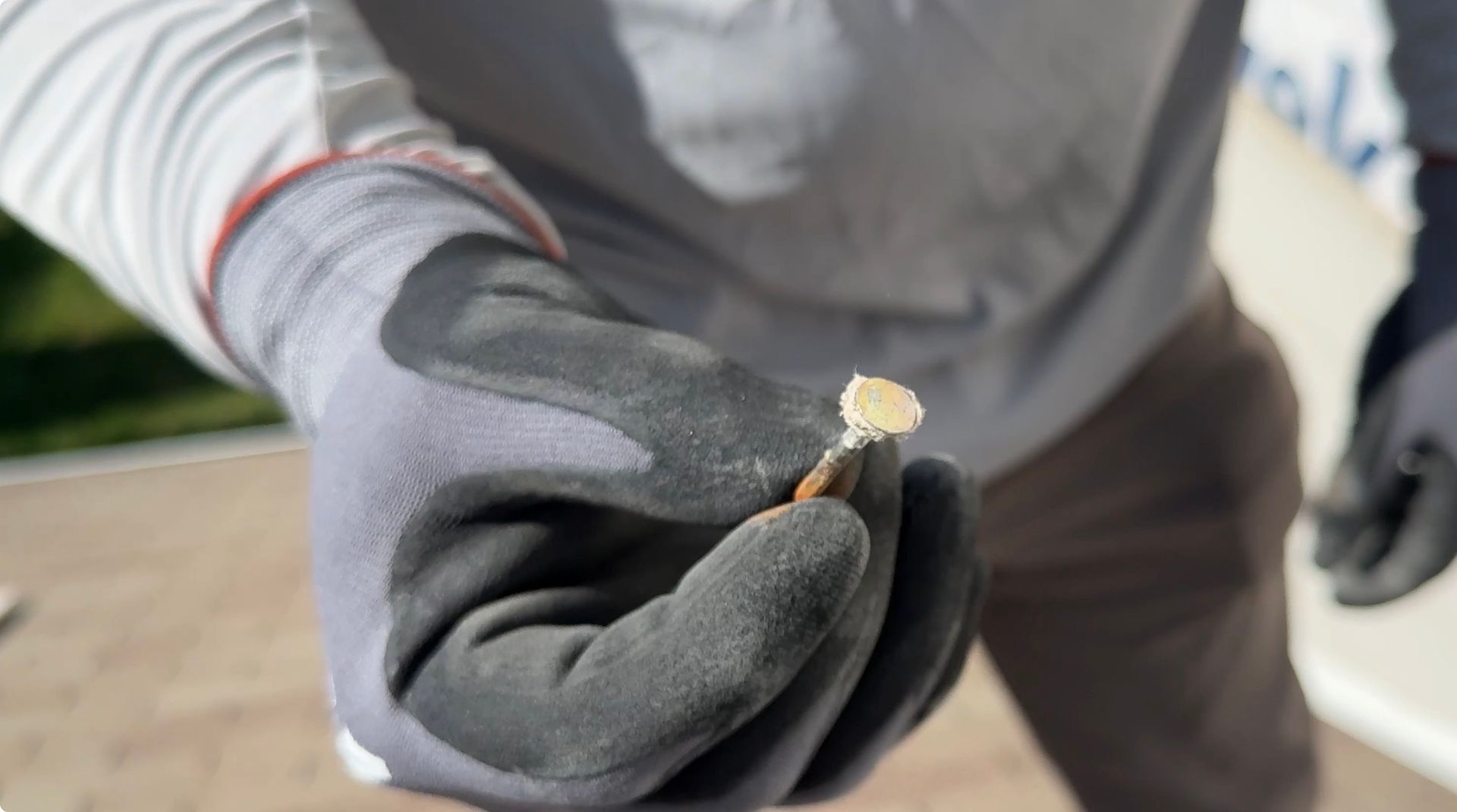
When Zach inspected the existing installation, he found that the nails were too short for this wall assembly.


They did not reach deeply enough into the intended structural support to provide the anchorage the siding needed. That allowed certain planks to loosen and move.


Once movement begins, pressure can build around nail locations, plank edges, and overlaps. That stress can cause siding to bow away from the wall, crack, or break.

Were Roofing Nails the Problem?

Not automatically.


Roofing nails, also known as shingle nails, can be used in certain approved James Hardie installations. The type of tool or the general name of the nail does not tell the whole story.


James Hardie states that siding guns and roofing nail guns can be used to fasten its fiber cement products. However, the tool must be properly adjusted and loaded with fasteners that meet the applicable installation requirements.


The manufacturer’s current installation instructions and technical documents direct installers to consider:

  • The specific James Hardie product
  • Fastener dimensions and material
  • Framing type
  • Sheathing thickness
  • Building height
  • Wind exposure
  • Fastener spacing and placement
  • Local building-code requirements


A roofing nail can be acceptable in one approved wall assembly while a similar-looking nail may be too short for another.


On this home, the problem was not simply that the original installer used roofing-style nails. The installed fasteners did not meet the required length and anchorage for this application.


That is an important distinction.

Why Short Fasteners Can Become a Bigger Siding Problem

Siding is the visible exterior surface, but it works as part of a larger wall system.


The planks, fasteners, house wrap, sheathing, flashing, caulk, trim, and framing all have specific jobs. If one part of that system is not doing its job, the first visible clue may be a piece of siding that no longer sits flat.


Homeowners may notice:


  • Siding bowing away from the wall
  • Planks that appear wavy
  • Gaps between siding courses
  • Loose pieces that move in the wind
  • Cracked corners or broken edges
  • Missing pieces after a storm
  • Openings where water could travel behind the siding

Seeing one of those signs does not automatically mean the siding product is defective. It also does not automatically mean the entire house needs new siding.


It means someone needs to determine why the siding moved.

What the Siding Repair Included

The repair plan for this Mechanicsburg home was specific to the problems found during the inspection.

It included:


  • Removing loose and damaged 7-inch James Hardie Cedarmill Plank siding around the exterior
  • Installing up to 60 new Pearl Gray siding pieces
  • Fastening the replacement siding correctly to the wall assembly
  • Securing other loose siding around the house
  • Adding caulk and flashing details where needed


That scope matters because it shows the difference between replacing a visible symptom and addressing the larger problem.

What the Homeowner Could See What Was Happening What the Repair Addressed
Loose and damaged siding around the exterior The existing fasteners were too short for the wall assembly Remove damaged planks and install up to 60 properly fastened Pearl Gray replacement pieces
Planks bowing, breaking, or pulling away Movement was creating stress around fasteners, edges, and overlaps Replace damaged pieces and secure other loose siding around the home
Gaps where water could travel behind the siding Water was not being consistently directed over the exterior surface Add caulk and flashing details where needed to improve water management
Problems in several areas, but serviceable siding elsewhere The damage did not automatically require replacing the entire exterior Complete a targeted repair over a project window of up to two days

The siding needed to look right when the repair was finished, but appearance was only part of the job.


The new pieces also needed to remain secure. Loose sections elsewhere around the home needed attention. Water needed to be directed over the siding instead of being given an easy path behind it.

Why the Flashing Detail Mattered

During the video, our siding installer, Dinny, demonstrated how water could travel behind the siding through an open gap.


Without a piece of metal flashing, water reaching that area could run behind the exterior surface. Once it is behind the siding, the water is no longer following the path the wall system was designed to manage.


Properly positioned flashing provides a bridge for water back onto the exterior face of the siding. From there, it can continue down and away from the wall.


It is a small piece of metal that most homeowners will never see after the project is finished.


It is also one of the details helping protect the wall from hidden moisture.


That is why siding work cannot be judged by color and straight lines alone. The hidden fastening and water-management details matter just as much as the finished appearance.

Did the Entire Home Need New Siding?

No.


The repair was substantial, but full replacement was not automatically the best answer.


The existing Pearl Gray James Hardie siding still had value. The affected areas could be removed and replaced, while other loose sections could be secured.


Full siding replacement may make more sense when:

  • Damage is widespread across most of the home
  • Water has damaged the sheathing or framing
  • The existing color or profile cannot be matched
  • Most of the siding was installed incorrectly
  • The siding is already near the end of its usable life
  • Repair costs begin to approach the cost of replacement


When the damage is limited and compatible material is available, a targeted repair can address the problem without replacing siding that is still performing properly.


Our guide to whether siding replacement is worth it in Central Pennsylvania explains additional factors homeowners should consider.

What Should Homeowners Look For?

You should not need to monitor your siding every time the wind picks up.

If you notice siding moving, bowing, cracking, or pulling away, look at the surrounding area from the ground. The first loose piece may not be the only affected piece.


Pay particular attention to:

  • Gables and taller walls
  • Rear and side elevations
  • Roof-to-wall transitions
  • Areas around windows and doors
  • Plank joints and overlaps
  • Places exposed to stronger wind
  • Areas with visible water staining


Do not press aggressively on fiber cement siding to test it. If a plank is already stressed or cracked, additional pressure could make the damage worse.


A professional inspection can determine whether the problem involves one damaged plank, improper fastening, missing flashing, water behind the siding, or a broader installation issue.

Need Help With Loose or Bowing Siding in Mechanicsburg?

The most important part of a siding repair is figuring out why the siding moved.

Otherwise, you may replace the visible damage without correcting the reason it happened.


Joyland Roofing provides siding repair and replacement services throughout Mechanicsburg, Cumberland County, and the surrounding areas of Central Pennsylvania.


If your siding is bowing, cracking, breaking, or coming loose, contact Joyland Roofing for an inspection.

We will look at the affected siding, the fasteners, the wall behind it, and the surrounding water-management details. Then we will explain whether the home needs a targeted repair or whether a larger replacement makes more sense.


No guessing based on one loose board.

Frequently Asked Questions

  • What caused the James Hardie siding on this Mechanicsburg home to bow?

    The existing fasteners were too short for the wall assembly. They did not provide enough anchorage to keep the fiber cement planks secure, which contributed to movement, bowing, cracking, and loose siding.

  • Can roofing nails be used for James Hardie siding?

    Yes, certain roofing nails and roofing nail guns can be used in approved James Hardie installations. The fasteners must still meet the product-specific requirements for dimensions, material, placement, spacing, framing, sheathing, and wind loads.

  • How large was this siding repair?

    The repair was scoped to remove loose and damaged 7-inch James Hardie Cedarmill Plank siding around the exterior and install up to 60 new Pearl Gray pieces. The estimated project window was up to two days.

  • Does bowed James Hardie siding mean the product is defective?

    Not necessarily. Bowing may be caused by installation details such as fasteners that are too short, incorrect fastener spacing, wall irregularities, missing clearances, or moisture-related issues.

  • Can individual James Hardie siding planks be replaced?

    Yes. Individual planks and localized sections can often be replaced when the damage is limited and compatible material is available. The repair should also correct the reason the original siding failed.

  • Why is flashing important behind siding?

    Flashing directs water back onto the exterior surface instead of allowing it to travel behind the siding. It is particularly important at roof-to-wall transitions, penetrations, and other areas where water naturally concentrates.

John Esh | CEO & Master Installer

  • 25+ Years Experience: From ground crew to Master Certified Installer.
  • Local Roots: Serving Lancaster, Harrisburg, and SEPA since 1991.
  • Credentials: GAF Master Certified (ME27586); Licensed in PA (PA124258) & MD (#137952).
  • The "Why": Obsessed with "radical transparency" to remove the fear factor from home improvements.

James Wesser | Content Producer

  • Background: Former local news digital producer and journalist.
  • The Mission: Turning complex roofing jargon into clear, "fluff-free" answers for homeowners.
  • Local Tie: When not filming on-site, he’s likely roaming Hersheypark or building digital worlds.

Meet The Experts