Poor Attic Ventilation
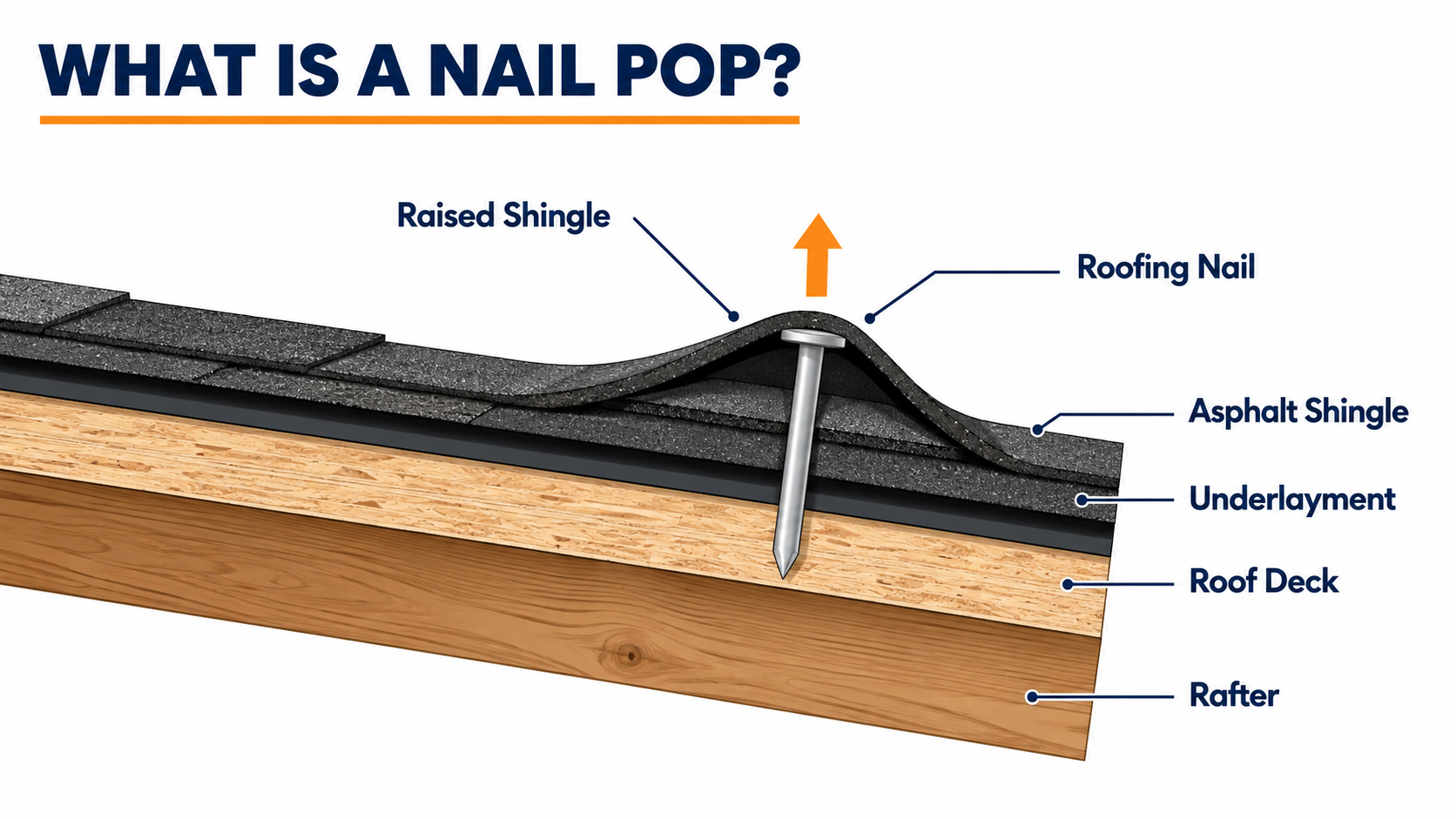
You wouldn't think of this as a cause for nail pops. But this is actually one of the most common sources of nail pops on shingle roofs. Excessive heat or moisture in an attic due to poor ventilation causes the
roof deck to expand and contract, and shift. This in turn causes fasteners to lose their grip in the roof deck and back out of it.
Incorrect Nail Placement
A fastener outside the designated nailing area may not hold the correct layers of the shingle. It may also sit too close to an edge or seam.
Incorrect Nail Depth or Angle
An underdriven nail can keep a shingle from sitting flat. A nail driven at an angle may not seat properly and can damage the shingle beneath it. If the nail is protruding (not set flat against the shingle it's driven into), heat and weather will eventually cause it to poke through the shingle covering it.
Insufficient Grip in the Roof Deck
A nail that misses solid decking, lands in a gap, or does not penetrate far enough will likely back out over time.
Fastener Corrosion
An exposed or inappropriate fastener can rust, weakening it and signaling that moisture has reached the area.
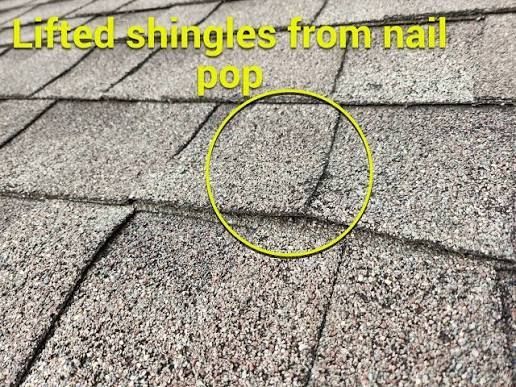
In this Landisville repair, the poor placement near the seam was visible. The pattern of several affected nails also suggested that Tyler needed to inspect more than one shingle.
We cannot determine every condition present during the original installation from the finished roof alone, so it would be irresponsible to claim one cause explains every fastener he found.