
Which roof repairs should happen before winter?
Use this as a starting point for a conversation with a roofer. “Act promptly” means arrange assessment and repair, or temporary protection when a permanent repair cannot safely happen yet.
| What you notice | What changes the urgency | Next step |
|---|---|---|
| Missing or torn shingle | An exposed joint, fastener or opening below the damaged area | Act promptly if exposed; get uncertain damage checked. |
| Cracked pipe-boot collar | A gap in the seal around the vent pipe | Arrange repair before winter. |
| Loose or missing flashing | An opening where roofing meets a wall or chimney | Arrange repair before winter. |
| Missing ridge-cap shingles | The vent or roof peak beneath the caps is exposed | Have the assembly checked and restore the missing caps. |
| Minor edge damage | Whether the layers beneath still shed water correctly | Monitoring may be reasonable after assessment. |
| Active dripping or fresh dampness | Water is already entering | Seek prompt help rather than waiting for spring. |
1. Can one missing shingle wait until spring?
It depends on where the shingle is missing and what is underneath. In John's demonstration, the important detail is the joint between two shingles in the row below. The overlapping shingle above helps keep water away from that joint.
When the missing piece exposes the joint, water has a route beneath the shingle covering. Underlayment provides another layer of protection, but its condition, fastener penetrations and installation affect how well it can handle that exposure.
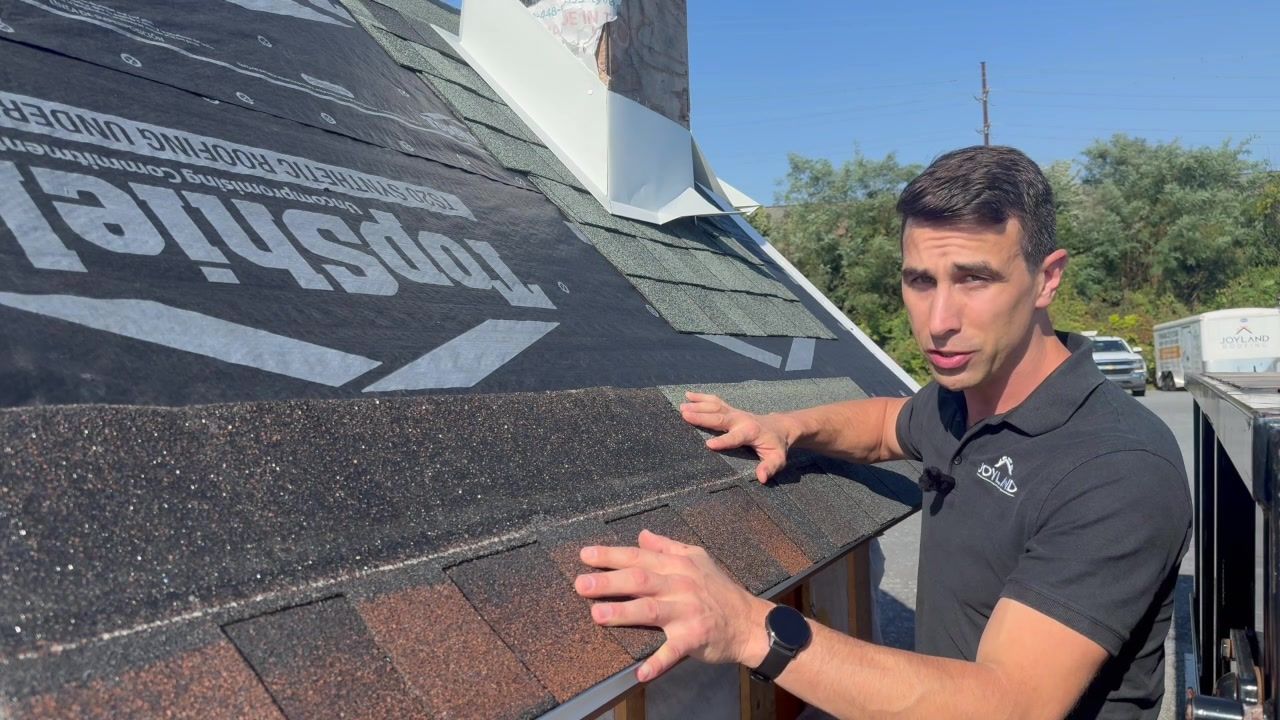
John also shows a different situation: a missing portion above an otherwise continuous shingle surface, without exposing that joint. That can be less urgent. A small damaged edge can fall into a similar category if the layers underneath remain intact.
Less urgent does not mean guaranteed to last the winter. A roofer still needs to check the actual overlap, fastening, seal and surrounding damage. A loose shingle deserves a look, too, because being present and being properly secured are different things.
If you cannot tell what the missing piece exposes from the ground, that is a reason to get it checked. It is not a reason to climb up and start lifting shingles yourself.
2. Should a cracked pipe boot be repaired now?
A cracked or separated pipe-boot seal should be addressed before winter. The pipe boot is the flashing around a plumbing vent where it passes through the roof. Its collar seals against the pipe.
John shows how a deteriorated rubber collar can leave an opening. Water can follow the outside of the pipe through that gap, even when the surrounding shingles look fine. Small component, very inconvenient place to have a hole.
Can you just caulk the pipe boot?
John discusses caulking as a possible temporary repair. The key word is temporary. Whether a sealant repair makes sense depends on the damage, the materials and the conditions. It should come with a follow-up plan, not a promise that it will last a particular number of months.
There may also be a suitable manufactured repair option. Oatey's flashing guidance explains that a compatible rain collar can restore the seal when the flashing base is sound but the existing rubber collar has failed. That is different from covering every problem with caulk. A damaged base or surrounding roofing may need a more complete repair.
3. Can loose flashing wait if the roof is not leaking?
Missing or displaced flashing should be repaired before winter, even without a ceiling stain. Flashing helps direct water away from transitions such as the joint where a roof meets a wall or chimney.
In the video, John demonstrates flashing pulling away from the surface it should protect. The problem is the opening behind it. Getting through one rainstorm without an obvious drip does not establish that the assembly is watertight.
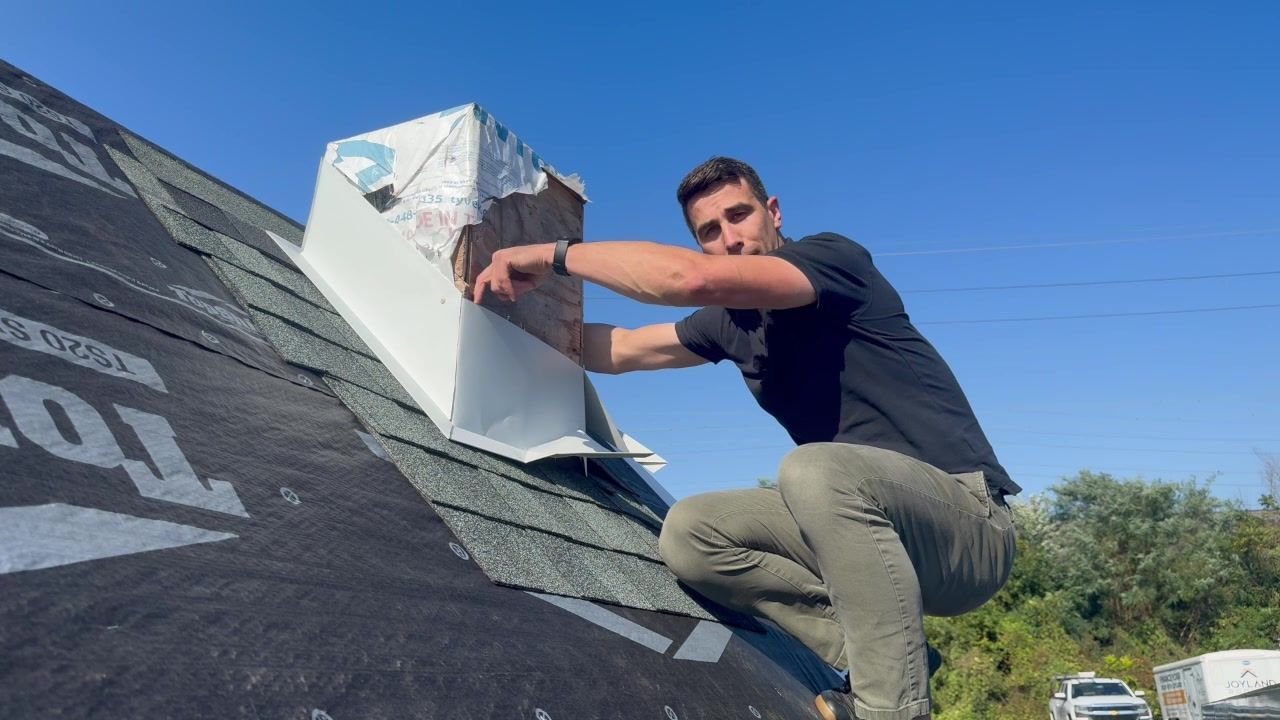
He also points out that the attic may show evidence before the finished ceiling does. If your attic has safe access and a proper walking surface, look for fresh dampness, staining or wet insulation near the area of concern. Do not step between framing members or cross an unfinished attic to investigate. A technician can check areas you cannot safely reach.
If a contractor recommends a repair, ask to see the opening and the proposed fix in photos. Our guide to checking a roofer's claims explains how to ask for evidence without needing to become a roofing expert overnight.
4. What if ridge-cap shingles have blown off?
Have missing ridge caps checked and replaced rather than assuming the roof peak is protected. Ridge-cap shingles cover the peak of the roof and, on some systems, the ridge vent.
John explains that the risk depends on what is underneath. He specifically calls out mesh-style ridge vents and peaks without a ridge vent as situations where lost caps can expose the attic to water.
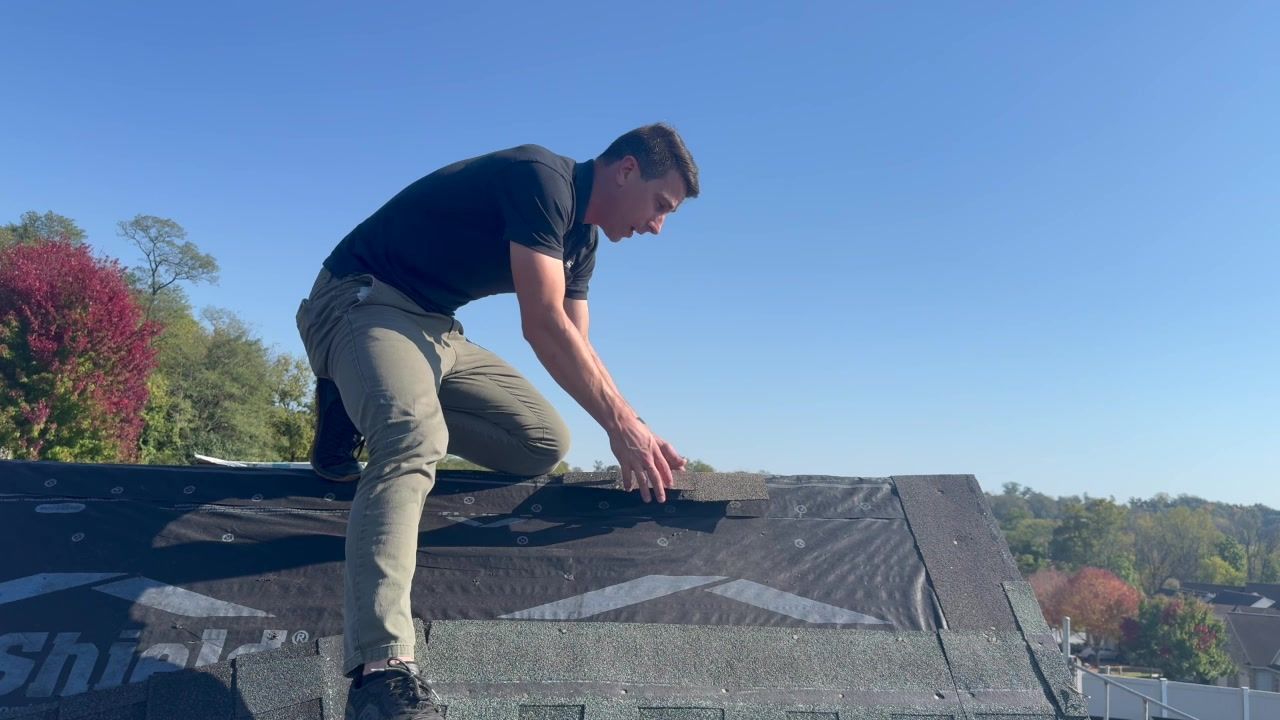
The vent type, exposed fasteners and surrounding cap shingles all matter. The presence of a vent does not automatically make missing caps safe to leave until spring.
Why does winter change the decision in Pennsylvania?
Winter adds snowmelt and colder repair conditions to the equation. A roof problem that is straightforward to reach on a dry fall day may be harder to work on when the surface is icy.
Ice dams are a separate concern from a missing shingle. The U.S. Department of Energy explains that snowmelt can refreeze at colder eaves, allowing water to back up beneath shingles. Air sealing, insulation and appropriate roof ventilation can help address the heat loss involved. Replacing one damaged shingle does not, by itself, solve that problem.
Can a roofer still repair shingles in winter?
Yes, when site conditions and the product requirements allow it. Winter is not an automatic stop sign.
GAF's temperature guidance notes that shingles are easier to handle above 40°F, but does not set that temperature as a universal installation cutoff. In cold conditions, shingles can become brittle and may need hand-sealing because their adhesive has not activated promptly.
The practical question is whether the roofer can make a sound repair safely, using the instructions for that roof system. When conditions prevent that, ask about temporary protection and the plan for completing the repair.
What might these roof repairs cost?
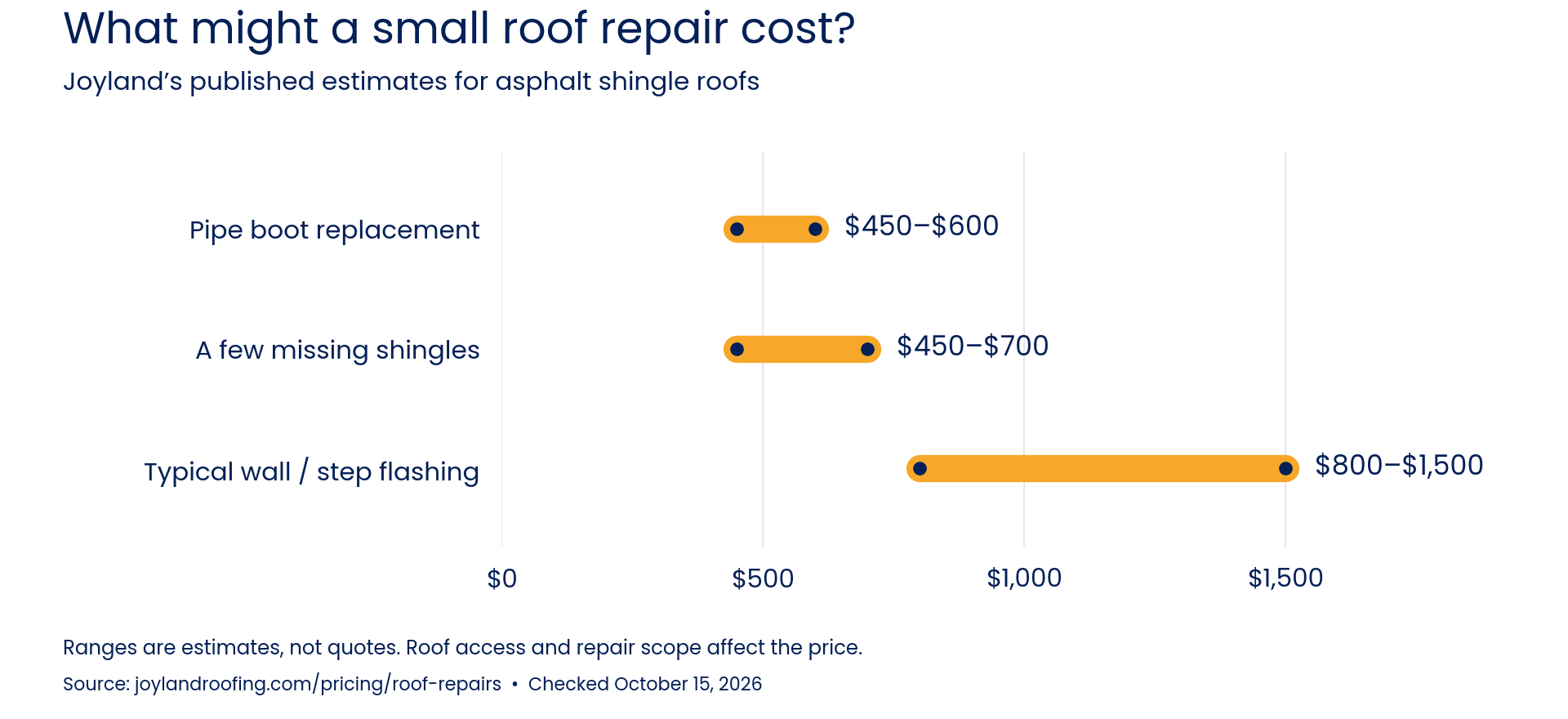
Joyland's roof repair pricing page lists these estimates for asphalt shingle roofs, checked October 15, 2026:
| Asphalt roof repair | Published estimate |
|---|---|
| Pipe boot replacement | $450–$600 |
| A few missing shingles | $450–$700 |
| Typical wall / step flashing issues | $800–$1,500 |
These are different repair scopes, not a prediction of how one problem will progress or how much waiting will cost.
Does needing a repair mean you need a new roof?
No. One damaged component does not automatically mean the entire roof is finished.
Joyland's roof repair service page describes a customer, Jim, who had been advised to replace his roof. Justin assessed the problem and addressed the roof and flashing issues with a repair instead. That example does not decide what your roof needs, but it shows why diagnosis should come before a replacement recommendation.
The useful distinction is between an isolated problem and a roof with widespread deterioration or recurring failures. Ask what is damaged, what remains serviceable and why the proposed work fits those findings.
What should you do if you are unsure?
- Photograph what you can see safely. Ground-level photos and pictures of interior staining help explain the concern.
- Describe when it happens. Rain, wind-driven rain or melting snow may provide useful clues.
- Ask what is exposed. Request photos that show the damaged component and the layers around it.
- If monitoring is recommended, agree on a plan. Ask when to recheck it and which changes mean you should call sooner.
A new drip or fresh dampness changes that plan. Keep clear of bulging ceilings and water near electrical fixtures, and seek prompt help.
If you are in Lancaster County or a nearby community and are weighing a repair before winter, contact Joyland about a roof assessment. We can help identify what is damaged and explain the next step.
You do not need to panic over every rough shingle edge. You do need a better plan than waiting for the ceiling to weigh in.