
From the ground, this looked like a small slate repair. Recent storms had damaged several pieces near the edge of a Lancaster, Pennsylvania roof, and Tyler believed a tree had likely struck the area. The broken slate left openings where rainwater could reach the wood and fasteners below.
The short answer is that individual slate tiles can often be replaced without replacing the entire roof when the surrounding roof system is still serviceable. On this job, installing the new slate was not the hardest part. Removing the old pieces without damaging the slate around them was where the repair became a battle.
Slate roof repair
Project Snapshot
Lancaster, Pennsylvania
Storm-damaged slate near the roof edge
A tree strike during recent storms, based on Tyler’s on-site assessment
Remove and replace roughly six pieces of slate
Unusually large ring-shank nails resisted the slate ripper
Replacement slate secured with galvanized roofing nails and slate hooks, depending on access
The damaged section was closed back in with replacement slate.
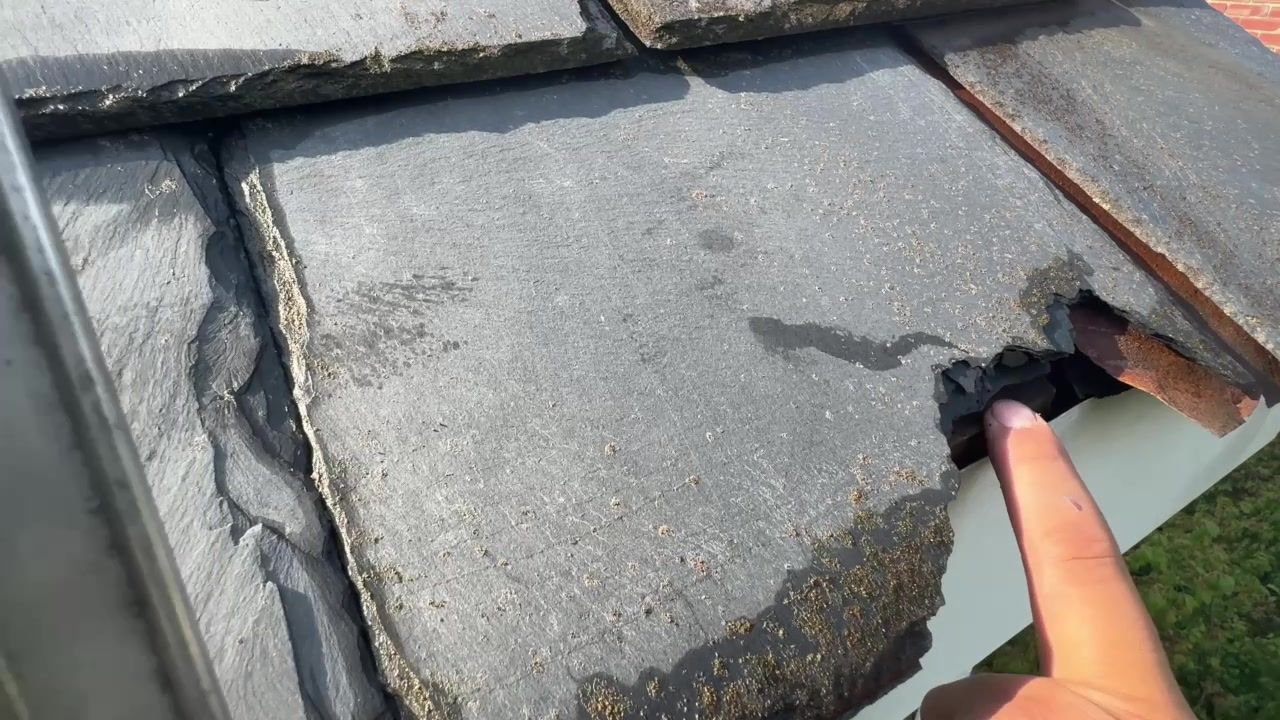
The impact broke away part of the slate and created a direct opening at the roof edge.
What Did the Storm Damage Look Like?
The damage was concentrated near the lower edge of the roof. One slate had a noticeable piece broken away, while another area exposed wood and fasteners that would normally be covered by the overlapping slate courses.
Tyler's assessment on the roof was that a tree had likely hit the area during one of the recent storms. The exact object was not confirmed, but the result was clear: water now had a path beneath the finished slate surface.
That is why a small-looking break deserves attention. Slate sheds water through overlapping courses. When a piece is cracked, punctured, or missing, the opening can direct rain toward the roof assembly underneath. The goal of a targeted repair is to restore that coverage before repeated wetting creates a larger problem.
Homeowners who want to understand the material and the specialized work it requires can read about Joyland's slate roof repair and restoration services.
Can Individual Slate Tiles Be Repaired?
Yes, individual slate tiles can often be replaced. A few broken pieces do not automatically mean the whole roof needs to come off.
This Lancaster project was a targeted repair. Tyler planned to remove about six pieces so he could reach the damaged area, install replacement slate, and rebuild the overlapping courses. Whether that approach makes sense on another home depends on the condition of the surrounding slate, roof deck, flashing, fasteners, and the location of the damage.
If you are trying to decide whether a localized fix is enough, Joyland's repair-versus-replace guide explains the broader factors that go into that decision.
Why Did This Slate Repair Become More Difficult Than Expected?
Slate repair requires patience because the damaged piece is held beneath the courses above it. A technician cannot simply lift one tile like a loose floorboard. The old fasteners have to be released while protecting the neighboring slate.
Tyler started by sliding a slate ripper beneath the damaged pieces to reach the hidden nails. Very quickly, the planned repair stopped behaving like a routine removal.
"This one's difficult, James," he said while working the ripper under the slate.
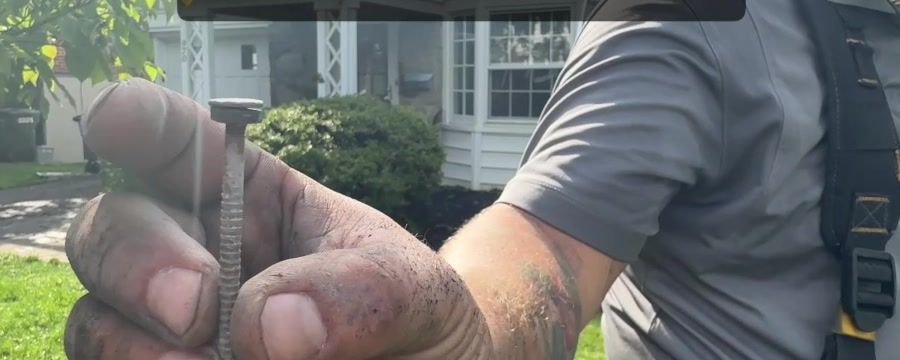
The ridged shank gripped the wood tightly, making the slate much harder to release.
The Unexpected Ring-Shank Nails
The removed fasteners were not the smooth roofing nails Tyler expected to find. They were unusually large ring-shank nails. The ridges along a ring-shank nail are designed to grip the wood, which helps explain why the slate ripper needed more force to release them.
That extra resistance changed the access needed for the repair. Tyler had to remove more surrounding slate than he originally anticipated just to reach two damaged pieces.
That does not mean the entire roof was failing. It means the visible number of broken slates did not tell the whole story about the labor required to reach them safely.
This is also why a roof-repair estimate cannot always be based on tile count alone. Access, roof pitch, surrounding material, and the original fastening method all affect the work. Joyland's current roof repair pricing guide gives homeowners a better sense of the variables that can move a repair price.
What Are Lath Boards Under a Slate Roof?
In the video, Tyler explains that slate may be installed over tongue-and-groove boards or over lath boards. Lath boards are narrower wood strips that give the slate fasteners something solid to attach to while leaving open spaces between the boards.
Seeing the lath is not automatically a sign of damage. It is part of how some older slate roofs were built. What mattered here was gaining enough controlled access to remove the damaged pieces and place the replacement slate without unnecessarily disturbing more of the roof.
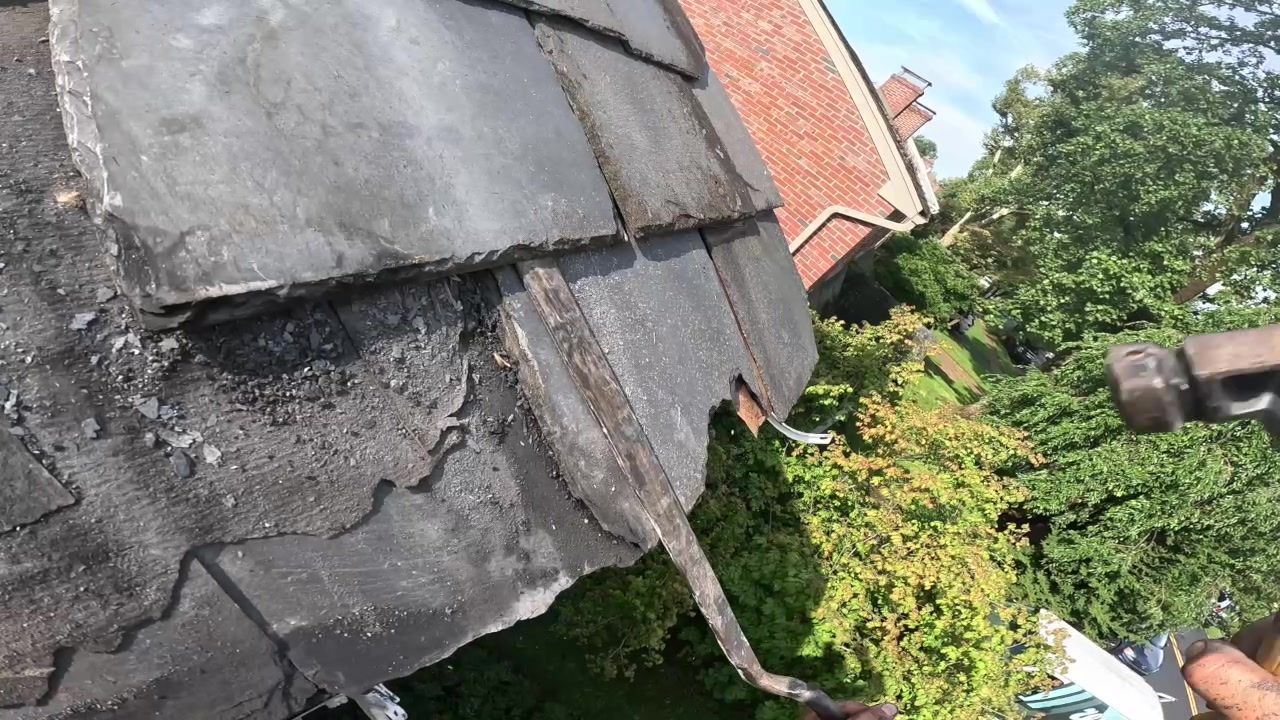
Removing the surrounding slate exposed the narrow wood lath boards beneath the roof covering.
How Was the New Slate Installed?
Once the stubborn slate and nails were out of the way, Tyler could rebuild the area. The basic sequence shown in the video was:
- Remove enough surrounding slate to reach the damaged pieces and concealed fasteners.
- Clear the repair area and examine the exposed wood and the path where water could enter.
- Fit the replacement slate so its size and overlap lined up with the existing courses.
- Secure pieces with galvanized roofing nails where the nailing location was accessible.
- Use slate hooks where the replacement needed to slide back beneath the slate above.
- Check the finished section to confirm the replacement pieces were seated and the damaged opening was covered.
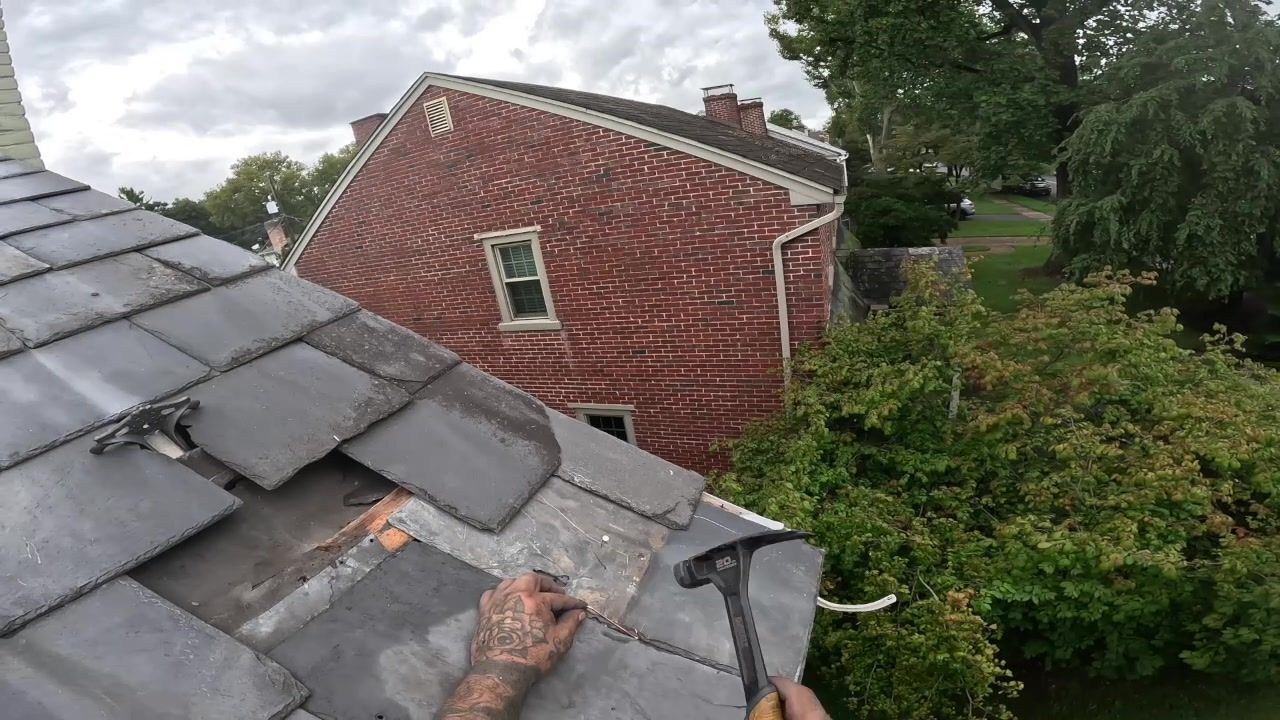
A slate hook provides a seat for a replacement tile when the original concealed nailing point is not accessible.
What Does a Slate Hook Do?
A slate hook is a small metal fastener installed through the joint between the slate pieces below the repair. The replacement slate slides upward beneath the course above, then settles back down so its lower edge rests in the hook.
The National Slate Association's slate roof repair guidance identifies slate hooks as one of the common methods used in repair work. The right method and fastener material still depend on the existing roof assembly, the slate, and the intended service life of the repair.
In this project, the hooks allowed Tyler to secure replacement pieces where direct access to a concealed nail position was limited. The finished repair maintained the layered appearance of the surrounding slate while closing the storm-damaged area.
What Lancaster Homeowners Should Take Away From This Repair
The biggest lesson is simple: the amount of damage visible from the ground is not always the same as the amount of work needed on the roof.
A broken corner or small hole may involve only a few pieces of replacement slate. It may also require careful removal of additional pieces because of how the roof was originally fastened. Until a technician can inspect the area closely, it is difficult to know which situation you have.
After a storm, look from the ground for:
- Fresh slate fragments near the home
- A slate tile with a missing corner or visible hole
- Pieces that have slipped out of line with the surrounding courses
- Newly exposed wood, metal, or fasteners
- Damage near a tree limb or a roof edge
Do not climb onto a slate roof to investigate. Slate can be brittle under concentrated foot traffic, and roof edges add another obvious safety risk. Take photos from a safe location and let someone with slate experience inspect the area.
Joyland provides roofing services throughout Lancaster County for storm damage, leaks, and other repair needs.
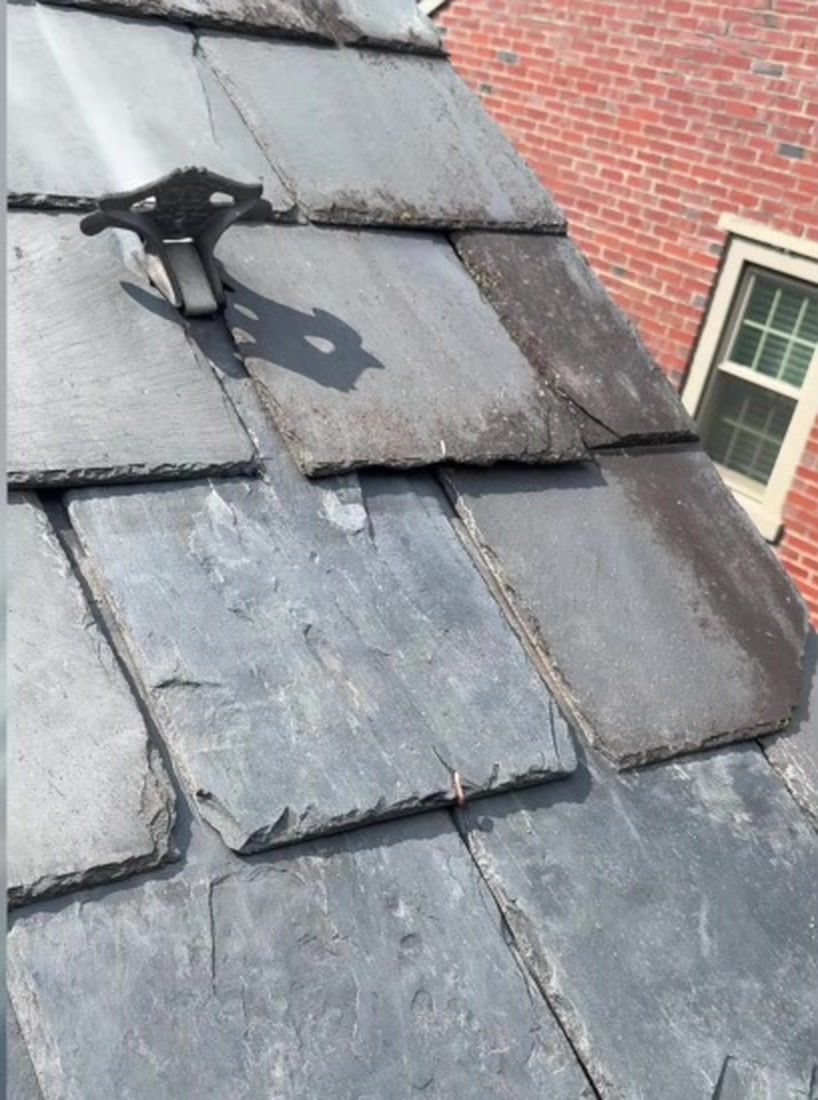
The completed repair restored the overlapping slate coverage at the damaged roof edge.
Need Help With a Damaged Slate Roof in Lancaster?
If a recent storm or falling branch damaged your slate roof, the safest next step is a close inspection by someone who understands slate-specific repair methods. Joyland Roofing can identify the affected pieces, look at the surrounding roof assembly, and explain whether a targeted repair is appropriate.
You can request a slate roof inspection or call Joyland Roofing at 717-459-3499.
Project note: This article is based on a real Joyland Roofing repair filmed in Lancaster, Pennsylvania. The field observations and repair explanation come from Tyler, the Joyland technician shown in the video.
Frequently Asked Questions About Storm-Damaged Slate Roofs
Can one broken slate tile be replaced without replacing the roof?
Often, yes. A qualified slate roofer can frequently replace an individual tile or a small group of tiles when the surrounding slate and supporting roof assembly are in serviceable condition. An inspection is still needed because the visible break may not reveal the condition of the fasteners or wood underneath.Why were ring-shank nails harder to remove?
Ring-shank nails have ridges that grip the wood. On this project, those ridges made the nails resist the slate ripper and required Tyler to use more force and remove additional surrounding pieces to reach the damaged slate.What is the difference between lath boards and tongue-and-groove roof boards?
Lath boards are narrow strips of wood with spaces between them. Tongue-and-groove boards interlock to create a more continuous wood surface. Tyler encountered lath boards beneath the slate on this Lancaster roof.Are slate hooks an accepted way to make a slate repair?
Yes. Slate hooks are a recognized repair method. The hook is installed below the replacement area, and the new slate slides beneath the upper course before resting on the hook. The appropriate hook and material should be selected for the existing roof and repair conditions.Does storm damage mean a slate roof has to be replaced?
Not necessarily. Localized damage can often be repaired. Replacement becomes a broader conversation when damage is widespread or when the slate, flashing, fasteners, or supporting structure have reached the end of their useful service life.How soon should a damaged slate roof be inspected after a storm?
Arrange an inspection as soon as you safely notice cracked, missing, or displaced slate. A prompt inspection can determine whether the opening is limited to the slate surface or whether water has begun affecting the materials underneath.
John Esh | CEO & Master Installer
- 25+ Years Experience: From ground crew to Master Certified Installer.
- Local Roots: Serving Lancaster, Harrisburg, and SEPA since 1991.
- Credentials: GAF Master Certified (ME27586); Licensed in PA (PA124258) & MD (#137952).
- The "Why":
Obsessed with "radical transparency" to remove the fear factor from home improvements.
James Wesser | Content Producer
- Background: Former local news digital producer and journalist.
- The Mission: Turning complex roofing jargon into clear, "fluff-free" answers for homeowners.
- Local Tie: When not filming on-site, he’s likely roaming Hersheypark or building digital worlds.