January 3, 2026
Roofer Secrets: Why Your Biggest Investment Isn't the Roof Itself
Author
If you’re interested in working with a licensed, experienced, and trusted company in Lancaster County, Joyland Roofing would love to provide you with a free quote. With decades of experience and a team dedicated to quality work, we’re the roofing company you’ve been looking for.
Fill out a form to tell us about your situation, or give us a call.
When homeowners think about a new roof, they usually focus on the shingles—the color, the style, maybe the brand.
But the shingles aren’t actually the biggest part of what you’re paying for.
In most roof replacements, less than half of the total cost goes to the materials on your roof. The rest covers labor, insurance, permits, disposal, equipment, and the overhead required to run a legitimate roofing company.
That’s why two estimates for the same house can look completely different. One contractor may include proper insurance, permits, and installation standards. Another may skip some of those costs to make the price look better.
On paper, both proposals say “new roof.” In reality, they’re not the same project.
And here’s the part most homeowners don’t realize: the biggest risks in a roofing job usually have nothing to do with the shingles. They come from the installation details—ventilation, flashing, and workmanship that you won’t see once the roof is finished.
This guide breaks down the hidden economics behind roofing estimates and the factors that actually determine whether your roof lasts decades… or fails much sooner.
Want to see how professional roofing standards protect your home? Read more about roofing safety and installation practices.
Table of Contents
- The Hidden Economics Behind Every Roof Replacement
- What Most Roofers Won't Tell You About Material Markup
- The Real Cost of Cutting Corners (And Who Actually Pays)
- Why Timing Your Roof Project Could Save You Thousands
- Insurance Claims: The Gray Area Between Coverage and Reality
- How to Read a Roofing Estimate Without Getting Played
- The Ventilation Problem Nobody Talks About Until It's Too Late
- When to Walk Away from a Roofing Contract
TL;DR
Real talk: Only 40% of what you pay goes to actual roofing materials. The rest? Labor, overhead, and profit margins they'll never show you. The biggest money-loser isn't the roof itself. It's the damage that happens when they screw up your ventilation (and most of them do). Book your project in winter and you can save 15-20%, but only if you know how to negotiate without getting garbage work. Insurance "help" from contractors usually means you're paying out of pocket for "upgrades" that should've been covered. And if you can't read between the lines of an estimate, you're going to get played.
The Hidden Economics Behind Every Roof Replacement
Here's what nobody tells you: you're not actually paying for a roof. Most of your money goes to a bunch of stuff you'll never see.
The materials sitting on top of your house? That's only about 40% of what you write on the check. Shingles, underlayment, flashing, all of it combined. The other 60% disappears into categories most estimates never spell out clearly: liability insurance, workers' comp, permit fees, disposal costs for your old roof, equipment rentals, fuel, administrative overhead. And yeah, profit margins at multiple levels.
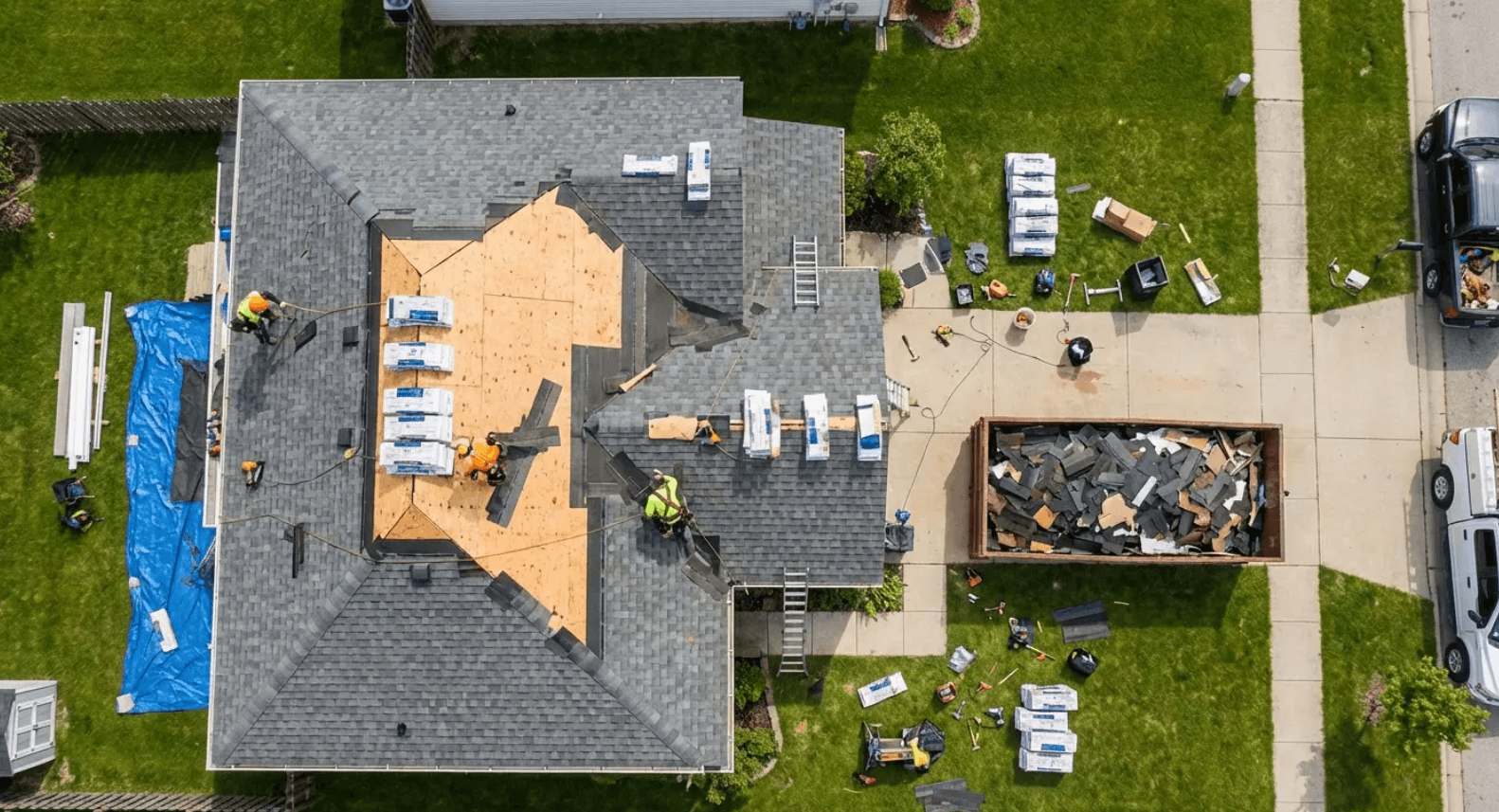
The 40/60 Rule (That Nobody Tells You About)
Let me show you where your money actually goes:
| Cost Category | Percentage of Total Invoice | What It Actually Covers |
|---|---|---|
| Materials | 35-40% | Shingles, underlayment, flashing, vents, fasteners |
| Direct Labor | 20-25% | Crew wages for installation time |
| Insurance & Workers Comp | 8-12% | Liability coverage, injury protection |
| Permits & Disposal | 5-8% | Municipal permits, landfill fees, haul-away |
| Equipment & Overhead | 8-12% | Tools, vehicles, fuel, office costs |
| Profit Margin | 10-15% | Contractor's net profit after all expenses |
This isn't about exposing contractor greed. I'm showing you what you're purchasing so you can evaluate bids intelligently. When one estimate comes in at $8,000 and another at $12,000 for the same square footage, the difference rarely lives in the shingle quality. It lives in how each company structures their operational costs and what corners they might be cutting to appear competitive.
Let's say you've got two contractors bidding on your roof. Same size, 2,200 square feet. Contractor A quotes $9,500 and carries full workers' comp insurance, pulls permits, and disposes of materials at a licensed facility. Contractor B quotes $7,200 but classifies workers as independent contractors (avoiding workers' comp costs), skips the permit to save $350, and dumps your old shingles illegally to avoid $600 in disposal fees.
You're not comparing equivalent services. You're comparing a legitimate business operation against one that's offloading risk and liability onto you.
The roofer who seems expensive might be the one operating legally and protecting your interests. The cheap roofer might be setting you up for problems you won't discover until something goes wrong.
Price Per Square? Meaningless.
Roofers love talking in squares (100 square feet of roof area). Homeowners love comparing price per square across estimates. Both habits create confusion.
A 2,000 square foot roof with twelve penetrations (vents, pipes, chimneys) costs way more to install correctly than a 2,000 square foot roof with three penetrations. Steep pitch? Add complexity. Multiple roof planes intersecting at valleys? Add time and material waste. Existing water damage requiring deck replacement? Now we're talking about a fundamentally different project.
The price per square metric flattens all this nuance into a single number that tells you almost nothing about value. You need to know what's included in that number, what's excluded, and what assumptions the contractor made about your roof's condition.
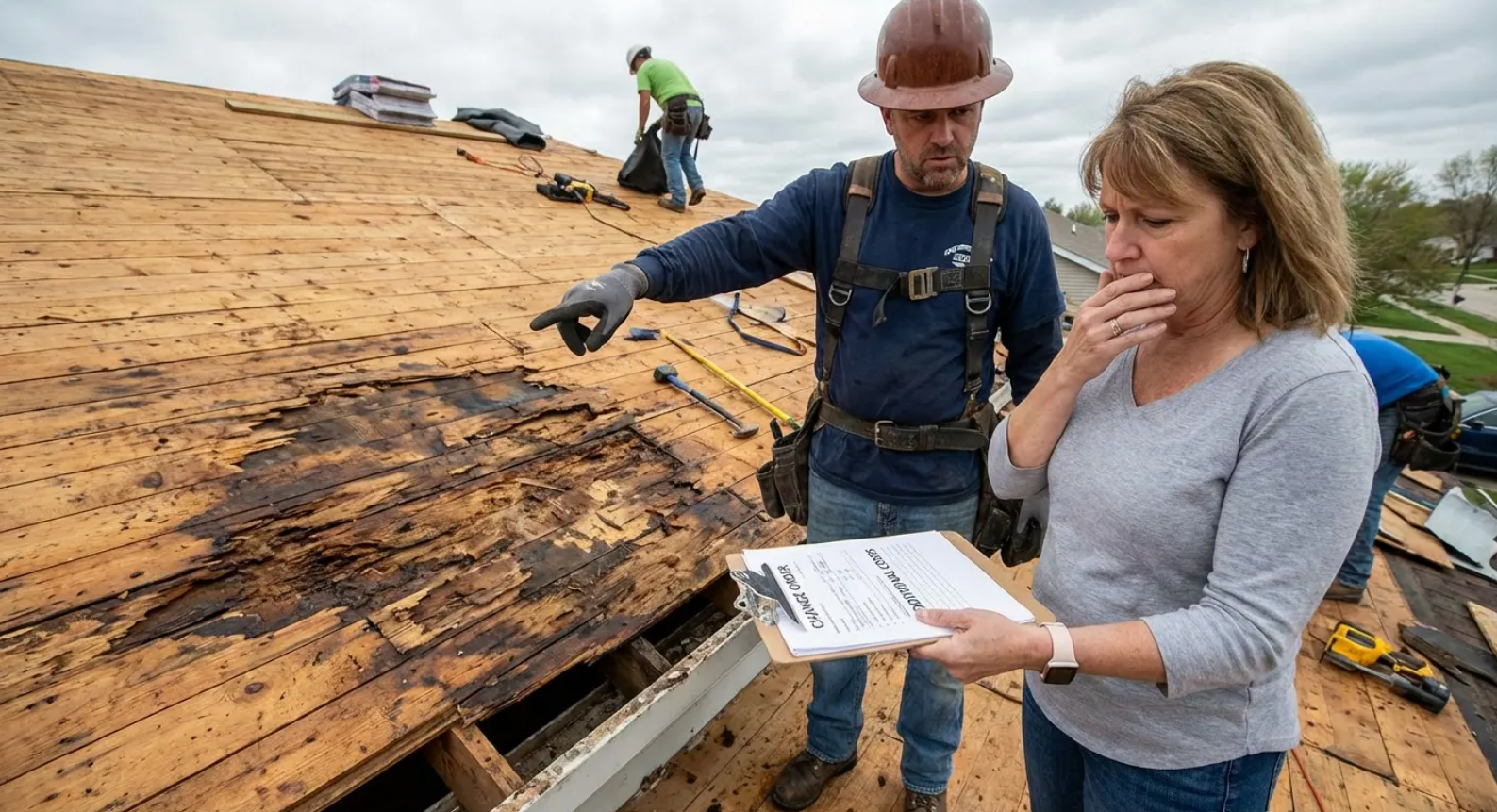
A lot of roofers make optimistic assumptions to win the bid, then hit you with change orders once the old roof comes off. The good ones account for these variables upfront rather than surprising you mid-project.
What Most Roofers Won't Tell You About Material Markup
Your shingles go through three different companies before they hit your roof, and every single one takes a cut.
Manufacturers sell to distributors. Distributors sell to contractors. Contractors sell to you. Each transaction includes a markup, and the size of that markup depends on volume, relationships, and negotiating power.
How Your Shingles Get Marked Up Three Times Before They Hit Your Roof
A large roofing company installing 200 roofs per year gets pricing that a small operation installing 30 roofs per year can't touch. That cost difference can reach 20-30% on materials alone.
Now here's the shady part: some contractors pass their savings along to win more bids. Others pocket the difference and charge you retail pricing regardless of what they paid.
You can't always tell which category your roofer falls into by looking at the bottom line, because the guy with higher material costs might run a leaner operation with lower overhead. The economics get complicated fast. And that's exactly how they want it.
I've seen homeowners obsess over shingle brands while ignoring the fact that their contractor is marking up materials by 50% above what they paid. The brand matters less than whether you're getting fair pricing on whatever brand gets installed.
The Warranty Upsell You Don't Need
Extended manufacturer warranties sound great until you read the fine print (and most homeowners never do).
The standard warranty on architectural shingles already covers manufacturing defects for decades. The "lifetime" or "50-year" upgrade warranty you're being upsold costs $500-$1,500 more and primarily extends coverage for cosmetic issues like granule loss or color fading. These warranties also come loaded with prorated clauses and installation requirements so specific that claims often get denied on technicalities.

Look, I'm not saying extended warranties never make sense. If you're in a hail-prone area or planning to stay in your home for 30+ years, the coverage might justify the cost. But most homeowners pay for peace of mind they'll never use, while the contractor pockets an easy commission from the manufacturer for pushing the upgrade.
The Real Cost of Cutting Corners (And Who Actually Pays)
Want to know the #1 way roofers screw up? Ventilation. And you won't find out until it's way too late.
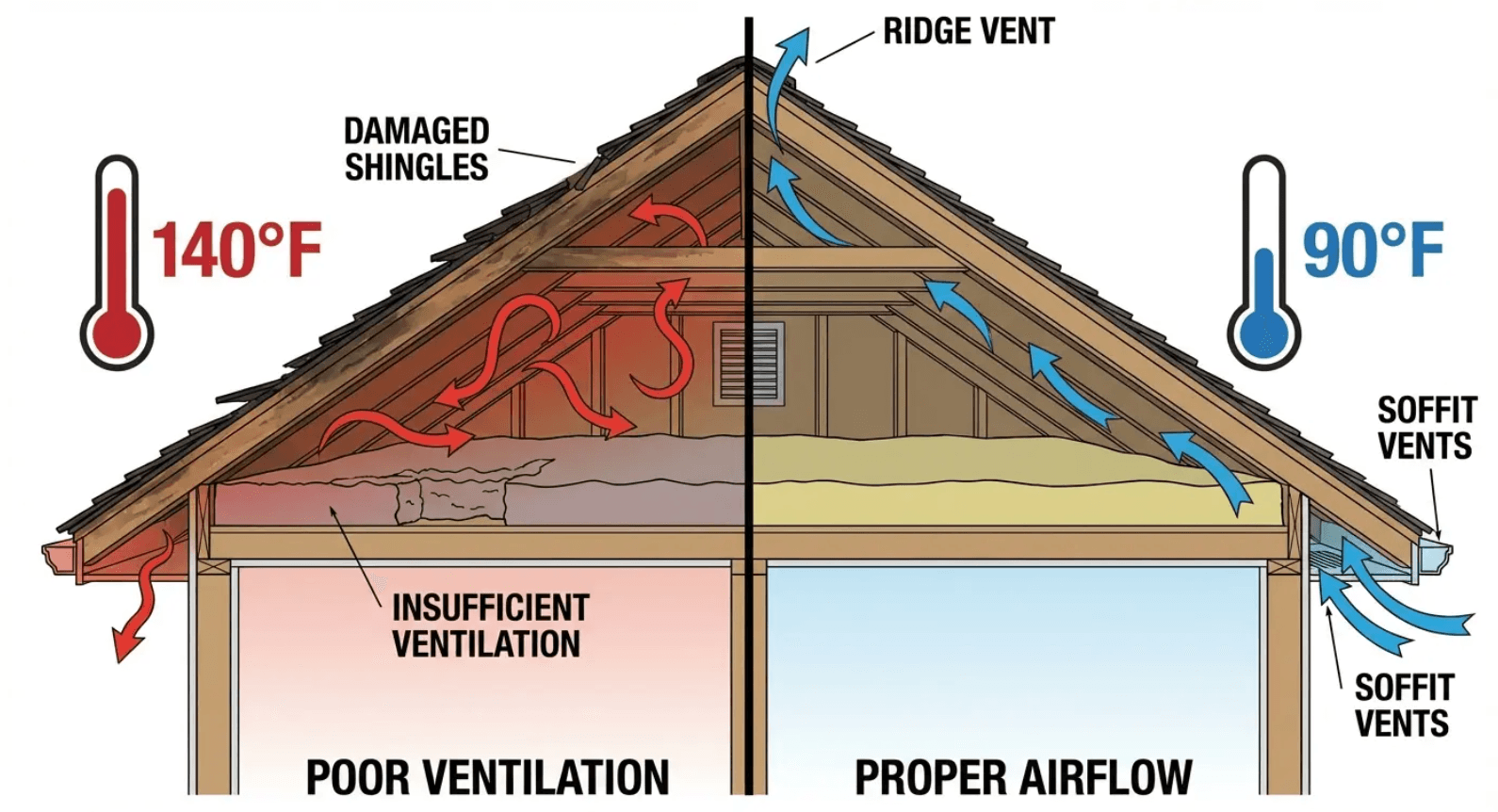
Your roof needs to breathe. Hot air must escape through ridge vents or other exhaust points while cool air enters through soffit vents. This circulation prevents heat buildup that degrades shingles from underneath and stops moisture accumulation that rots deck boards and grows mold.
When contractors install insufficient ventilation (or worse, block existing ventilation with insulation or solid soffit panels), they create a pressure cooker effect. The result shows up 2-3 years later: premature shingle failure, ice dams in winter, mold in your attic insulation, and moisture stains on your ceiling.
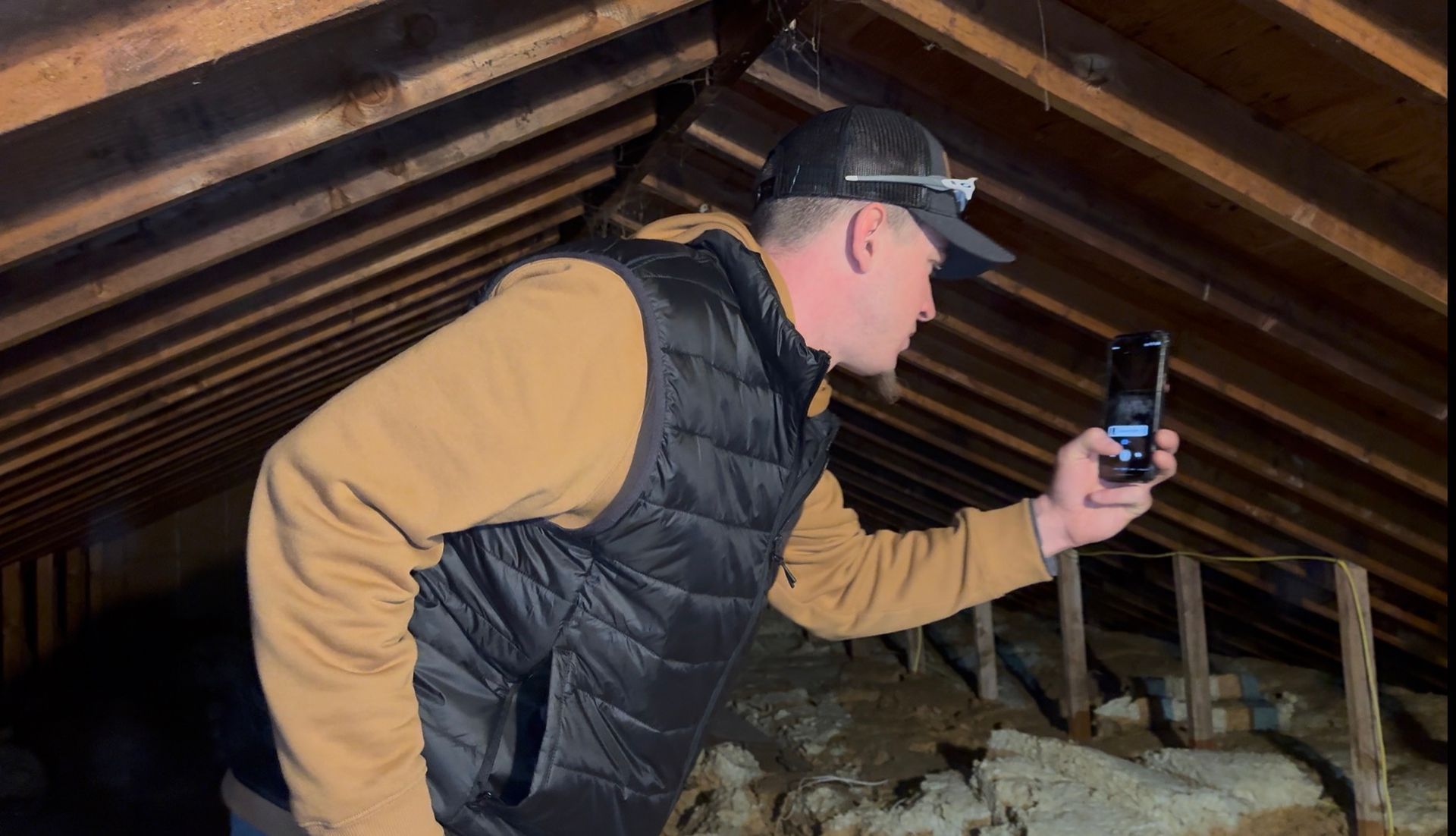
When Your Attic Becomes a Sauna
Your roof warranty won't cover this damage because it's an installation issue, not a manufacturing defect. You'll spend $3,000-$8,000 fixing ventilation and repairing interior damage, all because the original contractor saved 45 minutes and $200 in materials during installation.
And here's where it gets even worse.
In February 2026, a Springfield roofer was sentenced to five years of probation after pleading guilty to four counts of stealing more than $750 from homeowners who paid for roof repairs that were never completed. Investigators found ten victims who had written checks directly to the contractor instead of his company, losing a combined total of approximately $20,000 for work that was never performed.
These stories aren't outliers. They represent a pattern that thrives when homeowners don't know what questions to ask or what standards to demand. I'm based in San Francisco, but I've seen these same scams from Seattle to Miami. Geography doesn't matter. Scammers use the same playbook everywhere.
Flashing Failures Cost More Than Roof Failures
Water doesn't damage your home by soaking through shingles. It damages your home by sneaking through gaps around chimneys, skylights, dormers, and wall intersections where flashing should create a waterproof seal.
Flashing installation requires precision, quality materials, and experience. It also takes time, which means it's the first place inexperienced or rushed contractors cut corners. They'll reuse old flashing instead of installing new. They'll use roofing cement as a substitute for proper step flashing. They'll skip critical details around complex roof penetrations because doing it right requires custom metalwork.
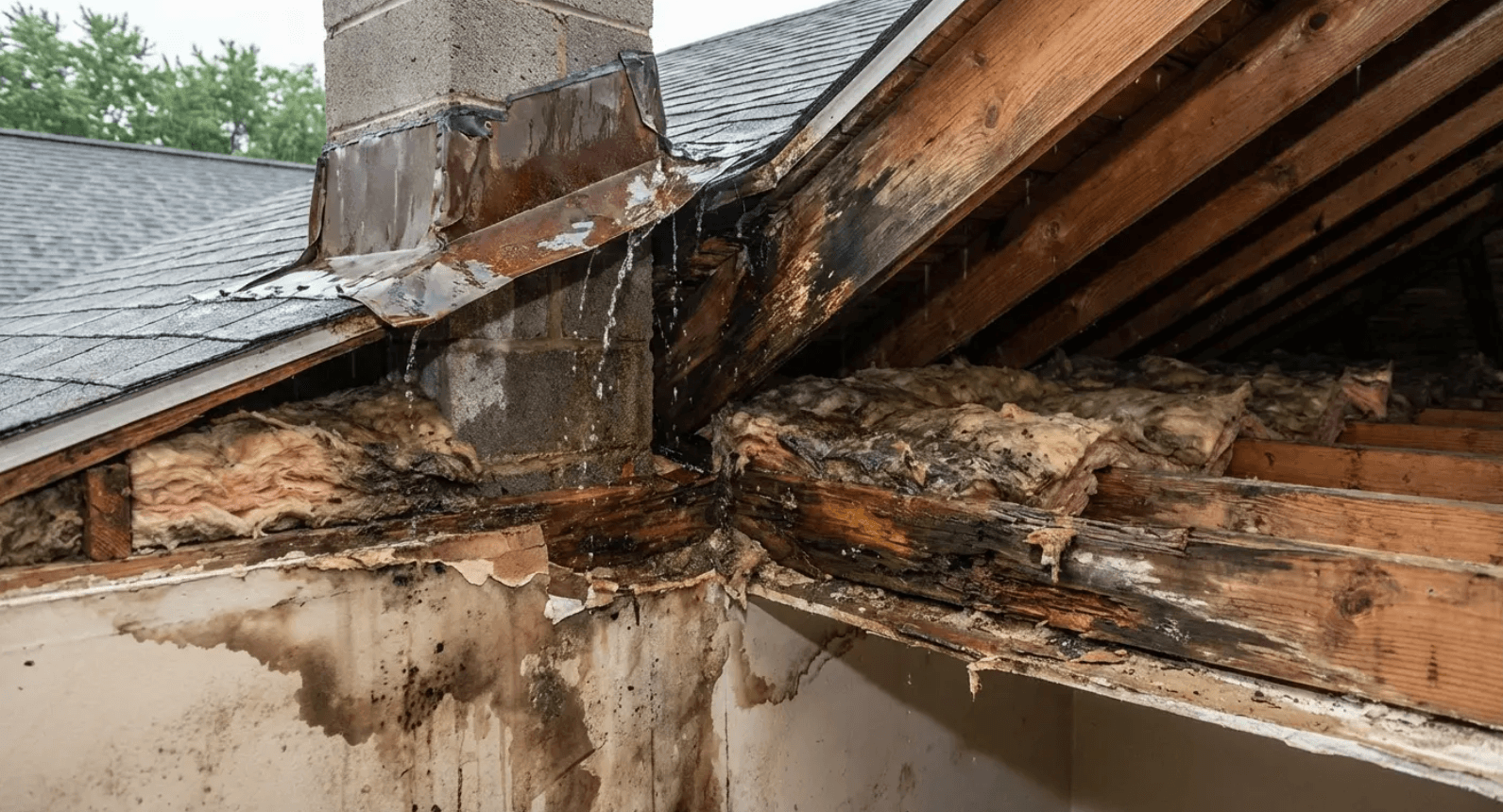
Let me show you what this looks like in real life. A homeowner in Portland hired a low-bid contractor who quoted $6,800 for a roof replacement. That was $2,400 less than competing bids. During installation, the crew reused the existing chimney flashing rather than installing new step flashing and counter-flashing.
Eighteen months later, water stains appeared on the living room ceiling adjacent to the chimney.
The repair required removing shingles around the chimney, installing proper flashing, replacing water-damaged drywall and insulation, and repainting. Total cost: $3,200. The original "savings" of $2,400 resulted in a net loss of $800, plus the hassle of interior repairs.
You won't know they cut these corners until water starts appearing inside your walls. By then, you're not just paying to fix the flashing. You're paying to repair water-damaged framing, replace soggy insulation, remediate mold, and repaint interior walls. The $400 the contractor saved by rushing your flashing becomes four grand or more in repairs you never budgeted for.
Why Timing Your Roof Project Could Save You Thousands
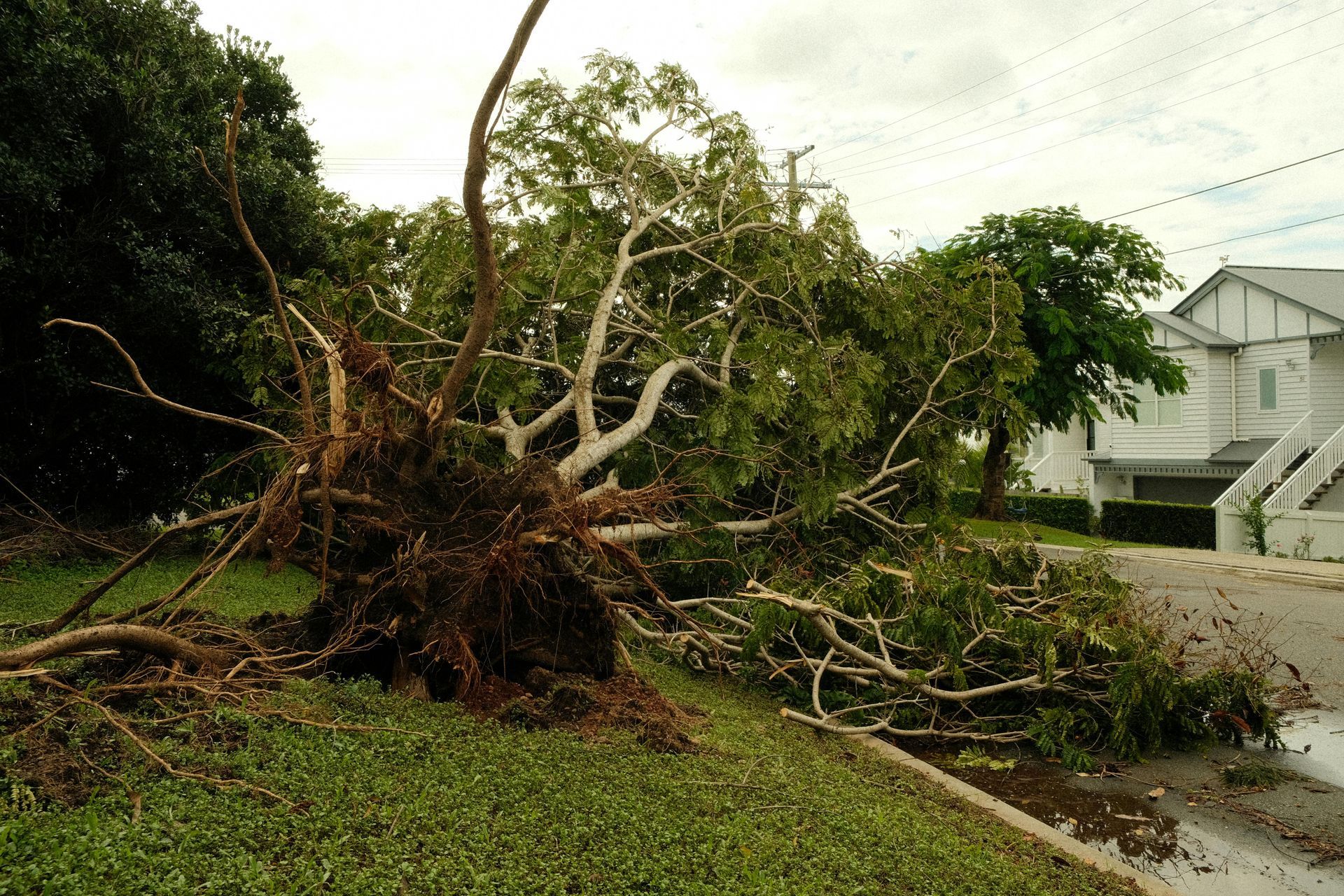
Roofing contractors make 60-70% of their annual revenue during the 4-5 months following major storm events.
When hail or high winds damage hundreds of roofs in a concentrated area, contractors can charge whatever they want. Demand outstrips supply by a massive margin, so they stop negotiating, stop offering discounts, and stop sweating the details of customer service.
The Storm Season Premium
They're booking jobs six weeks out and working seven days a week. This is when you'll pay top dollar and get bottom-tier attention. If your roof didn't get damaged in the storm but you've been thinking about replacement, wait.
Prices will drop 15-20% once the insurance claim rush subsides. You'll also get better quality work because crews won't be racing from job to job trying to maximize their seasonal windfall.
This happens every storm season. The roofer who won't return your calls in June suddenly becomes very interested in your project come November. That shift in leverage is worth thousands of dollars if you're patient enough to use it.
The November-February Window
Cold weather roofing is possible, preferable, and cheaper in most U.S. climates. But hold on, there's a catch.
Contractors hate sitting idle during winter months. Their crews need steady work, their equipment sits unused, and their overhead costs continue regardless of revenue. This creates negotiating leverage for homeowners willing to schedule work during the slow season. You can often negotiate 10-20% off peak season pricing simply by being flexible on start dates and giving the contractor certainty of work during their lean period.
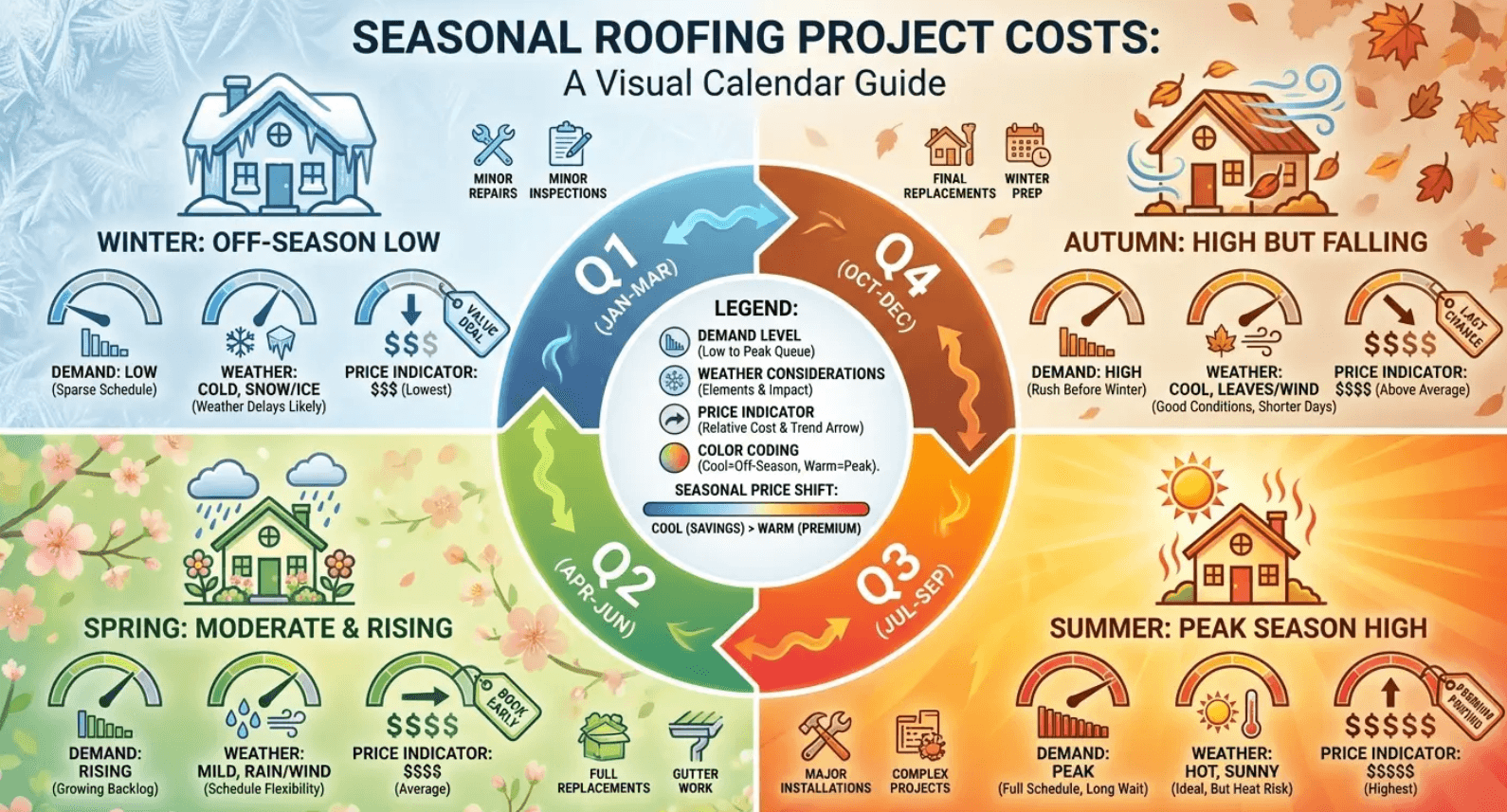
When you're negotiating off-season work, here's what you need to nail down. First, get quotes from 3-4 contractors in October or November. Then (and this is key) ask them straight up: "What's your discount for scheduling during slow season?" Don't dance around it. Most contractors would rather give you 15% off than have their crews sitting idle in January.
But you also need to verify the contractor has experience with cold-weather installation techniques. Confirm they'll hand-seal shingles if temperatures drop below manufacturer recommendations. Request a written guarantee that they'll monitor weather forecasts and pause work during unsuitable conditions. Lock in pricing with a signed contract, but build in flexible start dates (like "between December 1 and January 31"). Ask for references from previous winter projects.
The discount only makes sense if you're hiring someone who knows how to install roofs in cold weather. And many don't.
Shingles become brittle below 40°F and won't seal properly until temperatures rise. Experienced contractors know how to work around this using hand-sealing techniques and choosing appropriate weather windows. Inexperienced contractors will rush the job in marginal conditions and leave you with shingles that never seal.
This is where checking references from previous winter projects becomes critical. You're not just verifying they did the work. You're verifying the work held up over time.
Insurance Claims: The Gray Area Between Coverage and Reality
"We work with insurance." This phrase appears in roughly 80% of roofing company marketing. It means something different to the contractor than it does to you.
What "We Work With Insurance" Actually Means
To you, it suggests the contractor will handle the insurance paperwork, negotiate with the adjuster, and make sure you get maximum coverage. To many contractors, it simply means they'll provide an estimate in the format insurance companies prefer and they won't demand payment until your claim gets processed.
The difference? Huge.
Some contractors genuinely advocate for homeowners during the claims process. They'll meet the adjuster on-site, point out damage the adjuster might miss, and push back when legitimate repairs get denied. Others take the adjuster's initial assessment as gospel and build their scope of work around whatever the insurance approves, leaving you to pay out of pocket for anything beyond that.
The Upgrade Trap in Insurance Roofing
Insurance covers replacement with materials of "like kind and quality." Contractors make money by convincing you to upgrade beyond that baseline.
Your 20-year-old three-tab shingles get replaced with three-tab shingles under your policy. The roofer will push you toward architectural shingles (thicker, better looking, longer warranty) and frame it as a minor upgrade. The cost difference? Often $2,000-$4,000 out of your pocket. They'll bundle in upgraded underlayment, enhanced ventilation, and other improvements that sound reasonable but aren't covered by insurance.

These upgrades aren't inherently bad. Architectural shingles are objectively better than three-tab. But you need to understand you're paying the difference, and you need to decide whether that difference represents genuine value or just contractor upselling during a vulnerable moment.
A lot of homeowners don't realize they're funding major upgrades until they get the final bill and discover their insurance covered $8,000 of a $13,000 project. That $5,000 gap should've been discussed and approved before work began, not presented as a surprise at completion.
How to Read a Roofing Estimate Without Getting Played
Detailed estimates protect you. Vague estimates create opportunities for contractors to redefine scope midproject.
"Remove and dispose of existing roof" sounds straightforward until you discover it doesn't include replacing rotted deck boards (which the contractor conveniently discovers after tearing off your old shingles). "Install new roof system" could mean anything from bare-minimum code compliance to best-practice installation with upgraded materials. " Flashing" as a single line item tells you nothing about whether they're reusing old flashing or installing new, what materials they're using, or how they're handling complex penetrations.
The Line Items That Hide Problems
You want estimates that break down each component: removal and disposal (including haul-away), deck inspection and repair (with a per-sheet price for replacements), underlayment type and coverage, ice and water shield locations, drip edge, flashing details by location, ventilation components, shingle brand and model, ridge cap installation method, and cleanup procedures.
The more specific the estimate, the less room exists for surprise charges later.
| Estimate Line Item | Red Flag Version | Professional Version |
|---|---|---|
| Removal | "Remove old roof" | "Remove existing shingles, underlayment, and flashings. Haul away and dispose at licensed facility. Includes dumpster rental." |
| Deck Repair | "As needed" or omitted entirely | "Inspect all decking during tear-off. Replace damaged OSB at $45/sheet. Estimated 0-8 sheets based on visible condition." |
| Underlayment | "Install underlayment" | "Install GAF Deck Armor synthetic underlayment across entire roof deck per manufacturer specs." |
| Flashing | "Flashing" | "Install new aluminum step flashing at all wall intersections. Install new galvanized counter-flashing at chimney. Replace all pipe boot flashings with rubber collar type." |
| Ventilation | Not mentioned | "Install 20 linear feet ridge vent (ShingleVent II). Verify soffit intake ventilation provides 1:150 ratio per building code." |
| Warranty | "Manufacturer warranty" | "GAF System Plus limited lifetime warranty on materials. 10-year workmanship warranty on installation provided by [Company Name]." |
What's Not in the Estimate Matters More
The absence of certain items from an estimate tells you more about a roofer than the presence of others.
No mention of permits? They're either planning to skip them (illegal and potentially problematic for future home sales) or they're planning to charge you separately once the permit office tells them what's required. No warranty information? You have no idea what's covered or for how long. No timeline? They can stretch your project across weeks without accountability. No payment schedule? They can demand full payment upfront and leave you with no leverage if problems arise.
Here's what I look for in every estimate I review. If these things aren't there, I don't even bother:
- Contractor Information: License number, insurance policy numbers, physical business address
- Scope of Work: Detailed breakdown of every task (removal, installation, cleanup)
- Materials Specification: Brand names, model numbers, colors, quantities
- Permit Costs: Either included in price or explicitly listed as homeowner responsibility
- Deck Repair Pricing: Per-sheet or per-square-foot cost for replacements discovered during tear-off
- Waste Disposal: Method and cost of old material removal
- Timeline: Estimated start date and project duration in days
- Payment Schedule: Deposit amount, progress payments, final payment (never more than 10-20% upfront)
- Warranty Details: Both manufacturer and workmanship warranties with duration and coverage
- Cleanup Procedures: Magnetic sweep for nails, debris removal, property protection
Contractors who know what they're doing include all of this information proactively because they want you to understand exactly what you're buying. Contractors who leave these details vague are either inexperienced or deliberately creating ambiguity they can exploit later.
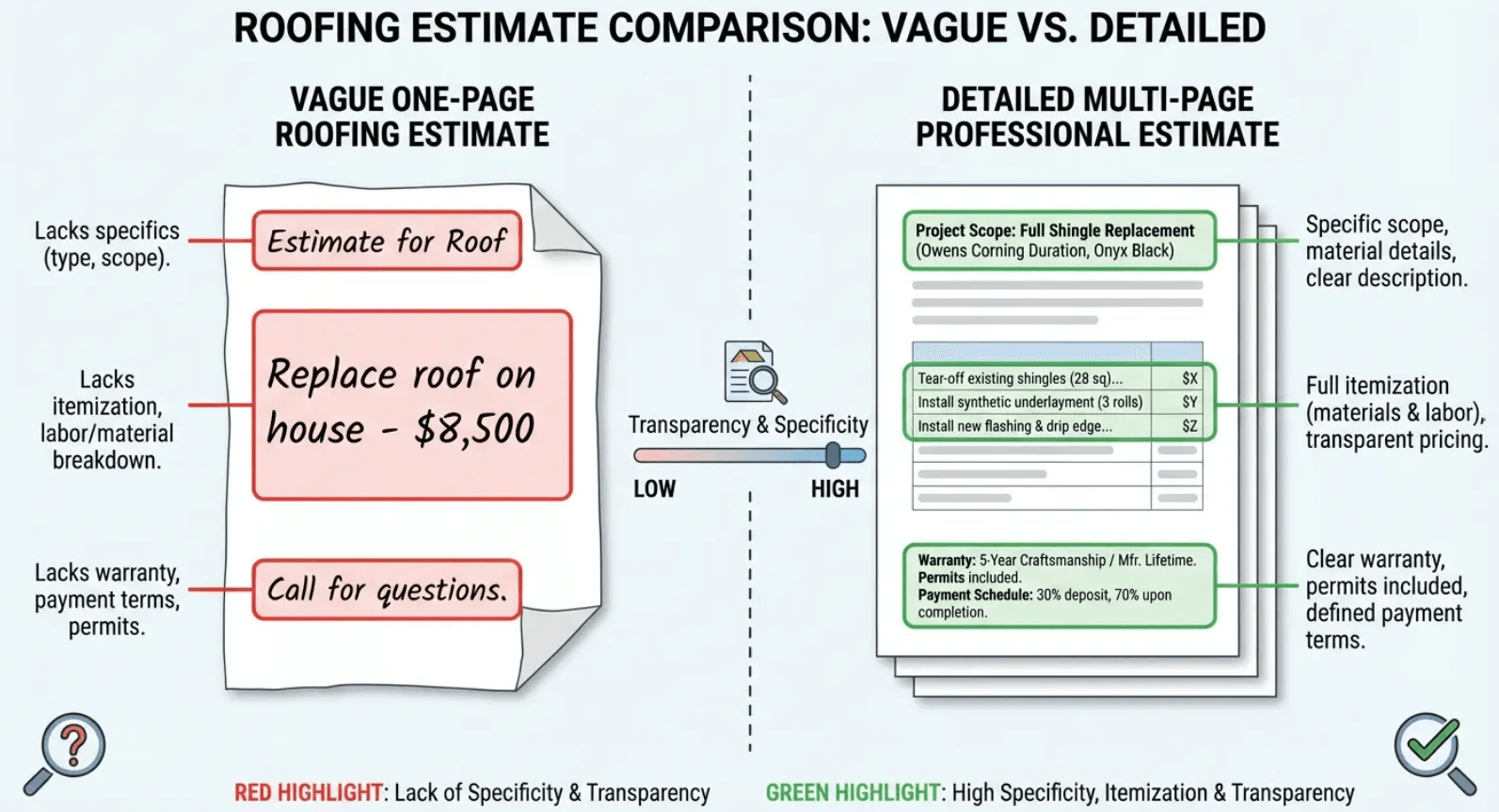
A homeowner received three estimates for the same roof. Estimate A listed "Complete roof replacement - $11,500" with no itemization. Estimate B provided a one-page breakdown with six line items totaling $10,800. Estimate C included four pages detailing every material by brand and quantity, labor broken down by task, a per-sheet deck repair cost, permit fees, timeline, payment schedule, and warranty information, totaling $11,200.
The homeowner chose Estimate C. During installation, the crew discovered eight damaged deck boards. Because the estimate specified $45 per sheet for OSB replacement, the additional $360 cost wasn't a surprise. The Estimate A contractor would have called it a "change order" and likely charged $80-100 per sheet since no price was pre-agreed.
The Ventilation Problem Nobody Talks About Until It's Too Late
Attic temperatures in an improperly ventilated space regularly exceed 150°F during summer months. Your shingles aren't designed to handle that heat from below.
The roofing industry continues to grow, with the Bureau of Labor Statistics projecting 6% employment growth for roofers from 2024 to 2034, faster than the average for all occupations. Yet despite this expansion and approximately 12,700 annual job openings, proper ventilation installation remains one of the most frequently bungled aspects of roofing work. Primarily because it's invisible to homeowners and easy for undertrained workers to skip or install incorrectly.
Why Your Shingles Are Cooking From Underneath
Shingles get tested and warrantied based on exposure to sun and weather from above. When heat builds up in your attic and radiates through the roof deck into the shingles from underneath, you're essentially baking them from both sides. This accelerates the breakdown of asphalt, causes premature granule loss, and can reduce a 30-year shingle's lifespan to 15-20 years.
The manufacturer won't cover this damage because it's not a manufacturing defect.
Proper ventilation keeps attic temperatures within 10-15°F of outside air temperature. This requires balanced intake (usually through soffit vents) and exhaust (through ridge vents, box vents, or turbines). The ratio matters: you need roughly equal square footage of intake and exhaust.
Most roofers install plenty of exhaust ventilation (it's visible and easy) but neglect intake ventilation (it's hidden in soffits and requires more labor). The result looks properly ventilated but functions poorly.
The Ridge Vent Installation Mistake
Ridge vents are the most popular exhaust ventilation solution, and they're installed incorrectly on roughly 40% of roofs.
A ridge vent only works if air can escape through it. This requires cutting a continuous slot along both sides of the ridge board (typically 1-2 inches per side). Some contractors skip this step entirely, installing the ridge vent over a solid ridge with no opening underneath. Others cut inadequate slots or fail to remove blocking that prevents airflow. You get the aesthetic of a ridge vent without any functional benefit.
Side note: I once watched a crew install a ridge vent over a completely solid ridge. No slot cut, nothing. Just nailed the vent right over solid wood. When I asked the foreman about it, he looked at me like I was crazy. That homeowner paid for ventilation they'll never get.
Poorly installed ridge vents can create negative pressure that pulls weather into your attic during storms. The vent becomes a liability rather than an asset. You can verify proper installation by going into your attic on a sunny day and looking up at the ridge. You should see daylight through the vent slots. No light? No ventilation.
When to Walk Away from a Roofing Contract
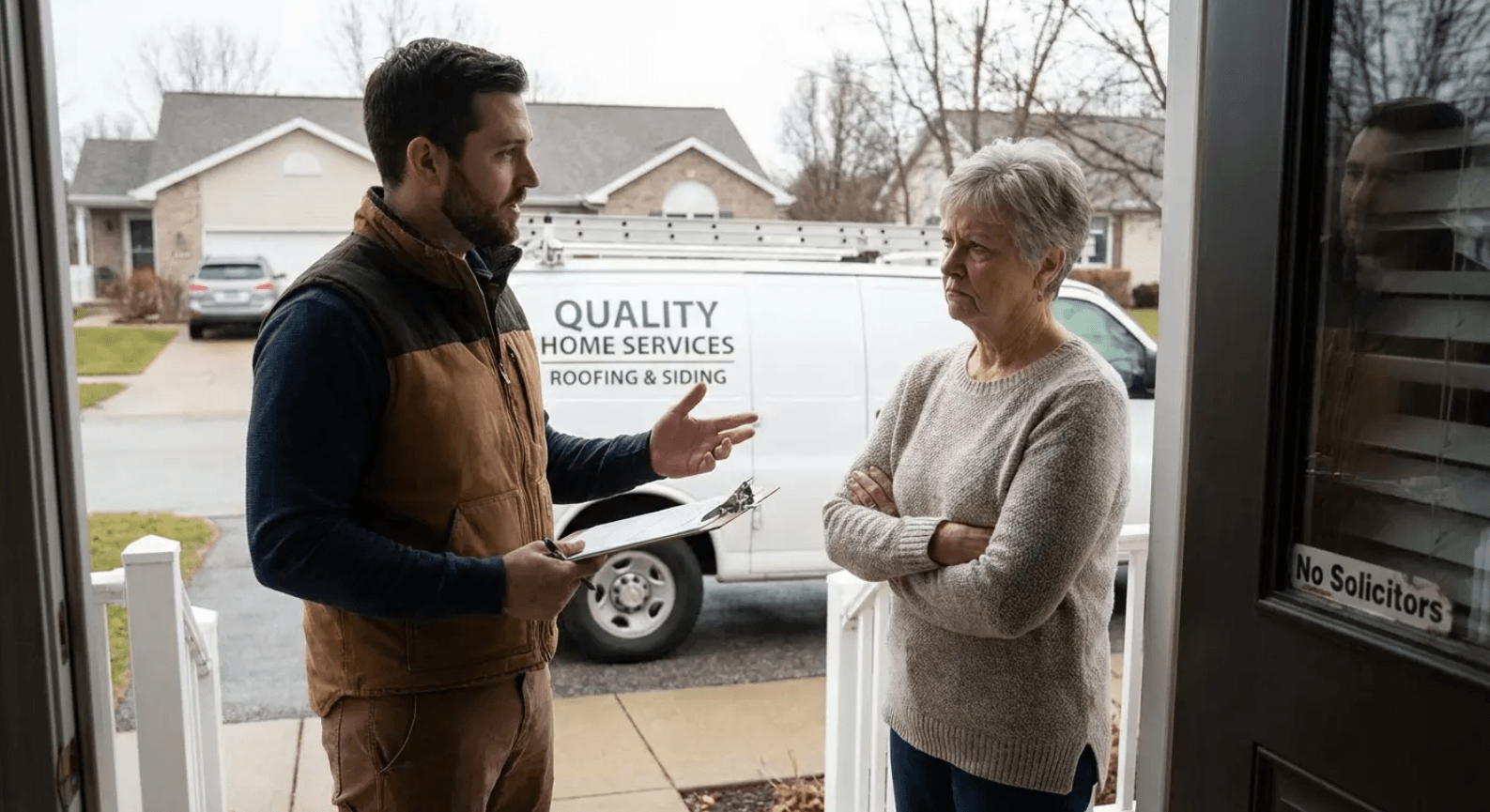
Door-to-door roofing scams continue to plague homeowners nationwide. In March 2026, Renton Police warned residents about fraudulent roofers going door-to-door claiming to spot loose shingles, offering small repairs, then pressuring homeowners into full roof replacements costing thousands of dollars. According to police, none of the work met code requirements, and victims lost up to $15,000. The fraudulent contractors were described as part of an organized group, with one reportedly using a thick Scottish accent to appear more trustworthy.
The Pressure Tactics That Signal Trouble
Legitimate roofing contractors don't need to pressure you into immediate decisions. Scammers do.
"This price is only good if you sign today" is the oldest pressure tactic in home improvement fraud. So is "I can start tomorrow if you commit right now" (especially right after a storm). Contractors who know what they're doing are booked weeks in advance during busy seasons. They provide written estimates that remain valid for 30 days minimum. They encourage you to get multiple bids and check references. They answer questions without defensiveness.
Contractors who push for immediate signatures, demand large upfront deposits (more than 10-20% is a red flag), or discourage you from getting other opinions are waving red flags you shouldn't ignore. The urgency is manufactured to prevent you from thinking clearly or discovering their reputation problems.
Walking away from these situations isn't rude. It's self-protection.
The License and Insurance Verification Nobody Does
You should verify contractor licensing and insurance before signing anything. Almost nobody does this, and it costs them.
Every state has an online contractor license verification system. It takes three minutes to confirm your contractor holds a valid license with no disciplinary actions. Insurance verification requires calling the contractor's insurance company directly (don't just accept a certificate they provide, as those can be outdated or fabricated). You need confirmation of both general liability insurance and workers' compensation coverage.
Why does this matter? If an unlicensed contractor damages your property, you have limited legal recourse. If an uninsured worker gets injured on your property, you could be held liable. If the contractor lacks proper insurance and causes damage to a neighbor's property, you might be on the hook.
This stuff really happens to homeowners who skipped verification because it felt awkward or time-consuming.
When the Estimate Doesn't Match the Sales Pitch
Pay attention to discrepancies between what the salesperson promises verbally and what appears in the written estimate.
"We always install ice and water shield across the entire roof" becomes a single row at the eaves in the written estimate. "Our crews are all employees" turns out to mean they subcontract most work to independent crews. "We include a 10-year workmanship warranty" appears nowhere in the contract documentation.
These aren't miscommunications. They're deliberate bait-and-switch tactics designed to win your business with promises the company has no intention of keeping.
If verbal promises don't appear in writing, they don't exist contractually. Contractors who know what they're doing put everything in writing because they want clarity and accountability. Contractors who resist documenting their promises are telling you those promises are negotiable (meaning they plan to negotiate them away once you've signed).
The Too-Good-To-Be-True Bid
When one estimate comes in 30-40% lower than all others for seemingly identical work, something is wrong with that estimate.
The low bidder either misunderstood your project scope, plans to cut significant corners, intends to hit you with change orders once work begins, or is desperately trying to generate cash flow (which often means they're on the verge of going out of business). None of these scenarios ends well for you.
Roofing has relatively standardized costs for materials and labor in any given market. Legitimate contractors might vary by 10-15% based on overhead structures and profit margins, but they can't vary by 40% while delivering the same quality and scope. The math doesn't work. You're not getting a deal. You're getting a different (inferior) product than what you think you're buying.
Finding a Roofer Who Solves Problems
Yeah, I know this is a lot. Your eyes are probably glazing over. But stick with me because this next part is important.
The good news? Contractors who operate with genuine integrity stand out clearly once you know what to look for. They provide detailed written estimates that itemize every component. They encourage questions and answer them with specifics rather than sales language. They carry proper licensing and insurance and make verification easy. They discuss potential problems proactively rather than discovering them conveniently after cashing your deposit check.
They also address the issues most contractors ignore. Proper ventilation gets designed into every project, not treated as an afterthought. Flashing details get documented with photos and explained in terms you can understand. Insurance claims get handled with advocacy for your interests, not just acceptance of whatever the adjuster initially offers.
This isn't about finding the cheapest contractor. It's about finding the contractor whose business model aligns with your needs rather than their quarterly revenue targets. Companies that operate with integrity follow the same principles as quality contractors anywhere: transparency, accountability, and craftsmanship that extends beyond what you can see from the ground.
When you're evaluating options, the contractor's willingness to educate you matters as much as their pricing. Companies that invest time explaining ventilation requirements, flashing details, and material choices are demonstrating respect for your investment and your intelligence. Companies that rush through estimates and push for quick decisions are demonstrating something else entirely.
Final Thoughts
Look, I've thrown a lot at you here. You don't need to remember every detail. Just remember this: the contractor who takes time to explain things and doesn't pressure you for a quick decision? That's probably your guy. The one who rushes you, won't itemize costs, or gets defensive when you ask questions? Run.
Your roof represents one of your home's largest maintenance investments, but the roof itself isn't where most of your money goes or where most problems originate.
The invisible systems surrounding your roof (ventilation, flashing, water management) matter more than shingle quality for long-term performance. The contractor's installation practices matter more than material brands for preventing problems. The clarity of your contract matters more than the bottom-line price for avoiding disputes and surprise costs.
Most roofing advice focuses on choosing shingles and comparing bids. I've focused on the overlooked economics, the installation details that cause expensive failures, and the contractor behaviors that signal integrity or predict problems. You now understand what you're buying when you hire a contractor, what questions to ask that most homeowners never think to ask, and which red flags should send you looking elsewhere.
This knowledge won't make finding a good contractor effortless, but it will make identifying bad contractors obvious. And that's often more valuable. The worst financial outcome in roofing isn't overpaying by 10%. It's hiring the wrong contractor and spending years dealing with the consequences of their shortcuts.
Your roof is too expensive and too important to hand over to someone who acts like you're bothering them by wanting to understand what you're paying for. You're now equipped to avoid the expensive mistakes that plague most roofing projects. Use this knowledge to ask better questions, demand clearer answers, and walk away from contractors who can't meet basic standards of professionalism and transparency.