January 3, 2026
Best Time to Replace Your Roof: Why Your Neighbors Are Probably Getting It Wrong
Author
Most homeowners ask the wrong question about their roof. They wait until something leaks and then ask, “How fast can this be fixed?”
That’s the worst possible timing.
The best time to replace your roof isn’t when water is dripping into your living room or shingles are blowing into your yard. It’s earlier—when the roof is still functioning but clearly reaching the end of its useful life. Planning ahead gives you time to compare contractors, schedule work during better weather windows, and avoid the emergency pricing that comes with sudden failures.
This guide explains how to recognize the right replacement window before problems turn expensive. And if you’re already noticing issues, it’s worth understanding whether a roof leak repair can wait or needs immediate attention so you can decide your next step before small damage becomes a major repair.
Table of Contents
- TL;DR
- The Hidden Cost of Waiting (And Why Most Homeowners Do It Anyway)
- Your Roof's Lifespan Isn't What the Warranty Says It Is
- Weather Windows Matter More Than You Think
- The Financial Sweet Spot Nobody Talks About
- Reading Your Roof's Warning Signs Before the Emergency Happens
- Why Fall Isn't Always the Answer
- The Replacement Timeline That Actually Works
- Making the Call Without Second-Guessing
TL;DR
- Stop waiting for emergencies. By the time you see leaks, you're paying double for all the damage you can't see.
- Warranties are basically useless. Your roof's actual lifespan depends on your climate and whether your installer was competent.
- Spring is better than fall for scheduling (contractors are hungry for work and you're not competing with everyone else).
- If you can see damage from the ground, you're already late.
- That "30-year shingle" warranty? Read the fine print. It's prorated, doesn't cover labor, and excludes most real-world damage. You're welcome.
The Hidden Cost of Waiting (And Why Most Homeowners Do It Anyway)
Your roof probably needs replacing. Or maybe it doesn't...I can't see it from here. But you're reading this, which means you're worried enough to Google it but not worried enough to actually call someone. I get it. Roofs are expensive and boring and you're hoping the internet will tell you it's fine for another five years.
Nobody wants to spend $15,000 on something they can't see from inside their house. It's like paying for insurance, except with roofs you're paying for something that already happened (your old roof) to unhappen. The average cost runs anywhere from like $8,000 for a small ranch to $30,000+ for a bigger house with a complicated roofline. I've seen higher. The "average" is meaningless because every house is different.
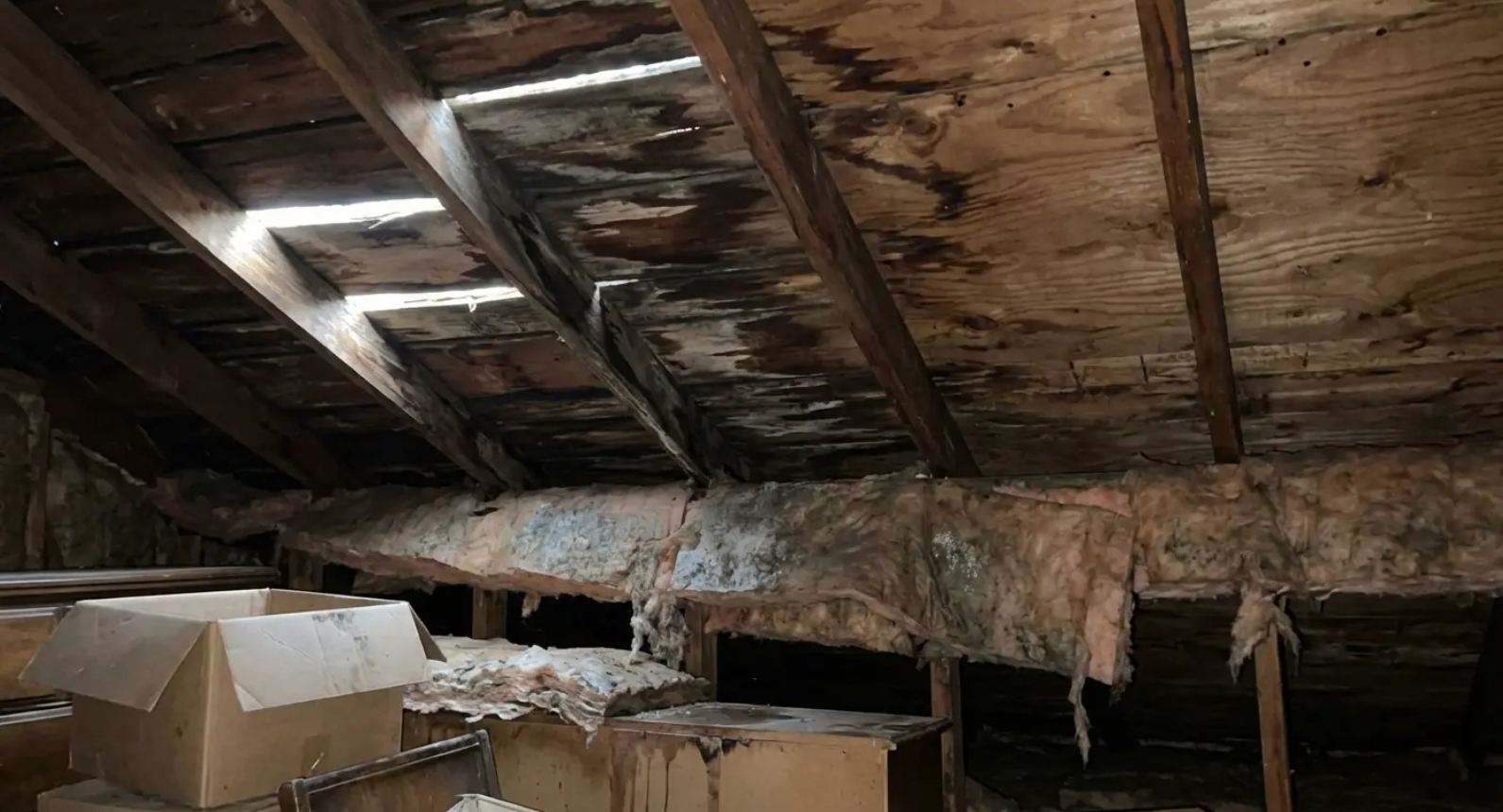
Here's what that extra season costs: Water doesn't announce itself with dramatic ceiling collapses. It starts quiet. Saturating insulation, rotting decking, breeding mold in wall cavities you can't see. By the time you notice interior damage, you're not just replacing shingles anymore. You're paying for new decking, insulation replacement, drywall repair, and possibly mold remediation.
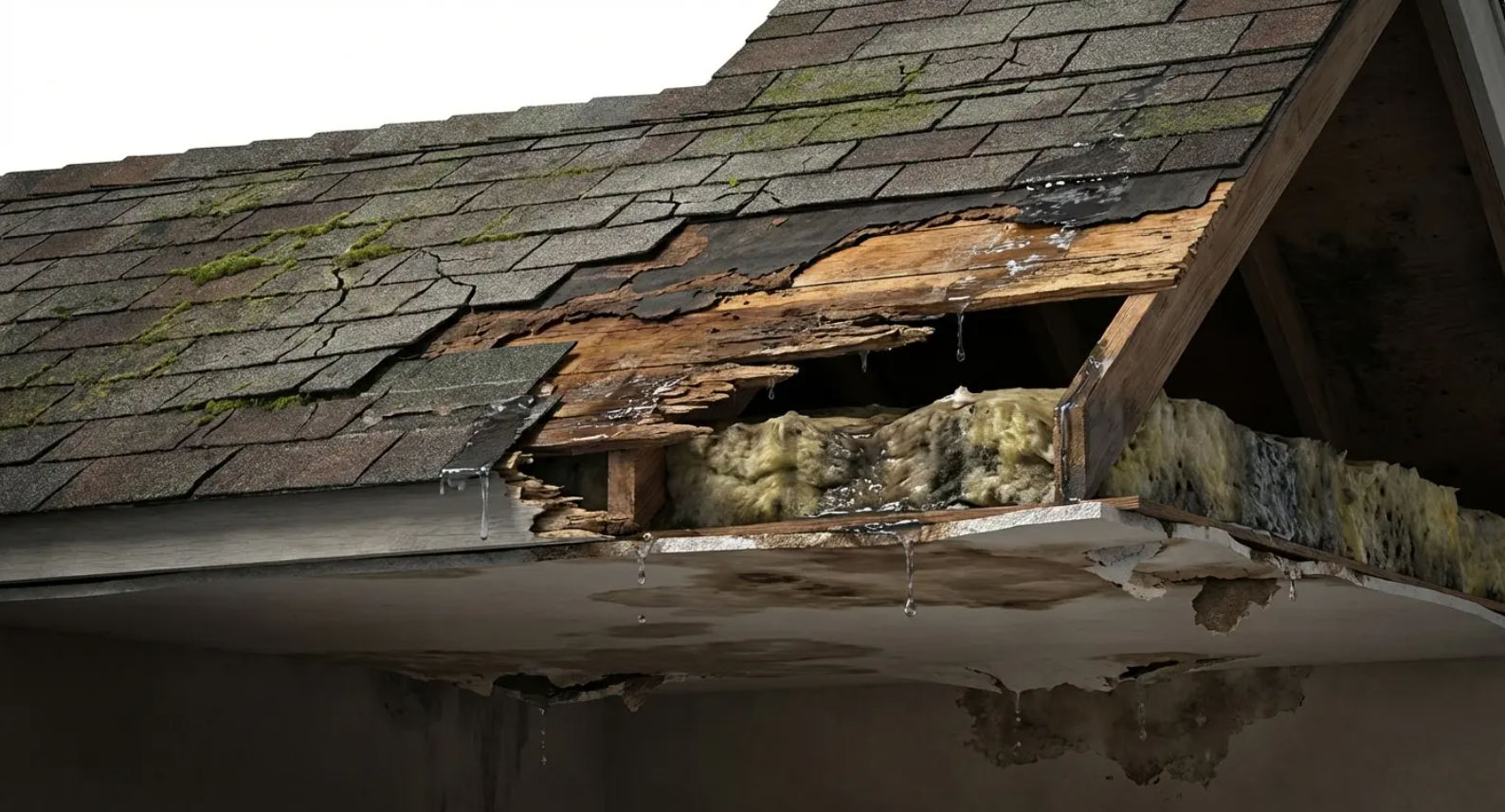
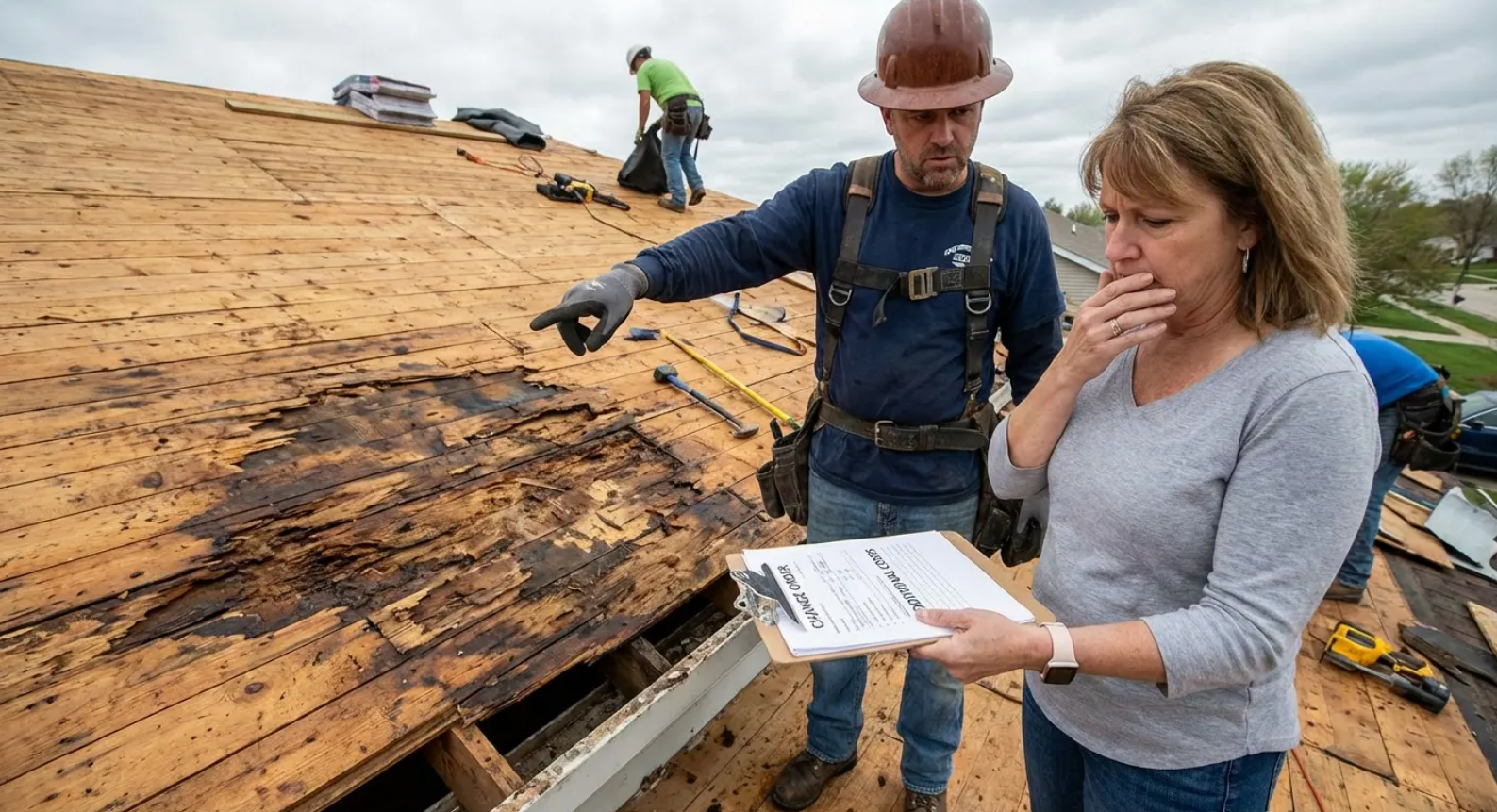
Had a customer in York County...nice guy, cheap as hell. Kept putting off his roof because "it's only a few shingles." I told him he was being an idiot. Six months later I'm back there because his wife called me directly, and there's water stains spreading across their bedroom ceiling. Guess who was right? The decking was rotted across maybe 40% of the roof. I don't know the exact percentage, I'm not measuring it with a ruler, but it was bad. What should've been a $14K roof turned into something close to $30K by the time we fixed the decking, dealt with the mold, patched the drywall. His wife still brings it up apparently.
The Emergency Replacement Premium
Waiting until failure forces your hand puts you in the worst negotiating position possible. You can't shop around when water is actively pouring into your living room. You'll take the first available contractor, pay their peak-season rates, and accept whatever timeline they offer.
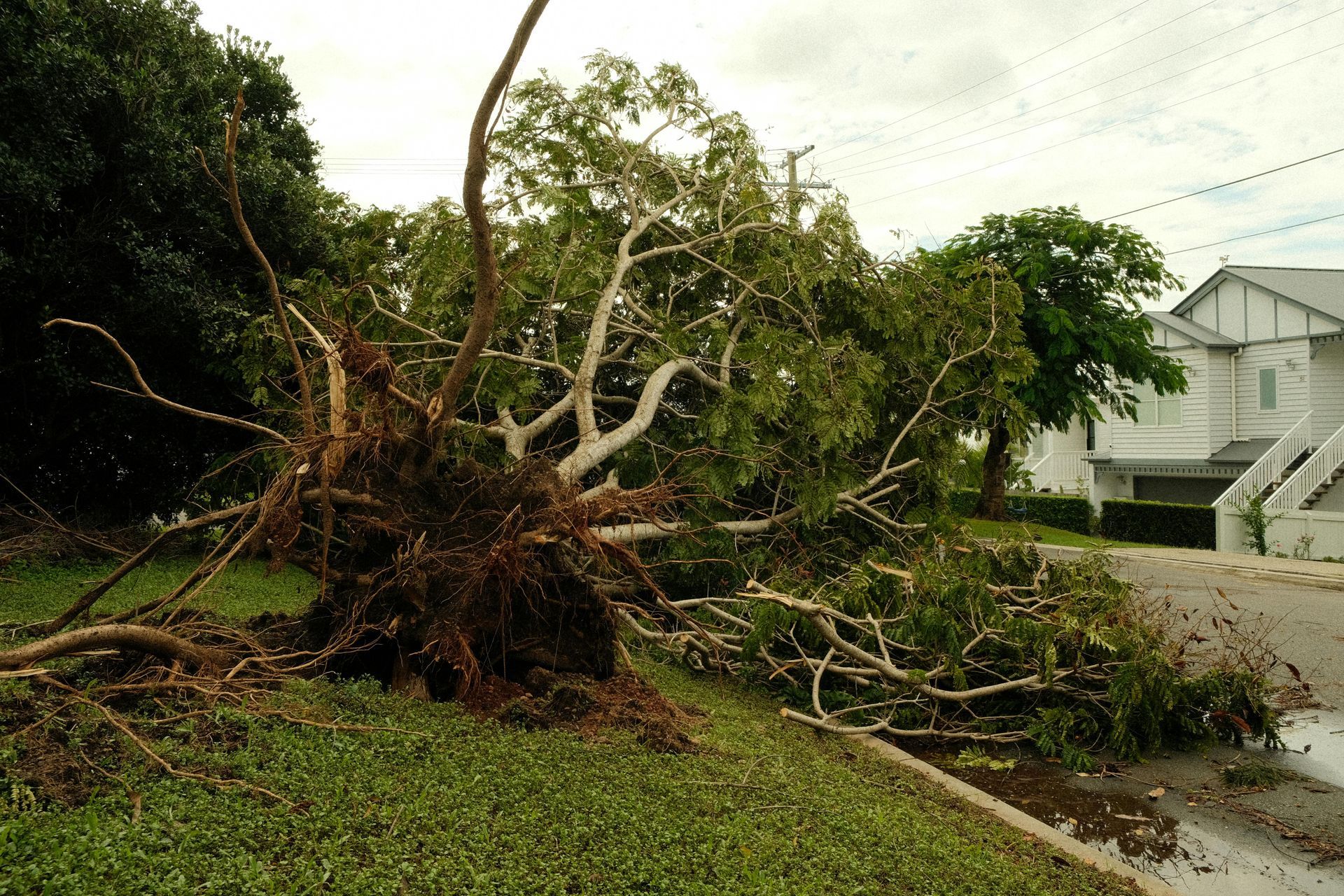
Storm damage creates contractor feeding frenzies. After a big storm, you'll get contractors knocking on your door like crazy. Some are legit, most are just trying to catch people while they're freaked out about damage.
The financial hit extends beyond the roof itself. According to industry data compiled by roofing professionals, insurance claims for water damage average $11,650, with homeowners often facing deductibles and premium increases after filing claims. Costs that could be avoided entirely with better timing. Your deductible applies, your premiums increase, and some policies won't cover damage from "lack of maintenance," which is how they'll classify a roof you knew needed replacement.
Why Your Brain Lies to You About Roof Urgency
There's actually behavioral economics research about why people suck at roof decisions, but forget the fancy terminology. You don't fix it because you can't see it, and you can't see it so you tell yourself it's fine. Plus it costs like $20,000, so your brain is HIGHLY motivated to believe it's fine.
Your roof degrades every single day. UV radiation breaks down asphalt shingles, temperature cycling causes expansion and contraction stress, and moisture works its way under compromised seals. This happens whether you think about it or not.
The right replacement window exists before you see obvious problems. That feels counterintuitive (why replace something that looks fine?), but it's the difference between a planned $15,000 investment and an emergency $28,000 crisis. Understanding when to replace your roof before visible failure occurs protects both your home and your budget.
Your Roof's Lifespan Isn't What the Warranty Says It Is
That "30-year architectural shingle" warranty sounds reassuring until you read the fine print. Manufacturers rate shingles under laboratory conditions that don't account for your specific roof pitch, sun exposure, attic ventilation, or climate zone.
The Real Lifespan Variables
Your roof ages in dog years if you live in the Sun Belt. Actually, worse than dog years...more like fruit fly years. Point is, Phoenix roofs don't last as long as Portland roofs. The sun just cooks them. Intense UV exposure and temperature extremes (140°F+ surface temperatures in summer) degrade asphalt shingles twice as fast as moderate climates. A 25-year rated roof in Phoenix might need replacement at 12-15 years.
Attic ventilation matters more than most homeowners realize. I've explained the ventilation thing to maybe a thousand homeowners and I swear half of them still don't get it. Your attic needs to breathe. That's it. That's the whole concept. Poor ventilation traps heat and moisture, cooking your roof from below while weather attacks from above. I've seen properly ventilated roofs outlast identical installations by 5-7 years simply because heat could escape.
Installation quality trumps material quality every time. I don't care if you bought the most expensive shingles Home Depot sells...if the crew installing them is hungover and rushing to finish before the football game, your roof will fail. I've seen it a hundred times. Stop obsessing about shingle brands and start vetting contractors. The best shingles installed incorrectly will fail faster than mid-grade shingles installed properly. Improper nailing patterns, inadequate starter strips, and poor flashing details all shorten lifespan regardless of warranty length.
Roofing experts are increasingly warning homeowners about the gap between warranty promises and real-world performance. According to Aleks Krylov, founder and president of Stern Roofing, speaking to AOL, asphalt shingles "typically last 20 to 30 years depending on installation quality, ventilation, and climate." That's a huge range that depends far more on your specific conditions than the manufacturer's laboratory testing.
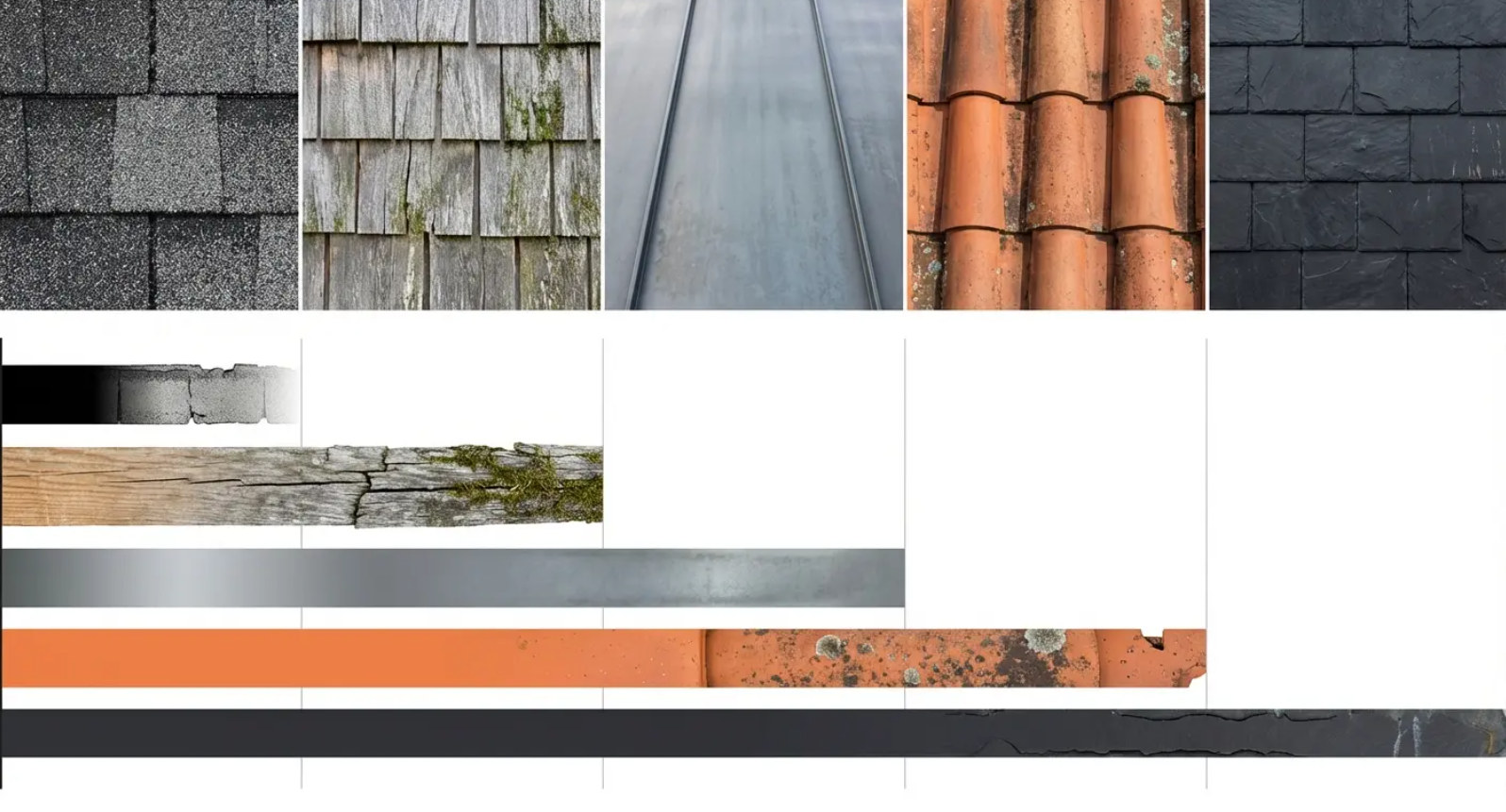
| Roofing Material | Advertised Lifespan | Actual Lifespan (Climate-Dependent) | Key Longevity Factors |
|---|---|---|---|
| Asphalt Shingles | 20-30 years | 12-30 years | UV exposure, ventilation, installation quality |
| Metal Roofing | 40-70 years | 40-70 years | Coating quality, fastener integrity, thermal expansion management |
| Cedar Shake | 30-40 years | 20-40 years | Humidity levels, maintenance frequency, treatment application |
| Clay/Concrete Tile | 50-100 years | 50-100+ years | Structural support, freeze-thaw cycles, installation precision |
| Slate | 75-100+ years | 50-100+ years | Fastener corrosion, structural support, foot traffic damage |
Climate-Specific Aging Patterns
Coastal homes face salt air corrosion and higher humidity. Mountain properties deal with extreme temperature swings and snow load stress. Midwest roofs endure hail damage and tornado-force winds. Each environment has its own aging signature.
Freeze-thaw cycles cause more damage than constant cold. Water infiltrates tiny gaps, freezes, expands, and widens those gaps. One winter of repeated freezing can age a roof several years.
Tree coverage creates a double-edged situation. Shade reduces UV damage but increases moisture retention and debris accumulation. Overhanging branches scrape protective granules off shingles with every windstorm.
Warranty Reality Check
Prorated warranties decrease coverage value each year. After 10 years on a 30-year warranty, you might only receive 40% material reimbursement. Labor isn't covered at all under most manufacturer warranties.
The fine print excludes wind damage, improper ventilation, and "acts of God." What's left? Manufacturing defects, which account for less than 1% of premature failures.
The warranty thing makes me crazy. Manufacturers write these 30-year warranties that are basically worthless after year 10 because of prorating, and they don't cover labor, and they exclude wind damage, which is the main thing that kills roofs. It's a scam, but everyone acts like it matters.
Weather Windows Matter More Than You Think
Temperature matters. Not just for the crew (though nobody wants to shingle a roof in 95-degree heat) but for the actual installation. Shingles have adhesive strips that need specific temperatures to seal, and if you install when it's too cold, they just... don't bond. Ever. Then you've got a roof that looks fine but isn't actually sealed, which you'll discover during the first major storm when shingles start flying off like playing cards.
The Temperature Sweet Spot
Most manufacturers specify installation between 40°F and 85°F. Outside this range, you're risking warranty violations and installation quality issues. Cold weather makes shingles brittle and prevents self-sealing. Extreme heat makes them too pliable, causing tears and improper alignment.
Morning installations in summer heat can be ideal. Shingles are cool enough to handle but will reach sealing temperature by afternoon. Afternoon installations risk overheated materials that won't lay flat.
You need at least 2-3 consecutive dry days for proper installation. Roofing over damp decking traps moisture that leads to rot and mold. Rushing installation between rain systems compromises the entire project.
Regional Weather Patterns
The "ideal season" varies dramatically by location. Pacific Northwest homeowners have a narrow summer window between rainy seasons. Southern homeowners avoid brutal summer heat. Northern climates race against early snow. Determining the right time to replace your roof requires understanding your regional climate patterns.
Hurricane season (June through November) complicates Gulf Coast and Atlantic seaboard timing. Material availability becomes unpredictable as suppliers prioritize storm damage repairs. Contractor availability evaporates as crews respond to emergency calls.
Monsoon season in the Southwest creates afternoon thunderstorm patterns that limit working hours. Mountain regions face unpredictable weather even in summer, requiring flexible scheduling.
Customers in coastal South Carolina scheduled their roof replacement for late August, attracted by a contractor's end-of-summer discount. Hurricane season brought three separate weather delays, leaving their home with exposed decking during a tropical storm. Water infiltrated the attic, damaging insulation and creating a mold problem that added $4,500 to the final project cost. Had they scheduled for April or early May (before hurricane season) they would have avoided both the weather delays and the subsequent damage entirely.
Wind and Installation Quality
Wind speeds above 20 mph make installation dangerous and difficult. Shingles blow around, alignment suffers, and safety risks multiply. Quality contractors won't work in high winds regardless of schedule pressure.
Humidity affects adhesive curing time. High humidity slows the sealing process, while very low humidity can cause premature drying before shingles are properly positioned.
Weather forecasting isn't perfect, so building buffer time into your replacement schedule prevents the "we'll finish next week when it clears" scenario that stretches projects across months.
The Financial Sweet Spot Nobody Talks About
Roofing operates on supply and demand pricing just like airline tickets. Understanding contractor availability cycles and material pricing patterns can save you 15-20% on identical work.
Contractor Availability and Pricing Cycles
Peak season (late spring through early fall) brings premium pricing. Contractors are booked solid, have less incentive to negotiate, and can't offer flexible scheduling. You're competing with dozens of other homeowners for the same crews.
Shoulder seasons (early spring and late fall) offer the best value proposition. Contractors need to keep crews working, material suppliers offer promotions to move inventory, and you'll get more attention to detail when crews aren't rushing to the next job.
Winter in moderate climates presents surprising opportunities. Contractors in areas with workable winter weather often discount services significantly to maintain cash flow during their slow season.

| Timing Factor | Peak Season (Summer-Fall) | Shoulder Season (Spring/Late Fall) | Off-Season (Winter) |
|---|---|---|---|
| Contractor Availability | Booked 6-8 weeks out | 2-4 weeks out | Often immediate availability |
| Pricing Leverage | Minimal negotiation room | 10-15% discount potential | 15-25% discount potential |
| Project Attention | Crews rushing between jobs | Balanced workload | Maximum attention to detail |
| Material Lead Times | 2-4 weeks for specialty items | 1-2 weeks standard | Immediate for most materials |
| Weather Delay Risk | Low (predictable conditions) | Moderate (variable weather) | Higher (but manageable in mild climates) |
Material Cost Considerations
Asphalt shingle prices fluctuate with oil prices since asphalt is petroleum-based. Tracking crude oil trends can help you anticipate price increases. A $2,000 price difference on materials isn't unusual between low and high periods.
Material costs have been crazy since COVID. What used to cost $12,000 in 2019 is like $17,000 now. Maybe it'll come down, maybe it won't.
Supply chain disruptions can delay projects for months. Ordering materials early, even if installation is weeks away, locks in pricing and ensures availability.
End-of-season closeouts on discontinued colors or styles can save thousands if you're flexible on aesthetics. The shingles perform identically, but last year's color palette costs 30% less.
Home Sale Timing Strategy
Planning to sell within 5 years? A new roof delivers around 60% ROI according to Remodeling Magazine's Cost vs. Value report, but timing matters. I've heard as high as 70%, but don't count on it. New roof helps you sell faster more than it increases the price. Replace too early and you won't recoup the investment. Wait too long and buyers will demand concessions or walk away.
The ideal window is 6-18 months before listing. The roof looks new, you can market it as recently replaced, and you avoid last-minute negotiation leverage for buyers.
Pre-listing inspections increasingly flag aging roofs even if they're not actively leaking. Buyers in competitive markets simply move to the next house rather than dealing with imminent replacement needs.
Tax and Financing Considerations
Home improvement loans typically offer better rates in Q1 when banks are pushing to meet annual lending goals. Shopping for financing in January or February can save hundreds in interest over the loan term.
Energy-efficient roofing materials may qualify for tax credits. The Residential Clean Energy Credit covers qualifying solar roofing, while some states offer additional incentives for cool roofing or reflective materials.
Insurance reimbursements complicate timing. If you're replacing due to storm damage, you'll need to coordinate with adjusters, wait for claim approval, and potentially supplement the payout. This process can take 4-8 weeks, affecting your weather window.
Figuring out the right time means balancing all these financial factors with weather conditions and your personal timeline.
Reading Your Roof's Warning Signs Before the Emergency Happens
Obvious damage means you've already waited too long. The skill is recognizing the early warnings that give you time to plan, budget, and choose contractors carefully.
Exterior Warning Signs
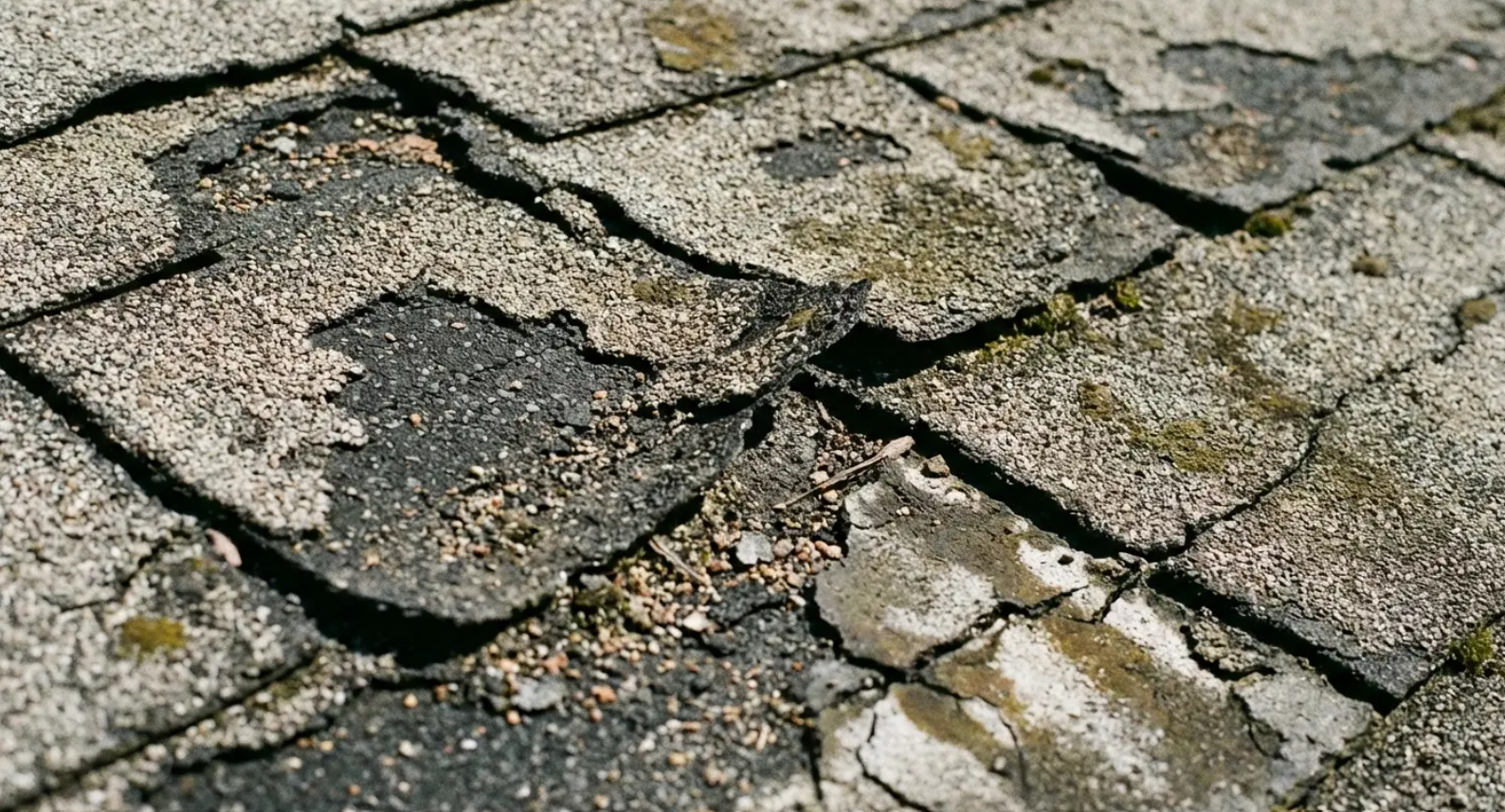
Granule loss shows up in your gutters first. Here's how I know a roof is done without even getting on a ladder: I look at the gutters. If there's a ton of granules washing down, the roof is cooked. Doesn't matter what the homeowner says about age or condition. Those sandy deposits are the protective ceramic coating washing off your shingles. Minor loss is normal aging, but heavy accumulation signals advanced deterioration. Once granules are gone, UV radiation attacks the asphalt directly, accelerating failure.
Curling shingle edges indicate moisture damage or poor attic ventilation. Shingles should lay flat. Edges that curl up or cup down mean the material is breaking down from heat or moisture stress. Curled shingles look like someone tried to peel them off the roof but gave up halfway. Once you see it, you can't unsee it.
Cracked or missing shingles might seem like isolated issues, but they're often symptoms of system-wide aging. One or two replacements make sense. Dozens scattered across your roof? That's your roof telling you it's reached the end of useful life.
Home inspectors are seeing an increasing number of homeowners caught off-guard by roof conditions they didn't monitor. According to Scott Johnson, ACI, home inspector and president of the American Society of Home Inspectors, speaking to House Beautiful, regular inspections reveal problems before they become emergencies.
Roof Inspection Checklist (Conduct Twice Yearly - Spring and Fall)
- Check gutters and downspouts for granule accumulation (sandy, gritty deposits)
- Examine shingles from ground level with binoculars for curling, cupping, or missing pieces
- Look for cracked, torn, or damaged shingles, especially after storms
- Inspect valleys and roof penetrations (chimneys, vents, skylights) for gaps or deterioration
- Check flashing around chimneys and roof penetrations for rust, separation, or damage
- Look for moss, algae, or vegetation growth (especially in shaded areas)
- Examine roof for sagging or uneven areas that indicate structural issues
- Note any daylight visible through roof boards from attic
- Check attic for water stains, moisture, or musty odors
- Document findings with dated photos for comparison over time
The Shingle Lifespan Timeline
Years 0-10: Minimal maintenance needed. Occasional storm damage possible but overall integrity remains strong.
Years 10-15: Watch for early warning signs. Increased granule loss, first instances of curling, potential moss growth in shaded areas.
Years 15-20: Decision point for most roofs. Repairs become more frequent. You're choosing between ongoing maintenance costs and replacement investment.
Years 20+: Living on borrowed time. Any major weather event could trigger failure. Emergency replacement becomes increasingly likely.
Interior Warning Signs
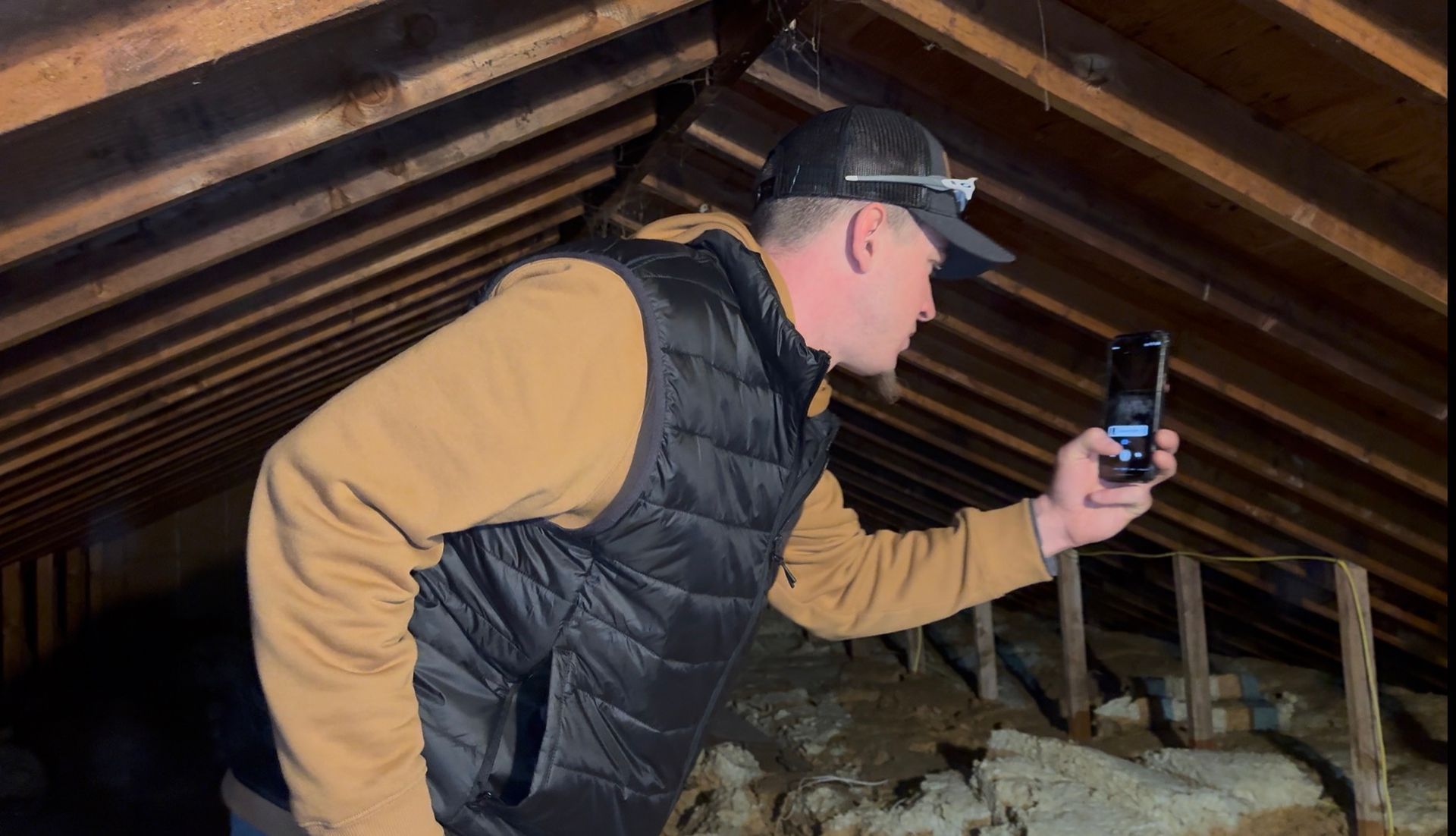
Attic inspection reveals problems before they reach living spaces. Look for water stains on decking, daylight visible through roof boards, moisture on insulation, or sagging decking between rafters. If your attic smells musty, you've got moisture. If it smells like wet cardboard, you've probably got active leaks.
Ceiling stains don't always mean roof failure. They might indicate plumbing leaks, HVAC condensation, or ice dam damage. But water stains near exterior walls or following roof lines strongly suggest roofing issues.
Increased energy bills can signal roof problems. Damaged or missing shingles reduce insulation effectiveness, making your HVAC work harder. A sudden 15-20% increase in heating or cooling costs warrants a roof inspection.
The Repair vs. Replace Calculation
The 30% rule provides a practical guideline: If repairs will cost more than 30% of replacement cost, or if damaged area exceeds 30% of total roof surface, replacement makes more financial sense.
Age matters in this calculation. Repairing a 10-year-old roof makes sense. Repairing a 20-year-old roof just delays inevitable replacement while throwing money at a failing system.
Matching existing shingles becomes impossible after a few years. Manufacturers discontinue colors and styles, weathering changes appearance, and new shingles will look obviously different. Partial replacement on visible roof sections creates an aesthetic problem.
Customer in Oregon noticed a few damaged shingles after a windstorm on their 17-year-old roof. The repair quote was $1,800 for the damaged section. However, their roof replacement estimate was $16,500. Using the 30% rule ($16,500 × 0.30 = $4,950), the repair seemed cost-effective. But when the contractor noted that similar wind damage had occurred twice in the past three years, costing $1,400 and $1,600 respectively, the total repair investment over three years ($4,800) approached the replacement threshold. Combined with the roof's age, they chose replacement...and discovered extensive hidden decking damage during tear-off that would have caused a catastrophic failure within two years.
Recognizing these signs helps you determine when to replace your roof before emergency situations force rushed decisions.
Why Fall Isn't Always the Answer
Every roofing article recommends fall replacement. The reasoning sounds solid: moderate temperatures, dry weather, and contractors eager to finish projects before winter. But this conventional wisdom creates problems.
The Fall Scheduling Crunch
Everyone else read the same advice. Fall becomes the most competitive season for contractor availability in many markets. You're scheduling 6-8 weeks out, paying peak rates, and hoping weather cooperates.
Early fall weather can be unpredictable. Hurricane season extends through November. Early snow can hit northern states by October. That "ideal window" is narrower than it appears on paper.
Contractors rushing to complete projects before winter sometimes cut corners. They're managing multiple jobs, racing weather, and trying to keep crews employed. Quality can suffer when everyone's in a hurry.
The Spring Advantage
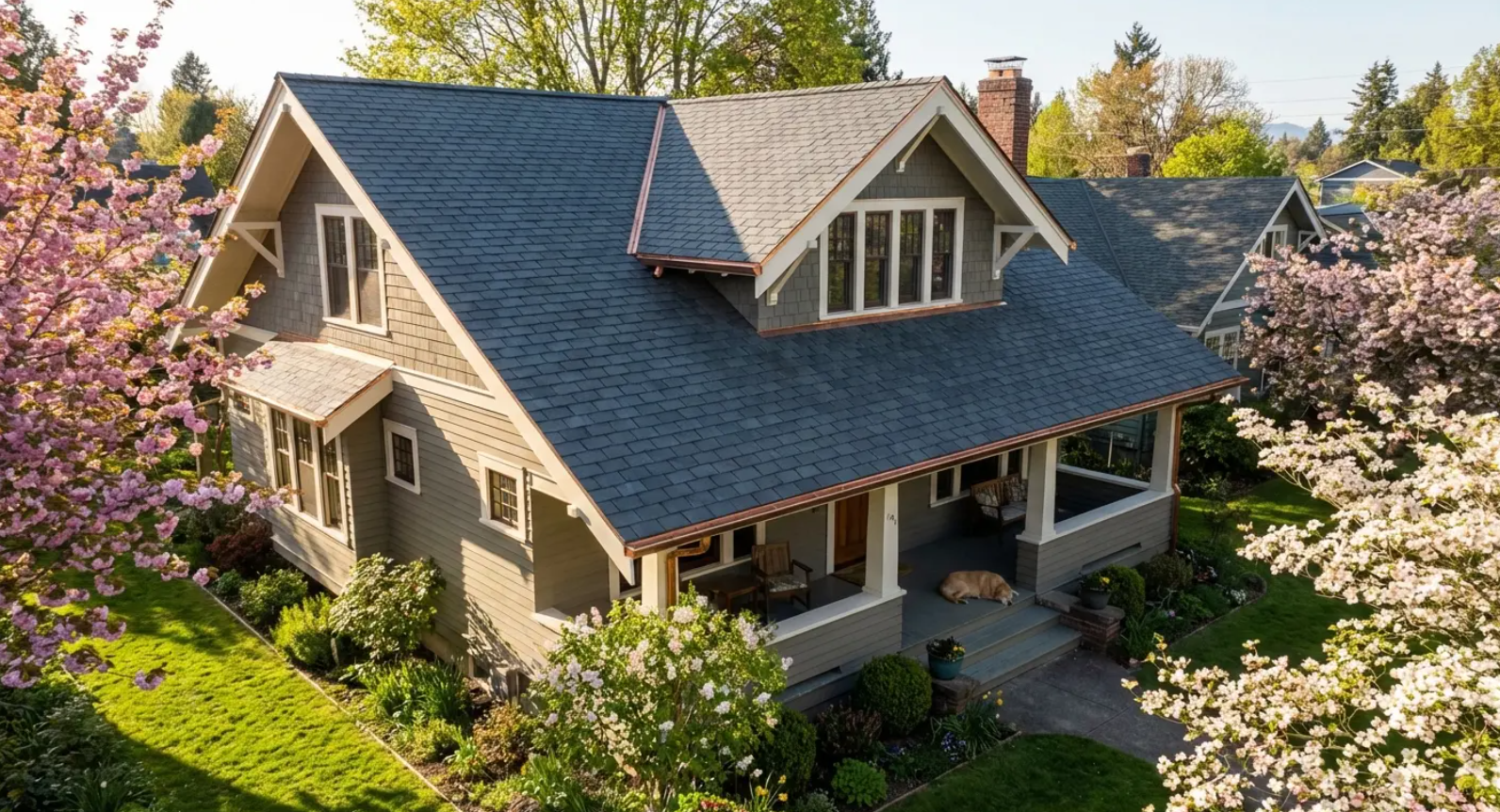
Spring offers a strategic opportunity most homeowners miss. Contact contractors in late winter or early spring, before the rush begins. You'll get their attention, better pricing, and flexible scheduling.
Contractors are hungry for work after slow winter months. They'll negotiate more readily, offer detailed consultations, and potentially discount services to secure early-season jobs.
Material availability is better in spring. Suppliers are fully stocked, haven't been depleted by storm damage repairs, and are running promotions to move inventory.
Regional Exceptions
Southern states can replace roofs year-round with minimal weather risk. Waiting for fall makes less sense when winter temperatures stay mild and summer heat is the only real concern.
Coastal areas should avoid hurricane season entirely. The savings from off-season pricing aren't worth the risk of having your home partially exposed when a storm hits. Schedule replacement in winter or early spring instead.
Desert climates face different constraints. Summer temperatures make installation dangerous and affect material performance. Winter and spring offer ideal conditions that fall can't match.
When Winter Works
Moderate climate zones (Pacific Northwest, parts of the South, California) can handle winter installations without quality concerns. Temperatures stay within manufacturer specifications, and contractor availability is excellent.
You'll need flexibility. Weather delays are more common in winter, so don't schedule replacement the week before hosting Thanksgiving. Build buffer time into your timeline.
Emergency replacements don't get to choose seasons. If your roof fails in January, you replace it in January. Quality contractors can work around weather limitations with proper planning and materials rated for cold-weather installation.
Determining the optimal timing requires thinking beyond generic seasonal advice and considering your specific regional conditions.
The Replacement Timeline That Actually Works
Roof replacement isn't a weekend project. Understanding the realistic timeline prevents frustration and helps you make better decisions at each stage.
The Assessment Phase (2-4 Weeks)
Start by getting your own eyes on the roof. Binoculars work if you're not comfortable climbing ladders. Document what you see with photos, note any obvious damage, and check your installation date if you have records.
Professional inspections take 1-2 hours but scheduling might take 1-2 weeks during busy seasons. Get at least three inspections from different contractors. Actually, two is probably fine. One quote is risky unless you really trust the contractor. You're evaluating both your roof and the contractors themselves.
Inspection reports should include detailed findings, remaining lifespan estimates, repair vs. replacement recommendations, and itemized quotes. Vague assessments or high-pressure sales tactics are red flags.
The Decision and Planning Phase (2-6 Weeks)
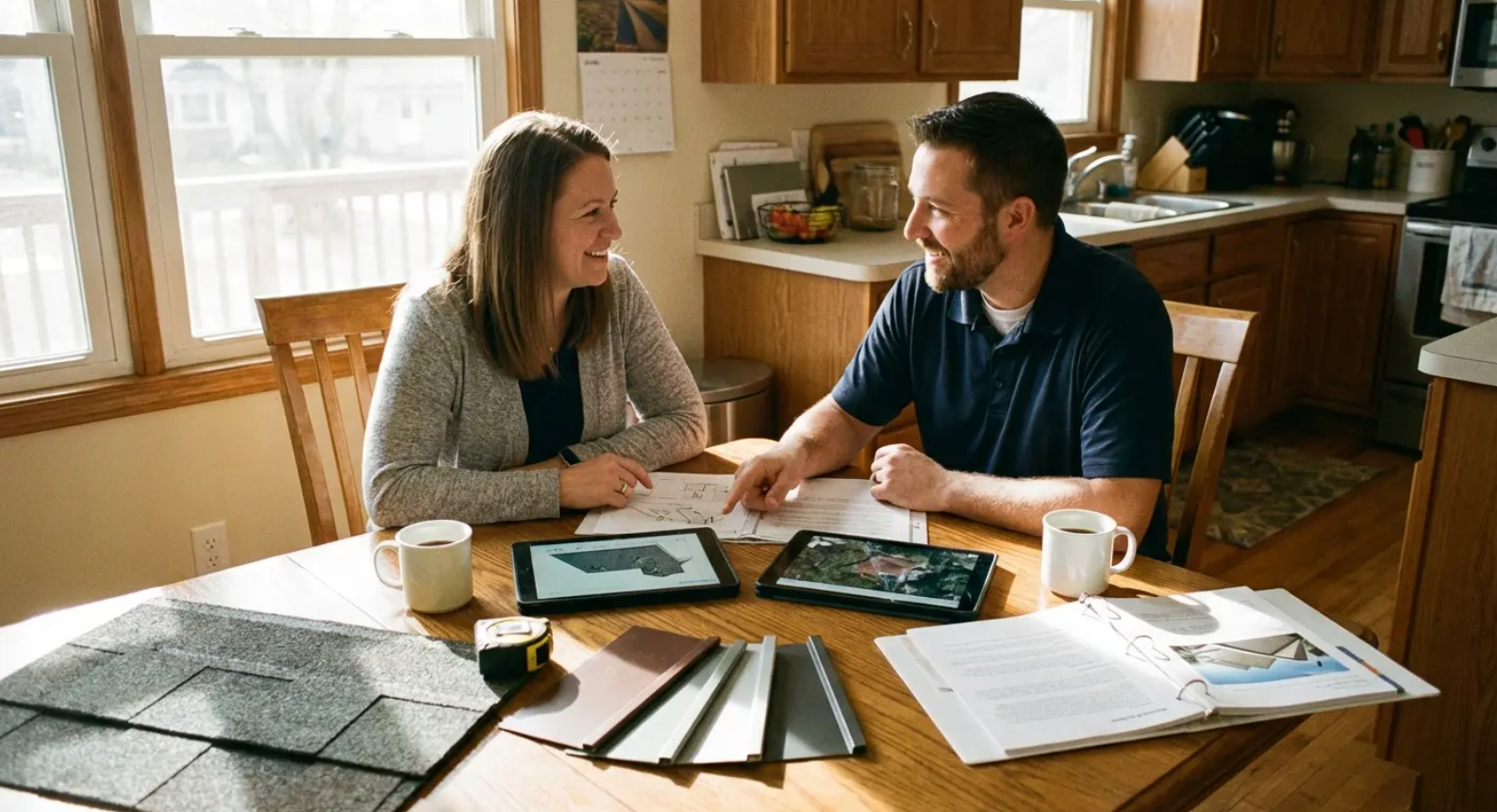
Compare quotes carefully. The lowest bid isn't always the best value. Look at material specifications, warranty terms, project timeline, payment schedules, and contractor credentials.
Check licenses, insurance, and references. This takes time but prevents disasters. Call previous customers and ask specific questions about communication, timeline accuracy, and how the contractor handled problems.
Material selection requires research. You're choosing between asphalt shingles, metal, tile, or specialty materials. Each has different costs, lifespans, and aesthetic impacts. Don't rush this decision to save a few days.
Financing approval (if needed) can take 1-3 weeks. Apply early so funding doesn't delay your project when contractors are ready to start.
Contractor Vetting Template
Contractor Name: _________________
Contact Date: _________________
Quote Amount: $_________________
Credentials Verification:
- Valid contractor's license (License #: ________)
- Current general liability insurance (Expiration: ________)
- Workers' compensation coverage verified
- Better Business Bureau rating checked (Rating: ________)
- Online reviews read (Google, Yelp, Angi)
References (Minimum 3):
1. Name: _____________ Phone: _____________
Project Date: _______
- Was the project completed on time? Y / N
- Any issues during installation? Y / N
- Would you hire them again? Y / N
2. Name: _____________ Phone: _____________
Project Date: _______
- Was project completed on time? Y / N
- Any issues during installation? Y / N
- Would you hire them again? Y / N
3. Name: _____________ Phone: _____________
Project Date: _______
- Was project completed on time? Y / N
- Any issues during installation? Y / N
- Would you hire them again? Y / N
Quote Details:
- Materials specified by brand and grade
- Warranty terms clearly stated (Material: ___ years / Labor: ___ years)
- Project timeline provided (Estimated days: ________)
- Payment schedule outlined
- Cleanup and disposal included
- Permit acquisition responsibility clarified
Red Flags Noted:
- Pressure to sign immediately
- Requires full payment upfront
- No physical business address
- Unwilling to provide references
- Significantly lower than other quotes (>25% difference)
Decision: Accept / Reject / Request Clarification
The Installation Phase (1-5 Days)
Most residential roofs take 1-3 days for tear-off and installation. Larger homes, complex roof lines, or multiple stories extend this timeline. Weather delays add unpredictable time.
Day 1 typically involves tear-off, debris removal, and decking inspection/repair. You'll know immediately if hidden damage exists. Budget flexibility helps here because you won't know about rotted decking until the old roof is removed.
Days 2-3 cover underlayment, drip edge, valley installation, and shingle application. Quality contractors work systematically, completing sections fully rather than partially covering the entire roof.
Final inspection and cleanup happen on the last day. Your property should look better than before the project started. Magnetic sweeps for nails, complete debris removal, and site restoration are non-negotiable.
Buffer Time and Contingencies
Add 20-30% to every timeline estimate. Weather delays, material backorders, hidden damage, and scheduling conflicts happen on nearly every project.
Permit approval can take 1-4 weeks depending on your municipality. Some areas require permits for roof replacement, others don't. Your contractor should handle this, but verify it's included in their timeline.
HOA approval adds another layer if you're changing colors or materials. Review architectural guidelines early and submit requests 4-6 weeks before planned installation.
Understanding realistic timelines alongside seasonal considerations helps you plan effectively.
Making the Call Without Second-Guessing
You're never going to feel 100% certain about spending $15,000+ on something you can't see from inside your house. That's normal. But indecision has its own cost.
The Decision Framework
Start with objective data. How old is your roof? What warning signs exist? What does professional inspection reveal? Remove emotion from this part of the evaluation.
Consider your financial situation realistically. Can you afford a replacement now? Will waiting improve your financial position, or are you just hoping the problem disappears? Emergency replacements cost more and offer fewer financing options.
Factor in your timeline. Are you selling soon? Planning other major home projects? Expecting significant life changes? Roof replacement affects and is affected by other decisions.
Common Decision Traps
Waiting for the "perfect time" guarantees you'll replace during an emergency. Perfect timing doesn't exist. Good enough timing, based on solid information, is the realistic goal.
Seeking endless second opinions creates analysis paralysis. Three professional inspections provide sufficient data. More opinions just generate conflicting advice that makes decisions harder.
Hoping the roof lasts "just a few more years" is expensive optimism. Those years might happen, but the collateral damage risk increases exponentially. You're gambling your home's interior against replacement costs.
When to Pull the Trigger
Your roof is 75% through its expected lifespan and showing early warning signs. This is the sweet spot for proactive replacement.
You're planning to sell within 18 months. Replace now, market the new roof, and avoid buyer negotiations or deal-killing inspection findings.
Repair costs over the past 2-3 years exceed 25% of replacement cost. You're throwing money at a failing system. Consolidate those ongoing expenses into one replacement investment.
You've experienced recent severe weather and insurance will cover partial costs. The out-of-pocket expense is lower than it'll ever be, and you're getting a full system replacement instead of patch repairs.
The Peace of Mind Factor
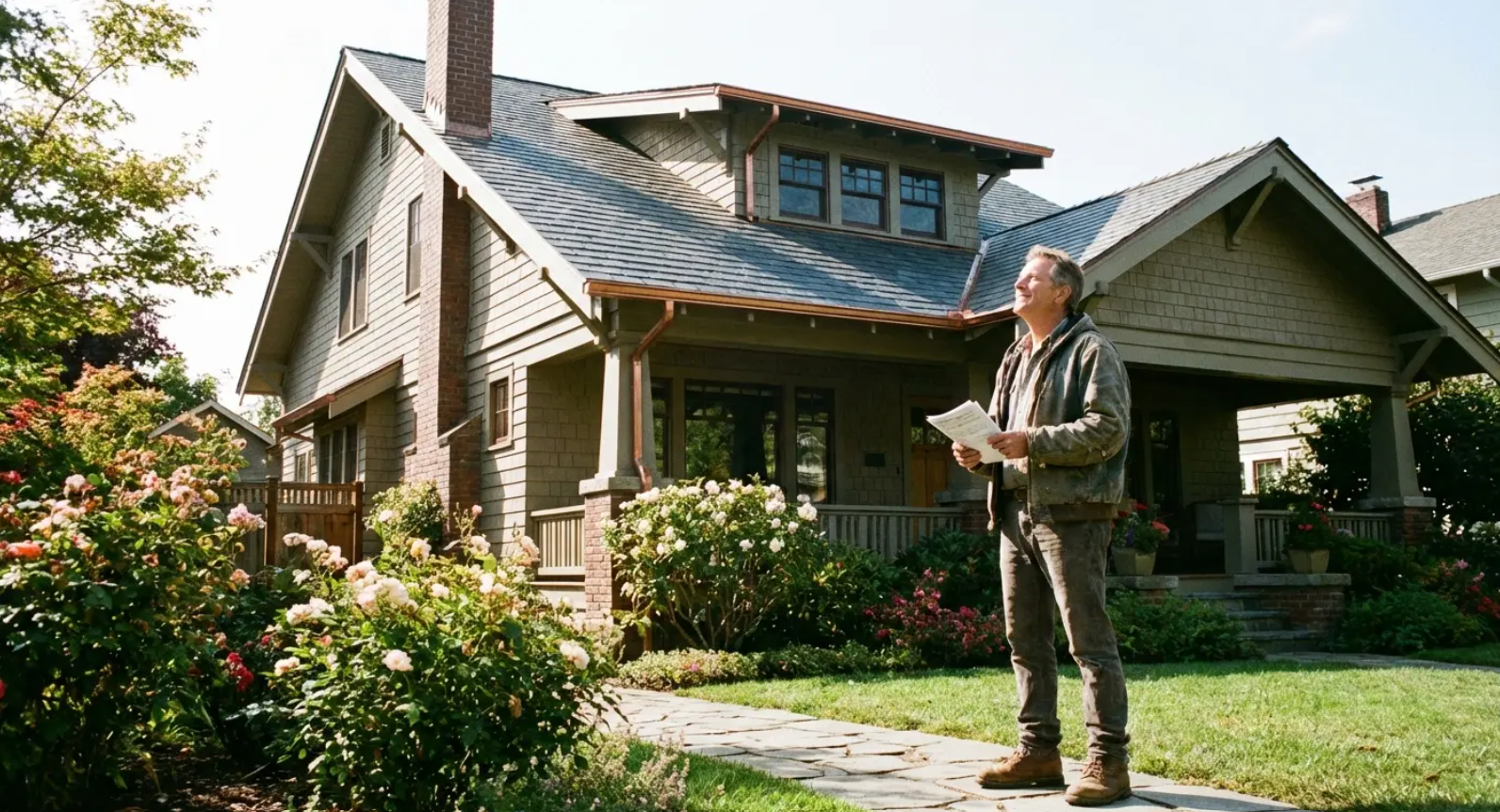
Look, I can't quantify this with numbers, but having a sketchy roof sucks. Every time it rains hard you're up there looking at the ceiling like "is that a new stain?" Every storm you're wondering if today's the day. That's not a great way to live. New roof = you stop thinking about your roof for 20 years. That's worth something.
You're making a decision with imperfect information. That's true for every major home investment. Accept the uncertainty, make the best choice you can with available data, and move forward.
Anyway, if you're in our service area and want someone to actually look at your roof instead of just Googling symptoms, we do free inspections at Joyland Roofing. No pressure, no "sign today for a discount" BS. We'll tell you what we see, what it'll cost, and when you should probably do it. Then you can decide like an adult.
Schedule here or don't. Your roof.
Final Thoughts
The best time to replace your roof isn't when everyone else does it or when some article tells you to. It's when YOUR roof, in YOUR climate, with YOUR plans, reaches the point where replacing it makes more sense than patching it.
That timing is different for every homeowner. A 15-year-old roof in Phoenix faces different realities than a 15-year-old roof in Portland. Your financial situation, home sale plans, and risk tolerance all factor into the equation.
What matters most is making an informed decision before you're making an emergency decision. Get professional inspections while you still have time to plan. Understand your roof's actual condition, not what you hope it might be. Build realistic timelines that account for weather, contractor availability, and financing needs.
Last roof I did, the homeowner had been agonizing over the decision for two years. Two years of getting quotes, reading articles, asking neighbors. Finally pulled the trigger. Afterwards he told me, "I should've done this two years ago." They all say that. Nobody regrets replacing their roof too early. Everyone regrets waiting too long.
Your roof is protecting everything else you own. It deserves strategic attention, not just crisis management. Make the call based on data, plan the timeline based on your situation, and execute the replacement before it becomes an emergency. That's how you win at roof replacement timing.