
February 8, 2026

Roofing Has Changed Forever: Here’s What You Actually Need To Know

Author

John Esh

Share

If you haven't looked at a roof in ten years, you’re in for a surprise. The industry has shifted massively. We aren't just talking about asphalt and tar paper anymore; we’re talking about complex composites, digital measurements, and materials that can actually lower your electric bill. But here’s the thing: the contractor you hire matters way more than the brand of shingle you pick. In this guide, we’re breaking down everything from solar tech to the specific nailing patterns that keep your roof attached during a gale. We want you to understand how modern tech impacts longevity and why the new stuff offers protection we couldn't dream of twenty years ago.


The market is huge right now, and frankly, it can get overwhelming. With the total U.S. market projected to hit nearly $60 billion in 2024 (Rooflink), there are a lot of options flying around. With that much money on the table, understanding your estimate and the process is vital. We want to cut through the noise and help you make the best decision for your home.


Table of Contents


  • Materials Have Evolved Way Past Asphalt
  • How Robots and Data Are Fixing Your Roof
  • Picking a Partner in the Modern Era
  • Final Thoughts


TL;DR


In a rush? If you don't have time to geek out on thermal emittance or supply chains, here is the cheat sheet. These are the non-negotiables you should look for before signing anything.

We believe in total transparency. These points sum up the biggest changes in installation standards. If you know these basics, you’re already ahead of 90% of homeowners starting a renovation.


  • Synthetics are tough: Modern composite shingles look like slate or cedar, but they carry Class 4 impact ratings. Translation: They resist the hail that usually destroys natural materials.
  • Cool roofs save cash: New granule technology reflects the sun and releases trapped heat, which can noticeably lower your AC usage.
  • Measurements are digital: If your contractor shows up with just a tape measure, be wary. Satellite and drone data are 99.9% accurate and prevent over-ordering.
  • Vetting is vital: Look for manufacturer "Master" certifications. This gets you warranties that cover the workmanship, not just the shingles.
  • Details matter: Demand 6-nail "storm patterns" and synthetic underlayment if you want a roof that lasts.


The "Before You Sign" Quick Check


  • Material Rating: Does the estimate specify Class 4 Impact Resistance?
  • Ventilation Check: Did they calculate the "1/300 rule" for your intake and exhaust?
  • Tech Check: Was the roof measured via satellite or drone report?
  • Warranty Level: Is the warranty backed by the manufacturer for workmanship?
  • Waste Plan: Is there a plan for recycling the old materials?


Materials Have Evolved Way Past Asphalt


It used to be that you had a binary choice: affordable asphalt or incredibly expensive slate. Thankfully, that limitation is gone. Science has pushed the boundaries of what a roof can handle. Now, it’s about weighing the upfront cost against the "lifetime" value. Manufacturers like Atlas are engineering shingles to endure specific environments rather than just covering a plywood deck. It changes how we calculate ROI entirely.


As you look at these new materials, it helps to learn how to upgrade your roof from asphalt shingles so you understand the long-term benefits. We see upgrades as a way to secure your home's future. The industry has finally responded to the demand for durability. Your choice now impacts insurance premiums and resale value. Honestly, we encourage clients to look at this as a capital improvement, not just a repair. Advanced products offer performance that old-school asphalt simply can't match. When you buy a modern system, you're buying peace of mind.


Feature Traditional Asphalt Natural Slate Modern Synthetic Composite
Lifespan 15–25 Years 75–100+ Years 50+ Years
Impact Rating Class 3 (Standard) Low (Brittle) Class 4 (Highest)
Weight Moderate Heavy (Requires Reinforcement) Lightweight
Maintenance Moderate (Algae/Granule Loss) High (Cracking/Slipping) Low (Fade/Crack Resistant)
Cost $ $$$$ $$$
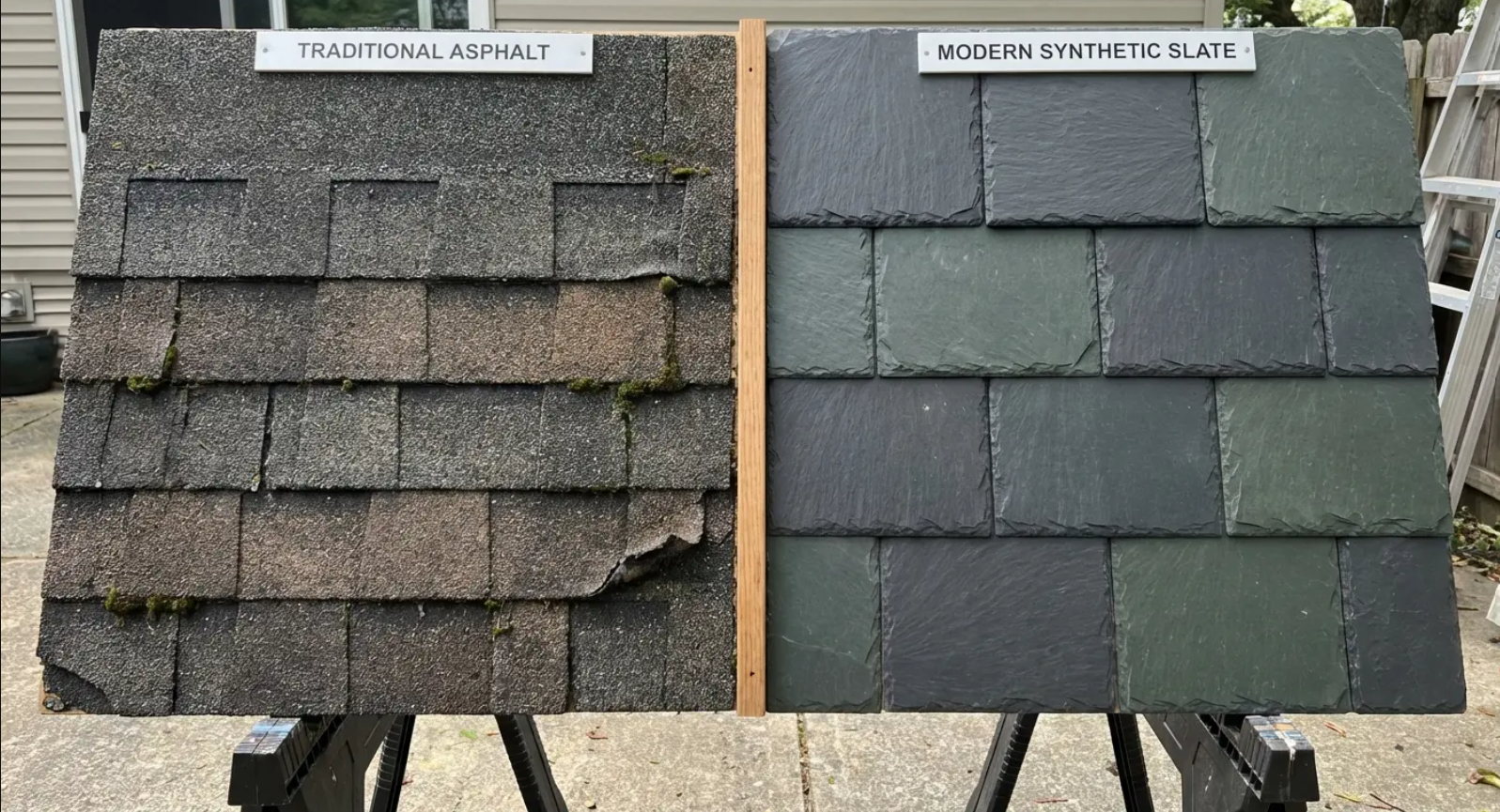
Side-by-side view of traditional asphalt roofing and modern synthetic slate roofing.

The Rise of High-End Composites


Synthetic roofing used to have a bad reputation for looking like cheap plastic. That’s changed. We now work with high-end composites made from recycled polymers and rubber. They mimic the texture and depth of slate or cedar shakes so well that you often can't tell the difference from the curb. You get the look you want without the maintenance nightmare of natural materials. It allows for historical accuracy without the historical headaches.


Class 4 Ratings and Hail Defense


Modern synthetics frequently carry Class 4 impact ratings. This means the material withstands hail impact that would shatter natural slate or dent metal. You should check your homeowner's insurance policy immediately—many insurers offer significant premium reductions for Class 4 materials because they know they won't be paying to replace it after the next storm.


The "Golf Ball" Test: Imagine a standard shingle struck by a 2-inch hailstone. It usually "bruises," dislodging granules and leading to a leak months later. Conversely, a Class 4 synthetic is tested by dropping a 2-inch steel ball from 20 feet up, twice on the same spot. If the backing doesn't crack, it passes. That's the difference between a massive insurance claim and a non-event.


Color That Actually Lasts


Early synthetic roofs had a problem with fading unevenly or "chalking" after a few years. New formulations use advanced UV inhibitors to lock in color stability. We are seeing roofs that maintain their original hue for 50 years or more, so you don't have to worry about your roof looking patchy a decade down the line.

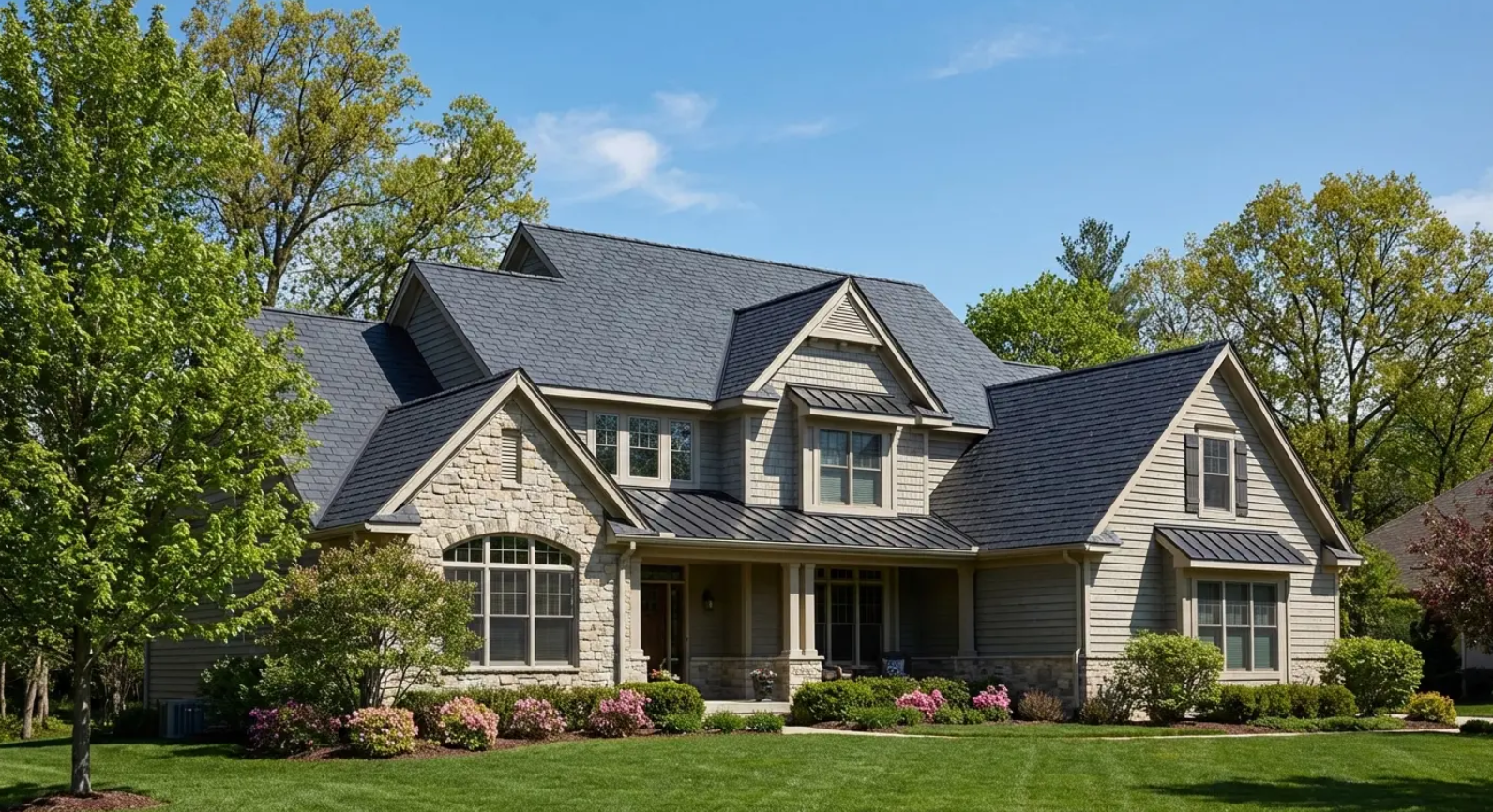
Stone-clad two-story house with a blue-gray roof. Lush green lawn with trees and blue sky.

Shingles That Fight the Heat


"Cool roofing" used to mean white, industrial flat roofs. That technology has finally migrated to residential shingles. Manufacturers now incorporate reflective granules that bounce solar energy back into the atmosphere. This reduces the temp in your attic and lowers the load on your AC. Brands like Atlas combine this thermal performance with the look you expect. It's not a niche trend anymore; it's becoming standard. In fact, "cool" shingles are seeing about 6% annual growth as we all try to mitigate heat (Rooflink). Efficient systems pay for themselves over time.


Stopping the Black Streaks


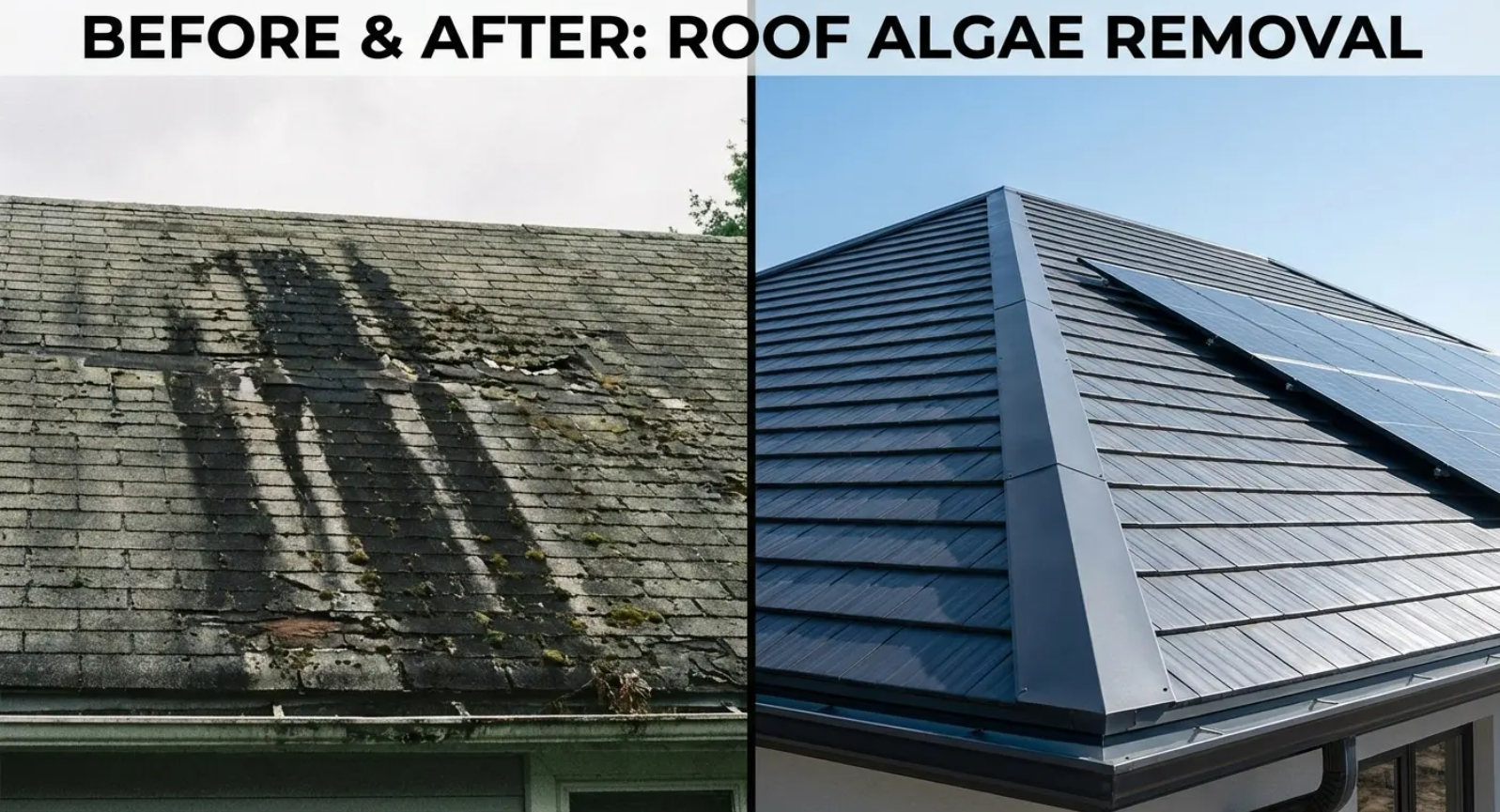
You’ve seen roofs covered in those ugly black streaks. That is Gloeocapsa magma, a type of algae common in humid climates. A major innovation we love is the use of copper-containing granules (often co-branded with Scotchgard). This prevents algae formation entirely, preserving your curb appeal and keeping those reflective granules clean so they can do their job.

Before and after comparison of a roof affected by algae, then cleaned. The cleaned roof is blue-gray and shiny.

Understanding Solar Reflectance


The Solar Reflectance Index (SRI) measures a roof's ability to reject solar heat. A higher number means lower energy bills. When you're selecting shingles, ask to see the SRI data sheet. If you live in a warmer climate, aim for a value over 25 to maximize savings.


Releasing the Heat


Reflecting the sun is only half the battle. A roof also needs to release the heat it absorbs. Modern granules are engineered for high "thermal emittance." This means they don't hold onto heat overnight. Your home cools down faster after sunset, keeping your living space comfortable without forcing your HVAC to work overtime.


Power Generation Without the Bulk


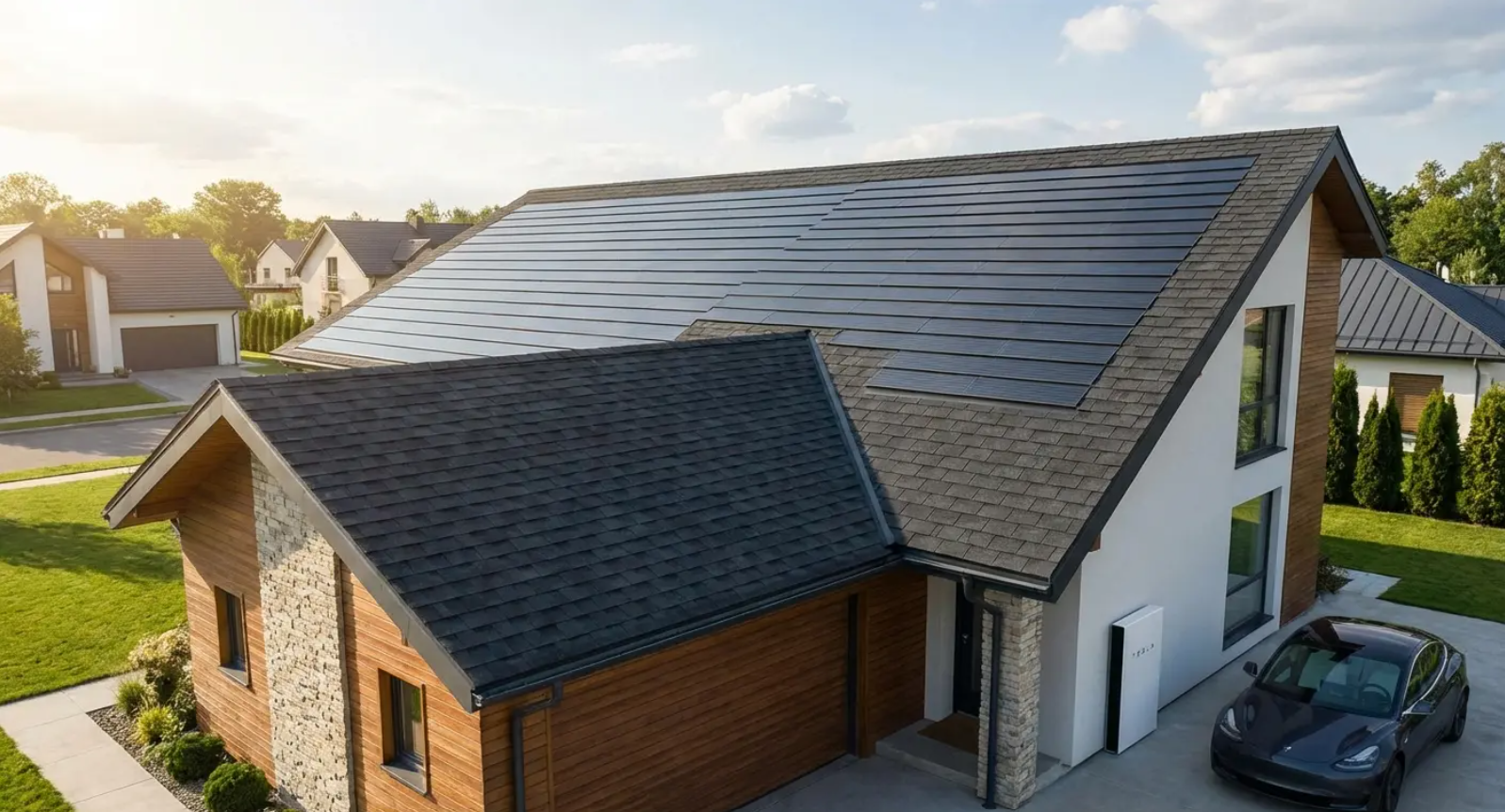
We are moving away from the era of bulky, rack-mounted solar panels bolted on top of shingles. Building-Integrated Photovoltaics (BIPV)—like solar shingles—are challenging the old standard. These are solar cells built directly into the roof itself. They offer a sleek, low-profile look that blends in seamlessly.

Modern house with solar panels on roof, car parked in driveway.

The Trade-off: Looks vs. Power


Solar shingles look incredible, but there is a trade-off. They generally have a slightly lower efficiency rate compared to traditional panels. You have to calculate if the aesthetic gain is worth a potential 10-15% reduction in power generation. We help homeowners run these numbers to see what makes sense for their specific goals.


How Robots and Data Are Fixing Your Roof


Let's be honest, construction isn't always known for being high-tech. But roofing has caught up fast. The process is now entirely data-driven. From AI measurements to supply chain logistics managed by giants like ABC Supply, we use tech to reduce human error. This protects you from hidden costs. Adoption is happening fast—40% of contractors currently use some form of AI, and more are jumping on board every day (Roofing Contractor). This ensures your estimate is precise and inventory is tracked in real-time. The days of guessing quantities are over.


Precision Over Guesswork


Hand-measuring a roof is obsolete. We use satellite imagery, drone data, and AI to generate reports that are 99.9% accurate. This protects you from being overcharged for "just in case" materials. You pay for exactly what your roof needs, not for a contractor's inability to measure correctly.

A drone captures a 3D model of your home to provide precise roofing measurements.

The End of Over-Ordering


Software allows us to pull a 3D model of your house using aerial photography. It identifies pitch, hips, valleys, and penetrations automatically. Ask your contractor if they use digital modeling. If they rely solely on a tape measure, they might be estimating high to cover their bases, and that costs you money.


DIY Verification


New apps allow even homeowners to use smartphone cameras to calculate surface area instantly. This democratizes the data. You can actually double-check the square footage estimates provided by pros to ensure the numbers line up.


Safer, Deeper Inspections


We use drones equipped with high-res cameras and thermal sensors to inspect roofs. These can spot moisture trapped under a roof or hail damage that is invisible from the ground. It provides a safe, comprehensive assessment without anyone risking injury on a ladder. Understanding this tech explains why video roof inspections are superior for finding hard-to-spot damage.


The Thermal Reveal: A homeowner in a rainy climate had a mysterious leak. A manual inspection showed tight flashing. However, a drone with thermal imaging flew over at dusk and detected a "hot spot" where wet insulation was holding heat. The leak was actually originating ten feet higher than the stain on the ceiling—a discovery only possible through data.


The Supply Chain Revolution


The efficiency of your project hinges on the distributor. Major players have digitized the fulfillment process, allowing us to track material delivery in real-time. This ensures your project never stalls because we’re missing a specific box of flashing.

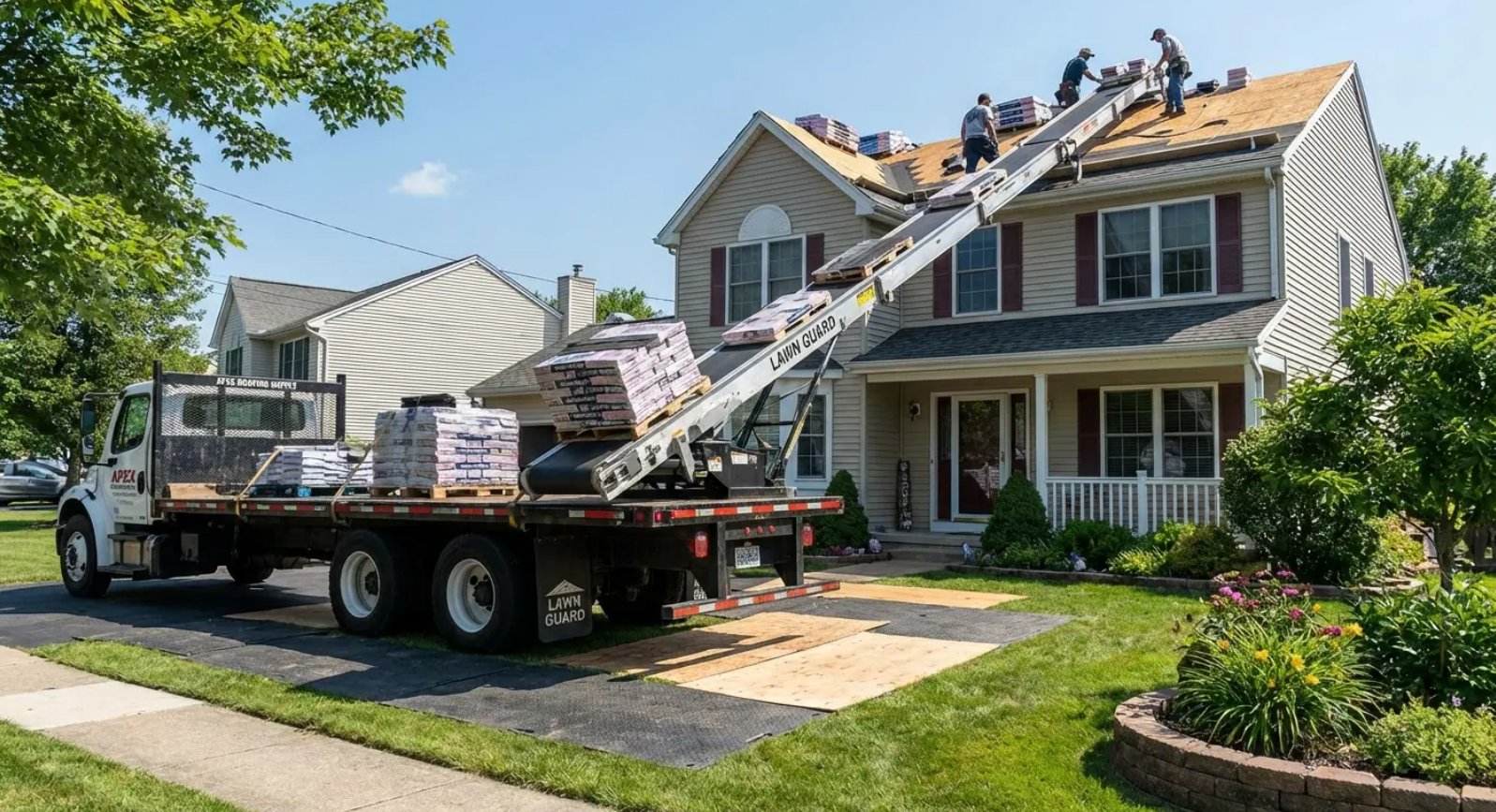
Roofers replacing shingles on a two-story house, using a truck-mounted conveyor to deliver materials.

Rooftop Precision


Advanced logistics allow materials to be delivered directly to the roof exactly when the crew arrives. This "just-in-time" delivery minimizes the time materials sit on your lawn, saving your grass and preventing material theft.


Beating the Shortages


Data analytics help distributors predict regional shortages. We use this data to recommend materials that are actually in stock, avoiding the months-long delays that have plagued the industry recently.


Picking a Partner in the Modern Era


Choosing a partner is just as critical as the material itself. The definition of a "pro" has evolved to include certification, insurance automation, and sustainable practices. You need to know how to vet a company beyond just checking their star rating. Because the industry is crowded, knowing 8 tips to find & hire the best roofing contractor is essential to filter out the noise. A great partner does more than nail shingles; they care about the community. You see stories like the Miami Dolphins and local roofers teaming up to help veterans (Local 10), and that reflects the heart of a true professional.


Trust is the currency of this business. When you hire a company, you invite them into your sanctuary. We take that seriously. We see too many scams and fly-by-night operators. A legitimate firm has roots in the area. We encourage you to verify every claim a salesperson makes. Your warranty depends on the installer's credentials, so we maintain our licenses and insurance religiously.

Woman and man shaking hands in front of a house for sale. Autumn scene.

Finding the Real Pros


The barrier to entry in roofing is low, but the barrier to excellence is high. Modern vetting goes beyond checking the BBB. You need to verify manufacturer certifications. These credentials are the only thing standing between you and a voided warranty if something goes wrong.


Why Manufacturer Status Matters


Top-tier manufacturers like Atlas or GAF offer "Master" or "Platinum" status to select contractors. These aren't just marketing badges. They allow us to offer warranties that cover workmanship for 25 years, backed by the manufacturer. Verify the contractor's status on the manufacturer's actual website, not just by looking at the logo on their truck.


If It Isn't Online, It Didn't Happen


A modern contractor documents their work. You should look for geotagged project photos and recent reviews. A lack of digital history is a massive red flag. We believe in showing our work because transparency builds trust.


Demanding Transparency


Digital contracts should itemize everything. We list the number of nails per shingle and the specific brand of underlayment. Vague terms like "install to code" are insufficient. You deserve to know exactly what is being installed on your home.


Automating the Claims Process


The interaction between roofing and insurance is increasingly automated. We use the same software (like Xactimate) that adjusters use. This streamlines the approval process for storm damage and ensures everyone is speaking the same language regarding price.


Getting What You Are Owed


Insurance adjusters often miss code-required items. We know how to file "supplements"—additional documentation proving that items like ice and water shields are required by local code. We fight to ensure your claim covers the full cost of a compliant roof.


Responsible Roofing


Roofing generates massive amounts of waste. We focus on sustainability through recycling and proper system design. It’s about reducing the environmental impact and ensuring the new roof lasts as long as possible. Safety is also non-negotiable. There are too many stories of contractors facing massive fines for negligence (OHS Online). We prioritize safety on every job to protect our crew and your home.


Keeping Shingles Out of Landfills


Ask if your tear-off debris is heading to a landfill or a recycling center. Old asphalt shingles can often be ground down for road paving. We recommend asking for a "waste diversion plan."


Breathing Life into the System


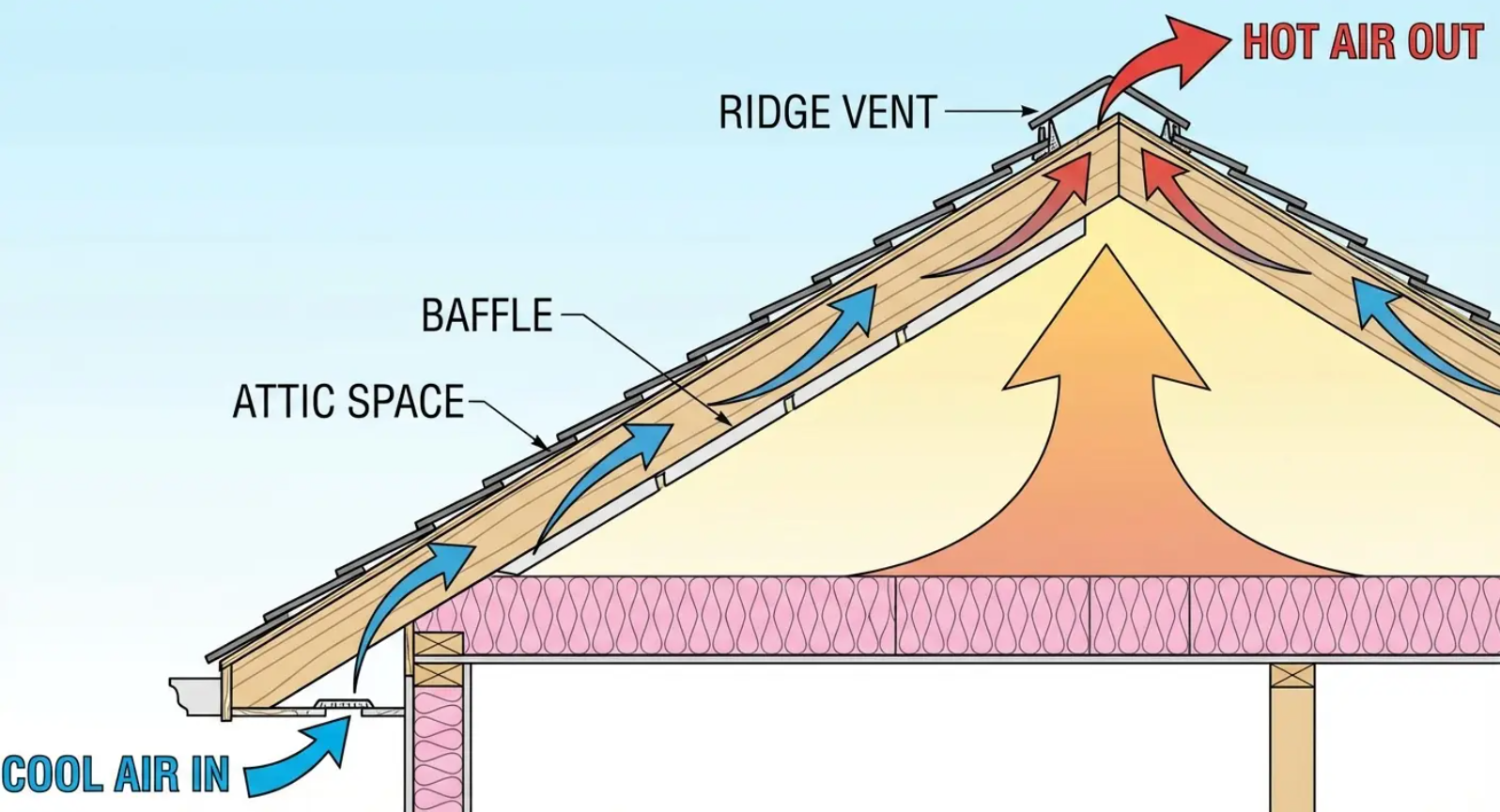
Sustainability is also about lifespan. Proper attic ventilation extends the life of the shingles. A roof installed without calculating the "1/300 rule" for airflow is destined to fail prematurely. We calculate this for every single project. Understanding why your home needs appropriate roof venting is critical for preventing heat buildup.

Diagram illustrating attic ventilation. Cool air enters, heated air rises, and exits via a ridge vent.

The Nitty Gritty Details


Even the best materials will fail if installed poorly. The nuances of installation determine the roof's integrity. We focus intensely on flashing and nailing patterns because these are where leaks typically start. We inspect every component, adhere to strict codes, and never cut corners on underlayment.


Storm Patterns vs. Standard


Standard nailing patterns just aren't enough in high-wind areas. We use a "storm nail" pattern, which usually involves 6 or 7 nails per shingle. This significantly increases wind resistance, keeping your shingles on your roof during a gale rather than scattered across your yard.

Specification Standard Installation Storm/High-Wind Installation
Nail Count 4 Nails per Shingle 6 Nails per Shingle
Wind Resistance Up to 60–70 MPH Up to 130 MPH
Starter Strip Standard Placement Enhanced Adhesive / Double Seal
Hip & Ridge Standard Cap High-Profile / Reinforced Cap
Ideal For Moderate Climates Coastal / Tornado Alley / Open Plains

Weaving vs. Continuous


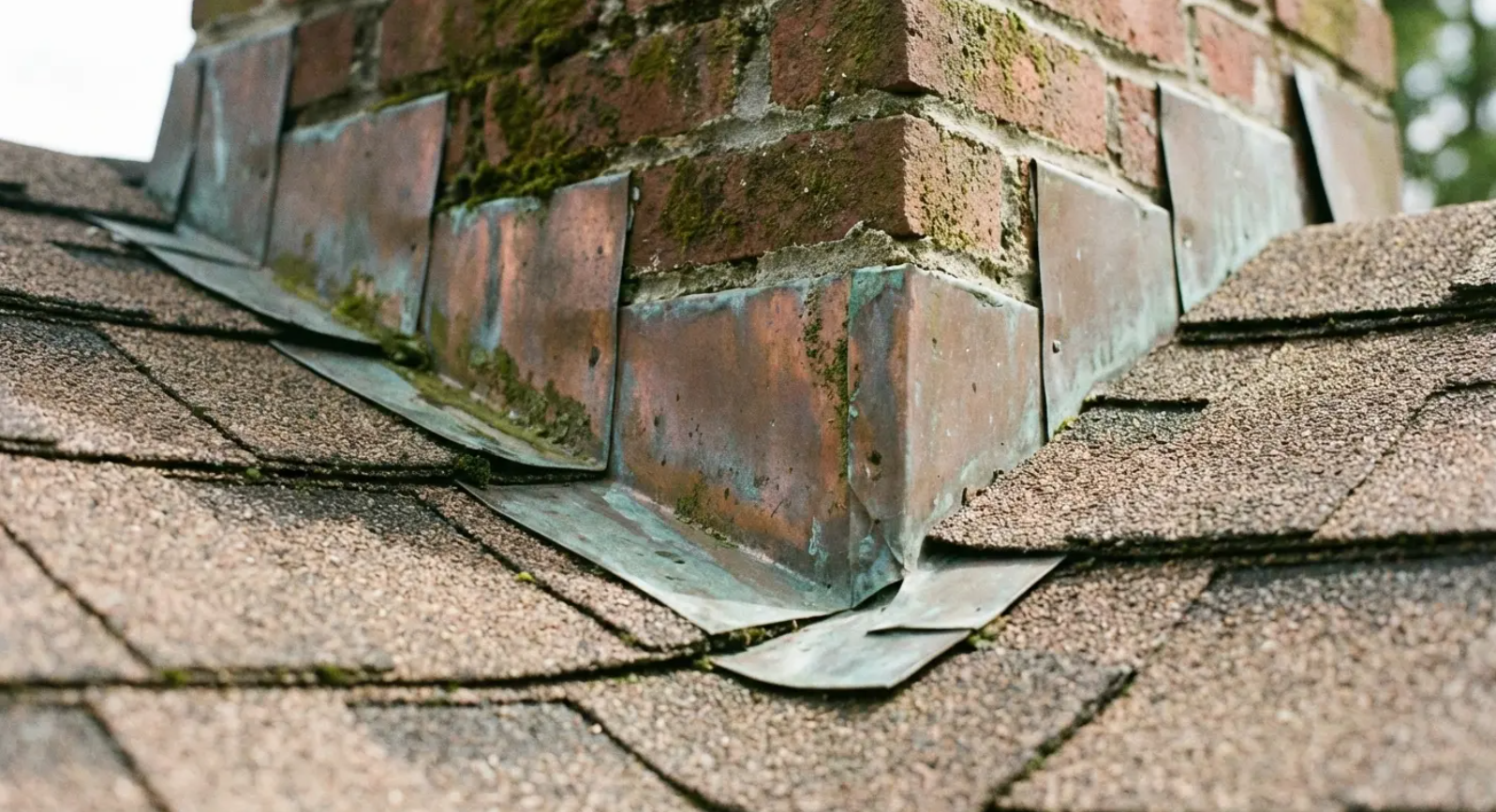
Leaks rarely happen in the middle of a shingle field; they happen at transitions. Modern standards require step flashing—individual pieces woven into shingles—rather than continuous flashing for sidewalls. This handles thermal expansion without buckling. We refuse to compromise here. Having roof flashing explained clarifies why we insist on step flashing over cheaper alternatives.

Close-up of a chimney base with copper flashing and moss, surrounded by brown asphalt shingles.

Synthetics Take Over


The industry has largely moved away from felt paper. We use synthetic underlayment. It is lighter, stronger, and provides a secondary water barrier that doesn't wrinkle when wet. This ensures your shingles lay flat immediately.


Sealing the Danger Zones


It is critical to install self-sealing membranes not just at the eaves, but in all valleys and around pipes. This ice and water shield seals around the nail shaft, creating a gasket that prevents water intrusion even if ice dams form.


The Ice Dam Scenario: In a heavy winter, heat escaping your attic melts snow, which refreezes at the gutter. Water backs up under the shingles. Without a self-sealing shield, that water drips into your walls. With the shield, the interior stays dry even when there is standing water on the roof.


We Simplify the Complexity


You are navigating a complex ecosystem of high-tech materials and digital diagnostics. It is easy to get lost in the weeds of solar reflectance indices and nailing patterns. Joyland Roofing exists to simplify this for you. We don't just sell you a roof; we act as your translator and guide. By staying on the cutting edge and partnering with top-tier manufacturers, we ensure the "latest and greatest" actually protects your home. We bridge the gap between digital precision and trusted craftsmanship.


Ready to upgrade your home's defense? Contact Joyland Roofing today for a consultation.


Woman laughing, wearing headset, holding phone, in office, Joyland Roofing logo on screen.

Your Home Deserves the Upgrade


Roofing is no longer just about hammering nails. It is about energy efficiency, resilience, and digital accuracy. You have the knowledge now to demand better materials and smarter installation. Don't settle for outdated methods when the technology exists to give you a roof that performs better and lasts longer. We want you to feel confident in your decision. Your home protects your family, and your roof protects your home. Trust the data, trust the materials, and trust a verified partner. The future of roofing is here, and it looks bright.

how often to clean gutters
By John Esh January 4, 2026
How often should you clean your gutters? It's not a one-size-fits-all. Your trees, weather, and roof design set the pace. Learn how often your gutters need attention to avoid leaks.
Logo for Joyland Roofing: red and black roof icon with company name in red and black text.
By John Esh January 4, 2026
Search Blog
Hole in white siding. Damaged area has rough edges and discolored interior. Horizontal grooves visible.
By John Esh January 1, 2026
Search Blog

Contractor showing a homeowner roof damage during an inspection, highlighting why an instant roof qu
By John Esh March 31, 2026
Instant roof quote tools are fast but often miss roof pitch, ventilation, and hidden damage that can significantly change the true cost of roof replacement.
By John Esh March 31, 2026
Mansard roof design helps you unlock extra space and stay within zoning limits. Understand the pros, risks, and key construction details before building
By John Esh March 31, 2026
Modern roof design has become a performance system, not just a weather barrier. Learn what thermal bridging, drainage architecture, and material sequencing mean for your home's energy costs and longevity.
By John Esh March 31, 2026
Lean to roof design creates unique structural, drainage, and thermal challenges most contractors miss. Learn what actually causes failures — and how to build a lean to that lasts decades.
By John Esh March 31, 2026
The best black roof house color ideas go far beyond safe gray and white. Discover bold palettes, undertone strategy, and testing methods that actually work for your black roof house.
By John Esh March 31, 2026
Dormer roof design failures happen where you can't see them. Learn the structural, drainage, and ventilation realities that determine whether your dormer lasts decades or fails in five years.
By John Esh March 31, 2026
Discover flat roof patio ideas that actually work — from structural load checks and waterproofing to materials, drainage, privacy, and plants that survive rooftop conditions.
By John Esh March 31, 2026
Parapet roof design failures rarely start where you expect. Learn the flashing details, thermal movement risks, and drainage plane problems that cost property owners thousands.
By John Esh March 31, 2026
Cantilever roof overhang design failures come from rotational stress, snow load miscalculations, and fascia myths. Learn what your builder isn't telling you.
By Moe Marketing Agency March 31, 2026
Dutch gable roof design done wrong costs thousands. Learn proportions, flashing, structural load paths, and maintenance realities before you build.