January 4, 2026
Roof Residential Longevity: Why Most Homeowners Replace Their Roof 10 Years Too Early
Author
New Paragraph
Most homeowners think they understand roof residential longevity - 20 to 25 years, maybe less if storms hit hard. Sounds simple. It’s not.
What actually happens is this: roofs get replaced long before they fail. Not because they can’t do their job anymore, but because they look like they can’t. A little granule loss, some streaking, a few curled edges - and suddenly you’re staring at a five-figure estimate you didn’t need to spend.
That’s the real problem. Most people don’t know the difference between a roof that’s aging and a roof that’s failing. And in an industry where replacements are far more profitable than repairs, that confusion gets expensive fast.
This guide is here to change that. We’re breaking down how roof residential longevity actually works - what truly shortens it, what extends it, and how to tell when your roof needs attention versus when it’s still doing exactly what it was built to do.
Before you assume your roof’s on its last leg, it’s worth seeing how longevity actually plays out - check out this roofing guide.
Because once you understand what real failure looks like, you stop reacting to fear - and start making decisions that actually protect your home and your wallet.
Table of Contents
- TL;DR
- Why Replacing Your Roof Early Costs You Thousands
- What Roof Failure Actually Looks Like (Hint: It's Not What You Think)
- The Free Inspection Problem
- Your Roof Is a System, Not Just Shingles
- Storm Damage: Real vs. Imagined
- When Repairs Beat Replacement Every Time
- The Math Your Contractor Won't Show You
- How to Actually Assess Your Roof's Condition
- Finding Contractors Who Won't Screw You
- The Bottom Line
TL;DR
Most roofs get ripped off 5-10 years before they actually fail. That's $10,000+ you didn't need to spend.
Why does this happen? Inspectors who only make money on replacements. Homeowners who can't tell the difference between a roof that looks rough and one that's actually failing. Insurance claims that treat cosmetic hail damage like total loss.
Here's what actually matters: knowing when cosmetic aging becomes functional failure. Understanding that your roof is a system... your shingles might be fine while your flashing is shot. Running the real numbers on repair vs. replacement instead of just reacting to the first scary estimate you get.
You need a framework for auditing your roof's condition that separates engineering reality from sales pressure. That's what this guide gives you.
Why Replacing Your Roof Early Costs You Thousands
Asphalt shingle roofs last 20-25 years. Everybody knows that.
What you don't know is that most get replaced at year 15. Some even earlier. Not because they failed... because someone convinced the homeowner they failed.
The average replacement costs $8,000-$15,000. Five million roofs get replaced every year in the U.S. Do the math on how much of that is premature, and you start to see the scale of the problem. (Hint: it's billions. With a B.)
What drives this?
Inspection culture has become replacement culture.
When you call someone to look at your roof residential system, you're often getting evaluated by a company whose primary revenue comes from full replacements, not repairs. How they make money matters more than most homeowners realize.
But there's something worse. Most of us don't know what roof failure looks like. We see curling shingles, some granule loss, maybe a dark streak or two, and we assume we're on borrowed time. The roofing company confirms our fears (because that's what we've hired them to do, whether we realize it or not), and suddenly we're financing a new roof.
Your roof can look rough and still be years away from failure.
Cosmetic aging and functional failure aren't the same thing, but the industry treats them interchangeably because it's more profitable that way.
What Roof Failure Actually Looks Like (Hint: It's Not What You Think)
End of life means your roof can't keep water out anymore. That's it. Everything else is negotiable.
But that's not how the industry treats it. They treat cosmetic aging and functional failure as the same thing because it's more profitable that way.
Granule loss? Shingles are designed to shed granules. Some loss is expected. Excessive loss matters, but "some" doesn't mean you're on borrowed time.
Curling at the edges? Depends how bad and whether it's breaking the seal.
Missing shingles after a storm? That's a repair. You wouldn't replace your whole fence because three boards fell off.
You're looking for patterns of water intrusion. Stains on your ceiling that grow after rain. Soft spots in your decking. Daylight visible through your roof boards from the attic. These signal failure.
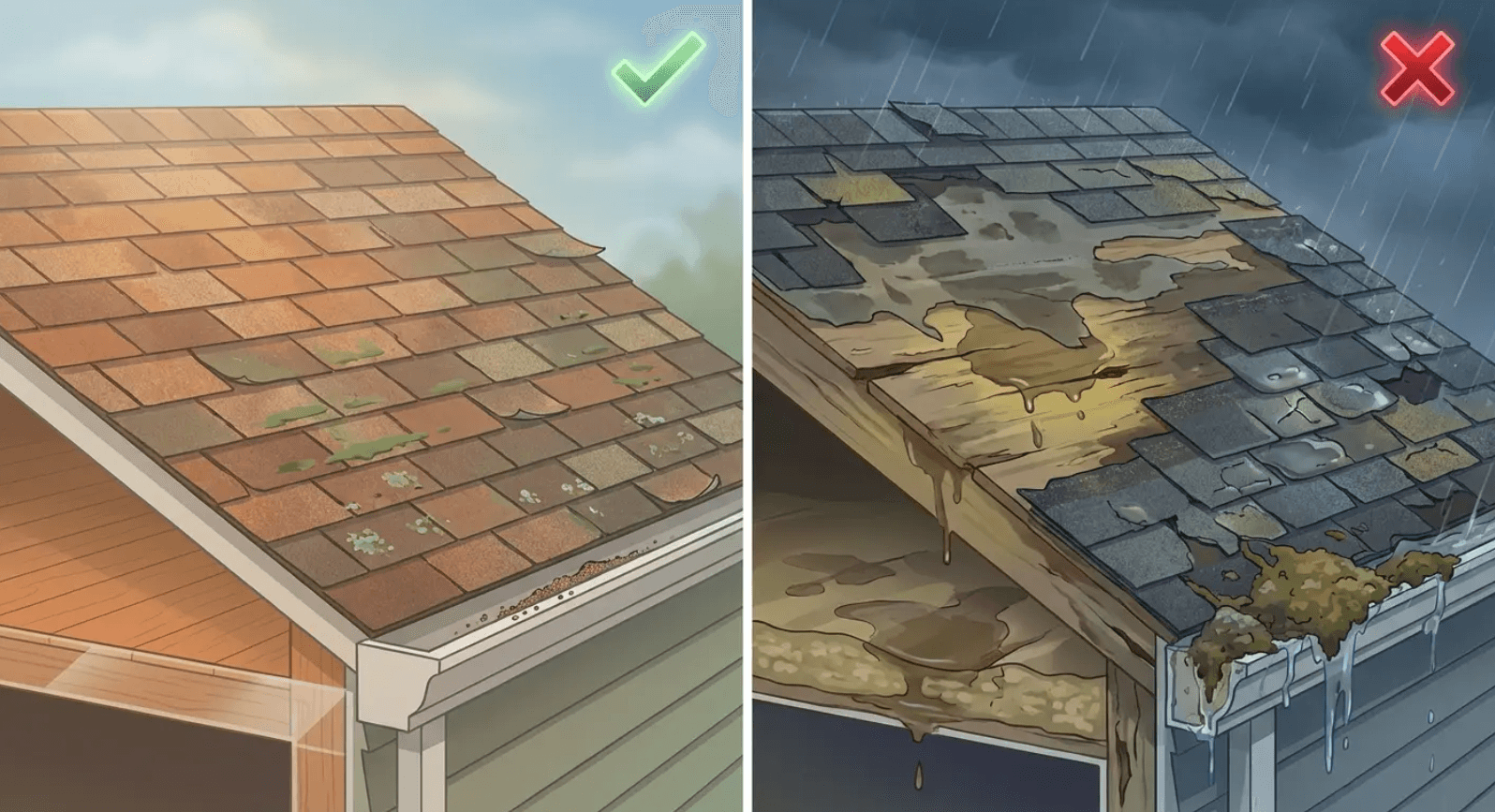
Here's a quick reference for what actually matters versus what's just normal aging:
| Visual Indicator | What It Means | Replacement Required? |
|---|---|---|
| Granule loss in gutters | Normal aging; shingles shed throughout lifespan | Not unless asphalt layer is exposed across 40%+ of roof |
| Curling shingle edges | Thermal cycling and age; may compromise wind resistance | Only if curling exceeds 1 inch and affects seal integrity |
| Dark streaks/algae | Cosmetic issue from algae growth; zero structural impact | No; cleaning or algae-resistant shingles address this |
| Missing shingles (isolated) | Storm damage or failed adhesive in specific areas | No; spot repairs sufficient for <5% of total surface |
| Ceiling stains (growing) | Active water intrusion; indicates compromised barrier | Yes, if widespread; targeted repair if localized |
| Sagging roof line | Structural failure of decking or framing | Yes; immediate intervention required |
The Three Failure Modes That Matter
Sealant Failure: When your shingles no longer stick properly and wind can lift them repeatedly, you've got a problem. This doesn't happen uniformly across your roof. It starts in high-stress areas (ridges, valleys, edges) and spreads. Catching it early means targeted repairs.
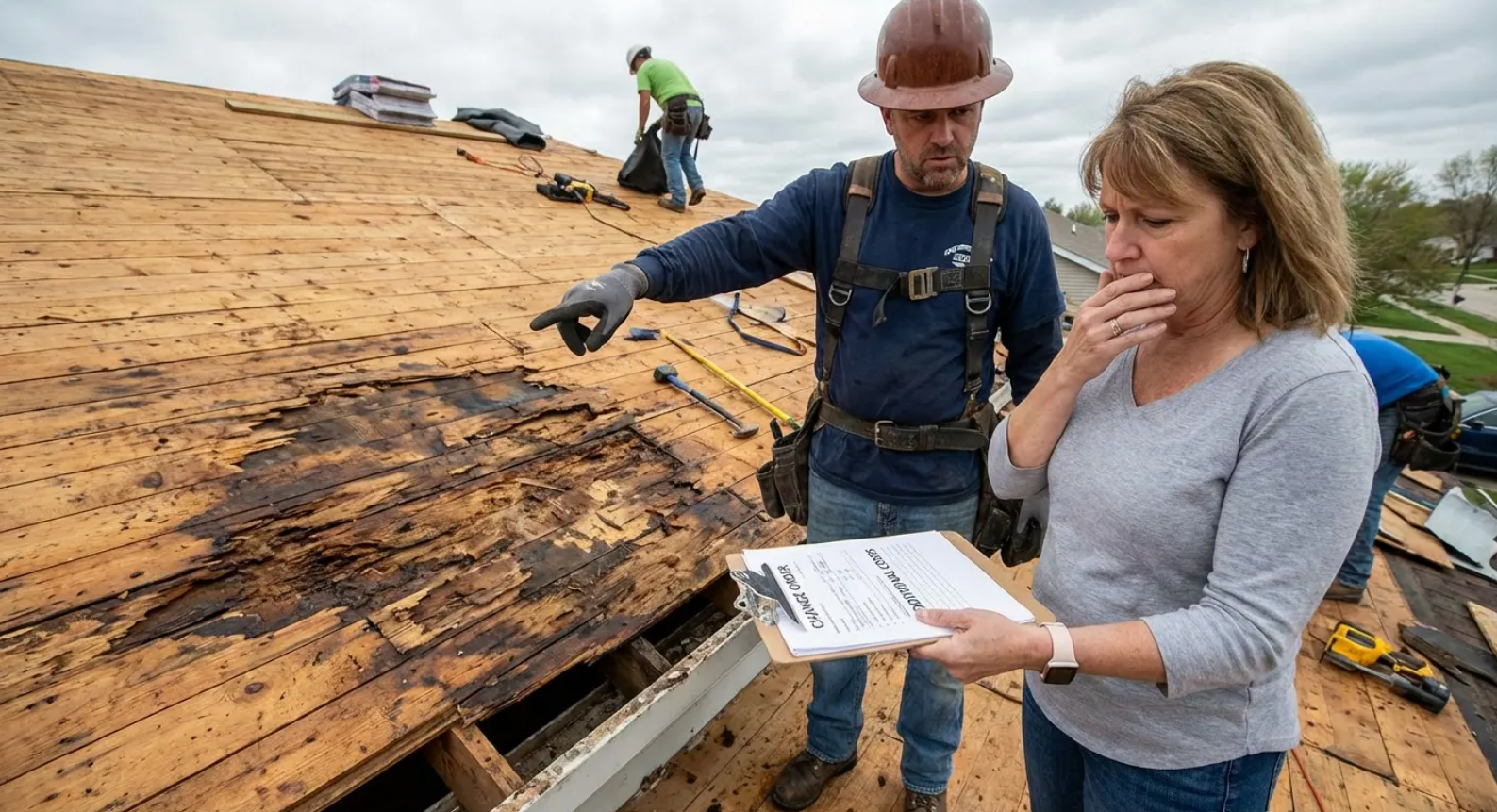
Decking Degradation: Your shingles might look fine while the wood underneath rots. This happens when your ventilation system fails or when small leaks go unaddressed for years. You won't see this from the ground, which is why attic inspections matter more than drone photos. Any reputable Knoxville roofing company should include attic inspection as part of their comprehensive assessment.
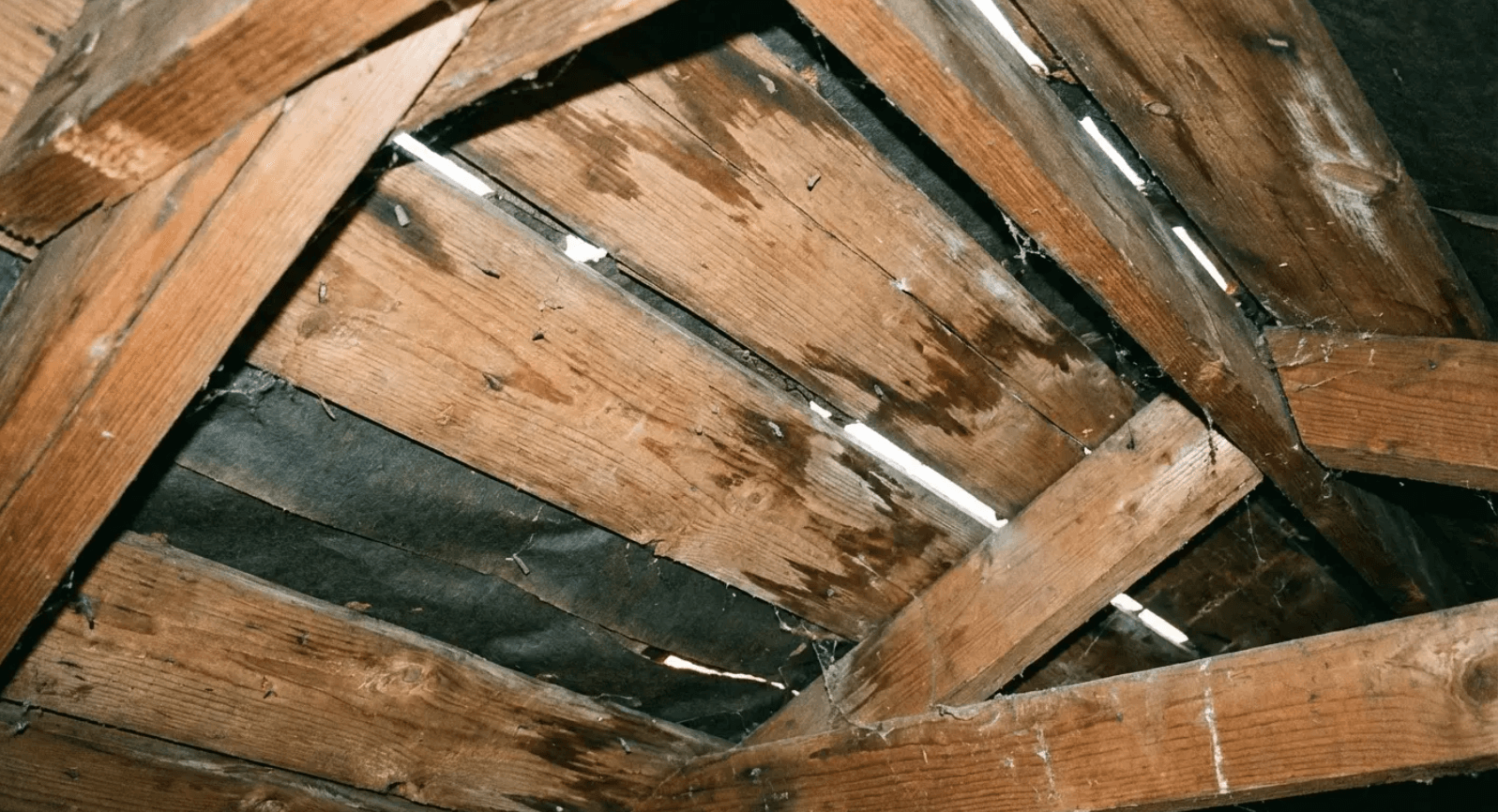
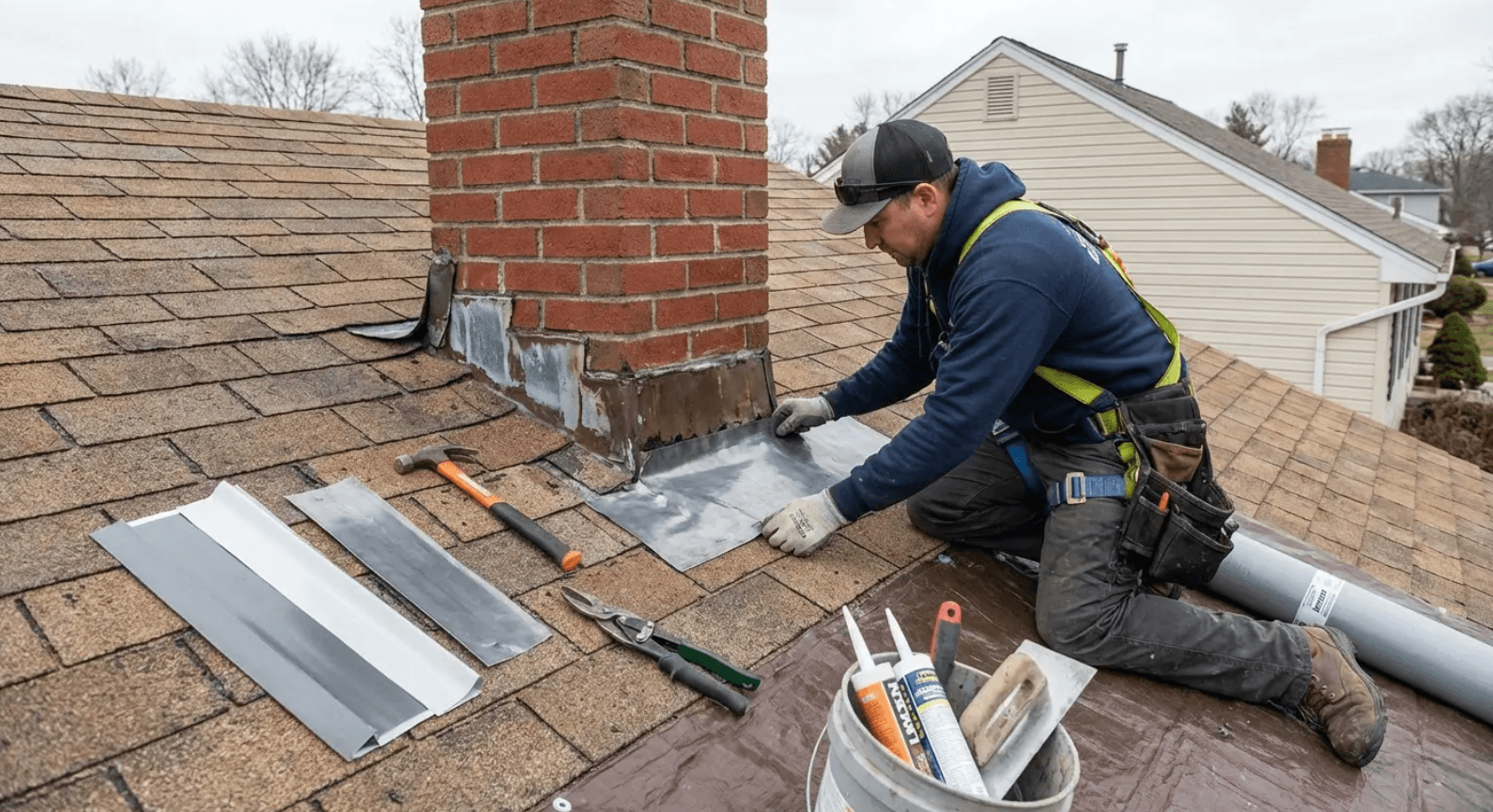
Flashing Compromise: More leaks start at flashing points (chimneys, vents, skylights, valleys) than anywhere else on your roof. Flashing can fail while your shingles still have a decade of life left. Replacing flashing is a fraction of the cost of replacing your entire roof.
The common thread? None of these failures require total replacement when caught at the right time. But they all get used to justify it.
The Free Inspection Problem
Free roof inspections aren't really free. You're paying with bias.
When a replacement-focused contractor inspects your roof, they're looking through a specific lens. They're trained to identify replacement triggers, not repair opportunities. This isn't necessarily malicious. It's how they've been taught to evaluate roofs, and it's how their business model works.
I've seen inspection reports that flag "aging shingles" as a critical issue on 12-year-old roofs. That's not a defect. That's a roof performing exactly as designed, just showing its age. But the language in these reports creates urgency where none exists.
What Unbiased Inspection Looks Like
You need someone who makes the same amount of money whether they recommend repair or replacement. That's harder to find than it should be.
Independent inspectors exist, but most homeowners don't know to look for them until after they've already gotten three "free" inspections from Knoxville roofing companies that all recommend replacement.
An unbiased inspection separates observations into categories: cosmetic wear (expected for the roof's age), minor issues (addressable with repair), and failure points (requiring work). Most inspection reports lump everything into one alarming narrative.
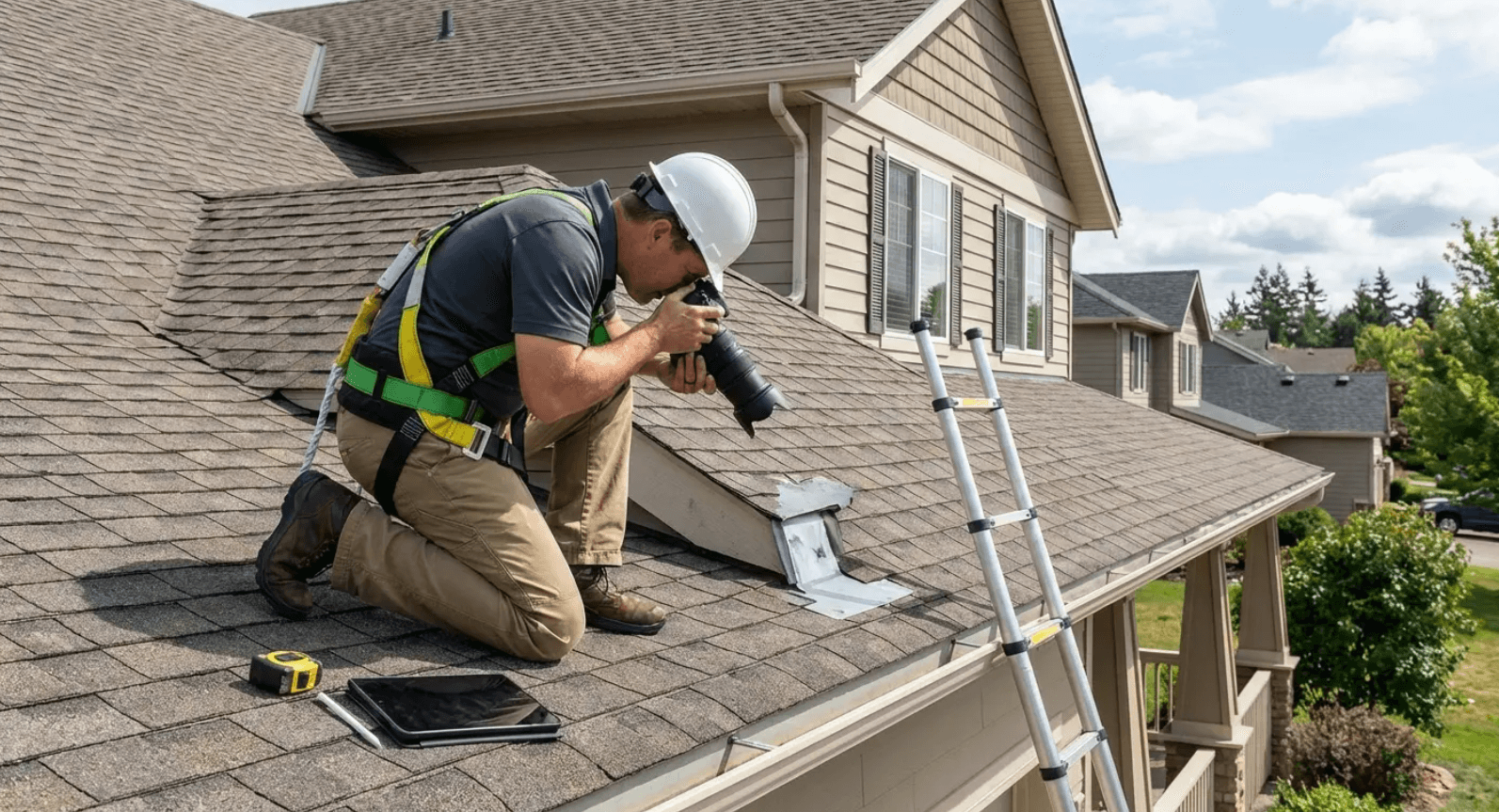
Ask for photos of specific problem areas with explanations of why each issue matters functionally. "Granule loss in valleys" tells you nothing. "Granule loss exposing asphalt layer in valleys, creating vulnerability to UV degradation and accelerated wear" tells you something actionable.
The difference between a sales inspection and an engineering inspection is that one tells you what you need to buy, and the other tells you what's happening on your roof. When vetting roofing contractors Knoxville homeowners should specifically ask how inspectors are compensated and whether they perform both repairs and replacements.
Questions to Ask Any Roof Inspector (Before They Start):
- Do you do repairs and replacements, or just replacements? And do you make comparable profit on both?
- I want a written report that separates cosmetic concerns from functional failures. Can you do that?
- Can you provide photographic evidence of each problem area with specific explanations?
- What percentage of roofs you look at actually need replacing versus just repairs?
- Will you identify which components are failing versus which are aging normally?
- If I wait another year or two, what happens?
- Do you offer a monitoring option for roofs that aren't in immediate failure?
Your Roof Is a System, Not Just Shingles
Your shingles might be rated for 25 years, but that doesn't mean your roof system lasts 25 years. It also doesn't mean the system fails at year 25.
Roofing is a system. Your shingles, underlayment, flashing, ventilation, and decking all work together, and they all age differently. Your shingles might still be in decent shape while your valley flashing has corroded. Or your decking might be compromised in one section due to a long-resolved leak while the rest of your roof is solid.
The industry sells you on material warranties because they're easy to market. "50-year shingles" sounds impressive. What they don't emphasize is that those shingles are part of a system with components that have different lifespans and different failure modes.
Last year, a client in Houston called us about a 14-year-old roof. She noticed a small leak near the chimney during heavy rain. Three contractors recommended full replacement, citing the roof's age and "widespread wear." An independent inspector found that only the chimney flashing had failed due to thermal expansion cycles. A $600 repair. The shingles themselves had another 8-10 years of serviceable life. She spent $600 instead of $14,000 and got nearly a decade more performance from the existing roof.
Component-Level Thinking Changes Everything
Your underlayment typically fails before your shingles, especially if you've got an older roof with felt paper instead of synthetic underlayment. But you can't see your underlayment without removing shingles. So it fails quietly, reducing your roof's water resistance while your shingles still look acceptable.
Flashing around your chimney might need replacement at year 12, but your shingles could go another eight years. Do you replace the whole roof or just address the flashing? Most contractors default to total replacement because it's simpler and more profitable. A quality Knoxville roofing company will break down which components need attention versus which can continue performing.
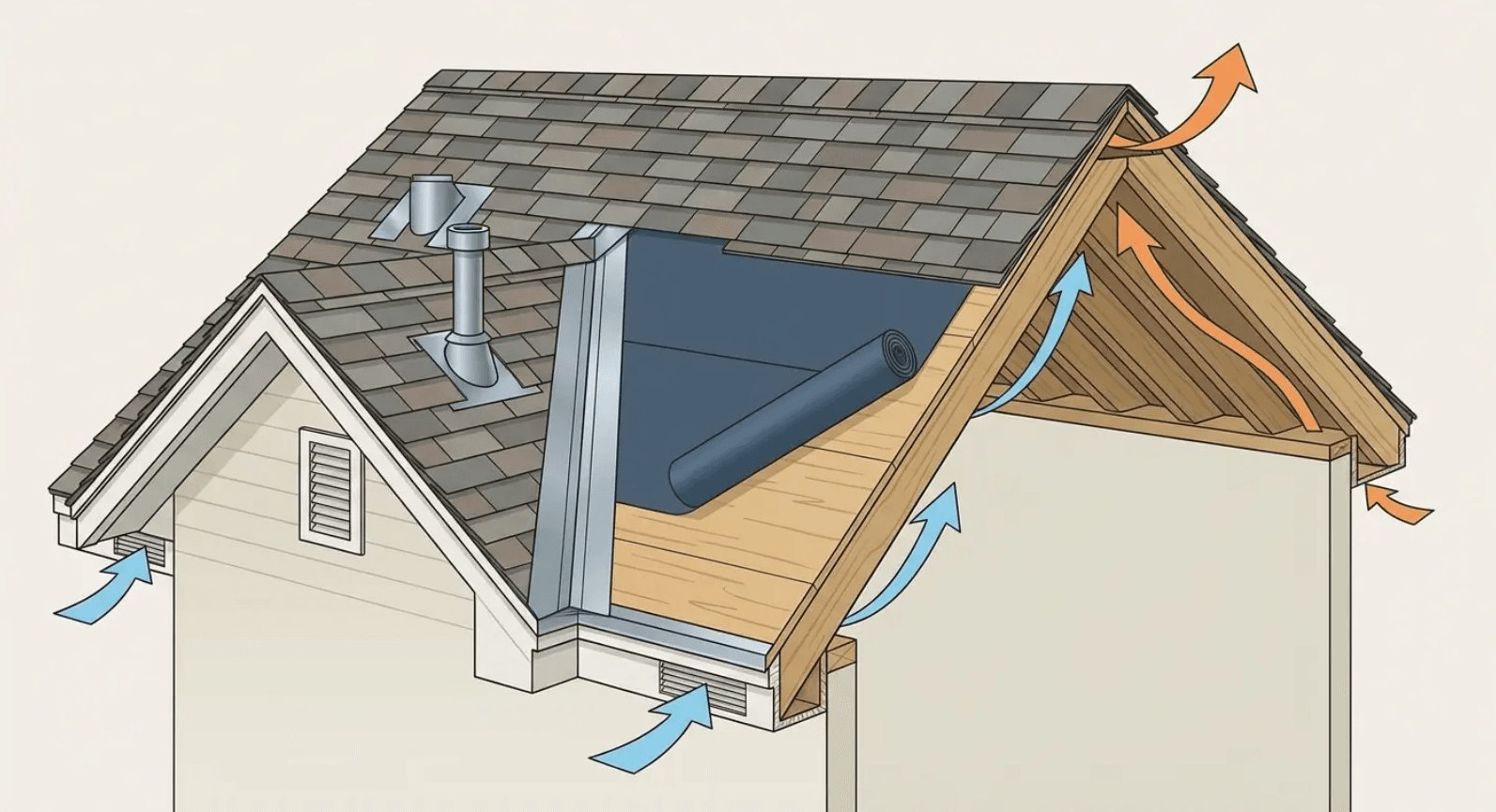
Ventilation problems can cut your roof's lifespan in half by trapping heat and moisture. But fixing ventilation doesn't require new shingles. It requires ridge vents, soffit vents, or attic fans. A $2,000 ventilation upgrade can add five years to your roof's life.
When you think in terms of systems and components, replacement becomes one option among several, not the inevitable conclusion. Experienced professionals in roofing Knoxville TN understand this component-level approach and can guide you through targeted work.
Your roof is a bunch of parts that all age differently. Here's what typically fails when:
| Roof Component | Typical Lifespan | Common Failure Mode | Replacement Cost (vs. Full Roof) |
|---|---|---|---|
| Asphalt Shingles | 20-25 years | Granule loss, curling, seal failure | 100% (baseline) |
| Underlayment (felt) | 12-20 years | Deterioration from moisture/heat | 30-40% (requires shingle removal) |
| Underlayment (synthetic) | 25-50 years | Rarely fails before shingles | 30-40% (requires shingle removal) |
| Valley Flashing | 15-25 years | Corrosion, separation from decking | 8-15% |
| Chimney Flashing | 12-20 years | Sealant failure, metal fatigue | 5-10% |
| Vent Boot Seals | 10-15 years | UV degradation, cracking | 3-6% |
| Ridge Vents | 20-30 years | Rarely fails; may become inadequate | 8-12% |
| Decking (OSB/plywood) | 25-40 years | Water damage from leaks, poor ventilation | 20-35% (depends on affected area) |
Storm Damage: Real vs. Imagined
Storm damage is the most over-diagnosed condition in residential roofing. Not because storms don't damage roofs (they absolutely do), but because the threshold for "total loss" has been systematically lowered by an industry that profits from insurance-funded replacements.
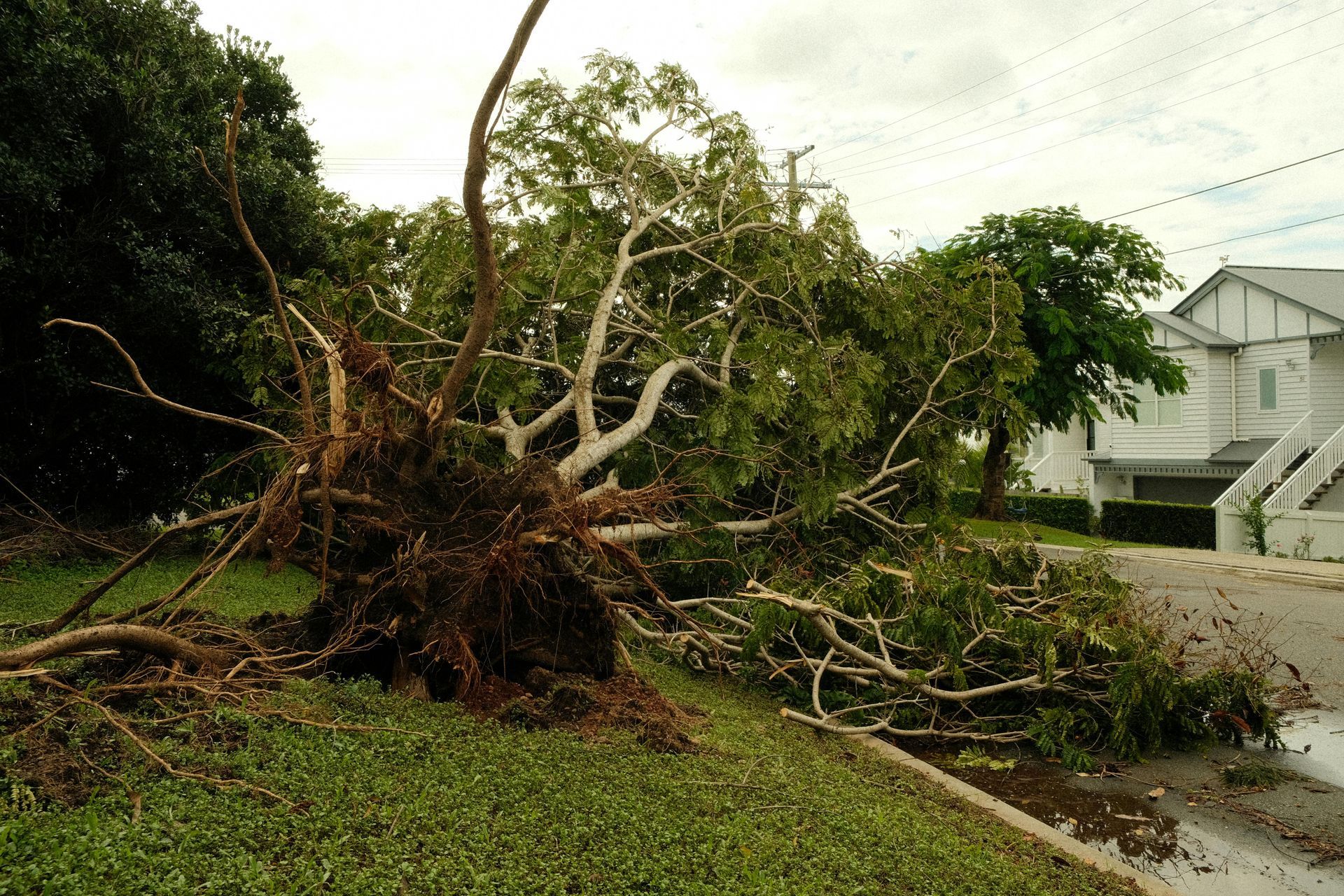
Recent severe weather continues to drive replacement demand across the country. In early March 2026, storms tore the roof off a home as severe weather moved across the Metro East (WHSV), showing the real damage that extreme weather can inflict. However, not all storm events create this level of destruction. Understanding the difference between catastrophic damage and repairable impact is critical.
Hail hits your roof. You get a knock on your door from a "storm chaser" who offers a free inspection. They find damage. They help you file an insurance claim. You get a new roof. This sequence has become so normalized that homeowners don't question whether the damage warranted replacement.
Hail Damage Reality Check
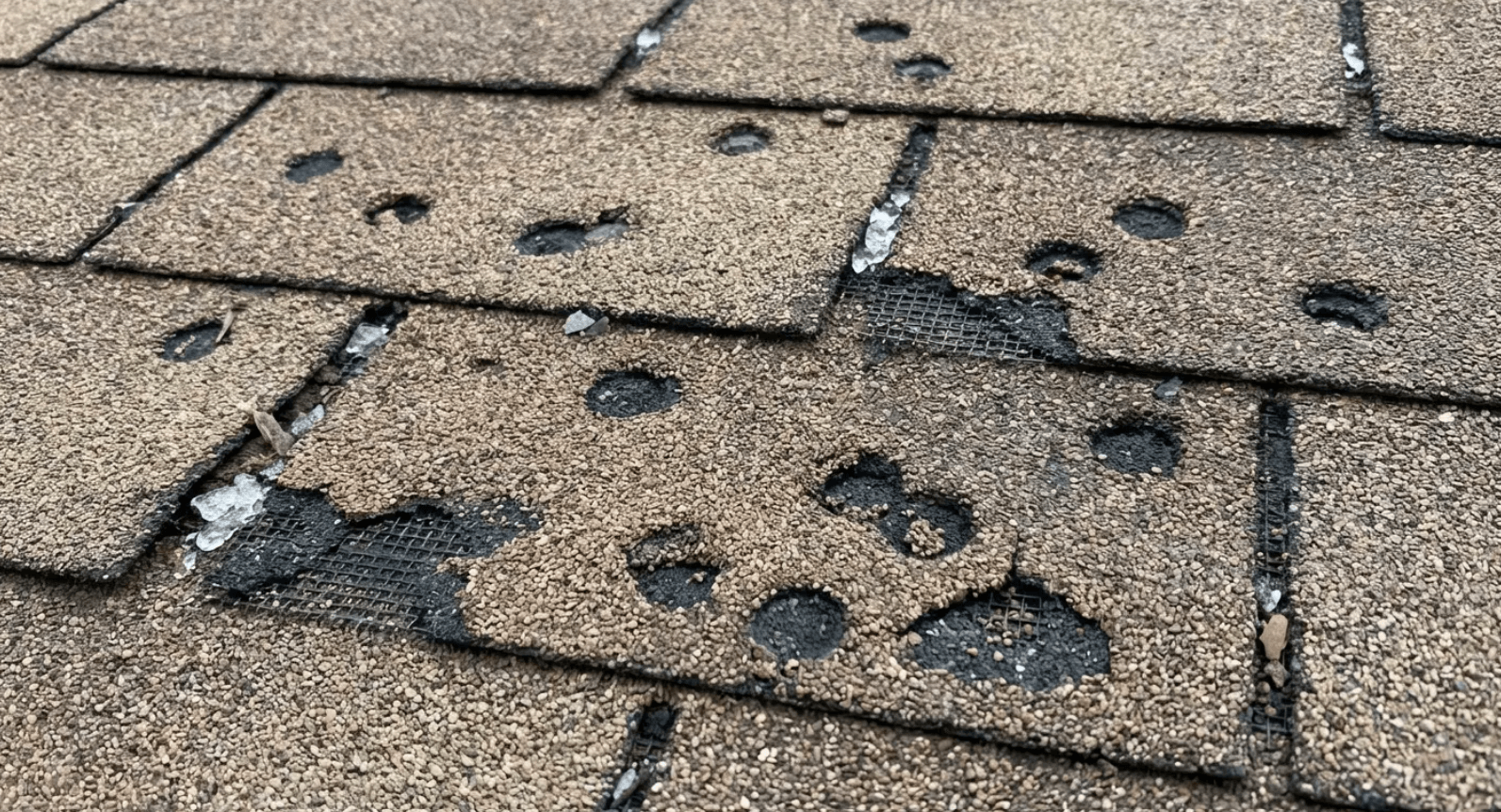
Hail creates divots in your shingles. Those divots can compromise the protective granule layer and accelerate aging. But what matters is: how severe is the damage, how widespread is it, and how much functional life did your roof have left anyway?
If you've got a 10-year-old roof with light hail damage across 30% of the surface, you're looking at accelerated aging, not immediate failure. That roof might've lasted another 12 years without the hail. With the hail damage, maybe it lasts eight.
That's still eight years of performance.
Insurance adjusters and contractors often use "cosmetic matching" requirements to justify full replacements. Your south-facing slope gets damaged, and they argue the whole roof Knoxville property needs replacement for aesthetic consistency. That's a valid concern if you're selling your house next year. It's not a functional concern.
Here's what happened in Denver:
A woman got hit with hail last spring. Not terrible hail (nothing like the golf-ball-sized stuff that totals cars), but enough to dimple her shingles.
Within two days, she had storm chasers knocking. Both said the same thing: full replacement, we'll handle the insurance, sign here.
She didn't. She waited three weeks and paid an independent inspector $300 to actually measure the damage.
127 hail strikes across 2,400 square feet. Most concentrated on the west-facing slope. Impact depth: 2-3mm. Enough to speed up granule granule loss, but the asphalt mat wasn't exposed.
The recommendation: watch it for two years. If degradation gets worse, replace just the west slope. Cost: $3,800 in two years, maybe.
The "sign here" option: $13,500 right now for a roof that didn't functionally need it.
Wind Damage vs. Wind Wear
Wind lifts shingles. Sometimes it tears them off completely. Sometimes it just breaks the seal. A few missing shingles don't mean your roof failed. They mean you need to replace a few shingles.
I've seen homeowners get told they need full replacements after losing 15-20 shingles in a windstorm. That's roughly 0.5% of the shingles on an average roof. You wouldn't replace your entire fence because three pickets blew off.
The question you should ask after storm damage: what percentage of my roof is compromised, and how does that affect my remaining lifespan? If the answer is "20% damage on a roof that had five years left," you're looking at repairs and monitoring, not replacement. A trustworthy Knoxville roofing company will help you understand these distinctions rather than defaulting to full replacement.
When Repairs Beat Replacement Every Time
Repairs get dismissed as "throwing good money after bad." That's true sometimes. It's also a convenient narrative for contractors who'd rather sell you a $12,000 replacement than a $1,500 repair.
Strategic repairs at the right intervals can extend your roof's life by 5-10 years. You're not trying to make a failing roof last forever. You're addressing specific problems before they cascade into system-wide failure.
The Repair Windows That Matter Most
Years 10-12: Your first-generation flashing starts failing. Valleys, chimneys, vent boots... they need attention now, before the leaks start rotting your decking. Cost: $800-$2,500. What you get: 3-5 more years.
Around year 15-17: High-stress areas start showing real wear. Ridge caps, edges, south-facing slopes. You can replace just these zones plus add new ridge vents and push your roof to year 22-25. You're looking at $2,000-$4,500 for another 5-7 years.
Late teens (18-20): If you've maintained things, you might only need flashing and minor shingle work. This is where the math gets interesting. Spend $1,500-$3,000 now or $12,000 in two years?
The calculus is simple. Year 15, roof might've made it to year 20, spend $3,000 to get to year 25? You just saved $9,000-$12,000 in today's dollars.
Take this Portland situation. A couple had a 16-year-old asphalt shingle roof showing significant wear on the south-facing slope and along the ridge line. The north slope and most valleys were still in good condition. Instead of replacing the entire 2,800 square foot roof for $15,200, they opted for targeted work: replaced all south-slope shingles (940 sq ft), installed new ridge caps across the entire roof, and replaced three vent boots and the chimney flashing. Total cost: $4,100. The repair added 7 years of performance, pushing the full replacement timeline to year 23. When they eventually did replace the entire roof, they'd saved $11,100 in present-value dollars and got 23 years from a roof originally expected to last 20.
What Makes a Repair Worth It
You need three conditions: (1) The majority of your roof is still functional, (2) The problem is isolated to specific components or areas, and (3) You're getting at least three additional years of performance per thousand dollars spent.
Repairs fail when homeowners try to patch a roof that's already in system-wide failure. At that point, you're not repairing. You're delaying the inevitable and probably causing more damage in the process.
But if your roof is at 60-70% of its functional life and you've got isolated issues? Repair is almost always the right move financially. Experienced roofers in Knoxville who prioritize customer value over transaction size will walk you through this analysis honestly.
Repair vs. Replace Decision Framework:
Answer these questions to determine whether repair makes sense:
1. Age Assessment: Is your roof under 75% of its expected lifespan? (For 25-year shingles, that's under 18-19 years)
- Yes = Repair is worth considering
- No = Lean toward replacement
2. Damage Scope: What percentage of your roof shows functional compromise?
- Under 30% = Repair strongly favored
- 30-50% = Run the financial math
- Over 50% = Replacement likely better
3. Component Analysis: Are the problems concentrated in replaceable components (flashing, valleys, ridge caps)?
- Yes = Repair is ideal
- No (decking or widespread shingle failure) = Consider replacement
4. Cost-Per-Year Calculation: Divide repair cost by additional years gained
- Under $500/year = Excellent repair value
- $500-$1,000/year = Good repair value
- Over $1,000/year = Replacement may be better
5. Future Plans: Are you selling within 2 years?
- Yes = Replacement may provide better ROI for resale
- No = Repair saves immediate capital
6. System Health: Is your ventilation adequate and decking sound?
- Yes = Repairs will perform as expected
- No = Address system issues first or replace
When considering Knoxville roof repair options, this framework helps you make decisions based on data rather than pressure.
The Math Your Contractor Won't Show You
Every dollar you spend on your roof today is a dollar you can't invest elsewhere. That matters more than most homeowners consider when making replacement decisions.
Say your roof is 14 years old and showing wear but not failing. Contractor A says you need replacement now ($13,000). Contractor B says you can repair and get another six years ($2,800). Most homeowners focus only on the immediate decision: spend $13,000 or spend $2,800?
The Real Comparison
You need to compare the total cost of ownership over the same time period. If you replace now, you're spending $13,000 today. If you repair and then replace in six years, you're spending $2,800 today plus $13,000 (adjusted for inflation, probably $14,500) in six years.
Present value matters. $14,500 six years from now is worth roughly $12,100 in today's dollars (assuming a 3% discount rate). Add your $2,800 repair, and your total present value cost is $14,900. That's $1,900 more than replacing now.
But here's what changes the math: if you're financing either option, the cost of capital matters. Financing $13,000 at 7% over 10 years costs you $18,100 total. Financing $2,800 now and $14,500 in six years (same terms) costs you roughly $19,800 total. The gap widens.

However (and this is where it gets interesting), if you can pay cash for the repair and invest the $10,200 difference for six years at even a modest 6% return, you end up ahead. The repair route gives you optionality and liquidity.
When Replacement Makes Financial Sense
You're at year 18 or beyond, repairs would cost more than 30% of replacement cost, or you're planning to sell within two years and need the marketability boost. Outside those scenarios, the math usually favors strategic repairs and delayed replacement.
I'm not suggesting you repair your way into roof failure. I'm suggesting you run the numbers instead of making decisions based on fear or contractor pressure. A transparent roofing contractor Knoxville TN homeowners can trust will show you both scenarios and let you decide.
How to Actually Assess Your Roof's Condition
You don't need to be a roofing expert to understand your roof's condition. You need to know what questions to ask and what answers should concern you.
The Self-Assessment Framework
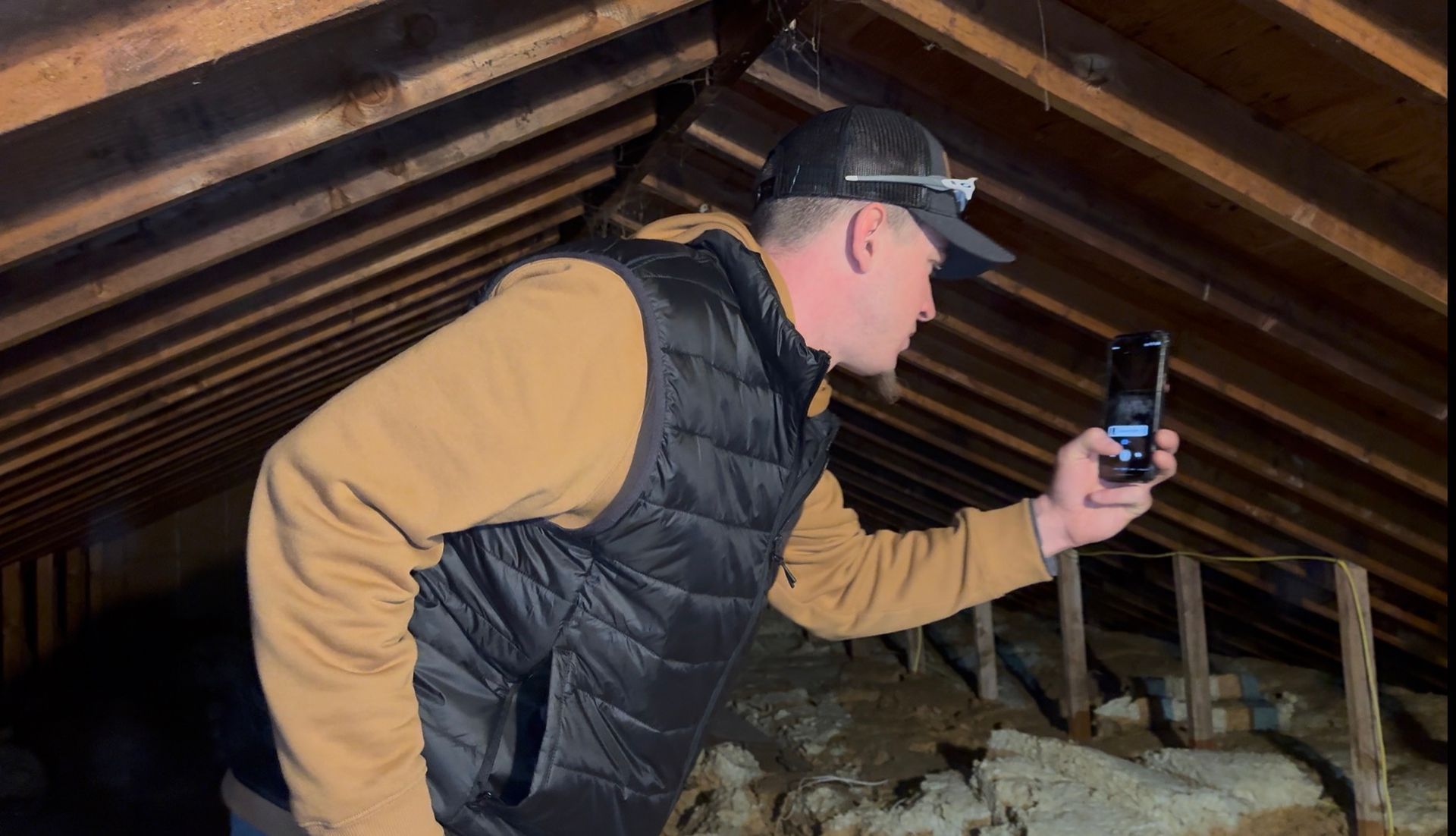
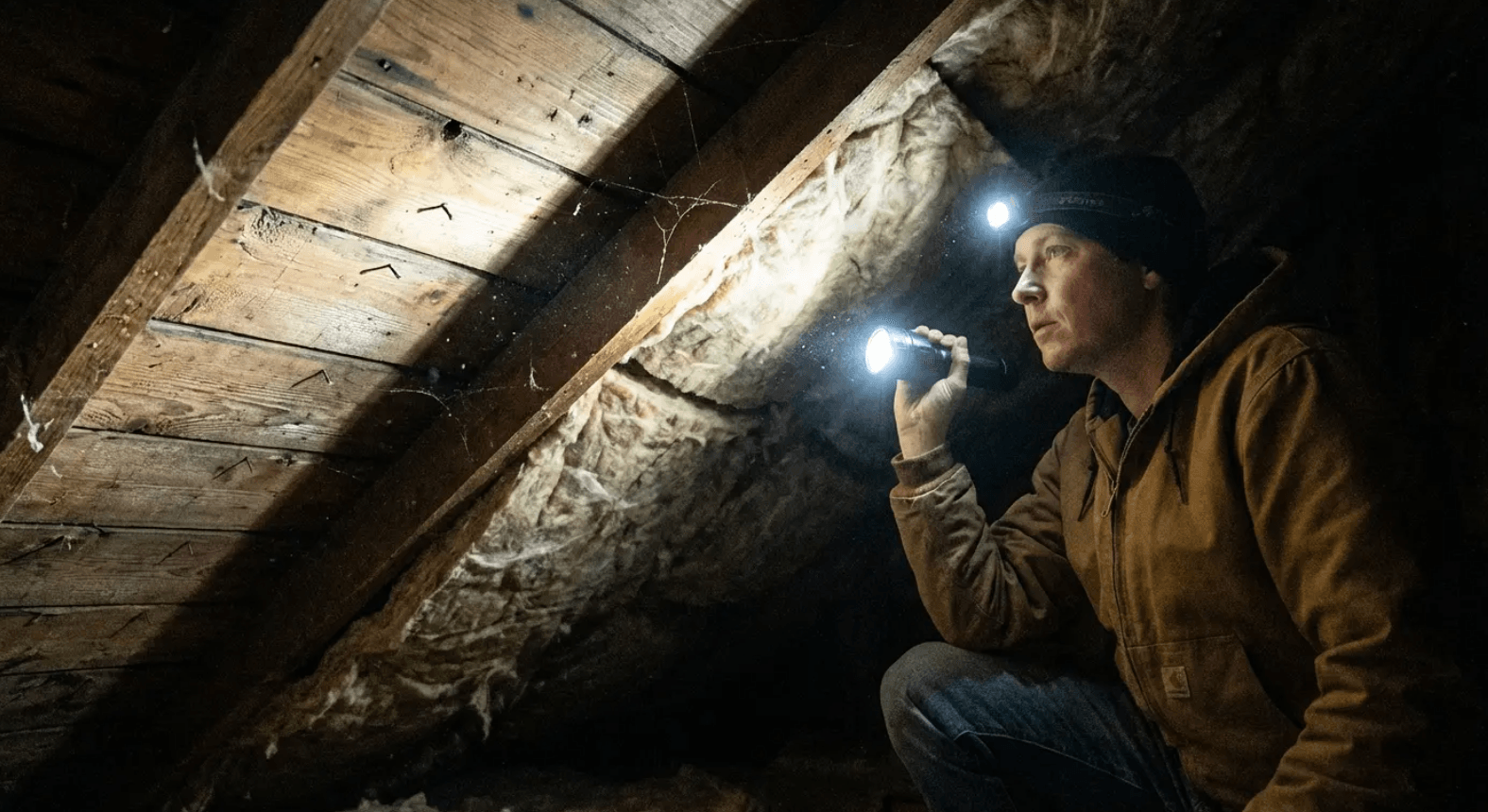
From Your Attic: Go up there on a sunny day. Look for daylight coming through the roof boards. That's a problem. Check for water stains on the underside of your decking. Fresh stains (darker, sometimes damp) mean active leaks. Old stains (faded, dry) mean historical issues that may or may not still be active. Feel your insulation. Wet or compressed insulation indicates ongoing moisture problems.
From the Ground: Use binoculars to inspect your roof without getting on it. You're looking for missing shingles, significant curling (edges lifting more than an inch), and areas where the granule loss is so severe you can see black asphalt. A few worn spots don't mean failure. Widespread bare asphalt across multiple sections does.
In Your Gutters: Check what's coming off your roof. Some granules are normal throughout a roof's life. Excessive granules (handfuls per cleaning) suggest accelerated wear. But here's the context that matters: new roofs shed granules heavily for the first year or two. That's manufacturing excess, not failure.
Questions That Cut Through Sales Pressure
When you hire someone to inspect, ask these specific questions and pay attention to how they answer:
"What percentage of my roof shows functional compromise versus cosmetic aging?" If they can't or won't separate these categories, you're getting a sales pitch.
"Which specific components need attention, and what happens if I address those without replacing the entire roof?" This forces them to think in terms of systems and repairs rather than defaulting to replacement.
"If this were your house and your money, would you replace it now or repair and monitor it?" Personal stake questions sometimes break through the sales script. Not always, but sometimes.
"Can you show me the specific failure points and explain why each one requires replacement versus repair?" You want photos and explanations, not generalizations about "age" or "wear."
Red Flags in Inspection Reports
Vague language without specific functional problems identified. Every roof ages. That's not a diagnosis.
Urgency language ("needs immediate attention," "critical condition") without corresponding evidence of active leaks or structural compromise. Real emergencies are obvious. Manufactured emergencies use dramatic language to compensate for lack of crisis.
Recommendations for replacement without any discussion of repair options or component-level solutions. Even roofs that genuinely need replacement usually have some repairable elements.
Pressure to make immediate decisions, especially tied to financing offers or limited-time discounts. Legitimate roofing companies don't need to manufacture urgency. Your roof's condition won't change significantly in the two weeks you take to get second opinions.
Getting a Second (or Third) Opinion That Differs
You need opinions from different types of companies. If you get three inspections from three replacement-focused contractors, you'll get three similar recommendations. Mix it up: get one from a large replacement company, one from a repair-focused roofing contractor Knoxville homeowners recommend, and one from an independent inspector who doesn't perform the work.
The variance in their assessments tells you something important. If all three say you need immediate replacement, you probably do. If one says replacement, one says repair, and one says monitor for another year, you've got options worth exploring.
Finding Contractors Who Won't Screw You
The hardest part of roof ownership isn't dealing with aging shingles. It's finding someone you can trust to tell you the truth about what you need.
You're stuck between contractors who profit from your replacement and your own lack of expertise to verify their recommendations. The fact that they know more than you is what makes this decision so stressful. You know you don't know enough, and you're not sure who's giving you straight answers.
The roofing industry is experiencing a shift in how contractors position their services. In January 2026, Mister ReRoof announced expanded metal roof replacement services in Katy, TX (Burlington County Times), emphasizing lifetime solutions and transparency over quick sales. It's a model that reflects growing consumer demand for honest assessments and long-term value rather than pressure-driven replacements.
Look, I'm with Joyland Roofing. We do this for a living. But we built our business differently because we got tired of the industry's default answer to everything being "replace it."
When we inspect your roof, you get a breakdown of what's actually wrong, what's just aging normally, and what can wait. We show you repair options and replacement options side by side, with real numbers on what each buys you.
Sometimes we recommend replacement. Often we don't. We make money either way, which means we can actually tell you the truth about what your roof needs.
If you're in our service area and you're tired of inspections that feel more sales-driven than informative, we'd like to show you what transparent roof assessment looks like. You'll get the information you need to make a confident decision, whether that's working with us or taking what you've learned to make a better choice elsewhere.
The Bottom Line
Don't let someone sell you a $13,000 roof replacement because yours is 14 years old and "showing its age." Everything shows its age. That doesn't mean it's broken.
Find someone who makes money whether they repair or replace your roof. Ask specific questions. Run the actual numbers.
Most importantly, understand that roof residential longevity doesn't end overnight, and your roof doesn't need replacing the moment it shows wear. Those two facts should change how you approach every roof-related decision for the rest of your homeownership.
The replacement-default mindset costs homeowners billions collectively and thousands individually. It persists because it's profitable for contractors and because most of us don't know enough about roofing systems to push back confidently. You're not expected to become a roofing expert, but you can become an informed consumer who asks the right questions and demands specific answers.
Think in terms of components and systems. Understand that your roof ages in stages, with different parts requiring attention at different times. Know the difference between cosmetic wear and functional failure. Run the financial math instead of making decisions based on fear or urgency.
Your roof probably has years left. Don't throw them away.