December 31, 2025
Roof Replacement: The Complete Guide to Protecting Your Home (and Your Wallet)
Author
Let’s be honest: nobody wakes up on a Saturday morning excited to buy a new roof. It’s a massive expense, it’s loud, and unlike a kitchen remodel, you don’t get a fancy new island to show off at dinner parties. But getting it right is critical. According to recent industry data from Verisk,roof repair and replacement costs jumped nearly 30% last year alone, hitting $31 billion.
With prices surging, you can't afford to get this wrong. A
roof replacement isn't just about nailing down new shingles; it’s about engineering a shield that keeps your home dry and efficient for decades. Here is everything you need to know to make sure your investment actually pays off.
Table of Contents
- TL;DR: The Quick Version
- Picking the Right Materials
- The Stuff You Don't See (But Need)
- The Construction Zone
- Let’s Talk Money
- Why We Obsess Over the System
- Final Thoughts
TL;DR: The Quick Version
If you’re in a hurry, here are the absolute essentials you need to know before signing a roof replacement contract:
- It’s a system, not just shingles: If your ventilation is bad, even the most expensive shingles will cook from the inside out and fail early.
- Architectural is the new standard: Avoid the flat "3-tab" shingles. Architectural (dimensional) shingles look better, last longer, and handle wind much better.
- Ventilation is non-negotiable: Your roof needs to breathe. Cool air must come in the bottom (soffits) and hot air must go out the top (ridge) to prevent mold.
- Watch the transitions: Roofs rarely leak in the middle. They leak at walls, chimneys, and valleys. Insist on proper metal flashing in these spots.
- Check the wood: Never let a roofer nail new material over rotten plywood. Always budget a little extra for wood replacement just in case.
- Bet on the installer, not the brochure: Manufacturer warranties are full of loopholes. A strong workmanship warranty from your local installer is your best safety net.
Picking the Right Materials
Most homeowners start by picking a color. We get it—curb appeal matters. But before you decide between "Charcoal Black" and "Weathered Wood," you need to look at performance. Modern roofing materials are high-tech, engineered products designed to handle specific environments.
Whether you are doing a standard
roof replacement or a custom upgrade, the material you choose dictates how long you can go before worrying about this again.
Asphalt Has Changed (For the Better)
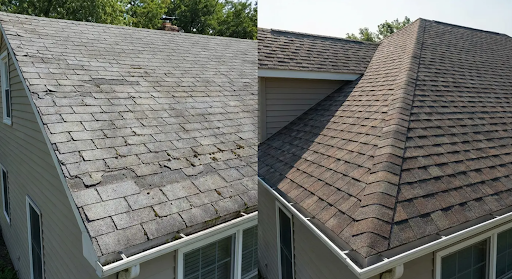
Asphalt shingles are still the king of American roofing, but the technology has come a long way. We aren't using the simple paper mats of the 1990s anymore. Today's shingles are fiberglass-reinforced and engineered for depth and durability.
Why You Should Skip 3-Tab Shingles
If you see a quote for flat, 3-tab shingles, toss it. They are essentially dinosaur tech. We almost exclusively recommend architectural shingles. They have multiple bonded layers, which gives them that textured, 3D look. More importantly, they are heavier and far more resistant to wind uplift.

Hail Protection & Insurance Savings
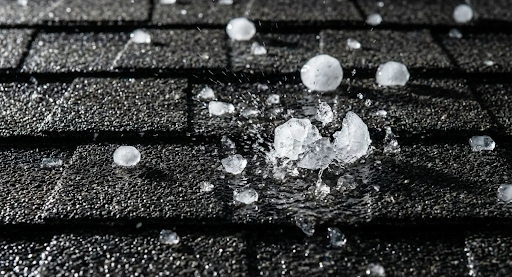
Living in a storm path? You might want to look at Class 4 Impact Resistant shingles. These are modified with rubber-like polymers (SBS) that allow the shingle to absorb the shock of a hailstone without cracking. It’s like the difference between hitting a rock and hitting a tire.
The stats back this up. “In hail-prone states, the average roof lifespan is 15 years, compared to 22 years in western states.” That 7-year gap is money out of your pocket. Plus, many insurance carriers offer premium discounts for installing Class 4 shingles, which can help offset the upfront cost.
Even in places like Palm Beach County, homeowners are facing rising insurance scrutiny. Upgrading your materials is one of the best ways to protect your home’s insurability.

Life Beyond Asphalt
If you plan on staying in your home forever, or you just want a distinct look, you might look past asphalt. Metal and synthetics cost more upfront, but they are often cheaper in the long run because you won't be replacing them in 20 years. If you are thinking about installing a metal roof, here is how they stack up:
| Material | Lifespan | Cost | Best For |
|---|---|---|---|
| Architectural Asphalt | 20–30 Years | $ | Most homes; best bang for your buck. |
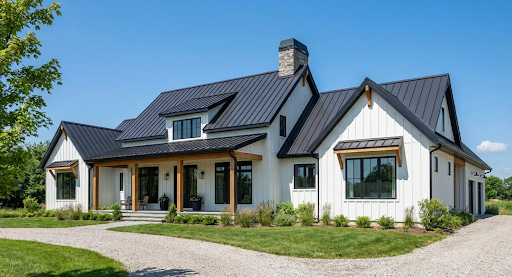
| Metal (Standing Seam) | 50+ Years | $$$ – $$$$ | Modern look; shedding snow; longevity. |
| Synthetic Composite | 50+ Years | $$$ | Historic slate/shake looks without the maintenance. |
| Clay/Concrete Tile | 50–100 Years | $$$ | Mediterranean styles; hot climates. |
Metal Roofing: Buy It Once
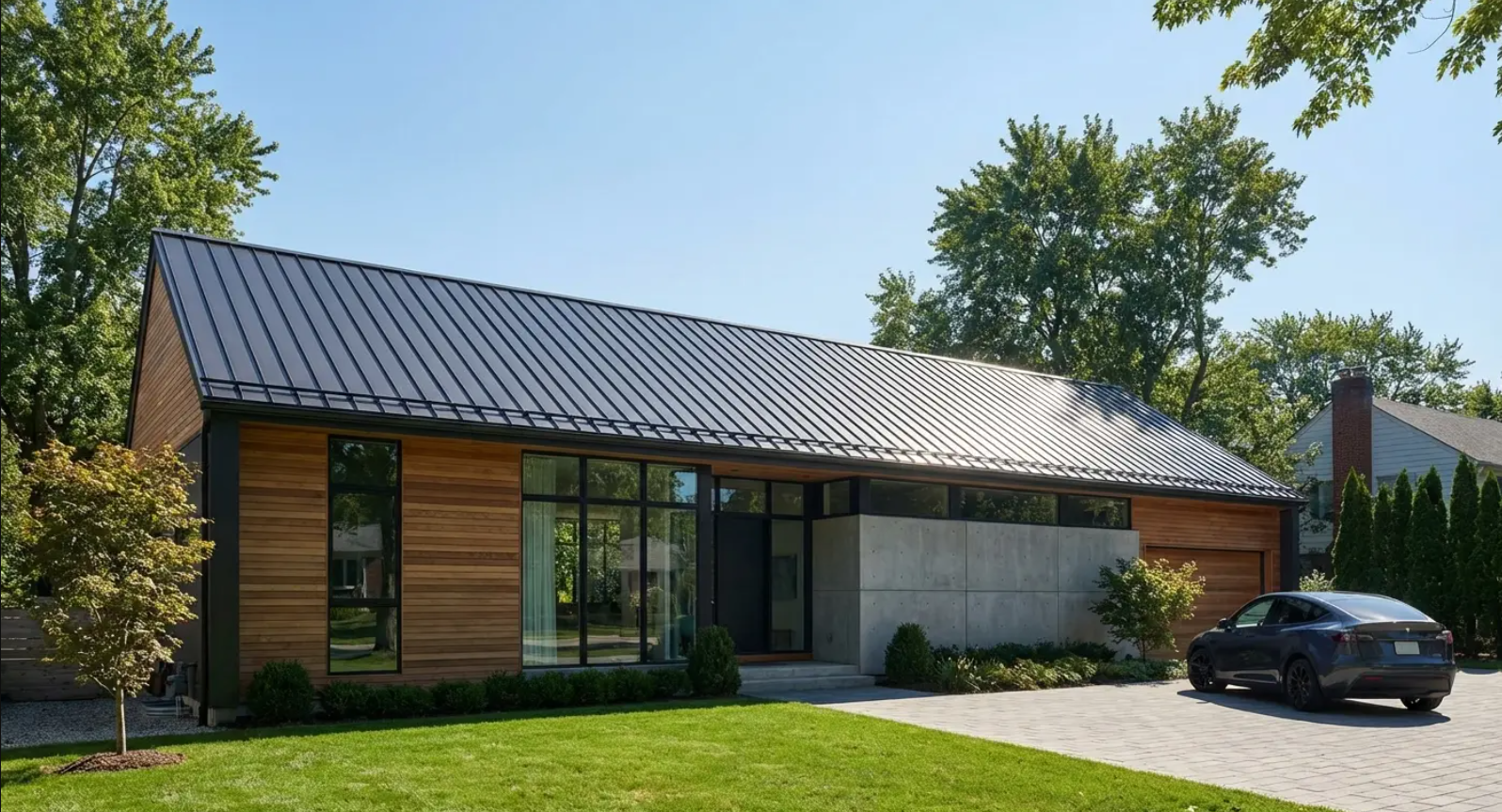
If you go metal, go "Standing Seam." This system hides the fasteners underneath the metal panels. Avoid the "barn roof" look where the screws are exposed to the weather; the rubber washers on those screws eventually rot and leak. The standing seam is sleek, modern, and practically bulletproof.

The Synthetic Look: Faux Slate
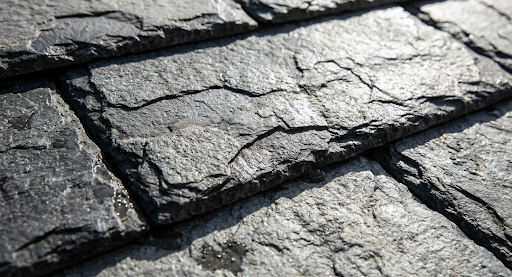
Love the look of slate but hate the idea of reinforcing your trusses to hold thousands of pounds of stone? Composite tiles are made from recycled plastics and rubber. They look exactly like slate or cedar shake but won't crack, rot, or fade. It’s a premium option, but it adds incredible character to a home.

Thinking About Solar?
If solar panels are in your future, tell your roofer now. You might need to reinforce the decking to handle the extra weight, or you might opt for integrated solar shingles. It is much cheaper to prep for solar during the roof replacement than to retrofit it later.
Geography Matters
A roof that works in Arizona might fail miserably in Pennsylvania or the Pacific Northwest. Your local climate dictates the chemistry.
Lessons from the Wet Pacific Northwest
Take the famous "roof life of Oregon" as an example. Because of the constant drizzle and shade, roofs there are prone to moss and algae that eat away at shingles. If you live in a wet or wooded area, you can't just use standard shingles. You need algae-resistant granules (usually copper-infused) and zinc strips near the ridge to stop biological growth.
If you ignore your local micro-climate, you might end up with a leak years before your warranty expires—not because the shingle was bad, but because it was the wrong tool for the job.
The Stuff You Don't See (But Need)
Here is the biggest misconception homeowners have during a roof replacement: "A new roof is just new shingles."
That is false. A roof is a machine. It breathes, it sheds water, and it insulates. If the underlying system is broken, the shingles don't stand a chance.
Letting Your Attic Breathe
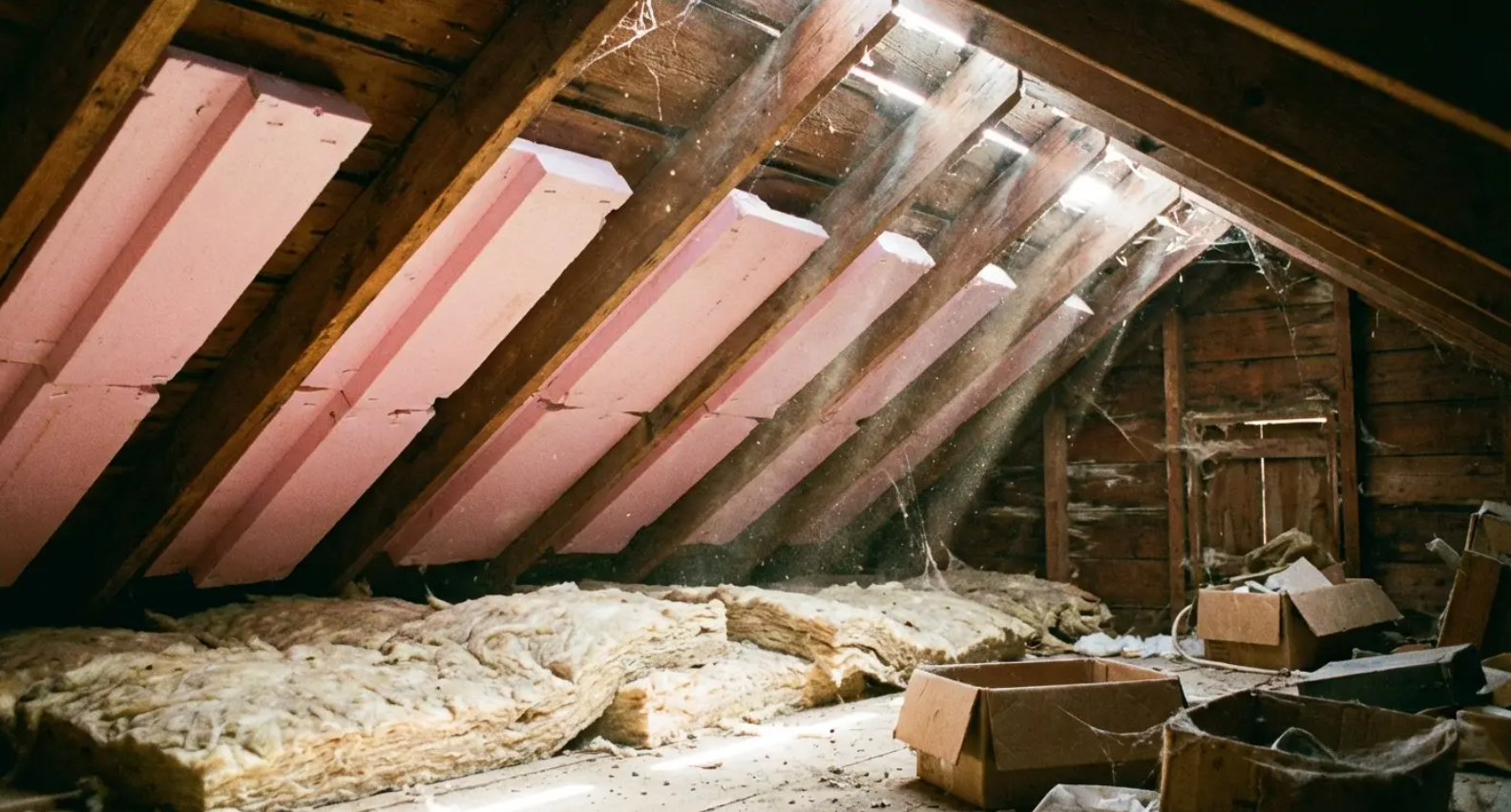
Proper ventilation is about balance. You need fresh air coming in low and hot air exiting high. If this flow stops, your attic turns into an oven in the summer (frying your shingles) and a moisture trap in the winter (causing mold). You can read more here aboutwhy your home needs appropriate roof venting.
Don't Choke the Soffits
It starts at the bottom. The soffits (the underside of your eaves) need to be clear. We often find insulation stuffed into these corners, blocking airflow. We install "baffles" to push the insulation back and ensure a clear channel for air to rise.

Why Ridge Vents Win
The best exhaust is usually a continuous ridge vent cut along the very peak of the roof. It uses the Bernoulli principle—basically, as wind blows over the peak, it creates a vacuum that sucks the hot, stale air out of the attic. It’s quiet, efficient, and has no moving parts to break.
Waterproofing the Weak Points
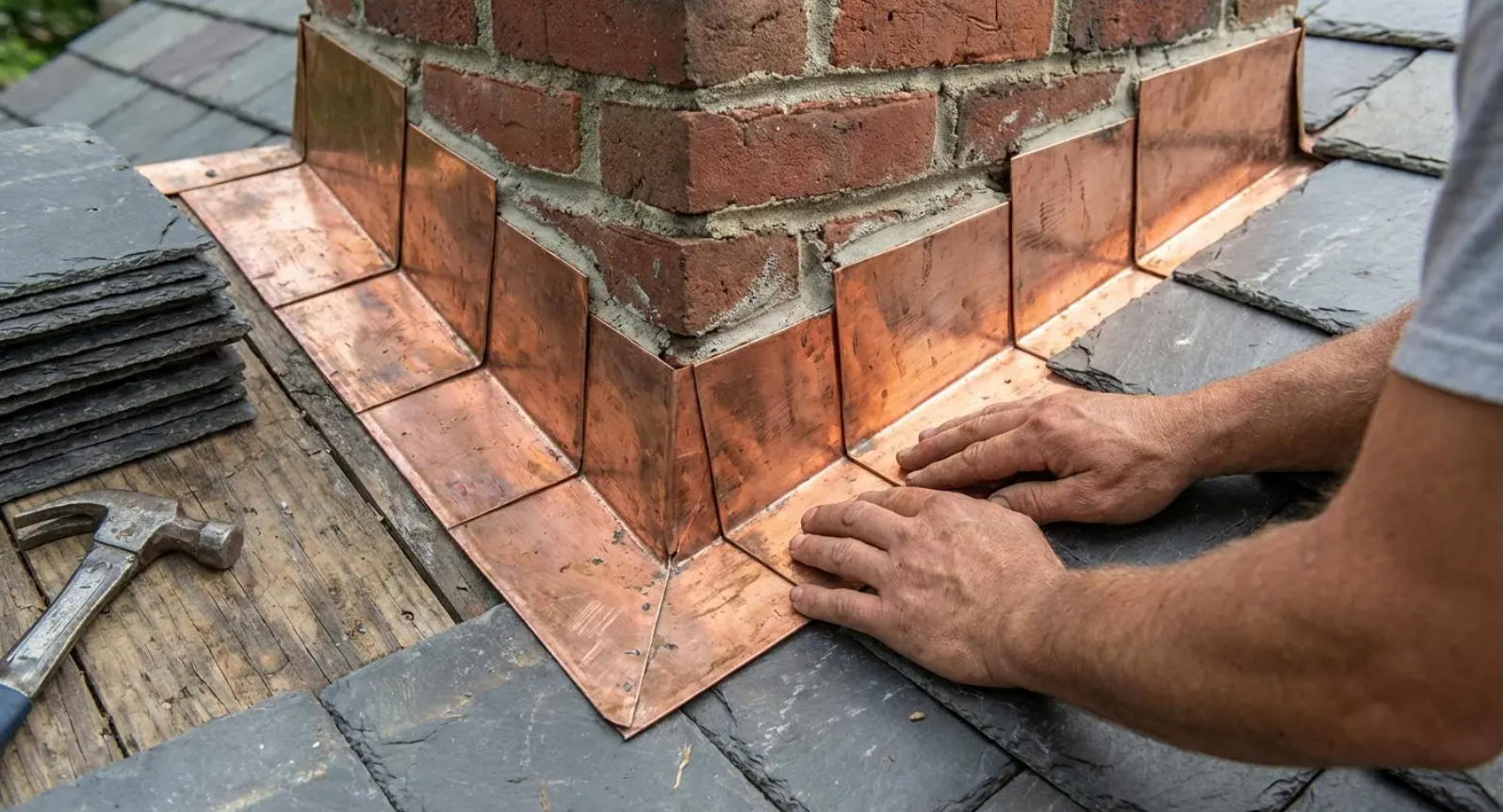
Water is lazy; it follows the path of least resistance. That usually means it enters where the roof stops and a wall or chimney begins. We use "flashing" (metal fabrication) to armor these spots.
The Ice & Water Shield
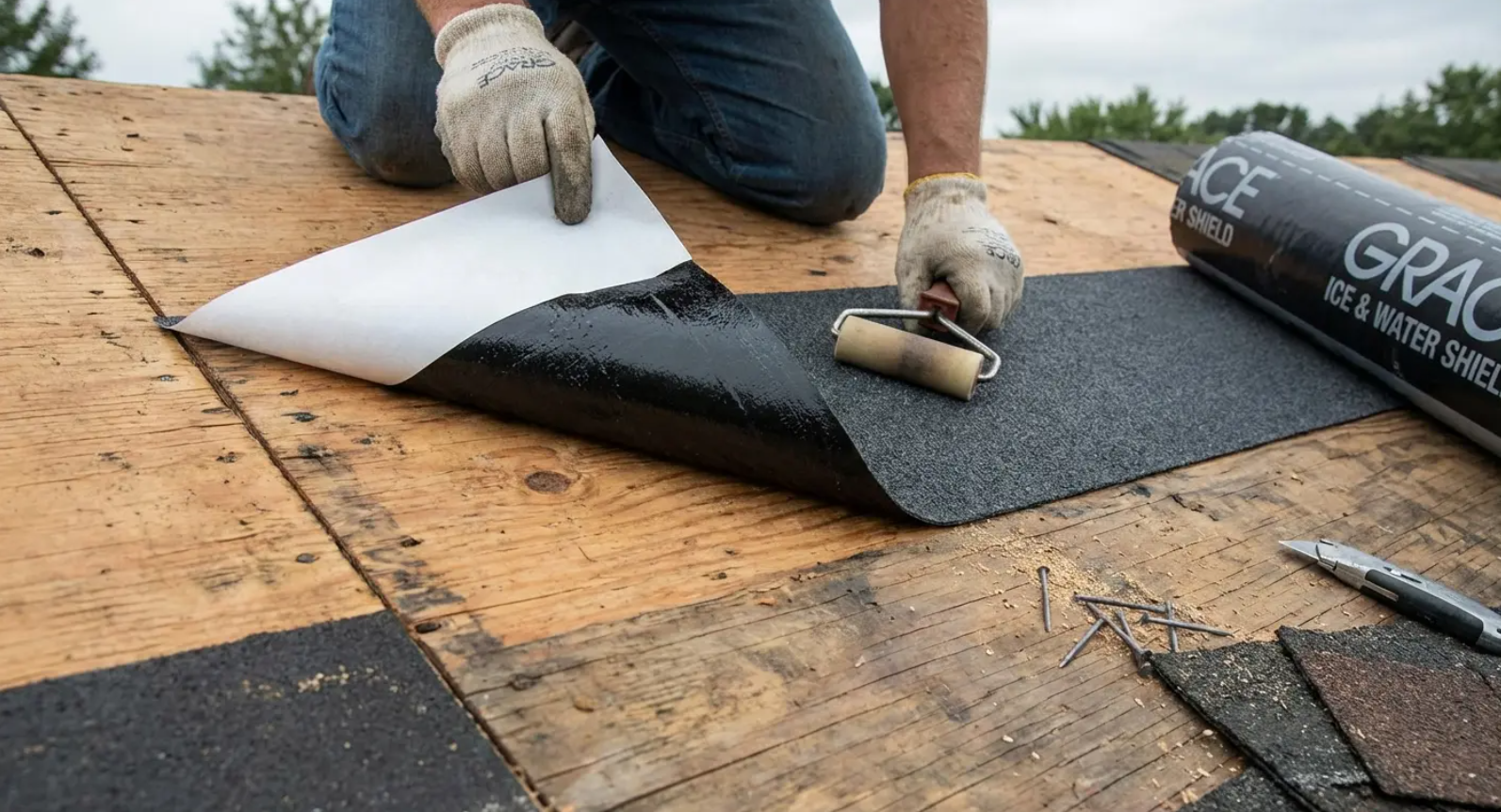
This is a sticky, rubberized membrane that goes down on the wood deck before the shingles. We put it in valleys and along the eaves. If water gets under the shingles, or if an ice dam forms, this sticky layer seals around the nails so the water can't get to the wood.

Flashing: The Real MVP
Wherever a roof meets a wall, we use "step flashing." These are L-shaped pieces of metal woven into every single row of shingles. This allows the house to expand and contract with the temperature without breaking the water seal. Never let a roofer use a single long strip of metal here—it will buckle and leak.

Drip Edges
This is a metal flange on the edge of the roof. It kicks the water away from the fascia board and into the gutter. Without it, water can curl back under the shingles and rot the edge of your roof deck.
The Construction Zone
Knowing what to expect can lower your blood pressure. A roof replacement turns your home into a construction site for a day or two. Here is how we manage the chaos. (For a day-by-day breakdown, check out the re-roofing process guide).
Quick Prep Checklist for You:
- [ ] Move the Cars: We need the driveway for the dumpster.
- [ ] Secure the Walls: We are hammering on your roof; vibrations can knock pictures off the walls inside.
- [ ] Cover Attic Storage: Dust and granules will fall through the cracks. Throw a tarp over your heirlooms.
- [ ] Clear the Patio: Move the grill and potted plants out of the "drop zone."
- [ ] Mow the Lawn: Short grass makes it much easier for us to find stray nails with magnets later.
The Tear-Off
We strip everything down to the bare wood. Some roofers try to save time by nailing over the old roof. Don't let them. We need to see the deck to know it's safe.
Protecting Your Flowerbeds
We drape tarps from the gutters to the ground to catch falling debris. We also cover AC units and pools. We treat your landscaping with respect.
Checking the Decking
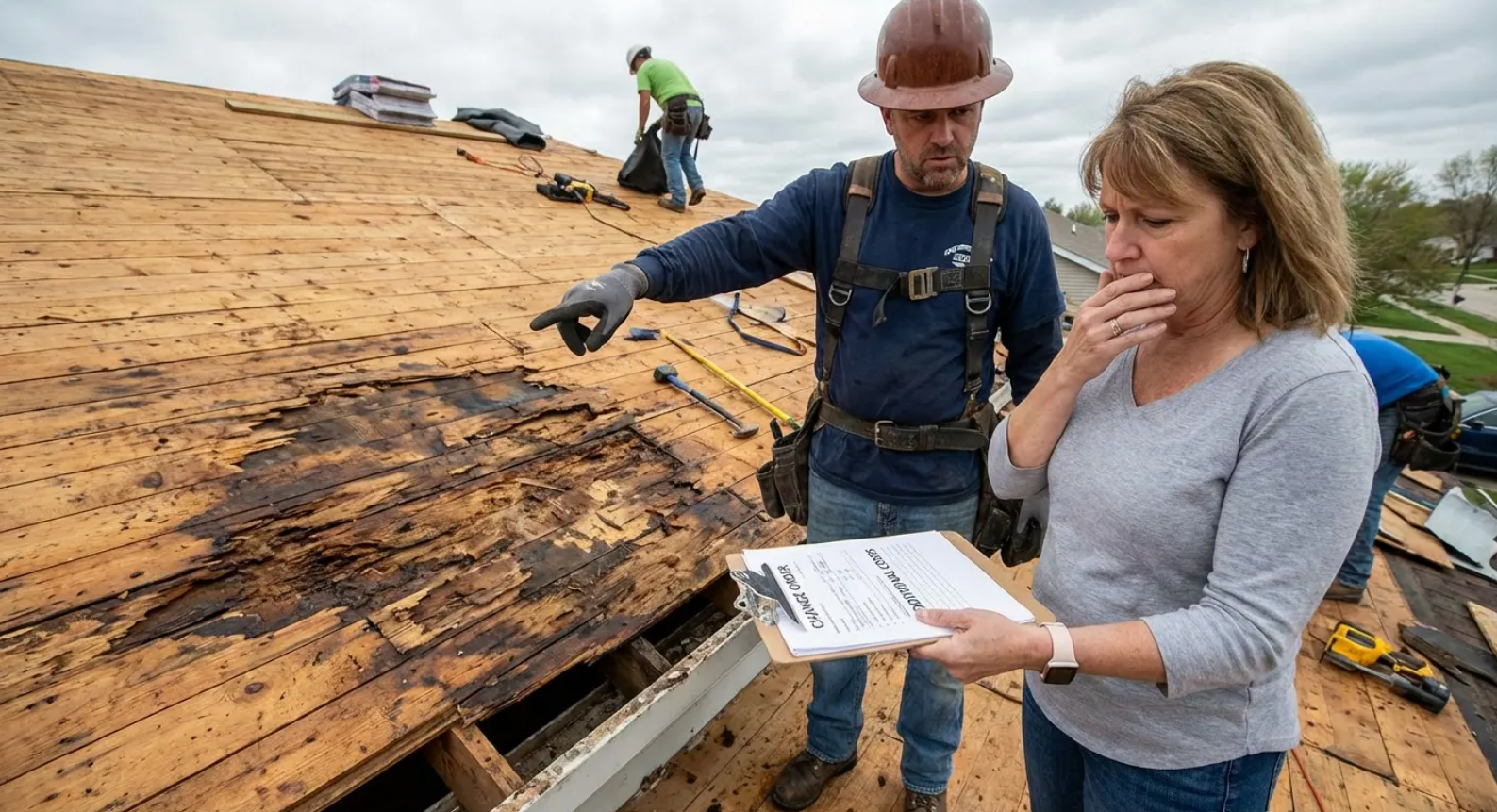
Once the wood is exposed, we look for rot or delamination. If the wood is soft, it has to go. You cannot nail a 30-year roof into rotten wood. If you're curious about the state of your current roof, check our guide on identifying old roofing.
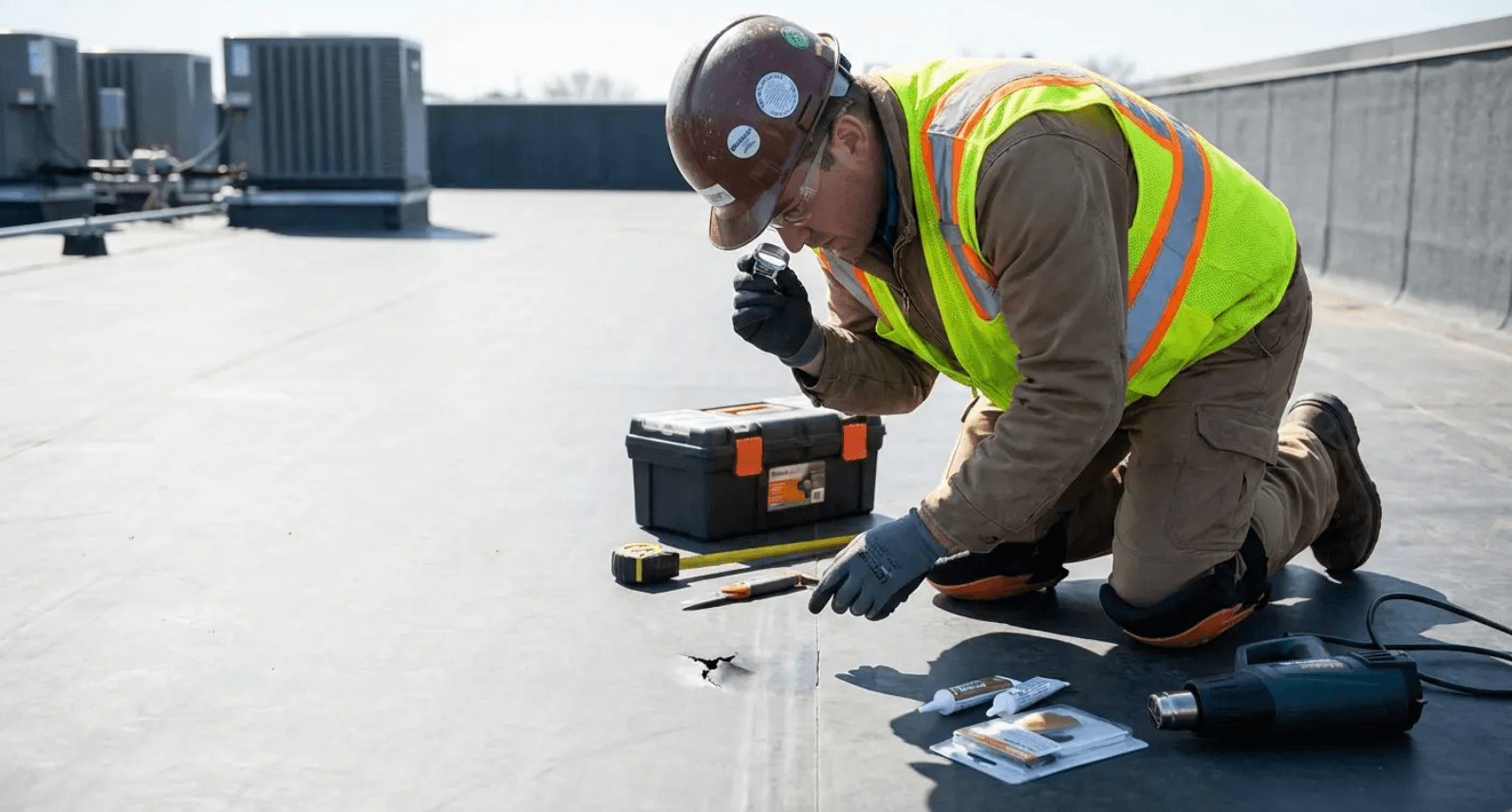
This step is vital. Just recently, a school district in Texas found cracking and surface wear that was invisible from the ground. Stripping the roof revealed the truth and allowed them to fix it properly.
Installation Details
The difference between a good roof and a bad roof is often the installer's technique. Technique matters.
Nailing Patterns
Nails have to be driven straight and flush. If they go in crooked, they cut the shingle. If they are placed too high, they miss the nail strip and the shingle will blow off in the next storm.
Valleys: Open vs. Closed
You have two choices for valleys (where two roof slopes meet). We prefer "Open Valleys," where we leave a W-shaped metal channel exposed in the center. It handles heavy water flow better and doesn't clog with leaves as easily as woven shingles.
Wind Protection at the Eaves
We use a specific "starter shingle" along the edges. It has a special glue line that seals the first row of shingles down tight so wind can't get underneath and peel them up.
The Cleanup
The job isn't done until your yard is safe for your kids and dog.
The Magnet Sweep
We run high-powered rolling magnets over your driveway, lawn, and garden beds. We do this multiple times to catch any stray nails that missed the tarp.
Let’s Talk Money
A roof replacement is a big investment. The average cost can range widely, but knowing where the money goes helps you spot a fair deal versus a "too good to be true" bid. Recent data suggests average costs hover around $25,000, though this varies by size and material.
Understanding the Quote
A quote should be a detailed plan, not a number scribbled on a napkin. You need to see exactly what you are paying for. (Read more on what a roofing estimate should include).
| Item | What It Is | Why It Matters |
|---|---|---|
| Tear-off & Disposal | Dumpster fees & labor. | Ensures we inspect the deck properly. |
| Materials | Shingles, flashing, vents. | Verify you are getting the brand you asked for. |
| Labor | Crew wages & insurance. | Cheap labor often means uninsured or unskilled workers. |
Labor vs. Materials
Generally, materials are about 40-50% of the cost. The rest is labor and overhead. If a bid is drastically lower than the others, they are likely cutting corners on labor quality or insurance. Don't risk it.
The "Surprise" Fund
We recommend budgeting an extra 10-15% just in case. We can't see rotten plywood until we tear the old roof off. If we find bad wood, it has to be replaced. It's better to have that money set aside and not need it, than to scramble for cash mid-project.
The Fine Print
Warranties can be confusing. Here is how to read them.
The Truth About "Lifetime" Warranties
"Lifetime" usually refers to the shingles, not the labor. And it's often prorated, meaning the value drops every year. Don't get blinded by the word "Lifetime."
Why Workmanship Matters More
This is the warranty from the installer. It covers mistakes in installation. If a roof leaks, it’s usually because of a sideways nail or bad flashing, not a defective shingle. Look for a workmanship warranty of at least 10 years.
Resale Value
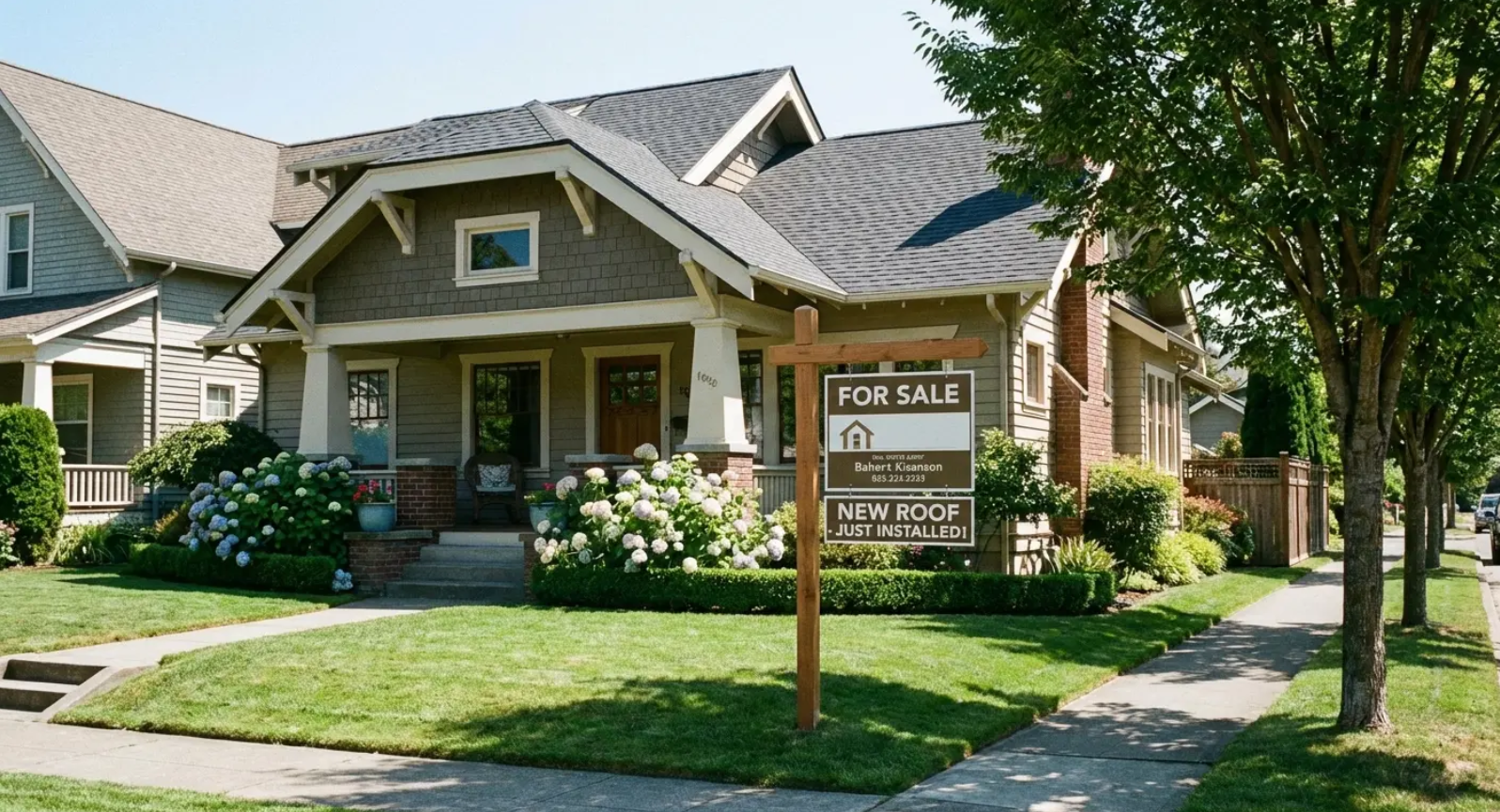
A new roof is a huge selling point. Check if your warranty is transferable to the next owner—it can be a great bargaining chip if you sell the house.

Wind Ratings
Make sure the system is rated for high winds. Most warranties only apply if you use the specific starter strips and hip/ridge caps required by the manufacturer.
Why We Obsess Over the System
We know this is a lot of information. Physics, chemistry, installation techniques—it’s enough to make your head spin. But at Joyland Roofing, we obsess over these details so you don't have to.
We don't just slap on new shingles. We use video documentation to show you exactly what your roof looks like naked, and we design a custom ventilation system for your specific home. We want this to be the last roof you worry about for a very long time.
Final Thoughts
You now know enough to be dangerous. You can read a quote, spot a corner-cutting roofing contractor, and choose the right materials for your roof replacement project. Remember: the materials matter, but the hands installing them matter more. Treat your roof like the investment it is, and it will protect you for decades to come.