December 31, 2025
Snow Guards Won't Save Your Roof (But They'll Save Everything Else)
Author
Let me clear something up right now: snow guards don't protect your roof.
I know that sounds backwards. They're literally attached TO your roof. But after installing these systems for years, I can tell you with absolute certainty: your roof is the one thing that doesn't need protection. It's designed to handle snow. That's literally what structural engineers calculate when they spec out your building.
What your roof CAN'T handle? The physics of 300 pounds of compacted snow deciding to avalanche off at 2 PM on a Tuesday while someone's standing underneath.
That's what snow guards are for. They're not roof protection. They're people protection. Property protection. Lawsuit protection.
We've installed hundreds of these systems over the years, and the most common misconception we encounter is that these products are roof protection devices. They're not. They're ground-level safety equipment that happens to be mounted on your roof.
If you want to understand how everything on your roof actually works together, take a look at this breakdown of the parts of a roof.
Table of Contents
- TL;DR
- The Real Problem Isn't Snow ON Your Roof
- Metal Roofs Are Basically Ice Slides
- What Snow Guards Actually Prevent (Spoiler: Not Roof Damage)
- Choosing the Right System Without Getting Sold
- Installation Mistakes That'll Cost You More Than the Guards
- When You Don't Actually Need Snow Guards
- How We Do This Differently at Joyland Roofing
TL;DR
Quick version if you're in a hurry:
Snow guards don't protect your roof. Your roof is fine. They protect everything below your roof from becoming a lawsuit or an insurance claim. Metal roofs without snow guards in snow country? That's negligent. You need the right system for your pitch and material, not whatever looks good. And some situations don't need them at all, no matter what a salesperson tells you.
The Real Problem Isn't Snow ON Your Roof
The entire conversation around snow guards misses the point.
We're not protecting your roof. We're protecting everything and everyone below it.
Your roof can handle snow. That's what structural engineers calculate when designing the building. They account for snow load, wind load, all the forces that'll act on that structure over its lifetime. What they can't account for is the uncontrolled release of hundreds of pounds of accumulated snow and ice, which happens in seconds after weeks of buildup.
Over the past 30 years, five people have died in roof avalanches in Colorado, including a gut-wrenching incident on March 16, 2023, when a father and two kids were buried by snow sliding from a roof. One of the children died.
I don't bring this up to be morbid. I bring it up because this is preventable. Completely, 100% preventable with a proper installation.
Snow guards are a ground-level safety measure. They prevent kinetic energy disasters. They eliminate the scenario where a delivery person gets buried under 400 pounds of snow while dropping off a package at your front door.
The Misconception That Costs Homeowners Thousands
The snow guard industry has a marketing problem. Products are sold as roof protection devices, which creates confusion about what you're buying and why you need it.
Here's what's happening.
Your roof accumulates snow throughout the winter. That snow compacts, freezes, creates a cohesive mass. When thermal dynamics cause that mass to release (and it will release), you're dealing with a sudden avalanche event. Not a gentle melting process.
A 10x10 foot section of compacted snow can weigh 300+ pounds. That's the equivalent of two full-grown adults sliding off your roof simultaneously. Your deck furniture doesn't stand a chance. Neither does your car. Neither does a person.
Consider a homeowner in Colorado with a 40-foot metal roof at a 6:12 pitch. After a typical winter storm deposits 18 inches of wet snow, the roof accumulates approximately 2,400 pounds of snow across its surface. When afternoon sun creates a melt layer at the metal surface, that entire mass can release simultaneously. Not gradually over days, but in a single three-second event.
The snow doesn't gently slide off in manageable portions. It avalanches as one cohesive sheet with enough force to snap a 6-inch deck post, total a parked vehicle, or cause fatal injuries to anyone standing below. Without snow guards, this homeowner isn't protecting their roof by letting snow slide off. They're creating a recurring hazard that exists every time temperatures fluctuate above freezing.
We've seen homeowners spend thousands replacing gutters, repairing vehicles, fixing damaged HVAC units, all while believing they were doing the right thing by letting their roof "self-clean."
The roof is fine. Everything else is destroyed.
What Your Insurance Company Knows That You Don't
Insurance adjusters view properties with metal roofing in snow regions differently than you might expect. They're looking at liability exposure, not roof condition.
When someone gets hurt by snow sliding off your roof, you're potentially responsible. Premises liability law doesn't care whether you knew the snow was going to slide at that exact moment. It cares whether you took reasonable precautions to prevent foreseeable harm.
Some insurance policies specifically require snow retention systems for coverage validation on certain roof types. (Ask me how I know this. Actually, don't. It involves a denied claim and a very angry homeowner who's now a client.)
We've seen claims denied because the homeowner failed to install reasonable safety measures when they upgraded to a metal roof.
The financial exposure is real:
| Incident Type | Typical Claim Cost | Coverage Status Without Snow Guards |
|---|---|---|
| Personal injury (delivery person) | $50,000 - $250,000+ | Often denied or reduced due to negligence |
| Vehicle damage (parked car) | $3,000 - $15,000 | May be covered but increases premiums |
| Gutter system destruction | $1,500 - $4,000 per incident | Typically covered once, scrutinized after repeat claims |
| Property damage (neighbor's fence/deck) | $2,000 - $10,000 | Covered under liability but affects renewal rates |
| HVAC unit destruction | $5,000 - $12,000 | Covered but may trigger mandatory snow guard requirement |
These aren't hypothetical numbers. We've worked with homeowners navigating every one of these scenarios. The pattern is consistent: the cost of snow guards would've been a fraction of the damages they ended up paying for.
Risk management isn't exciting, but it's a lot cheaper than reactive damage control.
Metal Roofs Are Basically Ice Slides
Snow doesn't just "fall off" your roof. It avalanches with accumulated kinetic energy that most people have no clue about.
Metal roofing creates a uniquely dangerous situation because of two material properties: low friction coefficient and high thermal conductivity.
When sun hits your metal roof, it heats up quickly and creates a thin melt layer between the roof surface and the snow mass above it. That water acts as a lubricant, eliminating the friction that was holding the snow in place.
The entire snow load can release simultaneously rather than gradually. We're talking about the difference between controlled melting over several days versus a catastrophic release in three seconds.
This is exactly why you can't skip snow guards. They prevent the initial movement that triggers the avalanche effect.
Why Metal Roofs Become Ice Chutes
Material properties matter more than most homeowners realize. Metal roofing reflects and conducts heat differently than absorptive materials like asphalt shingles.
When sun exposure creates that critical melt layer, even a 4:12 pitch becomes a slide. The coefficient of friction drops from around 0.4 (snow on metal) to nearly 0.1 (snow on water on metal). That's the difference between stable and catastrophic.
Metal roofing is self-cleaning, which is actually a feature in many applications. But that feature becomes a hazard without controlled retention. You can't have it both ways. Either you control the release with snow guards, or you accept the liability of uncontrolled avalanches.
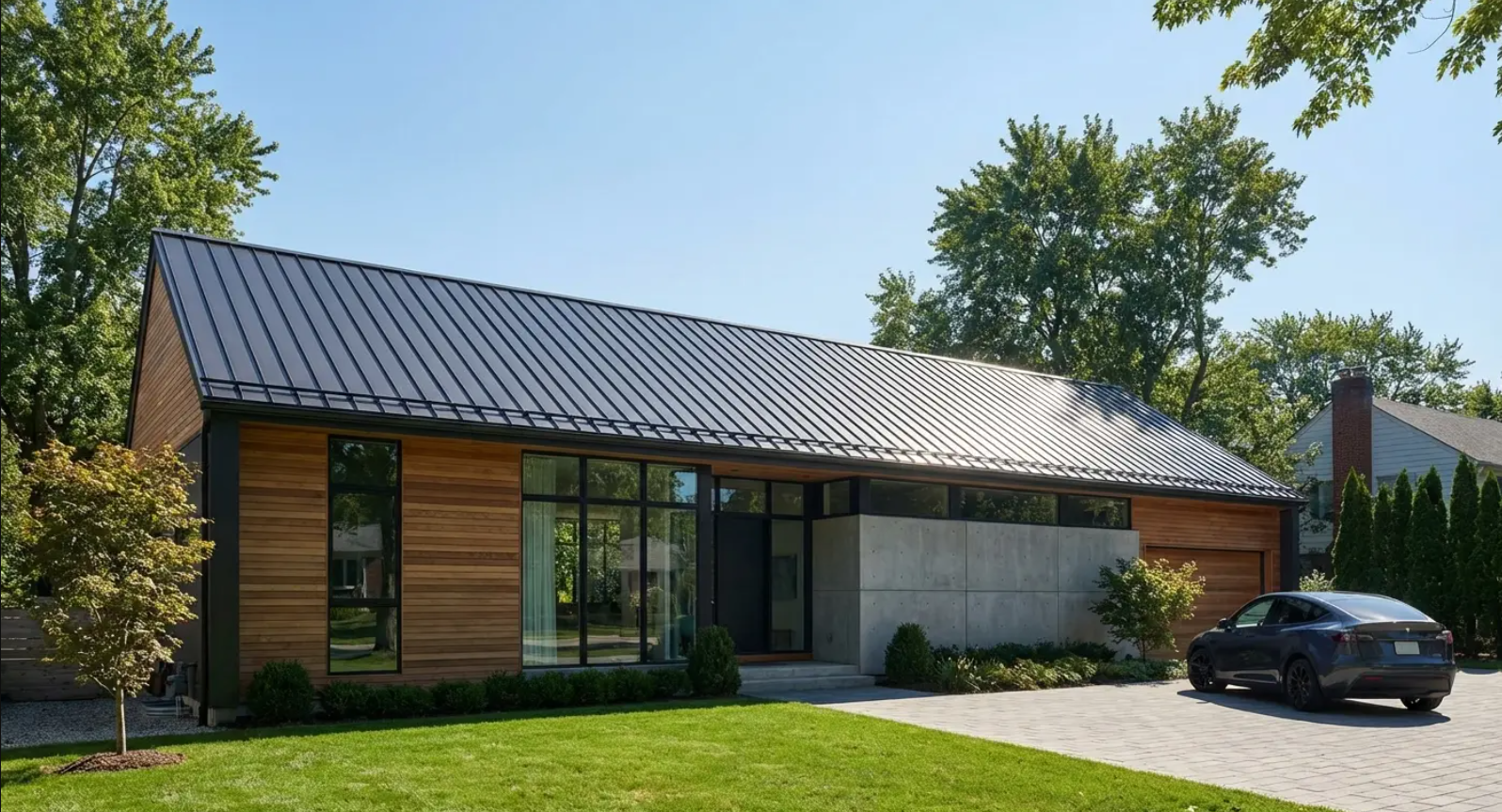
We've had homeowners tell us they chose metal roofing specifically because it sheds snow. That's fine, but you need to understand what "shedding" means in practical terms. It means everything below your roof edges is in a drop zone. Understanding the different types of snow guards for metal roofs helps you select the right retention system to manage this shedding safely rather than eliminating it entirely.
The Avalanche Effect You Can't See Coming
Temperature fluctuations don't follow a schedule. Sun exposure patterns change throughout the day. Even vibrations from wind can trigger release events.
Property owners assume they can monitor and predict when snow will slide, but the physics don't work that way. There's no warning system. There's no gradual buildup you can observe and respond to.
The snow is stable until it isn't, and the transition happens faster than you can react.
A commercial building owner in Vermont learned this lesson expensively. After a significant snowfall, they instructed employees to avoid the building's south-facing side where the metal roof typically shed snow by afternoon. On the third day, at 10:47 AM (three hours earlier than the pattern suggested), a temperature spike triggered a release while a maintenance worker was servicing the HVAC unit below.
The 400-pound snow mass struck him, causing a fractured vertebra and six-month recovery period. The subsequent lawsuit revealed that the building had been cited for missing snow guards during a prior insurance inspection, a detail the owner had dismissed as optional. The settlement, legal fees, and increased insurance premiums exceeded $180,000. Roughly 15 times the cost of a proper snow retention system.
You can't "manage" snow release through vigilance. You need a passive system that works 24/7, regardless of whether you're home, whether you're paying attention, or whether the snow decides to release at 2 PM or 2 AM.
What Snow Guards Actually Prevent (Spoiler: Not Roof Damage)
We need to be specific about what we're preventing here, because "protection" is too vague to be useful.
Snow guards prevent destroyed gutters. They prevent crushed HVAC units. They prevent broken windows, damaged landscaping, injured pedestrians, blocked emergency exits, and totaled vehicles. Each of these represents a different failure mode that happens when snow releases without control.
They also prevent the less obvious problems. When snow slides off your roof and piles up at the eave, it creates ice dam conditions that lead to water intrusion. The secondary damage from ice dams can exceed the cost of the primary damage from the snow slide itself.
Snow Guard Risk Assessment Checklist
Here's a quick checklist I run through with clients. If you check off three or more, you're not thinking about snow guards. You're installing them:
- [ ] Metal, slate, or smooth composite roofing material installed
- [ ] Roof pitch exceeds 3:12 slope
- [ ] Entryways, walkways, or high-traffic areas located below roof edges
- [ ] Vehicles regularly parked within 15 feet of roof drip line
- [ ] Gutters have been damaged or torn off in previous winters
- [ ] HVAC equipment, propane tanks, or utilities positioned below roof edges
- [ ] Decks, patios, or outdoor living spaces in the drop zone
- [ ] Children's play areas or pet spaces near the building
- [ ] Landscaping features (shrubs, lighting, hardscaping) below eaves
- [ ] Neighboring properties within potential slide radius
- [ ] Commercial property with public access or employee traffic
- [ ] Previous insurance claims or near-miss incidents involving roof snow
We're solving multiple problems simultaneously, which justifies the cost when you add up the potential damages. A $3,000 snow guard installation starts looking reasonable when you're comparing it to $8,000 in gutter replacements over five years, plus the vehicle damage you haven't experienced yet but will.
The Gutter Destruction Cycle
When hundreds of pounds of snow and ice slide off a roof, gutters are the first casualty. The shearing force tears gutters away from fascia boards, damages hangers, and often destroys the gutter system completely in one event.
We've replaced the same homeowner's gutters three times in four years before they finally agreed to install snow guards. The math was straightforward: $1,200 per gutter replacement times three equals $3,600 spent on a recurring problem. Snow guards would've cost $2,800 and eliminated the issue permanently.
Want to know something that makes my blood boil? Some contractors deliberately skip recommending snow guards because they make more money replacing your gutters every other year.
I've seen it. It's sleazy as hell, and it's why you need to ask whether your contractor actually makes money from the problem they're supposedly preventing.
The long-term economics are clear. You can pay once for prevention or pay repeatedly for repairs. We'd rather install snow guards and never see you again for gutter work, but that's not how everyone in this industry operates.
Liability Scenarios You Haven't Considered
A delivery person injured by falling snow. A child's play area destroyed. A neighbor's property damaged by ice projectiles from your roof.
These aren't hypothetical scenarios. They're documented claim patterns we've seen across hundreds of properties. Snow guards eliminate these exposures entirely by controlling the descent of snow and ice.
Commercial properties face even more significant liability due to higher foot traffic. Every employee, customer, and vendor who walks past your building is a potential claimant if your roof releases snow at the wrong moment.
The human cost of inadequate snow retention systems was emphasized by Theresa Blake Graven, Public Information Officer for the National Avalanche Center and Colorado Avalanche Information Center, who stated: "Roof avalanches pose a serious risk every year in mountain communities. It's critical to stay aware of snow-loaded roofs, minimize time spent beneath them, and keep a shovel nearby in case of an emergency."
The CAIC advises people to watch for thick snow buildup on roofs, avoid spending time directly beneath roof edges, and keep entryways clear. Recommendations that acknowledge the inadequacy of behavioral precautions alone without proper retention systems.
Who's in your drop zone? That's the question you need to answer before deciding whether snow guards are optional or essential.
Choosing the Right System Without Getting Sold
Decision-making frameworks matter more than product features when you're evaluating snow guard options.
We're going to break down the main types of snow guards (pad-style, continuous rail, and fence-style), but we're not doing it the way manufacturer brochures do it. We're explaining the engineering logic behind each system so you can match the right type to your roof characteristics: pitch, length, material, and expected snow load.
The math that contractors should be doing but often skip involves calculating how many roof snow guards you need and where they should be placed based on load distribution. This isn't aesthetic. It's not arbitrary. There are engineering standards that determine spacing and row placement.
| Snow Guard System Type | Best For | Attachment Method | Load Distribution | Typical Cost Range (per sq ft of roof) |
|---|---|---|---|---|
| Pad-style (individual guards) | Moderate snow loads, distributed patterns | Mechanical fasteners or adhesive | Each guard handles localized load | $2.50 - $4.50 |
| Continuous rail (fence-style) | Heavy snow loads, steep pitches | Brackets mechanically fastened | Linear distribution across entire width | $5.00 - $8.00 |
| Clamp-on (standing seam specific) | Standing seam metal roofs | Non-penetrating clamps | Transferred to seam structure | $4.00 - $7.00 |
| Bar systems (SnoBar/ColorBar) | Extreme snow loads (>45 PSF) | Engineered bracket systems | Calculated structural distribution | $6.00 - $12.00 |
You need to verify that you're getting appropriate recommendations rather than over-buying or under-protecting. That requires understanding what the numbers mean and why they matter for your specific situation.
The Load Distribution Math Your Contractor Might Skip
Snow guard placement isn't aesthetic. There are engineering standards that determine spacing and row placement based on expected snow loads and roof dimensions.
"One row at the eave" is usually insufficient. Load needs to be distributed across multiple rows to prevent system failure. Each guard or rail section needs to handle a calculated portion of the total snow mass based on tributary area (the section of roof that each guard is responsible for protecting).
When you're getting quotes, ask contractors to show you their load distribution calculations. If they can't explain why they're recommending a specific pattern and quantity with engineering justification, that's a red flag.
Snow Guard Specification Template
Use this template when requesting quotes to ensure contractors provide complete, comparable proposals:
Property Information:
- Roof material: _________________
- Roof pitch: ____:12
- Roof length (eave to ridge): _____ feet
- Roof width: _____ feet
- Total roof area: _____ square feet
- Ground snow load for zip code: _____ PSF
System Requirements:
- Snow guard type recommended: _________________
- Number of rows required: _____
- Vertical spacing between rows: _____ feet
- Horizontal spacing within rows: _____ inches
- Total number of guards/linear feet of rail: _____
- Attachment method: _________________
- Load calculation methodology: _________________
Installation Details:
- Fastener type and size: _________________
- Sealant brand and type: _________________
- Structural attachment points identified: Yes / No
- Warranty coverage: _____ years
- Installation timeline: _____
- Total project cost: $_____
- Cost per guard/linear foot: $_____
Request that contractors show their load distribution calculations and explain why they're recommending the specific pattern and quantity. If they can't provide engineering justification, that's a red flag.
Why "More Is Better" Is Wrong (and Expensive)
You can have too many snow guards, which creates unnecessary expense without additional safety benefit.
Over-installation can create problems by preventing any snow release, leading to excessive load buildup. The goal is controlled retention, not complete prevention of snow movement. The engineering sweet spot exists, and going beyond it is waste.
A homeowner in Montana received three quotes for snow guards on their 2,000-square-foot metal roof. The first contractor quoted 450 individual pad-style guards at $4,800. The second recommended 280 guards at $3,200. The third proposed 180 guards in a properly engineered staggered pattern at $2,400.
The homeowner initially leaned toward the first quote, assuming more guards meant better protection. However, when they requested load calculations, only the third contractor could demonstrate that their pattern (with guards spaced according to the roof's 5:12 pitch and 30 PSF snow load) would distribute force appropriately across structural members.
The first contractor was simply placing guards every 18 inches without engineering justification, creating 270 unnecessary penetrations in the roof and wasting $2,400 while potentially preventing beneficial gradual snow release that reduces total roof load.
We're not trying to maximize product sales. We're trying to optimize for performance, which sometimes means recommending fewer snow guards than you might expect.
Material Matching That Actually Matters
Your snow guard material needs to be compatible with your roofing material. Not just in attachment method but in thermal expansion, corrosion potential, and longevity.
Aluminum guards on a steel roof can create galvanic corrosion. Plastic guards might not handle UV exposure in your region. The compatibility matrix matters more than the price difference between options.
The common mismatches that lead to premature failure are preventable if you specify the right product for your specific roof. That might not be the cheapest option. It might not be the most popular option. But it's the option that'll still be functioning in 15 years when you've forgotten you even have snow guards.
We've removed failed snow guard systems that were only three years old because someone chose incompatible materials to save $200 on the initial installation. The replacement cost was triple the original installation price.
Installation Mistakes That'll Cost You More Than the Guards
Installation quality matters more than product selection in most cases.
Penetration sealing failures, incorrect fastener selection, improper spacing, and structural attachment errors can turn a snow guard installation from a protective measure into a liability. The cheapest installation bid is often the most expensive in the long run.
We're going to catalog the common failures that compromise snow guard effectiveness and often cause roof damage in the process. These aren't minor details. They're the difference between a system that works for 20 years and one that fails in the first season.
The Sealant Failure Nobody Talks About
Every snow guard attachment point is a potential leak if not properly sealed.
Thermal cycling, UV exposure, and mechanical stress degrade sealants over time. The sealant choice matters as much as the guard choice, but some installers cut corners here because homeowners can't see the difference until it fails.
There's a significant difference between appropriate roofing sealants and generic caulk. Appropriate sealants are formulated for the specific thermal expansion rates of metal roofing and the UV exposure they'll experience. Generic caulk fails within two years in most climates.
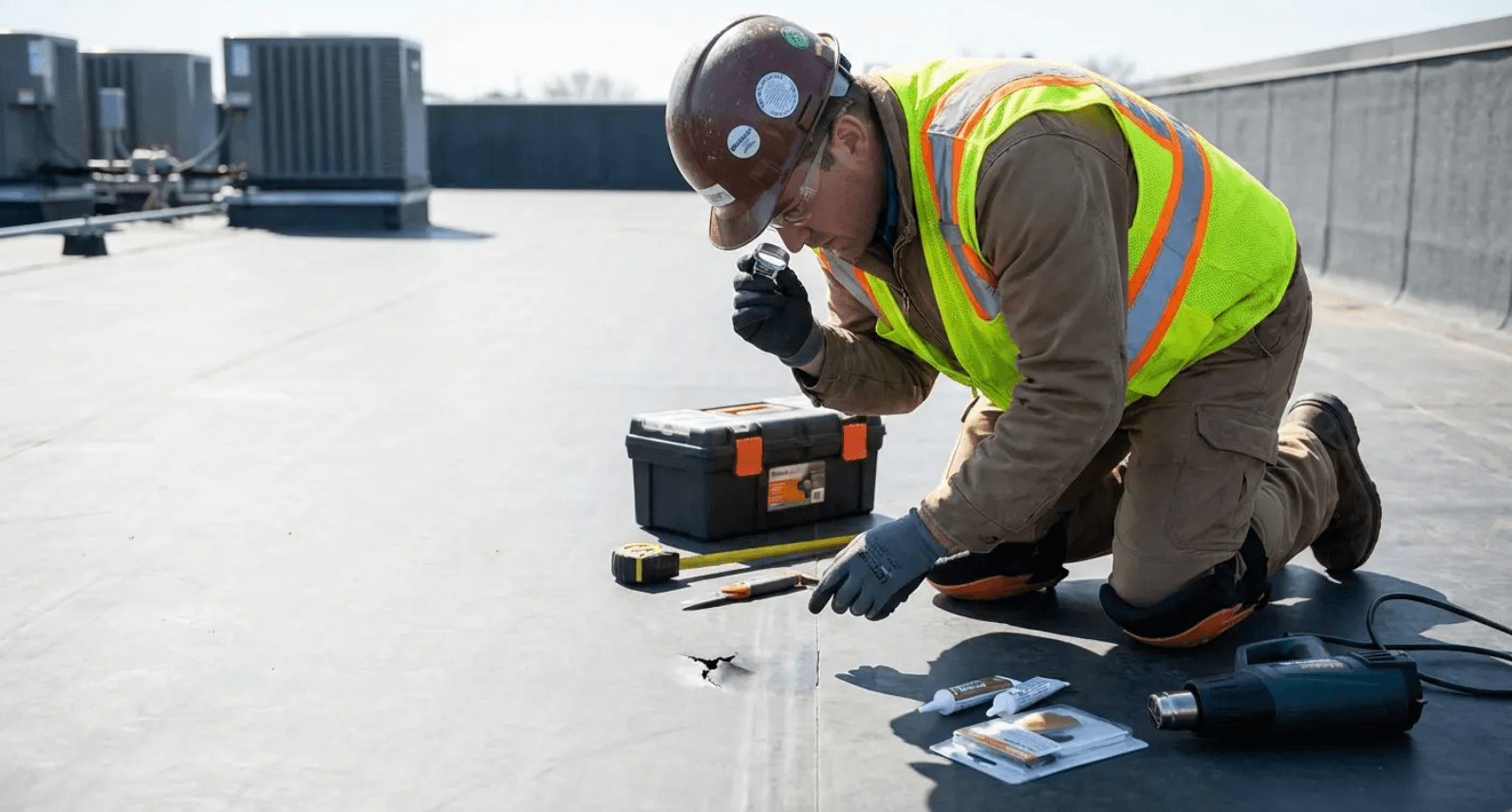
Installation isn't a one-time event. Sealants should be checked periodically and refreshed before they fail. We recommend inspection every three years and proactive resealing every five to seven years depending on your climate.
The cost of resealing is minimal compared to the cost of repairing water damage from failed penetrations. We've seen $8,000 in interior ceiling damage from a $15 sealant failure at a single snow guard attachment point.
Structural Attachment Points That Aren't Actually Structural
Some installers attach snow guards to roof panels or sheathing without considering whether those attachment points can handle the loads involved.
Snow guards experience significant force when retaining snow mass. If they're not anchored to structural members (rafters, purlins, or adequate substrate), they can tear out, taking roof material with them.
Proper installation requires knowledge of the roof's structural layout and strategic fastener placement. You need to verify that your installer is doing structural due diligence, not just screwing guards into whatever's convenient.
The difference between mechanical attachment and adhesive systems matters here too. Each is appropriate for different situations, and choosing the wrong one creates failure risk.
Why Adhesive Systems Fail in Cold Climates
Adhesive-mounted snow guards have limitations that aren't always disclosed during sales conversations.
Adhesives lose bond strength in cold temperatures and can fail catastrophically when they're needed most. Temperature ratings matter. Some adhesive systems are only appropriate for moderate climates or specific roof materials, but they get installed in cold regions because they're faster and easier.
Surface preparation affects adhesive performance significantly. Many failures trace back to installation on dirty or cold surfaces. The roof needs to be clean, dry, and above the adhesive's minimum application temperature. Requirements that get ignored when installers are rushing to finish before weather moves in.
We don't install adhesive snow guards in regions with ground snow loads above 30 PSF. The risk isn't worth the convenience. Mechanical attachment is more labor-intensive and creates more penetrations, but it's reliable in the conditions where snow guards are most critical.
When You Don't Actually Need Snow Guards
We need to acknowledge situations where snow guards don't make sense or won't be effective.
Roofs with pitches too low don't generate enough gravitational force to cause snow slides. Materials that already have high friction don't need additional retention. Situations where the real problem is ice damming or structural load capacity won't be solved by snow guards.
This honest assessment builds credibility. We'd rather tell you that you don't need our product than sell you something that won't solve your actual problem.
The Pitch Problem That Makes Guards Pointless
Roofs below a certain pitch (typically 3:12 or less) don't generate enough gravitational force to cause snow slides.
The snow sits there and melts gradually. Snow guards would be unnecessary expense because there's no slide risk to prevent.
Pitch interacts with roof length in ways that complicate the simple cutoff. A low pitch on a long roof might still generate enough momentum for slides. A steep pitch on a short roof might not accumulate enough mass to be dangerous.
You need to understand your roof pitch and whether it falls into the "slide risk" category. We've turned down jobs where homeowners wanted snow guards on 2:12 pitch roofs because they'd seen them on neighbors' houses. Just because someone else has them doesn't mean you need them.
When Your Real Problem Is Ice Dams, Not Slides
Ice dams and snow slides are two different winter roof problems that often get confused.
Ice dams form from heat loss through the roof creating melt-refreeze cycles at the eave. Snow slides are purely mechanical events driven by gravity and friction. Snow guards don't prevent ice dams. They might make them worse by retaining snow that insulates and increases heat transfer.
If you're dealing with ice dams, you need to address attic insulation, ventilation, and heat loss. Installing snow guards to solve an ice dam problem wastes money and doesn't address the root cause.
We've had homeowners call us frustrated that their new snow guards didn't prevent ice dams. We have to explain that we told them during the consultation that snow guards wouldn't solve that problem, but they heard what they wanted to hear.
Know which problem you're facing before you invest in a solution.
How We Do This Differently at Joyland Roofing
You've probably gotten conflicting advice from contractors who have different motivations.
We approach snow guard recommendations from an engineering and liability perspective rather than a sales perspective. We've seen too many installations fail because they were under-specified to win a low bid or over-specified to maximize revenue.
Our approach is to calculate what's needed and recommend that, even if it's less profitable for us. Sometimes that means recommending fewer snow guards than you expected. Sometimes it means telling you that you don't need snow guards at all.
We include load calculations and site-specific recommendations in every assessment. We show you the math. We explain why we're proposing a specific pattern and quantity. We give you the information you need to make an informed decision, whether you hire us or someone else.
The snow guard industry has a trust problem because too many contractors treat these systems as profit centers rather than safety infrastructure. We're trying to change that by being transparent about what you need and why.
If you want a proper assessment that includes load calculations and site-specific recommendations, we're happy to provide that. No pressure, no overselling. Just engineering and honest advice about what'll work for your property.
Final Thoughts
Snow guards are liability management tools that prevent kinetic energy disasters, not roof protection products.
The upfront cost feels significant until you compare it to the damages they prevent or the insurance and legal costs of a snow-related incident. A $3,000 installation is reasonable when measured against $50,000 in liability claims or $180,000 in lawsuit settlements.
Think about what's below your roof edges. Are those things worth protecting with a one-time installation? Are the people who walk past your building worth protecting from a 300-pound ice sheet that could release without warning?
Proper snow guard installation is a form of property stewardship that protects both your assets and the people who might be affected by uncontrolled snow release. You now understand what you're buying and why it matters.
Look, I've given you the information. What you do with it is up to you.
Install snow guards. Don't install them. Hire us. Hire someone else. Get three quotes and go with the cheapest one for all I care.
But if you're in snow country with a metal roof and you skip this? Don't say nobody warned you when your insurance company starts asking questions after your neighbor's car gets crushed in your driveway.
You've been warned.
P.S. If you're reading this in July and thinking "I'll deal with this before winter," you won't. We get slammed in October and November with people who had six months to handle this and didn't. Book this stuff in summer when we actually have time to do it right.