January 3, 2026
Roof Insurance Claims: What Your Adjuster Won't Tell You About Policy Loopholes
Author
Here's what nobody tells you about roof insurance until it's too late: While you've been paying your premiums like clockwork, insurance companies have been quietly rewriting the rules. You won't find out until you're standing in your living room watching water drip through your ceiling. And then they'll tell you you're only covered for a fraction of what you thought.
State Farm reported a $1 billion increase in hail-related claims nationwide from 2021 to 2022 (according to industry data from NICB). Let that sink in for a second. Claims went up by a billion dollars. And what did insurance companies do? Did they prepare to pay out more? Hell no. They started finding new ways to pay less.
The gap between what you think you're covered for and what your policy actually pays has never been wider. We're talking about loopholes, depreciation schemes, and bureaucratic traps that can cost you tens of thousands of dollars. I'm going to show you exactly how insurers minimize payouts and give you the specific knowledge you need to fight back and get fair compensation for legitimate roof damage.
Table of Contents
- TL;DR
- What Your Policy Actually Says (vs. What You Think It Says)
- The Silent Changes Happening to Your Coverage
- Depreciation Math That Makes No Sense (And Why They Hope You Won't Check)
- The First 72 Hours: Document Everything or Regret It Forever
- Pre-Existing Damage vs. Storm Damage: Where Adjusters Draw the Line
- Why Your Contractor's Estimate and Insurance's Offer Never Match
- The Appeal Process They Hope You'll Never Find
- Real Talk: How We Handle This at Joyland
- What Happens When You Cash That First Check
TL;DR
Here's the bottom line: Your insurance policy has probably changed without you noticing, and those changes screw you over right when you need coverage most. The first three days after damage happens are critical—most people blow it by not documenting properly. Insurance adjusters are trained to call storm damage "pre-existing wear," and they're really good at it. Your contractor's estimate will always be higher than insurance wants to pay, and there's a reason for that. You can appeal, but they hide that process in the fine print. And whatever you do, don't cash that first check without reading the fine print—it might be your only check.
What Your Policy Actually Says (vs. What You Think It Says)
Insurance companies have spent the last ten years quietly gutting roof coverage. And they've done it in the most cowardly way possible—through policy amendments buried in renewal documents that nobody reads because, let's be honest, who has time to wade through 50 pages of legal jargon every year?
The shift from replacement cost value (RCV) to actual cash value (ACV) policies represents one of the biggest ways they've screwed homeowners. RCV policies pay for a new roof regardless of your old roof's age. ACV policies subtract depreciation based on the roof's age and expected lifespan, which means you're getting pennies on the dollar for older roofs.
Then there's the switch from flat deductibles to percentage-based ones tied to your home's value. A $1,500 flat deductible sounds manageable. A 2% deductible on a $400,000 home? That's $8,000 out of your pocket before insurance covers anything. And cosmetic damage exclusions that weren't standard ten years ago? They've created a whole new category of reasons to deny your claim.
Get this: Storm damage doubled from $30 billion to $60 billion between 2022 and 2023, according to the Insurance Information Institute. Doubled. And you know what insurance companies did with that information? They didn't increase their payout budgets—they tightened the screws on what they'd actually cover. This dramatic increase coincided with inflation and supply chain disruptions that contributed to an average increase of around $2,000 per claim, creating a perfect storm where homeowners face both higher damage costs and more restrictive coverage terms.
Annual policy renewals don't trigger the same scrutiny as new policies. You're busy. The renewal documents arrive, you see your premium amount, you pay it, and you move on. Insurers bank on this inattention during renewal periods. They're not sending you a highlighted summary of what changed; they're burying amendments in dense legal language on page 47 of your policy documents.
The gap between what you think your coverage includes versus what's actually written in your current policy has become a chasm. Matching shingles across a roof? Many policies now exclude that. Code upgrade coverage? Often requires a separate endorsement you probably don't have. Wind vs. hail damage distinctions? They've become more granular and restrictive, with separate deductibles and coverage limits that didn't exist in older policies.
The Shift From Replacement Cost to Actual Cash Value (And Why It Destroys Your Payout)
Understanding the difference between RCV and ACV policies isn't optional anymore—it's the difference between a manageable roof insurance claim and financial devastation.
RCV policies pay for a new roof regardless of your old roof's age. Your 15-year-old roof gets destroyed? You get enough money to install a new roof, minus your deductible. ACV policies subtract depreciation based on the roof's age and expected lifespan. That same 15-year-old roof with a 20-year lifespan might only receive 25% of replacement cost under ACV.
Here's the math on a typical roof claim: a $15,000 roof replacement with a $2,000 deductible under RCV means you pay $2,000 and insurance covers $13,000. Under ACV with 75% depreciation? Insurance pays $1,750 after your deductible, and you're covering $13,250 out of pocket.
Many homeowners have been migrated to ACV policies during renewals without explicit notification. The change is buried in renewal documents, often in a section titled "Policy Amendments" or "Coverage Updates" that most people skip. This shift hits older homes the hardest, where roofs are more likely to need replacement but receive the least coverage.
The recoverable depreciation concept adds another layer of complexity. You can claim the depreciated amount after completing repairs, but only if you understand the process and submit the right documentation within the policy's time limits—usually 180 to 365 days from the date of loss.
| Policy Type | 10-Year-Old Roof ($15,000 Replacement) | 15-Year-Old Roof ($15,000 Replacement) | 18-Year-Old Roof ($15,000 Replacement) |
|---|---|---|---|
| RCV (Replacement Cost Value) | $15,000 minus deductible | $15,000 minus deductible | $15,000 minus deductible |
| ACV (Actual Cash Value) | $10,500 minus deductible (30% depreciation) | $3,750 minus deductible (75% depreciation) | $1,500 minus deductible (90% depreciation) |
| Out-of-Pocket with $2,000 Deductible (RCV) | $2,000 | $2,000 | $2,000 |
| Out-of-Pocket with $2,000 Deductible (ACV) | $6,500 | $13,250 | $15,500 (exceeds replacement cost) |
Okay, I'm going to show you a table that's going to make your blood boil. These are real numbers from real policies, and the difference between what you think you're covered for and what you actually get is staggering.
See that last column? An 18-year-old roof with ACV coverage means you're paying $15,500 out of pocket even though you have insurance. At that point, what the hell are you even paying premiums for?
Let me tell you about what happened to a client of ours in Plano last year. We'll call her Sarah (not her real name, but the story's 100% real). She bought her house in 2010, and the roof was already eight years old when she moved in.
Last spring, a hailstorm tore through her neighborhood—you could hear it hammering the roof from inside the house. Sarah had been paying her insurance premiums for nine years straight, never missed a payment.
Here's where it gets infuriating.
Under her original RCV policy from 2010, she would have received $18,500 (the full replacement cost) minus her $1,500 deductible, leaving her with a $17,000 payout. But her policy was automatically converted to ACV at renewal when the roof turned 15 years old—a change buried on page 8 of her renewal documents that she never saw.
When she filed her roof insurance claim, the adjuster calculated 80% depreciation on the 16-year-old roof, reducing the initial payout to $3,700 minus the deductible. Sarah received a check for $2,200 and was shocked to discover she needed to cover the remaining $16,300 out of pocket, with the possibility of recovering some depreciation only after completing the full replacement and submitting extensive documentation within 180 days.
She had no idea her coverage had changed until she needed it most.
Percentage-Based Deductibles That Punish High-Value Homes
The move from flat-rate deductibles to percentage-based deductibles has created a massive barrier to filing roof claims for moderate damage. We're seeing this pricing structure become standard in many states, especially those with high claim frequencies.
For a home valued at $400,000 with a 2% deductible, you're paying $8,000 out of pocket before insurance covers anything. Compare that to the old flat-rate deductible of $1,500, and you're looking at an additional $6,500 burden that makes filing roof insurance claims for anything less than catastrophic damage financially questionable.
This pricing structure was introduced to offset insurer risk in high-claim areas, but it's created a situation where many homeowners don't realize their deductible has changed until they file a roof damage insurance claim. The shock of discovering you owe $8,000 instead of $1,500 can derail the entire claims process.
Percentage deductibles interact with separate wind/hail deductibles in coastal regions, creating even more complexity. You might have a 1% standard deductible, a 2% wind deductible, and a 3% named storm deductible—all on the same policy. Which one applies to your roof claim depends on how the damage is classified, and adjusters have significant discretion in making that determination.
The financial calculation you need to make when deciding whether damage justifies filing a roof claim has changed dramatically. If your deductible is $8,000 and the damage estimate is $10,000, you're only getting $2,000 from insurance. Is it worth the potential premium increase and claim on your record? These deductibles have effectively made minor to moderate roof repairs self-funded for many policyholders.
Cosmetic Damage Exclusions That Weren't in Your Original Policy
Cosmetic damage exclusions have been added to policies over the past decade, especially affecting hail damage roof claims where shingles are dented but not functionally compromised. This is a relatively new development that's catching homeowners completely off guard.
Insurers now distinguish between cosmetic damage (visible dents, bruising) and functional damage (leaks, structural compromise). Many policies exclude coverage for purely cosmetic issues, which sounds reasonable until you understand the implications.
Matching shingles across a roof often requires full replacement even if only one section is functionally damaged. Roofing materials have limited production runs, colors are discontinued, and weathering makes new materials visually distinct from existing ones. Under cosmetic exclusions, insurers will only pay for the damaged section, leaving you with a patchwork roof that looks terrible and hurts your home's resale value.
These exclusions are worded carefully in policies. You'll see language about "damage that does not affect the performance or structural integrity of the roof" or "aesthetic impairment that does not compromise weather protection." What qualifies as cosmetic vs. functional in adjuster assessments often comes down to whether water is actively leaking through the roof at the time of inspection.
The aesthetic vs. protective function debate plays out in disputed roofing insurance claims constantly. Adjusters argue that dented shingles still provide weather protection, so the damage is cosmetic. Homeowners and contractors argue that compromised shingle integrity will lead to premature failure and water intrusion, making it functional damage that should be covered.
These exclusions affect resale value when a roof has visible damage that insurance won't cover. Potential buyers see a damaged roof, home inspectors flag it, and suddenly you're negotiating thousands off your sale price for damage your insurance company classified as cosmetic.
The Silent Changes Happening to Your Coverage
Insurance companies can modify policy terms during renewal periods without requiring your explicit consent. This isn't a loophole—it's how insurance contracts are legally structured, and it's working against you.
Renewal notices count as legal notification of changes even when you don't read the updated terms. The difference between mid-term policy changes (which require consent) and renewal changes (which don't) is huge. Mid-term changes need your signature. Renewal changes? They're automatically accepted unless you reject them and shop for alternative coverage before the renewal date.
The burden is on you to review renewal documents line by line. I know that's unrealistic for most people, but that's exactly what insurers are counting on. Common amendments that specifically target roof claims include reduced coverage for roofs over a certain age (often 15-20 years), mandatory roof inspections before renewal for older roofs, and the introduction of named storm deductibles separate from standard wind/hail coverage.
When your renewal documents arrive, you have a narrow window to reject changes or shop for alternative coverage before renewal auto-accepts the new terms. Miss that window, and you're stuck with whatever amendments were included for at least another year.
Policy Renewal Review Checklist
When your renewal documents arrive, review these specific items before the auto-renewal date:
1. Coverage Type Changes
- Verify whether your policy remains RCV or has switched to ACV
- Check if age-based coverage reductions now apply to your roof
- Confirm whether cosmetic damage exclusions have been added
2. Deductible Modifications
- Compare current deductible amount to previous year
- Check if flat-rate deductible has changed to percentage-based
- Identify separate wind/hail or named storm deductibles
- Calculate actual dollar amount of percentage-based deductibles
3. Coverage Limits and Exclusions
- Review maximum payout limits for roof claims
- Check for new exclusions related to roof age or condition
- Verify code upgrade coverage status
- Confirm matching/ordinance or law coverage
4. New Requirements
- Look for mandatory inspection requirements
- Check for maintenance documentation requirements
- Review claim filing deadlines or notification windows
5. Action Items
- Document all changes in writing
- Request clarification on unclear amendments
- Shop alternative coverage if changes are unfavorable
- Complete any required inspections before deadline
Age-Based Coverage Reductions That Kick In Automatically
Policies automatically reduce coverage when a roof reaches certain age thresholds, and this happens without any action from you. Many policies now switch from RCV to ACV coverage when a roof turns 10, 15, or 20 years old, depending on the insurer and state regulations.
The age calculation is determined by installation date, not home purchase date. If you bought a house with a 12-year-old roof, your coverage might have already been reduced before you even filed your first roof claim. Insurers rarely tell homeowners when their roof crosses these thresholds—you discover it when you file a roof insurance claim and the payout is way lower than expected.
Payouts decrease at each age milestone. A 10-year-old roof might receive 70% of replacement cost, a 15-year-old roof drops to 25%, and an 18-year-old roof might get only 10%. This creates a catch-22 where you can't afford to replace aging roofs without insurance coverage, but insurance won't fully cover aging roofs.
Finding your roof's age-based coverage terms in your current policy documents requires digging through the declarations page and the policy form itself. Look for sections titled "Special Provisions," "Coverage Limitations," or "Age of Roof Provisions." The language is deliberately vague, often stating something like "coverage may be reduced for roofs exceeding their expected useful life" without specifying exact percentages or thresholds.
Mandatory Roof Inspections Before Renewal (Or Else)
Insurers are increasingly requiring roof inspections before renewing policies on homes with older roofs. This trend has accelerated dramatically over the past three years, driven by rising claim costs and improved technology for remote assessments.
These inspections are conducted by third-party inspectors hired by insurers, not independent contractors you choose. The inspector examines remaining lifespan, existing damage, and maintenance issues. If the inspection reveals problems, you're facing coverage denial, forced replacement before renewal, or significantly higher premiums.
You often receive inspection notices with 30-60 day deadlines. Failing to schedule an inspection can result in non-renewal, which creates a cascade of problems. Non-renewal for failure to inspect gets reported to insurance databases, making it harder and more expensive to find alternative coverage.
Inspectors are specifically looking for remaining lifespan estimates, visible damage (even minor issues that haven't been claimed), signs of deferred maintenance, and code violations. According to Verisk's 2024 property analytics report, 38% of U.S. homes have roofs in moderate to poor condition, and these homes experience 60% higher loss costs than those with well-maintained roofs. This data drives insurers' increasing reliance on mandatory inspections, as they use aerial imagery and AI-powered assessments to identify high-risk properties before renewal rather than after roof claims are filed.
The controversial practice of using aerial imagery and AI analysis to assess roof condition without physical inspections has become standard for many insurers. Satellites and drones capture images of your roof, algorithms analyze the imagery for damage indicators, and you receive a non-renewal notice based on a computer's assessment. This technology sometimes flags false positives—shadows misidentified as damage, discoloration interpreted as deterioration, or normal wear classified as critical issues.
What can you do when you disagree with inspection findings? You can request a second inspection at your own expense, provide documentation of recent repairs or maintenance, or appeal the decision through your insurer's internal review process. But the burden of proof is on you to demonstrate that the inspection findings are incorrect.
Depreciation Math That Makes No Sense (And Why They Hope You Won't Check)
Here's the thing about depreciation: There's no standard formula. None. One adjuster might use straight-line depreciation. Another uses some accelerated method. A third just seems to make it up as they go.
And you know what? That's not an accident.
We've seen identical roofs receive vastly different depreciation calculations from different insurers. One adjuster might use straight-line depreciation, dividing total cost by expected lifespan and multiplying by age. Another might apply accelerated depreciation, which front-loads depreciation in early years. A third might use arbitrary depreciation, applying subjective percentages based on their assessment of condition.
And here's the thing that makes me crazy: Manufacturer warranties don't align with insurance depreciation schedules. A shingle warranted for 50 years might be depreciated as if it only has a 20-year lifespan. When you challenge this discrepancy, adjusters claim that warranties reflect ideal conditions, not real-world performance in your specific climate.
Challenging depreciation calculations requires supporting documentation: manufacturer specifications, independent roofing assessments, maintenance records, and comparable claims data if you can obtain it. The expected lifespan assumptions insurers use consistently favor their bottom line—they're using 20 years for architectural shingles when manufacturers warranty them for 30-50 years.
The Expected Lifespan Game (And How It's Rigged Against You)
Insurers determine a roof's expected lifespan using internal guidelines that aren't disclosed in your policy. These determinations are often conservative compared to manufacturer specifications and real-world performance.
Insurers typically use 15-25 year lifespans for most shingle roofs regardless of actual product warranties. Climate and maintenance factors are supposed to adjust these estimates, but they rarely work in your favor. Adjusters have discretion to assign lifespan values that aren't documented in policy terms, which means two identical roofs in the same neighborhood might receive different lifespan assessments from the same insurance company.
A 10-year-old roof with a manufacturer's 30-year warranty might be depreciated as if it has only 5 years of useful life remaining. This effectively reduces the payout to 25% of replacement cost. When you question this math, adjusters point to "industry standards" that they can't or won't provide in writing.
Using manufacturer documentation to challenge unfavorable lifespan determinations can work, but you need to be persistent. Independent roofing assessments from licensed contractors carry weight, especially when they include detailed condition reports and remaining lifespan estimates based on actual inspection rather than theoretical calculations. Maintenance records demonstrating regular upkeep help counter arguments that the roof has been neglected or poorly maintained.
| Roof Material | Manufacturer Warranty | Insurer's Assumed Lifespan | Depreciation Method Impact |
|---|---|---|---|
| 3-Tab Asphalt Shingles | 20-25 years | 15-20 years | 5-7% annual depreciation |
| Architectural Shingles | 30-50 years | 20-25 years | 4-5% annual depreciation |
| Metal Roofing | 40-50 years | 30-40 years | 2.5-3.3% annual depreciation |
| Tile Roofing | 50+ years | 40-50 years | 2-2.5% annual depreciation |
| Slate Roofing | 75-100+ years | 50-75 years | 1.3-2% annual depreciation |
Note: Actual depreciation calculations vary by insurer and adjuster discretion. These ranges represent common industry practices but are not standardized.
Let me tell you about a homeowner in Colorado Springs we worked with. He installed GAF Timberline HDZ architectural shingles with a limited lifetime warranty (effectively 50 years of coverage) in 2014. When hail damaged the roof in 2024, the insurance adjuster assigned a 20-year expected lifespan to calculate depreciation, claiming that "lifetime warranties don't reflect actual functional lifespan in Colorado's climate."
Using this 20-year assumption for the 10-year-old roof, the adjuster calculated 50% depreciation, reducing a $22,000 replacement cost to an $11,000 initial payout. The homeowner challenged this with GAF's warranty documentation showing the shingles were rated for 50 years with proper installation, and presented his installation receipt proving professional installation with proper ventilation.
After escalating through the insurance company's appeals process and providing an independent roofing inspector's assessment that the roof had 25-30 years of remaining lifespan, the insurer revised the depreciation to 20%, increasing the payout by $6,600. That's a significant difference achieved simply by questioning the adjuster's initial calculation and providing supporting evidence.
Why Your Adjuster's Calculator Doesn't Match Your Contractor's
The disconnect between insurance depreciation calculations and actual market costs for roofing materials and labor is substantial. Adjusters often use pricing databases that don't reflect current market rates, regional cost variations, or supply chain impacts on material prices.
Xactimate is the most common pricing database used by insurance adjusters. It's updated quarterly at best while material costs fluctuate monthly. Labor rates in adjuster calculations often fall below prevailing wages for licensed contractors. This creates a gap between insurance payouts and actual replacement costs that you're expected to cover.
Specific line items where discrepancies commonly appear include underlayment (adjusters use minimum code requirements while contractors recommend upgraded products), flashing (adjusters allocate minimal amounts while proper flashing requires significant material and labor), disposal fees (adjusters underestimate the cost of removing and disposing of old roofing materials, especially for multi-layer tear-offs), and permit costs (adjusters use outdated fee schedules or exclude them entirely).
Adjusters exclude certain costs that contractors include as standard. Code upgrades get excluded unless you have specific endorsements. Matching materials for partial replacements often aren't covered. Structural repairs discovered during tear-off may be classified as pre-existing and denied.
Documenting actual costs to support claim appeals requires detailed contractor estimates with line-item breakdowns, material invoices showing current pricing, labor rate documentation from multiple licensed contractors, and permit fee schedules from your local building department.
A roofing contractor in Austin provided a detailed estimate for $22,500 to replace a storm-damaged roof. The breakdown included $8,500 for materials, $9,000 for labor, $2,000 for tear-off and disposal of the old roof, $1,500 for upgraded underlayment required by current building codes, $800 for permits and inspections, and $700 for flashing replacement.
The insurance adjuster's estimate came in at $16,200. They used Xactimate pricing that was six months outdated, calculated labor at $45 per square while local licensed contractors charge $65-75 per square, excluded the code-required underlayment upgrade entirely, and allocated only $400 for disposal despite the home having three layers of old shingles. The $6,300 gap left the homeowner scrambling to cover the difference or accept substandard work from an unlicensed contractor willing to work for the insurance amount.
The First 72 Hours: Document Everything or Regret It Forever
Look, I know you're stressed. Your roof is damaged, maybe water's coming in, and now I'm telling you to become a forensic photographer. But trust me on this—the next 72 hours will determine whether you get a fair payout or get screwed.
The immediate post-damage period is critical, and documentation collected in the first 72 hours can make or break your roof damage insurance claim. Evidence deteriorates quickly—tarps cover damage, weather conditions change, temporary repairs obscure original damage. Witness accounts become less reliable with time, and adjusters give more weight to documentation from right after the event than retroactive evidence.
Most homeowners make critical mistakes during this window. They clean up too quickly, removing evidence of debris impact. They make permanent repairs before documentation, eliminating proof of damage extent. They fail to photograph the entire roof even if damage appears localized, missing evidence that would support a larger roof claim.
Adjusters are trained to scrutinize roof claims where initial documentation is sparse or delayed. They'll question whether damage occurred during the reported event or at some other time. They'll argue that lack of immediate documentation suggests the damage wasn't as severe as claimed.
First 72 Hours Post-Damage Action Plan
Hour 0-24: Immediate Documentation
- Photograph visible exterior damage from ground level (all sides of home)
- Document interior damage (water stains, ceiling damage, attic leaks)
- Record the date, time, and nature of the damaging event
- Take wide-angle shots showing entire roof planes
- Capture close-ups of specific damaged areas
- Photograph surrounding properties for comparison
- Document any fallen debris (branches, hail accumulation)
- Record weather conditions immediately after the event
Hour 24-48: Evidence Preservation
- Download official weather data from NOAA/National Weather Service (Yes, this sounds tedious because it is. But adjusters will use this same data to deny your claim if you don't have it.)
- Take additional photos in different lighting conditions
- Video walkthrough of all damage (interior and exterior)
- Document any emergency repairs with before/after photos
- Collect contact information from neighbors who witnessed the event
- Photograph undamaged sections for comparison
- Secure temporary protection (tarps) while documenting original damage state
- Create a written timeline of the damage event
Hour 48-72: Claim Preparation
- Contact insurance company to report claim
- Organize all photos chronologically with descriptions
- Compile weather data documentation
- Schedule professional roof inspection
- Request adjuster inspection appointment
- Gather policy documents and review coverage terms
- Create backup copies of all documentation
- Avoid permanent repairs until after adjuster inspection (I know you want to fix it immediately. Don't. Not yet.)
The Photo Evidence That Actually Strengthens Your Claim
Adjusters need to see damage severity, damage extent, and causation evidence. Your photos should tell a complete story that supports your roof insurance claim process from start to finish.
Close-ups of individual damaged shingles or materials show severity. Wide shots showing damage distribution across the roof demonstrate extent. Reference photos of undamaged sections provide comparison. Contextual photos showing the damaging conditions if possible (fallen branches, hail accumulation, standing water) establish causation.
Technical photography tips make a difference. Use a ruler or common object for scale in close-up shots. Take photos in good lighting conditions—overcast days work better than harsh midday sun for showing damage detail. Avoid digital zoom which reduces image quality. Organize photos with timestamps and location notes.
Video documentation can be even more powerful than still photos for showing damage extent. A slow walkthrough of the entire roof perimeter, narrating what you're seeing, creates a comprehensive record that's harder for adjusters to dispute. Interior damage photos—water stains, ceiling damage, attic leaks—help establish the claim's urgency and scope.
Weather Data That Proves Your Case (Or Destroys It)
Insurers will pull weather reports from the National Weather Service, NOAA, and local weather stations to verify that damaging conditions occurred at your location on the date you're claiming. You need to access these same sources and include the data in your initial claim submission.
Specific data points matter: wind speeds (sustained and gusts), hail size (measured in inches), storm timing (start and end times), and precipitation amounts. Homeowner weather apps or news reports don't carry the same weight as official meteorological data.
Official data sometimes doesn't show severe weather at your exact location, but surrounding areas were affected. Microbursts and localized storm cells create verification challenges. When this happens, you need supplemental evidence: photos of damage to surrounding properties, witness statements from neighbors, and detailed documentation of debris patterns that indicate wind direction and intensity.
Get weather data immediately rather than weeks later to ensure you're working from the same information the adjuster will use. Weather data gets archived and can be harder to access after time passes. Some detailed storm reports are only available for a limited period after the event.
Pre-Existing Damage vs. Storm Damage: Where Adjusters Draw the Line
Here's one of their favorite tricks: calling storm damage "pre-existing wear." Your roof gets hammered by hail, shingles are cracked and dented, and the adjuster shows up and says, "Well, these shingles were already old, so this is really just normal wear and tear."
It's gaslighting, plain and simple.
Adjusters use specific techniques to classify damage as pre-existing rather than storm-related, which allows insurers to deny roof insurance claims or reduce payouts. The burden of proof is on you to demonstrate that damage resulted from a covered event rather than gradual deterioration, poor maintenance, or previous unclaimed damage.
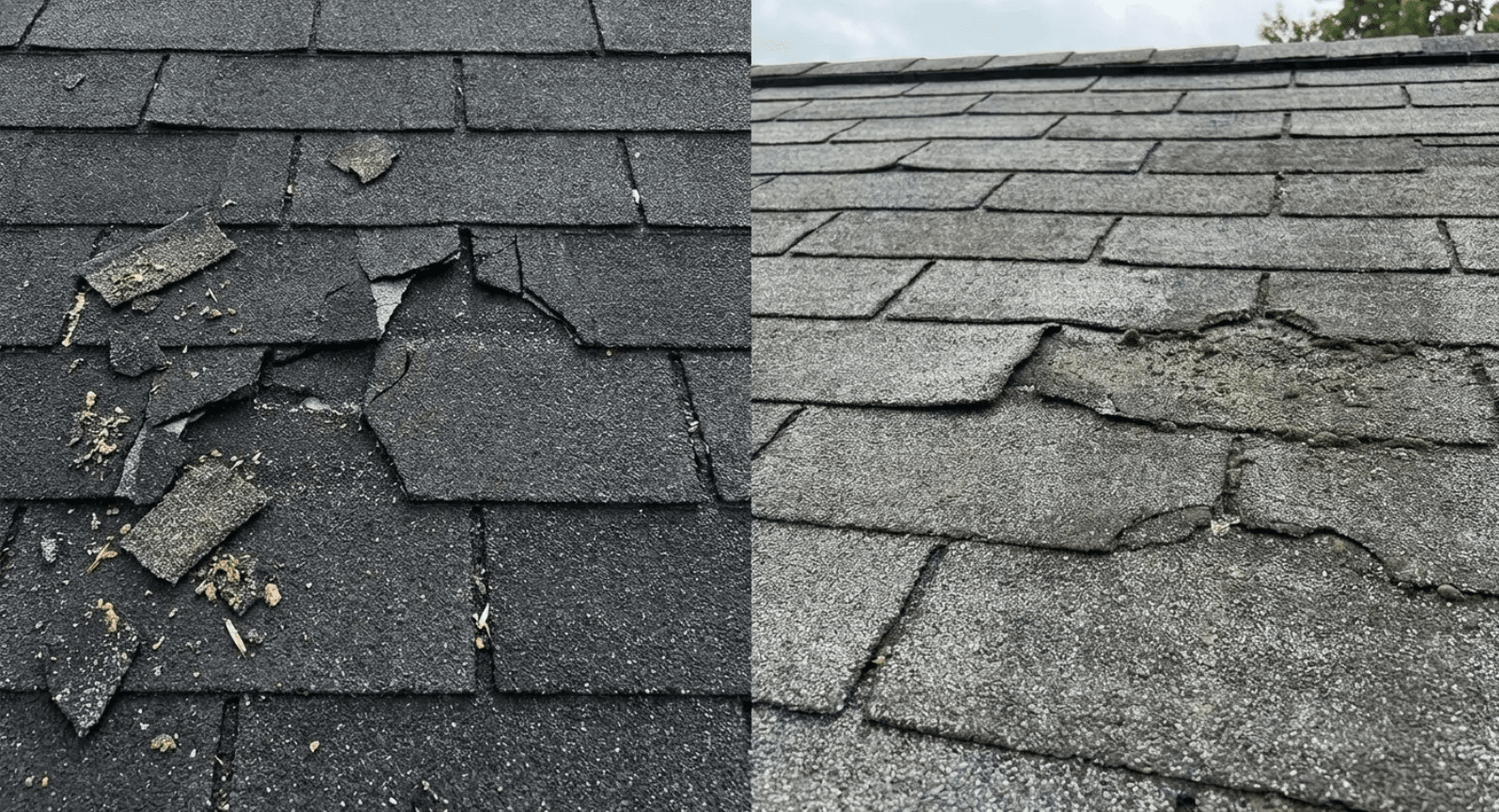
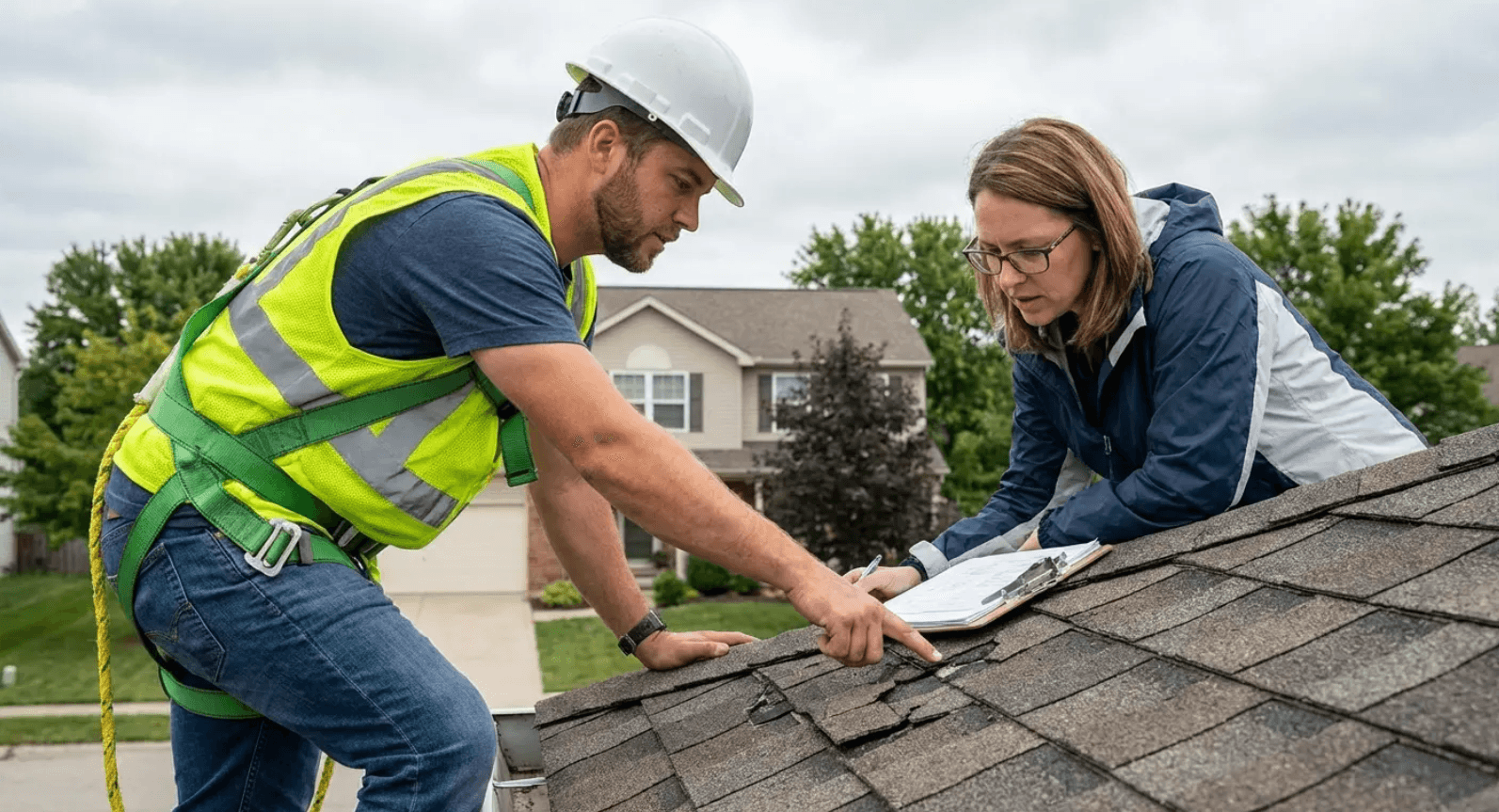
Specific signs adjusters look for when identifying pre-existing conditions include weathering patterns that indicate long-term exposure, organic growth (moss, algae) that doesn't develop overnight, granule loss consistent with age rather than impact, and fastener failure from installation issues rather than wind uplift.
Counterstrategies exist. Maintenance records prove the roof was in good condition before the storm. Pre-storm inspections or appraisals are invaluable for high-value homes. Documentation of the distinct characteristics of fresh storm damage—sharp edges on broken shingles, impact marks with specific directional patterns, uniform damage across the roof rather than isolated deterioration—supports your position.
Want to see how bad this gets? There's a case out of New Jersey where a commercial property owner's roof literally collapsed—not leaked, not sagged, fully collapsed—and the insurance company tried to call it "wear and tear." Can you imagine? The roof fell down and they're like, "Sorry, that's just normal aging." According to the court filing reported by Insurance Business Magazine, Market Street Properties had to sue Farmers Mutual Fire Insurance Company in federal court just to get them to acknowledge that a collapsed roof might be covered damage. The property owner's engineer determined the collapse resulted from hidden decay of an interior timber frame truss, which the policy specifically covered under its Supplemental Coverage for Collapse.
The case shows how insurers routinely invoke wear-and-tear exclusions even when policies contain specific coverage provisions that should override those general exclusions. Understanding the interplay between exclusions and affirmative coverage grants is critical when fighting pre-existing damage classifications.
The Maintenance Records That Prove You're Not Negligent
Documentation of regular roof maintenance defeats pre-existing damage arguments. Insurers often claim that damage resulted from neglect, which isn't covered under standard policies.
Adequate maintenance documentation includes receipts from professional inspections, records of gutter cleaning and debris removal, documentation of previous repairs with dates and scope of work, and photos from routine maintenance visits. Annual roof inspections are worth the cost even when no problems are apparent, because they create a paper trail proving responsible ownership.
Creating a maintenance log that will satisfy insurance scrutiny doesn't require extensive effort. Date and description of maintenance activities, photos showing roof condition at the time, receipts for professional services, and notes about any issues identified and addressed build a compelling record over time.
What if you haven't maintained documentation but have maintained the roof? You'll need to rely on other evidence: contractor statements about the roof's condition when they inspect after damage, comparison photos showing the roof's appearance before the storm (even casual photos that happen to include the roof in the background), and neighbor testimony about your property maintenance habits.
The difference between maintenance (which is your responsibility) and wear and tear (which happens despite proper maintenance) matters in claim disputes. Maintenance means cleaning gutters, removing debris, addressing minor issues promptly. Wear and tear means gradual granule loss, slight curling at shingle edges, minor weathering—things that happen over time regardless of how well you maintain the roof.
Fresh Damage Markers That Adjusters Can't Dispute
Physical characteristics distinguish new storm damage from existing deterioration. Understanding these markers helps you identify and document them before the adjuster arrives.
Hail impacts create bruising with compressed fibers and intact granules around the impact site. Old damage shows weathered edges and granule loss. Wind damage creates sharp tears and exposed nail lines. Old damage shows gradual lifting and weathered underlayment. Debris impact creates punctures with fresh wood exposure. Old damage shows darkened or stained wood.
Pointing out these specific characteristics during the inspection influences the adjuster's assessment. They're trained to look for these markers, but they're also trained to minimize damage findings. When you demonstrate knowledge of what constitutes fresh damage, adjusters take your roof insurance claim more seriously.
Photographing damage in ways that highlight fresh damage markers requires attention to detail. Close-up shots showing the texture and color differences between damaged and undamaged areas work well. Macro photography of impact sites revealing compressed fibers provides compelling evidence. Lighting angles that create shadows highlighting depth of damage help demonstrate severity.
Adjusters sometimes claim that damage could have occurred in a previous storm that wasn't claimed. Counter this argument with weather history showing no significant events between the last inspection and the current damage, home occupancy records proving you would have noticed and reported earlier damage, and the uniform nature of damage across the roof indicating a single event rather than accumulated impacts over time.
Why Your Contractor's Estimate and Insurance's Offer Never Match
This is the conversation I have about fifteen times a month, and it never gets less frustrating. A homeowner calls me, confused and angry: "The contractor says $22,000, but insurance only approved $16,000. Is someone ripping me off?"
Short answer: No. Long answer: Welcome to the gap between what things actually cost and what insurance pretends they cost.
Contractor estimates routinely exceed insurance settlements, and it's not because contractors are inflating prices—though adjusters often imply this. Contractors price based on actual market costs, include necessary work that insurance doesn't cover, and account for site-specific challenges that insurance pricing databases don't adequately reflect.
Code upgrades represent a major gap. When you replace a roof, current building codes apply regardless of when your home was built or what your old roof looked like. Enhanced underlayment in high-wind zones, upgraded flashing systems, improved ventilation requirements, fire-rated materials in wildfire-prone areas, and structural reinforcements for hurricane straps or snow load compliance all add significant cost.
Insurance policies typically exclude code upgrade costs unless you've purchased specific code upgrade endorsements. Most homeowners haven't. Contractors must include these costs in estimates because they're liable for code violations. Adjusters exclude them from settlements because the policy doesn't cover them.
As winter storm damage continues to impact homeowners across the country, roofing companies are emphasizing the importance of professional documentation in the claims process. Guardian Roofing, Gutters & Insulation recently issued guidance advising Pacific Northwest homeowners that "winter storms can cause hidden roof damage that isn't immediately visible from the ground," including ice dams, wind-driven rain exploiting weak points, and freeze-thaw cycles that crack shingles.
The company stressed that working with contractors experienced in insurance-related repairs helps homeowners understand "what damage is storm-related versus wear-and-tear" and ensures documentation meets insurance standards—a critical distinction when contractor estimates inevitably exceed initial insurance payouts.
Contractors include profit and overhead in estimates while insurance calculations may reduce or exclude these line items. Insurance often pays for repair when replacement is necessary. Contractors refuse to work for insurance-calculated amounts that don't cover their actual costs, leaving you stuck in the middle.
Code Upgrades That Insurance Won't Cover (But You're Legally Required to Install)
So let me get this straight: You're legally required to bring your roof up to current code when you replace it. That's the law. But your insurance policy doesn't cover bringing it up to code unless you bought a special endorsement that nobody told you about.
You're required by law to spend money that your insurance doesn't cover. And somehow this is legal. If that doesn't make you want to flip a table, I don't know what will.
Building code compliance requirements create a gap between insurance coverage and legal obligations. Current codes apply to all replacement work regardless of your home's age or your old roof's specifications.
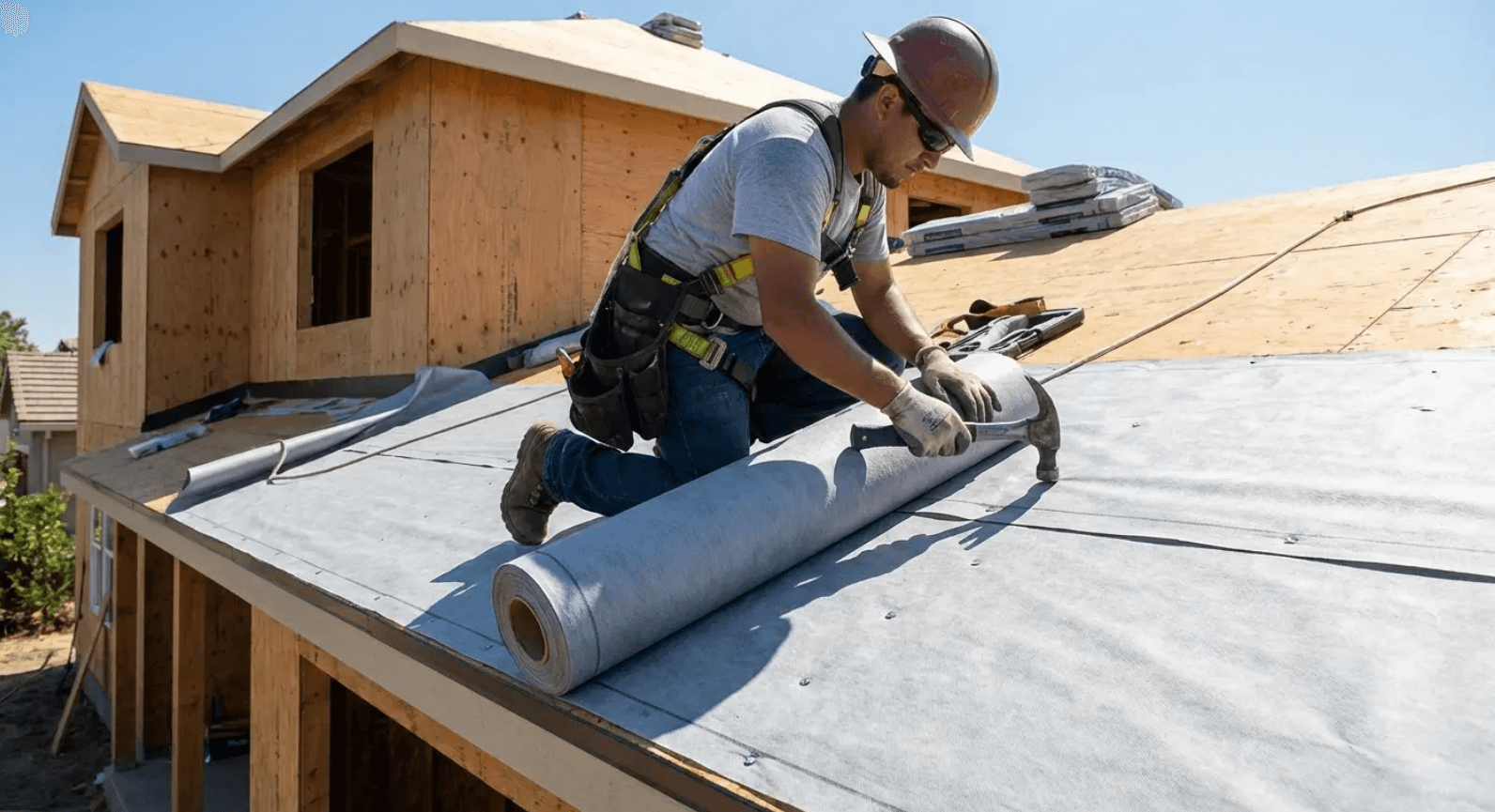
Common code upgrades that add significant cost include enhanced underlayment in high-wind zones (synthetic underlayment instead of felt paper can add $1,500-$3,000), upgraded flashing systems (ice and water shield in valleys and at penetrations), improved ventilation requirements (ridge vents and soffit vents that weren't required when your home was built), fire-rated materials in wildfire-prone areas (Class A shingles cost more than standard products), and structural reinforcements for hurricane straps or snow load compliance.
Insurance policies typically exclude code upgrade costs unless you've purchased specific code upgrade endorsements. Check your declarations page for "Ordinance or Law Coverage" or "Code Upgrade Coverage." If you don't see it listed, you don't have it.
Contractors must include these costs in estimates because they're liable for code violations. Building inspectors will fail work that doesn't meet current codes. Contractors can lose their licenses for repeated violations. Adjusters exclude code upgrade costs from settlements because the policy language specifically excludes them.
Options for homeowners facing this gap include paying out of pocket for the difference, purchasing code upgrade coverage before you need it (too late once damage occurs), or challenging denials when codes have changed since your policy was written and the insurer hasn't clearly disclosed the exclusion.
The Matching Problem That Turns Partial Damage Into Full Replacement
Matching existing materials often requires replacing more than just the damaged section, creating costs that insurance disputes. Roofing materials have limited production runs, colors are discontinued, and weathering makes new materials visually distinct from existing ones even when they're technically the same product.
Contractors recommend full replacements when insurance only approves partial repairs because visible patch jobs affect home value and curb appeal. Some building codes require matching across visible roof planes even if only one section is damaged. A patchwork roof with mismatched shingles looks unprofessional and raises questions for potential buyers.
Matching standards vary by policy. Some cover matching across the entire roof, others only the affected plane, many exclude cosmetic matching entirely. Read your policy's "Loss Settlement" section carefully. Look for language about "matching materials" or "uniform appearance."
Documenting that matching materials are unavailable from manufacturers strengthens your position. Request a letter from the manufacturer stating that your shingle color has been discontinued or that the product line has changed. Get statements from multiple suppliers confirming they can't source matching materials. Photograph the color and texture differences between new and existing materials.
Negotiating expanded replacement coverage when partial repairs would create aesthetic problems requires emphasizing property value impact. Appraisals showing how mismatched roofing affects resale value carry weight. Comparable sales data demonstrating buyer resistance to homes with obvious patch repairs helps your case.
The Appeal Process They Hope You'll Never Find
Here's something they definitely don't mention when they deny your claim: You can appeal. Every single policy has an appeals process built in. But insurance companies bury it so deep in the policy language that you'd need a law degree and a treasure map to find it.
Why? Because they're counting on you not knowing it exists. They're betting you'll see that denial letter, feel defeated, and give up.
Don't.
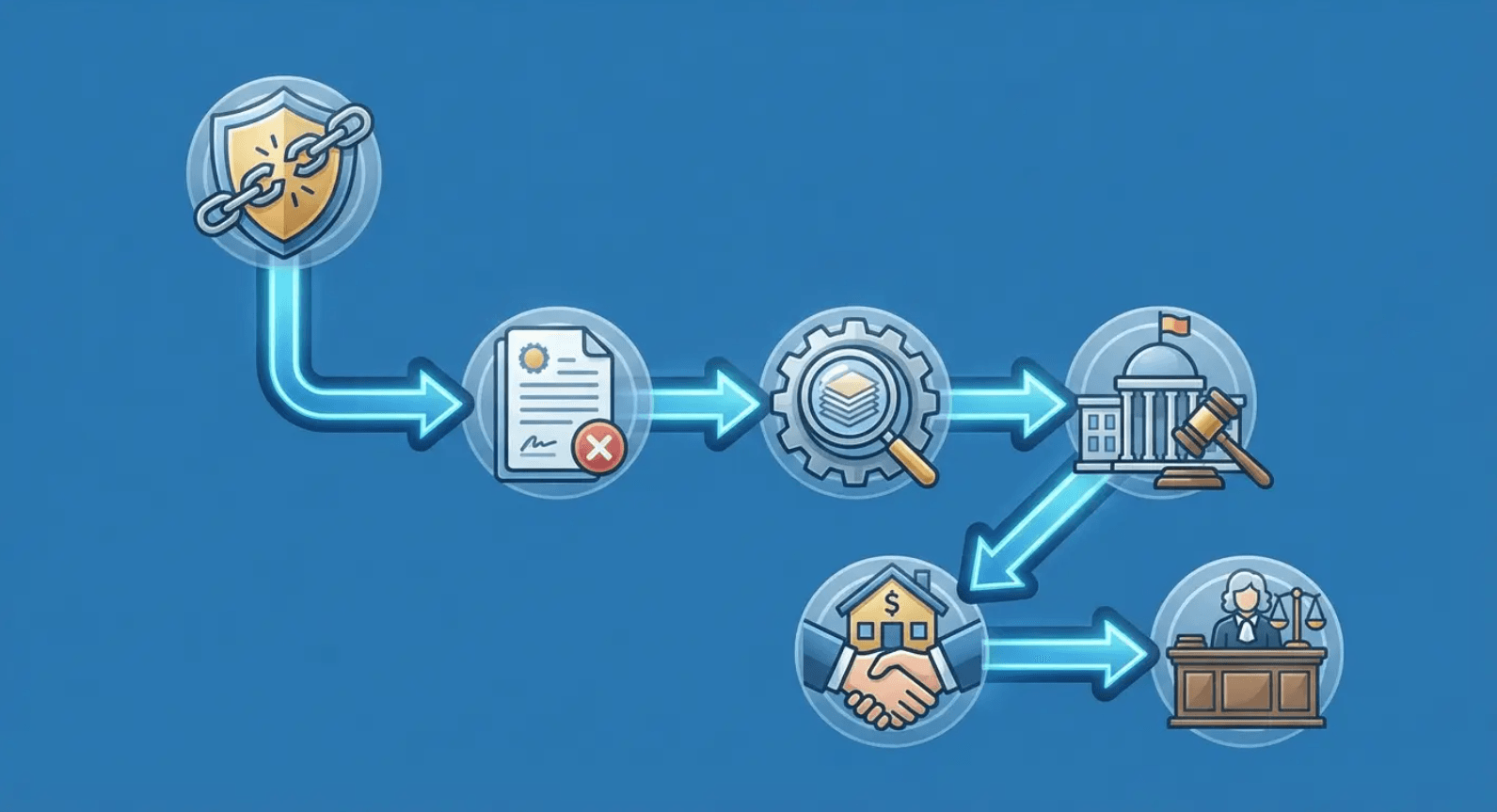
Every insurance policy includes an appeal or dispute resolution process, but insurers deliberately make it difficult to find and understand. The multi-tier appeal structure includes internal company review (first level), department of insurance complaints (state regulatory level), appraisal clauses (binding third-party assessment), and litigation (final resort).
Most denied or underpaid roof claims never get appealed. Homeowners don't know they can appeal, the process seems intimidating, and insurers imply that the initial decision is final. Appeals succeed more often than you'd expect because initial adjusters make mistakes, documentation improves with contractor input, and supervisory reviews catch errors.
The step-by-step appeal process starts with requesting written denial explanations with policy citations. Insurers must explain why they're denying coverage or limiting payment, citing specific policy language. Gather contractor assessments and independent inspections that contradict the adjuster's findings. Submit formal reconsideration requests with supporting documentation. Escalate to state insurance departments when internal appeals fail.
Timing matters. Appeals have strict deadlines, usually 60-180 days depending on state and policy. Miss the deadline and you've waived your right to dispute the decision. Documentation that strengthens appeals most effectively includes independent professional assessments, manufacturer specifications contradicting depreciation calculations, weather data supporting your damage timeline, and photos clearly showing damage characteristics.
Persistence pays off even when initial responses are discouraging. Insurers count on you giving up after the first denial. Each level of appeal brings fresh eyes to your roof claim and increases the likelihood of a fair settlement.
The Appraisal Clause That Levels the Playing Field
The appraisal clause is like a secret weapon that most homeowners don't know they have. It's sitting right there in your policy, probably on page 34 or something, just waiting for you to use it. And insurance companies hate when you do.
Here's why: It takes the fight out of their hands and puts it in front of neutral third parties. No more arguing with adjusters who have quotas to meet. No more going in circles with claims supervisors. Just independent appraisers looking at the actual damage and determining what it actually costs.
The appraisal clause found in most property insurance policies allows either party to demand a binding assessment of damage by neutral third parties. This is one of the most powerful tools you have, yet most people don't know it exists.
How appraisal works: each party selects an appraiser, the two appraisers select an umpire, and the three-person panel determines the amount of loss. Note that appraisal addresses how much the damage costs to repair, not whether coverage exists. If the insurer denies coverage entirely, appraisal won't help—you need to resolve the coverage dispute first.
Invoke appraisal when the insurer agrees you have coverage but disputes the cost. This is the perfect scenario for appraisal because you're only arguing about valuation, not policy interpretation. Appraisal differs from litigation in that it's faster, cheaper, and limited to valuation issues rather than broader legal questions.
Insurers often settle roof insurance claims more favorably once appraisal is invoked because they know independent assessment will likely increase the payout. The cost of going through appraisal plus the risk of a higher award makes settlement more attractive.
Costs run typically $2,500-$5,000 total. You pay your appraiser, split the umpire cost with the insurer. These costs are usually recovered through increased settlements. A $5,000 appraisal expense that results in a $15,000 increase in settlement is money well spent.
Finding qualified appraisers who specialize in roofing insurance claims requires research. Ask contractors for referrals, contact your state's insurance department for lists of certified appraisers, and verify credentials and experience with roofing-specific claims. Many contractors and public adjusters recommend triggering appraisal clauses early rather than exhausting internal appeals first, because appraisal brings objective third parties into the process immediately.
State Insurance Departments That Actually Respond to Complaints
State insurance departments regulate insurer behavior and investigate consumer complaints, providing powerful leverage for disputed roof claims. They can investigate claim handling practices, require insurers to explain denials, identify bad faith practices, and pressure insurers to reconsider decisions.
What they can't do: force specific settlement amounts or override policy terms. If your policy clearly excludes something, the insurance department can't create coverage that doesn't exist. But they can ensure insurers are applying policy terms correctly and handling roof insurance claims in good faith.
Filing complaints is usually done online through state insurance department websites. Include your policy number, claim number, timeline of interactions, and specific policy language you believe supports your position. Be factual and organized—emotional rants don't help your case.
Response timelines vary but expect 30-60 days for initial review. The department will contact your insurer, request their file, and evaluate whether claim handling was appropriate. Insurers take department complaints seriously because patterns of complaints trigger regulatory scrutiny and bad faith findings affect licensing.
When to file complaints: after internal appeals are exhausted or when you suspect bad faith practices like unreasonable delays, misrepresentation of policy terms, or failure to conduct adequate investigation. Don't file prematurely—give the insurer a chance to resolve the issue through their internal process first.
Examples of how complaints have resulted in reopened roof claims and increased settlements are numerous. We've seen cases where department intervention revealed that adjusters misapplied policy terms, failed to consider relevant evidence, or used outdated pricing data. The department's inquiry prompted supervisory review that corrected these errors and increased settlements by thousands of dollars.
Real Talk: How We Handle This at Joyland
You get stuck between contractor estimates and insurance payouts, unsure how to bridge the gap or whether you're being taken advantage of by either party. Working with a roofing company that understands the roof insurance claim process changes the outcome entirely.
Look, I'm not going to pretend we're doing this out of the goodness of our hearts. We're a business. But here's the thing: We can't do our job—which is replacing your roof properly—if insurance is only paying half of what it actually costs. So yeah, we've gotten really good at dealing with insurance companies.
We know what adjusters look for. We know what documentation they need. We know which arguments work and which ones are a waste of time. And we're there during the inspection to push back in real-time when they try to classify obvious storm damage as "pre-existing wear."
We work directly with insurance adjusters, provide documentation that meets insurance evidence standards, and help you understand what your policies actually cover versus what adjusters initially offer. Experienced roofing contractors can identify underpaid line items in insurance estimates, provide supplemental documentation that supports higher valuations, and explain technical roofing issues in terms that adjusters must acknowledge.
Having a contractor present during insurance inspections makes a significant difference. We point out roof damage insurance that homeowners might miss and counter adjuster arguments in real-time. When an adjuster claims damage is cosmetic, we can demonstrate why it's functional. When depreciation seems excessive, we can reference manufacturer specifications and expected lifespan data.
Contractors submit supplements when initial settlements don't cover actual scope of work. After the adjuster's initial assessment, we often discover additional damage during tear-off or identify line items that were undervalued. Submitting detailed supplements with photos and explanations of why additional work is necessary often results in increased payouts.
Choosing a contractor before filing a roof insurance claim often results in better outcomes than filing first and finding a contractor later. We can document damage properly from the start, be present during the adjuster's inspection, and ensure nothing gets missed or misclassified.
According to Verisk's property analytics data, non-catastrophic wind and hail claims rose sharply from 17% of residential roof claims in 2022 to 25% in 2024, with roof-related items making up more than a quarter of residential claim value last year. This dramatic increase in claim frequency makes it more critical than ever for homeowners to work with contractors who understand how to document damage properly and navigate the increasingly complex roof insurance claim process.
Schedule a free insurance claim consultation where we review your policy coverage, assess damage, and explain realistic expectations before the insurance adjuster arrives. This preparation makes all the difference in securing fair compensation.
What Happens When You Cash That First Check
Stop. Before you deposit that check, before you even endorse it, read everything that came with it. I'm serious. This is where a lot of homeowners accidentally screw themselves.
That check probably has language on it—either printed right on the check or in a letter that came with it—that says depositing it means you accept this as full and final payment. Once you cash it, you're done. Game over. Even if you find more damage later, even if you realize the amount doesn't cover repairs, too bad. You already agreed it was enough.
Accepting insurance settlement checks carries legal implications that can limit your options for additional compensation. Most settlement checks include restrictive endorsements—language printed on the check or in accompanying documents stating that depositing the check constitutes acceptance of the settlement as full payment.
These endorsements are legally binding in most states. Once you deposit that check, you've agreed that the amount fully compensates you for all damage. Never deposit a settlement check until you're certain it covers all damage.
The difference between initial payment checks and final settlement checks matters. Initial payments are often just the ACV portion with recoverable depreciation still pending. Final settlement checks close the roof claim. Insurers sometimes send checks that appear to be partial payments but are labeled as final settlements. Read all accompanying documents carefully before depositing anything.
Identifying restrictive language before depositing checks requires careful review. Look for phrases like "final payment," "full and final settlement," "payment in full," or "acceptance of this payment releases all claims." This language might be on the check itself, in the memo line, or in a letter accompanying the check.
What if you've already deposited a check but later discover additional damage? Some states allow roof claims to be reopened within specific timeframes. Supplemental roof insurance claims can sometimes be filed for newly discovered damage that wasn't apparent during initial inspection. Restrictive endorsements can occasionally be challenged if they weren't clearly disclosed.
Your rights to reject settlements include returning checks uncashed and continuing negotiations. You're not obligated to accept the first offer. Have contractors assess damage before accepting any payment. Get multiple opinions if the insurance amount seems inadequate.

The Recoverable Depreciation You're Leaving on the Table
Many homeowners don't complete the recoverable depreciation process, leaving thousands of dollars unclaimed. Understanding how this works is critical for maximizing your roof damage insurance claim.
Recoverable depreciation works in stages: insurance pays ACV upfront (replacement cost minus depreciation), you complete repairs, you submit proof of completed work and paid invoices, and insurance releases the depreciation amount. This isn't automatic—you must initiate the process.
Strict deadlines apply, typically 180-365 days from the date of loss. Miss the deadline and you forfeit the depreciation permanently. Required documentation includes contractor invoices, proof of payment, completion certificates, and photos of completed work.
Many homeowners miss these deadlines because they don't understand the process, they use insurance money for other expenses and never complete repairs, or they assume depreciation is automatically paid. Common mistakes include completing repairs but failing to submit documentation, submitting incomplete documentation that delays processing, and missing deadlines that forfeit the depreciation permanently.
Recovering depreciation often represents 30-50% of the total claim value. On a $20,000 roof replacement with 40% depreciation, you're leaving $8,000 on the table if you don't complete this process. That's real money that belongs to you if you follow through.
Documentation That Triggers Depreciation Release
Insurers need proof that repairs were completed and proof that you paid for those repairs. This prevents fraud where homeowners collect depreciation without spending it on repairs.
Required documentation typically includes itemized contractor invoices showing work performed, proof of payment (canceled checks, credit card statements, payment receipts), completion certificates or final inspection reports, and photos showing completed repairs.
Why each document matters: invoices prove scope of work matches the roof claim, payment proof prevents double-dipping, photos verify quality and completion. Organize documentation for submission with clear labels, dates, and descriptions. Submit depreciation claims as soon as work is complete rather than waiting, because delays raise questions about whether work was done.
Let me tell you about a homeowner in Minneapolis who learned this lesson the hard way. He received an initial ACV payment of $8,200 for hail damage to his roof (total replacement cost of $19,500 minus $9,300 in depreciation and a $2,000 deductible). After completing the replacement, he submitted his contractor's final invoice and proof of payment to recover the $9,300 depreciation.
His submission included only a one-page summary invoice without itemized line items, a credit card statement showing a $19,500 charge but no merchant name, and no completion photos. The insurance company rejected the depreciation claim, requesting detailed invoices matching the original estimate's scope of work, clear proof the payment went to the roofing contractor, and photos of the completed roof.
By the time he gathered the correct documentation and resubmitted, he had missed the 365-day deadline by 12 days. The insurer denied the claim as untimely, and he forfeited $9,300 in recoverable depreciation—nearly half the total claim value—due to inadequate initial documentation and missed deadlines.
Final Thoughts
Here's what it comes down to: Insurance companies have built a system that's designed to exhaust you. They're counting on you being too overwhelmed, too confused, or too tired to fight back. They've made it complicated on purpose.
But now you know how it works. You know what they're going to try to pull, and you know how to counter it. You know what to document, what to challenge, and when to push back.
Will it still be a pain in the ass? Probably. But at least now you're not walking in blind. And that makes all the difference.
Insurance roof claims are designed to be complex and discouraging, but homeowners who understand the system can achieve fair outcomes. The information gap between insurers and policyholders creates an uneven playing field: insurers know exactly how policies have changed, how depreciation is calculated, what appeal processes exist, and what documentation strengthens roof claims, while you're left to figure this out during the stress of property damage.
Shift your mindset from trusting that insurance will automatically do right by you to actively managing your roof insurance claims with the same diligence insurers use to minimize payouts. Fair settlements require documentation, persistence, and often professional help from contractors or public adjusters who understand the system.
Roof damage is stressful enough without fighting your insurance company, but the financial stakes are too high to accept inadequate settlements without question. The difference between a homeowner who accepts the first offer and one who documents thoroughly, appeals when necessary, and works with knowledgeable contractors can be $10,000, $20,000, or more.
You're not powerless in this system—you just need to know how it works and be willing to advocate for yourself.
The policy loopholes, depreciation schemes, and bureaucratic traps we've covered aren't secrets insurers want exposed. They rely on you not knowing your rights, not understanding your coverage, and not having the energy to fight for fair compensation.
Now you know better.