January 2, 2026
Roof Deck Structural Failures No One Talks About (And Why Your Contractor Probably Missed Them)
Author
Your roof deck is probably failing right now. Not dramatically—no holes, no visible sagging, nothing that would make you panic. Just slowly, quietly coming apart in ways that won't show up until you're three days into a roof replacement with half your building exposed and a contractor saying words you don't want to hear.
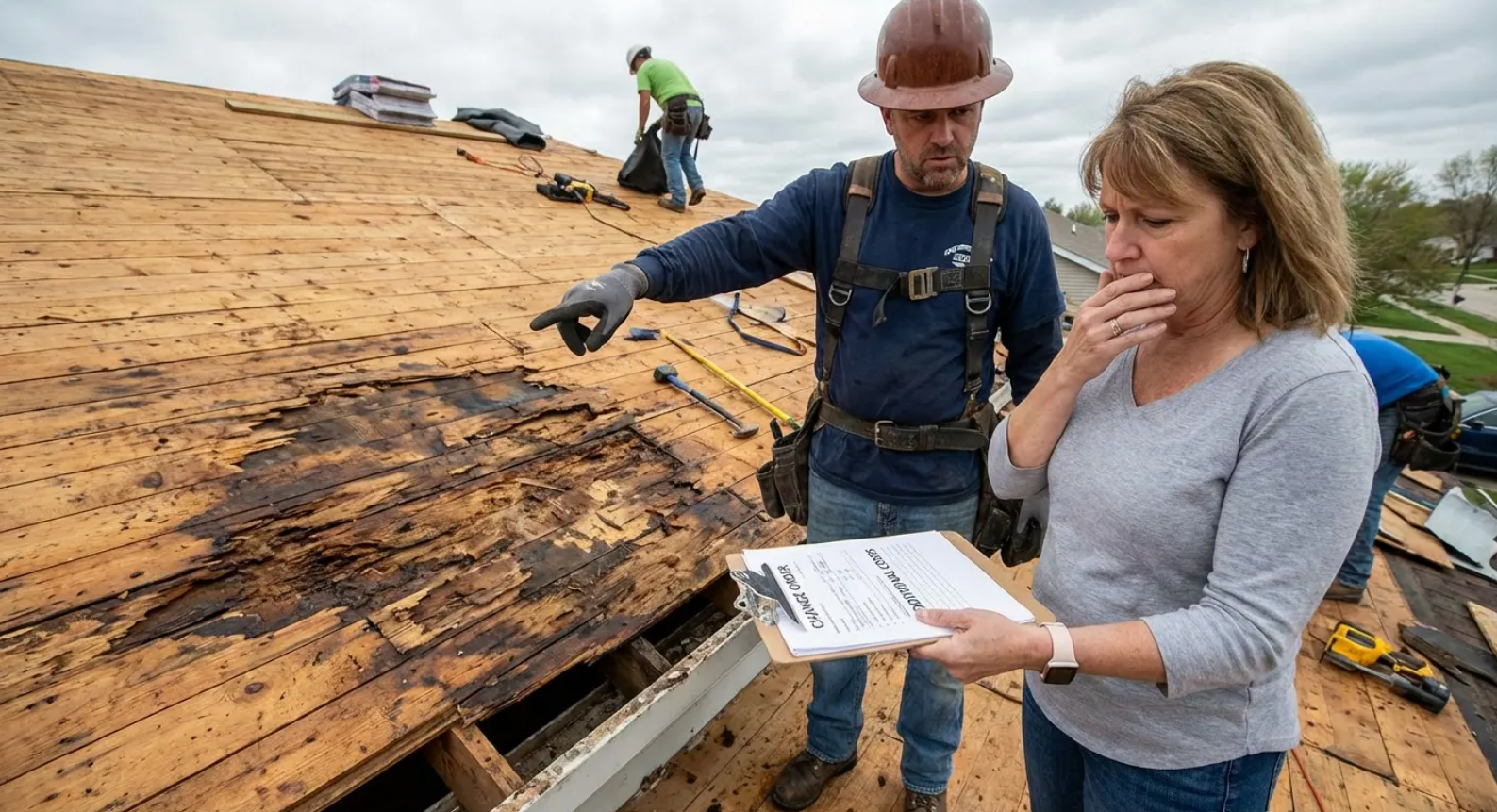
I've been on enough of these jobs to know the pattern. Property owner plans a straightforward re-roof. Budget's set. Timeline's clear. Then we pull back the shingles and find a deck that's been held together by hope and the old roofing material. Now we're having a very different conversation about very different numbers.
The problem? Everything we use to inspect roof decks was designed for simpler roofs on simpler buildings. Your deck is dealing with thermal stress, moisture problems, and loads that nobody calculated for when it was installed. And the standard inspection methods miss almost all of it.
Planning a roof replacement? Learn about roofing safety and installation standards before starting your project.
Table of Contents
- The Hidden Load Problem: Why Your Roof Deck Was Never Designed for What You're Using It For
- Thermal Movement and Fastener Withdrawal: The Slow-Motion Disaster Happening Above Your Head
- Why Roof Deck Inspection Standards Are Stuck in 1987
- The Ventilation Paradox: How Better Insulation Is Quietly Destroying Roof Decks
- Moisture Mapping vs. Visual Inspection: What Finds Deck Failure Before It's Critical
- The Retrofit Dilemma: When Upgrading Your Roof System Exposes Deck Problems You Didn't Budget For
- What Building Codes Don't Tell You About Deck Lifespan in Mixed-Climate Zones
- When to Walk Away: Red Flags That Mean Your Deck Needs Replacement, Not Repair
The Hidden Load Problem: Why Your Roof Deck Was Never Designed for What You're Using It For
Here's how this plays out: Client calls, wants to upgrade from basic shingles to the premium architectural ones. Looks great, adds curb appeal, everyone's happy. Except we're adding 4,000 pounds to a 2,000 sq ft roof. That's a Honda Civic. Permanently parked on your house.
Was the deck engineered for that? Maybe. Probably not. Depends who built it and when and whether they were feeling generous with the safety margin that day. We don't know until we look, and most contractors don't look until it's too late.
The structural risks of snow accumulation on roof decks became a critical safety issue in Massachusetts this winter. Bevilacqua Deck Builders issued warnings to Natick rooftop deck owners about snow loads exceeding design capacity. They noted that wet, dense snow weighs substantially more per inch than dry powder and can deposit hundreds of pounds across a modest rooftop deck surface within hours. Some of those decks were engineered for dry powder assumptions that don't match what actually lands on them during a nor'easter.
Building codes set minimum standards that don't reflect real-world loading scenarios. Contractors don't recalculate roof deck capacity when replacing roofing materials or adding equipment. Snow load calculations use statistical averages that may not reflect accumulation patterns on your specific roof geometry.
| Roofing Material Type | Weight per Square Foot | Typical Deck Impact |
|---|---|---|
| 3-Tab Asphalt Shingles | 1.5-2.5 lbs | Baseline load for most residential decks |
| Architectural Shingles | 3.0-4.5 lbs | 50-100% weight increase over 3-tab |
| Modified Bitumen | 2.5-4.0 lbs | Moderate increase, concentrated at seams |
| Built-Up Roofing (BUR) | 5.5-6.5 lbs | Significant load increase, requires structural review |
| Concrete Tile | 8.0-12.0 lbs | Often exceeds original deck design capacity |
| Slate | 7.0-10.0 lbs | Requires engineered deck reinforcement |
When a Roof Replacement Becomes a Structural Upgrade You Didn't See Coming
Last year we had a client with a 1988 colonial. Original three-tab shingles, 2 lbs per square foot. She wanted architectural shingles—the thick, dimensional ones that look expensive because they are. Those run 4 lbs per square foot.
Her 2,000 square foot roof went from 4,000 lbs of shingles to 8,000 lbs. We're talking about adding two tons of permanent weight to a structure that was designed with minimal safety margin. This wasn't a code violation—her original roof met 1988 standards. But those standards grandfathered older structures, meaning what was legal when built doesn't mean adequate by today's requirements.
The contractor who identifies this issue during tear-off isn't creating a problem. They're preventing a structural failure that would've occurred during the first major snow event after installation.
What is roof decking if not the structural foundation that supports everything above it? When we talk about deck capacity, we're discussing the engineered load limits that determine whether your roof deck can safely support the materials you're placing on it.
The Equipment Creep Nobody Calculated For
Walk me through your building's roof history. Started with one HVAC unit in 1995, right? Then you added another when you finished the second floor. Then the kitchen exhaust fan. Then the satellite dish (or three). Then someone decided solar panels would be nice.
Each addition seemed small. Nobody triggered a structural review because the individual weights didn't hit any thresholds. But collectively?
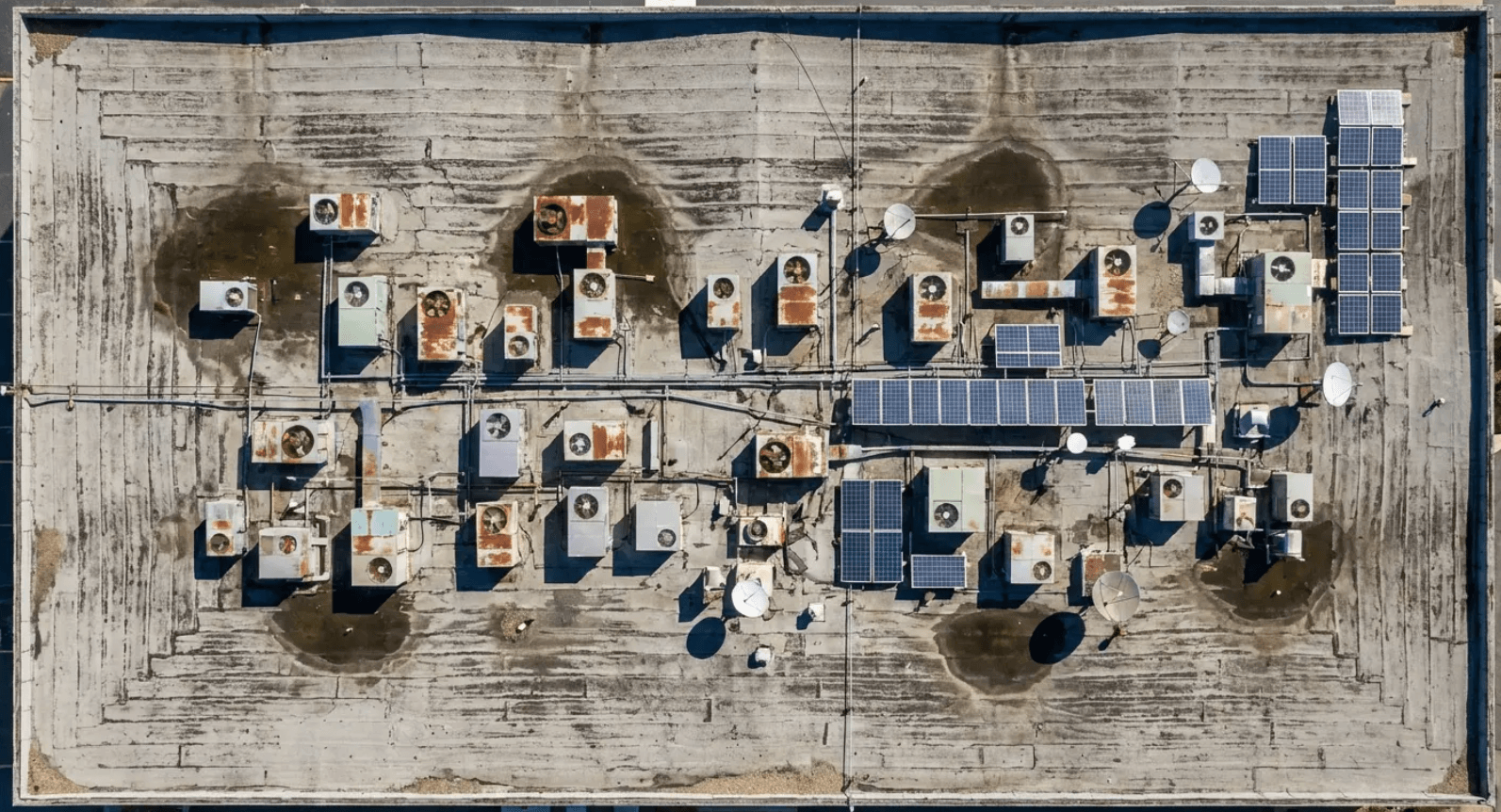
I inspected a commercial building last month—1995 construction, originally had a single 4-ton HVAC unit. Over 25 years they'd added two more HVAC units, a telecom cabinet, kitchen exhaust fans, and a small solar array. Nobody had recalculated capacity. When we pulled the roof membrane for replacement, we found permanent depressions in the metal decking under every equipment support. The deck was deflecting between supports—clear evidence that accumulated loads exceeded design capacity.
The spacing and attachment method of these loads matters more than total weight. A 600-pound HVAC unit concentrated on four support points creates entirely different stress than 600 pounds of roofing material spread across 100 square feet.
When does a structural engineer's load analysis become necessary? When the cumulative weight of everything you've added over the years exceeds what a roofing contractor typically evaluates. That's a different assessment entirely.
Thermal Movement and Fastener Withdrawal: The Slow-Motion Disaster Happening Above Your Head
Your roof expands and contracts every single day. Not much—fractions of an inch. But do that 7,000 times over 20 years and every fastener in that deck has worked itself loose just a little bit more. It's like a screw in a drawer that you open and close every day. Eventually, it backs out.
Nobody sees this happening. Can't see it from inside. Can't see it from the ground. The deck looks fine until the day it doesn't, usually during a windstorm when you find out that your roof's uplift rating is now theoretical.
Metal decks, wood decking, and concrete decks all fail differently under thermal stress. A 20-year-old roof deck in Phoenix has experienced vastly different stress than one in Seattle. Dark roof surfaces experience 40-60°F greater temperature swings than light surfaces. That's not a minor difference—that's the difference between a fastener that holds and one that's been working itself loose for two decades.
Why Your Deck Fasteners Are Failing Even Though Nothing Looks Wrong
Microscopic movements occur with each thermal cycle, enlarging fastener holes in wood decking or causing fasteners to back out of metal decking. Multiply 365 days by your building's age—that's your minimum thermal cycles. A roof in the desert or at high altitude? Double it for the extreme daily temperature swings.
I pulled back shingles on a 15-year-old roof last week. The deck looked perfect from the attic. From above? Screw heads sitting 1/8 inch proud of the surface across 30% of the deck. Started flush in 2009, now they're backing out. You can't see that from below. Can barely see it from above unless you know what you're looking for.
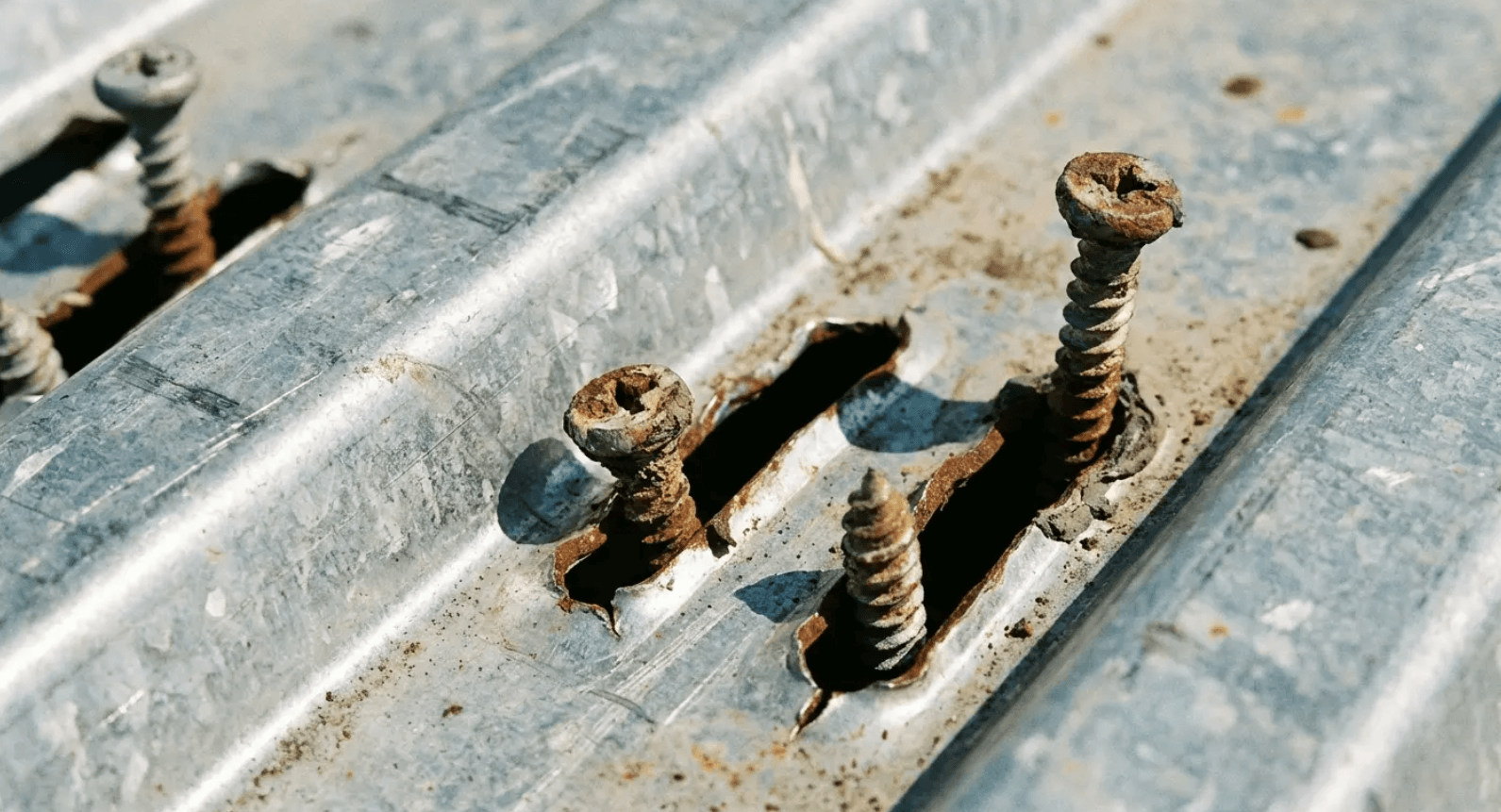
Fastener withdrawal is a time-based failure mode that doesn't correlate with visible damage. It becomes critical right when a roof system needs replacement, creating a compounding cost problem that catches property owners off guard.
Before assuming your roof deck fasteners are adequate, check these thermal stress indicators: roof surface color, building age, deck material type, climate zone (desert and high-altitude locations get hammered), whether the roof is ventilated or unventilated, and any previous wind uplift damage. Dark surfaces on unventilated decks in hot climates? That's worst-case scenario for fastener withdrawal.
The Wind Uplift Test Your Roof Is Failing Right Now
Wind uplift ratings measure how much negative pressure (suction) a roof system can withstand before failure. These ratings are tested in controlled laboratory conditions with new materials and properly installed fasteners.
A roof system installed to code can fall out of compliance years later due to fastener withdrawal. When does uplift testing make sense? Before re-roofing, when you need to know whether the existing roof deck can support the new system you're planning to install.
Commercial property owners face liability implications when their roofs no longer meet the wind ratings required by their insurance policies. That's not theoretical—it's a coverage issue that can leave you exposed when you need protection most.
Why Roof Deck Inspection Standards Are Stuck in 1987
The way we inspect roof decks hasn't changed since 1987. I'm not exaggerating—look up the standards. Same visual inspection, same probe testing, same assumptions about what "good condition" means.
Meanwhile, roofs have changed completely. Different materials, different loads, different failure modes. We're using rotary phones to inspect smartphones.
Visual inspections from below (looking up at the roof deck) can't detect fastener withdrawal, moisture content, or early-stage delamination in plywood or OSB. Inspection standards evolved when roof systems were simpler and roof deck materials more homogeneous. Economic incentives keep inspection standards minimal—faster inspections mean lower costs, but that creates risk for property owners who assume a "passed" inspection means their roof deck is in good condition.
What Moisture Meters Tell You (And What They Don't)
Surface moisture readings don't necessarily indicate roof deck moisture content. A single moisture reading tells you almost nothing without a pattern of readings across the roof area.
Start with these questions when an inspector reports moisture readings: Where were the readings taken? What type of meter was used? What's the baseline reading for dry material of this type? How do these readings compare to other areas of the roof deck?
Pin-type meters measure electrical resistance between two pins inserted into material—they give you direct contact with the material but only measure moisture at pin depth. They create small holes and get thrown off by material density and temperature.
Pinless meters use electromagnetic fields—they're non-destructive and cover larger surface areas, but they can't determine moisture depth and get confused by metal fasteners.
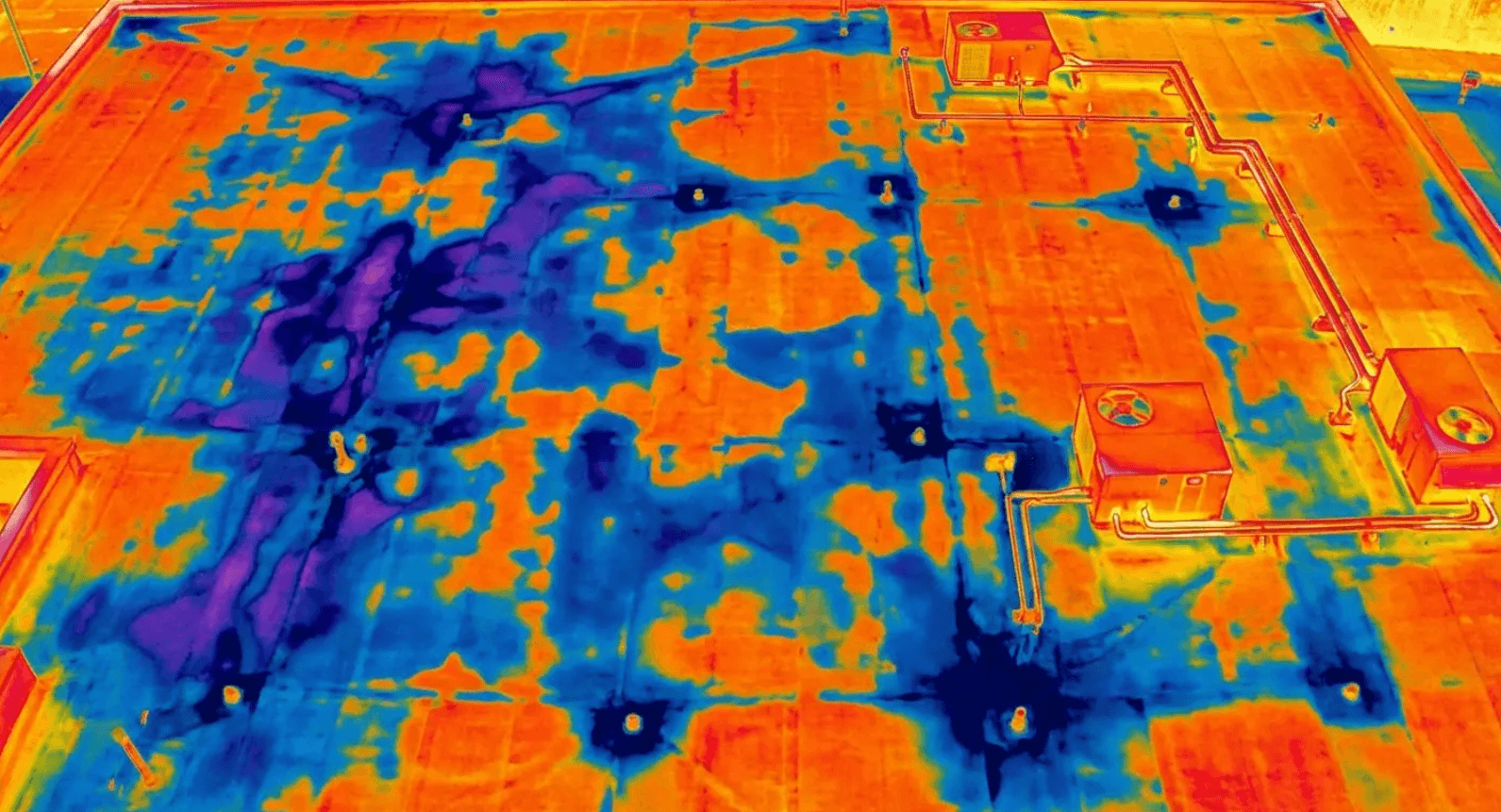
Infrared thermography shows you surface temperature differentials across large areas quickly, but it requires temperature differential to work and can't tell you how much moisture is present. Solar heating and reflective surfaces throw it off.
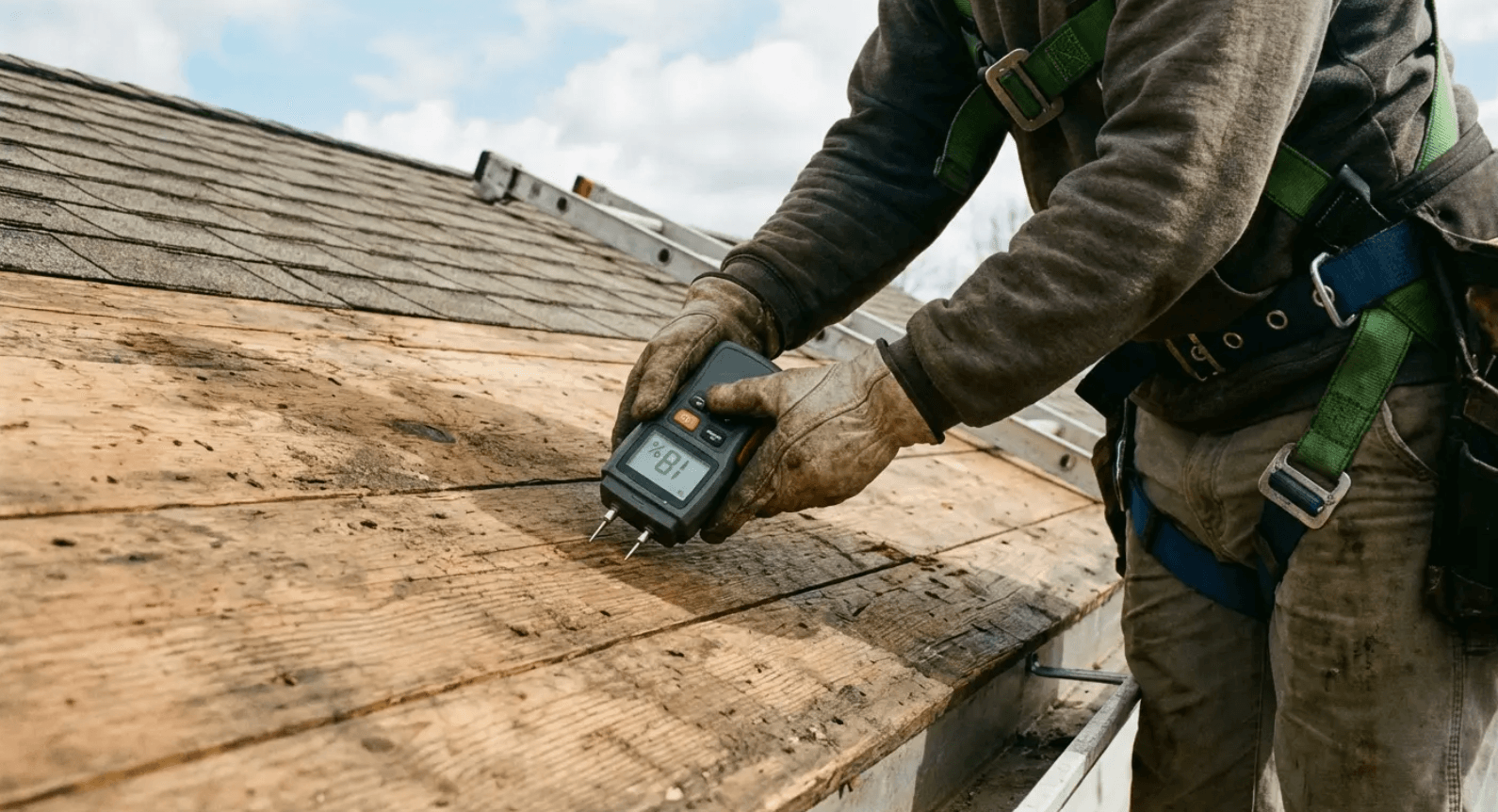
Moisture in the roof deck doesn't always mean you have an active leak. Could be condensation, slow drainage, or moisture that entered months ago and hasn't dried yet. Recent weather, roof system type, and testing methodology all affect results.
The Core Sample: When You Need to Look Inside Your Deck
Core sampling becomes necessary to truly understand roof deck condition, particularly for built-up roofing or modified bitumen systems where the roof deck isn't visible without destructive testing. A proper core sample reveals layer adhesion, moisture migration, insulation condition, and roof deck integrity.
Property owners resist core sampling because it creates penetrations that must be sealed. That resistance sometimes leads to catastrophic failures that could've been prevented.
One core per 5,000-10,000 square feet provides adequate diagnostic information for most roofs. Where should cores be located? Areas with visible problems, areas with suspected moisture intrusion, and representative areas that appear normal. That combination gives you the full picture.
The Ventilation Paradox: How Better Insulation Is Quietly Destroying Roof Decks
Energy efficiency improvements have increased insulation R-values without proportionally increasing ventilation capacity. Trapped moisture in under-ventilated roof assemblies leads to roof deck deterioration, particularly in cold climates where warm interior air meets cold roof decks.
Building codes' ventilation requirements—ratios of vent area to roof area—were developed for lower insulation levels and are inadequate for current energy codes. Spray foam insulation applied directly to roof decks eliminates ventilation entirely, creating moisture management challenges that require perfect installation to avoid problems.
Why Your Energy Audit Might Be Killing Your Roof Deck
Adding attic insulation without upgrading ventilation raises the dew point within the roof assembly. Air
sealing improvements trap moisture that previously escaped through leakage.
I've seen this pattern a dozen times: Homeowners get an energy audit. Recommendations include adding R-30 insulation to the attic and sealing air leaks. Great for energy bills. Terrible for the roof deck, which now has warm, moist air trapped against it with nowhere to go.
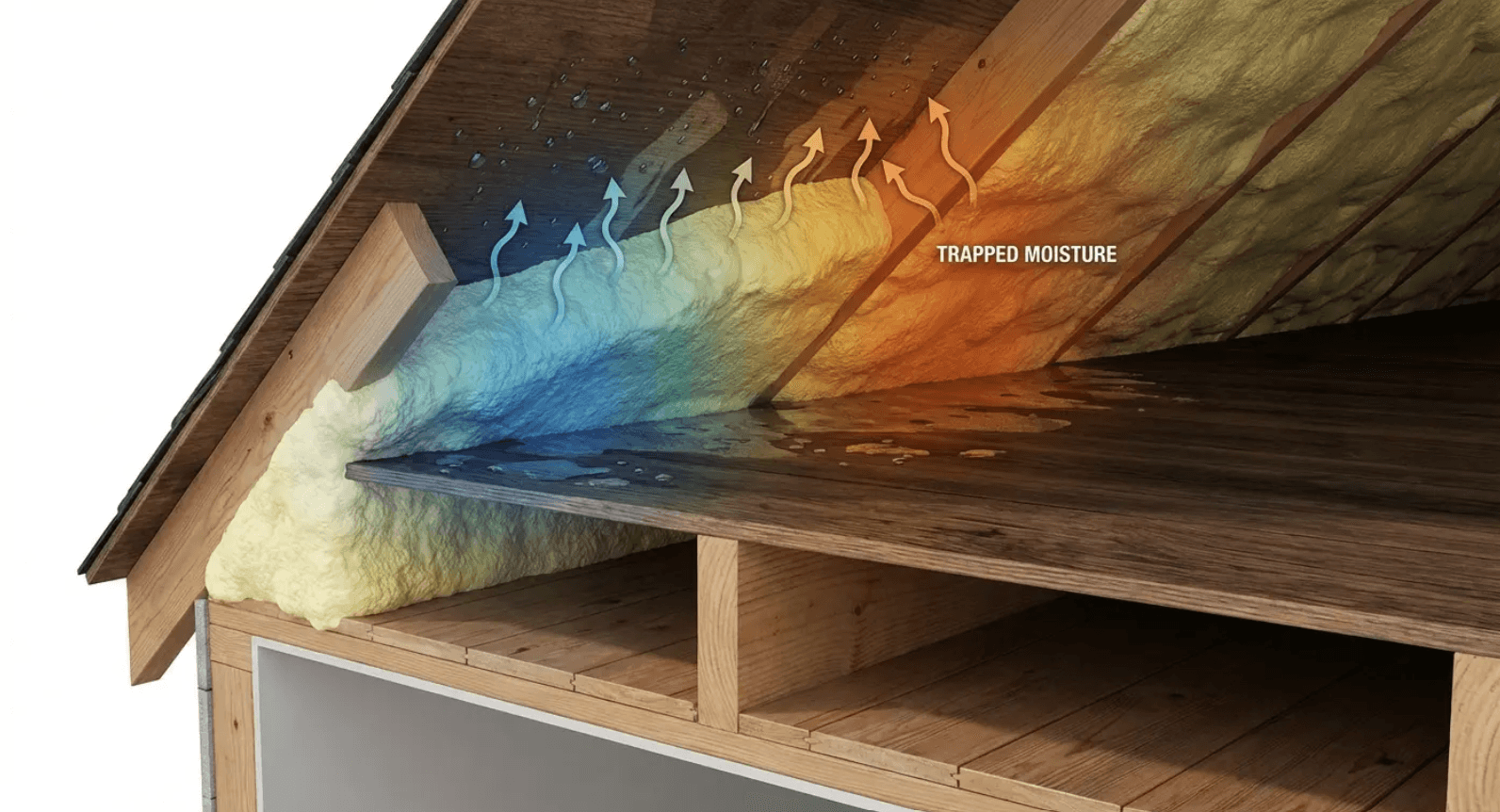
Roof deck condition should be assessed before (not after) major insulation upgrades. Sometimes mechanical ventilation becomes necessary to replace natural air exchange that's been eliminated. You can't just pile on insulation and hope for the best.
Cathedral Ceilings and the Condensation Problem Nobody Solved
Cathedral ceiling assemblies eliminate the attic space that traditionally buffered temperature and moisture differences. The roof deck becomes the ceiling deck, creating vulnerability to condensation-related failure that standard construction doesn't experience.
Many cathedral ceiling roofs were built with inadequate ventilation channels or insulation that blocks airflow, creating conditions for moisture accumulation that worsen over time rather than self-correcting.
Signs of condensation problems show up inside: water stains on ceiling surfaces, mold growth along beam pockets, musty odors during humid weather. These interior symptoms indicate that moisture is accumulating within the roof deck assembly, compromising structural integrity even when the exterior appears fine.
The "hot roof" versus "cold roof" design debate matters for roof deck longevity in ways that affect your building for decades. Get it wrong and you're looking at replacement in 15 years instead of 30.
Moisture Mapping vs. Visual Inspection: What Finds Deck Failure Before It's Critical
Technology-enabled moisture mapping detects problems before they cause visible damage. Infrared thermography and capacitance meters create spatial maps of moisture distribution across a roof deck, revealing patterns that indicate active leaks, condensation problems, or drainage issues.
For large commercial roofs where visual inspection of the entire roof deck is impractical, moisture mapping provides comprehensive assessment that would otherwise require destructive testing at hundreds of locations.
Reading Moisture Patterns: What the Data Means
When you're looking at moisture scan results, the pattern tells you more than the amount. See moisture in rings around penetrations? That's flashing failure—fix it now. Broad, uniform moisture across whole sections? That's condensation, which means you've got a ventilation problem. Moisture just at the edges? Check your gutters and edge flashing. Linear patterns following seams? Now you might have a structural issue—something's moving that shouldn't be.
Patterns change seasonally, meaning a single inspection may not capture the full picture. Moisture in the roof deck doesn't always require roof deck replacement—drying capacity varies with roof deck material, climate, and roof system design.
I had a client panic last spring because moisture scans showed elevated readings across 40% of the deck. We rescanned in July after two months of dry weather—readings dropped by 60%. The deck wasn't failing, it just needed time to dry out after a wet winter. Wood decking can absorb and release moisture relatively quickly. Metal decking doesn't absorb moisture but can trap it in surface rust or at connection points.
When Moisture Testing Gives False Confidence
A "dry" reading doesn't necessarily mean the roof deck is in good condition—it might just mean it's currently dry. Testing during only one season can miss problems that are cyclical.
The worst is when someone shows me a moisture report from August in Arizona claiming their deck is perfect. Of course it's dry in August—everything's dry in August. Come back in January after the winter rains and let's see what the scan shows then.
Different roof deck materials retain and release moisture at different rates, affecting when testing is most meaningful. Understanding these material behaviors prevents misinterpretation of test results.
The Retrofit Dilemma: When Upgrading Your Roof System Exposes Deck Problems You Didn't Budget For
A planned roof replacement reveals roof deck problems that weren't apparent until the old roofing was removed. This happens constantly because the old roof system concealed deterioration. Contractors can't always predict roof deck condition before tear-off—some problems only become visible when layers are removed.
Budget for roof deck contingencies. What's reasonable to hold in reserve? I tell clients 15-25% for roofs over 20 years old, and 10-15% for newer roofs with unknown maintenance history. That cushion protects you from mid-project financial stress.
The Tear-Off Surprise: Why Good Contractors Find Problems Bad Ones Miss
Discovering roof deck problems during tear-off is a sign of contractor thoroughness, not contractor incompetence. Surface conditions, obvious sagging, and accessible areas can be evaluated before tear-off. Hidden deterioration, fastener condition, and moisture within the assembly cannot.
Some contractors lowball estimates by assuming roof deck condition will be good, setting up conflict when it's not. I've seen this game played—bid comes in suspiciously low, then three days into the job suddenly there's $15,000 in "unexpected" deck work.
The reason we do moisture mapping and test cuts upfront? I got tired of having the "your deck is worse than we thought" conversation three days into a job. Client's angry, we're behind schedule, everyone's stressed. Now we have that conversation before the contract is signed, when you can still make decisions without a tarp on your roof and a weather forecast breathing down your neck.
Photos and documentation during tear-off are critical. When a contractor reports roof deck problems, request photos of the specific issues, ask how widespread the problems are, get pricing for repair versus replacement options, and understand how the problems affect warranty coverage.
Repair vs. Replace: The Math Nobody Wants to Do
At what threshold does replacement become more cost-effective than repair? When 30% or more of the roof deck needs work, replacement costs only marginally more than repair.
Last year we had a commercial building owner facing this decision. Tear-off revealed that 35% of the metal roof deck had moisture damage, delamination, or fastener withdrawal issues. We gave him two options: Replace only the damaged sections at $8,500 additional, or replace the entire deck at $18,000.
Seems like repair saves $9,500, right? Except the manufacturer's warranty required that at least 80% of the roof deck be in "like-new" condition for full coverage. Partial repair would void the 20-year warranty, leaving only a 10-year contractor workmanship warranty.
When he factored in the reduced warranty value and the likelihood that the remaining 65% of "acceptable" decking would deteriorate within 10 years (requiring another disruptive project), full replacement became the economically rational choice despite the higher upfront cost.
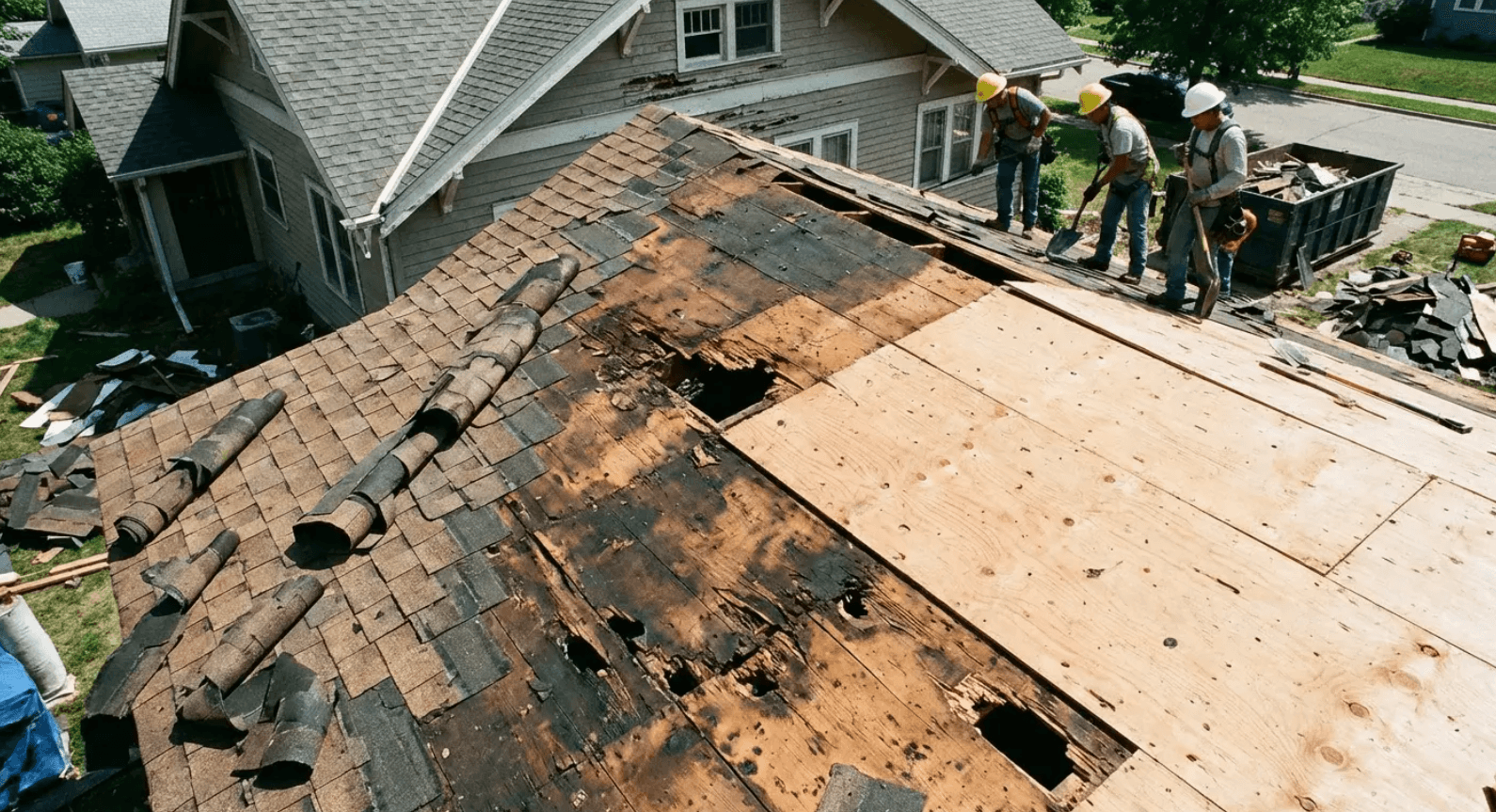
Repair patches create thermal bridges and potential weak points. Extensive patching sometimes creates more problems than it solves.
What Building Codes Don't Tell You About Deck Lifespan in Mixed-Climate Zones
Building codes establish minimum standards for new construction but provide little guidance on roof deck lifespan or replacement triggers. Codes focus on structural adequacy at installation but don't account for degradation over time.
Climate affects roof deck longevity dramatically. Mixed-climate zones where roof decks experience freeze-thaw cycles, high humidity, and significant temperature swings create the harshest conditions.
Why Your Deck's Expiration Date Isn't on Any Label
Deck manufacturers don't provide expected lifespan data. That absence of information creates risk for property owners who need to plan for replacement. Variables that affect roof deck longevity include moisture exposure, thermal cycling, load history, and ventilation.
Dark roof surfaces, inadequate ventilation, heavy equipment loads, and exposure to salt air all reduce lifespan. "Original to the building" doesn't necessarily mean the roof deck needs replacement.
Fastener withdrawal affecting more than 20% of connections, widespread surface rust on metal decking, delamination in wood products, or sagging between supports all indicate approaching end of life. These condition indicators matter more than age alone.
Coastal, Mountain, and Prairie: Why Location Determines Deck Survival
Coastal environments' salt air and humidity create corrosion and decay problems. Mountain climates' freeze-thaw cycles and snow loads create mechanical stress. Prairie climates' temperature extremes and wind create different failure modes entirely.
Metal roof deck with galvanized or galvalume coating works well in dry climates but corrodes faster in coastal environments. Wood decking performs adequately in moderate climates but deteriorates rapidly in high-humidity areas.
Microclimate effects create variation even within a single climate zone. Shading, exposure, and drainage patterns all affect how your specific roof deck ages compared to similar buildings in your area.
When to Walk Away: Red Flags That Mean Your Deck Needs Replacement, Not Repair
Widespread delamination in plywood or OSB, extensive rust-through in metal decking, sagging between supports, and fastener withdrawal affecting more than 30% of fasteners all signal that repair won't adequately address the underlying issue.
These conditions can't be fixed through localized repairs. Attempting to patch systemic problems wastes money without solving anything. Continuing to defer replacement when these conditions exist is a gamble that rarely pays off.
Delamination, Sagging, and Soft Spots: The Failure Modes You Can't Patch
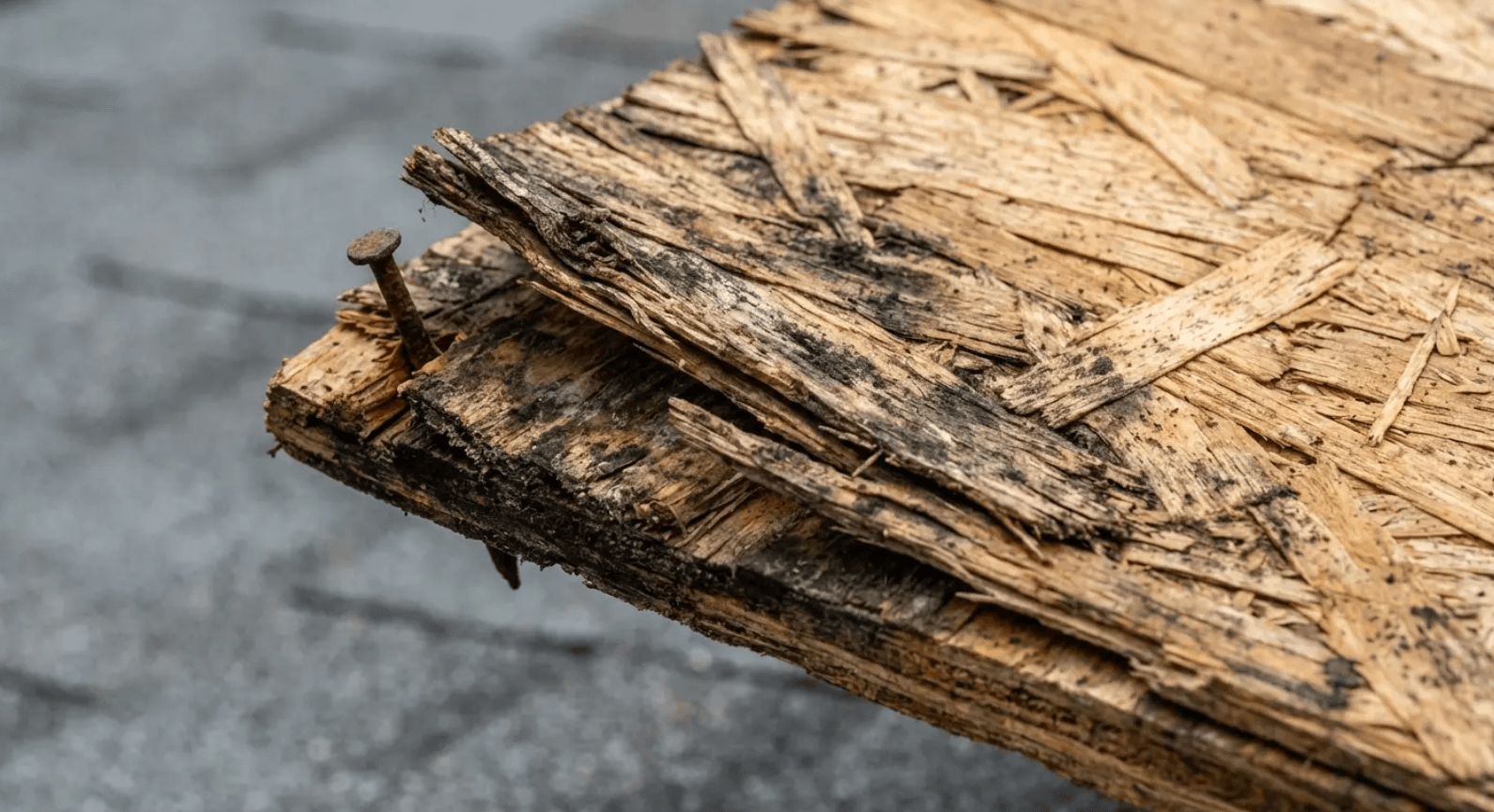
Delamination in engineered wood products affects large areas rather than isolated spots. It compromises both structural strength and fastener holding power. Look for separation between wood layers, visible at cut edges or where fasteners have pulled through.
Sagging is subtle and hard to see from ground level. Inadequate support, material failure, or accumulated loads exceeding design capacity cause it. Sagging indicates problems that repair can't fix—the structural members have permanently deformed.
"Soft spots" in roof decks are just the visible symptom of more extensive hidden damage. Walking on a roof deck shouldn't produce noticeable deflection or spongy feeling. When it does, the underlying structure has deteriorated beyond what surface repairs can address.
The Cost-Benefit Analysis Your Contractor Won't Do for You
Contractors prefer repair because lower project cost is easier to sell, even when replacement would provide better long-term value. Calculate cost per square foot of patching versus replacement. Factor in how repairs affect warranty coverage, future maintenance costs, and resale value.
Account for the disruption cost of addressing roof deck problems twice rather than once. Sometimes spreading costs over time makes sense. Other times, doing it right once saves money and hassle.
Liability and Insurance: Why Your Deck Condition Matters More Than You Think
Insurance adjusters assess roof condition after storm damage. Pre-existing roof deck deterioration can affect claim outcomes in ways that surprise property owners.
Commercial property owners face liability if roof deck failure causes injury. Documented inspection and maintenance records provide important protection.
Some insurance policies require periodic roof inspections and may non-renew coverage if roof deck problems aren't addressed. This creates situations where roof deck replacement becomes necessary to maintain insurability rather than because failure is imminent.
Joyland Roofing's Approach: Pre-Tear-Off Deck Assessment That Protects Your Budget
Here's what we do differently, and why it costs a bit more upfront:
We moisture-map before we tear anything off. Not just the obvious problem spots—the whole roof. Takes an extra half-day, but it means you know what you're dealing with before we've committed your building to being half-naked.
Then we do test cuts. Usually three or four spots that tell us different things: one where we suspect problems, one that looks perfect, one near equipment, one at the edge. We patch them back up if we're not starting demo that day.
And if you're adding equipment or going heavier on materials, we run the load calc. Takes maybe an hour, costs you $300, and tells you whether you're about to create a problem that won't show up for five years but will definitely be your problem when it does.
We provide detailed documentation of what we find and transparent pricing for different scenarios (best case, likely case, worst case) so you can budget appropriately. This approach takes more time upfront, but it eliminates the mid-project surprises that blow budgets and create conflict.
You'll know what you're dealing with before we remove a single shingle, and you'll have options clearly explained so you can make informed decisions about repair versus replacement. We're not interested in selling you roof deck work you don't need, but we're also not going to install a 30-year roof system on a roof deck that won't last 10 years.
Final Thoughts
Look, your deck's going to need replacement eventually. That's not a failure—it's physics. Materials break down. Fasteners loosen. Moisture gets in.
The question is whether you find out on your terms or the deck's terms. On your terms means you get moisture mapping before the re-roof, budget appropriately, and make decisions when you have options. On the deck's terms means you're standing there at 9 AM on a Tuesday with half your roof torn off, looking at photos of rot you couldn't have seen yesterday, trying to figure out where you're going to find an extra $15,000.
I know which one I'd pick. But I've also seen enough of the second scenario to know that most people don't realize they have a choice until it's too late.
The worst call I get is from someone who's three days into a roof replacement with another contractor. They're calling me for a second opinion because the numbers just jumped by $20,000 and they don't know if they're being taken for a ride or if the problems are real.
Usually? The problems are real. But now they're in the worst possible negotiating position. Roof's half off, weather's coming, and walking away means eating the demo cost and starting over.
That's why we do the assessment work upfront, even when clients think we're being paranoid. Because "paranoid" looks a lot smarter when you're not the one scrambling for emergency funding mid-project.
What You Should Do This Week
If your roof is over 15 years old or you're planning a replacement:
Get moisture mapping before you sign anything. Costs $300-800 depending on roof size. Worth every penny.
Ask your contractor about test cuts. If they resist, that's a red flag. Good contractors want to know what they're dealing with.
Get load calculations if you're changing materials or adding equipment. Your contractor might say "it's fine"—make them show you the math.
Budget 20% contingency for deck work. Hope you don't need it, but you probably will.
Get it in writing what happens if they find deck problems. Who decides repair vs. replace? What's the pricing structure? What affects the timeline?
Don't wait until you're mid-project to figure this out.