
Is Insulated Siding Worth It for Pennsylvania Homeowners?
John Esh
December 17, 2025

Lorem ipsum dolor sit amet

Lorem ipsum dolor sit amet, consectetur adipiscing elit. Sed do eiusmod tempor incididunt ut labore et dolore magna aliqua. 

The Real Insulation Value of Insulated

Vinyl Siding

The best insulated vinyl siding options on the market have an R-value (that’s the measure of insulation) between R-2 and R-3. For perspective, Pennsylvania’s building codes require R-30 in ceilings and R-20 in walls. So yes, that little bump from the siding helps—but only a little.


If your goal is to lower heating bills, the numbers probably won’t add up fast enough to justify the extra cost. You’re looking at an extra $2.50 to $3.50 per square foot compared to non-insulated siding. For most homes, that’s a few thousand dollars more.


For illustration, let’s say that you end up saving $50 a month on heating for four months of the year with insulated siding. That’s $200 saved annually. YAY! But on a $5,000 up-charge for materials and installation? You’ll be waiting decades to break even.


What About Fiber Cement Siding?

Fiber cement siding—like James Hardie—isn’t really about insulation. It’s about durability, style, and low maintenance. If you’re focused on reducing drafts or heating costs, fiber cement won’t make a big difference there. But if you want that solid, high-end look and fire resistance, fiber cement wins on aesthetics and longevity.A photo showing the inside of insulated siding.


A Hidden Perk: Wider Vinyl Siding Panels Come Pre-Insulated

Here’s something most homeowners don’t realize: wider vinyl profiles often come with built-in insulation. For example, if you go from a 5-inch panel to a 6- or 7-inch one, insulation is automatically included in most profiles. That wider panel needs extra rigidity so it doesn’t flex or warp too much.


That’s actually why I went with a 6-inch profile on my own house—it gave us the wider, modern look we wanted and came pre-insulated by default. So in that case, it wasn’t about energy savings. It was about aesthetics.


Installation Notes: Trim, Flashing, and Fit

Insulated siding is thicker than non-insulated, which means your installer might need to adjust window trim, door casings, or flashing for a clean, tight fit. If your home already has tight architectural details, this can add a little complexity to the project. Nothing major, but worth planning for, and it can also contribute to higher costs for the insulated option.


So… Is Insulated Siding Worth It?

If you’re hoping to save money on energy bills, probably not. If you love the clean, wider-profile look, absolutely! Want slightly more soundproofing? Maybe a little more durability? Maybe.

Category Verdict
Looks Yes Wider profiles look great and often include built-in insulation for rigidity.
Insulation / Energy Savings Not really R-2.5 to R-3 helps a little, but the payback on that cost is slow in PA climates.
Impact / Wind Resistance Slightly Added rigidity helps, but proper installation matters more than the foam backing.

Frequently Asked Questions About Insulated Siding


Does insulated siding increase my home’s energy efficiency?
A little bit, yes—but not enough to make a major impact on your energy bills. It can slightly reduce drafts and help with comfort, but most savings come from your attic and wall insulation.


Will insulated siding make my home quieter?
It can reduce exterior noise slightly since the foam backing absorbs sound. If you live near a busy road, it might help a little. But windows are typically the big bully culprit for sound transmission, so you might want to think about 
upgrading your windows instead.


Can insulated siding protect my home better from hail or wind?
It adds some rigidity, but it’s not a night-and-day difference. Proper installation matters more for wind resistance than the siding type itself.


Is insulated siding a good choice for Lancaster County weather?
It can help a little with temperature swings, but Pennsylvania’s real energy loss happens more through the attic, windows, and doors. Focus your upgrades there first.


How do I know which siding type is right for me?
If you want a stylish, low-maintenance exterior, insulated vinyl or fiber cement are both great. Talk with your siding contractor about your goals—whether it’s looks, budget, or performance. Check out this post about 
siding material options, or this one to learn about Fiber Cement siding pricing.


Serving homeowners across From York, Carlisle and Lancaster to West Chester and Lansdale, Joyland Roofing & Exteriors helps you choose the siding that fits your style, your budget, and your home’s needs—without the sales gimmicks.


Give us a call at 717-704-8517 or fill out our contact form!

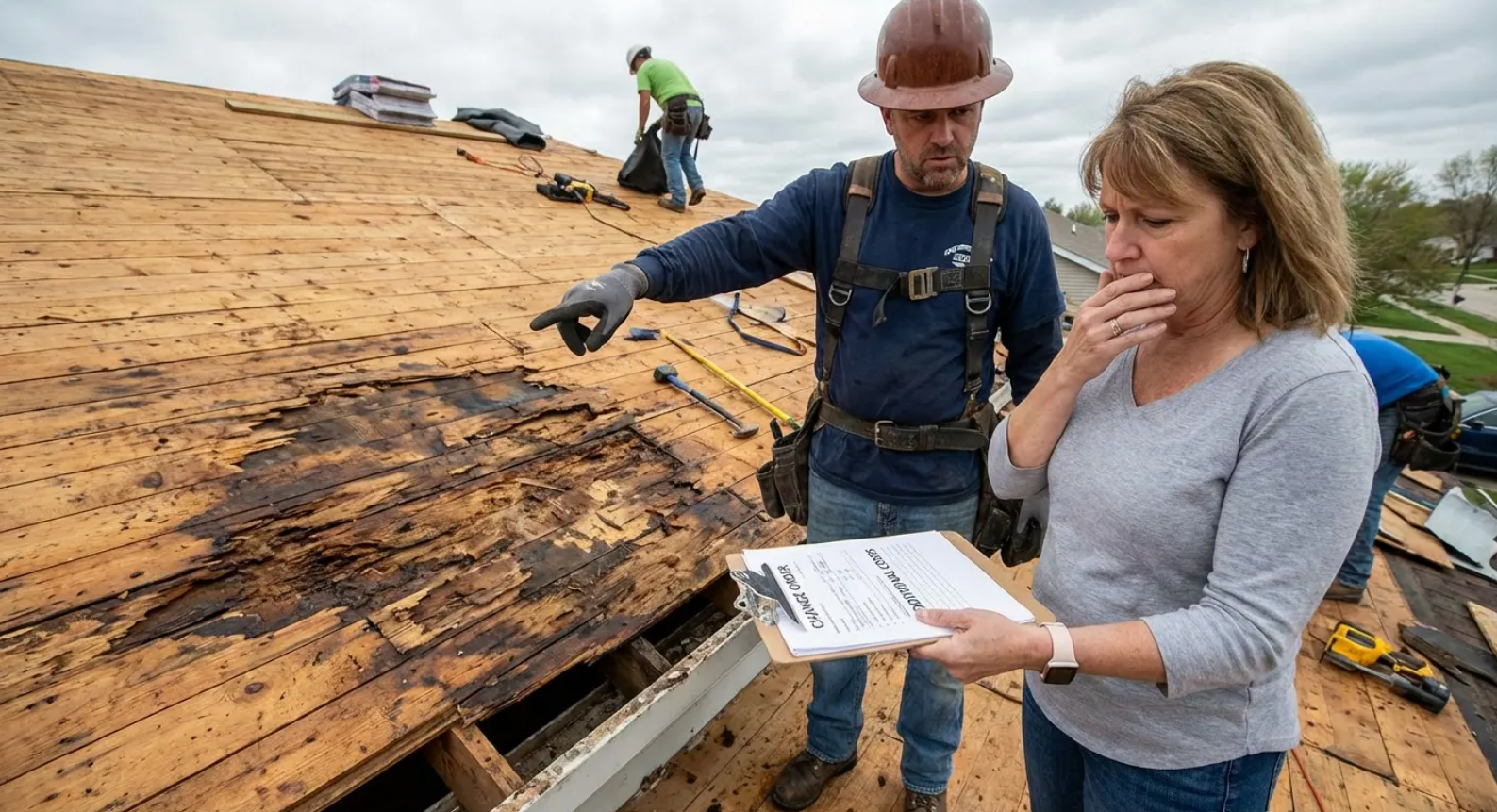
Contractor showing a homeowner roof damage during an inspection, highlighting why an instant roof qu
By John Esh March 31, 2026
Instant roof quote tools are fast but often miss roof pitch, ventilation, and hidden damage that can significantly change the true cost of roof replacement.
By John Esh March 31, 2026
Mansard roof design helps you unlock extra space and stay within zoning limits. Understand the pros, risks, and key construction details before building
By John Esh March 31, 2026
Modern roof design has become a performance system, not just a weather barrier. Learn what thermal bridging, drainage architecture, and material sequencing mean for your home's energy costs and longevity.
By John Esh March 31, 2026
Lean to roof design creates unique structural, drainage, and thermal challenges most contractors miss. Learn what actually causes failures — and how to build a lean to that lasts decades.
By John Esh March 31, 2026
The best black roof house color ideas go far beyond safe gray and white. Discover bold palettes, undertone strategy, and testing methods that actually work for your black roof house.
By John Esh March 31, 2026
Dormer roof design failures happen where you can't see them. Learn the structural, drainage, and ventilation realities that determine whether your dormer lasts decades or fails in five years.
By John Esh March 31, 2026
Discover flat roof patio ideas that actually work — from structural load checks and waterproofing to materials, drainage, privacy, and plants that survive rooftop conditions.
By John Esh March 31, 2026
Parapet roof design failures rarely start where you expect. Learn the flashing details, thermal movement risks, and drainage plane problems that cost property owners thousands.
By John Esh March 31, 2026
Cantilever roof overhang design failures come from rotational stress, snow load miscalculations, and fascia myths. Learn what your builder isn't telling you.
By Moe Marketing Agency March 31, 2026
Dutch gable roof design done wrong costs thousands. Learn proportions, flashing, structural load paths, and maintenance realities before you build.

John Esh | CEO & Master Installer

  • 25+ Years Experience: From ground crew to Master Certified Installer.
  • Local Roots: Serving Lancaster, Harrisburg, and SEPA since 1991.
  • Credentials: GAF Master Certified (ME27586); Licensed in PA (PA124258) & MD (#137952).
  • The "Why": Obsessed with "radical transparency" to remove the fear factor from home improvements.

James Wesser | Content Producer

  • Background: Former local news digital producer and journalist.
  • The Mission: Turning complex roofing jargon into clear, "fluff-free" answers for homeowners.
  • Local Tie: When not filming on-site, he’s likely roaming Hersheypark or building digital worlds.

Meet The Experts