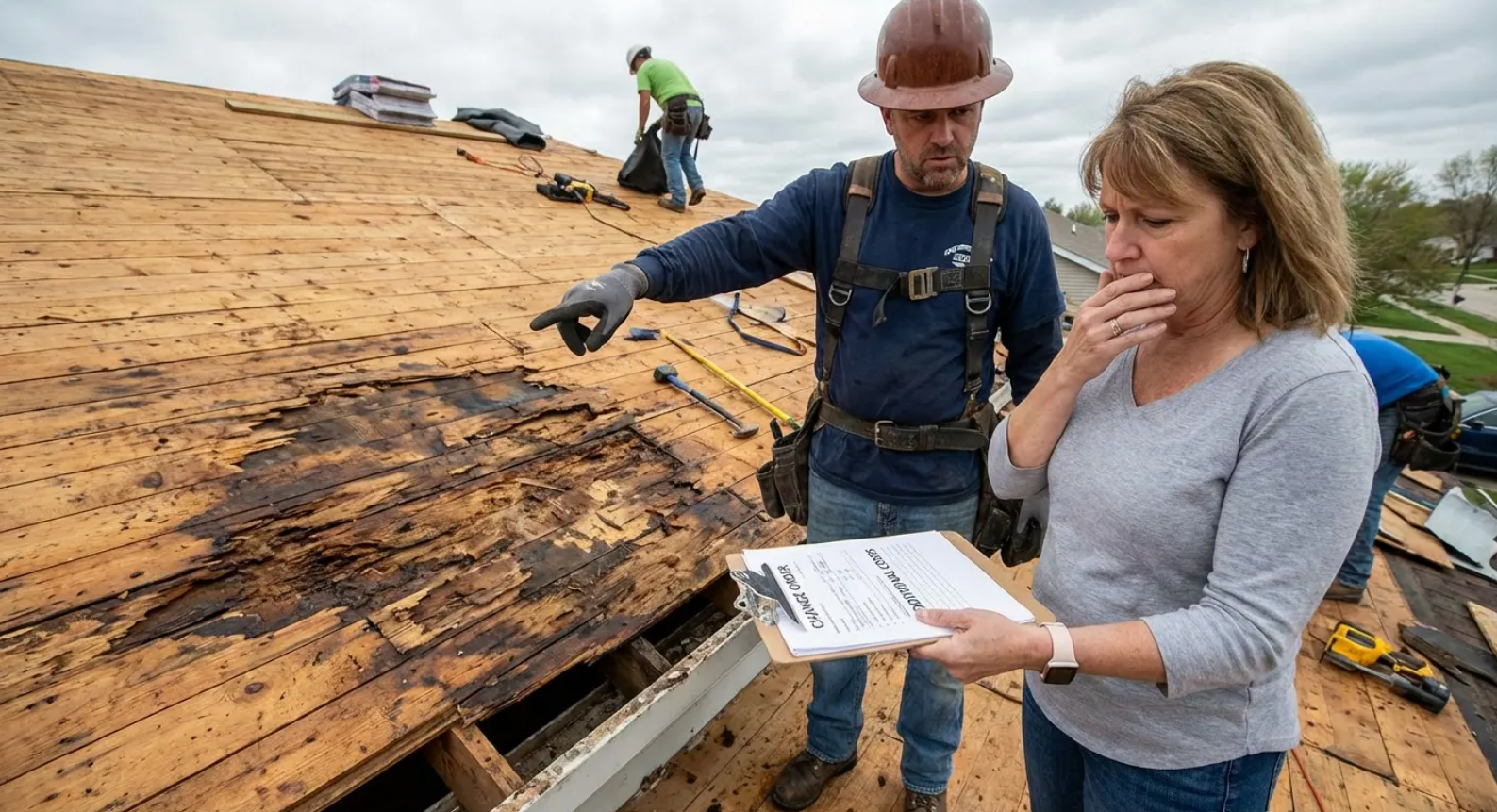
If a roofer knocks on your door offering a “free roof covered by insurance,” your instincts should kick in. As someone who has been on thousands of roofs across Central Pennsylvania and now runs a
local roofing company, I have seen firsthand how insurance claims can be handled the right way and the very wrong way. This guide is here to walk homeowners through what actually happens behind the scenes of roofing insurance claims, how storm chasers operate, and how to protect your home and your policy.
What Has Become Too Common in Roofing Insurance Claims
There are three things that have become far too regular in the roofing industry when it comes to insurance claims.
The first is exaggerated or misrepresented damage. Not every dent, scuff, or lifted shingle is storm damage. Yet some claims are written as if a tornado landed on the house when the reality is minor wear.
The second is manufactured or worsened damage. This is the one that makes insurance fraud investigators sweat. Tool-created damage, intentionally lifted shingles, and even simulated hail hits do happen. Not every roofer does this, but it happens enough that carriers actively look for these patterns.
The third is aggressive supplement stacking. Supplements are legitimate when real items were missed. But some companies treat supplements as a profit engine, stacking line items to squeeze every possible dollar whether it is justified or not.
How Storm Chasers Typically Operate
Storm chasers are roofing companies that travel into an area after a storm with one goal: sign as many insurance claims as possible before they disappear.
They usually rely on aggressive door knocking. The pitch is simple. A storm came through, you might qualify for a free roof. While that can be true in rare cases, most homeowners would already see signs of damage around their property if it were significant. Once they “find” damage, the pressure starts.
High-energy sales presentations, urgency tactics, and same-day signing pushes are common. If the claim goes through, they often handle everything for you, which sounds convenient. The catch is they typically take one hundred percent of the insurance payout even when it far exceeds the actual cost of replacing the roof.
How This Impacts Homeowners Long Term
Here is the uncomfortable truth nobody likes to talk about. When fraudulent or inflated claims stack up nationwide, insurance companies do not punish the roofing contractors. They adjust their policies for homeowners.
That shows up as higher premiums, higher deductibles, policy exclusions, roof age restrictions, cosmetic damage exclusions, and more ACV-only policies instead of full replacement coverage. Some carriers now refuse to insure roofs past 15 to 18 years old or exclude hail damage entirely. All of this traces back to abuse in the system.
What a Legitimate Roofing Insurance Claim Actually Looks Like
When a claim is real and handled ethically, it is straightforward.
- There is verifiable storm damage from a documented event. Not wear and tear. Not old shingles.
- There is clear photo documentation taken before, during, and after inspections without manipulating the roof.
- There is a scope of work that matches the actual damage. No mystery line items. No padded extras. No deductible games.
The challenge is that insurance carriers know some claims are questionable, but it is difficult to prove on an individual basis when documentation appears legitimate. That is why homeowners need to be informed and cautious.
What I Would Tell My Own Family Before Opening a Claim
If a roofer knocked on my mom’s door tomorrow, here is exactly what I would tell her.
Get an inspection from a truly local roofer or a home inspector who did not cold call you or knock on your door.
Never sign anything that assigns your claim rights away. Contingency agreements lock you into using that contractor whether you are comfortable or not.
Beware of high-pressure sales tactics. If you are being pushed to sign immediately, that is a red flag.
Understand your policy before opening a claim. Pay attention to exclusions, ACV versus replacement value, roof age limits, cosmetic damage clauses, and hail coverage.
Why We Take a Different Approach
This message exists for one reason. Homeowners deserve the truth. Ethical roofing companies absolutely exist. But storm chasing and claim manipulation have damaged trust and driven insurance costs higher for everyone.
Our approach is simple. We document real damage when it exists. We tell homeowners when a claim is not in their best interest. We protect your home and your policy and handle claims the right way when they are truly warranted. You should never feel pressured into gambling with your insurance policy. The goal is protection, not profit games.
If you suspect hail or wind damage, start with education, not urgency. The right decision today protects your roof, your insurance, and your wallet long term. Roofing insurance should be a safety net, not a sales trap.