
A Quick History Lesson: Who Is James Hardie?
James Hardie was a real person—a Scottish immigrant who moved to Australia in the 1880s and founded a building materials company. Over time, that small business became James Hardie Building Products, the global leader in fiber cement technology.
Today, “Hardie Board” is practically synonymous with fiber cement siding. It’s the Kleenex of the category.
What Is James Hardie Siding Made Of?
James Hardie siding is made from a blend of:
- Portland cement
- Sand
- Cellulose fibers
- Water
They mix it all up, throw it into a mold — and out comes a nice Hardie plank! Ok, not that easy, but the manufacturing process produces a very consistent and sturdy result.
Pros of James Hardie Siding
1. Longevity That Outlasts Most Options
Fiber cement is built to last. James Hardie siding comes with a 30-year non-prorated warranty—and real-world use shows it can easily last 50+ years with proper care. That’s a solid warranty because that means that for the first 30 years, It doesn’t rot, warp, melt, or get chewed up by bugs like wood and vinyl can.
2. Major Curb Appeal
Hardie siding looks fantastic. It has the clean lines and deep texture of painted wood, or a smoother, more modern look—but without the upkeep. It’s available in dozens of colors and several styles (lap siding, board-and-batten, shingles, panels, etc.) so you can match any architectural style.
ColorPlus® Technology—Hardie’s baked-on finish—helps keep the color looking rich for years, and resists fading better than typical paint. You can get the product with this factory-applied finish in your choice of color, or you can opt for a simple pre-primed siding which you can then paint on your own.
3. Exceptional Durability
Hardie siding is built to last, to the point that they actually include specific language on the warranty including:
• Does not contribute to the spread of fire (FlameSpread Index of zero when tested per ASTM E84)
• Does not crack, split, edge check, or warp as
a result of damage from water, heat and freezing
temperatures when tested in accordance with
ASTM C1185.
• Resists damage from hail.
• Will not be damaged by termites or other
wood-boring insects.
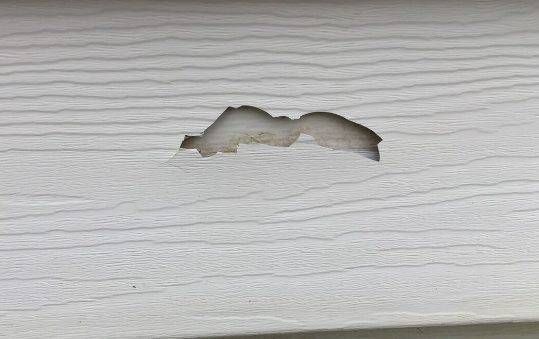
• Resists damage caused by woodpeckers.
This is an especially good option to consider if you’ve had termite issues in the past, or live in the woods where there’s a good amount of moss and long-lasting moisture – and woodpeckers or even aggressive squirrels. Yep, I’ve seen damage to vinyl and wood siding products from squirrels. They can chew through vinyl and wood to get into attic spaces or find a cozy place to make a nest.
4. Great for Resale Value
Hardie siding consistently ranks among the top home remodeling projects for return on investment. According to Remodeling Magazine’s Cost vs. Value Report, re-siding with fiber cement can recoup up to 68% of the cost at resale—more than most remodeling projects for sure. So if you want to upgrade your home to Hardie but are on the fence because of the extra cost, keep this in mind.
Let’s say you sell your home 5 years after you get Hardie siding installed. You paid $30,000 originally. You got the incredible look you wanted. Now you go to sell – $20,000 of that could come back to you just from the increased home value due to the siding, which means you really only end up paying $10,000 for your top-of-the-line Hardie siding project. Not a bad deal, for sure.
5. Warranty Peace of Mind
I mentioned some of the warranty specifics above. This warranty also has a 30-year Non-Prorated period, which means they will cover the full cost of the defective material for 30 years, up to twice the original cost if necessary.
30-year limited product warranty
15-year finish warranty on ColorPlus products
Warranties are transferable, which is great for resale value.
Cons of James Hardie Siding
It’s More Expensive
This isn’t the budget pick. James Hardie siding can cost 2-3x more than regular vinyl siding. But there are two main reasons to that:
- Material cost: Fiber cement is more expensive to produce.
- Labor: It’s heavy and more complex to install, so labor takes longer and costs more.
This second point is a very important one. This product is not as light as vinyl. So if your installer doesn’t take his time to fasten it properly to your wall studs, it will likely slide off over time. That’s the last thing you want. It’s not good enough to just nail it to a 1/2″ wood OSB wall – it needs to be fastened through the OSB and into the wall stud.
It Will Need to be Repainted
And the biggie. While Hardie siding is low maintenance, you will still need to perform some upkeep mainly when it comes to painting it. Like any other siding, Hardie siding will start to fade, which means you may need to repaint. Here’s how I think through this issue:
If I buy vinyl siding: it’s color fades over time, it gets green and needs to be washed off, etc… At the end of 25-30 years, it’ll probably need to be replaced.
If I buy fiber cement: The initial paint should last 25-30 years. At that time, I can get it washed off and repainted with a fresh coat (in a new color if I want!) for MUCH CHEAPER than what it would cost to replace vinyl siding.
So it’s kind a bit of a toss-up. Yep, it’ll need to be painted at some time in the distant future. So keep that in mind.
So Is James Hardie siding Right For Me?
Hopefully you’re better able to answer this question now. It’s a premium product, and yes—you’ll pay more up front. But over the life of your home, it often ends up saving you money and hassle.
If you’re in a starter home or you’re flipping a house, vinyl might be the better financial move. But if you want to do it once and do it right—this is it.
Final Thoughts: Is It Worth It?
James Hardie siding is a premium choice for sure.
I would definitely give it a fair look if:
I lived in the woods (termites, woodpeckers, moss, moisture)
I lived in a hail-prone area
I’m in my forever home and want to do it once and do it right
I wanted a look that sets my home apart from the hundreds of other houses around mine
Got Questions?
If you’re considering Hardie siding and want to know what it would look like (and cost) on your home, give us a shout. At Joyland Roofing, we install siding all across Central PA—and we’re happy to give you straight answers and a quote that makes sense for you.
John Esh | CEO & Master Installer
- 25+ Years Experience: From ground crew to Master Certified Installer.
- Local Roots: Serving Lancaster, Harrisburg, and SEPA since 1991.
- Credentials: GAF Master Certified (ME27586); Licensed in PA (PA124258) & MD (#137952).
- The "Why":
Obsessed with "radical transparency" to remove the fear factor from home improvements.
James Wesser | Content Producer
- Background: Former local news digital producer and journalist.
- The Mission: Turning complex roofing jargon into clear, "fluff-free" answers for homeowners.
- Local Tie: When not filming on-site, he’s likely roaming Hersheypark or building digital worlds.