March 30, 2026
The Best Type of Roof for Your Home (And Why the Answer Isn’t So Simple)
Author
xatjlkj
Searching for the best type of roof material can quickly become overwhelming. One guide recommends metal, another says asphalt is the safest choice, while others insist premium materials like slate are the only option worth considering.
The reality is there isn’t a single best type of roof for every home.
The right roofing choice depends on factors many comparisons ignore—your local climate, your home’s structure, installation quality, and how much maintenance you’re willing to handle over time. A material that performs well in one region might fail much sooner in another, and even premium products won’t last if the roofing system isn’t designed properly.
This guide breaks down why the idea of a universally “best” roof is misleading and what homeowners should actually consider before choosing a material. If you’re evaluating options, it’s also helpful to understand whether a metal roof might be the right choice for your home and how different materials perform over decades of real-world use.
Table of Contents
- Why Most Roof Type Comparisons Miss the Point Entirely
- The Hidden Cost Structure Nobody Talks About
- Your Climate Doesn't Care What You Want
- Material Durability vs. System Longevity (They're Not the Same Thing)
- The Maintenance Trap That Catches Everyone
- Installation Quality Trumps Material Choice Every Time
- What Your Home's Architecture Is Actually Telling You
- The Resale Value Myth You Need to Stop Believing
- Energy Efficiency: Beyond the R-Value Marketing
- Making the Decision When You're Ready
TL;DR
- Your structure decides what's possible before you even think about looks or budget (most people get this backwards)
- Climate will destroy the wrong material no matter how much you paid for it
- Bad install on premium materials = failure. Good install on mid-grade materials = decades of performance. Contractor matters more than shingle brand
- That "cheap" roof that needs $500/year in maintenance? It's not cheap. Do the 20-year math
- Your home's architectural design may physically limit your options in ways you haven't considered
- Resale value claims are misleading because buyer preferences are hyper-local
- Energy efficiency involves your entire roof system, not just the surface material
Why Most Roof Type Comparisons Miss the Point Entirely
You've got 15 browser tabs open, all claiming to tell you the "best" roof type. Three say metal. Four say asphalt. Two are weirdly passionate about slate. And you're more confused than when you started.
Here's why: there is no "best" roof. Anyone who tells you otherwise is either selling something or doesn't know what they're talking about.
Here's something that surprised me when I first learned it: materials only eat up about 55% of your roofing budget, with labor taking roughly 35%. And if a crew has to rip off an existing layer? That can jump your costs by 25% because of the extra time and labor required (HGTV roofing materials guide). Most people obsess over shingle brands and completely ignore the fact that removing two layers of old roof can add $8K to the project. Don't be most people.
So what actually happens? You're trying to make a decision that'll protect your home for decades, and the internet hands you generic lists that ignore your specific situation. That article written for a national audience doesn't know your home was built in 1952 with framing that can't support tile. It doesn't account for the fact that you live in a region where hail shows up regularly, or that your neighborhood has strict architectural guidelines.
We've got more roofing options now than ever. Does this help? No. It makes everything worse. When every material has a list of pros and cons, and those lists contradict each other depending on which source you're reading, how are you supposed to choose? Understanding the different types of roofing materials becomes critical when you realize that each option performs differently based on your unique circumstances.
The Checklist Approach Is Setting You Up for Failure
Can we talk about how useless those pros/cons lists are? You know the ones. They present each roof material with bullet points of advantages and disadvantages, treating every factor as if it carries equal weight. This completely misses how roofing decisions actually work.
Take Sarah and Tom. Sarah in Phoenix sees that metal roofing "can be noisy during rainstorms" and crosses it off her list. Phoenix gets 8 inches of rain per year. Eight. She eliminated her best option because of a problem she'd experience roughly never. The superior heat reflectivity would slash her cooling costs, but she'll never know because she got hung up on rain noise in a desert.
Meanwhile, Tom in Portland reads that cedar shingles offer "attractive natural aesthetics" and decides they're perfect. He's ignoring the fact that Portland's 43 inches of annual rainfall and high humidity will require constant maintenance to prevent the mold and rot that cedar is particularly susceptible to in wet climates. Both made decisions based on generic pros and cons without considering how their specific environments would interact with each material.
These checklists fail because they give you information with zero context. A "con" that doesn't apply to your situation isn't actually a con. A roof material's noise level during rain matters enormously in Seattle and barely at all in Albuquerque. Fire resistance is make or break in wildfire zones and irrelevant in humid coastal areas. Weight becomes a dealbreaker if your structure can't support it, regardless of how many other "pros" a material has.
I've seen homeowners eliminate their best option because of a drawback that wouldn't apply to their situation, while simultaneously considering materials that would fail spectacularly in their specific environment. The problem isn't that the information is wrong. Without context, it's useless.
What "Best" Actually Means for Your Situation
Before you can identify the best type of roof for your home, you need to define what "best" means in your specific context. This isn't philosophical. It's practical. The best type of roof is the one that meets your non-negotiable requirements while optimizing for your priorities.
Can your house physically hold the roof you want? Answer this first. Everything else is fantasy until you know your structure can handle it. This isn't about preference. It's about engineering reality. A roof that your structure can't handle isn't an option, no matter how perfect it seems otherwise.
Next: climate. Your weather doesn't care what you want. It'll destroy the wrong material whether you paid $10K or $50K for it. Temperature swings, precipitation levels, wind exposure, and sun intensity aren't factors you can negotiate with. The climate will win every time.
Be honest about maintenance. Not "I should do this" honest. Actually honest. We all have good intentions about maintaining our homes, but your roof choice needs to match your realistic maintenance commitment, not your aspirational one. If you check your roof once every three years when you remember, don't choose a material that needs quarterly attention. It'll fail, and it'll be your fault.
Budget alignment means looking at both initial and lifecycle costs. The cheapest installation might cost you more over twenty years than a pricier option with lower maintenance needs. Or you drop $45K on slate and get basically nothing back when you sell. I've seen it happen.
Aesthetic integration matters, but it should come last in your evaluation process. Once you've identified materials that meet your structural, climate, maintenance, and budget requirements, then you can choose based on appearance.
Okay, Grab a Pen (Or Your Phone Notes)
Answer these honestly. Not "what sounds good" honest. Actually honest.
1. Can Your House Even Handle This?
What is my current roof pitch? (Measure or have a contractor measure)
Was my home originally built with heavy roofing (tile, slate) or light roofing (asphalt, wood)?
Have I actually had an engineer look at this, or am I just guessing? (Be honest.)
2. What Your Climate Demands
What is my annual temperature range (high and low)?
How many inches of rain/snow does my area receive annually?
Am I in a high-wind, hail, or wildfire zone?
3. Maintenance Reality Check
Will I realistically inspect my roof twice per year?
Am I comfortable hiring professionals for maintenance, or do I need DIY-friendly options?
Do I have trees that will require regular debris removal?
4. The Money Conversation
What is my upfront budget limit?
How long do I plan to own this home?
What is my annual maintenance budget?
5. What You Can't Ignore About Looks
What roof types are standard in my neighborhood?
Does my home's architectural style create expectations?
Are there HOA restrictions I must follow?
The Hidden Cost Structure Nobody Talks About
That $15,000 quote? That's just the cover charge. Let me show you where the real money goes.
The real cost of roof ownership extends across decades and includes expenses most people never consider during the selection process. Insurance premiums shift based on your roof type and age. Some materials require professional maintenance that costs hundreds annually, while others need minimal attention. Energy costs fluctuate depending on how your roof interacts with your climate. Replacement timelines vary so dramatically that a material lasting twice as long might cost less per year despite a higher initial price.
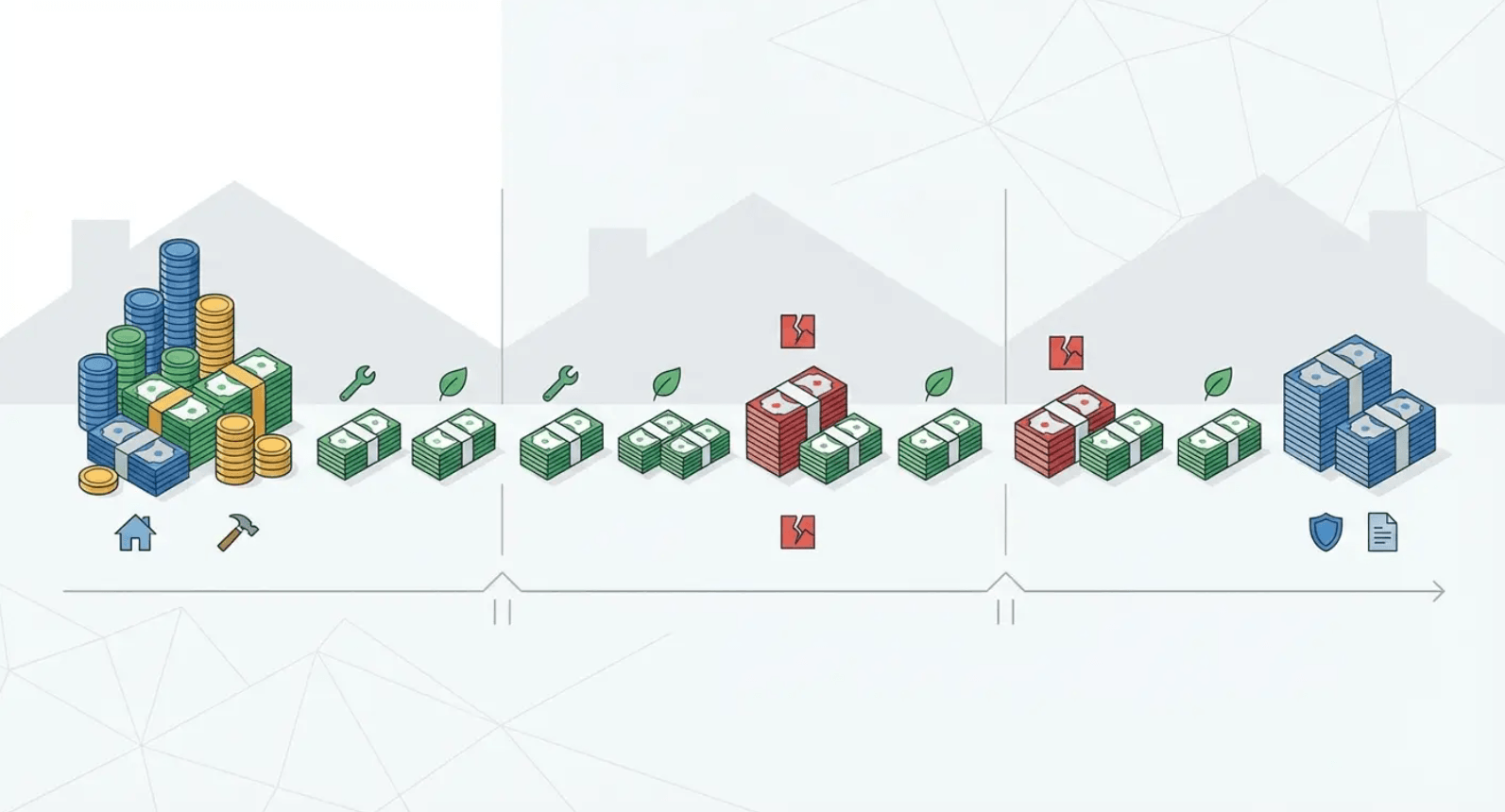
Understanding the complete financial picture? You need to look at total cost of ownership over the expected lifespan of each material you're considering. This calculation changes which roof materials make sense for your situation in ways that might surprise you.
Your Warranty Is Probably Worthless
Roof warranties. They sound great in the sales pitch, right? Thirty years of coverage, you're bulletproof. Then you actually read the thing and realize you're covered for basically nothing that will actually go wrong.
Most roofing warranties are prorated, meaning the coverage decreases each year. A shingle that fails in year fifteen might get you 50% coverage on materials, but you're paying full price for labor, which represents the majority of replacement cost. That warranty that seemed so valuable suddenly covers a fraction of your actual expense.
The exclusions list is longer than the coverage. Acts of God? Not covered. Wind over X mph? Not covered. Algae? Nope. Basically, if something actually goes wrong, there's probably an exclusion for it. Damage from storms, hail, wind above certain speeds often isn't covered. Algae growth, moss, and discoloration typically aren't included. If you don't maintain the roof exactly according to the manufacturer's specifications (which might require professional inspections you didn't know about), the warranty becomes void.
Labor coverage is usually absent or extremely limited. The manufacturer might replace defective shingles, but they won't pay the crew to remove the old ones and install the new ones. Since labor represents 35% or more of roofing costs, this limitation dramatically reduces the warranty's real value.
Look, I'm not saying warranties are worthless, but they shouldn't be a primary decision factor. A 50-year warranty on a material that's wrong for your climate won't help when the roof fails for reasons the warranty doesn't cover. Focus on choosing the right material and contractor first, and treat the warranty as a bonus rather than a safety net.
The Maintenance Schedule Nobody Actually Follows
Different types of roofing materials demand vastly different maintenance commitments. This isn't just about frequency. It's about complexity, cost, and the consequences of neglect. A maintenance schedule that seems manageable in theory often becomes burdensome in practice, and skipping maintenance doesn't just reduce lifespan. It can void warranties and create safety hazards.
| Roof Type | Annual Maintenance Time | Typical Annual Cost | Critical Maintenance Tasks | Professional Service Frequency |
|---|---|---|---|---|
| Asphalt Shingle | 2-4 hours | $150-$300 | Debris removal, gutter cleaning, shingle inspection, seal checking | Every 3-5 years |
| Metal Standing Seam | 1-2 hours | $100-$200 | Fastener inspection, debris removal, coating check | Every 5-7 years |
| Clay/Concrete Tile | 3-5 hours | $200-$400 | Broken tile replacement, underlayment inspection, valley cleaning | Every 2-3 years |
| Wood Shake/Shingle | 4-6 hours | $300-$600 | Moss/mold treatment, split repair, preservative application, debris removal | Annually |
| Slate | 1-2 hours | $150-$250 | Broken slate replacement, flashing inspection, debris removal | Every 5-10 years |
| Flat/TPO Membrane | 2-3 hours | $200-$400 | Ponding water removal, seam inspection, drain clearing, membrane check | Every 2-3 years |
These numbers represent realistic maintenance for homeowners who stay on top of their roof care. Fall behind, and you're looking at accelerated deterioration that turns minor issues into major repairs. A wood shake roof that doesn't receive annual moss treatment will rot. Tile roofs with broken pieces that aren't replaced promptly allow water infiltration that damages the underlayment. Metal roofs with loose fasteners develop leaks that spread.
People choose materials based on how they'll look and perform if perfectly maintained. Then they don't maintain them. Then they're shocked when the roof fails early. Don't be that person. You might love the appearance of wood shakes, but if you're not prepared to invest 4-6 hours and $300-$600 annually in maintenance, you're setting yourself up for premature failure and expensive repairs.
How Your Insurance Company Is Watching Your Roof
Your roof type and age directly impact your homeowner's insurance premiums in ways most people don't discover until after installation. Insurers evaluate roofs based on impact resistance, fire ratings, wind resistance, and age, then adjust your premiums accordingly.
Impact-resistant shingles rated Class 4 can reduce your premiums by 10-30% in hail-prone areas. That discount continues year after year, potentially offsetting the higher initial cost of impact-resistant materials within a decade. Fire-resistant materials matter enormously in wildfire zones, where some insurers won't even cover homes with wood shake roofs anymore.
Age matters more than material for many insurers. A roof over 15 years old might trigger premium increases or coverage limitations regardless of its condition. Some insurers require inspections once a roof reaches a certain age, and failing that inspection can result in dropped coverage or mandatory replacement as a condition of continued insurance.
These ratings hit your wallet twice: once when the roof gets damaged, and every month in your insurance premiums. An insurer in Florida weights hurricane resistance heavily, while one in Colorado focuses on hail ratings. The same roof might reduce your premiums in one state while having no impact in another.
Before choosing a roof material, call your insurance company and ask specifically how different options would affect your premiums. The answers might change your cost calculations significantly.
Your Climate Doesn't Care What You Want
I once had a client in Houston fall in love with wood shakes. Houston. Where it's 90% humidity and rains 50+ inches a year. I had to physically show her pictures of moldy wood shake roofs to talk her out of it.
Climate isn't just one factor among many. It's the primary constraint that should eliminate options before you consider anything else. Temperature extremes, precipitation patterns, wind exposure, and sun intensity create non-negotiable requirements that override aesthetic preferences and even budget considerations.
Your local weather patterns will interact with your roof every single day for decades. Materials that thrive in one climate deteriorate rapidly in another. Ignoring this reality doesn't change it. It just means you'll pay for a premature replacement.
Thermal Cycling Is Destroying Your Roof Right Now
Temperature changes cause roofing materials to expand and contract. This process, called thermal cycling, happens constantly. Daily temperature swings create expansion during the day and contraction at night, while seasonal changes add larger cycles on top of that. Over time, this stress breaks down materials, loosens fasteners, and creates gaps where water can penetrate.
Some materials handle thermal cycling better than others. Metal roofing expands and contracts significantly but is designed with fastening systems that accommodate this movement. Asphalt shingles become brittle with repeated cycling, especially in climates with dramatic temperature swings. Tile and slate are relatively stable but can crack if the expansion and contraction of the underlying structure stresses them.
The damage from thermal cycling is cumulative and invisible until it becomes severe. A roof in Phoenix that experiences 100-degree temperature swings between night and day undergoes far more stress than one in San Diego with 20-degree swings. This is why the same material might last 30 years in one location and 15 in another.
Some new materials are trying to solve the thermal cycling problem. According to Family Handyman's report on new residential roofing materials, thermoplastic shingles now essentially allow a roof to "self-heal" where "scratches and other damage are sealed when the sun heats the material, which separates the bonds. As the shingles cool at night, the material re-bonds, closing up any scratches or damage caused by weather." This represents a significant advancement for homeowners in climates with dramatic temperature swings.
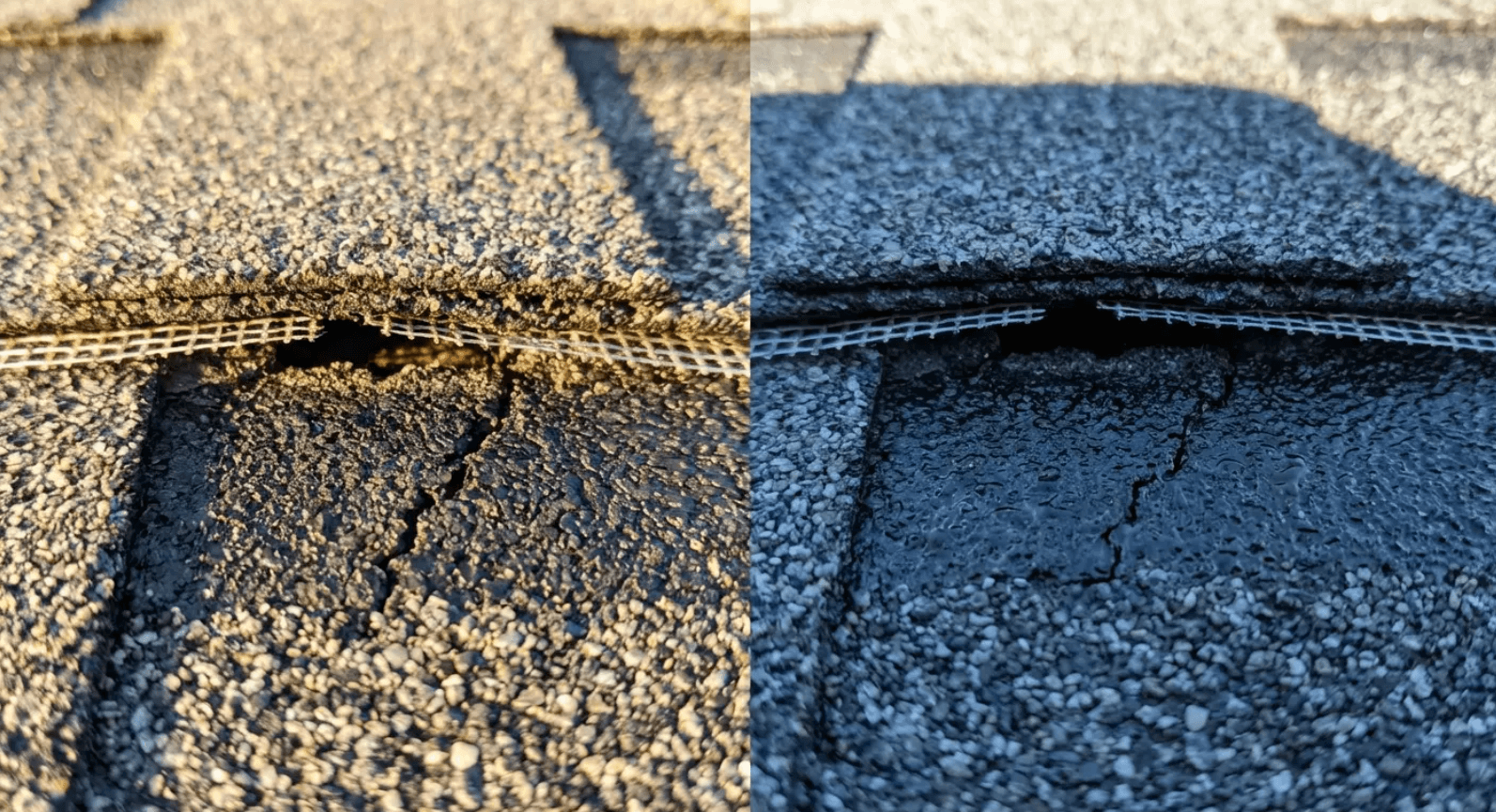
Big temperature swings where you live? This needs to be top three on your priority list. Wrong material for your climate? Doesn't matter how perfect the install is. It's going to fail early.
Water Exposure Patterns That Determine Material Viability
Not all precipitation is equal. A climate that receives 40 inches of rain spread across 200 days creates completely different challenges than one that gets 40 inches in 50 heavy downpours. Snow load adds weight and creates ice dam risks that don't exist in rain-only climates. High humidity without much rain can still promote moss and algae growth that degrades certain materials.
Constant drizzle (I'm looking at you, Pacific Northwest) keeps roofs damp. Moss and algae love this. Wood and asphalt? They're basically moss magnets in these conditions. Materials in these climates need either natural resistance to biological growth or regular treatment to prevent it. Portland, Seattle, and much of the Pacific Northwest fall into this category.
Heavy occasional downpours test a roof's water-shedding capacity and drainage design. Materials need to handle sudden large volumes of water without allowing infiltration at seams or penetrations. Flash flooding on the roof surface can find weaknesses that light rain never would. Much of the Southwest and parts of the South experience this pattern.
Snow load creates structural stress and ice dam risks. Materials need to be durable enough to handle the weight, and the roof system needs proper insulation and ventilation to prevent the freeze-thaw cycles that create ice dams. These dams trap water on the roof surface, forcing it under shingles and through seams. Northern climates and mountain regions face these challenges.
Humidity without significant rainfall still creates problems. Moisture in the air condenses on cool surfaces, promoting rot in wood materials and corrosion in metal. Coastal areas often experience this, where salt air adds another layer of material stress.
Your roof material needs to match your specific water exposure pattern. Wood shakes in a humid climate require constant vigilance against rot. Flat or low-slope roofs in heavy rain areas need exceptional waterproofing because water doesn't shed quickly. Metal roofs in coastal areas need coatings that resist salt corrosion.
Wind and Impact Ratings You Can't Afford to Ignore
Wind resistance and impact resistance matter enormously in certain regions and barely at all in others. Building codes establish minimum requirements, but exceeding them often makes sense depending on your local weather patterns.
Wind ratings measure how well roofing materials stay attached during high winds. The ratings range from Class D (90 mph) to Class H (150 mph). If you live in a hurricane zone or area with frequent severe storms, these ratings determine whether your roof stays on your house. According to roofing specialists at GP Martini Roofing, the hip roof is widely considered the most wind-resistant shape, with this design often regarded as the strongest due to its balanced slopes on all sides which enhance stability and resistance to wind. The pyramid shape of a hip roof evenly distributes structural stress, making it highly resilient in various weather conditions including heavy rain, snow, and wind.
Impact resistance ratings (Class 1 through Class 4) measure how well materials withstand hail and falling debris. Class 4 represents the highest resistance, typically requiring a 2-inch steel ball dropped from 20 feet to cause no damage. In hail-prone regions, Class 4 materials can be the difference between a roof that survives a storm and one that needs complete replacement.
These ratings hit your wallet twice: once when the roof gets damaged, and every month in your insurance premiums. Many insurers offer significant discounts for impact-resistant roofing in hail zones. Some won't cover certain materials at all in high-risk areas.
Building codes in your area establish minimums based on local risks, but these are baseline requirements. If your region experiences severe weather regularly, exceeding code minimums provides additional protection that pays off when the next major storm hits.
Material Durability vs. System Longevity (They're Not the Same Thing)
Here's something most homeowners miss entirely: the durability of your roofing material and the longevity of your roof system are two different things. You can have incredibly durable roofing materials that last decades, but if the underlayment fails, or the flashing corrodes, or the decking rots, your roof system has failed regardless of how perfect the surface material looks.
Your roof isn't just shingles. It's a system: decking, underlayment, flashing, vents, all working together. One piece fails, the whole thing fails. The visible material on top gets all the attention, but the decking, underlayment, flashing, ventilation, and drainage components determine whether that system performs as intended. System failure typically occurs in these supporting components, not in the primary roofing material.
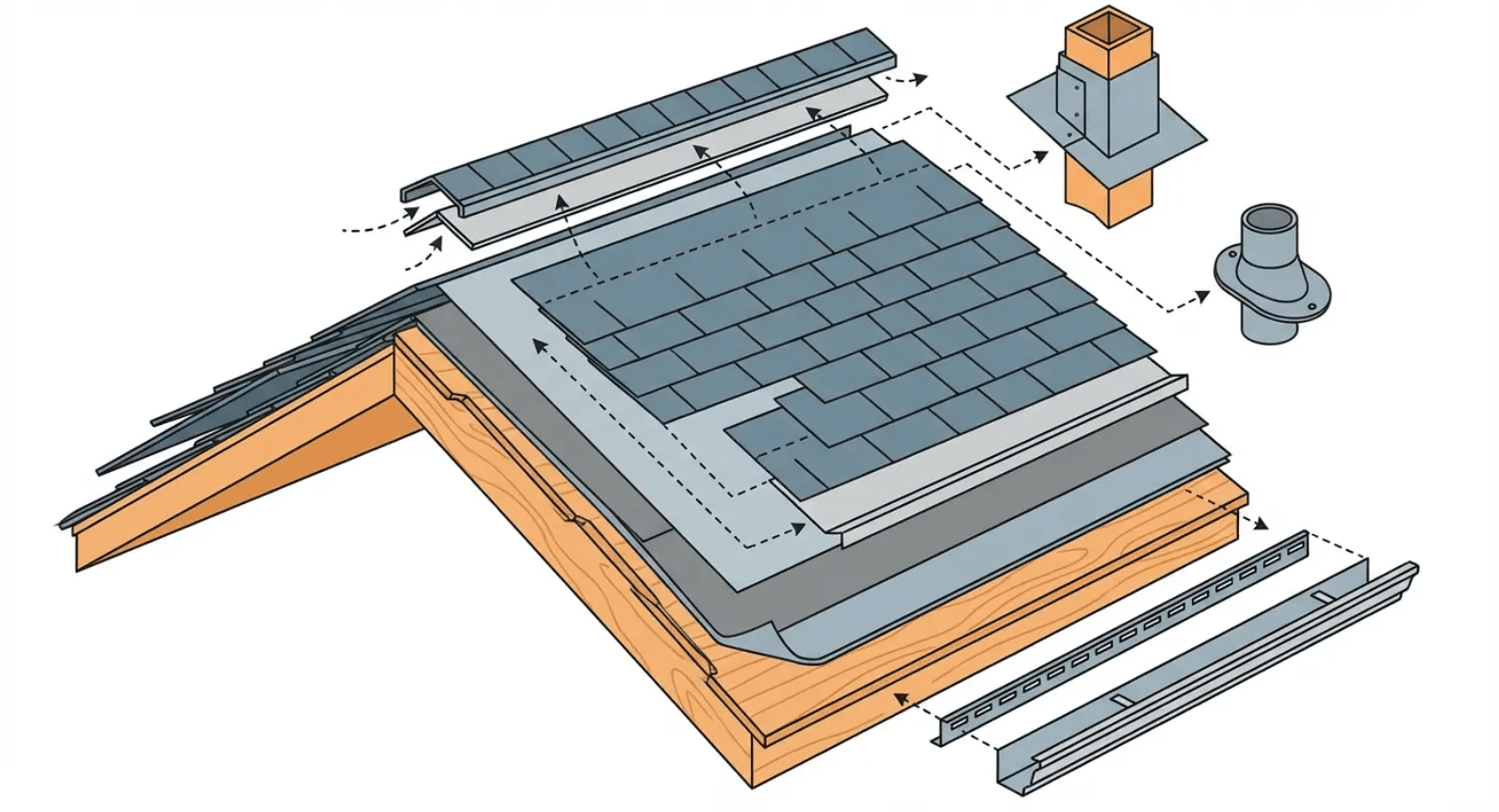
Obsessing over shingle quality while ignoring everything underneath? That's how you end up with a $20K repair bill five years in. Understanding how these components work together changes how you evaluate roofing options.
The Deck: Your Foundation for Everything
The deck (that's the plywood or OSB under everything) is your foundation. If it's shot, nothing you put on top matters. This structural layer provides the surface that roofing materials attach to, and its condition, thickness, and fastening patterns affect which materials you can even install.
An aging or inadequate deck makes certain roof types non-viable regardless of their other merits. Heavy materials require thicker, stronger decking than lightweight options. If your existing deck is deteriorated, you'll need to factor replacement costs into your budget before you can install any new roofing.
Deck thickness matters for fastener holding power. Thin decking doesn't provide enough material for fasteners to grip properly, leading to blow-offs in high winds. Standard 3/8-inch OSB might be adequate for asphalt shingles but insufficient for heavier materials.
Spacing between deck boards or panels affects which materials work. Some roofing types require solid decking with no gaps, while others can work with spaced sheathing. If you're switching from one material type to another, you might need to modify the deck structure entirely.
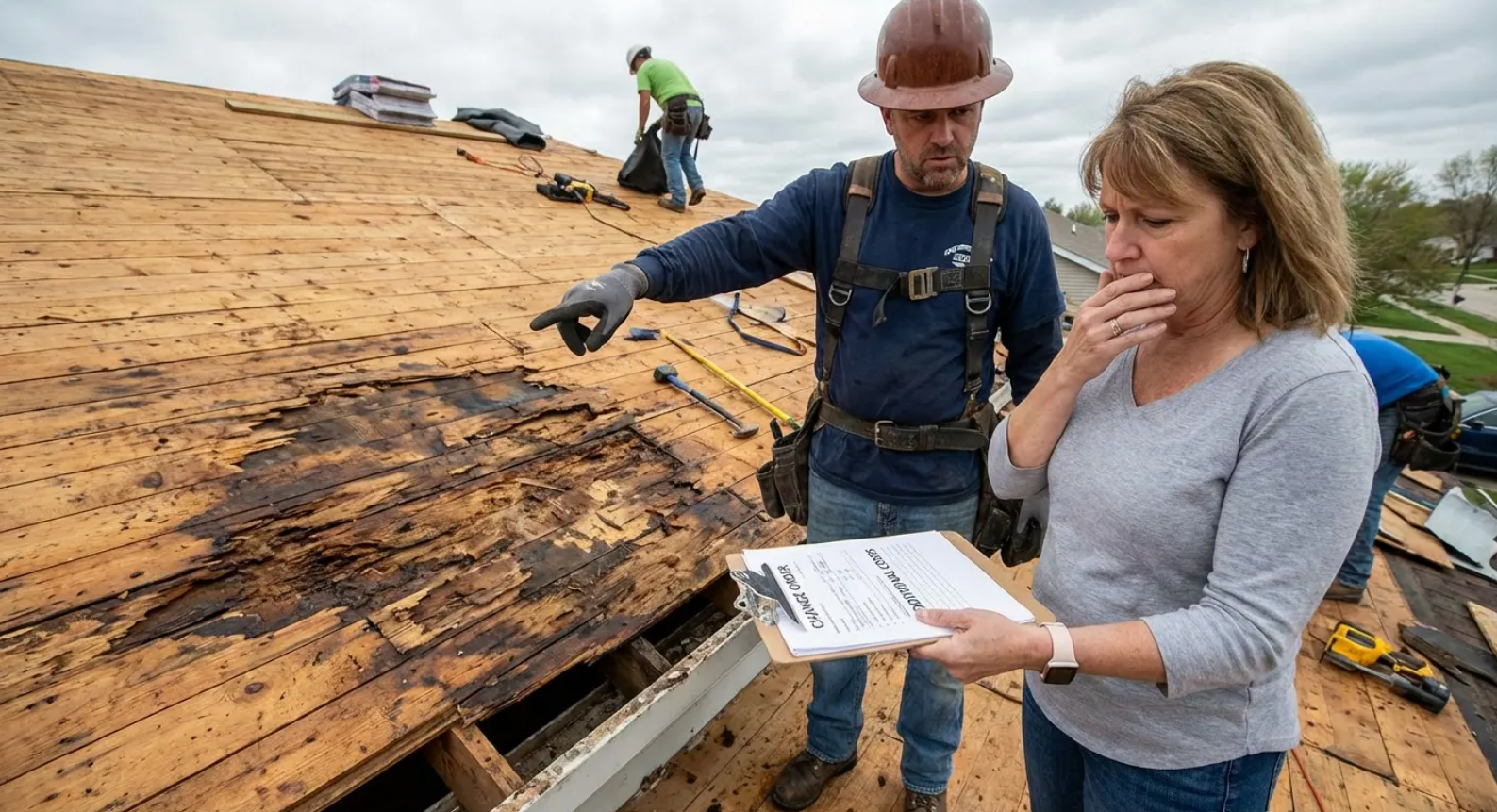
Deck damage hides until tear-off day. Then suddenly you're looking at soft spots and rot, and the contractor's adding $3K to the bill. Surprise! Contractors should inspect and report deck condition, but some skip this step to keep bids low, leaving you with surprise costs mid-project.
Underlayment: The Unsung Hero
The roofing industry has seen significant advancement in underlayment technology over the past two decades. As detailed in Family Handyman's overview of roofing innovations, synthetic underlayments manufactured using polyethylene or polypropylene plastic now offer several advantages over traditional felt: they are lighter, stay down better in the wind, absorb less heat, and stay flexible in the cold. They are also safer to walk on, which is good news for workers on high roofs. While synthetics come in various thicknesses with the thickest costing 30 to 40 percent more than felt, some of the thinnest cost less than felt, though thinner products tend to tear out and can be punctured by imperfections in the decking.
Underlayment provides critical secondary water protection. When wind-driven rain gets under shingles, or when ice dams force water backward, the underlayment is your last line of defense. Traditional felt paper works, but modern synthetic options perform dramatically better in most situations.
Here's something most people miss: spending an extra $800 on better underlayment often matters more than spending an extra $3,000 on premium shingles. A mid-grade shingle over high-quality synthetic underlayment often outperforms a premium shingle over cheap felt. The underlayment protects the deck and interior from water damage when the primary material is compromised.
Upgrading underlayment makes particular sense in harsh climates or on complex roof geometries with lots of valleys and penetrations. These situations increase the likelihood of water getting past the primary material, making that secondary protection crucial.
Most contractors won't even mention underlayment options unless you ask. They'll use whatever's cheapest and you'll never know the difference until water gets in. Ask specifically about underlayment type and quality. It's one of the best investments you can make in your roof system.
Flashing: Where Most Leaks Actually Start
Want to know where most leaks start? Not the shingles. Chimneys. Valleys. Skylights. Anywhere there's flashing. That's where water finds a way in. Flashing is the metal or membrane material that seals transitions and penetrations, and it's where water naturally wants to infiltrate.
I had a client in Fremont (call her Jennifer) who'd dealt with ceiling stains for years. Three different contractors, three roof repairs, stains kept coming back. So she went nuclear: $18,000 for top-shelf architectural shingles, 50-year warranty, the works. She was done with this problem.
Eight months later, I get a call. The stains are back. Same spot, same chimney. I go up there and the shingles are perfect, flawless install. But the chimney flashing? Same corroded aluminum that's been there since 1987. The crew just worked around it to save 45 minutes. $850 fix. That's what she needed from the start.
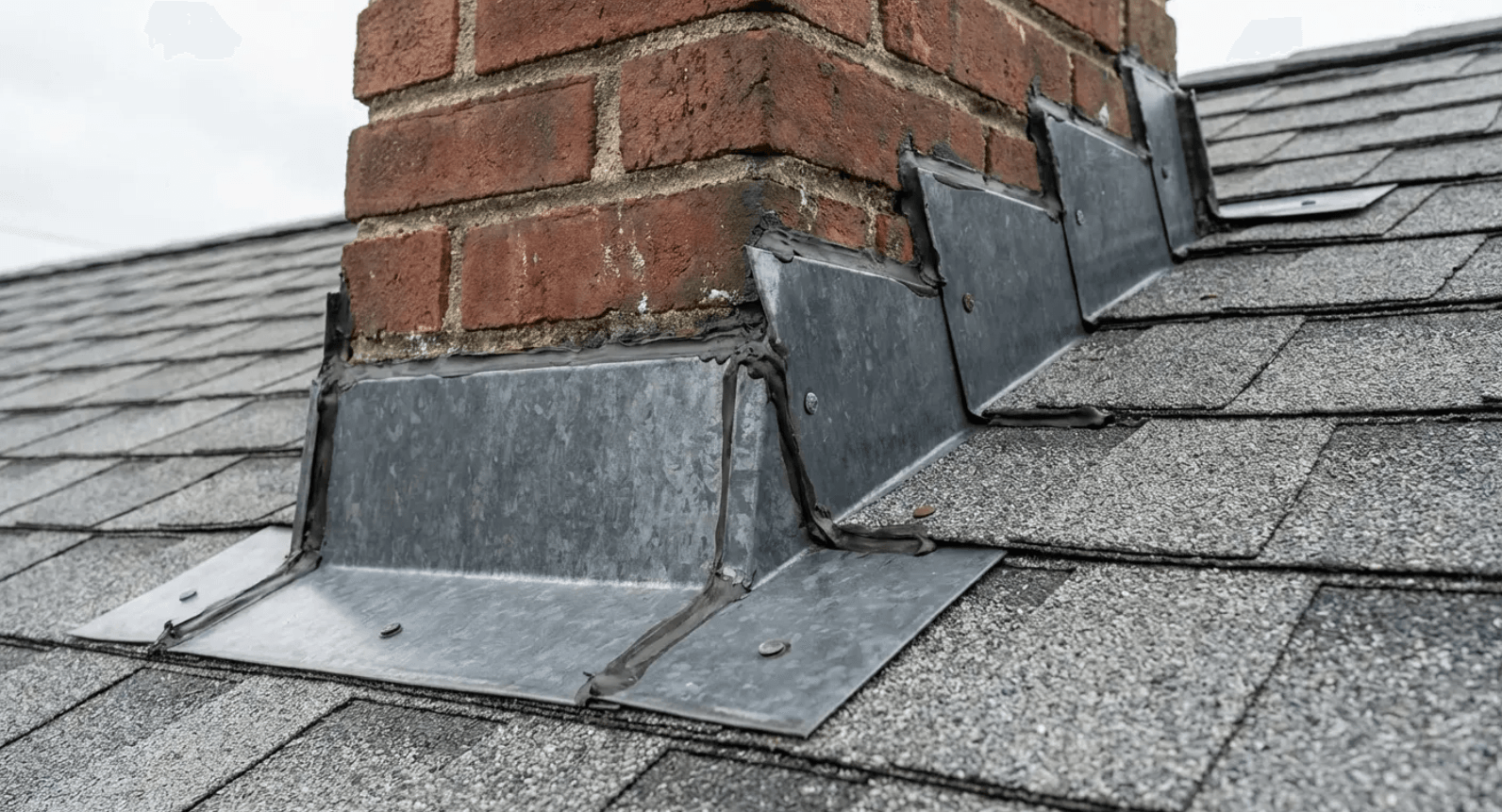
Flashing is make or break. Period. Even premium roofing materials won't prevent leaks if flashing is substandard or improperly installed. Valleys, where two roof planes meet, channel enormous amounts of water and require robust flashing. Chimneys need step flashing integrated with counter flashing. Skylights need curb flashing that sheds water around the opening.
Material choice matters for flashing too. Copper lasts longest but costs more. Aluminum is affordable but can corrode in certain environments. Galvanized steel is durable but needs proper coating. The flashing material should match or exceed the expected lifespan of your roofing material. There's no point in a 50-year roof with 20-year flashing.
Ask every contractor specifically about flashing. What material? What gauge? Are they replacing everything or reusing the old stuff? Their answer tells you if they know what they're doing. Detailed answers indicate a contractor who understands that flashing determines whether your roof system succeeds or fails.
The Maintenance Trap That Catches Everyone
Everyone thinks they'll maintain their roof. Everyone. You know how many actually do? Maybe 20%. And I'm being generous.
Homeowners consistently underestimate the ongoing maintenance their roof choice will require. We all have good intentions when making the initial decision. Of course we'll inspect the roof twice a year, clear debris regularly, and address small issues before they become big problems. Then life happens, years pass, and the roof gets attention only when leaks appear inside the house.
This gap between intended maintenance and actual maintenance grows over time and accelerates roof deterioration. Materials that require regular attention fail prematurely when they don't receive it. Warranties become void. Small problems that would cost hundreds to fix become thousands-of-dollars disasters.
The Inspection Schedule Nobody Actually Follows
Most types of roofs need inspection at least twice annually: spring and fall. These inspections should catch damage from winter storms, clear debris before summer heat, and prepare the roof for the next seasonal cycle. Professional inspections every few years add another layer of protection by identifying issues homeowners might miss.
What to Actually Check (And When)
Spring (After Winter Beat the Hell Out of Your Roof)
- Check for lifted, cracked, or missing shingles/tiles from winter storms
- Inspect all flashing around chimneys, vents, and skylights for separation
- Clear debris from valleys and gutters
- Look for signs of ice dam damage on eaves and lower roof sections
- Check attic for water stains, mold, or daylight penetration
- Examine fascia and soffit for rot or pest damage
- Verify all roof vents are clear and functional
Fall (Before Winter Beats the Hell Out of Your Roof)
- Remove all leaves, branches, and organic debris
- Trim overhanging tree branches (maintain 6-foot clearance minimum)
- Inspect and clean all gutters and downspouts
- Check that all shingles/tiles are secure before winter winds
- Verify attic insulation is dry and properly distributed
- Ensure attic ventilation is unobstructed
- Inspect all roof penetrations and seal any gaps
- Document roof condition with photos for insurance purposes
Most homeowners inspect their roof only when problems become visible from inside the house, which means damage is already advanced. Water stains on ceilings indicate that moisture has penetrated the roofing material, traveled through the underlayment, soaked into the decking, and finally made its way into the living space. By that point, you're looking at repairs far more extensive than what proactive inspection would have caught.
Proactive inspection finds missing shingles before water infiltrates. It identifies loose flashing before leaks develop. It catches small problems when they're still small.
Debris Management Changes With Roof Type
Different roof configurations and materials interact with debris in distinct ways. Some designs are self-cleaning: steep pitches shed leaves and branches naturally. Others trap debris in valleys and behind obstacles, creating moisture retention and deterioration.
Roof pitch affects how debris behaves. Steep roofs shed most debris naturally, while low-slope roofs collect everything that lands on them. Valleys concentrate debris flow, and if they're not cleared regularly, organic material decomposes and holds moisture against the roofing material.
Material texture matters too. Smooth metal sheds debris easily. Textured asphalt shingles catch and hold pine needles and small leaves. Wood shakes trap debris between the individual pieces. Tile roofs collect debris in the gaps between tiles.
Surrounding vegetation determines your debris load. Trees overhanging your roof drop leaves, needles, branches, and sap. Pine trees are particularly problematic: their needles are small enough to work into every crevice and acidic enough to accelerate material degradation. Deciduous trees dump massive amounts of leaves in fall that need clearing before winter.
If you're choosing a roof type and you have significant tree coverage, factor in the ongoing debris management that choice will require. A metal roof might shed most debris naturally. A wood shake roof will need constant clearing to prevent moisture retention and rot.
When DIY Maintenance Becomes Dangerous
Some roof types are relatively safe for homeowner access. Others are genuinely dangerous and require professional service. Understanding this distinction matters for both safety and realistic cost planning.
Low-slope roofs with good traction are the safest for DIY maintenance. You can walk on them without significant fall risk, making inspection and debris clearing manageable for most homeowners. Metal roofs can be safe if they're not too steep and you have proper footwear, though they become slippery when wet.
Steep-pitch roofs are dangerous regardless of material. The fall risk increases dramatically above a 6/12 pitch (6 inches of rise per 12 inches of run). Even if you're comfortable with heights, one slip can result in serious injury or death.
Tile and slate roofs are dangerous for a different reason: the materials break under foot traffic. Walking on these roofs requires knowing exactly where to step to avoid breaking tiles or cracking slate. Broken pieces are expensive to replace and create immediate leak risks.
Age matters too. An older roof with deteriorated materials becomes more dangerous as materials become brittle and less able to support weight. What was safe to walk on ten years ago might not be safe today.
If your roof type or pitch makes DIY maintenance dangerous, factor professional service costs into your total cost of ownership. A roof that requires $300-500 in professional maintenance annually costs $6,000-10,000 over twenty years. That's a significant expense that should influence your material choice.
Installation Quality Trumps Material Choice Every Time
This is going to piss off some material manufacturers, but here it is: installation craftsmanship matters more than the difference between mid-grade and premium materials. A poorly installed high-end roof fails faster than a well-installed budget option. The best roof materials in the world won't perform as intended if they're not installed correctly.
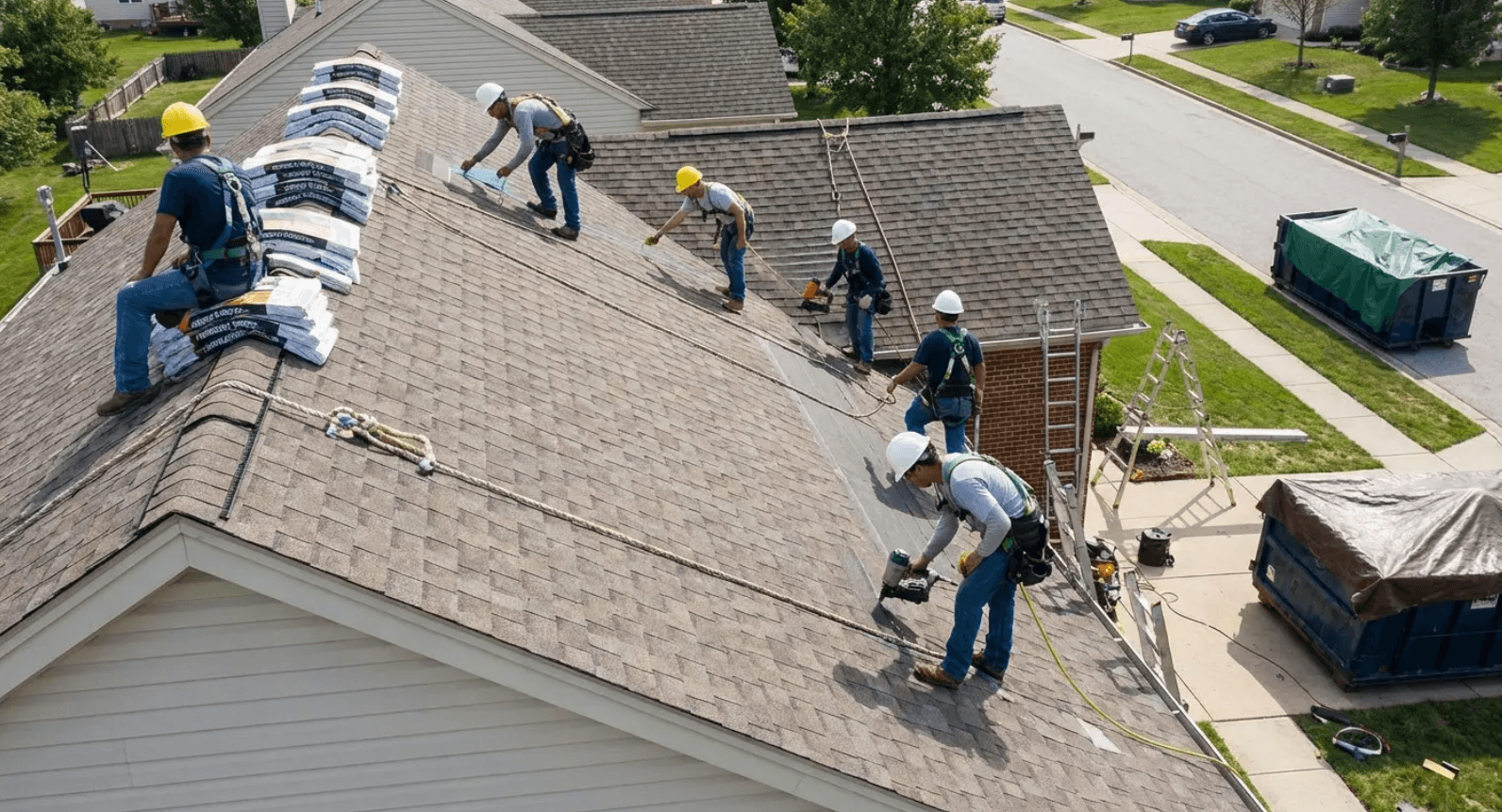
This reality should fundamentally change how you approach roof selection. Spending an extra $5,000 on premium materials while hiring the cheapest contractor is backwards. You'd be better off with good materials and an excellent contractor.
Ventilation Design Determines Lifespan
Proper attic ventilation controls temperature and moisture in the roof system, directly impacting material lifespan. Inadequate ventilation can cut roof life in half regardless of material quality.
Ventilation is simple: cool air comes in at the bottom, hot air goes out at the top. Creates a flow that removes heat and moisture. Without it, your attic becomes an oven in summer and a swamp in winter. Both destroy your roof from underneath.
Without adequate ventilation, summer heat builds up in the attic, cooking the underside of your roofing material. Asphalt shingles become brittle and deteriorate prematurely. Adhesive strips fail. Decking warps. The damage happens invisibly, shortening roof life by years or decades.
Winter moisture is equally destructive. Warm air from your living space rises into the attic, carrying moisture with it. Without ventilation to remove this moisture, it condenses on cold surfaces, soaking insulation and rotting decking. Ice dams form when this warm air melts snow on the roof surface, which then refreezes at the eaves.
Ventilation requirements vary by roof type and climate. Building codes establish minimums (typically 1 square foot of ventilation per 150 square feet of attic space), but these are baseline requirements. Some situations need more.
Your contractor should evaluate your existing ventilation and recommend improvements if necessary. Ridge vents combined with soffit vents provide the most effective continuous ventilation. Gable vents and roof vents can supplement but shouldn't be the primary system.
Ventilation design must be integrated with roof installation. Adding ventilation after the fact is possible but more expensive and less effective than designing it in from the start.
Fastening Patterns Nobody Sees But Everyone Pays For
The way roofing materials are attached to the deck determines whether the roof survives severe weather. Fastening patterns are invisible once installation is complete, which means you can't verify quality after the fact. This is why contractor reputation and oversight are critical.
Each roofing material has specific fastening requirements. Asphalt shingles need a certain number of nails in specific locations. Metal roofing requires fasteners with washers that seal around the penetration. Tile needs fasteners that allow for thermal movement without cracking.
Nail placement matters enormously. Nails driven too high don't penetrate the overlapping shingle above, reducing wind resistance. Nails driven at angles don't hold properly. Overdriven nails break through the shingle surface, creating leak points. Underdriven nails leave gaps where wind can get under materials.
Fastener type and quality affect longevity. Cheap nails corrode, losing holding power over time. Roofing in coastal areas needs corrosion-resistant fasteners or they'll fail prematurely. The wrong fastener length doesn't penetrate the deck adequately.
Wind resistance depends almost entirely on proper fastening. A shingle rated for 110 mph winds only achieves that rating when installed according to manufacturer specifications. Improper fastening can reduce wind resistance by 50% or more, turning a high-performance material into one that fails in moderate storms.
Once the roof's on, you can't see how it's nailed down. You're trusting the crew did it right. This is why contractor reputation matters: you can't inspect their work after it's done. A reputable contractor follows manufacturer specifications because they understand that shortcuts lead to callbacks and warranty claims. A contractor focused on speed and profit cuts corners you'll never see until the roof fails.
Why the Cheapest Bid Is Usually the Most Expensive
Lowball installation bids typically reflect shortcuts in labor, materials, or both. Understanding what proper installation costs helps you identify when a bid is too good to be true.
Proper installation takes time. Crews need to remove old materials carefully, inspect and repair decking, install quality underlayment, follow fastening specifications, and integrate flashing correctly. Rushing through these steps to complete jobs faster means quality suffers.
Material substitution is common with low bids. The contractor quotes premium materials but installs cheaper alternatives, betting you won't know the difference. Underlayment gets downgraded. Flashing uses thinner gauge metal. Fasteners are cheaper versions that corrode faster.
Labor shortcuts create invisible problems. Insufficient fasteners save time but reduce wind resistance. Skipped flashing steps save money but guarantee leaks. Inadequate ventilation is easier but shortens roof life.
Insurance and licensing cost money. Contractors without proper insurance or licensing can bid lower because they're not carrying those expenses. When something goes wrong (a worker gets injured, or damage occurs to your property), you're liable because they're not covered.
Three detailed bids from reputable contractors will cluster in a similar price range. If one bid is 30% lower than the others, that contractor is either desperate for work (which raises questions about their reputation) or planning to cut corners. Either way, the "savings" will cost you more when the roof fails prematurely or develops problems that weren't covered by their inadequate warranty.
Cheapest bid saved a client $4,500. Know what it cost him? The crew damaged his solar panels during tear-off. Cracked a skylight. Left nails in his driveway that gave him two flat tires. And the roof leaked within six months. He paid $4,500 less upfront and spent $12,000 fixing their mistakes. Math is hard.
What Your Home's Architecture Is Actually Telling You
Your home's existing design constrains or enables certain roof types in ways you might not have considered. Roof pitch, structural capacity, and architectural style aren't just preferences. They're physical realities that eliminate some options while making others natural fits.
Ignoring what your home is telling you leads to problems. You can force a material choice that doesn't fit, but you'll pay extra for structural modifications, and the result often looks wrong because it violates the design logic of your home's style.
Pitch and Slope: What You Can't Change
Your roof's pitch decides what you can even use. Not what looks good. What's physically possible. Some materials require minimum pitch for proper water drainage, while others are designed specifically for low-slope applications.
Pitch is measured as rise over run: a 4/12 pitch rises 4 inches for every 12 inches of horizontal distance. Low-slope roofs (2/12 or less) need materials that create watertight seals because water doesn't shed quickly. Steep-slope roofs (6/12 or higher) can use materials that overlap and shed water through gravity.
Asphalt shingles require minimum 2/12 pitch, though 4/12 is better for longevity. Below that, water can work backward under the shingles through capillary action. Metal roofing works on lower slopes: some systems go down to 1/12 with proper sealing. Tile and slate need steeper pitches (typically 4/12 minimum) because the individual pieces overlap and rely on gravity for water shedding.
Flat or low-slope roofs need membrane systems (TPO, EPDM, or modified bitumen) that create continuous waterproof barriers. These materials don't work on steep slopes because they're not designed for that application.
Can you change your pitch? Technically yes. Will it cost as much as remodeling half your house? Also yes. So no, you're not changing your pitch. For most homeowners, working within your existing pitch makes more sense than trying to change it.
Structural Load Capacity Is Non-Negotiable
Different roofing materials have vastly different weights. Not all structures can support all materials, and installing a roof that's too heavy for your framing creates serious safety risks.
| Roofing Material | Weight Per Square Foot | Structural Requirements | Typical Homes That Can Support | Reinforcement Cost If Needed |
|---|---|---|---|---|
| Asphalt Shingle (3-tab) | 2-3 lbs | Standard framing | Nearly all residential structures | N/A |
| Asphalt Shingle (architectural) | 3-4.5 lbs | Standard framing | Nearly all residential structures | N/A |
| Metal Standing Seam | 1-3 lbs | Standard framing | All residential structures | N/A |
| Wood Shake/Shingle | 3-4 lbs | Standard framing | Most residential structures | Rarely needed |
| Concrete Tile | 8-12 lbs | Reinforced framing | Homes built for tile or with upgraded structure | $5,000-$15,000 |
| Clay Tile | 6-10 lbs | Reinforced framing | Mediterranean/Spanish style, purpose-built homes | $5,000-$15,000 |
| Natural Slate | 7-10 lbs | Heavy-duty framing | Historic homes, high-end construction | $8,000-$20,000 |
| Synthetic Slate | 4-5 lbs | Standard to reinforced framing | Most residential structures | $0-$5,000 |
Homes originally built with heavy roofing have the structural capacity to support it. If your house was built with tile or slate, you can replace it with the same material. Homes built with lightweight asphalt shingles typically don't have the framing to support heavy materials without reinforcement.
Structural reinforcement means adding support to rafters, trusses, and load-bearing walls. This work requires engineering analysis, permits, and skilled labor. The cost can add $5,000-$20,000 to your project, which might make heavy materials financially impractical even if you love how they look.
Get an engineer to look at it. Costs $300-500. Tells you exactly what your structure can handle. Way better than guessing and being wrong. This evaluation should happen before you commit to a heavy roofing material, not after you've signed a contract.
Architectural Style Creates Expectations
Home architectural style creates aesthetic expectations that certain roofing styles fulfill better than others. There's a reason Mediterranean homes have tile and Colonials have shingles. It's not just tradition. These conventions developed for practical reasons, and violating them often looks wrong even if functionally sound.
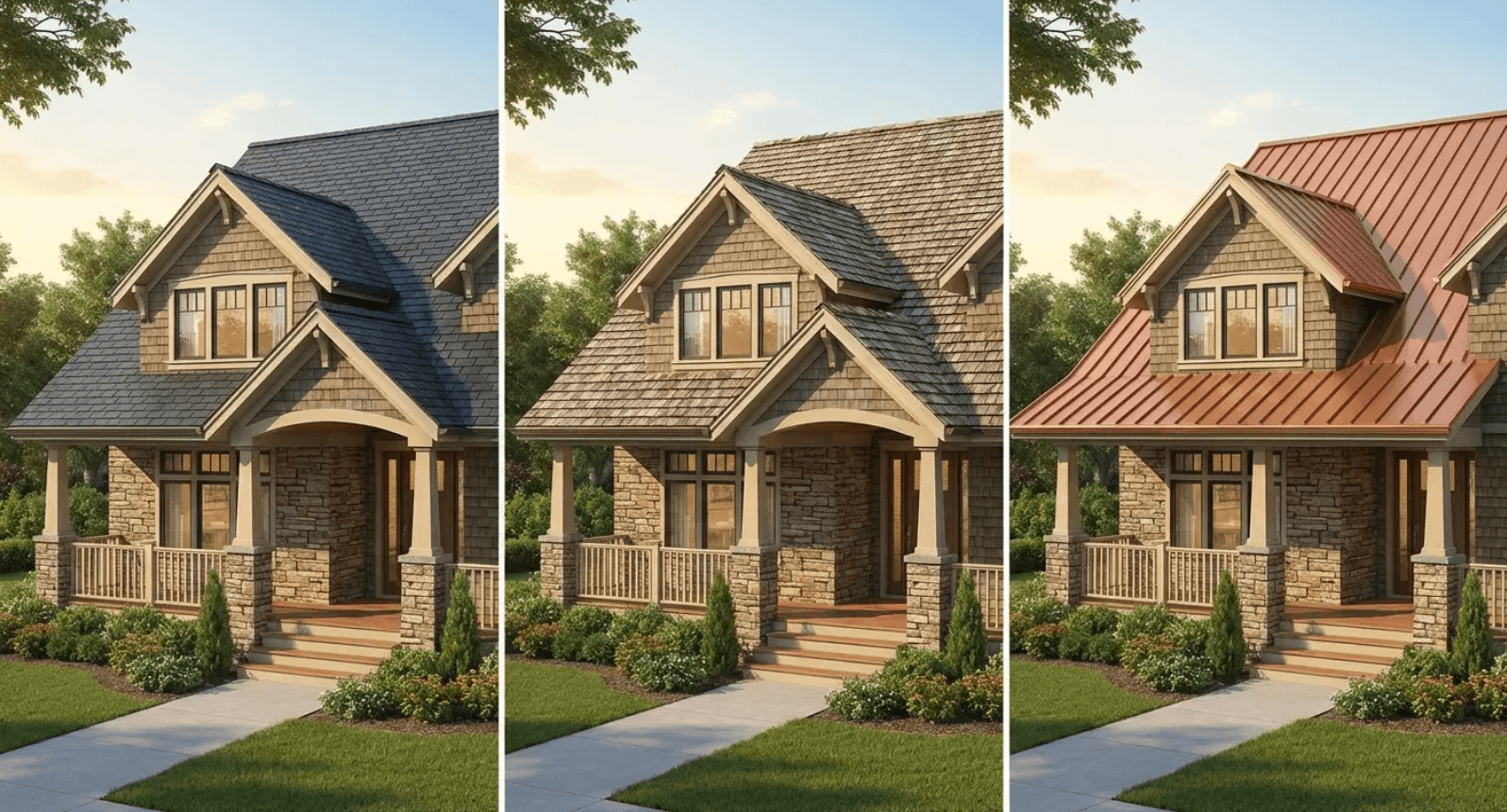
Colonial and Cape Cod homes traditionally have asphalt or wood shingles. The clean lines and symmetry of these styles pair well with uniform roofing materials. Metal can work but needs to be the right profile: standing seam rather than corrugated.
Mediterranean and Spanish styles call for tile (clay or concrete in earth tones). These homes were designed with tile in mind, and the roof is a defining feature of the style. Substituting asphalt looks cheap and undermines the architectural intent.
Tudor and English Cottage styles traditionally feature slate or wood shake. The irregular, textured appearance of these materials complements the style's emphasis on craftsmanship and natural materials. Synthetic alternatives can work if they convincingly mimic the texture and color variation of natural materials.
Modern and contemporary homes offer more flexibility. Clean lines and minimalist aesthetics work with metal, flat membrane systems, or low-profile materials. The key is maintaining the simplicity and precision that defines the style.
Ranch and farmhouse styles are versatile. Metal roofing has become popular on modern farmhouses, while traditional ranches work with asphalt or wood. The style is less prescriptive, giving you more options.
Matching your neighborhood matters too. If every home on your street has asphalt shingles and you install bright metal, you're the outlier. This might not bother you, but it can affect resale value because buyers often want to fit in rather than stand out.
The Resale Value Myth You Need to Stop Believing
Premium roofing materials don't automatically increase home resale value. This assumption drives countless decisions, but the data tells a different story. Returns vary dramatically by market, and exceeding local norms rarely pays off the way homeowners expect.
Making roof decisions based on speculative resale assumptions rather than your actual plans is backwards. How long will you own the home? What do buyers in your specific market value? These questions matter more than national averages or general advice.
Buyer Preferences Are Intensely Local
What buyers value in roofing varies by region, price point, and local building conventions. A roof type that's standard in one market might be exotic in another, and exotic often translates to concerning rather than premium.
In the Southwest, tile roofing is expected on certain home styles. Buyers see it as normal and appropriate. In the Northeast, tile is unusual, and buyers worry about finding contractors who can repair it. The same material has completely different market perceptions depending on location.
Coastal areas value hurricane-resistant materials. Impact-resistant shingles and proper fastening matter more than premium aesthetics. Buyers in these markets understand storm risks and evaluate roofs accordingly.
Wildfire zones prioritize fire resistance. Metal and tile have advantages over wood or asphalt. Buyers in these areas often can't get insurance with certain roof types, which eliminates those materials from consideration regardless of other merits.
Anywhere that sees real winter (Chicago, Minneapolis, Buffalo, Denver) values ice dam prevention and snow load capacity. Buyers understand these issues and look for proper ventilation, adequate pitch, and materials that handle freeze-thaw cycles. A roof that's perfect for Arizona might raise concerns in Minnesota.
National trends don't determine local value. Research what's standard in your specific market before assuming a premium material will command a premium price.
Age Matters More Than Material for Most Buyers
For most home buyers, roof age and condition matter more than material type. A newer mid-grade roof often has more market appeal than an aging premium roof.
Buyers and lenders evaluate roof life remaining. A 5-year-old asphalt roof has 15-20 years of life left, which means the buyer won't face replacement costs for years. A 20-year-old slate roof might have 50+ years of life remaining, but many buyers don't think in those timeframes. They see an old roof and worry.
Lenders sometimes require roof replacement or escrow funds if the roof is beyond a certain age, regardless of condition. This creates financing complications that can kill deals or reduce your negotiating power.
Buyers often lack the knowledge to evaluate premium materials. They see a roof that looks old and assume it needs replacement soon, even if the material is slate or tile that will last another century. Education helps, but you're fighting perception.
Timing your roof replacement relative to sale plans matters. If you're selling within 5 years, a new mid-grade roof provides maximum appeal. If you're staying 20+ years, choose based on your preferences and total cost of ownership rather than resale speculation.
When Premium Materials Actually Pay Off
Specific situations exist where premium roofing materials do provide measurable resale returns. Understanding these situations helps you determine whether material upgrades make financial sense from a resale perspective.
High-end markets where premium materials are expected provide the best returns. If comparable homes in your price range all have slate or tile, asphalt shingles will hurt your value. You're not gaining value by upgrading. You're avoiding a penalty by meeting expectations.
Homes where the roof is highly visible and central to curb appeal benefit from premium materials. If your roof dominates the front elevation and is the first thing people see, investing in attractive materials makes sense. If the roof is barely visible from the street, appearance matters less.
Markets with specific material preferences reward matching those preferences. Some areas strongly prefer metal roofing. Others expect tile on certain styles. Going against local preferences rarely pays off, while matching them maintains value.
Two identical colonials in Newton, Mass. Built same year, same square footage, same everything. Both needed roofs in 2016.
Owner A goes with architectural asphalt. $12K. Looks fine, does the job.
Owner B goes full premium: natural slate. $45K. Looks amazing. Historic accuracy. The whole deal.
Fast forward to 2019. Both sell. They list at the same price: $485K.
Owner A's house sells in 18 days. Asking price. Done.
Owner B's house sits. And sits. 127 days on market. Finally sells for $492K: seven grand more than Owner A.
Owner B spent an extra $33K on that slate roof. Got back $7K. That's a 21% return. On a roof. In a market where slate should add value.
Why? Buyers were scared. "Who fixes slate around here?" "What if something breaks?" "How much does maintenance cost?" The premium material became a liability.
That's what I mean when I say resale value is complicated.
Energy Efficiency: Beyond the R-Value Marketing
Energy efficiency marketing dominates roofing sales pitches, but most claims oversimplify how roof-related energy performance works. The truth is that what's under your roof matters more than what's on top of it, and marginal improvements get marketed as dramatic savings.
Understanding what drives energy performance helps you evaluate efficiency claims realistically and invest in improvements that provide meaningful returns rather than marketing hype.
Reflectivity Matters Only in Specific Climates
Cool roof technology (reflective coatings and light-colored materials) provides real benefits in hot, sunny climates by reducing cooling loads. According to roofing industry experts, studies show that by reflecting heat on your roof rather than absorbing it through cool roof technology (typically achieved through metal roofing, flat roof membranes, or white roof coatings), homeowners can cut their energy bills by up to 15% (HGTV's roofing materials analysis). However, this benefit is primarily realized in hot, sunny climates where cooling costs dominate energy expenses, while homeowners in colder climates may want heat absorption rather than reflection.
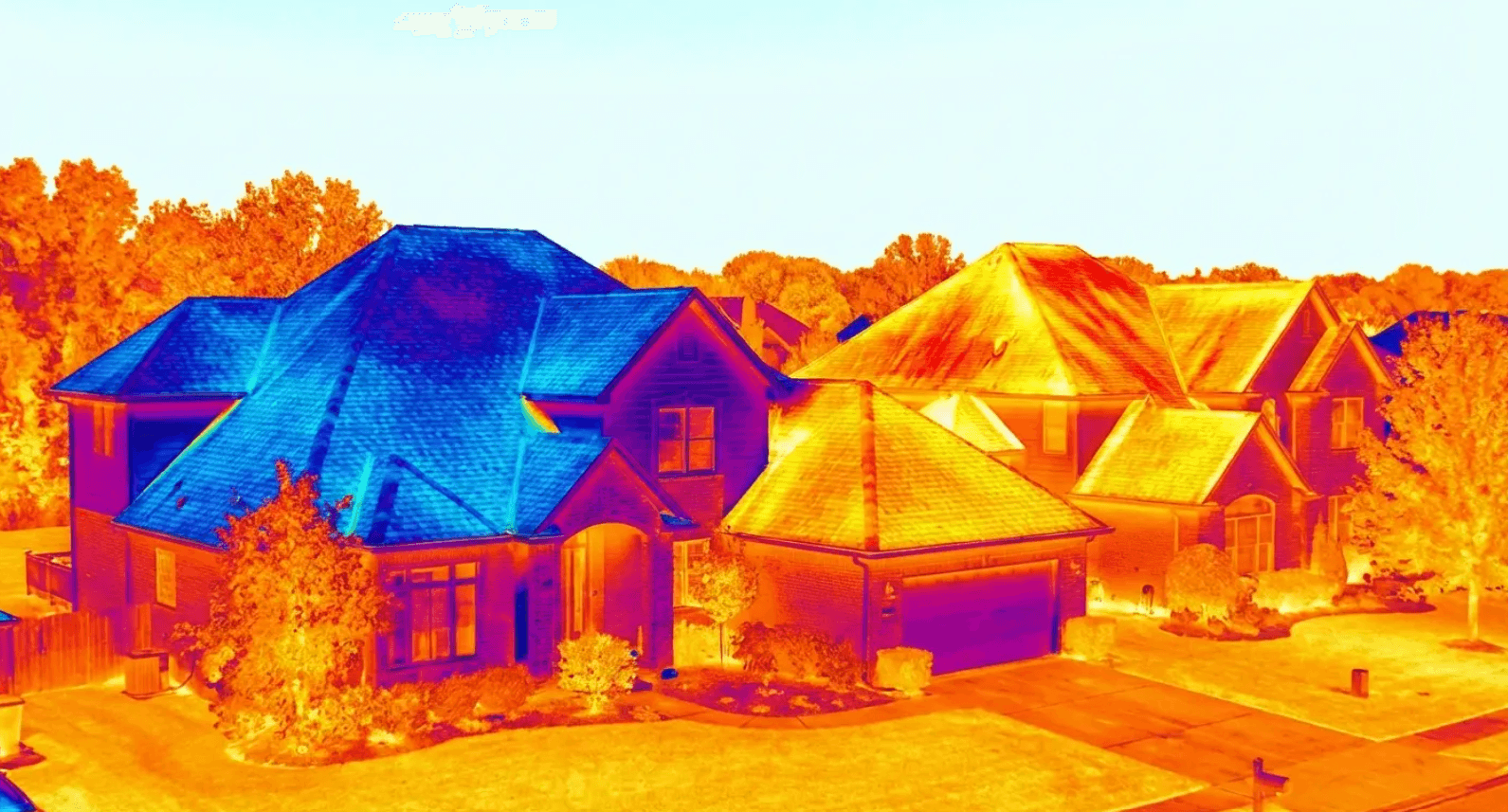
Reflectivity works by bouncing solar radiation away from your home rather than absorbing it as heat. Dark roofs in sunny climates can reach 150-180°F on summer days, turning your attic into an oven. Reflective roofs stay 50-60°F cooler, reducing the heat load on your cooling system.
Climate determines whether reflectivity helps or hurts. Phoenix, Vegas, Palm Springs, anywhere it regularly hits 110+? These places benefit enormously from reflective roofing. The cooling season dominates energy costs, and reducing heat gain provides year-round savings. Minneapolis, Boston, and other cold-climate cities might see minimal benefit or even increased heating costs because winter heat absorption can reduce heating loads.
Mixed climates require analysis. If you have significant cooling and heating seasons, the benefit depends on which season dominates your energy costs. Cooling typically costs more per degree than heating, so even moderate cooling climates might benefit from reflectivity.
Color matters more than material for reflectivity. A white asphalt shingle reflects more heat than a dark metal roof. Special reflective coatings can make dark colors more reflective than they appear, but light colors inherently reflect more solar radiation.
Your Attic Insulation Matters Way More
The insulation between your living space and attic has far more impact on energy costs than roofing material choice. Proper insulation prevents heat transfer in both directions: keeping heat in during winter and out during summer.
Insulation is measured in R-value, which indicates resistance to heat flow. Higher R-values mean better insulation. Building codes establish minimums based on climate zone, but these are often inadequate for optimal energy performance.
Most homes are under-insulated. Adding insulation to meet or exceed current code recommendations provides dramatic energy savings, often 20-30% reductions in heating and cooling costs. This dwarfs the 5-15% potential savings from reflective roofing.
Insulation type matters. Fiberglass batts are common but leave gaps if not installed perfectly. Blown-in cellulose or fiberglass fills spaces more completely. Spray foam provides the highest R-value per inch and seals air leaks simultaneously.
Upgrading insulation during roof replacement makes sense because the attic is already accessible. The incremental cost is lower than doing it as a separate project, and the energy savings start immediately.
Roofing and insulation work together as a system. A reflective roof reduces heat gain, while insulation prevents that heat from reaching your living space. Optimizing both provides better results than maximizing one while ignoring the other.
Ventilation Affects Comfort and Costs
Proper roof ventilation impacts energy performance by reducing attic heat buildup in summer and moisture accumulation in winter. These effects influence both comfort and energy costs.
Summer ventilation removes hot air from the attic before it can conduct through insulation into living spaces. Without ventilation, attic temperatures can exceed 150°F, overwhelming insulation and forcing cooling systems to work harder. Proper ventilation keeps attics closer to outdoor temperatures, reducing the heat load on your home.
Winter ventilation removes moisture that rises from living spaces. This moisture can condense in the attic, soaking insulation and reducing its effectiveness. Wet insulation loses R-value, meaning your heating system works harder to maintain comfort. Ventilation keeps insulation dry and performing as designed.
Ventilation, insulation, and roofing material interact as a system. You can't optimize one element while ignoring the others and expect maximum energy performance. A reflective roof without adequate ventilation still allows heat buildup. Great insulation without ventilation gets compromised by moisture. Ventilation without insulation just moves air without preventing heat transfer.
Stop obsessing over cool roof coatings. Your attic insulation matters way more. The energy efficiency conversation should focus on the entire roof system rather than surface material alone. Marketing that emphasizes material properties while ignoring insulation and ventilation is selling you an incomplete solution.
Making the Decision When You're Ready
Okay, you've got all this information. Now what? Here's how to actually make a decision without losing your mind.
Moving from information gathering to decision-making feels overwhelming when you understand how many factors influence roof selection. The key is working through a prioritization process that starts with constraints and moves toward preferences.
This framework helps you filter options systematically rather than trying to evaluate everything simultaneously. By the time you reach aesthetic choices, you've already eliminated materials that won't work for structural, climate, or financial reasons.
Start With What You Can't Change
Cross off everything your structure can't hold, everything your climate will destroy, and everything that violates code. What's left? That's your actual list. These non-negotiable factors narrow the field considerably.
Can your house physically hold the roof you want? Answer this first. Everything else is fantasy until you know your structure can handle it. If you need reinforcement, does that cost fit your budget? These questions eliminate entire categories of materials immediately.
Your existing roof slope determines which materials will function properly. Low-slope roofs need membrane systems. Steep slopes can use most materials but might make some impractical due to installation difficulty.
Climate demands create hard requirements. If you're in a wildfire zone, fire resistance isn't optional. Hurricane areas need specific wind ratings. Hail zones benefit enormously from impact resistance. This isn't about what you want. It's about what won't fail in your climate.
Building codes establish legal minimums. Your local jurisdiction might require specific ratings, materials, or installation methods. Code compliance isn't negotiable, so materials that don't meet requirements are off the table.
HOA restrictions might limit your choices further. Some associations specify approved materials, colors, or styles. Fighting these restrictions is possible but rarely worth the effort and expense.
After filtering for these constraints, you'll have a much shorter list of viable options. This makes the remaining decisions manageable rather than overwhelming.
Balance Initial Cost Against Lifecycle Value
With viable options identified, let's talk money. Real money, over 20-30 years. This calculation determines which roof materials make sense for your specific timeframe and budget.
Total cost of ownership includes installation, maintenance, energy impact, and expected lifespan. A material that costs $15,000 to install and lasts 25 years with $200 annual maintenance costs $20,000 total, or $800 per year. A material that costs $25,000 to install and lasts 50 years with $100 annual maintenance costs $30,000 total, or $600 per year. The more expensive option provides better value over its lifetime.
Your ownership timeline changes this calculation. If you're selling in five years, lifecycle value matters less than immediate cost and market appeal. If you're staying 30 years, lifecycle value should drive your decision.
Financing affects the equation too. If you're paying cash, upfront cost is straightforward. If you're financing, interest costs add to the total. A $10,000 difference financed over 15 years at 6% interest costs an additional $2,600 in interest.
Energy savings can offset higher initial costs. If a reflective roof saves $300 annually in cooling costs, that's $7,500 over 25 years. Factor these savings into your total cost comparison.
Insurance discounts work similarly. If impact-resistant shingles reduce your annual premium by $150, that's $3,750 over 25 years, potentially enough to offset the higher material cost.
Run the numbers for your specific situation rather than relying on generalizations. Your timeline, financing, energy costs, and insurance rates are unique.
Trust Your Gut on Aesthetics
After filtering for viability and financial fit, aesthetic preference becomes the deciding factor. You'll be looking at your roof every day, and appearance matters for your satisfaction with your home.
Among functionally equivalent options, choose what you find most attractive. If two materials meet your structural, climate, and budget requirements, and one looks significantly better to you, that's your answer. Don't overthink it.
Neighborhood context influences aesthetics. A roof that looks great in isolation might look out of place on your street. Consider whether you want to match your surroundings or stand out. Neither choice is wrong, but be intentional about it.
Color selection matters more than most people realize. The roof represents a significant portion of your home's visible exterior, and color affects the overall appearance dramatically. Bring home samples and view them in different lighting conditions before deciding.
Texture and profile create visual interest. Flat materials look different from dimensional ones. Smooth surfaces contrast with textured ones. These details affect how your roof reads from the street.
Personal taste is valid. If you love the look of metal roofing and it meets all your practical requirements, don't let anyone talk you out of it because it's "trendy" or "unusual." Your home should reflect your preferences, not someone else's opinions.
Finding a Contractor Who Actually Knows What They're Doing
Contractor selection determines whether your roof choice performs as intended. A great material installed poorly performs worse than a good material installed correctly.

Licensing verification should be your first step. Confirm that the contractor holds the appropriate licenses for your state and locality. Unlicensed contractors might bid lower, but you have no recourse if problems arise.
Insurance coverage (both liability and workers compensation) protects you from financial risk. If a worker is injured on your property and the contractor doesn't carry workers comp, you could be liable. Request certificates of insurance and verify them directly with the insurance company.
Ask for references from jobs 3+ years old. Then actually call them. Ask: "Any leaks?" "Did they come back when you called?" "Would you hire them again?" If they hesitate on that last one, you have your answer. Recent references only confirm that the contractor can complete a project, not that their work holds up .
Manufacturer certifications indicate that the contractor has received training on proper installation techniques for specific materials. Certified contractors typically provide better warranties because manufacturers trust their installation quality.
Ask them: "What underlayment are you using and why?" If they say "standard" or can't name a brand, they're not thinking about quality. If they explain the difference between felt and synthetic and why they prefer one for your situation, they know their stuff. A quality contractor can walk you through every step: how they'll handle ventilation, what underlayment they'll use, how they'll integrate flashing, what fastening pattern they'll follow. Vague answers or resistance to questions are red flags.
Years in business matters, but longevity alone doesn't guarantee quality. A contractor who's been around for 20 years has proven they can sustain a business, which suggests satisfied customers and proper business practices. However, verify their reputation through recent reviews and references.
Getting Multiple Bids Without Losing Your Mind
Structure the bidding process to get comparable quotes that you can evaluate meaningfully. This means specifying the same materials and scope to each contractor so you're comparing equivalent work.
Provide detailed specifications to all bidders. Specify the exact material (brand, model, color), underlayment type, flashing material, and any special requirements. Without this specificity, contractors bid on different scopes and you can't compare prices accurately.
Detailed bids should include material specifications, labor breakdown, timeline, warranty terms, and payment schedule. Vague bids that just list a total price hide what you're actually getting. Insist on itemization so you can see where your money goes.
When you get a bid that's itemized, look at the labor percentage. Should be 35-40% of total. If it's 50%+, they're padding labor. If it's under 30%, they're either cutting corners on crew size or using unlicensed workers.
Three bids from reputable contractors will cluster in a similar price range. If all three bid $18,000-$22,000 and a fourth bids $12,000, the outlier deserves scrutiny. What are they doing differently? Cheaper materials? Fewer workers? Skipped steps? The answer usually reveals why the price is lower.
High bids also deserve questions. If most contractors bid $20,000 and one bids $35,000, understand what additional value they're providing. Sometimes it's superior materials or more thorough prep work. Other times it's just higher profit margins.
Timeline commitments should be realistic and specific. "We'll start when weather permits" is too vague. "We'll begin the week of June 15th and complete within 5 working days" gives you accountability.
Payment schedules should align with work completion. Do not (I repeat, do not) pay the full amount upfront. Never pay 50%+ before they start. Standard is 10-25%. Anyone asking for half before they start is either desperate or planning to take your money and run. Standard terms include a deposit (typically 10-25%), a payment at project midpoint, and final payment upon completion and your approval. This structure protects you by ensuring the contractor has incentive to finish properly.
Written contracts protect both parties. Everything you've discussed should be in writing: materials, timeline, payment terms, warranty coverage, cleanup procedures, and how changes will be handled. Verbal agreements are worthless if disputes arise.
Ask: "What happens if you find deck damage during tear-off?" Get the answer in writing. Per-square-foot replacement cost, who approves it, how it affects timeline. Don't get surprised on demo day.
Final Thoughts
Look, I get it. You wanted me to just tell you "get metal" or "asphalt is fine" and be done with it.
But that's not how this works. The best type of roof for your neighbor might be terrible for you. Your structure's different. Your budget's different. You might actually maintain your roof, or you might be like most people and forget it exists until water's dripping on your couch.
Here's what I can tell you: Start with what you can't change. Can your house hold it? Will your climate destroy it? Can you afford it (really afford it, including maintenance)?
Answer those first. Then pick something you don't hate looking at.
And for the love of god, hire a good contractor. I cannot stress this enough. Yes, I just made you read 8,000 words about roofing. Yes, I keep harping on contractor quality. I sound like a broken record. But I've seen too many people ignore this and regret it. The best material in the world installed by a hack will fail. Mid-grade material installed by someone who knows what they're doing will last decades.
That's it. That's the secret. There is no perfect roof. There's only the right roof for your specific situation, installed by someone who gives a damn.
Now go get three bids. Detailed ones. And actually check their references (call people whose roofs are at least three years old).
You've got this.