March 30, 2026
Roof Leak Repair Cost: What You're Actually Paying For (And Why It Matters More Than the Number)
Author
If you’ve been trying to pin down your roof leak repair cost, you’ve probably already noticed something frustrating: the numbers don’t make sense. One quote seems suspiciously cheap, another feels way too high - and somehow, both contractors swear they’re right.
Here’s the truth most homeowners don’t hear upfront: you’re not just paying for a repair. You’re paying for someone to correctly diagnose a problem you can’t fully see, fix it in a way that actually lasts, and stand behind that decision when the next storm hits. That’s why this guide isn’t about throwing average price ranges at you - it’s about showing you what those numbers really represent and how to avoid paying twice for the same leak.
Inside this blog, you’ll learn why two quotes for the same “leak” can be thousands apart, what separates a quick patch from a permanent fix, and how to read between the lines of an estimate so you don’t get burned later. Because the cheapest option isn’t always the smartest - and in roofing, it rarely is.
Want to understand how leaks actually start (and why they’re often misdiagnosed)? Check out this breakdown of the science behind roof repairs and see what most contractors won’t explain.
Table of Contents
- TL;DR
- The Hidden Economics Behind Every Roof Leak Quote
- Why Your Neighbor's $300 Repair Isn't Comparable to Your $3,000 One
- What Roofers See That You Don't (And How It Changes the Price)
- The Real Cost Drivers Nobody Talks About
- When "Just Patch It" Becomes the Most Expensive Option
- How to Evaluate a Roof Leak Repair Estimate Without Getting Played
- Smart Questions That Separate Good Contractors from Bad Ones
TL;DR
- Roof leak prices vary widely because you’re not just paying for materials and labor - you’re paying for expertise and a contractor willing to stand behind a long-term fix. The $300 repair doesn’t come with that level of commitment.
- Your neighbor’s repair cost isn’t a useful comparison. Every roof is different - location, pitch, materials, and the actual cause of the leak all impact the price.
- The cheapest option often costs more over time. Quick fixes usually address symptoms, not the root problem, leading to repeat repairs.
- Roofers price repairs based on accessibility, underlying damage, and whether they can confidently warranty the work - not just what you see from inside your home.
- A solid estimate should clearly explain what failed, why it failed, and what potential issues are developing. If it doesn’t, you’re likely paying for a temporary patch rather than a real solution.
The Hidden Economics Behind Every Roof Leak Quote
Here's what most people get wrong about roof repair quotes: they think they're comparing prices on the same service.
They're not.
Last week, a homeowner showed me three estimates for what looked like the same leak. $500, $1,800, and $2,600. She was convinced two of these contractors were trying to rip her off. Turns out all three quotes were legitimate. They were just fixing completely different problems.
The $500 guy saw a few missing shingles. The $1,800 contractor found compromised decking and flashing that had been installed wrong from day one. The $2,600 quote included all that plus mold remediation because water had been traveling through the attic for who knows how long.
Same wet ceiling. Three totally different problems.
This is where homeowners lose their minds trying to figure out roof leak repair cost. The numbers feel random because you can't see what you're paying for. And honestly? That's the whole issue right there.
What You're Really Purchasing
The actual materials might be 20-30% of your bill. Maybe. The rest? You're paying for someone who knows what the hell they're looking at. Someone with insurance so you're not screwed if they fall off your roof. Someone willing to put their name on a warranty that says "I'll fix this if it leaks again."
When a roofer gives you a price, they're basically saying "I'll stake my business on solving this problem for good." That's not nothing.
The handyman who charges $300 to slap some caulk around your chimney? He's not making that promise. Six months from now when water's pouring in again, good luck finding him. His phone number probably doesn't even work anymore.
You Can't Shop for This Like You're Buying a TV
Water heaters are standardized. You can compare specs, pick the best price, done. Roof leaks? Every single one is different. The "product" you're buying is someone's professional judgment about what's actually wrong and how to fix it so it stays fixed.
The contractor charging less might genuinely be more efficient. Or they might be offering you a patch job that ignores the real problem. When you're trying to figure out how much does it cost to repair a roof, you can't just look at the bottom line. You need to understand what's actually included.
And here's the uncomfortable part: without crawling around in your attic yourself, you can't really tell the difference just from reading the quote.
Why Your Neighbor's $300 Repair Isn't Comparable to Your $3,000 One
Your neighbor's roof leak story has almost nothing to do with yours.
I know that sounds dismissive. But someone tells you at a barbecue they got their leak fixed for $350, and suddenly the $1,800 estimate on your counter feels like highway robbery. Except you have no idea what their roof pitch is, where their leak was, whether they have rotted wood underneath, or if their "fix" will even make it through next winter.
The roof leak repair cost they paid addressed a totally different situation than what you're dealing with.
The Variables That Multiply Cost
Roof pitch matters way more than people realize. A gentle 4/12 slope? Roofers can walk around up there with basic safety gear. An 8/12 pitch or steeper? Now we're talking specialized equipment, harnesses, moving slower, being way more careful. That difference alone can double your labor costs for the exact same repair - and significantly increase your total roof leak repair cost.
| Roof Pitch | Safety Requirements | Labor Cost Impact | Typical Work Speed |
|---|---|---|---|
| 4/12 to 6/12 | Basic fall protection | Baseline rate | Standard |
| 8/12 | Specialized equipment | #ERROR! | Slower |
| 12/12+ (45°) | Scaffolding often required | #ERROR! | Significantly slower |
Height is another multiplier. Single-story ranch? Maybe three hours for a repair. Same exact fix on a two-story colonial could take six hours. Not because the work is harder, but because everything takes longer when you're dealing with scaffolding and hauling materials up and down.
Access can make or break your budget. I've seen repairs triple in cost because the leak was over a room with cathedral ceilings. Can't get to the underside of the roof easily, so the roofer's working half-blind or tearing out interior finishes just to see what's going on.
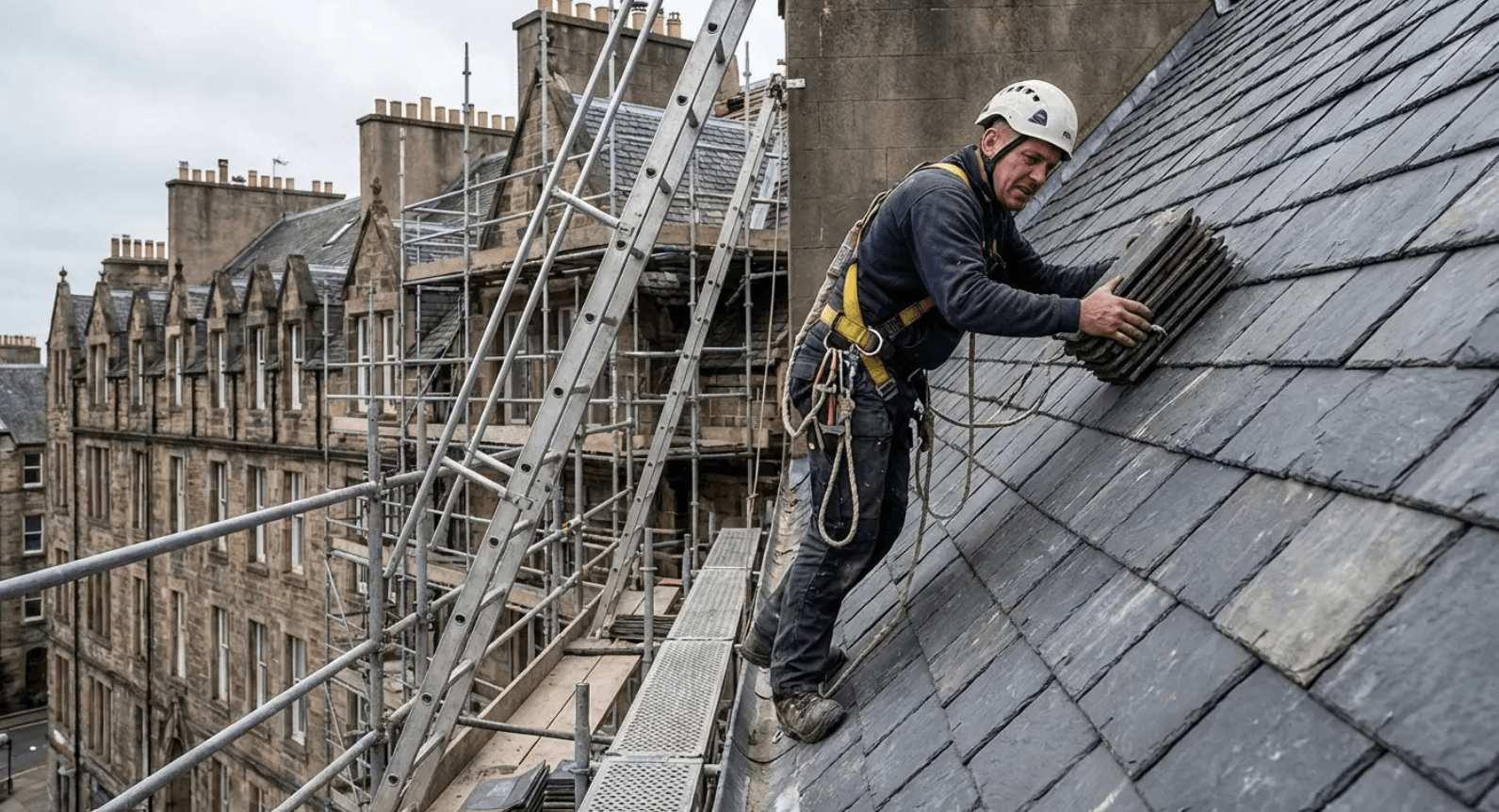
Two identical pipe boot failures. First one's on a ranch with a 5/12 pitch, easy access from the driveway. $350, done. Second one's on a three-story townhouse, 11/12 pitch, trees everywhere, needs scaffolding and tree trimming just to work safely. Same leak, same fix, but now it's $1,200 because of access issues alone.
This isn't theoretical. We see this every single week.
Timing and Urgency Premiums
Emergency repairs cost more, and that's not price gouging (though yeah, some contractors do take advantage). It's just economics. You call on Saturday because water's dumping into your living room? You're asking a crew to drop everything, possibly work in bad weather, and bump their scheduled jobs. That costs extra.
Winter repairs in cold climates run higher because materials don't seal right when it's freezing, everything takes longer, and there's more risk of causing additional damage while we're up there working. The roof repair price you get quoted in January might be 20-30% more than the same job in June.
After a major storm, every roofer in town is booked for weeks. Supply and demand kicks in. Prices go up. You can wait and maybe save money, but every day you wait, water's doing more damage inside your house.
What Roofers See That You Don't (And How It Changes the Price)
You see a drip. We see a story.
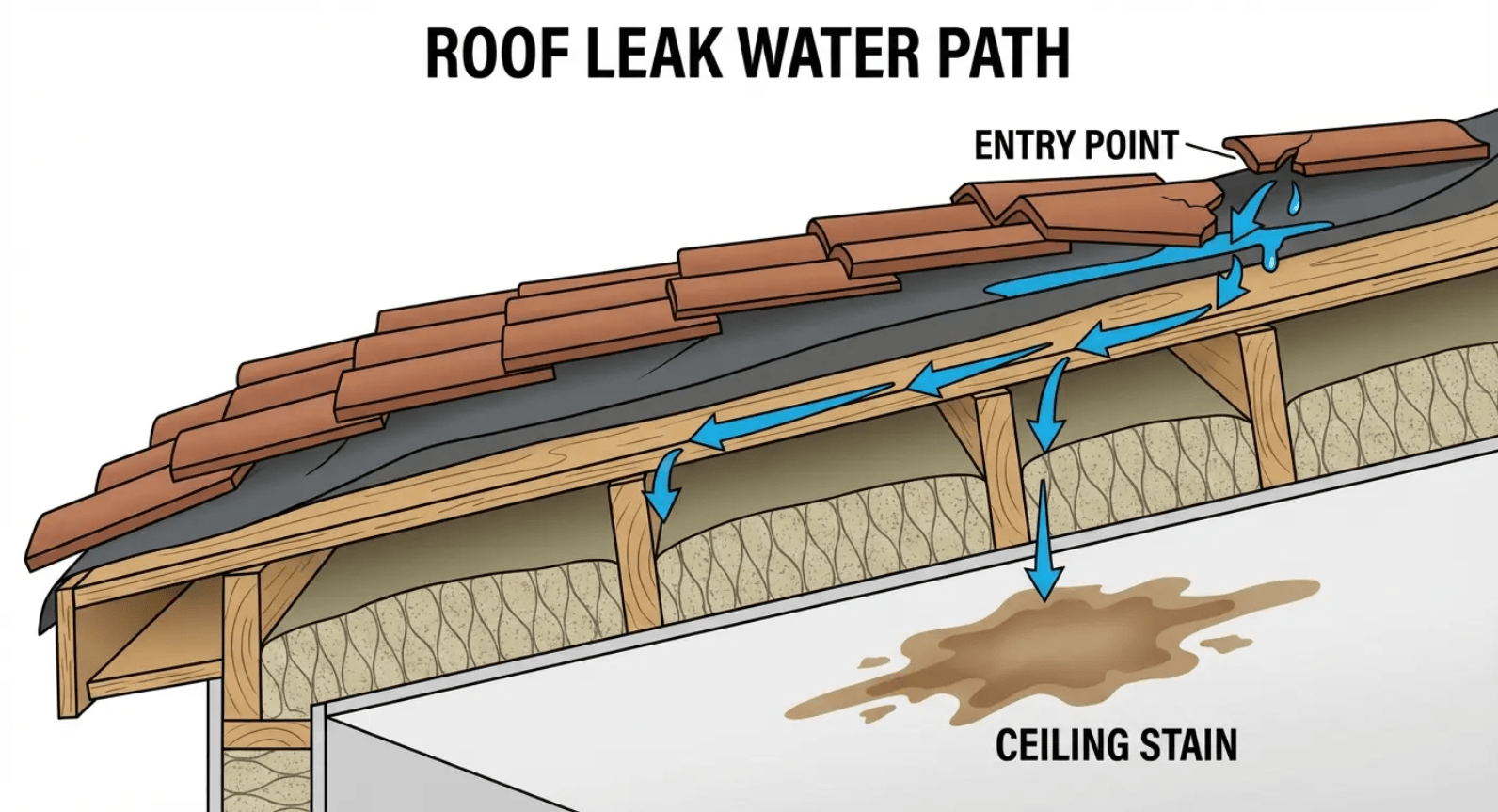
The water stain on your ceiling is rarely directly below where the roof actually failed. Water travels. Sometimes a lot. I've traced leaks that traveled fifteen feet from the entry point before they finally dripped through your ceiling.
The Detective Work
Good roofers don't just find where it's leaking. We reverse-engineer how water got there. And that often means tracing it back through layers of roofing, along rafters, through insulation, across the underside of your roof deck.
Water doesn't fall straight down once it gets past your shingles. It follows the path of least resistance. Along a rafter. Through a gap in the insulation. Across the sheathing. Until it finds an exit, which is usually your ceiling.
The damage you see inside might be ten feet away from the actual problem on the roof.
Inexperienced contractors fix the spot right above the stain. We're done, they say. Then it leaks again because they never found the real entry point. This is why your initial roof leak repair cost can increase when a thorough inspection reveals the actual issue.
What We're Actually Looking For
Inside your house:
- Every water stain, not just the obvious one
- Soft spots in the ceiling
- Mold smell (wet insulation has a distinct odor, and not in a good way)
- Signs of old leaks that "fixed themselves" when the weather changed
In your attic:
- Water trails along the rafters
- Wet or compressed insulation
- Mold growth on the wood
- Rust stains or mineral deposits
On your roof:
- Every penetration (pipes, vents, chimneys, skylights are usual suspects)
- Flashing at all the transition points
- Shingle condition around the problem area
- Debris in valleys that might be damming water
Under the surface:
- Soft spots in the decking (means rot)
- How saturated the underlayment is
- Structural integrity of the framing
- Whether we're looking at one problem or three
This takes 45 minutes to an hour for a typical house. Contractors who quote you after a ten-minute walk on the roof? They're guessing. And guesses don't hold up when it's time to warranty the work.
Reading the Signs
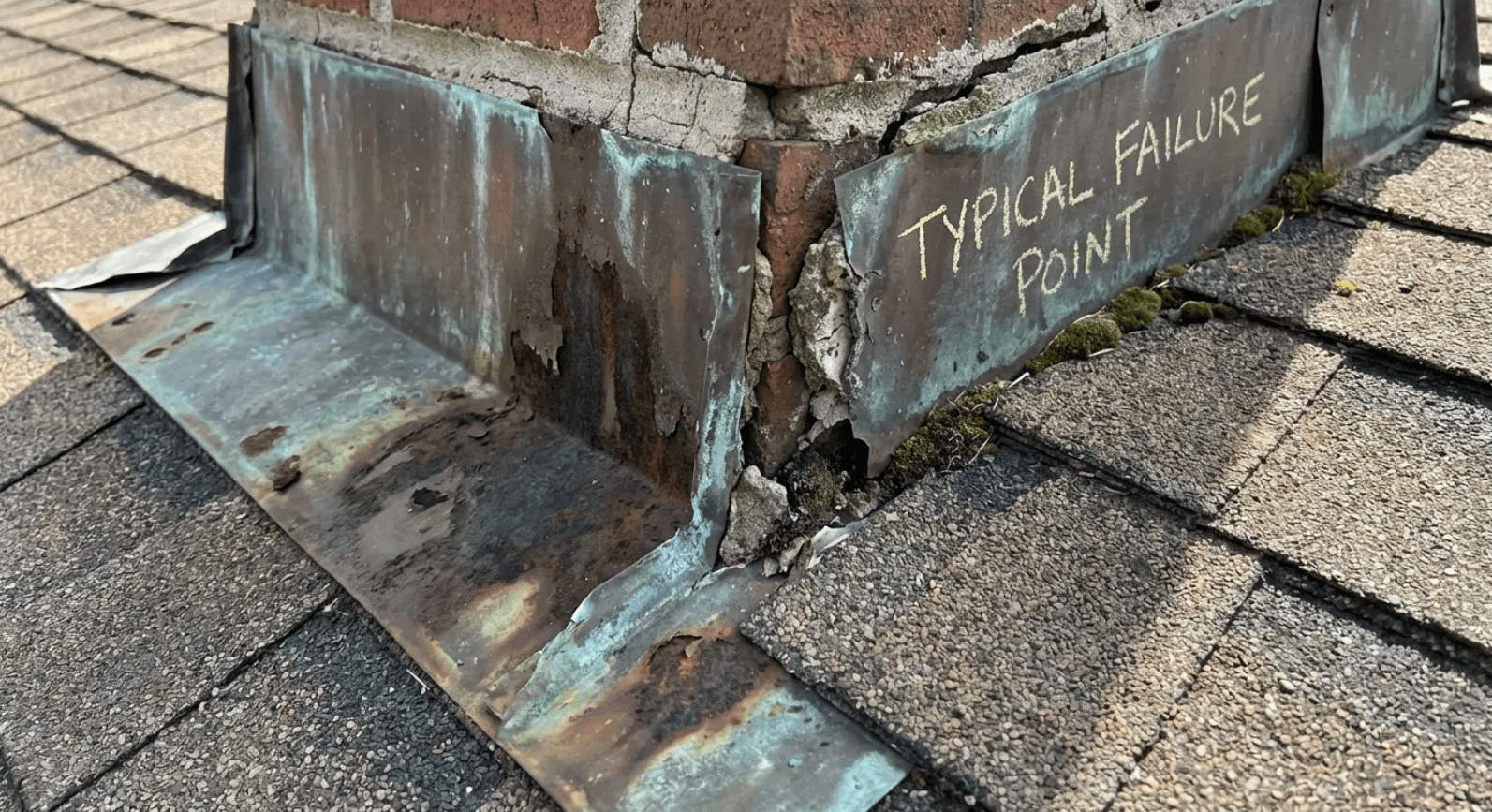
Certain leak locations tell us specific things right away. Water near a chimney? Almost always flashing. And flashing repairs aren't simple. You need to understand how different materials expand and contract, how to integrate new metal with old brick, how to make it all seal properly.
Leaks in valleys? Could be debris buildup. Could be improper installation. Could be the shingles are just done. Each one needs a different fix.
We also spot problems that haven't leaked yet. Your roof's showing its age in one area? Related issues are developing somewhere else. And here's the thing that makes honest roofers squirm: do we mention these future problems and risk looking like we're upselling? Or stay quiet and wait for you to call us back in six months?
We always mention them. You deserve to know what's coming. Whether you fix it now or later is up to you, but you should at least know it's there.
What's Hiding Under Your Shingles
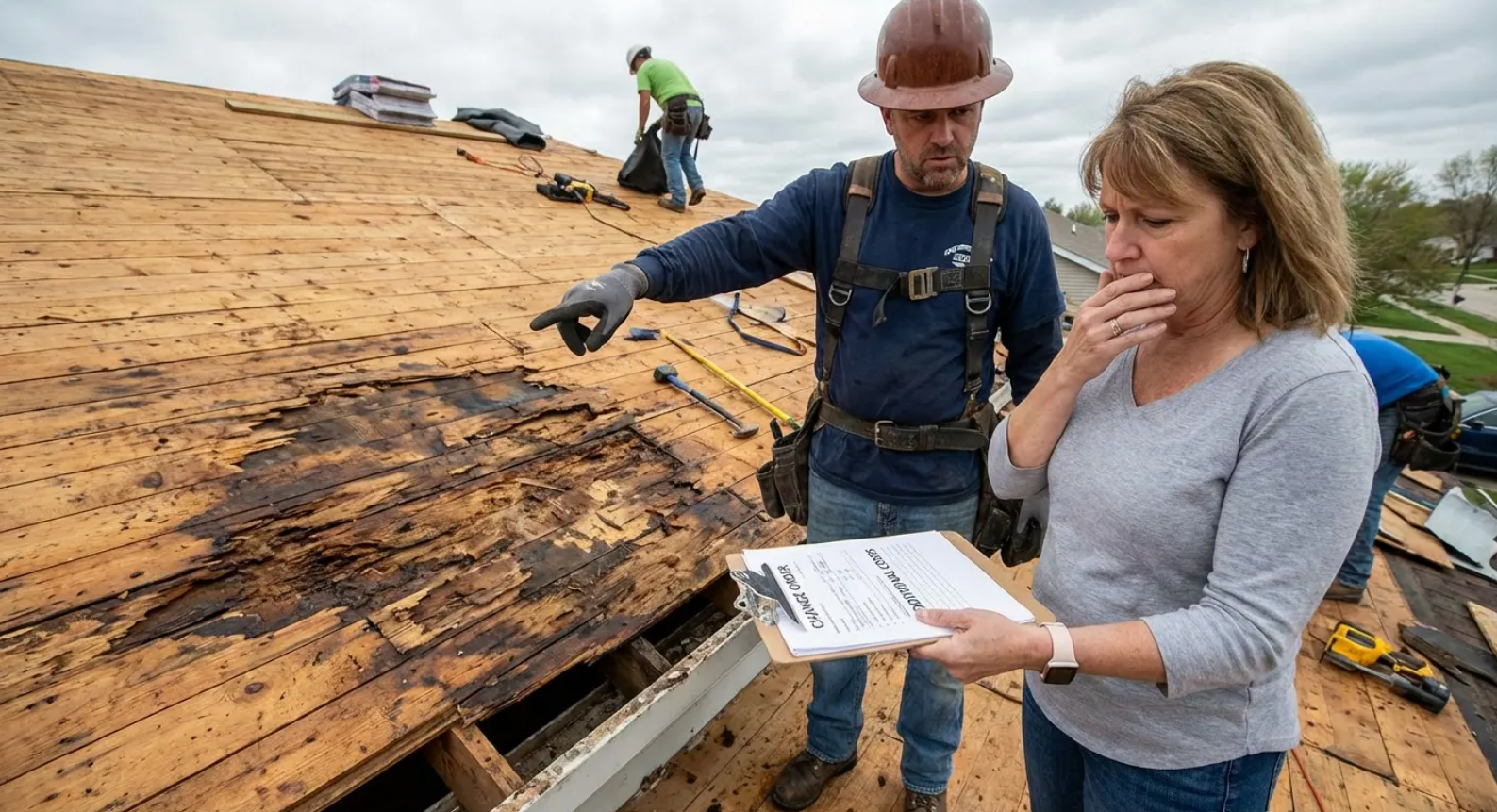
Nobody knows what's under there until we pull them up. That uncertainty creates problems for everyone. Some roofers build huge contingencies into their quotes. Others quote the visible work and warn you that additional charges might apply if they find rot.
Replacing rotted decking can add $500 to $2,000 depending on how bad it is and how hard it is to access. Rafter damage costs even more. And these aren't optional upgrades. You can't just patch new material over compromised wood and expect it to work.
A homeowner in Philly called about what looked like a simple valley leak. Initial quote: $650. We pulled up the valley shingles and found out the original installer never put in valley flashing at all. Just wove the shingles together and called it good. The wood underneath had three years of water damage. Needed to replace a 6x8 section of decking. Final roof repair cost: $2,100.
Not because we were dishonest. Because the problem was way worse than anyone could see from the surface.
The Real Cost Drivers Nobody Talks About
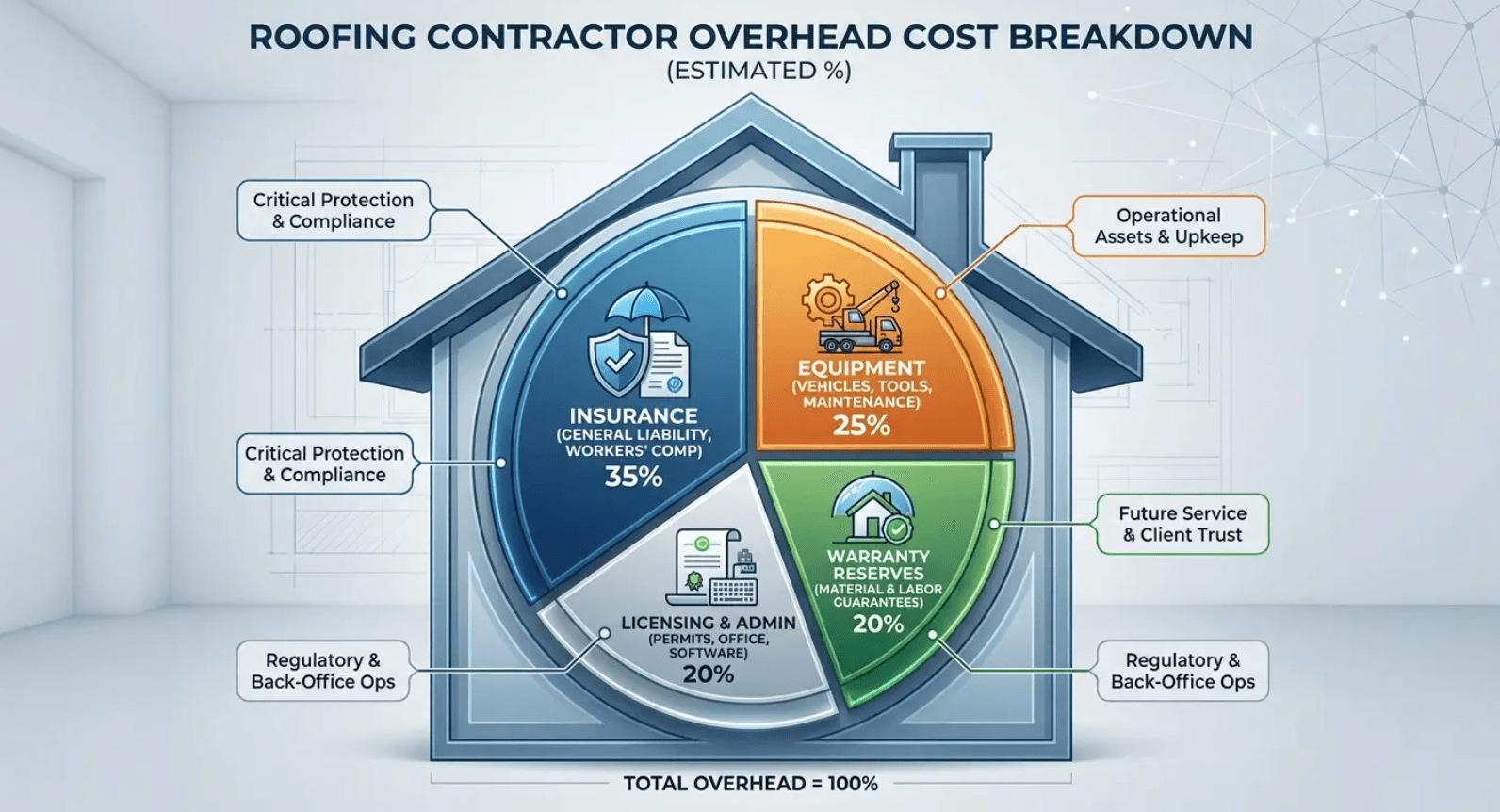
The line items on your estimate are just part of the story. The bigger costs never show up in writing because they're baked into every contractor's overhead.
And these invisible costs? They’re part of your total roof leak repair cost, and they separate legitimate professionals from guys working out of pickup trucks.
Insurance and Bonding (Or Why That Cheap Guy Is Actually Expensive)
Real roofing contractors carry multiple insurance policies. General liability, usually $1-2 million in coverage. Workers' comp. Commercial auto. These policies can run $15,000 to $40,000 a year for a small company.
You're paying for that insurance in every quote - and it’s built into your roof leak repair cost. And you should want to.
If an uninsured roofer gets hurt on your property, guess whose homeowner's insurance might be on the hook? If they drop a bundle of shingles on your neighbor's car and don't have liability coverage, who do you think gets sued? This protection is fundamental to roof repair cost, and it's what separates pros from disasters waiting to happen.
The contractor charging 40% less than everyone else probably isn't insured. That savings? It comes with enormous risk that transfers directly to you.
Warranties That Actually Mean Something
When we warranty our work for five or ten years, we're making a financial bet that the repair will hold. And that warranty has real value because it means we'll come back and fix problems on our own dime if something goes wrong.
Contractors price in the statistical risk of callbacks. You're paying a small premium on every job to cover the occasional one that needs a return visit.
Handymen charging half what licensed roofers charge? They might say the work is guaranteed, but what's that guarantee worth when they're out of business next year?
Permits and Code Compliance
Some repairs need permits. Especially if they're over a certain size or involve structural work. The permit itself might only be $100-$300, but the real cost is the time to pull it, schedule inspections, and make sure everything meets code.
Contractors who skip permits save time and money. But they transfer massive risk to you. Try selling your house when the buyer's inspector finds unpermitted roof work. Or filing an insurance claim when the adjuster asks for permit records.
Code requirements exist because certain practices have been proven over decades. The contractor who says "we don't need a permit for this" might be right. Or they might be cutting corners that'll bite you later.
We pull permits when required because we're not interested in creating future headaches for our clients.
When "Just Patch It" Becomes the Most Expensive Option
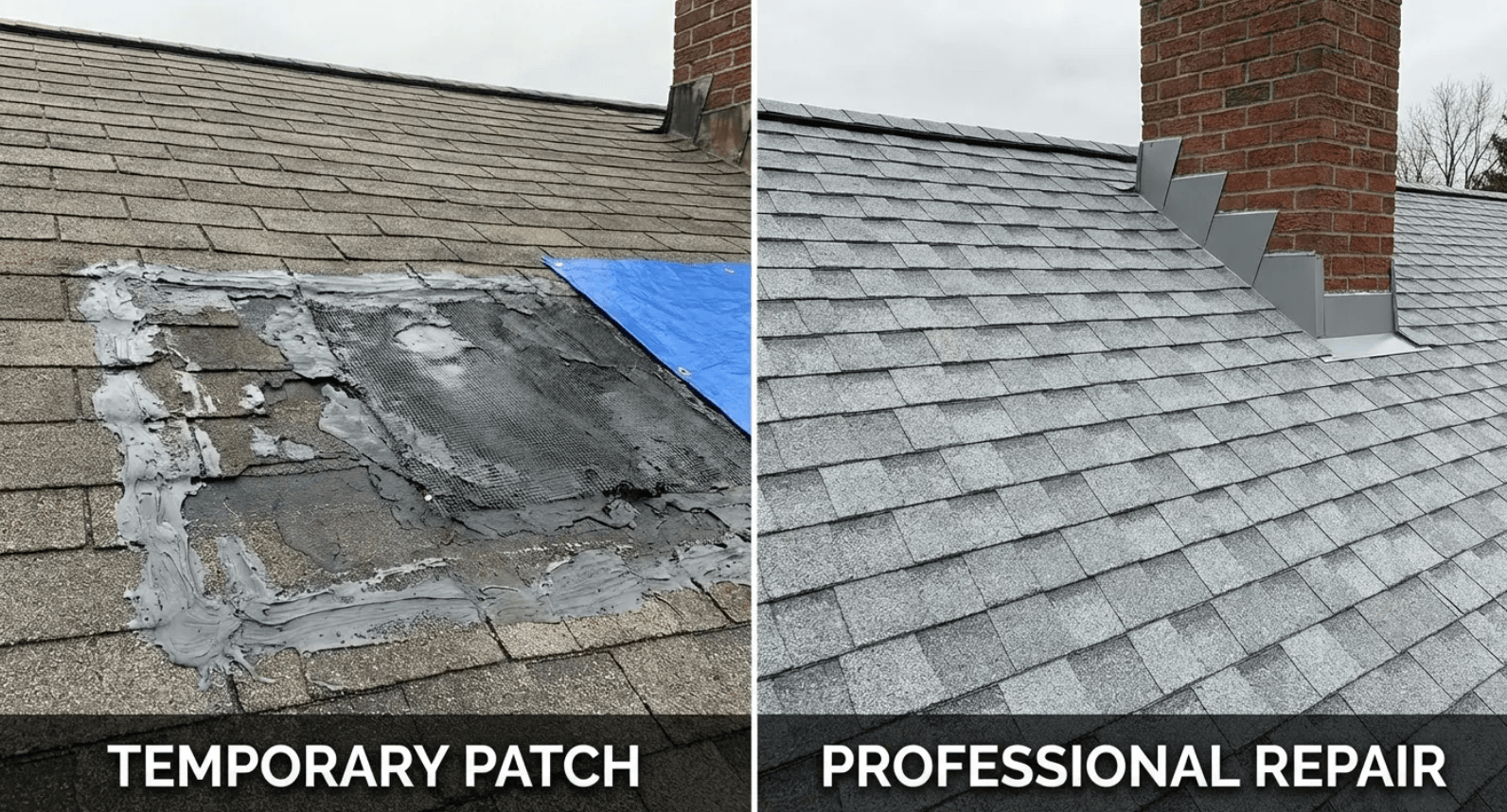
Look, patch jobs have their place. Not every leak needs a complete tear-off. But I've seen enough homeowners nickel-and-dime themselves into major expenses by always choosing the cheapest fix that this deserves some attention.
Each Patch Works for Less Time
The first patch on an aging roof might buy you three years. The second one? Maybe eighteen months. The third barely makes it through a season. Each repair becomes less effective because you're applying new solutions to progressively deteriorating materials underneath.
At some point, repairs stop making economic sense.
A $600 patch that lasts six months costs you $100 per month. A $6,000 roof replacement that lasts twenty years? That's $25 per month. The math isn't complicated, but it requires looking past the immediate sticker shock.
I've had homeowners spend $3,000 across five separate patches over two years, then finally replace the roof for $8,000. If they'd replaced it after the second patch failed, they'd have saved money and two years of stress about when it would leak again.
When Patches Actually Make Sense
If you're selling within a year, a targeted fix might be smarter than a full replacement you won't recoup in the sale price. If your roof is relatively young and the leak is from an isolated installation error or storm damage, a patch solves the problem without unnecessary expense.
The key is matching the repair to the actual situation. You need someone who can honestly tell you whether you're dealing with a one-off failure or a symptom of your whole roof giving up.
| Scenario | Patch Makes Sense | Full Repair/Replacement Better | Why |
|---|---|---|---|
| Isolated storm damage on 5-year-old roof | ✓ | Single failure point, rest of system is solid | |
| Multiple leaks on 18-year-old roof | ✓ | Whole system is failing, patches won't stop it | |
| Single leak, selling home in 6 months | ✓ | Won't recoup replacement cost in sale | |
| Leak plus visible widespread wear | ✓ | Underlying deterioration will cause new leaks soon | |
| Flashing failure on otherwise good roof | ✓ | Isolated component failure | |
| Leak with confirmed decking rot | ✓ | Can't patch new material over compromised wood |
Water Damage Doesn't Stay Put
Every day water gets into your roof system, it's potentially ruining insulation, growing mold, rotting wood, and messing with electrical. A $400 repair you put off for three months might turn into $1,200 because the damage spread. Wait another six months and you could be looking at $3,000 in combined roofing and interior fixes.
This isn't me trying to scare you. It's just physics and biology. Water finds every available space, and organic materials (wood, drywall backing, insulation) break down when they get wet.
When millions of homes are ignoring leaks, the collective cost of putting it off becomes staggering. Understanding how much do roof repairs cost over time means factoring in the damage happening while you're deciding whether to act.
I've seen $300 leaks turn into $5,000 nightmares because homeowners waited through "just one more winter." Delay itself has a price tag, and it compounds every single day.
How to Evaluate a Roof Leak Repair Estimate Without Getting Played
You can't become a roofing expert from reading a blog post. But you can learn to spot the difference between a real estimate and a number scribbled on the back of a business card.
What Actual Estimates Include
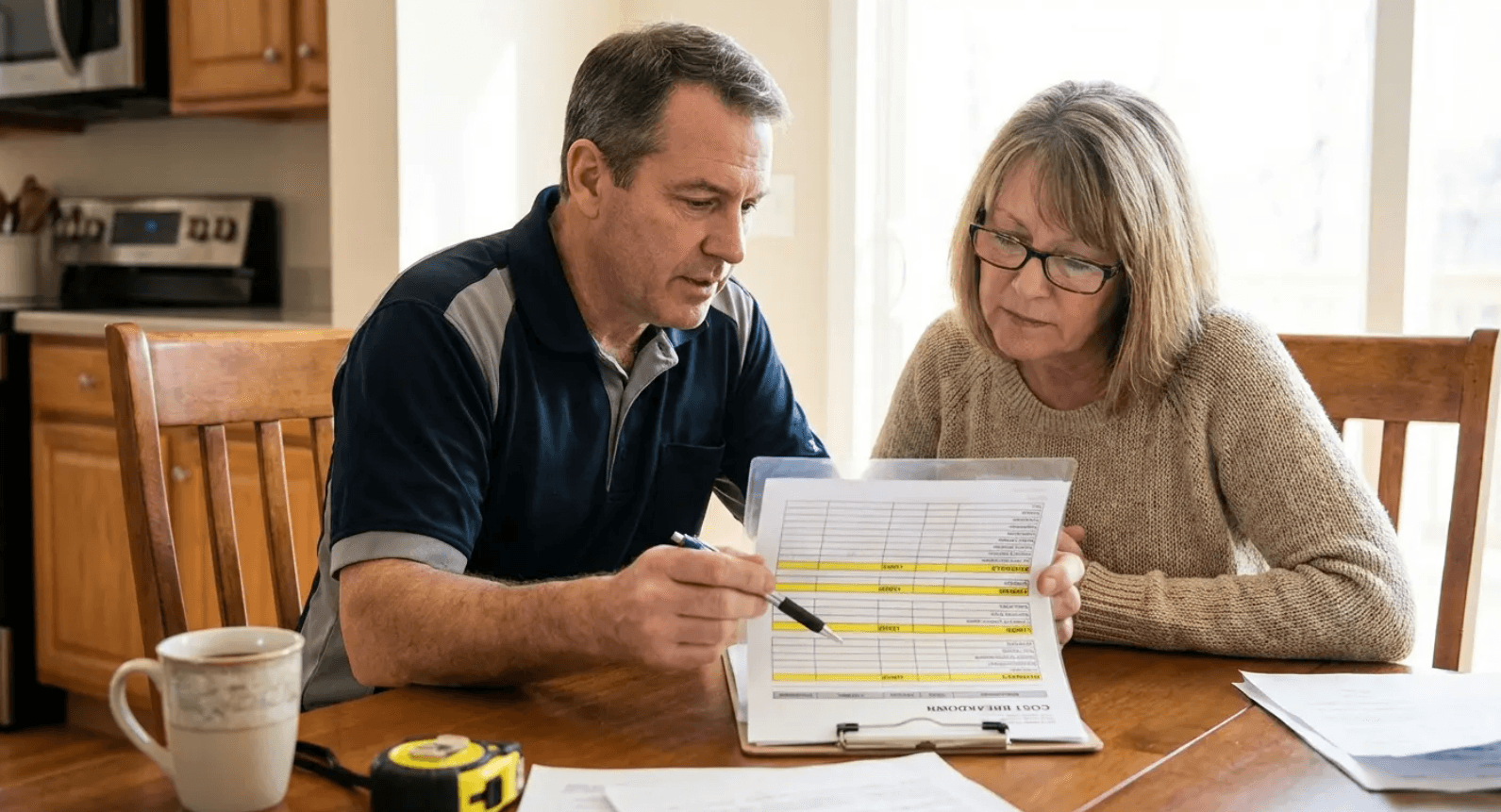
Professional estimates name specific materials by brand and grade. Not just "architectural shingles." That could mean anything from cheap 20-year builder-grade stuff to premium 50-year products. The price difference is huge, and the performance gap is even bigger.
Labor should be broken out from materials when possible. This transparency helps you understand what you're paying for. Some contractors bundle everything into one number, which makes comparison shopping basically impossible.
The scope of work matters enormously. "Fix roof leak" tells you nothing. "Remove damaged shingles in 4x6 area near north valley, replace compromised decking, install new underlayment and ice/water shield, install new shingles to match existing, seal all penetrations" tells you exactly what's happening.
When you're trying to figure out how much does it cost to repair a roof leak, this level of detail is everything.
What to Look For in an Estimate
Materials:
- Brand names, not just "shingles"
- Quality level specified
- Quantities listed
- Warranty info included
Labor:
- Separated from materials (or explained why it's bundled)
- Time estimate
- Crew size
- Rate clearly stated
Scope:
- Specific location described
- Dimensions provided
- All work steps outlined
- Underlayment and decking addressed
- Cleanup included
Legal stuff:
- License number
- Insurance available on request
- Permit requirements mentioned
- Payment terms clear
- Warranty duration and what it covers
- Start and completion dates
Contingencies:
- How they handle surprise damage
- Whether you approve before additional work
- Pricing for add-ons
Red Flags That Should Worry You
Prices way below everyone else usually mean something's wrong. If one quote is 40% cheaper, that contractor is either desperate (which raises quality questions), planning to cut corners, or didn't understand what you need.
Pressure tactics are never okay. "This price is only good if you sign today" is manipulation, not legitimate business. Materials don't jump in price overnight, and labor costs don't change based on your timeline.
Vague scheduling or payment terms that want a ton of money upfront should concern you. Standard practice is a deposit (10-30%), payment on completion, or progress payments tied to milestones. Contractors asking for 50% or more upfront might have cash flow problems. Or they might disappear with your money.
Understanding the average cost of roof repair in your area helps you spot quotes that fall way outside normal ranges. Everyone's quoting $1,500-$2,200 and someone comes in at $600? There's a reason, and it's probably not good.
Actually Comparing Quotes
You can't compare estimates unless they're fixing the same thing. If one contractor plans to replace 30 square feet of decking and another doesn't mention decking at all, they're not offering the same solution.
Ask each contractor to walk you through what they found and why they're proposing their approach. How well they explain their reasoning tells you a lot about their expertise and honesty.
Someone who can't articulate why they're doing something probably doesn't understand it well enough to do it right.
A Detroit homeowner got three quotes for what looked like the same chimney flashing leak. Quote A: $450 ("reseal chimney flashing"). Quote B: $850 ("remove shingles around chimney, install new step flashing and counter flashing, replace shingles"). Quote C: $1,200 ("complete chimney flashing system replacement including base flashing, step flashing, counter flashing, cricket installation to prevent water pooling, shingle replacement").
She almost picked Quote A until the contractor from Quote C explained that resealing corroded flashing would fail within a year, and the chimney's uphill side needed a cricket to divert water. Something the original installation never had. Quote C wasn't expensive because of greed. It was actually fixing the problem while the others were selling band-aids.
Smart Questions That Separate Good Contractors from Bad Ones
The questions you ask matter less than how contractors respond. You're not just gathering information. You're testing their communication, their knowledge, and whether they want to educate you or just make a sale.
About Their Assessment
"What caused this leak?" seems basic, but the answer tells you whether they diagnosed the problem or just found where water's coming in. Good contractors can explain the failure mechanism. Bad ones shrug and say "your roof is old" or "probably wind damage."
"What else did you notice while you were up there?" tests thoroughness and honesty. Roofers who only report the specific issue you called about either didn't look carefully or aren't being straight with you. Your roof is a system. Problems rarely exist alone.
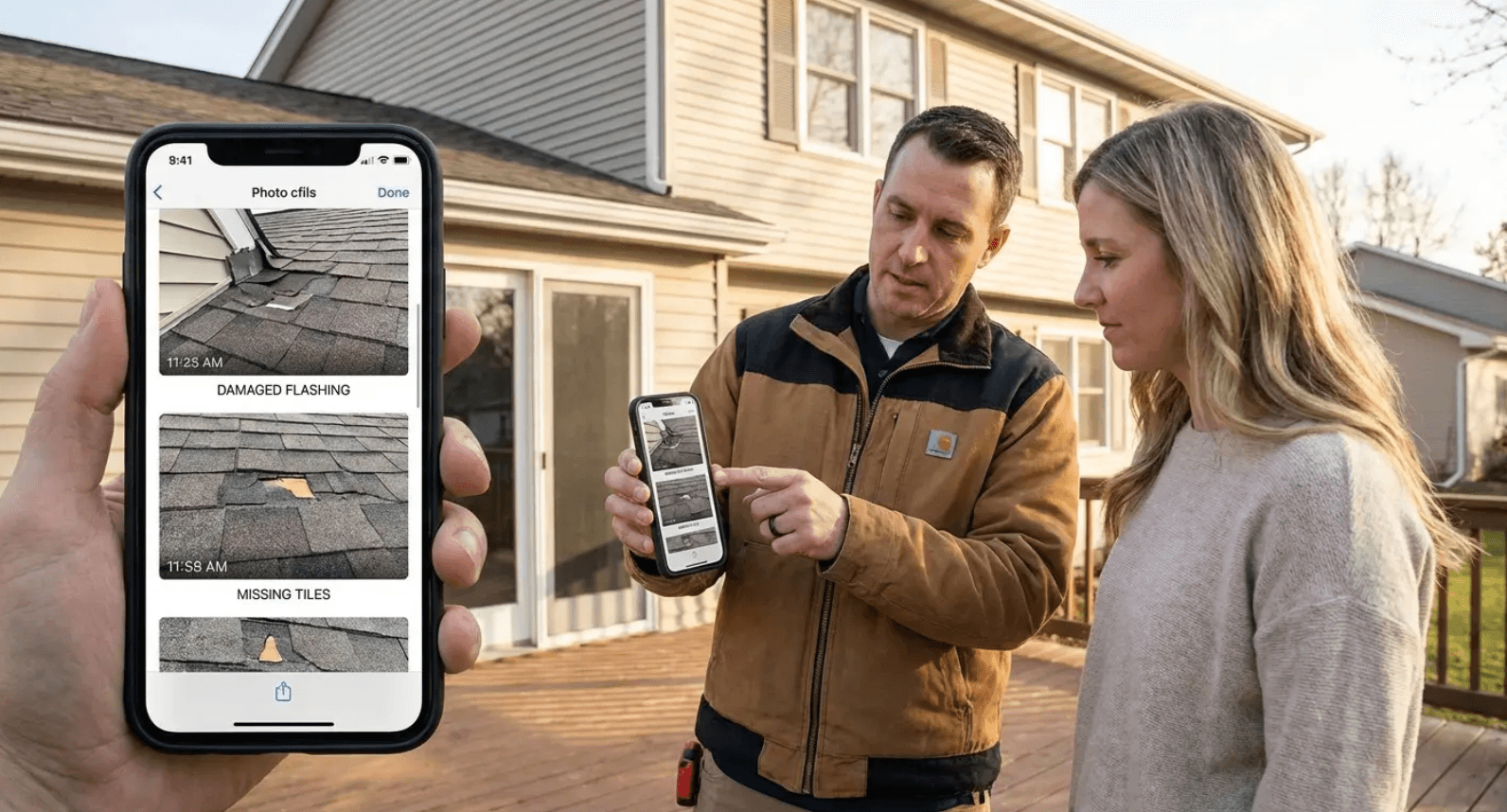
Ask them to show you photos. Most of us use phones now to document what we find. If they're not willing or able to show you, you're supposed to just trust them blindly.
We photograph every inspection because words don't show what a picture does. You should see what we're seeing.
About Their Solution
"Why this approach instead of alternatives?" forces them to justify their plan. There's rarely just one way to fix a leak. Understanding why they chose their method tells you whether they're optimizing for your needs or their convenience.
"How long will this repair last?" separates realistic contractors from people who'll say anything. Anyone guaranteeing a patch will last as long as the surrounding roof is lying or doesn't understand how materials work. Repairs perform differently than original installations.
When asking how much does it cost to repair a roof, also ask how long that investment protects your home. A $500 repair lasting two years is more expensive than a $1,000 repair lasting ten.
"What could go wrong?" might seem like inviting bad news, but contractors who acknowledge potential complications are being honest about the uncertainties in repair work. The ones promising everything will be perfect? Either inexperienced or full of it.
About Their Business
"How long have you been in business, and can you provide references from jobs you completed three or more years ago?" tests longevity and follow-through. Lots of roofing companies fold within five years. Recent references tell you nothing about whether the work holds up or whether they honor warranties.
"What happens if I have a problem after you finish?" should get you a clear explanation of their warranty process, response times, and callback procedures. Vague answers mean they don't have a real system.
"Are you licensed, bonded, and insured, and can I see proof?" isn't rude. It's basic protection. Contractors who act offended are hiding something. Professionals expect the question and have documentation ready.
This stuff matters. Early 2025, a Greensboro woman got stuck with a leaking roof after paying for a repair (WFMY News 2). The roofer went completely silent after getting paid. Only responded when local news got involved.
That's exactly why asking about warranty processes and getting everything in writing isn't being difficult. It's protecting yourself from contractors who vanish the second there's a problem.
Working With Contractors Who Actually Solve Problems
The frustration I hear most isn't about price. It's about uncertainty. Homeowners hate not knowing if they're being told the truth, if the fix will work, or if they'll be dealing with the same leak in six months.
Full disclosure: I run Joyland Roofing. We want your business. But whether you call us or someone else, at least now you know what questions to ask and what red flags to watch for.
Every estimate we provide includes photos of what we found, an explanation of what failed and why, and clear scope of work specifying exactly what we'll do. We don't disappear after the check clears. Our warranties mean something because we're not going anywhere.
If you're tired of contractors treating you like an ATM instead of a homeowner trying to make a smart decision, we'd like to earn your trust. Get a transparent estimate that explains what you're paying for and why it matters.