February 8, 2026
Roofing Trends That Actually Matter: What We're Seeing From the Top Down
Author
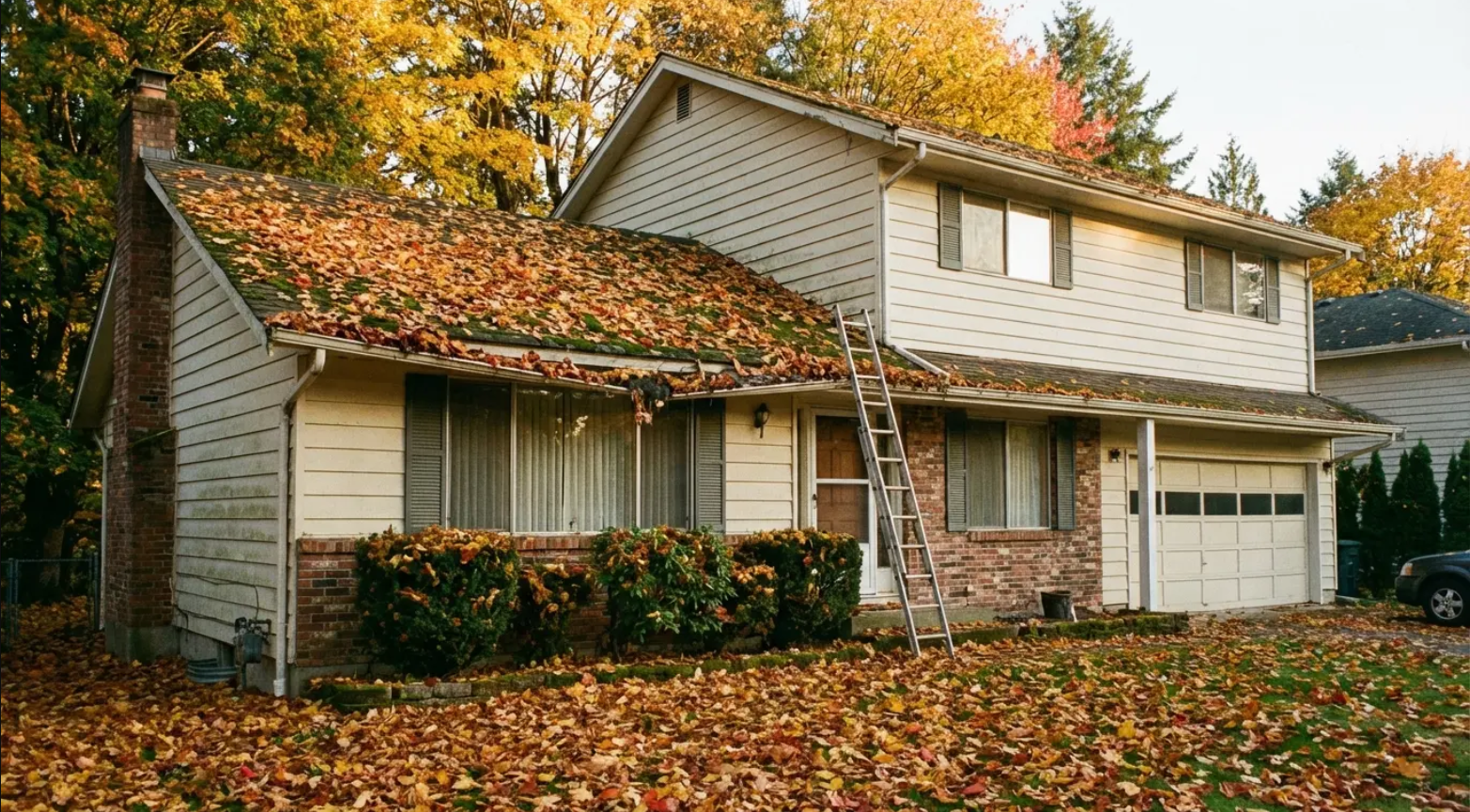
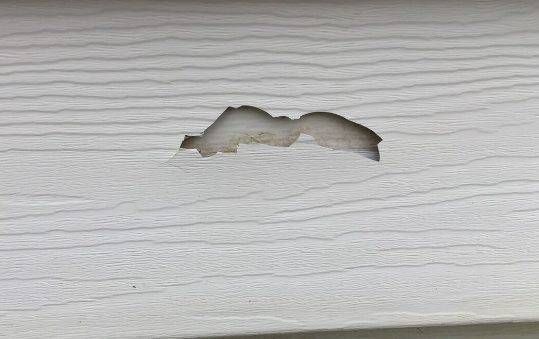
Most people only think about their roof when something goes wrong. A leak after a storm. Shingles in the yard after high winds. An insurance letter asking questions you didn’t expect.
By then, the decisions that mattered most have already been made.
Roofing isn’t a design accessory you update every few years. It’s a long-term system that protects your home, affects energy costs, and determines how many expensive surprises you’ll face over the next couple of decades.
But most roofing “trend” articles focus on colors and styles instead of what actually affects performance. The real shifts involve insurance requirements, climate exposure, installation quality, and long-term maintenance. Sometimes the biggest problems start small—like a leak homeowners assume can wait, even though roof leak repair often shouldn’t be delayed if you want to avoid bigger structural damage.
So instead of another list of trendy shingle colors, let’s look at the roofing trends that actually matter. And if you want to understand how different materials affect long-term performance, it’s worth learning more about whether a metal roof might be the right choice for your home as part of the bigger roofing decision.
Table of Contents
- Why Most Roofing Trend Lists Miss the Point
- The Longevity Calculation Nobody's Talking About
- Material Choices That Reflect Regional Intelligence
- The Hidden Cost of Aesthetic Conformity
- When Energy Efficiency Becomes a Liability
- Maintenance-Friendly Design Is the New Luxury
- The Insurance Variable That's Reshaping Decisions
- How Climate Patterns Are Rewriting Installation Timelines
- Why We're Rethinking Ventilation From Scratch
- The Real ROI of Smart Roofing Technology
- Working With a Team That Understands What Matters
TL;DR
Stop choosing roofs based on Pinterest. Here's what actually matters:
- Roofing decisions based purely on looks ignore the financial reality you'll face over 20-30 years of ownership
- Your local climate matters infinitely more than whatever's trending nationally
- Insurance companies now dictate material choices as much as your personal taste (maybe more)
- Maintenance accessibility determines your real costs, not the installation price tag
- When you install matters almost as much as what you install
- Most standard ventilation practices are outdated and some actually create problems
- Smart technology sounds great until you realize you're paying for features you'll never use
Why Most Roofing Trend Lists Miss the Point
I just Googled "roofing trends 2025" and got maybe 40 articles about the same five shingle colors. Not one mentioned insurance rates. Not one talked about what actually happens at year 15 when your "lifetime" warranty turns out to mean something very different than you thought.
This is the problem with roofing trend articles. They're written by people who've never had to tell a homeowner their eight-year-old roof needs replacing.
Look, here's what those lists ignore completely: you're not swapping out your roof every five years to keep up with design movements. You're making a call that affects your home's protection, energy bills, and resale value for the next two to three decades.
We're after something different here. The shifts in materials, installation practices, insurance requirements, and building science that determine whether your roof delivers on its promises or becomes a source of expensive surprises down the road. When you're dropping $15,000 to $50,000 on a roof replacement, understanding which industry changes genuinely impact performance matters a hell of a lot more than knowing what color is popular this season.
I'm not saying aesthetics don't matter. Your roof is visible, and yeah, you should be happy with how it looks. But appearance should be one factor among several, not the thing driving decisions that affect structural protection and financial performance over decades.
The trend I'm seeing among homeowners who actually get it? A shift toward functional intelligence. People are asking better questions during estimates. They're researching what performs in their specific climate instead of copying designs from different regions. They're calculating total cost of ownership rather than just comparing installation quotes.
That's the perspective I'm bringing here. We'll look at the industry shifts that affect your wallet, your home's protection, and your long-term satisfaction. Not just what photographs well.
The Longevity Calculation Nobody's Talking About
Let's talk about the biggest lie in roofing: those lifespan numbers on the brochure.
I've got a file drawer full of warranty claims from homeowners with "30-year shingles" that failed at year 14. The manufacturers don't technically lie. They just count on you not reading the fine print about what "proper installation and maintenance" actually means. Or the part where your specific climate conditions void half the coverage.
A "30-year shingle" might need replacement in 18 years depending on installation quality, ventilation design, maintenance habits, and climate exposure. That gap between marketing claims and actual performance? That's thousands of dollars in unexpected costs and years of service you thought you were purchasing but never received.
More homeowners are finally catching on. Instead of comparing materials based solely on upfront costs or manufacturer claims, they're calculating cost per year of service. This accounts for realistic lifespan expectations, maintenance requirements, energy impact, and the probability of premature failure.
Real numbers. This is what these materials actually last, not what the brochure says:
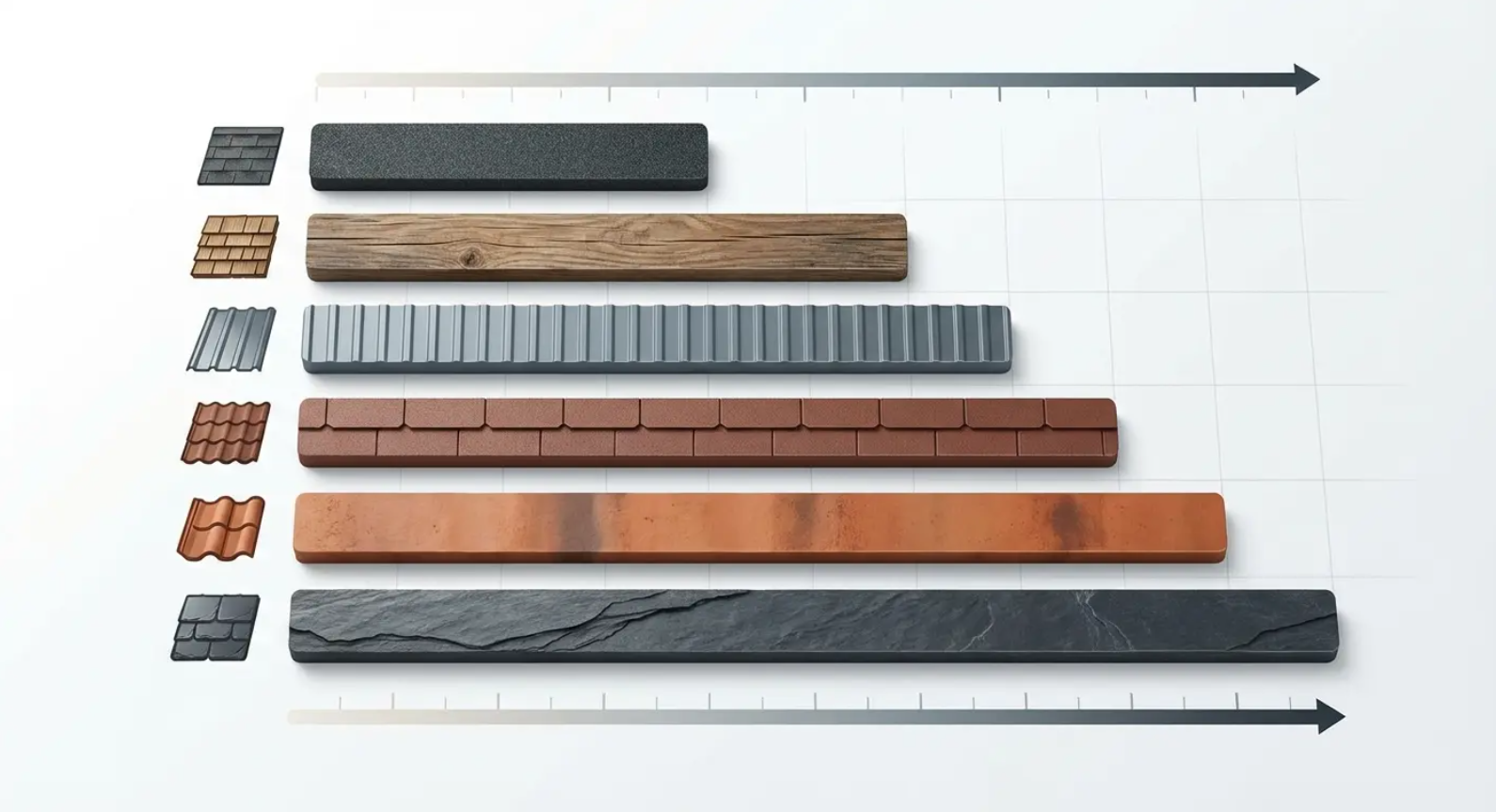
| Material Type | Industry-Claimed Lifespan | Typical Real-World Performance | Cost Per Year (Estimated) |
|---|---|---|---|
| Asphalt Shingles (3-tab) | 20-25 years | 12-18 years | $150-$250 |
| Architectural Shingles | 30 years | 18-25 years | $120-$200 |
| Metal Roofing | 40-70 years | 35-50 years | $80-$150 |
| Clay/Concrete Tile | 50+ years | 40-60 years | $100-$175 |
| Slate | 75-200 years | 50-100+ years | $75-$200 |
These numbers tell a different story than initial price tags. Last month, a customer was comparing two quotes: architectural shingles at $15,000 with a claimed 30-year lifespan, and standing seam metal at $28,000 with a 50-year expectation. The shingles appeared to cost $500 per year while metal costs $560 annually.
Sounds straightforward, right?
But when you factor in that the shingles will likely need replacement around year 22 due to local climate conditions (we're in a hail zone), while the metal roof will genuinely last 45+ years, the calculation flips. The shingles now cost $682 per year, while metal drops to $622. Add in two rounds of maintenance at $1,200 each for the shingles versus minimal maintenance for metal, and the metal roof costs $595 per year compared to $791 for shingles over their respective lifespans.
That's a $196 annual difference, or $8,820 over 45 years. Enough to cover a significant chunk of the initial premium for the metal roof.
And honestly? Most contractors won't show you this math because it makes their cheaper quote look worse.
The Installation Quality Multiplier
Material grade matters, sure. But installation quality? That determines longevity more than the product itself. I've seen mid-grade materials installed with meticulous attention to detail outlast premium materials slapped on by a crew rushing to finish before the weekend.
The problem is you never see the details that matter most. Nail placement and pattern. Underlayment selection and overlap. Flashing integration at valleys, chimneys, and wall intersections. Edge treatments and drip edge systems. Shingle alignment and exposure consistency.
These elements decide if your roof lasts 15 years or 25, yet they're invisible once installation is complete.
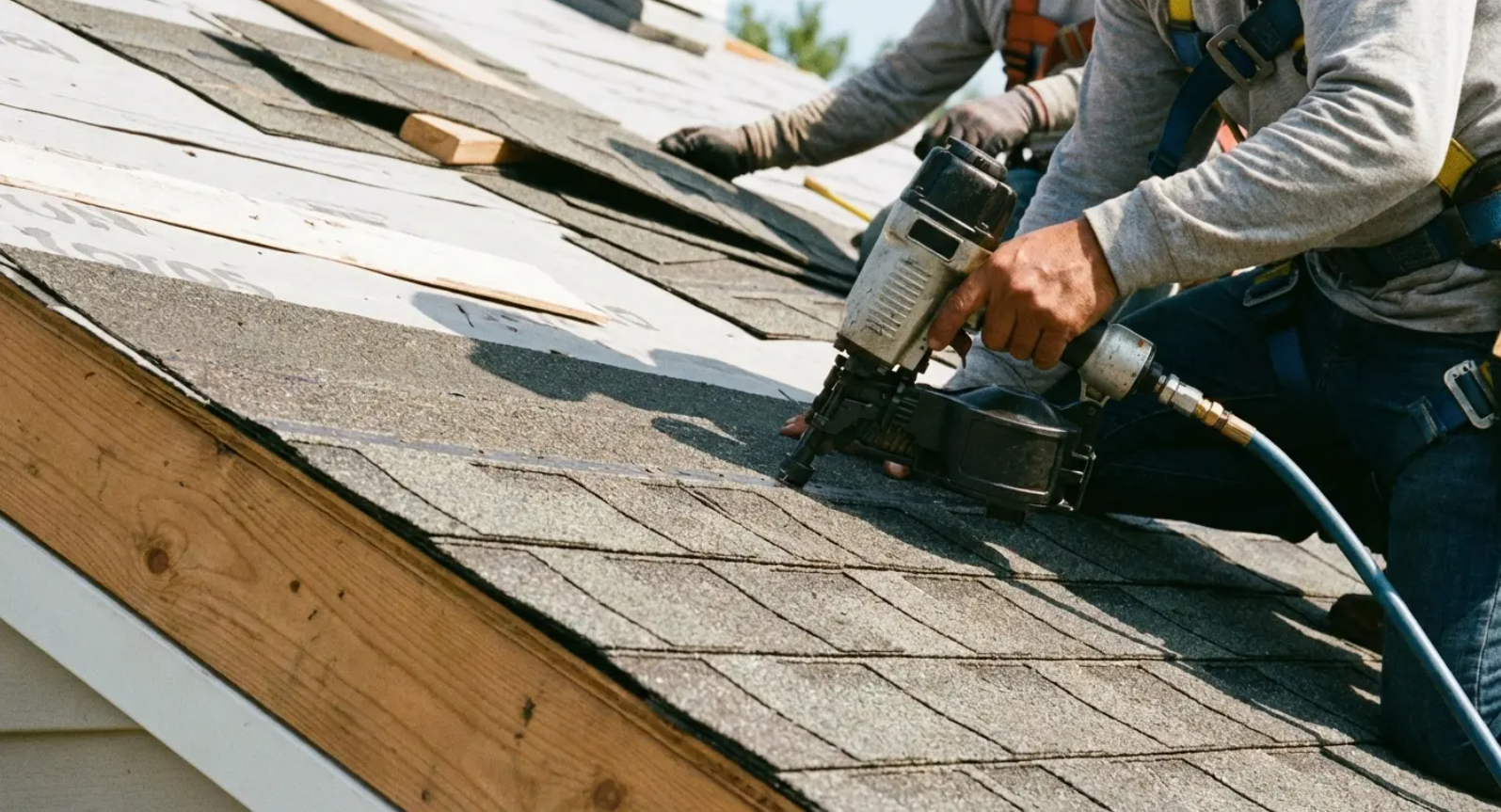
I'm noticing a welcome shift. Homeowners are asking more sophisticated questions during the estimate process. Instead of focusing solely on material brands and warranty length, they're asking about installation protocols and quality control measures.
These are the questions that make contractors nervous (the good ones will love that you're asking, the others will deflect):
- What nail pattern and placement do you use, and does it exceed manufacturer minimums?
- What type and weight of underlayment will be installed, and where?
- How do you handle flashing at valleys, chimneys, and wall intersections?
- What edge treatment and drip edge system will you install?
- How do you ensure proper shingle alignment and exposure?
- What ventilation intake and exhaust ratio will the installation achieve?
- Can you provide photos of similar completed projects showing detail work?
- What specific training or certifications do your installation crews hold?
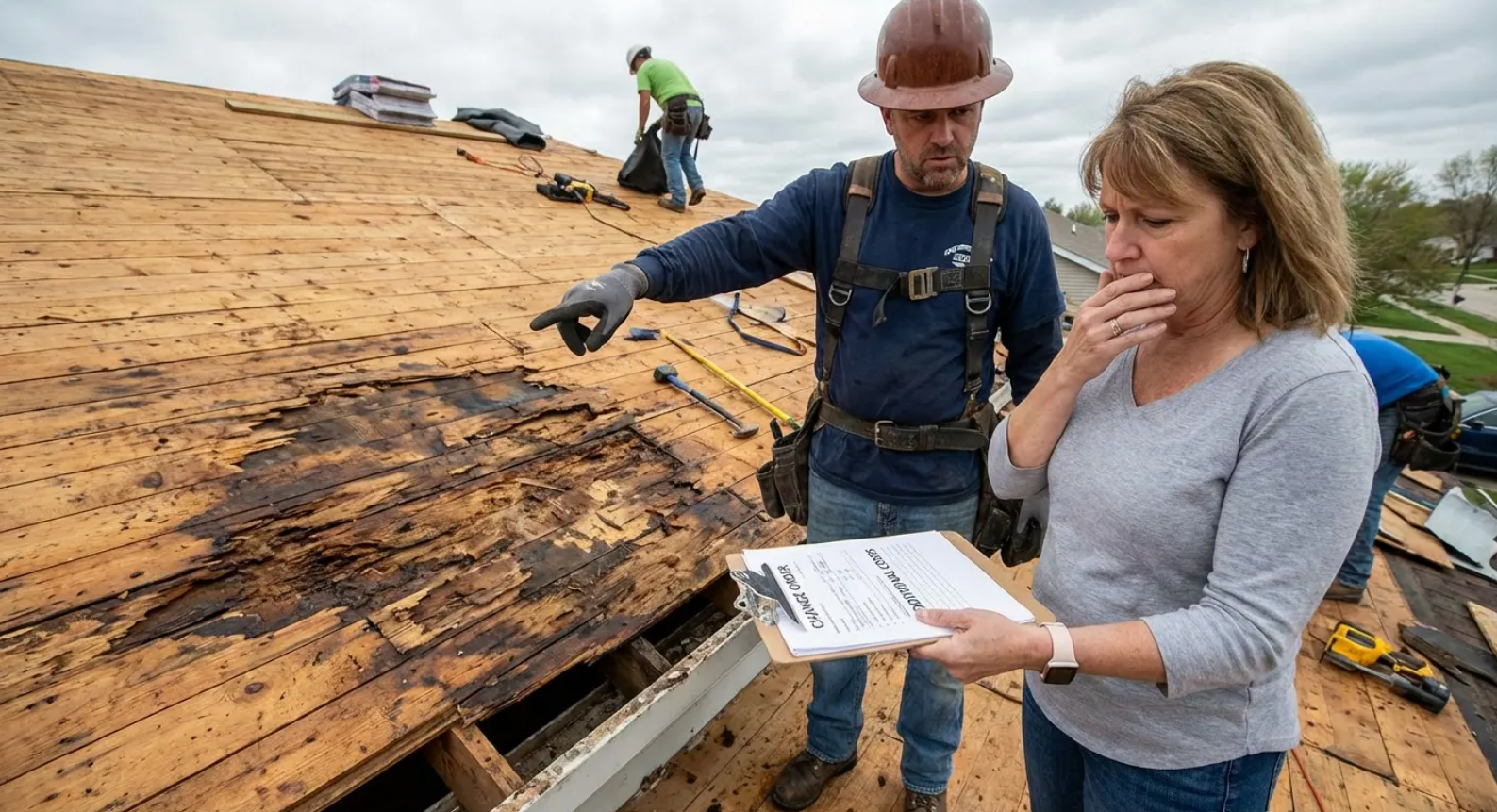
- How do you handle unexpected decking damage discovered during tear-off?
- What quality control inspections occur during and after installation?
Contractors who welcome these questions and provide detailed answers? They understand that installation quality matters. Those who deflect or provide vague responses are telling you something important about their priorities.
Why Warranty Terms Reveal More Than You Think
Warranty documents contain more fine print than most homeowners read. And that fine print explains why warranty claims often disappoint.
Most material warranties are prorated, meaning coverage decreases each year. A failure at year 12 on a "30-year warranty" might provide 60% material credit, but you're still paying for labor, disposal, and the remaining 40% of materials. That "free replacement" could cost you $8,000 out of pocket.
Want to know what really matters? Labor warranties. Installation defects cause more failures than material defects. A comprehensive workmanship warranty from a financially stable contractor provides better protection than an impressive-sounding material warranty from a manufacturer.
More contractors are offering longer, more comprehensive workmanship warranties as a competitive differentiator. Ten-year labor warranties are becoming standard among quality-focused companies, with some offering 15 or even 20 years on specific systems.
Read warranty documents carefully. Understand what's covered, what's excluded, how coverage changes over time, and what the claim process involves. A shorter warranty with comprehensive coverage beats a longer warranty riddled with exclusions and limitations every single time.
Material Choices That Reflect Regional Intelligence
National design trends ignore a fundamental reality: different regions demand different roofing solutions. What works beautifully in Seattle will fail catastrophically in Phoenix. Materials that excel in Miami create problems in Minneapolis.
Each of these environments requires distinctly different material approaches, yet homeowners frequently make selections based on what looks appealing in a different climate zone rather than what performs in their specific conditions.
People are finally starting to research what succeeds in their location instead of following national popularity rankings. In hail-prone areas, impact resistance ratings matter more than color options. In high-wind zones, attachment methods and material weight become critical factors. In areas with extreme temperature fluctuations, thermal movement accommodation prevents premature failure.
The Gulf Coast Versus Mountain West Reality
Gulf Coast roofs face humidity, salt air, hurricane-force winds, and relentless UV exposure. Materials need to resist moisture penetration, withstand uplift forces, and maintain integrity despite constant thermal cycling.
Mountain West roofs deal with entirely different challenges: extreme temperature fluctuations between day and night, significant snow loads, ice damming potential, and intense UV exposure at elevation.
The same materials and installation techniques don't address both environments effectively. Not even close.

In coastal areas, metal roofing with specialized coatings resists salt air corrosion. Sealed shingle systems prevent wind-driven rain penetration. Enhanced attachment patterns provide uplift resistance. Synthetic underlayments rated for high temperatures prevent premature degradation.
In mountain regions, materials need flexibility to accommodate thermal movement. Ice and water shields extend further up the roof plane to prevent ice dam damage. Ventilation systems address the unique challenges of heating season condensation. Snow retention systems prevent dangerous avalanches off steep slopes.
New roofing products continue emerging to address these regional challenges more effectively. Manufacturers are developing materials with climate-specific performance characteristics rather than one-size-fits-all solutions. These new roofing products incorporate advanced polymer technology that adapts to temperature extremes while maintaining structural integrity across diverse climate zones.
How Local Building Codes Signal What Works
Building codes evolve based on failure patterns. When specific problems occur frequently enough to warrant regulation, codes change to prevent future occurrences.
Wind uplift ratings, fire resistance classifications, and impact resistance requirements all tell you what threatens roofs in your area. These aren't arbitrary bureaucratic requirements. They're responses to documented problems.
Smart homeowners use code minimums as starting points rather than targets. If code requires Class 3 impact resistance, they're considering Class 4. If wind uplift ratings specify 110 mph, they're asking about systems rated for 130 mph.
This makes sense when you consider that codes represent minimum acceptable performance, not optimal performance. Your specific property might have exposure factors that exceed typical conditions in your area. A home on an exposed hilltop faces higher wind loads than one in a sheltered valley, even though both fall under the same code requirements.
The Hidden Cost of Aesthetic Conformity
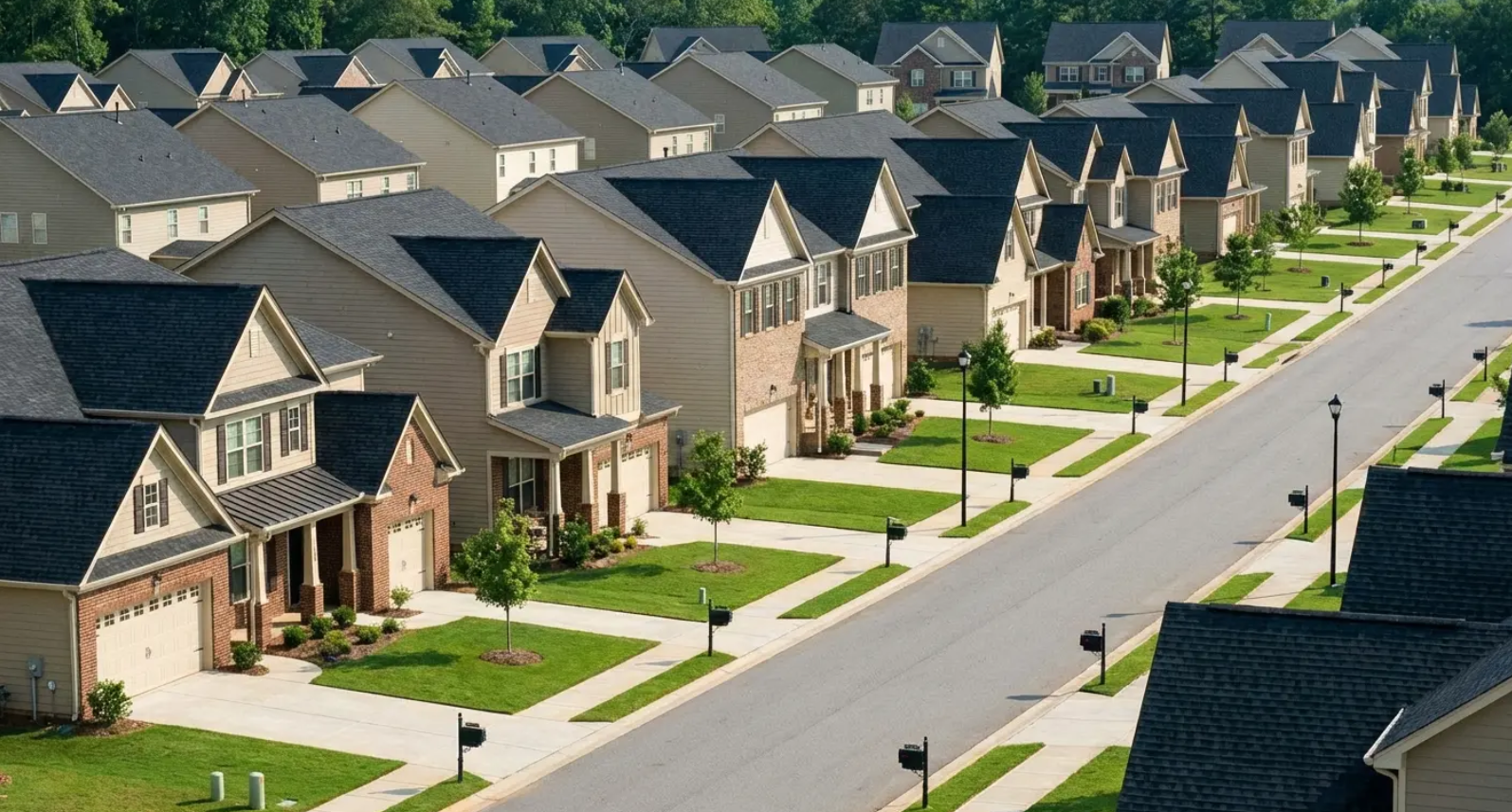
HOA requirements and neighborhood appearance standards constrain material choices in ways that increase costs and sometimes limit performance options. I understand the desire for visual harmony in planned communities, but some restrictions prioritize appearance over function in ways that cost homeowners money and compromise roof performance.
Dark shingles required for "aesthetic consistency" increase attic temperatures by 20-30°F in hot climates, shortening material life and increasing cooling costs. Restrictions against metal roofing eliminate the longest-lasting, most fire-resistant option in wildfire-prone areas. Prohibitions on certain ventilation systems reduce effectiveness and create moisture problems.
More homeowners are pushing back against purely aesthetic restrictions when better-performing alternatives exist. More people are requesting variances when they can demonstrate performance or longevity benefits, and more HOAs are beginning to accommodate these requests as board members recognize the value of superior systems.
When Appearance Requirements Conflict With Performance
Last spring, we worked with a couple in a Phoenix subdivision who'd been fighting their HOA for six months. They wanted to install a light-colored metal roof to reduce cooling costs and achieve 50+ year longevity, but the HOA required "earth-tone architectural shingles to maintain neighborhood character."
The husband was a data analyst, so he came to our meeting with a 40-page spreadsheet breaking down the thermal performance differences. By presenting data showing the metal roof would reduce surface temperatures by 40-50°F, along with samples of metal products that mimicked the required earth-tone appearance through specialized coatings, they secured approval.
The key was demonstrating that performance improvements didn't require aesthetic compromise.
The metal roof now saves approximately $85 monthly on cooling costs while meeting appearance standards, paying for its premium over shingles in under seven years through energy savings alone. Over its 50+ year lifespan, it'll save tens of thousands compared to replacing shingles multiple times.
Strategies for working within restrictions while optimizing performance: present data to HOA boards, propose compromises that maintain visual harmony while improving function, and identify products that satisfy both appearance requirements and performance goals.
Many HOA boards are more flexible than homeowners assume, particularly when presented with well-documented benefits and solutions that don't compromise the community's visual character. The key is approaching the conversation with data rather than demands.
When Energy Efficiency Becomes a Liability
Energy efficiency sounds universally positive, but some "efficient" choices create problems when applied without understanding the complete system.
Radiant barriers can trap moisture if ventilation isn't properly designed. Reflective coatings might reduce beneficial passive solar heating in cold climates. Excessive attic insulation without adequate ventilation creates condensation problems that damage decking and framing.
The shift I'm seeing? Climate-appropriate energy optimization rather than blanket application of efficiency features. Not every home benefits from every efficiency measure. The question isn't whether a feature is "efficient" in abstract terms, but whether it improves performance in your specific climate with your specific home configuration.
The Ventilation and Insulation Balance
Proper ventilation becomes more critical as insulation levels increase, yet many efficiency upgrades ignore this relationship. High insulation without adequate ventilation creates moisture problems, ice damming, and premature material failure.
Attic environments need both thermal resistance (insulation) and air movement (ventilation) working together. Insulation slows heat transfer. Ventilation removes moisture and prevents heat buildup. When you increase one without adjusting the other, you create imbalances that cause problems.
Inadequate ventilation combined with high insulation traps moisture that condenses on cold surfaces during heating season. This moisture damages decking, promotes mold growth, and reduces insulation effectiveness. In cooling season, inadequate ventilation allows heat buildup that shortens shingle life and increases cooling costs despite the insulation.
| Climate Zone | Recommended Ventilation Ratio | Primary Concern | Insulation Consideration |
|---|---|---|---|
| Hot-Humid (Gulf Coast) | 1:150 minimum, 1:100 preferred | Heat buildup, moisture accumulation | Adequate ventilation prevents moisture trapping |
| Hot-Dry (Southwest) | 1:150 minimum | Extreme heat buildup | Reflective barriers effective with proper airflow |
| Cold (Northern) | 1:150 with balanced intake/exhaust | Ice damming, condensation | Higher insulation requires proportionally more ventilation |
| Mixed-Humid (Southeast) | 1:150 minimum | Seasonal moisture shifts | Balance year-round performance |
| Marine (Pacific Northwest) | 1:100 preferred | Year-round humidity | Continuous ventilation critical |
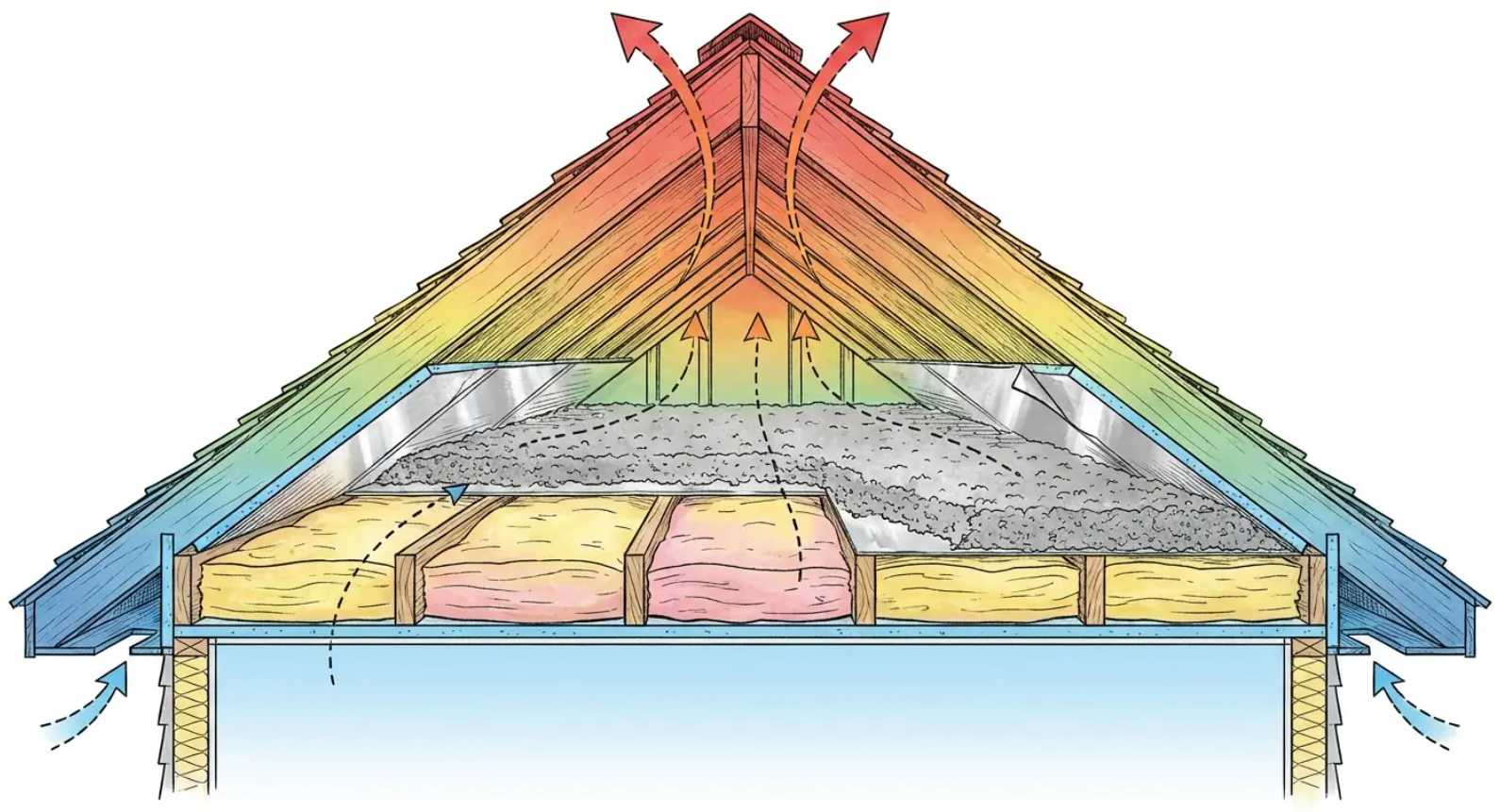
The physics of attic environments aren't complicated, but they're frequently misunderstood. Warm air holds more moisture than cold air. When that warm, moist air contacts cold surfaces, condensation occurs. Ventilation removes that moisture-laden air before condensation happens. Insulation without ventilation is a recipe for rot.
Mixing ventilation types creates short-circuiting where air takes the path of least resistance rather than flowing through the entire attic space. Ridge vents plus gable vents, or soffit vents plus powered fans, typically reduce effectiveness rather than increasing it. Air enters through soffit vents and immediately exits through the nearest gable vent, leaving portions of the attic unventilated.
Single-system approaches (continuous soffit intake paired with continuous ridge exhaust, for example) outperform mixed systems because they create consistent airflow patterns across the entire attic space.
Maintenance-Friendly Design Is the New Luxury
The most overlooked aspect of roofing? Designing for maintenance accessibility.
Roofs need periodic inspection, cleaning, and minor repairs to achieve their potential lifespan. Designs that make these tasks difficult or dangerous ensure they won't happen, which guarantees premature failure.
The trend toward maintenance-conscious design includes walkable roof sections, permanent anchor points for safety equipment, accessible valleys for debris removal, and inspection ports for hidden areas. This represents a maturation in how people think about roofs as systems requiring ongoing attention rather than install-and-forget components.
These features cost little during initial installation but dramatically reduce the lifetime cost and difficulty of necessary maintenance. A $300 investment in permanent anchor points enables safe access for decades. Strategic walkway pads protect high-traffic areas during inspections without damaging roofing materials. Gutter guard systems that allow cleaning without removal save time and prevent damage.
Access Points and Safety Features That Matter
Permanent roof anchor points installed per OSHA standards allow safe access without damaging materials. Contractors can attach fall protection equipment to these anchors during maintenance visits, enabling work on steep slopes that would otherwise be dangerous or impossible.
Walkway pads or designated access routes on slopes exceeding 6:12 pitch protect materials from foot traffic damage. These pads cost $15-25 per square foot during installation but prevent thousands in premature wear to high-traffic areas.
Soffit inspection ports at multiple attic locations enable ventilation checks and moisture monitoring without roof access. These simple additions allow you to verify that ventilation systems are functioning and identify problems before they cause visible damage.
Valley access considerations matter because valleys accumulate debris that needs periodic removal. Designs that allow safe valley cleaning prevent the water backup and ice damming that cause most leak-related damage.
What maintenance-friendly design actually includes:
- Permanent roof anchor points installed per OSHA standards for safe access
- Walkway pads or designated access routes on slopes exceeding 6:12 pitch
- Soffit inspection ports at multiple attic locations for ventilation checks
- Valley access considerations for debris removal without material damage
- Gutter system designed for cleaning access or with removable guard sections
- Proper clearance maintained between roof surface and tree branches (minimum 10 feet)
- Attic access hatch sized for equipment entry (minimum 22" x 30")
- Lighting provisions for attic inspection (permanent fixture or outlet)
- Clear documentation of maintenance schedule and access procedures
- Emergency repair material storage location identified and stocked
More contractors are recommending these features proactively, and more homeowners are requesting them after experiencing the difficulty of maintaining roofs without them. This reflects growing recognition that accessibility determines whether maintenance happens or gets deferred until small problems become catastrophic failures.
The Insurance Variable That's Reshaping Decisions
Your insurance company just became your roofing consultant, whether you like it or not.
Last year alone, I had three customers who picked materials based entirely on what their insurer would accept. Not what they wanted. Not what fit their budget best. What kept them insurable.
Insurance requirements and premium calculations now drive roofing decisions as much as personal preference or budget. In high-risk areas, certain materials or installation methods are becoming necessary to maintain affordable coverage or any coverage at all.
Insurance companies are using increasingly sophisticated risk models that account for roof age, material type, impact resistance, and wind ratings. Homeowners are choosing more expensive materials because the insurance premium difference pays for the upgrade over the roof's lifespan.
For homeowners in affected areas, the choice isn't about preference anymore. It's about maintaining insurability.
Impact Ratings and Premium Calculations
Impact resistance ratings range from Class 1 through Class 4, with Class 4 providing the highest protection against hail damage. These ratings come from standardized testing where steel balls of increasing size are dropped onto materials from specific heights.
Class 4 materials can reduce premiums by 20-35% in hail-prone areas, often paying for their additional cost within 5-7 years. Some insurers now require Class 3 or 4 ratings for new policies in specific zip codes.
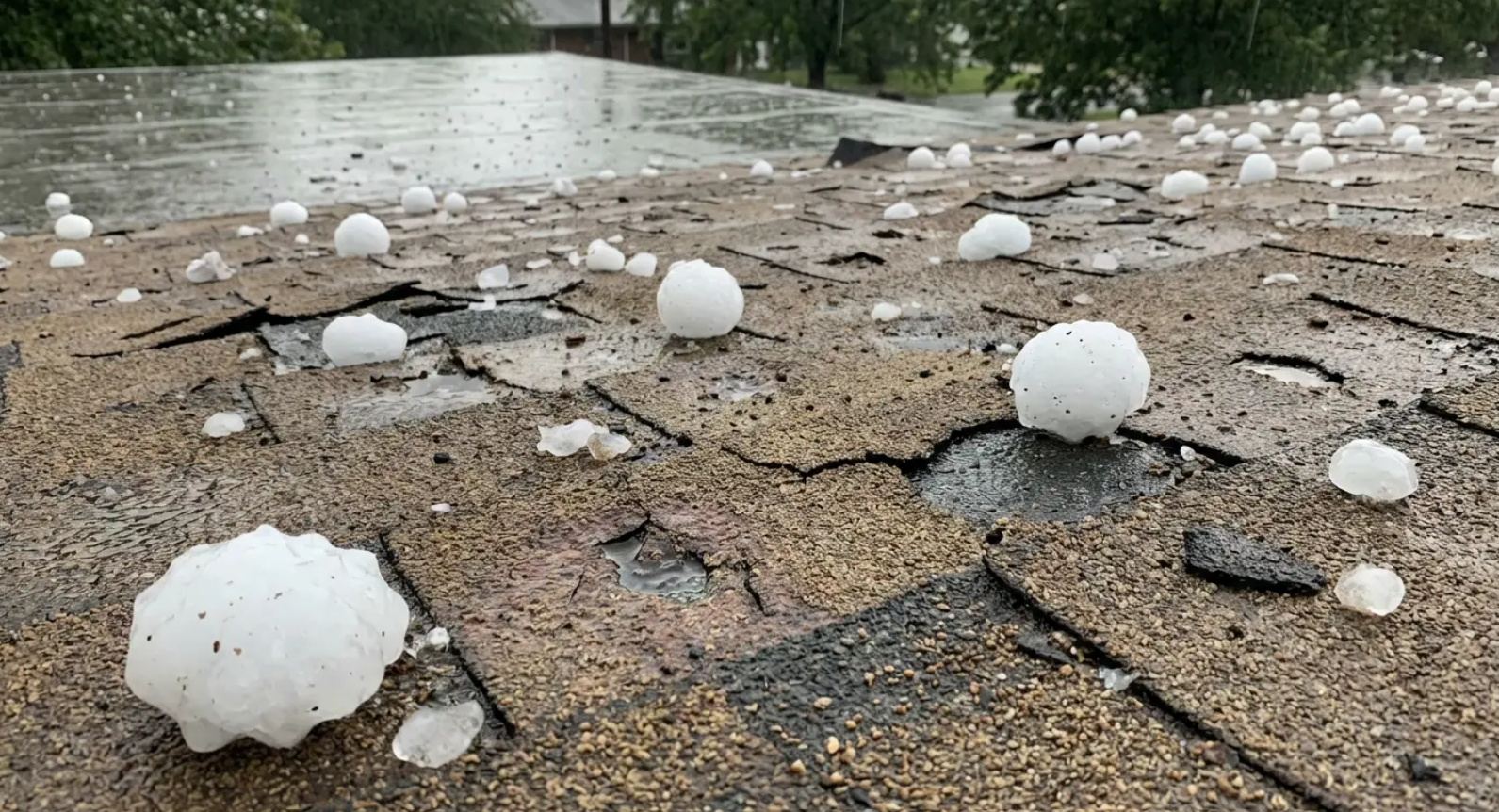
A homeowner in the Dallas-Fort Worth hail corridor received quotes for roof replacement: standard architectural shingles at $18,500 versus Class 4 impact-resistant shingles at $22,800. The $4,300 difference seemed substantial until they contacted their insurance agent.
The Class 4 materials qualified for a 35% premium reduction on their dwelling coverage, dropping their annual premium from $2,840 to $1,846 a savings of $994 per year. At that rate, the upgrade pays for itself in 4.3 years, and continues saving nearly $1,000 annually for the remaining life of the roof.
More importantly, their insurer indicated that standard shingles would result in policy non-renewal at the next term, making the Class 4 materials functionally mandatory rather than optional.
Verify impact ratings when contractors make claims. Request documentation showing that specific products meet the ratings being promised. Ensure you receive applicable insurance discounts by providing your insurer with manufacturer certifications and installation documentation.
Wind Ratings and Coastal Coverage
Coastal areas face increasingly strict requirements for wind uplift resistance. Wind speed ratings indicate the maximum sustained winds a roof system can withstand, but installation method matters as much as material choice.
Enhanced attachment patterns, sealed shingles, and specific underlayment types can mean the difference between coverage approval and denial. Standard installation might meet code minimums but fall short of insurance requirements.
Documentation of installation methods is becoming critical for claims. Insurers want proof that systems were installed according to enhanced standards, not just code minimums. Photos of nail patterns, underlayment installation, and flashing details provide evidence that protects you during claims processes.
How Climate Patterns Are Rewriting Installation Timelines
Installation timing affects roof performance more than most homeowners realize, and climate change is making traditional seasonal planning obsolete.
Shingle installation in extreme heat causes thermal sealing problems. Materials become too pliable, making proper alignment difficult. Adhesive strips activate prematurely, creating sealing issues. Workers struggle to maintain quality standards when roof surface temperatures exceed 150°F.
Installation during temperature swings affects material acclimation. Shingles installed at 45°F will expand when temperatures rise to 85°F, potentially causing buckling or improper sealing. Materials need to acclimate to ambient temperatures before installation.
Moisture exposure during multi-day installations creates underlayment issues. Even "waterproof" underlayments can develop problems if exposed to weather for extended periods before final covering.
More sophisticated contractors refuse to install during suboptimal conditions even when homeowners push for speed. This shift toward quality-focused scheduling prioritizes long-term performance over convenience.
Temperature Windows for Different Materials
Each roofing material has an optimal temperature range for installation. Asphalt shingles shouldn't be installed below 45°F or above 85°F for best results. Below 45°F, shingles become brittle and adhesive strips don't activate properly. Above 85°F, materials become too pliable and adhesive activates prematurely.
Metal roofing has different constraints. Thermal expansion and contraction mean fasteners need to accommodate movement. Installation during moderate temperatures allows proper adjustment of fastener tension. Extreme temperatures make achieving correct tension difficult.
Synthetic materials have their own requirements. Some become brittle in cold temperatures. Others soften excessively in heat. Manufacturer specifications provide temperature ranges, but contractors need to respect these limits rather than treating them as suggestions.
The roofing equipment and logistics sector is adapting to these changing climate realities. A recent market forecast from IndexBox projects that the global roofing truck market will experience sustained expansion through 2035, driven partly by contractors needing more sophisticated fleet capabilities to respond to narrower installation windows and weather-related scheduling volatility.
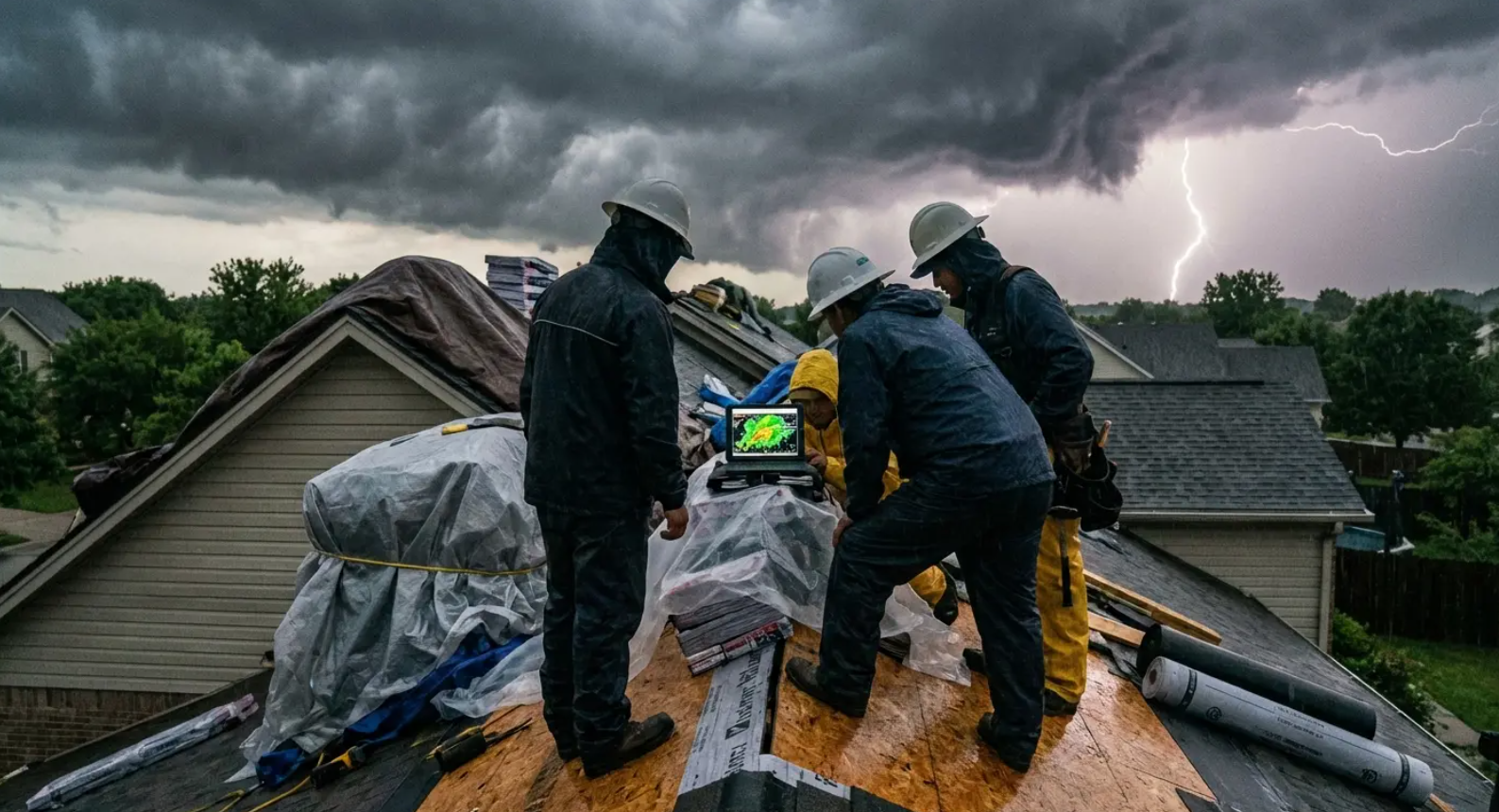
The report notes that contractors are investing in specialized vehicles with climate-controlled material storage and mobile equipment that allows them to mobilize quickly when optimal conditions arrive, then demobilize just as rapidly when weather turns unfavorable. This infrastructure investment reflects the industry's recognition that installation timing has become a critical performance variable.
What happens when installation occurs outside optimal windows? Shingles installed in cold temperatures may never seal properly, creating wind vulnerability throughout their lifespan. Materials installed in excessive heat may develop premature aging due to thermal stress during installation. These aren't minor issues. They're fundamental performance compromises that affect the entire service life.
Contractors should have protocols for handling unexpected weather changes during installation. Temporary weather protection for exposed areas. Criteria for stopping work when conditions deteriorate. Plans for securing partially completed installations overnight or during weather delays.
Why We're Rethinking Ventilation From Scratch
Ventilation science has evolved significantly, yet most installations still use outdated approaches. Modern building science shows that many standard practices create problems rather than solving them.
Powered attic fans, for example, create negative pressure that pulls conditioned air from living spaces into the at tic, increasing energy costs rather than reducing them. They can also pull moisture into attic spaces, creating condensation problems.
Gable vents combined with ridge vents create short-circuiting where air enters through soffit vents and immediately exits through gable vents, leaving portions of the attic unventilated. The ridge vent becomes decorative rather than functional.
More contractors are using calculation-based ventilation design that accounts for attic volume, roof pitch, climate zone, and insulation levels. This shift recognizes ventilation as a critical system that affects material longevity, energy costs, and interior comfort.
Climate-specific ventilation requirements vary in ways that standard formulas don't capture. High-humidity areas need different approaches than arid regions. Cold climates with significant snow need ice dam prevention strategies. Hot climates need heat exhaust capacity.
In hot-humid climates, ventilation needs to remove both heat and moisture. Higher ventilation ratios (1:100 instead of code minimum 1:150) improve performance. Continuous ridge and soffit systems work better than intermittent vents because they create consistent airflow.
In cold climates, balanced intake and exhaust prevents the pressure imbalances that contribute to ice damming. Adequate ventilation removes moisture from heating season condensation before it damages materials. Higher insulation levels require proportionally more ventilation to maintain proper moisture management.
Hot-dry climates need ventilation primarily for heat removal. Reflective barriers work effectively when combined with proper airflow, but they trap heat without adequate ventilation. The extreme temperature differentials in these regions make ventilation critical for material longevity.
Mixed-humid climates face seasonal challenges requiring year-round ventilation effectiveness. Some applications benefit from sealed attic approaches with spray foam insulation, moving the thermal boundary to the roof deck rather than the attic floor. This eliminates ventilation requirements but requires careful moisture management.
Marine climates with year-round humidity need continuous ventilation and moisture management. Vapor barriers and proper ventilation work together to prevent the moisture accumulation that threatens materials in these environments.
The Real ROI of Smart Roofing Technology
Smart sensors, leak detection systems, and monitoring technology are entering the roofing market, but ROI depends entirely on implementation quality and usage patterns.
Moisture sensors that alert you to leaks before visible damage can save thousands in repair costs, but only if you respond to alerts promptly and the system is properly maintained. Thermal imaging during installation can identify ventilation problems, but it's useless if the contractor doesn't adjust the design based on findings.
The trend? Selective technology adoption rather than wholesale embrace of every new gadget. Smart homeowners are asking what specific problem each new roofing technology solves and whether simpler solutions might be more effective.
Some roofing technology trends deliver genuine value. Others are solutions searching for problems. The difference lies in whether the technology enables action that improves outcomes or just generates data that sits unused.
Monitoring Systems That Prevent Damage
Leak detection sensors placed at vulnerable points can alert you to problems before they cause interior damage. Valleys, flashing transitions, and penetrations are common failure points where sensors provide early warning.
These systems work when they're integrated into regular maintenance routines and when alerts trigger responses. A sensor that detects moisture is worthless if the alert goes to an email account you check monthly or if you ignore alerts assuming they're false positives.
Thermal monitoring can identify ventilation failures or insulation gaps. Infrared cameras reveal temperature patterns that indicate airflow problems or missing insulation. This new roofing technology is most valuable during installation or renovation when corrections are straightforward and inexpensive.
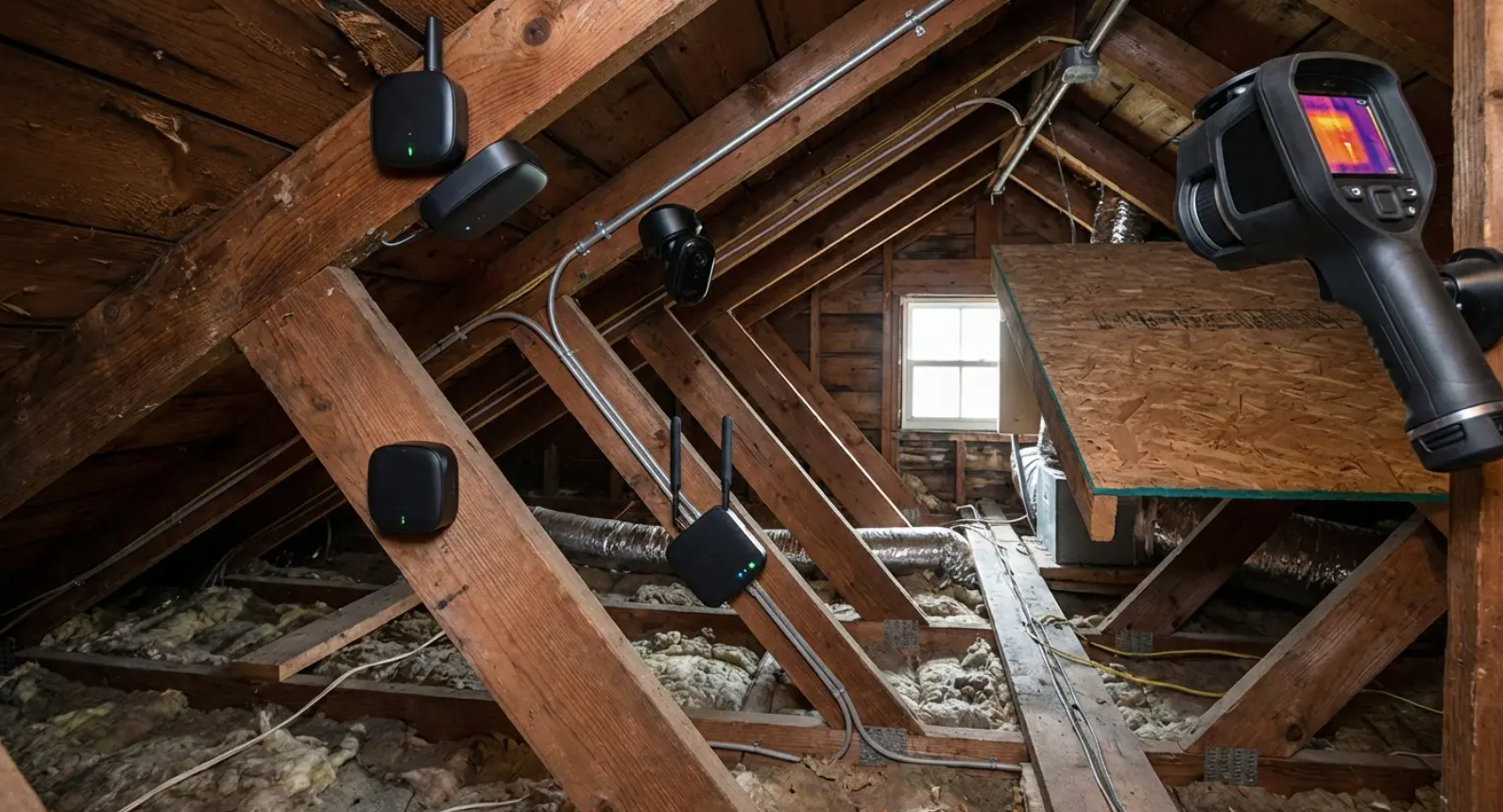
Installation best practices for monitoring systems: place sensors at known vulnerability points, ensure reliable connectivity for alert delivery, establish clear response protocols for different alert types, and test systems regularly to verify functionality.
As technology integration becomes more common in roofing systems, homeowners need to evaluate which innovations genuinely improve performance versus those that simply add complexity and cost without meaningful benefits.
The question to ask about any new roofing technology isn't whether it's innovative or sophisticated. The question is whether it solves a problem you have in a way that's more effective than existing solutions. Technology for its own sake adds cost without value. Technology that enables better decisions or earlier interventions can pay for itself many times over.
Working With a Team That Understands What Matters
Finding a contractor who thinks beyond installation day makes the difference between a roof that performs as expected and one that disappoints.
At Joyland Roofing, we've built our approach around the principles discussed throughout this piece: regional intelligence, longevity thinking, maintenance-conscious design, and evidence-based practices.
When you're evaluating contractors for your project, you're assessing whether they understand the factors that determine long-term performance or whether they're focused solely on closing the sale. Do they ask about your insurance requirements and explain how material choices affect premiums? Do they discuss maintenance requirements of different systems? Do they account for climate-specific considerations that affect longevity in your area?
We help homeowners think through the insurance implications of material choices, the maintenance requirements of different systems, and the climate-specific considerations that affect longevity in your area. When selecting a roofing contractor for your project, finding a team that prioritizes long-term performance over short-term convenience ensures your investment delivers the protection and value you expect over decades of ownership.
If you're trying to make sense of competing recommendations or need help evaluating whether your current roof can be optimized rather than replaced, we're here to provide straight answers based on what works, not what's easiest to sell.
The roofing industry is slowly shifting from product-focused thinking to system-focused thinking. The roofing trends that matter aren't about new shingle colors or minor material innovations. They're about understanding roofs as complex systems that interact with climate, insurance requirements, maintenance realities, and long-term cost structures.
Homeowners who approach roofing decisions with this broader perspective make better choices that serve them over decades rather than just looking good at installation. We've covered the functional roofing trends reshaping how informed buyers think about roofing: longevity calculations, regional intelligence, insurance variables, maintenance accessibility, climate-appropriate efficiency, evidence-based ventilation, and selective technology adoption.
These represent a maturation in how the industry and consumers approach one of the largest investments in home ownership. Your roof will be on your house for 20-30 years if you make good decisions now. Taking time to understand what drives performance in your specific situation pays dividends every year you own the property.
The difference between a roof that delivers on its promises and one that becomes a source of expensive surprises comes down to whether decisions are made based on comprehensive understanding or surface-level appeal. Aesthetics matter. Budget constraints are real. But neither should override the functional considerations that determine whether your investment protects your home effectively for decades or requires premature replacement.
More homeowners are rejecting the traditional approach of getting three quotes and choosing the middle one. Instead, they're investing time in understanding what they're buying, asking detailed questions about installation practices, researching material performance in their specific climate, and evaluating contractors based on expertise rather than price alone.
This shift benefits everyone. Homeowners get roofs that perform as expected. Quality contractors compete on value rather than price. The industry moves toward higher standards and better outcomes.
Look, you're going to live with this roof for 20+ years. Spend a weekend understanding this stuff. Your future self will thank you when your neighbor is their second replacement and you're still good for another decade.
Understanding the real roofing trends (the shifts in materials, installation practices, insurance requirements, and building science that affect long-term performance) empowers you to make choices that serve your interests over the entire lifespan of your roof.