

January 1, 2026
Roof Repair Science: Why Patch Jobs Fail (and How We Fix It For Real)
Author
Let’s be honest: there is nothing worse than paying to fix a roof leak, only to see a wet spot reappear on your ceiling the next time it rains. Unfortunately, a lot of people think a repair is just slapping some tar on a shingle and calling it a day. That is the fastest way to turn a small leak into a major structural headache.
At Joyland Roofing, we don't guess when performing a roof repair. We dig deep to find the root cause, using modern materials that actually bond to your roof rather than just sitting on top of it. We also believe in being upfront about the money—knowing when it makes sense to patch a leak and when you're better off replacing the roof entirely.
This matters now more than ever. The roofing industry is booming—expected to hit $76.4 billion in 2025. With that much money changing hands, you need to make sure your hard-earned cash is going toward a scientifically sound repair, not a temporary bandage. If you want to see how pricing works in our area, check out our breakdown on thecosts of roof repairs in Central PA.
Table of Contents
Here is the roadmap for this article. We are going to walk through the repair process, from the high-tech tools we use to find hidden water to the nitty-gritty details of insurance claims. Feel free to jump to the section that applies to you.
- Stop Guessing: Finding the Real Leak
- How Drones and Tech Changed the Game
- Thermal Imaging
- Removing Human Error
- Finding Water Without Cutting the Roof
- Impedance Scanners
- Nuclear Hydrogen Detection
- Handheld Infrared
- Digital Paper Trails
- Real-Time Reporting
- Chemistry Class: Materials That Actually Last
- Restoration Coatings
- Silicone and Acrylics
- Reflective Granules
- Liquid Flashing
- Armor for Your Roof
- SBS Modified Asphalt
- Keeping Granules in Place
- It’s a System, Not Just a Shingle
- Flashing is Where the Work Happens
- Weaving Step Flashing
- Cutting Reglets for Chimneys
- Don't Cook Your Shingles
- Balancing Intake and Exhaust
- Baffles Matter
- Smart Vents
- Making It Look Good
- The Boneyard Search
- The Layer You Don't See
- Synthetics vs. Felt
- Ice and Water Shield
- Self-Adhering Tech
- Breathable Membranes
- The Economics of Repair vs. Replacement
- When to Stop Repairing
- The Brittle Test
- The 50% Rule
- Speaking the Insurance Language
- Photos That Prove the Claim
- Xactimate Coding
- Engineer Reports
- Maintenance is Cheaper Than Disaster
- Gutters and Drainage
TL;DR
If you are standing in your living room with a bucket catching water right now, you probably don't have time to read a novel. Here are the main takeaways. If you are in an active crisis, effective roof repair starts with stopping the water immediately.
If it is currently storming, read our guide onemergency roof leak repair and how to stop a leak in the rain before you do anything else.
- Diagnostics over guessing: We use thermal drones and scanners to find where the water is coming in, which is rarely where it's dripping out.
- Chemistry matters: Modern repairs use liquid flashings and rubberized shingles that bond better and last longer than old-school tar.
- Ventilation is key: A repair will fail again if your attic heat is cooking the shingles from the bottom up.
- Insurance requires proof: We document damage with specific codes to help ensure you get covered.
- Know when to fold: If your shingles are too brittle to lift, a repair will only cause more damage. It might be time to replace.
Stop Guessing: Finding the Real Leak
Gone are the days of a guy climbing a ladder and just looking for a missing shingle. Visual inspections often miss the real story. We use a deeper approach to look beneath the surface. Identifying exactly how the water is traveling is the only way to guarantee a roof leak repair holds up against the next storm. Without data, it's just guesswork.
How Drones and Tech Changed the Game
We use aerial tech to map roofs with millimeter accuracy. This lets us spot hail hits, wind lift, and blistering that the human eye might miss during a quick walk-through. It keeps our team safer and gives you a complete picture of your roof's health before we even set up a ladder.
Thermal Imaging Finds Wet Insulation
We often fly drones at twilight to catch temperature changes as the roof cools down. Wet insulation holds heat longer than dry material, creating a glowing signature on our cameras. This lets us pinpoint active leaks trapped under the surface without cutting into the roof.
Removing Human Error
Software algorithms analyze our imagery to categorize damage objectively. This technology distinguishes between mechanical damage (like a dropped tool) and hail impact, removing opinion from the assessment. It gives us a fact-based baseline for your roof repair.
Finding Water Without Cutting the Roof
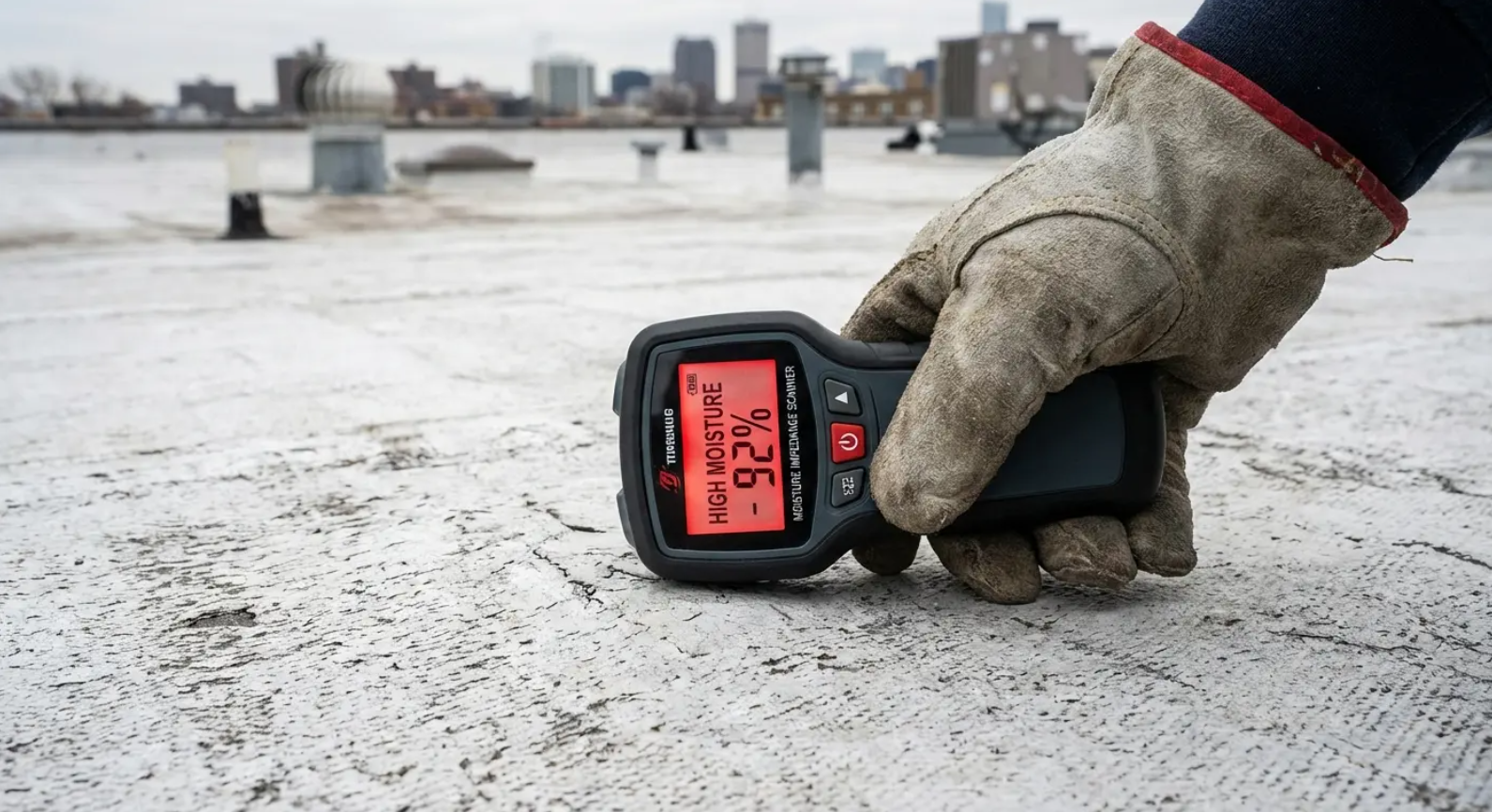
Knowing how much water is trapped is critical, especially for flat roofs. We use non-destructive testing to map "trapped" water. Patching a hole is useless if water has already soaked into the insulation five feet away.

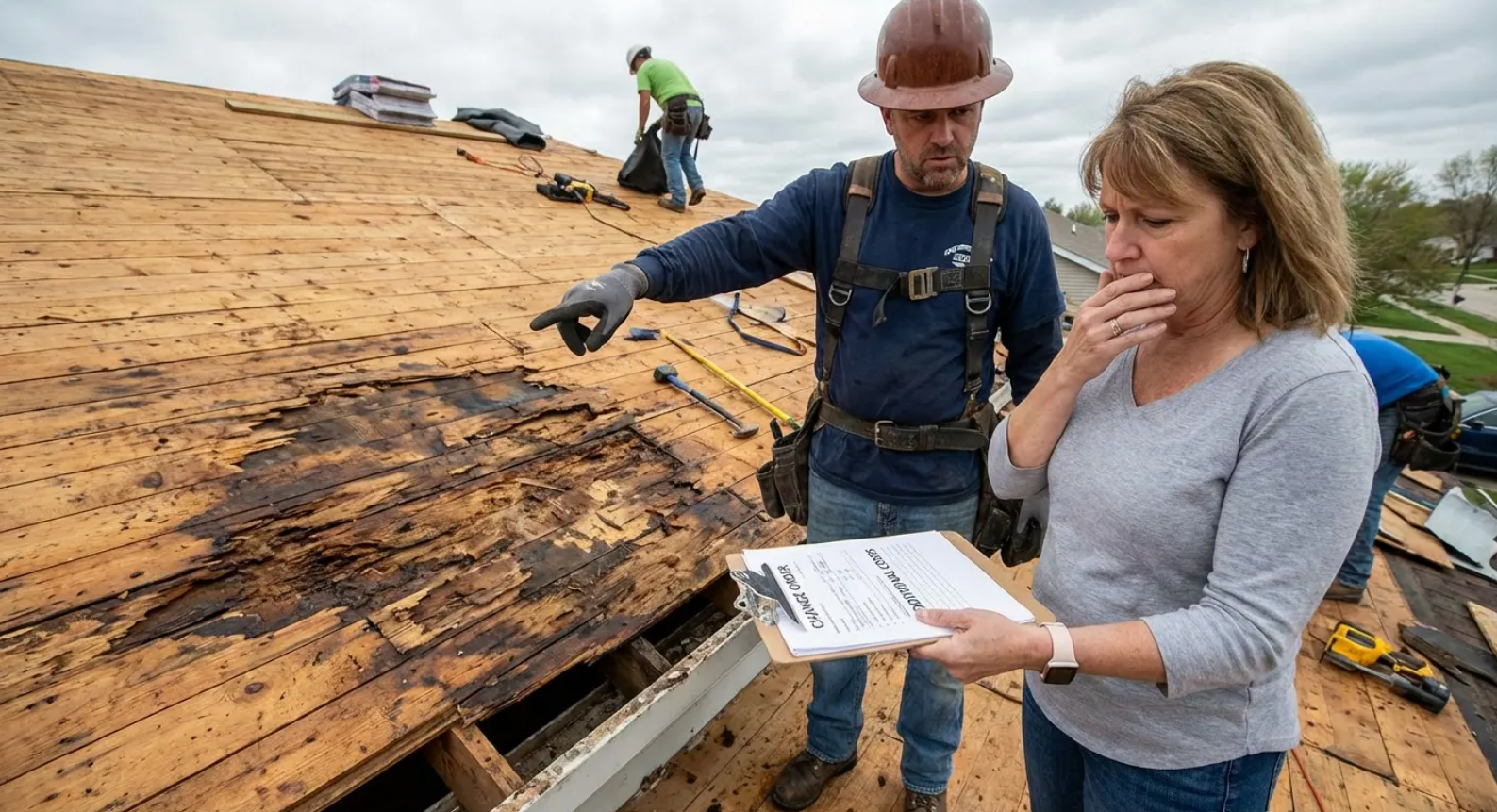
The "Dry" Ceiling Trap: We once met a homeowner with a flat-roof extension who saw a small stain on the ceiling. A handyman offered to patch a small tear above it for $200. However, using our scanner, we found that water had traveled 8 feet horizontally through the insulation. If we had just patched the tear, that trapped water would have kept rotting the deck, eventually causing a collapse. We removed the saturated section, replaced the insulation, and sealed it properly—saving the roof.
Ignoring these signs can be dangerous; understand the risks of not repairing a roof leak and how hidden moisture spreads over time.
Impedance Scanners
We run handheld units over the roof to send low-frequency signals into the system. Since water conducts electricity better than dry insulation, we get an instant reading of moisture right below the surface.
Nuclear Hydrogen Detection
This is the heavy artillery. It uses a neutron source to detect hydrogen atoms found in water. It requires specialized licensing, but it provides the deepest, most accurate reading of moisture in multi-layered roofs.
Handheld Infrared
We use handheld units to double-check suspect areas found by our drones. These are great for marking the exact "cut lines" on the roof deck so we only tear out what is actually damaged.
Digital Paper Trails
Modern roof repair is as much about data as it is about hammers and nails. We keep a digital record of the roof's condition from the first inspection to the final sign-off.

Real-Time Reporting
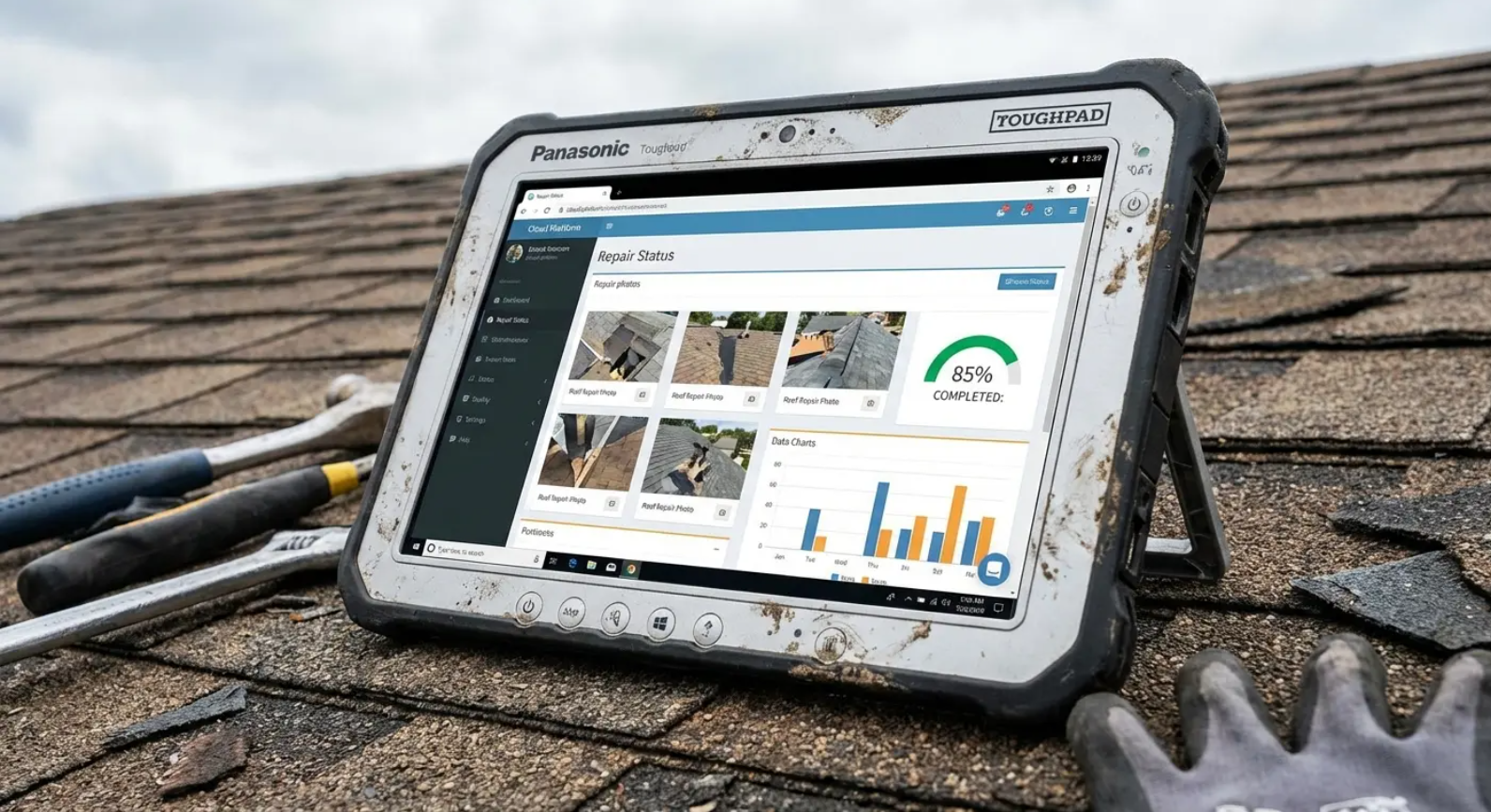
Our technicians use tablets to upload photos and notes to the cloud in real-time. This allows you to see the "before, during, and after" instantly. We want you to know exactly what you are paying for—no surprises.
Chemistry Class: Materials That Actually Last
We have moved away from basic asphalt patches and toward chemically bonding agents. This section explores the "science" part of the roof repair. We use materials that extend the life of the roof rather than just plugging a hole.
Restoration Coatings Save Money
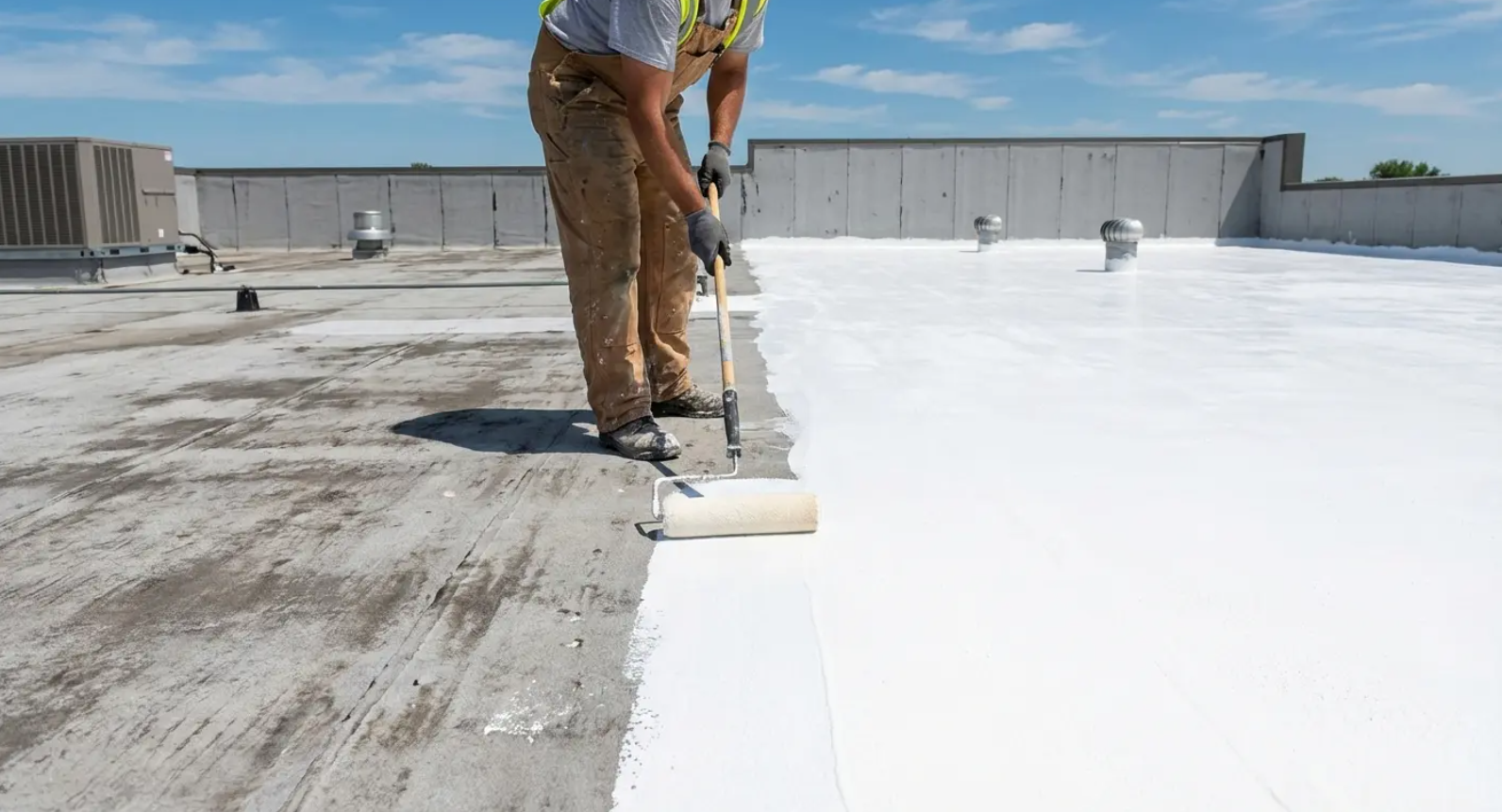
Sometimes, we choose "restoration" over tearing off a roof that is structurally sound but leaking. This involves applying liquid membranes that seal the entire surface. It reflects UV rays and lowers your cooling costs while waterproofing the system.
The benefits are real.A cool roof can lower indoor temperatures by nearly six degrees in buildings without AC. This doesn't just make you comfortable; it reduces the expansion and contraction that cracks roofs in the first place.
Silicone and Acrylics
We power wash the surface, prime it, and roll or spray these coatings to create a seamless, rubber-like skin. These are amazing for repairing metal roofs with loose seams or bitumen roofs that have cracked in the sun.

Reflective Granules
Manufacturers now make shingles with granules that reflect solar heat. Using these "cool" shingles during a repair helps reduce the heat load on your attic.
Liquid Flashing
Replacing metal flashing can be messy. Instead, we use PMMA liquid flashings. Think of it as liquid rubber that hardens quickly and bonds to almost anything. We can create a waterproof boot around tricky pipes and vents without needing complex metal work.
Armor for Your Roof
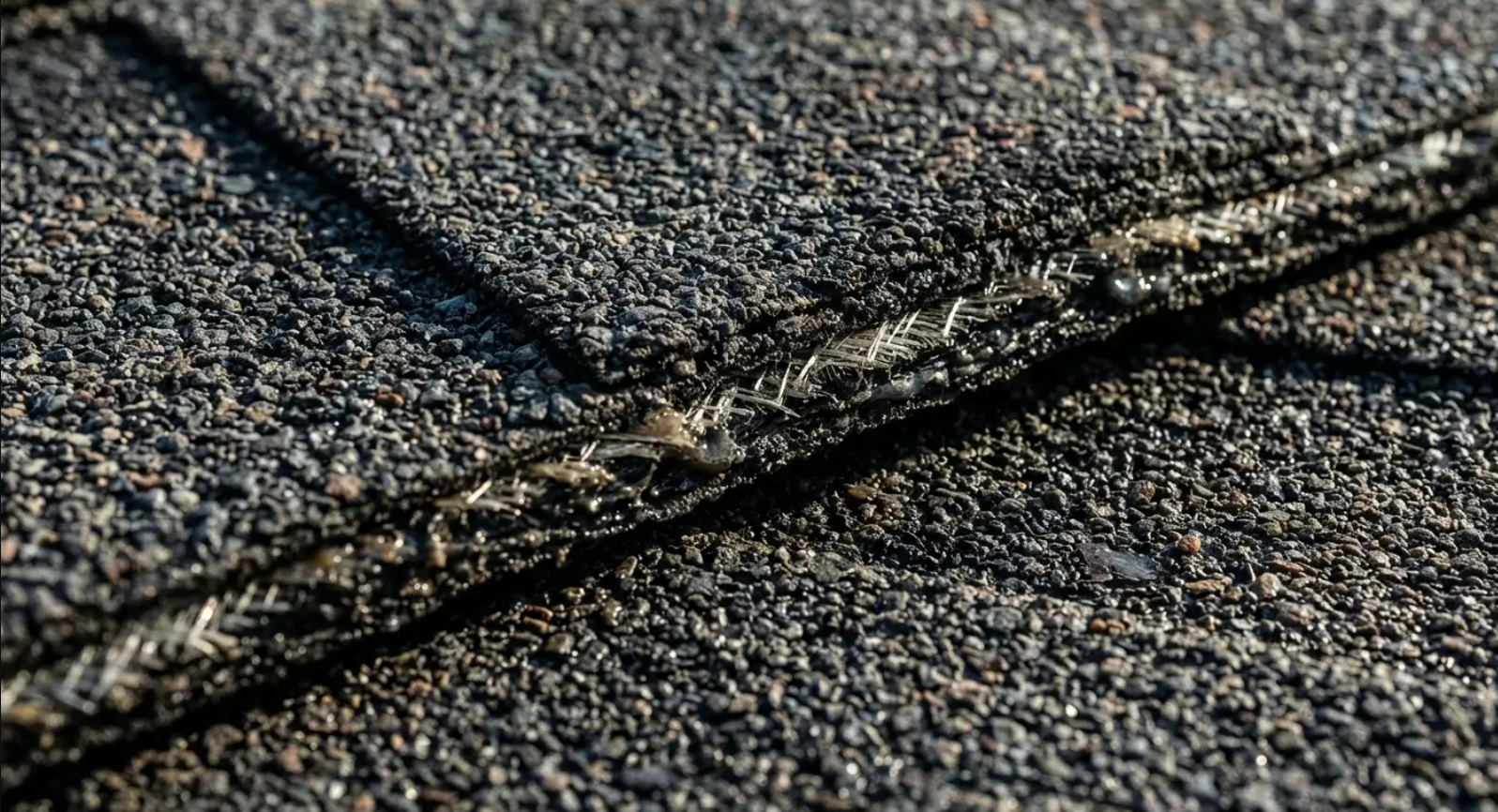
In storm-prone areas, we repair using Class 4 Impact Resistant shingles. These are built to take a beating. Polymer-modified asphalt allows the shingle to flex when hail hits it, rather than cracking.

SBS Modified Asphalt
SBS is a rubberizing additive we look for. It ensures the new patch is flexible and less likely to get brittle in cold weather compared to the older shingles around it.
Keeping Granules in Place
When granules fall off, the asphalt dies. We use newer repair shingles with advanced adhesives to keep those granules locked on, protecting the core of the shingle from the sun.
It’s a System, Not Just a Shingle
A roof is a breathing system, not just a waterproof hat for your house. We focus on ventilation and flashing because that is where 90% of failures happen. If you ignore the system, the roof repair will fail.
Flashing is Where the Work Happens
We reject the "tar and pray" method of slathering roofing cement over a leak. Instead, we rebuild the flashing so it sheds water mechanically.

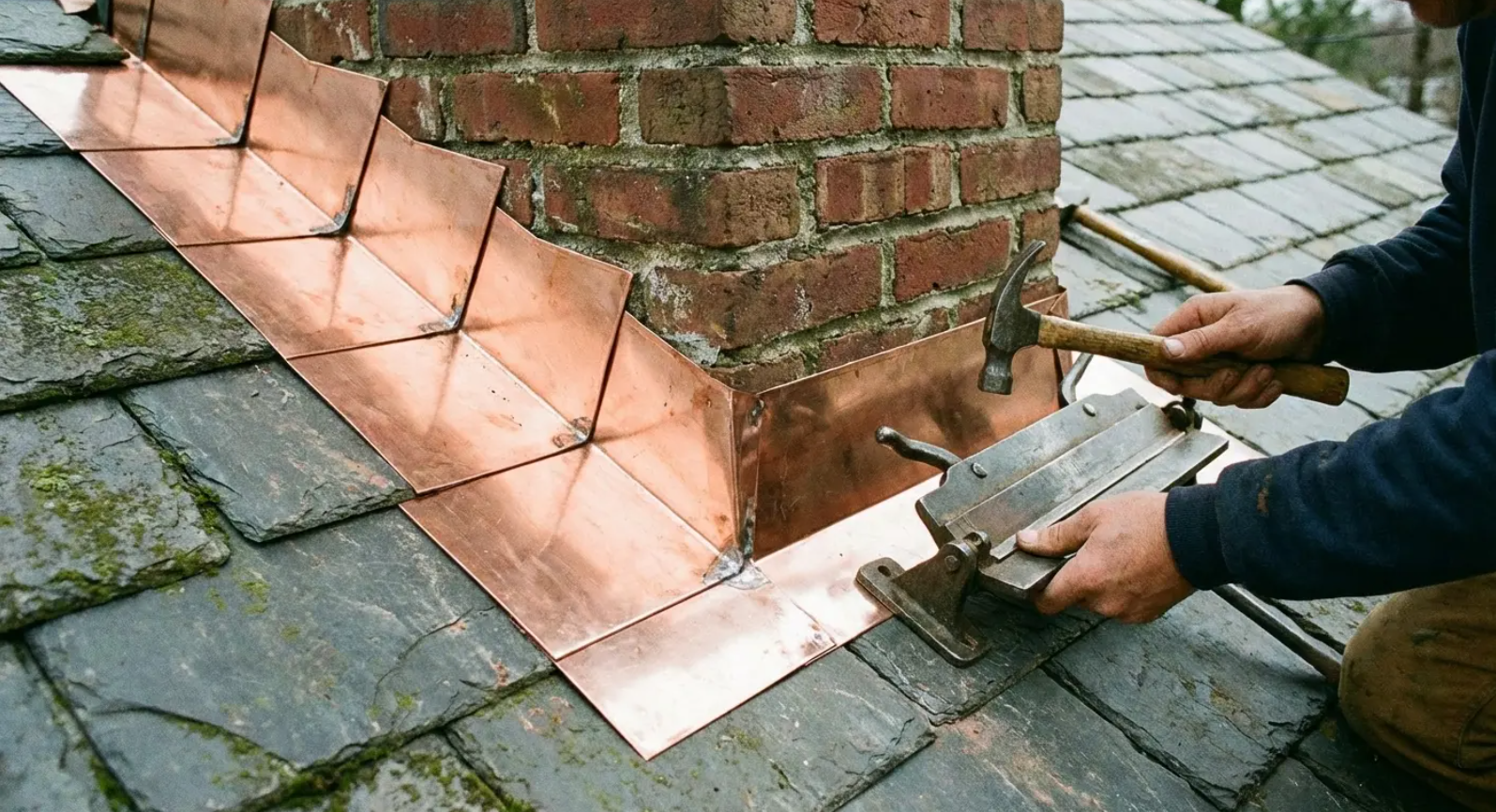
The Chimney Caulk Disaster: We inspected a roof where a previous contractor had simply caulked the gap between the brick chimney and the shingles. Within two years, the sun dried out the caulk, it cracked, and water poured down the chimney, ruining the living room drywall. Our repair involved cutting a groove (reglet) into the mortar, inserting custom metal flashing, and sealing it. This guides water out and away, even if the sealant eventually ages.
Weaving Step Flashing
We carefully pry up siding, remove rusted metal, and weave new aluminum or copper cards between each shingle. This ensures that water runs on top of the shingle below it, not behind the wall.
Cutting Reglets for Chimneys
Surface-mounted flashing relies on caulk, which eventually fails. The right way to fix it is cutting a groove into the masonry, inserting the metal, and sealing it to create a permanent water stop.
Don't Cook Your Shingles
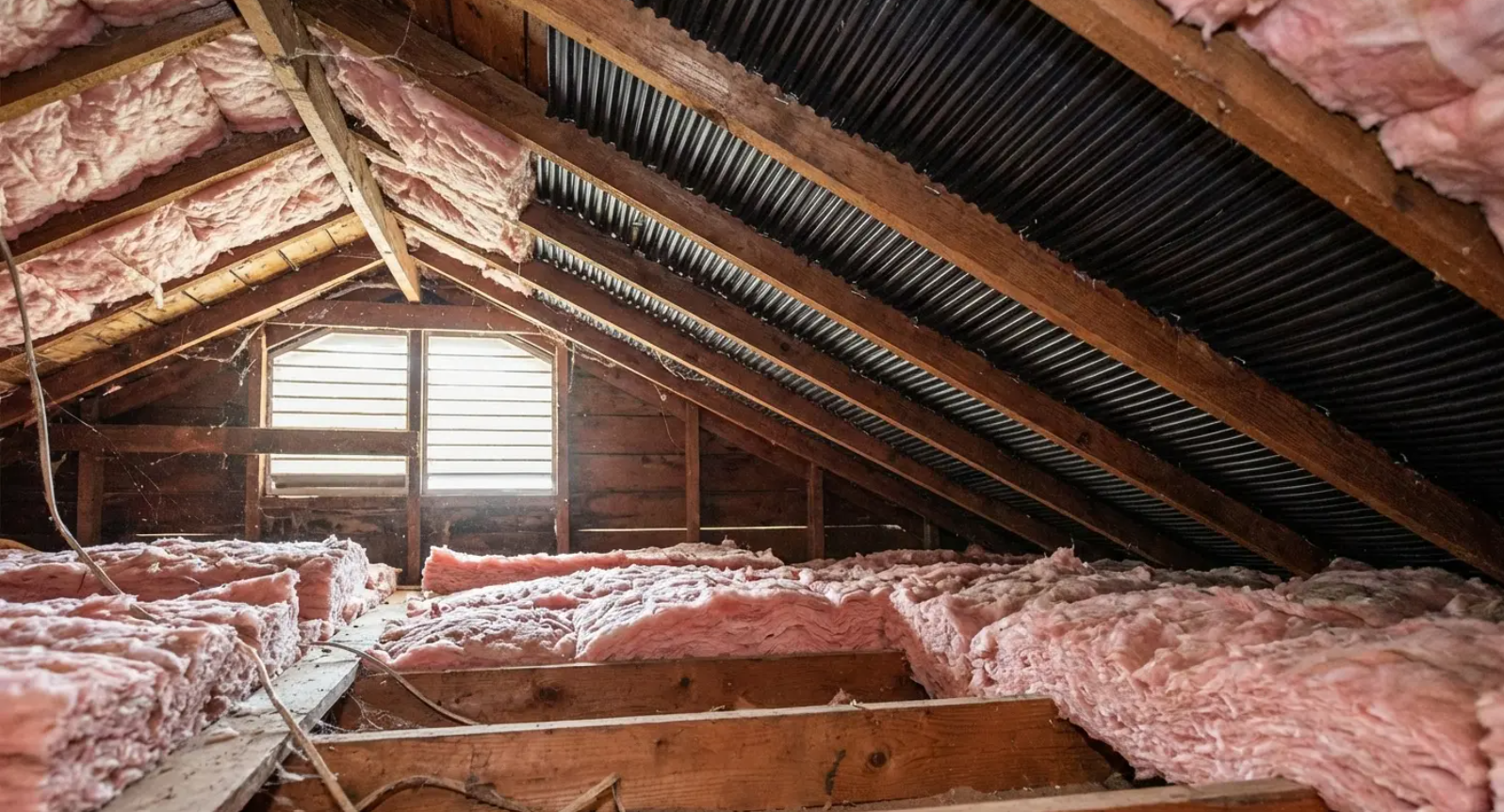
Repairs often fail because the attic heat cooked the shingles from the underside. We always check for balanced intake and exhaust ventilation to keep your roof deck temperature stable.
| Ventilation Symptom | Likely Cause | The Fix |
|---|---|---|
| Curling Shingles | Excessive heat in the attic cooking the asphalt. | Install ridge vents and clear blocked soffits. |
| Winter Ice Dams | Warm attic air melting snow on the roof. | Add baffles to push cold air from the eaves up to the peak. |
| Mold on Rafters | High humidity not escaping. | Balance the intake vents to match the exhaust. |
| Rusty Nails | Condensation forming on metal fasteners. | Install active solar vents to purge wet air. |
Balancing Intake and Exhaust
We calculate the attic size and ensure the airflow is split evenly between the soffit (bottom) and ridge (top). If we repair near the ridge, we make sure the vent isn't clogged, which would trap heat.
Baffles Matter
During repairs near the gutters, we check for insulation blocking the vents. We install baffles to ensure a clear channel for air to flow.

Smart Vents
In complex roofs where standard vents aren't enough, we might add solar-powered fans. These monitor temperature and humidity, turning on only when necessary to air out the attic.
Making It Look Good
A patch that sticks out like a sore thumb devalues your home. We work hard to match not just the color, but the weathering level of the existing roof.
The Boneyard Search
We check databases of discontinued shingles. If a perfect match isn't possible, we use the "harvesting" technique: taking weathered shingles from a hidden area of your roof to use for the repair, and putting new mismatched shingles in that hidden spot.
The Layer You Don't See
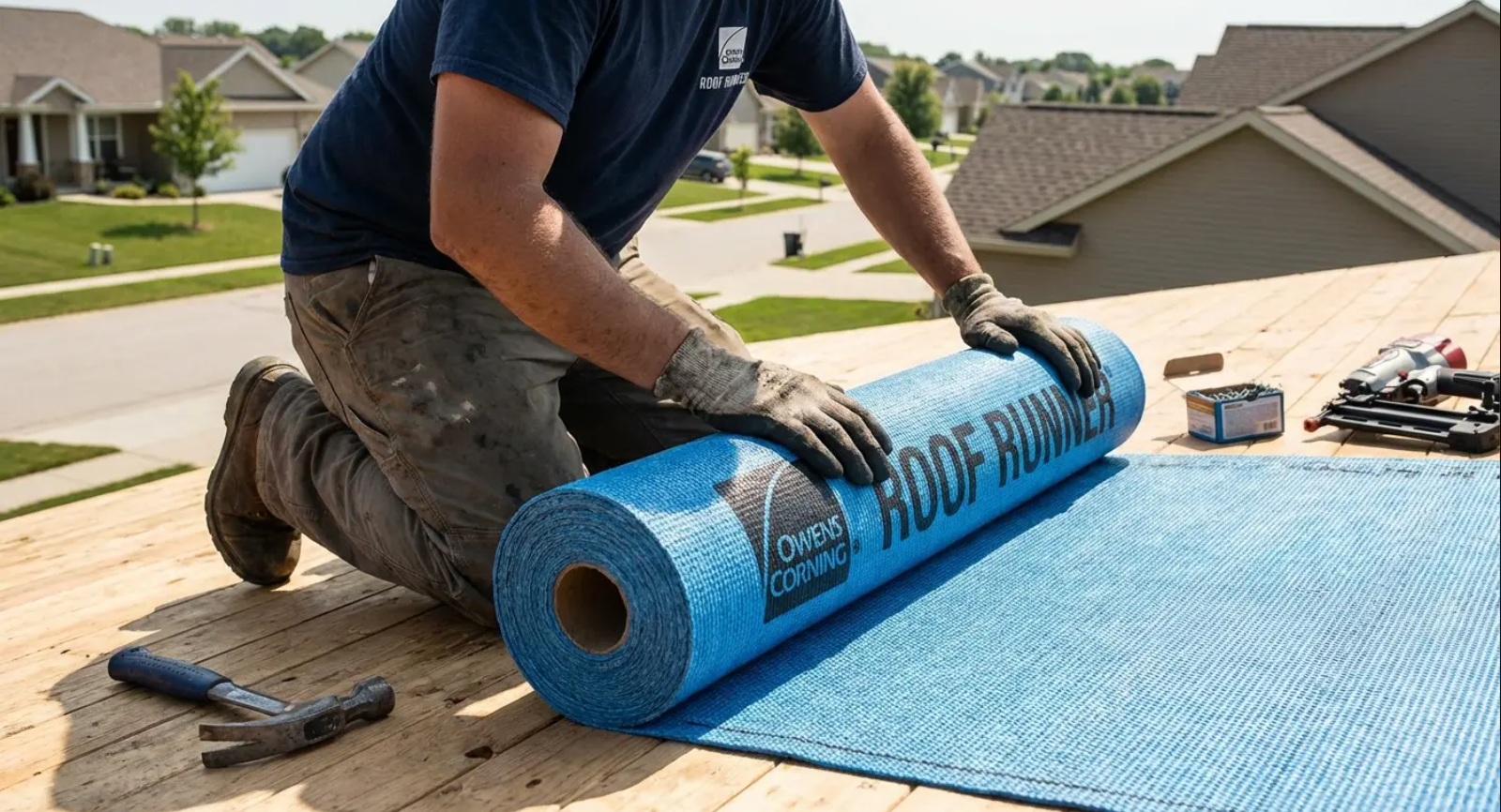
The underlayment is the most critical hidden upgrade we make. The felt paper of the past has been replaced by high-tech synthetics.

Synthetics vs. Felt
Synthetic underlayments are woven polymers that are tear-proof and waterproof. We prefer them because they provide a safer walking surface for us and a backup water barrier for you.
In some cases, if the damage is widespread, simply addressing the underlayment isn't enough; you might need to determine if the leak can wait or if you need immediate action by reading can your roof leak repair wait?
Ice and Water Shield
We stick this directly to the wood deck in valleys and eaves. If water backs up due to an ice dam, the seal around the nail prevents leakage into your home.
Self-Adhering Tech
Modern high-temp ice and water shields withstand the heat under metal roofs or dark shingles. We use these to prevent the material from melting or oozing, which used to happen with older materials.
Breathable Membranes
For older homes, we use breathable underlayments. These allow humidity from the house to escape while stopping rain from entering, preventing rot in the wood.
The Economics of Repair vs. Replacement
Roofing sits right at the intersection of construction and finance. We help you navigate insurance, understand depreciation, and make the tough call between a roof repair and a full replacement. Our goal is to ensure the repair makes financial sense for you.
This is a big issue. Maryland recently launched a critical repair program because so many homes are suffering from leaking roofs. While not everyone gets a grant, it highlights how important a solid roof is to a safe home.
When to Stop Repairing
This is the hardest part. We analyze the roof's remaining life honestly. If a roof repair costs a big chunk of a replacement price but only buys you a year or two, we will tell you it's a bad investment.
Context is key. The average replacement cost is around $25,840. If your repair estimate is approaching 30-40% of that on an old roof, patching rarely makes sense.
Repair vs. Replace Decision Matrix
- [ ] Age of Roof: Over 15 years old? (If yes, lean toward replace).
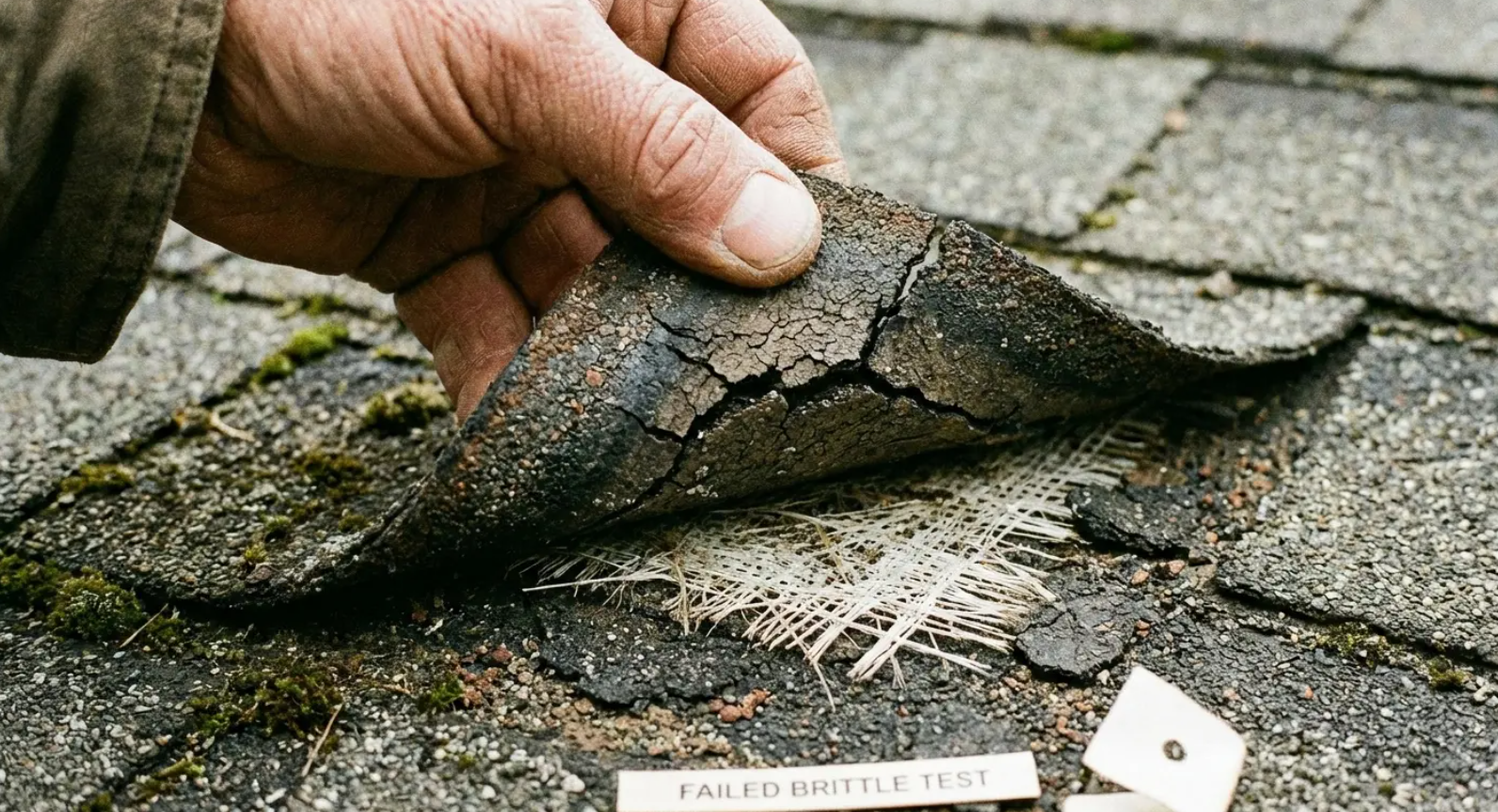
- [ ] The Brittle Test: Do shingles crack when lifted? (If yes, MUST replace).
- [ ] Leak Frequency: Is this the 3rd or 4th leak? (If yes, the system is failing).
- [ ] Granule Loss: Are gutters filled with sand? (If yes, the asphalt is exposed).
- [ ] Cost Ratio: Is the repair cost >30% of a new roof? (If yes, replacement is better).
To help you decide, check our guide on when should you replace your roof.
The Brittle Test
We lift a shingle tab 45 degrees. If it breaks or cracks, the roof is non-repairable. We use this to prove to insurance adjusters that a patch is impossible because the surrounding shingles will break during the process.

The 50% Rule
Building codes often state that if more than half of a roof section is damaged, the whole thing must be brought up to code. This often mandates a replacement over a repair.
Speaking the Insurance Language
Insurers look for proof of "sudden and accidental" damage. We act as your advocate, translating physical damage into the codes insurance carriers need to see.
The "Wear and Tear" Denial: A client had a claim denied because the adjuster called wind damage "normal wear and tear." We used close-up photos showing fresh tears in the sealant strip—a signature of recent high winds. This evidence forced the insurer to reverse the denial, covering a full replacement.
Photos That Prove the Claim
We take photos from specific angles and use a shingle gauge to prove the quality of the material, ensuring accurate valuation.
Xactimate Coding
We use the industry-standard software for pricing claims. We ensure the estimate uses the correct codes so you are reimbursed fairly.
Engineer Reports
In disputed claims, a structural engineer's report may be needed. This document differentiates between thermal cracking and wind damage, often serving as the tie-breaker.
Maintenance is Cheaper Than Disaster
We always advocate for maintenance rather than waiting for a leak. Annual check-ups can catch small issues before they become catastrophes.
Waiting too long is costly. For instance, the Wheeler Memorial Library recently had to spend nearly 38% of a grant on a roof repair that had been overdue for years. Deferring maintenance just makes the eventual bill bigger.
Gutters and Drainage
Clogged gutters cause water to back up under the shingles. We check downspouts and extensions to ensure the new roof repair isn't immediately ruined by standing water.
Final Thoughts
Modern roof repair is a mix of technology, chemistry, and skill. It’s not really a job for a general handyman anymore. The goal is to restore your home, not just cover a stain.
| Feature | Old School "Patch Job" | Modern Forensic Roof Repair |
|---|---|---|
| Leak Detection | Visual guess / Garden hose test | Thermal drones & Scanners |
| Materials | Roofing Tar / Caulking | Liquid Flashing / Rubberized Shingles |
| Scope | Cover the hole | Trace water path & replace wet insulation |
| Documentation | Hand-written invoice | Cloud-based photo logs |
| Longevity | 6 months - 2 years | 10+ years (often outlasts the roof) |
The complexity of modern roofing—from AI diagnostics to liquid flashings—means this isn't a place for guesswork. The trick is knowing the difference between a roof that needs a simple patch and one that has deeper issues.
At Joyland Roofing, we bridge the gap between technical expertise and your peace of mind. We don't just look at the leak; we look at the data. Whether we are doing a brittle test to save you money or handling insurance codes, we are committed to the truth about your roof. If you are worried about a leak, contact us today.
Ready to solve your roofing issues for good? Visit our roof repairs service page to schedule your inspection today.