December 31, 2025
The Real Deal on Church Roofs: Work With a Church Roofing Company That Protects Your Sanctuary and Bottom Line
Author
When it comes to church roofing, the real challenge isn’t just keeping out the rain—it’s protecting a place that holds history, community, and generations of memories. Unlike a typical home roof, a church roof comes with steep pitches, fragile structures, limited budgets, and a committee or two (or three) weighing in on every decision. Add in historic preservation requirements, insurance hurdles, and the unique dangers of steeples and towers, and you’ve got a project that demands strategy, experience, and the right team.
This guide breaks down the key challenges churches face when repairing or replacing a roof—and how to tackle them without blowing the budget or stirring up committee conflict. From material choices to drone diagnostics to finding a contractor who can handle a 70-foot steeple, here’s your quick roadmap to making clear, confident decisions for your church.
Table of Contents
- Old School Looks vs. New School Tech
- Synthetic vs. Natural Materials
- The Evolution of Metal Roofing
- Steeples and Towers: The Hard Stuff
- How to Survive Committee Decisions
- Getting Everyone on the Same Page
- Picking the Right Contractor
- Planning and Execution
- Drones & Infrared: Seeing the Invisible
- Digital Previews
- Keeping People (and Stained Glass) Safe
- Lowering the Heating Bill
- Protecting the Investment
- Funding & Insurance Headaches
- Maintenance: Don't Ignore It
- Understanding Warranties
- How Joyland Roofing Helps
- Final Thoughts
TL;DR
We know you’re probably reading this five minutes before a board meeting. If you don't have time for the deep dive, here are the main things you need to know to keep the roof over your head without breaking the bank.
- Fake it 'til you make it: Modern synthetic materials look just like slate or cedar but weigh way less and don't crack as easily.
- Steeples are dangerous: You need specialists with lightning protection certification, not just a guy with a tall ladder.
- The "Three Bid" trap: If you get three bids but don't give the contractors a specific scope of work, you're comparing apples to oranges. It never ends well.
- Check your policy: Make sure your insurance covers the full value of the structure and includes "commercial" coverage.
- Science saves money: Infrared scans can show you exactly where insulation is wet, so you don't pay to tear off a whole roof when you only need to fix a patch.
- Read the fine print: For flat roofs, you want an NDL (No Dollar Limit) warranty. Also, check the wind speed ratings—storms are getting stronger.
- Find a specialist: A specialized church roofing company knows how to handle these unique challenges better than a residential crew.
Old School Looks vs. New School Tech
Fixing a church roof is a balancing act. On one hand, you have to respect the history and the "soul" of the sanctuary. On the other hand, you want materials that actually last and don't cost a fortune to maintain. A good roofer needs to figure out how to marry those two needs without ruining the architecture or the structural integrity.
This is a big deal because, as noted elsewhere,"religious buildings are typically over 35 years old". That puts them in the "historic" category, meaning we have to be gentle. You can't just rip off the old roof and slap on a new one without thinking about the stress it puts on those old timbers and masonry walls.

Synthetic vs. Natural Materials
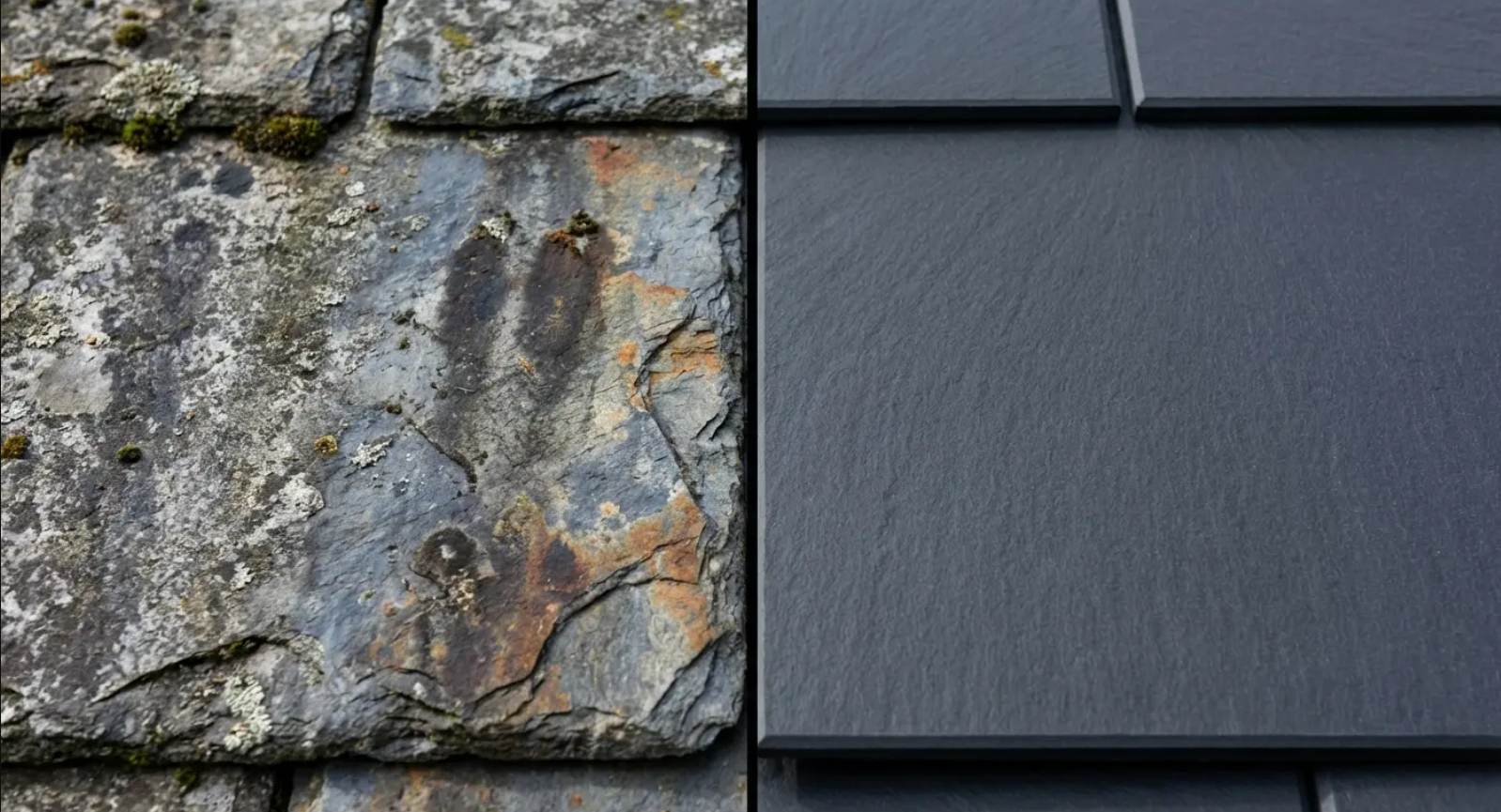
Traditional slate roofing and cedar shakes are beautiful, but they are heavy and expensive. The industry is shifting toward high-end synthetics. These composites look like the real deal from the ground, but they weigh a fraction of the amount and can take a serious beating from hail. Here is why purists are starting to change their minds:
| Feature | Natural Slate | Synthetic Composite | Cedar Shake |
|---|---|---|---|
| Lifespan | 75-100+ Years | 50+ Years | 20-30 Years |
| Weight per Square | 800-1,500 lbs | 200-400 lbs | 150-250 lbs |
| Impact Resistance | Low (Brittle) | Class 4 (Highest) | Moderate |
| Maintenance | High (Slippage/Cracking) | Low | High (Moss/Rot) |
| Cost | $$$$ | $$$ | $$$ |
Polymer-Based Imitations
Modern polymers can replicate the texture and color variance of natural slate or hand-split cedar almost perfectly. These products usually come with Class 4 impact ratings and 50-year warranties. You get the "forever" look of stone without worrying about it cracking every time a branch falls on it.
Check the Structure First
Before you swap materials, you need a structural checkup. If you switch from asphalt to real slate, your roof might collapse under the weight. Conversely, switching from real slate to synthetic takes a huge load off those aging trusses.
We saw this with a historic chapel in New England. They wanted to replace a failing asphalt roof with authentic slate to match the 1890s original look. But, the trusses had bowed over the last century. Real slate would have required $50,000 in steel reinforcement work. By choosing a high-end synthetic slate, they got the look they wanted, dropped the roof load by 60%, and didn't have to buy any steel.
Dealing with Historical Societies
If your church is on a historic registry, you know the drill: change is hard. You’ll need to get samples of the synthetic product and create a mock-up panel. This proves to the local board that the visual fidelity matches the original architecture. It’s a bit of a maze, but it’s navigable with the right help.
The Evolution of Metal Roofing
Metal roofing isn't just those corrugated panels you see on barns anymore. Modern standing seam and stone-coated steel options are watertight enough for flat areas and pretty enough for the parts of the roof everyone sees.

Copper: Shiny or Aged?
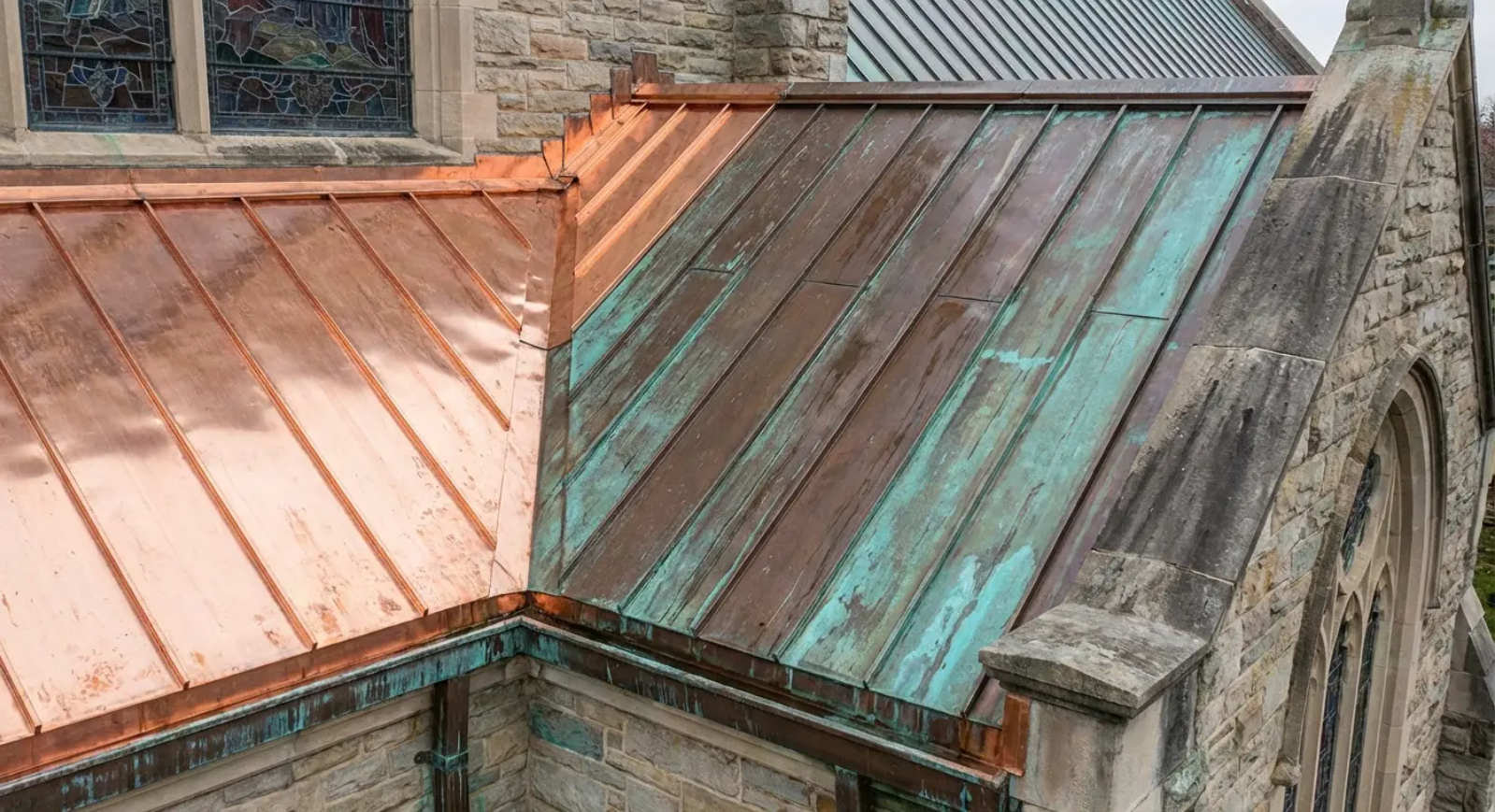
Copper is the gold standard for church flashings and steeples. The big decision is whether you want pre-patinated (that green, aged look) right out of the box, or bright copper that ages naturally. Just be careful—runoff from fresh copper can stain the masonry below while it oxidizes. You need a contractor who knows how to manage that.
The Hybrid Solution
Stone-coated steel is a great middle ground. It’s steel sheets coated with stone granules, so it looks like Mediterranean tile or wood shake, but it has the strength of steel. If you live in a high-wind or hurricane zone, this is often your best bet. It’s armor that looks like art.
Steeples and Towers: The Hard Stuff
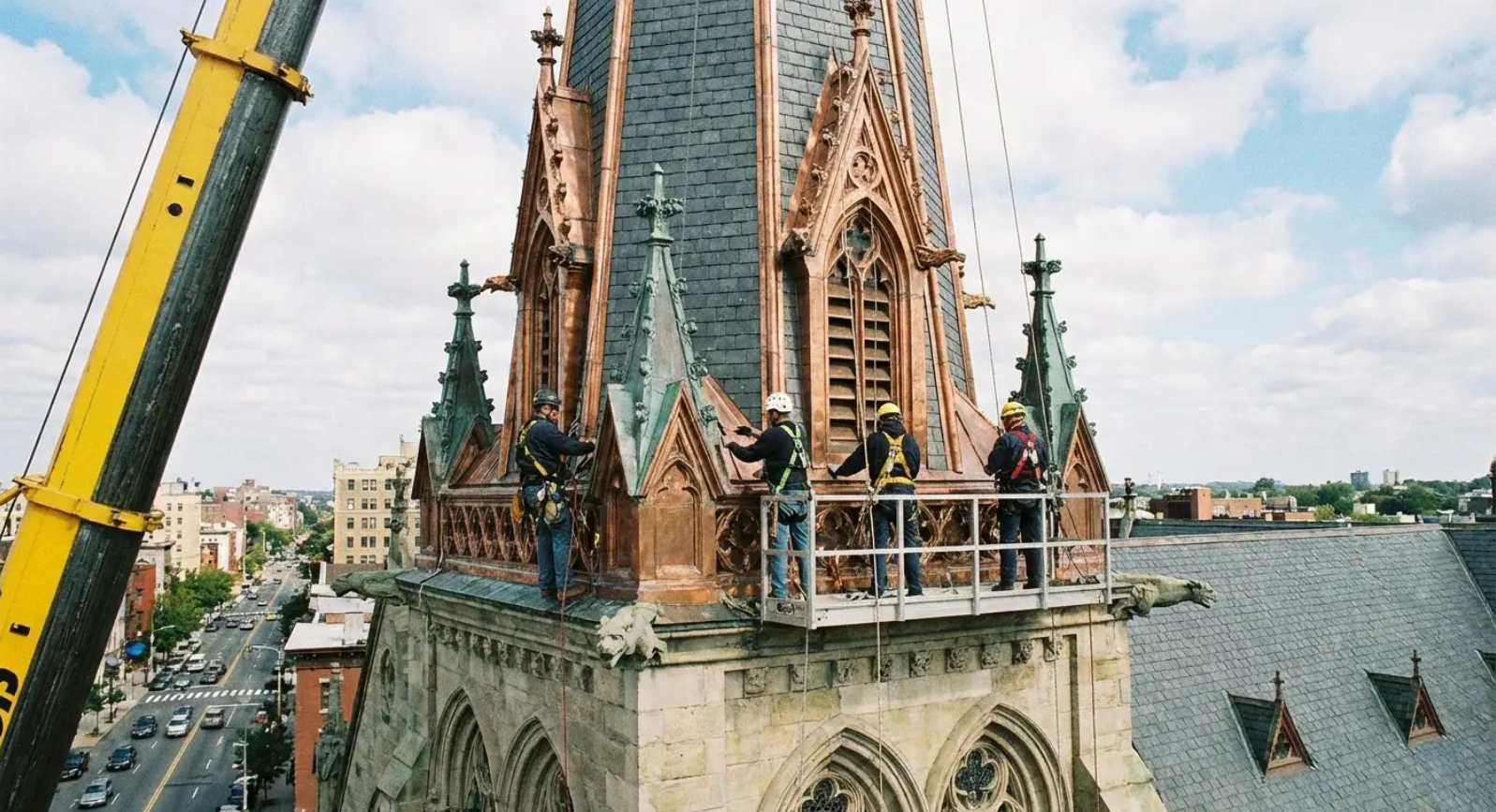
Steeples are basically lightning rods that look nice. Roofing them is dangerous and requires specialized rigging. Most general roofers aren't equipped for this.
You have to hire a team that knows high-angle work. As noted in industry stats, "heights of church roofs... vary from 30’ to 70’ feet tall". That requires safety protocols and gear that your average residential shingler just doesn't have.

Planning the Climb
Getting up there often means bringing in big cranes. You need to map out underground utilities in the parking lot first—you don't want a heavy crane crushing a septic tank or a pipe while setting up.
Don't Forget the Lightning Rods
When you re-roof a steeple, the lightning protection system usually has to come off and go back on. You can read more about roofs and lightning rods to see why this matters, but essentially, modern codes require specific bonding techniques. If you don't do this right, the new roof interferes with the grounding path, which is... bad.
Waterproofing the Tricky Spots
Steeples often contain louvers for bells or ventilation. These are notorious leak points. The best way to handle them is to wrap the rough openings with self-adhering membranes before putting the cladding back on. It’s tedious work, but it stops the leaks.
Fixing the Cross
While you have a lift or crane on site, that is the cheapest time to re-gild or paint the cross. It requires coordination between the roofer and a metal restoration specialist, but it saves you from renting a crane twice.
How to Survive Committee Decisions
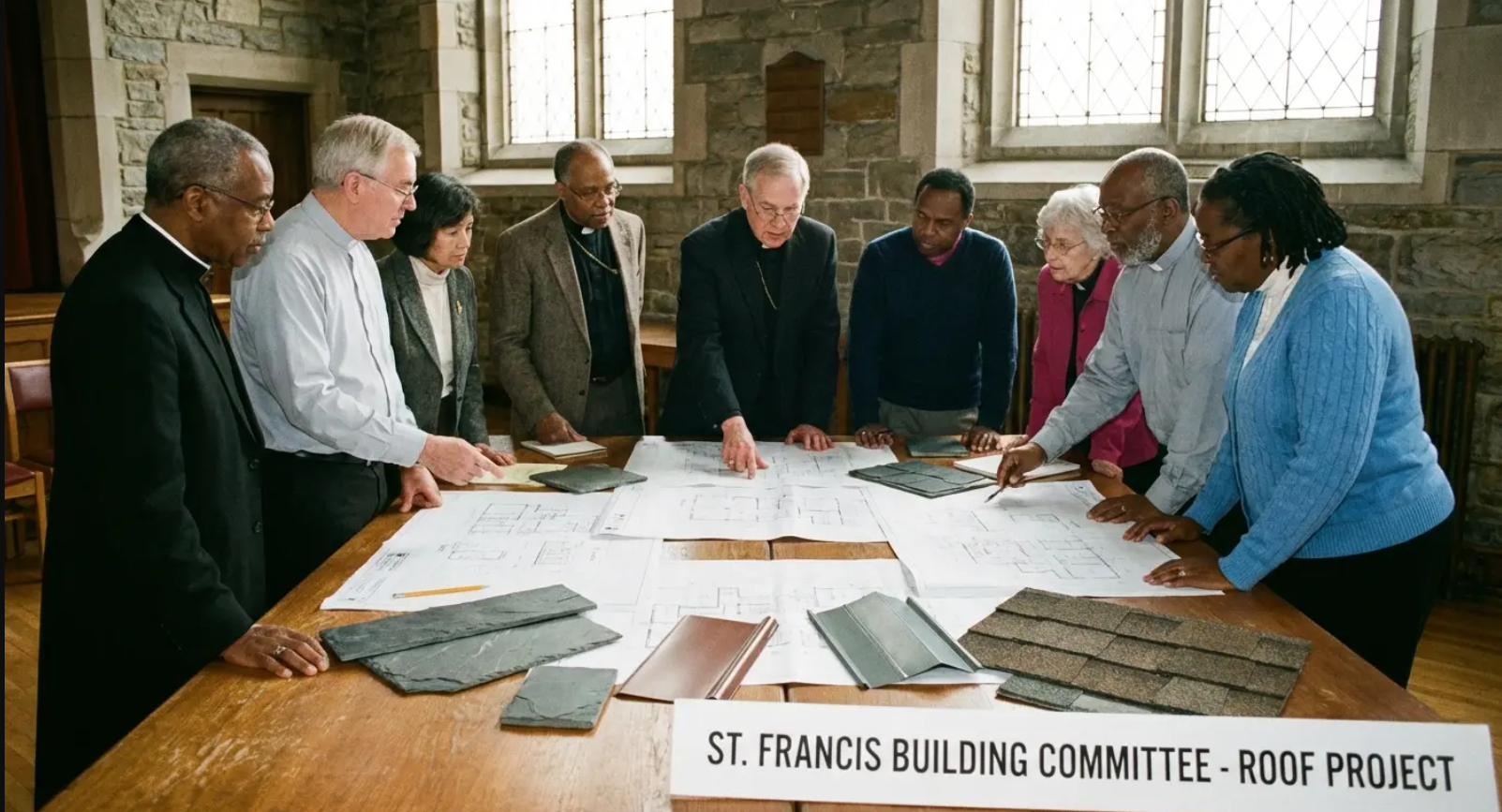
Homeowners decide things instantly. Churches decide things... eventually. We know that churches operate via committees, boards, and congregation votes. A professional church roofing company needs to be patient and provide the paperwork you need to get everyone to agree.

Getting Everyone on the Same Page
The hardest part of church roofing isn't the shingles; it's the decision-making. Boards often get "analysis paralysis." We recommend reading our guide on what leaders need to know to help prepare your team, but here are a few tips to keep things moving.
Translating "Roofer" to "English"
The facility manager has to explain technical jargon to the finance committee. Visual aids help. Bring in core samples of the current roof to show them why it's failing. Turn the engineering specs into financial sense.
Talk to the Congregation
For big projects, you might need to present to the whole church. Focus on stewardship and safety rather than technical specs. People want to know their building is safe and that their donations are being used wisely.
Value vs. Price
Churches love the "three bids" rule. But comparing a church specialist against a guy who mostly does suburban houses is dangerous. The committee needs to create a "scope of work" document first. That way, every bidder is pricing the exact same job. Otherwise, the lowest number is usually the one that missed the most details.
Picking the Right Contractor
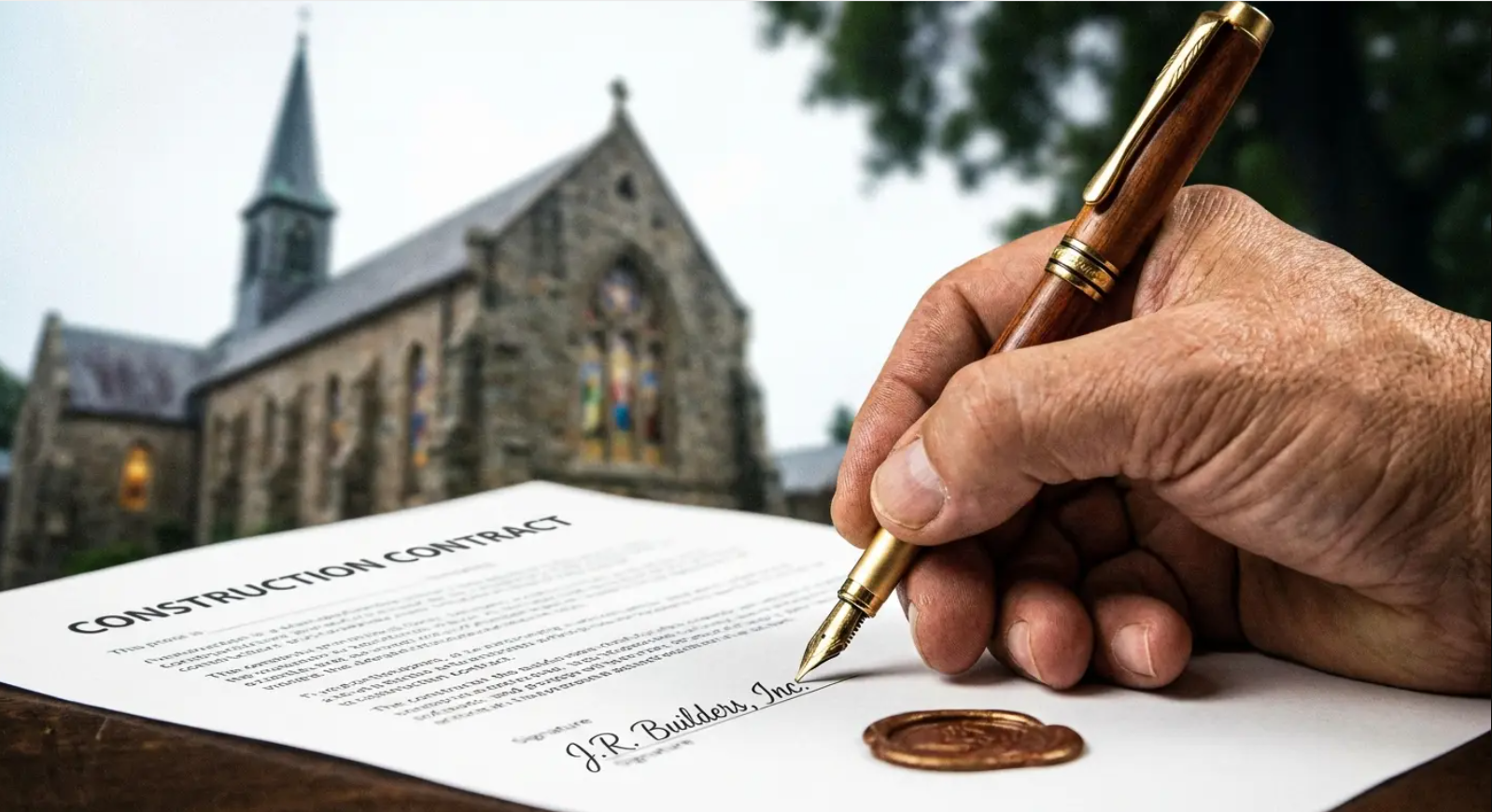
This is the make-or-break moment. You need to look past the sales pitch and verify they can actually handle a high-liability job.
Bad vetting leads to nightmares. A church in Charlevoix got hit hard when a contractor "stopped communicating, leaving the project unfinished" after getting paid upfront. The church had to take out a loan to finish the job. Don't let that be you.
The "Don't Get Burned" Checklist:
- [ ] Proof of General Liability and Worker’s Comp (ask for the certificates).
- [ ] List of 3+ church references from the last 2 years. call them.
- [ ] Manufacturer certification (Master/Platinum status).
- [ ] A safety plan for when people are in the building.
- [ ] Proof they can pay their bills (letter from a bank or supplier).
- [ ] A plan for keeping the building dry during the work.

Insurance Matters. A Lot.
General liability isn't enough. The company needs an umbrella policy big enough to cover the church if the worst happens—like a fire.
Speaking of fire, recently an insurer sued a roofing company after a fire at St. Theodosius Cathedral, claiming the roofer "started the fire by improperly using a blowtorch" while working on copper panels. The damages are over $9 million. If your contractor is under-insured, that cost falls on you.
Steep Slope Experience
Ask for a portfolio of roofs with similar pitch and complexity to yours. If they only do flat commercial roofs, they probably don't have the crews for a steep slate roof.
OSHA and Holy Ground
Churches are busy places—daycares, mid-week services, choir practice. The contractor needs a plan to keep people safe from falling debris. Safety protocols matter more here than on an empty office building.
Protect Yourself from Liens
Request "lien waivers" from material suppliers. This ensures the contractor has paid their bills. If they don't, the supplier can legally come after the church for payment, even if you already paid the roofer.
One Point of Contact
Who is running the show? Church jobs can take weeks. You need a daily onsite supervisor to talk to. If there is a funeral, you need someone who can shut down the noise immediately.
Planning and Execution
Technology has changed the game. We can now use tech to test things without ripping them apart and measure things down to the millimeter.

Drones & Infrared: Seeing the Invisible
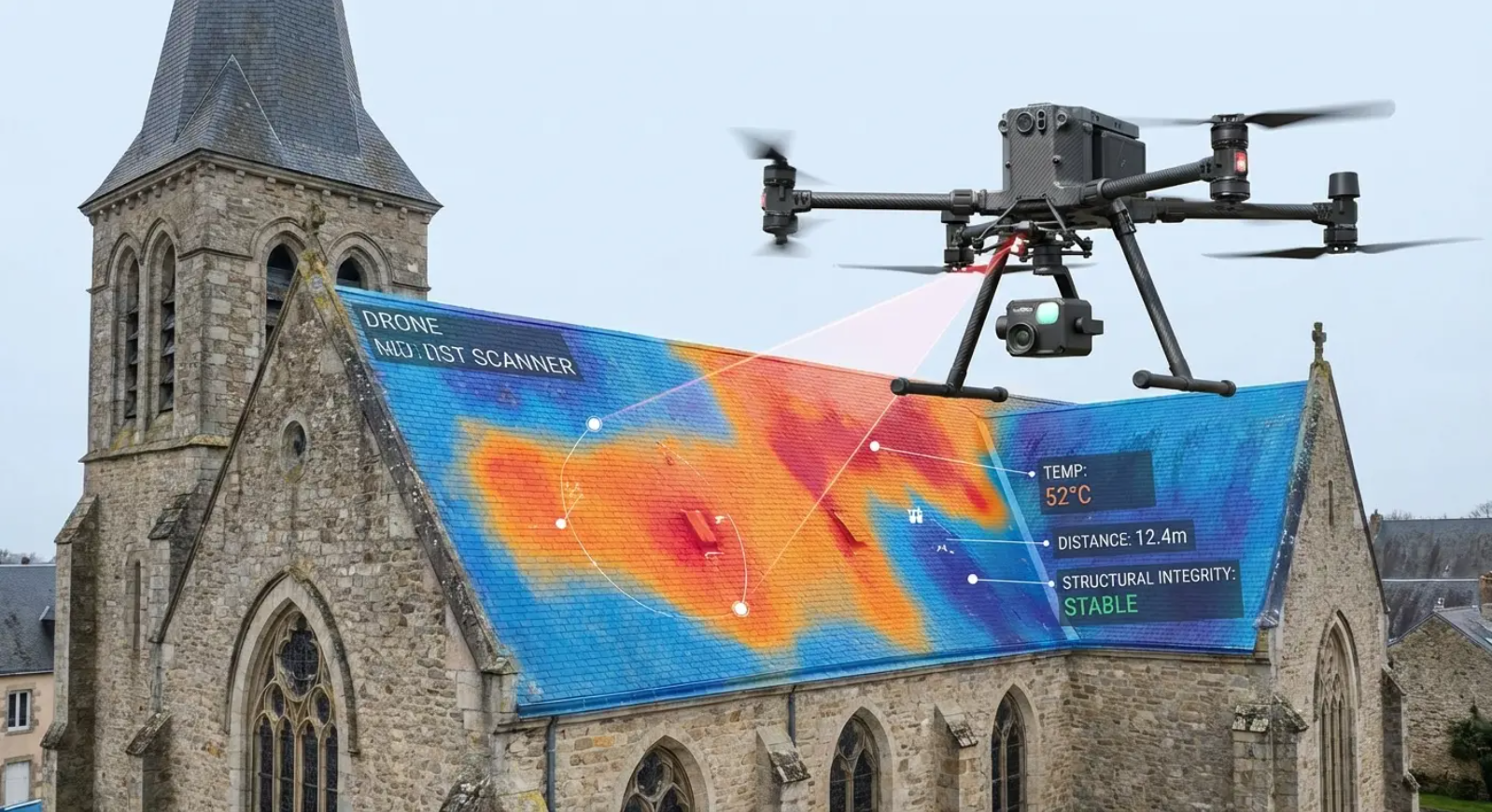
Walking on an old slate roof causes damage. Drones and thermal imaging let us see the condition of the roof without stomping all over it.
Finding Trapped Water
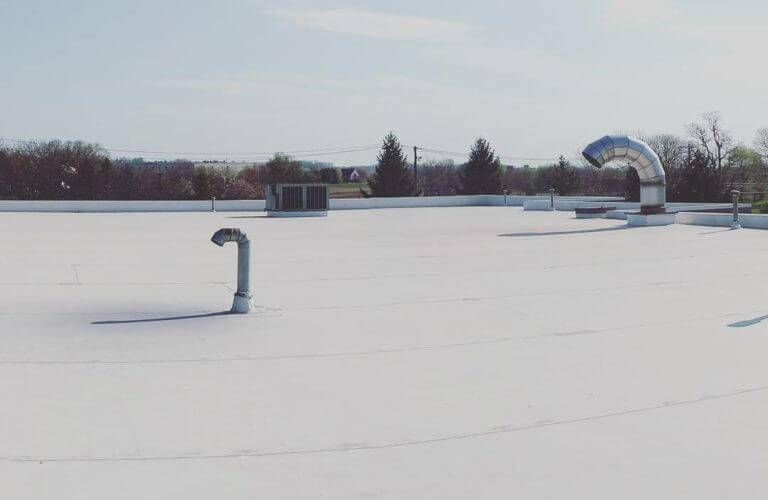
Infrared scans at sunset can spot wet insulation under flat roofs. It creates a moisture map. This is huge for your budget because it means you can replace only the wet areas instead of tearing off the whole roof.
For example, a Baptist church thought they needed a whole new roof over their fellowship hall. An infrared scan showed only 15% of the insulation was wet. They fixed the wet spots and coated the rest. It cost $40,000 instead of $100,000.
Measuring with Lasers
Drones can create 3D models of your church. This lets us measure materials accurately, so you aren't paying for waste or getting hit with surprise "we need more materials" costs later.
Digital Previews
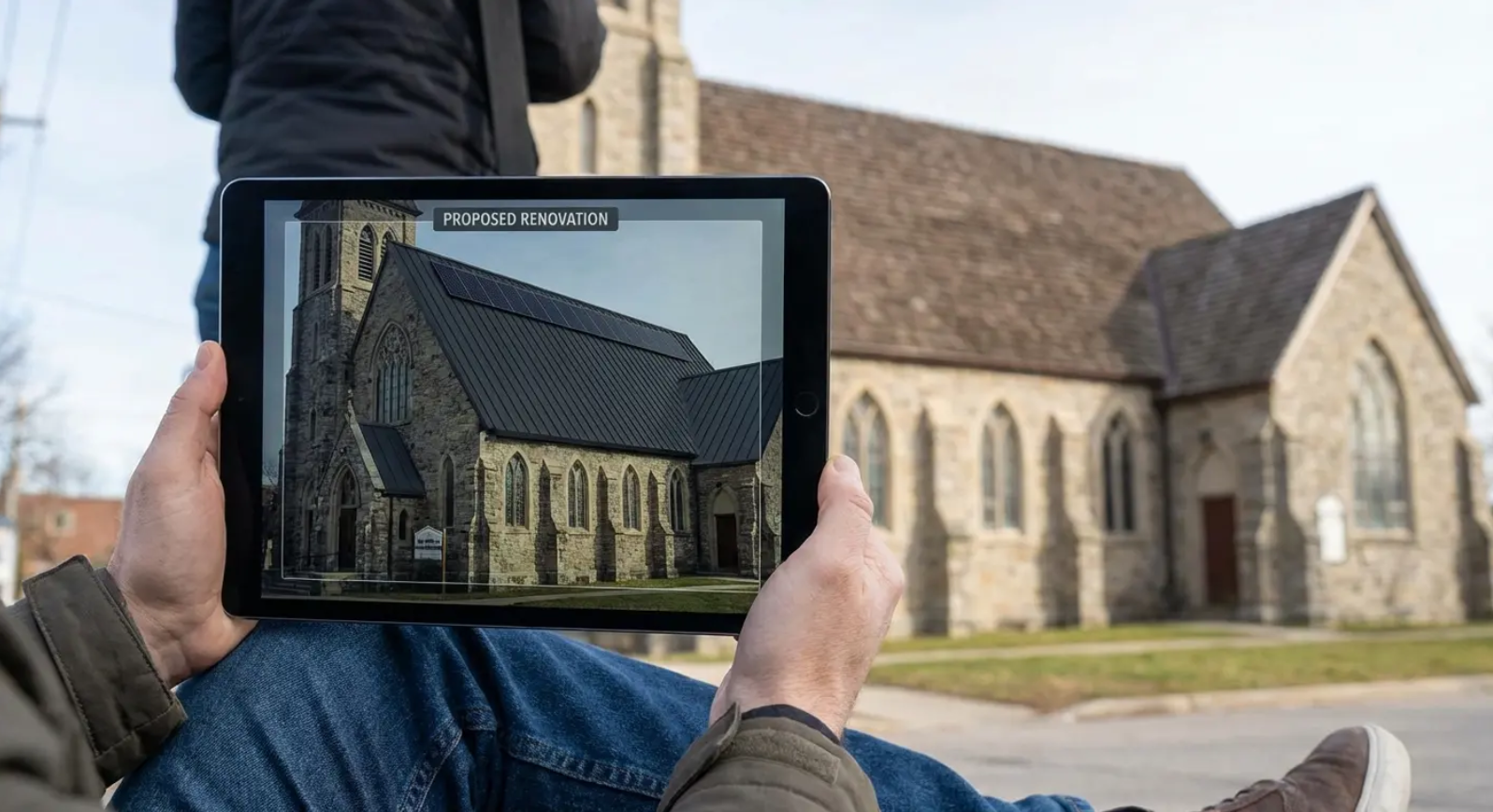
Visualization software helps committees see color changes before signing the check. It stops the buyer's remorse.

See It Before You Build It
Some apps let you hold a tablet up to the church and see the new roof superimposed on the building live. This is a great tool for fundraising presentations—donors like to see what they are paying for.
Matching the Brick
Digital tools analyze the colors in your brick or stone to suggest roof colors that match. You don't want to spend thousands on a roof that clashes with the walls.
Keeping People (and Stained Glass) Safe
Safety tech has come a long way. It keeps workers alive and lowers your liability.
| Old Way | New Way | Why It's Better |
|---|---|---|
| Ladders | Hydraulic Lifts | Less fatigue means fewer mistakes and injuries. |
| Roof Jacks | Safety Rails | Protection that doesn't poke holes in your roof deck. |
| Tarps | Catch-All Netting | Protects landscaping and stained glass from falling debris. |
| Rope & Harness | Auto Rope Grabs | Workers can move faster but stay tied in. |
Protecting Stained Glass
This is usually a church's biggest worry. We use netting and plywood structures specifically designed to cover those priceless windows. If a slate slides off during tear-off, it hits the plywood, not the glass.
Lowering the Heating Bill
Churches are huge, drafty spaces that cost a fortune to heat and cool. The roof plays a big role in that.

Let it Breathe
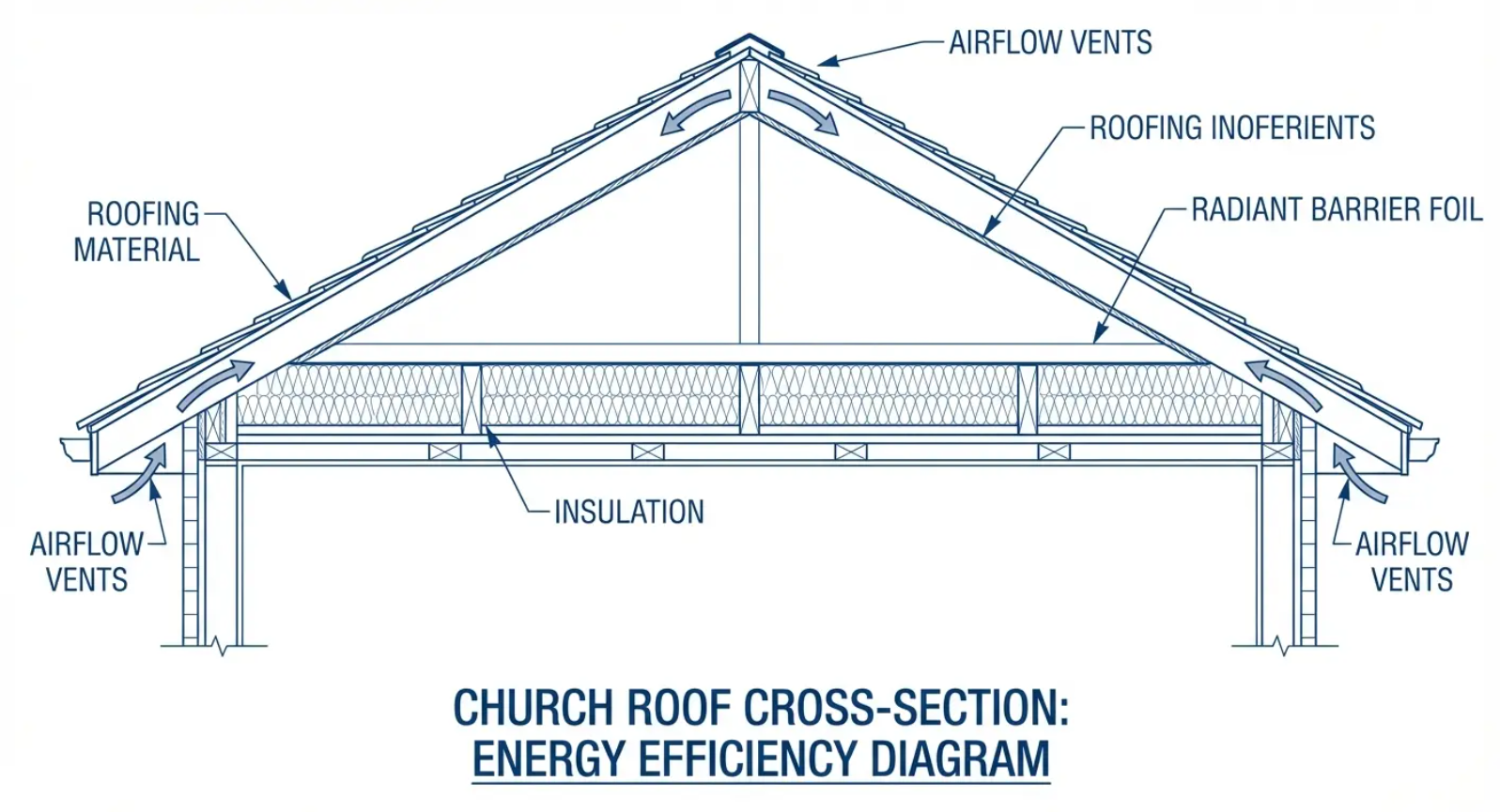
Many old churches don't have good ventilation. Adding soffit vents or smart ridge vents improves airflow. This keeps the attic cooler in summer and extends the life of your shingles.
Reflecting the Heat
If we have to replace the decking, using plywood with a foil radiant barrier can block up to 97% of radiant heat. It’s a simple upgrade that makes a noticeable difference in the AC bill.
Getting Ready for Solar
Even if you aren't doing solar now, you might want to later. We can install solar-ready mounts during the roofing process. This ensures that when you do add panels, you won't void your roof warranty by drilling holes in it.
Protecting the Investment
A new roof is expensive. You need to protect that investment through smart financial planning and maintenance.
Funding & Insurance Headaches
Paying for the roof is just as hard as installing it. Whether it's an insurance claim or a capital campaign, you need a plan.

Meet the Adjuster
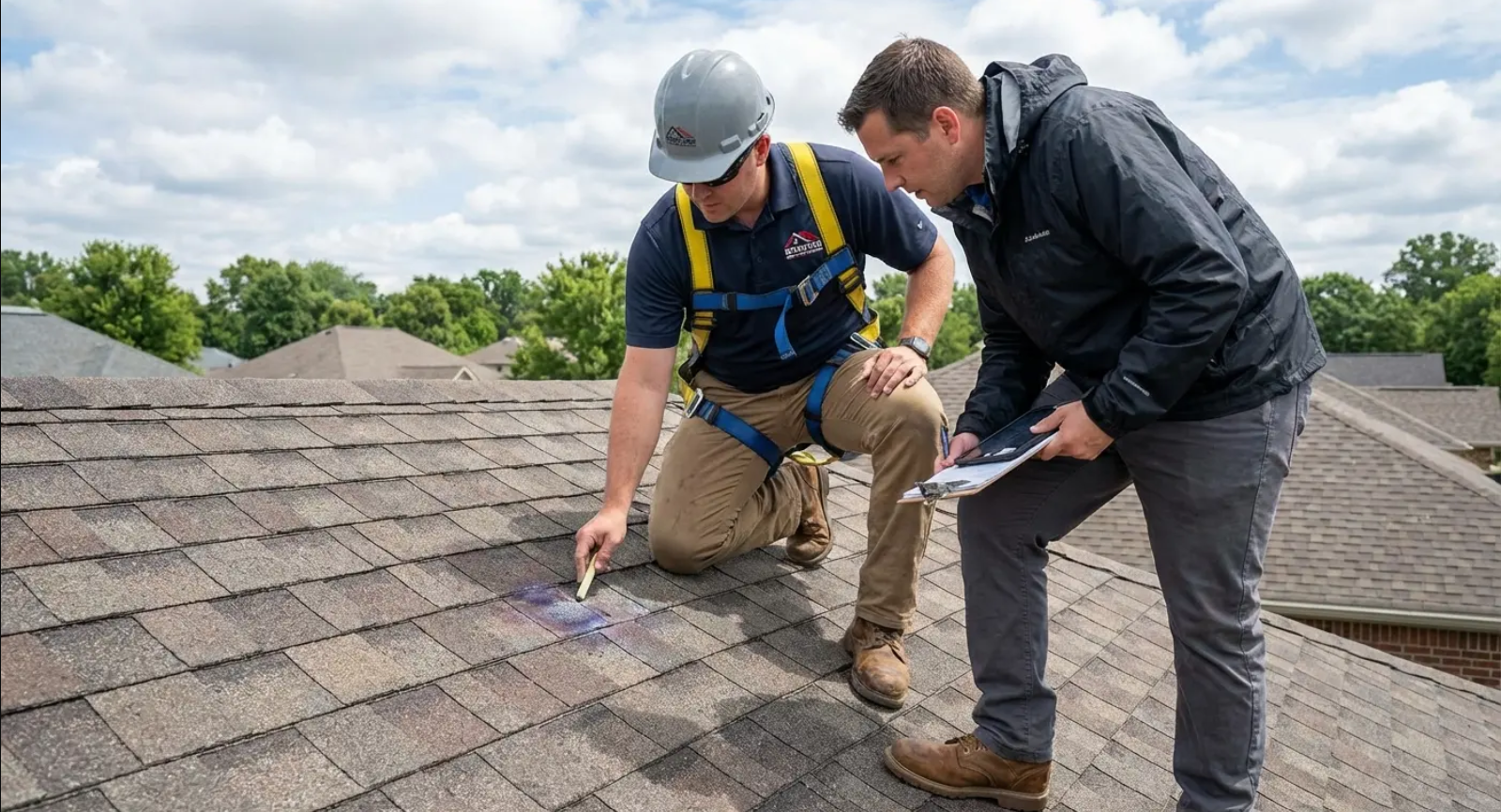
If you have storm damage, have your roofer meet the insurance adjuster on the roof. Adjusters might miss damage on steep, scary slopes. Your roofer is there to advocate for you and make sure you get a fair settlement.
Financing for Non-Profits
Banks can be weird about lending to churches. Specialized roofing companies often partner with lenders who understand how tithes and capital campaigns work, offering terms that make sense for your cash flow.
Phasing the Project
For massive roofs, we can split the project into phases over a few years. This helps with cash flow. The key is making sure the "tie-in" points between the old and new sections are watertight.
Maintenance: Don't Ignore It
The "install it and forget it" mindset destroys roofs. Commercial roof maintenance tips all say the same thing: if you don't check it, you void the warranty.
You need a partner with "OVER 10 YEARS OF COMMERCIAL ROOFING EXPERIENCE" to spot issues on complex church architecture. A handyman might miss the subtle signs of a leak until it's too late.
The "Twice a Year" Plan:
- [ ] Clean box gutters and scuppers (Spring & Fall).
- [ ] Check steeple flashing for wind damage.
- [ ] Look for loose slates after storms.
- [ ] Remove moss (it holds water like a sponge).
- [ ] Go into the attic and look for daylight or water stains.
- [ ] Check the lightning rod connections.
The Danger of Clogged Gutters
Church roofs shed a lot of water. If box gutters get clogged, that water backs up under the roof or into the walls. We saw a historic stone church that ignored their gutters for three years. The water backed up, ran down the interior stone walls, and ruined $25,000 worth of plaster. A $500 cleaning would have stopped it.
Understanding Warranties
Not all warranties are the same. You need to know the difference between coverage for the material vs. coverage for the workmanship.
Commercial Grade Protection
For flat sections, ask for an NDL (No Dollar Limit) warranty. This is standard for commercial flat roofing. It means if the roof fails, the manufacturer covers the total cost of replacement, not just a pro-rated amount.
Workmanship Matters
Material warranties cover the shingle; workmanship warranties cover the guy who nailed it down. The best companies offer extended workmanship warranties backed by the manufacturer. This is the difference between a product failure and an installer failure.
Storm Prep
Check the wind ratings. Standard warranties might cover 110mph, but with upgraded installation patterns, you can bump that to 130mph+. For a high steeple, that extra protection is worth it.
How Joyland Roofing Helps
We get it. Re-roofing a church isn't just a construction project; it's stewardship. At Joyland Roofing, we try to bridge the gap between the technical stuff and the personal communication your committee needs. We aren't here to pressure you. We're here to educate you, help you navigate the church roofing company selection process, and protect your sanctuary. From saving your stained glass to explaining the budget to your board, we're here to help.
Final Thoughts
You have a big responsibility to protect the history and the future of your building. But you don't have to do it alone. By understanding the materials, the tech, and how to vet a contractor, you can lead your committee to a good decision. Don’t let the complexity of church roofing paralyze you—use this guide, ask questions, and move forward with confidence.
Contact Us
We will get back to you as soon as possible.
Please try again later.