December 31, 2025
How Long Do Flat Roofs Last? The Hidden Variable No One Talks About (And Why It Matters More Than Materials)
Author
When people ask how long a flat roof lasts, they’re usually expecting a simple number: 20 years, maybe 30 if you bought the premium material.
But that number is mostly meaningless without one detail almost nobody talks about.
Not the membrane. Not the warranty. Not even the installation.
Drainage.
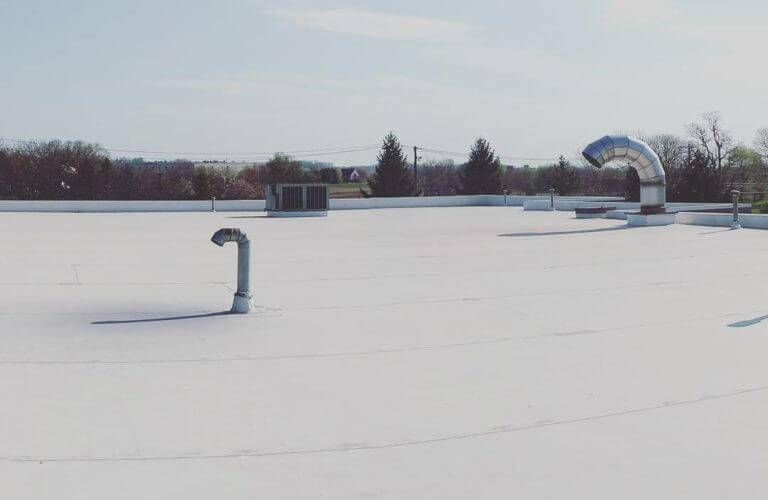
Flat roofs are built around one assumption: water lands on the roof and leaves quickly. When that happens, the system behaves roughly the way manufacturers promise and the roof can reach its expected lifespan.
When it doesn’t, everything ages faster.
Standing water increases pressure on seams, accelerates UV breakdown, and keeps insulation and structural components wet for longer than they were designed to handle. And because most of that damage happens out of sight, owners assume the roof is fine until the first leak appears.
That’s why two buildings with the exact same roof can end up on completely different timelines. One lasts 25–30 years. The other starts failing before year 15.
Same materials. Same warranty. Completely different outcome.
This guide breaks down what actually determines flat roof lifespan - and why the hidden factors around the system matter far more than the membrane itself.
Want to extend the life of your roof and prevent early failure? Read our guide: Flat Roof Maintenance Tips
Table of Contents
- The lifespan lie everyone believes
- Why maintenance is basically a time machine for your roof
- Material vs. system lifespan (not the same thing)
- Water pooling: the silent killer
- Why your contractor choice matters more than the product
- Climate stuff nobody thinks about
- When to stop repairing and just replace the damn thing
- The inspection gap (aka why your roof is dying and you don't know it)
- The only number that actually matters: cost per year
- What to actually do about all this
TL;DR
Look, if you want the short version: your flat roof's lifespan has almost nothing to do with what it's made of and everything to do with whether you actually take care of it. Most of you won't. That's why roofs rated for 30 years die at 15.
Water pooling will kill any roof. Doesn't matter if it's the expensive stuff. And nobody takes this seriously until they're writing a check for $80K.
Also, those lifespan estimates? Complete fiction. They assume you'll do everything right. You won't.
Most flat roofs fail at their seams and penetrations, not their membranes, which changes everything about how you should think about longevity. The real metric isn't "how long does a flat roof last" but "cost per year of service," and when you run those numbers, the conventional wisdom about materials gets flipped upside down.
Biannual inspections can double a flat roof's functional lifespan. But 80% of commercial property owners skip them because they don't see water dripping yet.
Climate affects flat roofs differently than pitched roofs. UV exposure and thermal cycling do more damage than rain in most places, but nobody plans for that.
The Lifespan Lie Everyone Believes
Every roofing manufacturer will tell you their product lasts 25-30 years. TPO, EPDM, whatever. They've all got these nice neat numbers. And technically they're not lying, but they're also completely full of shit because those numbers assume a perfect world that doesn't exist.
I've looked at hundreds of commercial roofs, and here's what actually happens. Two identical buildings, same materials, installed the same year, sitting in the same industrial park. Ten years later, one needs minor touch-ups. The other? Complete replacement. And it's not the membrane that's different.
Material lifespan estimates assume you'll catch small problems before they become big ones. They assume your drainage system works as designed. They assume the installer followed manufacturer specifications exactly (spoiler: many don't). They assume you're not running HVAC equipment that creates constant foot traffic across vulnerable areas.
You know what tells me a roof is going to fail? When I see the HVAC guys have worn a path across the membrane. Not visible damage yet, just this slightly different texture where boots have compressed the material 10,000 times. That's your failure point in 18 months.
Most property owners make decisions based on these theoretical lifespans, then feel blindsided when their roof fails years before the estimate. The problem isn't that the estimates are lies. They're incomplete answers to a complex question.
I've got this client. Owns two warehouses off I-25. 2015, he puts TPO on both buildings. Same contractor, same everything. Building A, he's obsessive. Calls us twice a year, fixes every little thing we flag. Three hundred bucks here, four-fifty there. His maintenance guy hates me because I'm always finding something.
Building B? "Call me when it leaks" approach.
And it did leak. Year 8. Destroyed $35K worth of inventory. Now he's replacing the whole roof.
Same material. Same installation. 18-year difference in lifespan because one guy spent $500 a year on maintenance and the other guy thought he was saving money.
When someone asks "how long does a flat roof last," they're expecting a number. What they need is a conversation about how they plan to care for it.
Why Maintenance Is Basically a Time Machine for Your Roof
Maintenance doesn't add years to your flat roof's life in some simple way. It multiplies longevity through compound effects that most cost analyses completely miss.
A tiny puncture in your membrane (maybe from a dropped tool during HVAC service) allows water infiltration. That water doesn't just damage the immediate area. It travels laterally through your insulation layer, potentially affecting 50-100 square feet of substrate before you notice interior leaking.
By then, you're not patching a puncture anymore. You're replacing sections.
Caught during a routine inspection? That's a 30-minute repair with some mastic and a patch. Cost: under $200. Discovered after interior damage appears? You're looking at membrane replacement, insulation replacement, and possibly deck repairs. Cost: $8,000 to $15,000 for the same initial problem.
This multiplication effect explains why well-maintained EPDM roofs regularly exceed 35 years while neglected TPO roofs (theoretically more durable) fail at 15. The material matters less than the attention it receives.
Property owners who implement biannual inspections (spring and fall, ideally) see their roofs reach or exceed manufacturer estimates. Those who adopt a "fix it when it leaks" approach rarely make it past 60% of the projected lifespan. We're not talking about a 10 to 15% difference here. The maintenance multiplier can literally double your roof's functional life.
| Maintenance Approach | Average Lifespan | Total Cost Over Life | Cost Per Year | Emergency Repairs |
|---|---|---|---|---|
| Biannual Inspections | 28–32 years | $65,000 | $2,187 | Rare (1–2 total, if you're lucky) |
| Annual Inspections | 22–26 years | $58,000 | $2,417 | Occasional (3–5 total) |
| Reactive Only | 12–16 years | $52,000 | $3,714 | Frequent (8–12 total, plus the stress) |
Yet roughly 80% of commercial property owners skip regular inspections. The reasons are predictable: budget constraints, competing priorities, the assumption that "no visible problems means no problems."
This drives me crazy. A property manager decides to skip the $400 fall inspection to save money this quarter. Six months later, they're dealing with a $12,000 emergency repair that could have been prevented with a $600 fix identified during that skipped inspection. I've had this exact conversation probably fifty times.
Biannual Flat Roof Maintenance Checklist
Spring Inspection (Post-Winter):
- Check all seams for separation or lifting
- Inspect flashings around penetrations for gaps
- Clear all drains and scuppers of debris (leaves, tennis balls, whatever)
- Document any ponding areas after rainfall
- Look for punctures or tears in the membrane
- Test caulking and sealants for deterioration
- Check for substrate damage from freeze-thaw cycles
Fall Inspection (Pre-Winter):
- Remove all accumulated debris and vegetation
- Verify drainage system functionality before snow season
- Inspect for UV damage and membrane brittleness
- Check HVAC equipment surroundings for damage
- Seal any minor cracks or gaps you find
- Document roof condition with photos
- Schedule any necessary repairs before winter hits
Material Lifespan vs. System Lifespan (Not the Same Thing)
Your flat roof isn't a single component. It's a system with multiple parts that age at different rates, and the system only lasts as long as its weakest element. This confused me for years when I was starting out.
The membrane itself (whether EPDM, TPO, PVC, or modified bitumen) isn't usually the first thing to fail. Seams fail. Flashings deteriorate. Penetrations develop gaps. Drainage components clog or separate. The substrate beneath everything can degrade from moisture infiltration that never reaches your interior ceiling.
Industry data shows that 70–80% of flat roof leaks originate at seams, penetrations (pipes, vents, HVAC equipment), or transitions (where the roof meets walls, parapets, or other structures). The field of the membrane, that large uninterrupted expanse, rarely develops problems unless it's physically damaged or severely degraded by UV exposure.
This matters enormously for longevity planning. A roof with 15 HVAC penetrations will require more maintenance and have more potential failure points than an identical roof with 3 penetrations. A roof with heat-welded seams (common in TPO and PVC) will outlast one with adhesive-bonded seams, even if the base material is theoretically less durable.
Last year, restaurant owner replaced their 3,200-square-foot flat roof with premium EPDM rated for 30 years. The membrane field remained in excellent condition for 14 years. But the roof failed at year 14 because of deteriorated flashings around eight rooftop HVAC units and two exhaust vents.
The flashing material (a different product than the membrane) had a shorter lifespan and wasn't included in the maintenance plan. The owner faced a $22,000 repair bill. Not because the membrane failed, but because the system's integration points weren't maintained. The membrane itself could have lasted another 10 to 15 years with proper flashing replacement at year 10.
When you're evaluating how long a flat roof lasts, you need to assess the entire assembly. How are seams constructed? What's the flashing detail at penetrations? How many transitions exist? What's the substrate condition? Is there a proper drainage design, or will water pool in areas?
Manufacturers provide lifespan estimates for their membranes in isolation. That's useful information, but it's not the answer to "how long does a flat roof last?" Your roof is a system, and systems fail at their weakest integration point, not their strongest component.
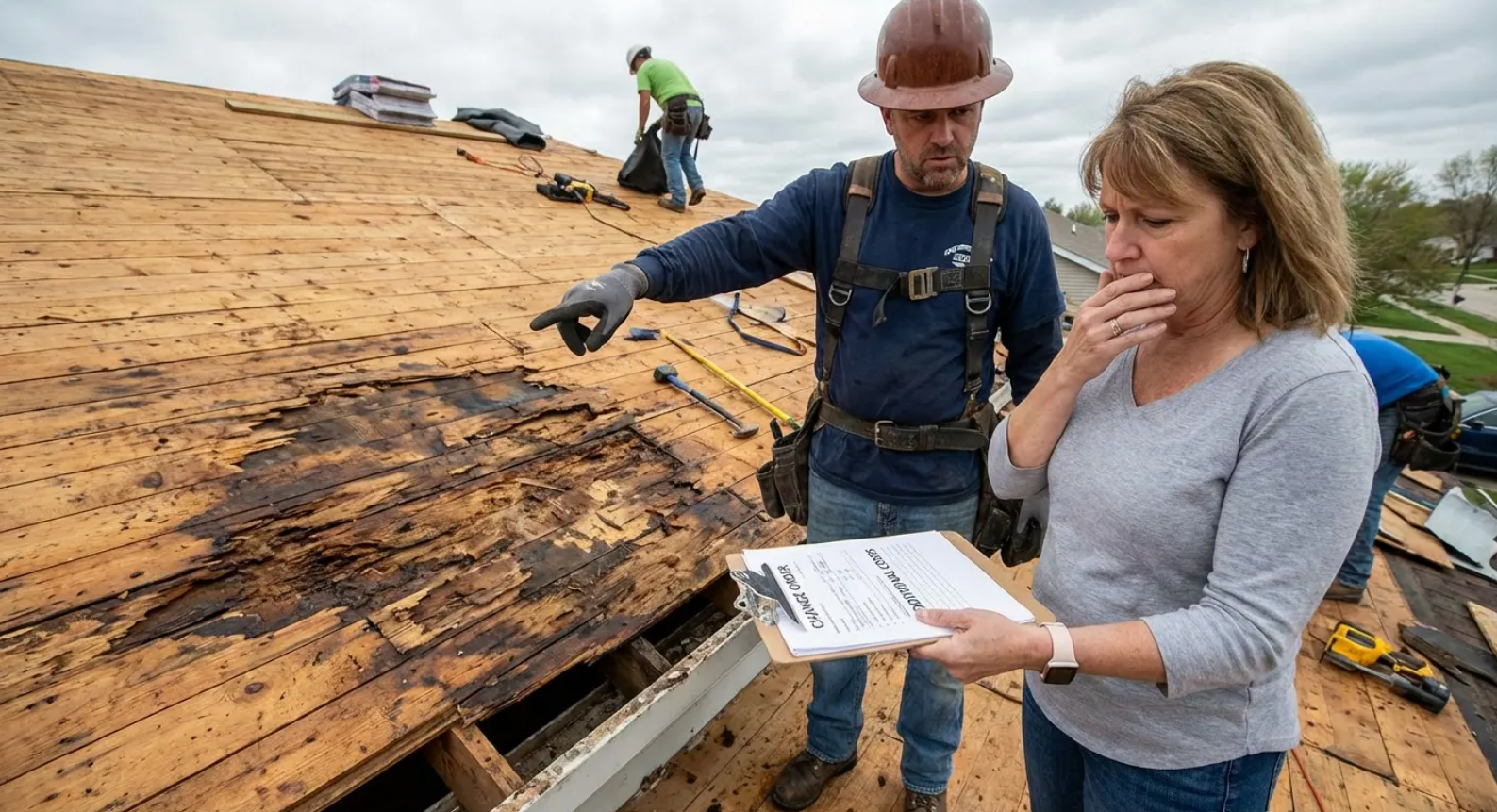
I've torn off roofs where the membrane was still in decent shape, but the entire system needed replacement because the substrate was compromised, the flashings were shot, and the seams were failing in multiple locations. You can't just replace flashings on a 20-year-old roof and expect another decade of service. At some point, the cumulative wear across all components means replacement is the only rational option.
Water Pooling: The Silent Killer
Ponding water will destroy your flat roof faster than any other single factor, yet it's dismissed as a minor cosmetic issue until catastrophic failure occurs.
The destructive nature of water pooling on flat roofs was recently demonstrated at the Potawatomi Conservatories in South Bend, where a green roof installed in 2016 began leaking "almost immediately" because gutters ran rainwater onto the flat roof where "water just pooled up and didn't drain." The city is now spending $160,000 to replace the failed roof with a more durable steel structure and TPO membrane. Inadequate drainage design can cause premature failure regardless of the roofing material selected.
Ponding (technically defined as water that remains on your roof 48 hours after rainfall) creates multiple simultaneous degradation mechanisms. The standing water acts as a magnifying glass for UV radiation, accelerating membrane breakdown. It adds weight stress to areas not designed to support it all the time. It increases the probability of leak development by maintaining constant hydrostatic pressure against seams and penetrations.
Research shows that areas with chronic ponding experience 40–60% faster deterioration than properly drained sections of the same roof. A TPO roof rated for 25 years might deliver only 12–15 in areas where water regularly pools. The membrane literally breaks down at an accelerated rate.
Why does ponding happen? Sometimes it's a settlement (the building structure shifts slightly over years, creating low spots). Sometimes it's inadequate initial slope (flat roofs should have 1/4 inch per foot minimum slope for drainage). Often it's clogged or inadequately sized drains. Occasionally it's poor design that creates unavoidable low areas given the roof's layout and drain placement.
Property owners notice ponding and assume it's normal. "It's called a flat roof, right?"
Wrong.
Flat roofs should drain completely within 48 hours of rain. If yours doesn't, you have a problem that's actively shortening your roof's lifespan every time it rains.
You can smell a failing roof in areas with chronic ponding. Not like rot exactly, more like wet cardboard mixed with algae. Sounds crazy, but after a while you walk up to a building and just know.
Fixing ponding requires adding slope (through tapered insulation), improving drainage (additional drains or scuppers), or in severe cases, structural intervention. These solutions aren't cheap, but they're far less expensive than replacing a roof that failed prematurely because of chronic ponding.
You can choose the most durable membrane available, pay for premium installation, and maintain it religiously. If water pools regularly, you've still shortened your roof's life by decades. Drainage isn't a detail. It's foundational to longevity.
Why Your Contractor Choice Matters More Than the Product
Two identical TPO roofs, installed the same week, with materials from the same manufacturer batch, can have a 20-year lifespan difference. The variable? Installation quality.
Proper flat roof installation requires obsessive attention to details that aren't visible once the job is complete. Seam overlap must meet manufacturer specifications (usually 6 inches minimum for heat-welded TPO). Adhesive coverage needs to be consistent and adequate. The substrate must be properly prepared (clean, dry, smooth). Penetration flashings require specific sequencing and overlap patterns. Fastening density must match the building's wind uplift requirements.
Cut corners on any of these, and you've compromised the entire system.
A seam that's only 4 inches wide instead of 6 might hold for five years, then fail. Inadequate adhesive might allow wind to get under the membrane, causing billowing and eventual tearing. Improperly flashed penetrations will leak, often for years before the water reaches your interior ceiling.
The problem? You can't see installation quality from the ground. A roof that looks perfect might have critical flaws built into its construction. By the time these flaws manifest as leaks, the installer's workmanship warranty has expired.
This is why contractor selection matters so much. Manufacturers certify installers who meet their training and quality standards. These certifications aren't just marketing. They represent documented competency in proper installation techniques. Certified installers offer longer warranties because they're confident in their work quality.
Price shopping your flat roof installation is financially irrational when you understand the longevity implications. A bid that's 20% cheaper might seem attractive until you realize it could deliver a roof that lasts 40% less time. The cost per year of service (the only metric that matters) is way higher with cheap installation.
I've torn off and replaced roofs that were only 8–10 years old because of installation defects. The materials were fine. The execution was fatally flawed. That's not a material failure. It's an installation failure, and it's entirely preventable by choosing competent contractors over cheap bids.
Contractor Evaluation Checklist for Flat Roof Installation
Certifications & Credentials:
- Manufacturer-certified installer for your chosen material
- Valid state/local licensing and insurance
- OSHA safety compliance certification
- Minimum 5 years flat roof installation experience (honestly, I prefer 10+)
Quality Indicators:
- Provides detailed written specifications, not just a price
- Offers minimum 10-year workmanship warranty
- Conducts pre-installation substrate assessment
- Uses manufacturer-approved installation methods
- Provides references from similar commercial projects
Red Flags to Avoid:
- Bid is 30%+ lower than other qualified contractors (run away)
- Reluctant to provide proof of insurance or certifications
- Pushes for immediate decision without proper inspection
- Offers only 1–2 year workmanship warranty
Climate Stuff Nobody Thinks About
Climate affects flat roofs through mechanisms that most property owners never consider, and these effects vary dramatically by region in ways that generic lifespan estimates completely ignore.
UV exposure is the silent killer in sunny climates. Flat roofs receive direct, perpendicular sunlight for hours daily, unlike pitched roofs where the angle reduces intensity. This UV bombardment breaks down polymer chains in synthetic membranes, causing them to become brittle and crack. A TPO roof in Phoenix experiences UV stress that's dramatically higher than the same roof in Portland, potentially reducing lifespan by 30–40%.
Thermal cycling (the daily expansion and contraction caused by temperature changes) creates fatigue stress at seams and penetrations. Regions with high daily temperature swings (think desert climates where it's 95°F at 3 PM and 55°F at 3 AM) stress roofing systems more than areas with stable temperatures.
This cycling doesn't cause immediate failure. It accumulates damage over thousands of cycles until seams separate or membranes crack.
Freeze-thaw cycles in cold climates create their own problems. Water that infiltrates any small gap or crack expands when it freezes, widening the opening. Thaw, repeat, gradually enlarge the damage. A minor seam defect that would remain stable in a warm climate becomes a progressive failure point in regions with regular freeze-thaw cycling.
Wind uplift in coastal or high-wind areas stresses the attachment system. Flat roofs are particularly vulnerable to wind getting underneath the membrane and creating uplift forces. Inadequate fastening (remember that installation quality variable?) combined with high winds can cause catastrophic failure even on relatively new roofs.
| Climate Type | Primary Stress Factor | Best Material Choice | Expected Lifespan Adjustment | Maintenance Priority |
|---|---|---|---|---|
| High UV (Southwest) | UV degradation | PVC (UV-stable) | -30% for TPO/EPDM | Quarterly inspections for brittleness |
| Temperature Swings (Desert) | Thermal cycling | EPDM (flexible) | -20% all materials | Biannual seam inspections |
| Freeze-Thaw (Northern) | Ice expansion | EPDM or modified bitumen | -25% for rigid membranes | Spring damage assessment |
| Coastal/High Wind | Wind uplift | Any with enhanced fastening | -15% if improperly fastened | Annual attachment testing |
| Moderate (Pacific NW) | Moisture/moss | TPO or PVC | Baseline estimates apply | Annual cleaning/drainage check |
Material selection should account for your specific climate. PVC performs exceptionally well in high-UV environments because it's more UV-stable than TPO. EPDM handles freeze-thaw cycles better than most alternatives because of its flexibility. Modified bitumen works well in moderate climates but struggles in extreme heat. I've seen it basically melt in Texas summers. Not literally melt, but close enough that you don't want to walk on it in July.
Climate considerations in flat roof design are evolving beyond just weather resistance. In a recent defense of flat roof selection for a new school in Vermont, PC Construction's director of preconstruction explained that flat roofs are engineered specifically to hold snow safely in place and are the industry standard across the Northeast. Maine's state funding only covers flat roofs despite heavy snowfall, because they provide economical long-term value when properly designed for regional climate conditions.
Generic lifespan estimates assume moderate climate conditions. If you're outside that moderate range (and most locations are in some way), adjust your expectations and material selection accordingly. A roof that delivers 30 years in one climate might only provide 18–20 in another, using identical materials and installation quality.
This plays out all the time. A property owner chooses TPO because it's rated for 25-30 years, installs it in Arizona, and wonders why it's showing significant degradation at year 12. The material isn't defective. It's being asked to perform in conditions that accelerate its breakdown beyond what the rating accounts for.
Nobody tells you this stuff because most contractors just install whatever they're comfortable with, regardless of whether it's right for your climate. That's how you end up with TPO in Arizona that's toast at 12 years.
When to Stop Repairing and Just Replace the Damn Thing
Knowing when to stop repairing and start replacing is one of the most financially important decisions you'll make about your flat roof, yet most property owners get it wrong by clinging to sunk costs.
The roofing industry uses a rough guideline: if a repair costs more than 50% of replacement value and your roof is past 70% of its expected lifespan, replacement makes more financial sense. But this formula misses critical nuances that affect real economics.
Repair frequency matters more than individual repair cost. A roof requiring $3,000 in repairs annually might seem manageable compared to a $45,000 replacement. Run that scenario for five years, though, and you've spent $15,000 on a roof that still needs replacing. You didn't extend its life. You just delayed the inevitable while throwing money at a deteriorating asset.
Multiple repairs in different areas signal systemic failure, not isolated problems. When you're patching seams in three locations this year, flashings in two areas next year, and membrane sections the year after, your roof isn't experiencing bad luck. It's telling you the entire system is reaching the end of life. Addressing failures individually costs more and delivers less than systematic replacement.
A medical office building with a 19-year-old modified bitumen roof faced a decision in 2024. They had spent $4,200 on repairs in 2022, $5,800 in 2023, and received a quote for $6,500 in additional repairs for 2024. Replacement cost was quoted at $52,000.
The property manager calculated they were spending roughly $5,500 annually on a roof rated for 20-25 years that was already at year 19. Rather than spend another $6,500, they replaced the roof. Within six months of that decision, two additional leaks appeared in unrepaired sections. Leaks that would have cost another $3,000–$4,000 to address. The replacement decision saved them from spending $9,500–$10,500 on a roof that would still need replacement within 1–2 years.
Emergency repairs carry premium pricing (often 50-100% higher than scheduled work) and cause business disruption. Water intrusion doesn't wait for convenient timing. You're paying rush rates, dealing with interior damage, potentially losing inventory or facing business interruption. These hidden costs rarely factor into repair vs. replacement calculations, but they should.
The psychology of sunk costs sabotages rational decision-making. "We just spent $8,000 on repairs two years ago" feels like a reason to keep repairing. It's irrelevant. That $8,000 is gone regardless of your next decision. The only question that matters: what provides the best value going forward?
Property owners who replace proactively (when repairs become frequent but before catastrophic failure) spend less total money and avoid emergency situations. Those who repair reactively until forced into emergency replacement pay more in combined repair and replacement costs, plus suffer business disruption.
Your roof doesn't care about your past investment. It's going to fail based on its current condition and remaining lifespan. Make decisions based on forward-looking economics, not backward-looking emotion.
The Inspection Gap (Or: How Saving $400 Costs You $40,000)
Most flat roofs fail prematurely because of problems that existed for months or years before anyone noticed them. Professional inspections close this gap, but only if you schedule them.
Manufacturer warranties require annual inspections as a condition of coverage. Most property owners ignore this requirement until they file a claim and discover their warranty is void. But the inspection requirement isn't just warranty theater. It's based on the documented reality that early problem detection dramatically extends roof life.
What does a proper inspection involve? Core sampling to check moisture infiltration in the substrate and insulation layers. Infrared thermography to identify wet areas not visible to the naked eye. Detailed examination of all seams, penetrations, and flashings. Drainage assessment to identify ponding areas. Fastener pull tests to verify attachment integrity. Documentation with photos and condition ratings.
You can't do this yourself with a ladder and a weekend afternoon. Professional inspections require specialized equipment and trained eyes that know what deterioration looks like in its early stages. That small blister in your EPDM membrane might look cosmetic to you. An experienced inspector knows it indicates substrate moisture that will cause a 20-square-foot failure within 18 months if not addressed.
The economics are straightforward. A professional inspection costs $300–$800 depending on roof size and complexity. It identifies $500–$2,000 in minor repairs that, if addressed immediately, prevent $10,000–$50,000 in major failures within 2-3 years. The return on investment is 10:1 or better, every single time.
Yet inspection compliance rates are abysmal. Property owners skip them because the roof "looks fine" from the ground, because the budget is tight this quarter, because it's one more thing to schedule and manage. These are all understandable human responses to a non-urgent task. They're also financially irrational when you calculate the expected value.
Biennial inspections (spring and fall, ideally) catch seasonal damage before it compounds. Spring inspections identify winter freeze-thaw damage. Fall inspections catch summer UV degradation and prepare the roof for winter weather. This rhythm aligns with how flat roofs deteriorate and maximizes problem detection.
The inspection gap between what you should do and what you actually do is probably shortening your roof's lifespan by 30–50%. That's not a guess. It's based on comparing well-maintained roofs to neglected ones with identical materials and installation quality. Maintenance discipline creates that difference, and inspections are the foundation of maintenance discipline.
The Only Number That Actually Matters: Cost Per Year
Every flat roof discussion focuses on the wrong numbers. Upfront cost doesn't matter. Theoretical lifespan doesn't matter. Cost per year of actual service is the only metric that reflects real economic value.
Here's how to calculate it properly: (Installation cost + lifetime maintenance cost + lifetime repair cost) ÷ actual years of service. This formula accounts for everything that affects your total investment, not just the initial check you write.
Consider two scenarios. Roof A: $30,000 installation, minimal maintenance, lasts 15 years because of poor installation quality. Roof B: $42,000 installation, $500 annual maintenance, lasts 28 years because of quality installation and regular care.
Roof B includes $14,000 in maintenance over 28 years ($500 × 28). Roof A will require repairs too, probably more of them given the poor installation. Factor in realistic repair costs (conservatively $5,000 over 15 years for Roof A, $3,000 over 28 years for Roof B because maintenance prevents major repairs), and the real calculation is:
Roof A: ($30,000 + $5,000) ÷ 15 = $2,333/year
Roof B: ($42,000 + $14,000 + $3,000) ÷ 28 = $2,107/year
Roof B costs $12,000 more upfront but delivers better value over its lifetime. It also avoids the disruption and risk of premature replacement.
This framework changes material selection decisions. Modified bitumen might cost less than PVC upfront, but if it requires more frequent repairs and lasts fewer years in your climate, the cost per year could be higher. TPO might seem like a budget option until you factor in its sensitivity to installation quality and the premium you need to pay for certified installers to achieve its theoretical lifespan.
The lowest cost per year almost always comes from mid-to-high-end materials, professionally installed, with consistent maintenance. The highest cost per year comes from budget materials, cheap installation, and reactive maintenance (fixing problems after they cause damage rather than preventing them).
Property owners make this calculation error constantly because humans are terrible at long-term financial planning. We overweight upfront costs and underweight future costs, even when the future costs are predictable and substantial. The roofing industry enables this bias by leading with material cost and theoretical lifespan rather than realistic total cost of ownership.
You're not buying a roof. You're buying years of weather protection. Price it accordingly. Calculate the cost per year for each option you're considering, using realistic assumptions about maintenance requirements and actual (not theoretical) lifespan based on your climate, building use, and commitment to maintenance.
The number that results from this calculation is the only one that matters for comparing your options. Everything else is just marketing or wishful thinking.
What to Actually Do About All This
You're probably reading this because you're facing a decision. Your flat roof is showing age, or you're planning a replacement, or you're trying to figure out if that estimate you received is reasonable.
The frustrating truth? Generic guidance only gets you so far. Your specific roof, on your specific building, in your specific climate, with your specific budget and operational constraints requires specific analysis. The variables we've covered (maintenance history, installation quality, drainage, climate, current condition) interact in ways that make cookie-cutter recommendations unreliable.
Professional assessment isn't optional if you want to make a truly informed decision. Someone needs to physically inspect your roof, understand your building's use case, review your maintenance history, and provide recommendations based on actual conditions rather than theoretical possibilities.
Look, I've seen too many property owners make expensive mistakes because they tried to DIY a decision that required professional input. I've also seen property owners get taken advantage of by contractors who recommend replacement when targeted repairs would suffice, or who underbid jobs and deliver poor installation quality.
If you're in Denver and you're staring at a roof that's giving you problems, call us. Joyland Roofing. We'll come look at it and tell you the truth, which might be "you need a new roof" or might be "fix these three things for $2,000 and you've got another five years."
I'm not interested in selling you a roof you don't need. I'm interested in still being in business in 20 years, which means not screwing people over.
Will we try to get your business? Obviously. But we'll do it by being straight with you, not by manufacturing urgency or upselling you into premium materials you don't need.
Whether you work with us or someone else, make sure you're getting professional evaluation before committing to major roof investments. The stakes are too high and the variables too complex for guesswork.
Final Thoughts
So how long does your flat roof last?
Honestly? However long you're willing to take care of it. I've seen $15K EPDM roofs hit 35 years because someone actually maintained them. I've seen $60K premium installations fail at 12 because nobody paid attention until water was dripping on the merchandise.
The industry doesn't want to tell you this because "it depends on whether you're lazy or not" isn't a great sales pitch. They'd rather talk about material specs and warranties. But after doing this for years, I can tell you: the roof you maintain beats the roof you ignore, every single time, regardless of what either one cost.
Material selection matters, but it's probably fourth or fifth on the list of longevity factors. Installation quality, maintenance discipline, drainage performance, and climate appropriateness all matter more. A budget material installed perfectly and maintained religiously will outlast a premium material installed poorly and neglected.
This isn't what the roofing industry typically tells you because it's harder to sell. Materials are tangible. You can compare spec sheets and prices. Maintenance discipline and installation quality are abstract. They require trust, ongoing commitment, and the ability to evaluate contractor competence rather than just compare bids.
But you know the truth now. Your flat roof's lifespan is largely within your control. Schedule those inspections. Address small problems immediately. Choose contractors based on quality, not price. Fix drainage issues before they cause membrane failure. Calculate cost per year, not upfront cost.
Do these things, and your flat roof will probably exceed its theoretical lifespan. Neglect them, and it definitely won't.
If that sounds like I'm blaming you for roof failure, yeah, kind of. Because most of the time, that's exactly what happens. The choice, and the resulting years of service, are yours.
Contact Us
We will get back to you as soon as possible.
Please try again later.