January 4, 2026
Should I Replace My Roof Before Selling? The Hidden Math Most Agents Won't Show You
Author
If you’re selling your house and the roof isn’t brand new, someone is going to tell you the same thing: replace it before you list. Your agent will say it. A contractor will definitely say it. Even well-meaning friends will repeat it like it’s obvious.
But the truth is, replacing your roof before selling is one of the most oversimplified pieces of advice in real estate. Sometimes it absolutely makes sense. Other times it’s a $15,000 mistake that buyers would’ve happily negotiated around. The difference comes down to your roof’s actual condition, who’s likely to buy your house, and what the market is doing right now.
Before you commit to tearing off thousands of dollars in shingles, it’s worth understanding how this decision really works. In fact, many homeowners don't realize how long a roof can last depending on materials, installation, and maintenance—something we explain in detail in our guide to parts of a roof and how shingles function.
Table of Contents
- Why the "Always Replace" Advice Might Be Costing You Money
- The Real Question: What Are Buyers Actually Seeing?
- The Inspection Report Factor Nobody Talks About
- When a Roof Replacement Becomes Your Best Negotiating Tool
- The Partial Fix Strategy That Splits the Difference
- The Disclosure Dilemma: What You're Legally Required to Reveal
- Reading Your Roof's Actual Condition (Not Just Its Age)
- The ROI Reality Check: What the Data Actually Shows
- Making the Call: A Decision Framework That Works
TL;DR
- Most agents tell you to replace your roof. Most agents are wrong about when it actually makes sense.
- Pre-listing inspections reveal whether you're screwed or just negotiating. Big difference.
- Partial repairs often deliver better returns than full replacements when done strategically before listing.
- That 107% ROI stat? Meaningless without context about your specific situation.
- Market conditions (buyer's vs. seller's market) flip the entire equation.
- Disclosure laws vary by state, but hiding known issues always backfires harder than addressing them upfront.
- Age alone doesn't determine replacement necessity. Material type, installation quality, and maintenance history matter way more.
- The decision framework should weigh: current condition + local market + buyer pool + your timeline + available capital.
Why the "Always Replace" Advice Might Be Costing You Money
Three contractors looked at my neighbor's roof before she listed her house. Three completely different opinions.
Contractor #1: "This needs to be replaced immediately. You'll never sell with this roof. $18,500."
Contractor #2: "Eh, it's got a few years left. I'd clean it and fix the flashing. $800."
Contractor #3: "Looks fine to me. Maybe monitor it."
Same roof. Same day. She wanted to throw something.
Every agent she talked to said the same thing: new roof or forget it. One even told her she'd lose $30K if she didn't replace it. Real estate agents love this advice. Contractors certainly aren't going to talk you out of it.
But nobody mentions this: you might be spending $15,000 to solve a problem that would've only cost you $8,000 in negotiations. When you're asking yourself should I replace my roof before selling, the question gets way more complicated than most people realize. Nobody's doing the actual math because everyone makes money when you replace that roof. Your agent wants a clean listing that moves fast. And look, I'm not saying they're heartless, but they make the same commission whether you pocket an extra $10K or not. Their math is different than yours. Contractors want the job. Home improvement shows have convinced us that everything needs to be pristine before we can possibly sell
Buyers aren't all the same. Some are handy and see your aging roof as an opportunity to negotiate down and choose their own contractor. Others are buying below their budget and have capital set aside for improvements. Cash buyers often couldn't care less about your roof's condition because they're planning a gut renovation anyway.
Your roof's age matters less than you think. Actually, scratch that. It barely matters at all. What matters is whether it's currently failing, likely to fail during the transaction period, or simply aging gracefully. A 20-year-old architectural shingle roof that's been properly maintained might have another 10 years of life. A 12-year-old roof with poor installation and no maintenance might be a legitimate problem.
The Commission Structure That Shapes This Advice
Let's talk about why your agent keeps pushing for a new roof. They make 3% of the sale price (give or take). So on a $300,000 house, that's $9,000. If you spend $15K on a roof and sell for $315,000, their commission goes up by about $450. That's it.
But that roof replacement delays your listing by two to three weeks, during which they can't close your deal and move to the next one.
I'm not suggesting agents are malicious. Most genuinely believe they're giving sound advice. The issue is structural: their business model rewards volume and speed over your maximum profit. They see deals fall apart over roof issues and develop a pattern-matching response that doesn't account for individual circumstances.
The Opportunity Cost You're Not Calculating
And think about where that money's coming from. If you're pulling $15,000 from savings or a HELOC, that's $15,000 you can't use for something else. Like, I don't know, the down payment on your next place. That might cost you a better interest rate or force you into PMI. If you're downsizing and investing the proceeds, you're losing months of potential market gains while that money sits in shingles.
Carrying costs matter too. And don't forget, while you're waiting for that roof crew to show up, you're bleeding money. Mortgage, insurance, utilities, the lawn guy. It adds up fast. If your market is cooling or interest rates are rising, the strategic timing of your sale might be worth more than the roof premium you'd capture.
Consider a homeowner in a cooling market who spends two months replacing their roof in late summer. By the time they list in October, they've missed the prime spring and early summer selling season, paid $2,400 in additional carrying costs (mortgage, insurance, utilities), and are now competing in a slower market where buyers have more negotiating power. The $15,000 roof investment plus $2,400 in carrying costs totals $17,400, but the October market might only support a $10,000 premium over what they could have gotten selling as-is in May.
They've lost $7,400 by making what seemed like the "responsible" choice.
The Real Question: What Are Buyers Actually Seeing?
Buyers see your roof for maybe 30 seconds. They pull up, look at the house, and make a snap judgment. If your roof looks like hell from the street, you're cooked. If it looks fine, they're not thinking about it.
My neighbor's roof was 22 years old. Ancient for shingles. But it was clean, uniform, no weird stains or curling. Buyers never mentioned it. Not once. Meanwhile, my other neighbor had a 12-year-old roof with black algae streaks all over it. Every single buyer brought it up.
Buyers don't see your roof the way you do. You know its history, when it was installed, how you've maintained it. They see it from the curb and maybe five minutes during the showing. That perception gap is where your decision gets made.
Curb appeal studies consistently show that roofing condition ranks in the top three visual factors affecting first impressions. But here's what actually matters: buyers are reacting to visible problems, not age. Dark streaks from algae growth, curling shingles, or obvious patches trigger concern. A roof that looks clean and uniform, even if it's 18 years old, doesn't set off alarm bells.
The inspection report changes everything (more on that in a sec). But in that critical first showing, you're dealing with visual assessment and gut reactions. A roof that looks problematic can prevent buyers from even making an offer. A roof that simply isn't new rarely has the same effect.
First-Time Buyers vs. Experienced Buyers
First-time buyers are the most nervous about roof condition because they're stretching their budget and terrified of unexpected expenses. They're also usually working with FHA or conventional loans that have stricter property condition requirements. For this buyer pool, roof condition carries outsized weight in their decision-making.
Experienced buyers and investors view roofs as line items. They've been through transactions before and understand that few homes are perfect. They're running calculations about negotiation leverage and whether the overall deal makes sense. These buyers might prefer that your roof needs work because it gives them a concrete reason to offer below asking price.
I know a real estate investor who's bought 30+ houses. She told me she specifically looks for houses with beat-up roofs because sellers panic and drop their price by $20K. Then she spends $12K on the roof and pockets the difference. Your problem roof is her profit center.
You need to know who's actually going to buy your house. Understanding your likely buyer demographic matters enormously. A starter home in a first-time buyer neighborhood has different roof calculus than a move-up property where buyers have equity and experience.
| Buyer Type | Roof Age Sensitivity | Financing Constraints | Negotiation Approach | Best Strategy for Sellers |
|---|---|---|---|---|
| First-Time Buyers | High - fear unexpected costs | FHA/VA loans require 2+ years remaining life | Emotional, may walk away over concerns | Replace if failing; repair visible issues; consider certification |
| Move-Up Buyers | Moderate - experienced but cautious | Conventional loans, more flexibility | Calculate repair costs into offer | Targeted repairs; price adjustment may work |
| Investors/Cash Buyers | Low - view as line item | No loan requirements | Aggressive negotiation using any flaw | Sell as-is; they prefer discount over your repairs |
| Downsizers | Moderate to Low - want simplicity | Often cash or large down payments | Prefer move-in ready but will negotiate | Clean presentation matters more than newness |

The Visual Fixes That Cost Almost Nothing
Sometimes you don't need a new roof. You need a clean one.
Algae staining (those black streaks common in humid climates) can make a perfectly functional roof look decrepit. Professional roof cleaning costs $300-600 and can transform your home's appearance.
Minor repairs create disproportionate visual impact too. Replacing a few damaged shingles, resealing flashing around chimneys and vents, or fixing a small section of curling shingles might cost $500-800. If these visible problems are what's triggering buyer concern, you've just solved your roof issue for 5% of replacement cost.
This is where a pre-listing roof inspection (not a full home inspection) becomes valuable. For $200-400, a roofing contractor can tell you exactly what visible issues are creating problems and what they'd cost to address. You might discover that $1,200 in targeted repairs eliminates the need for a $15,000 replacement discussion.
The Inspection Report Factor Nobody Talks About
The home inspection has become the second negotiation in every real estate transaction. You agree on a price, then the buyer's inspector finds issues, and you're back at the table. Roofs are the single most common major item flagged in inspection reports.
What most sellers miss: the buyer's inspector is working for the buyer (obviously), but they're also covering their own liability. Inspectors have been sued for missing roof problems, so they've become increasingly conservative in their assessments. An inspector might flag a roof as "near the end of its useful life" even when it has 5-7 years of function remaining. That phrase in a report triggers buyer panic and renegotiation demands.
You can't control what the buyer's inspector will say. But you can control whether you're surprised by it.
Pre-listing inspections have become standard practice in competitive markets for good reason: they let you address problems on your timeline and budget, not under the pressure of a ticking contract contingency period.
What Inspectors Actually Look For
Home inspectors aren't roofers, which creates interesting dynamics. They're looking for visible signs of problems: missing or damaged shingles, improper flashing, inadequate ventilation, interior water stains that suggest leaks. They'll note the roof's age and material type. They'll often recommend a specialist evaluation if they see concerns.
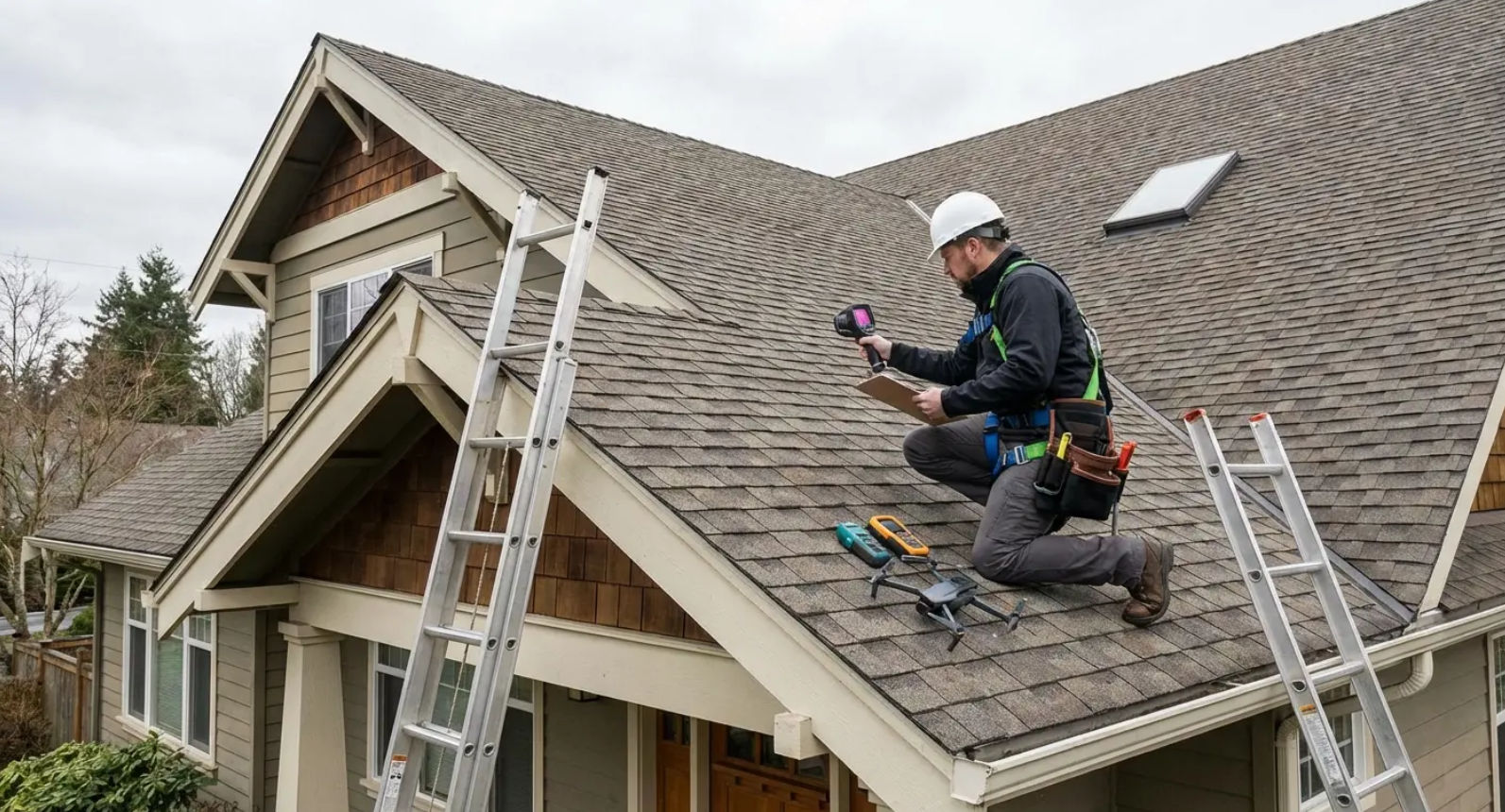
What they're not doing is guaranteeing the roof's remaining lifespan. Their reports are full of liability-limiting language about limitations of visual inspection and recommendations for specialist evaluation. But buyers read these reports emotionally, not technically. Any mention of roof concerns becomes a big deal.
The exact words in that inspection report? They matter. "The roof is aging and should be monitored" is very different from "The roof shows signs of active leaking and requires immediate attention." The first is maintenance advice. The second is a deal-killer unless addressed.
Figure out which bucket your roof is in. Everything else follows from that.
The Pre-Listing Inspection Strategy
Getting your own inspection before listing costs $400-600 but provides massive strategic advantage. You learn exactly what issues will be flagged, which ones matter, and what they'll cost to fix. You can then make an informed decision about whether to repair, replace, or price accordingly.
Buyers like this. It shows you're not hiding anything. You can provide the inspection report to potential buyers upfront, along with documentation of any repairs you made in response. This transparency reduces buyer anxiety and removes inspection contingencies as negotiation leverage. In multiple-offer situations, buyers who don't need to worry about inspection surprises often offer more aggressively.
Some sellers worry that getting an inspection creates disclosure obligations. You're right to consider this, which we'll address in the disclosure section. But in most cases, knowing problems and addressing them strategically beats hoping buyers won't find them.
Pre-Listing Roof Inspection - Stuff to Ask:
Before scheduling your inspection:
- Research 3-5 licensed roofing contractors or certified home inspectors in your area
- Verify they carry liability insurance and are willing to provide a written report
- Ask if they offer pre-sale roof certifications (some states recognize these)
- Clarify the inspection cost and what's included (written report, photos, estimated repair costs)
During the inspection, request documentation of:
- Overall roof condition assessment with estimated remaining lifespan
- Specific problem areas with photographs
- Itemized repair recommendations with priority levels (immediate, near-term, monitor)
- Estimated costs for each recommended repair
- Assessment of whether repairs vs. replacement makes more sense
After receiving the report:
- Get 2-3 quotes for any recommended repairs
- Calculate total repair costs vs. replacement cost
- Determine which repairs address deal-killer issues vs. negotiation points
- Decide whether to repair, replace, or price accordingly and disclose
- Keep all documentation organized for potential buyer review
When a Roof Replacement Becomes Your Best Negotiating Tool
Sometimes replacing your roof before selling is absolutely the right move. The trick is recognizing when you're in one of those situations versus when you're just spending money to feel proactive. Should I replace my roof before selling becomes a question with a clear "yes" answer in specific circumstances.
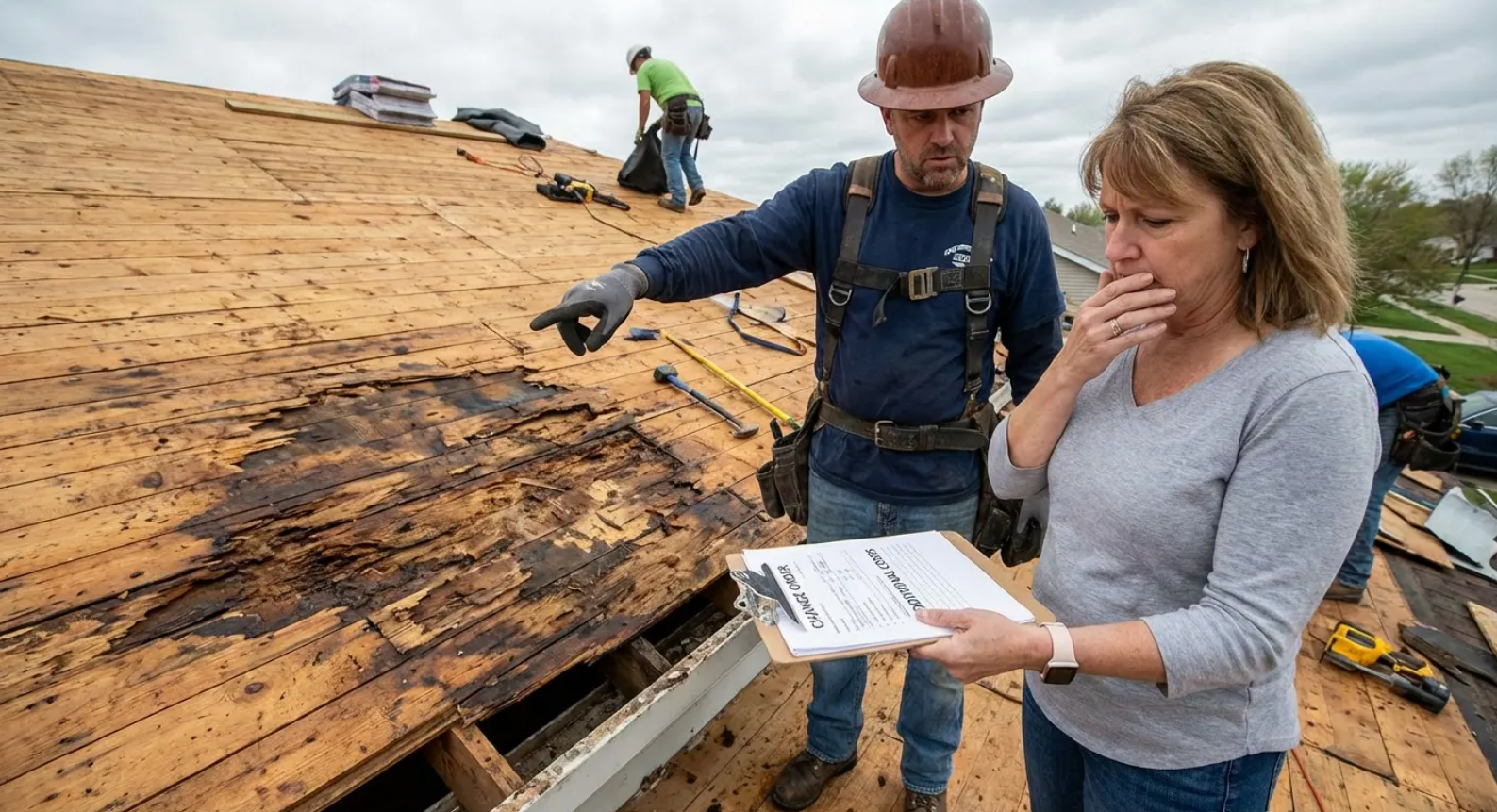
Active leaks or structural damage put you in replacement territory. You can't sell a house with water coming in (legally and practically), and repairs to damaged decking often cost enough that you might as well replace the whole roof. If your pre-listing inspection reveals rot, mold, or structural issues related to roofing failure, you're past the point of minor fixes.
Loan requirements force your hand in certain cases. FHA and VA loans require roofs to have at least two years of remaining life, and lenders interpret this conservatively. If your buyer pool is primarily first-time buyers using these loan products, a roof that's near the end of its rated lifespan will kill deals at the appraisal stage. You can't negotiate your way around loan requirements.
Florida insurance companies are adding new requirements to avoid insuring older homes, with some carriers now refusing to write policies on homes over 15 years old or requiring additional wind mitigation features that weren't originally installed. This creates a secondary pressure point for sellers in certain markets: even if a buyer can secure financing, they may struggle to obtain homeowner's insurance without a newer roof, effectively killing the deal at a different stage of the transaction.
The Price Point Threshold
Your home's price range changes buyer expectations completely. Buyers paying $600,000+ expect move-in condition and have less tolerance for deferred maintenance. They're comparing your home to others in that price range, many of which will have newer roofs. In luxury markets, an aging roof isn't a negotiation point. It's a reason to look at the next listing.
Conversely, buyers in the $200,000-300,000 range often expect to do some work. They're not shocked by a roof that needs replacement in a few years, and many are specifically looking for homes priced below market because of needed updates. In this segment, replacing your roof might not increase your sale price at all. You're just moving money from your pocket to the new owner's equity position.
Here's the actual math: will a new roof expand your buyer pool enough to justify the cost? In higher price ranges, it often does. In starter home territory, it usually doesn't.
Market Conditions Change the Equation Completely
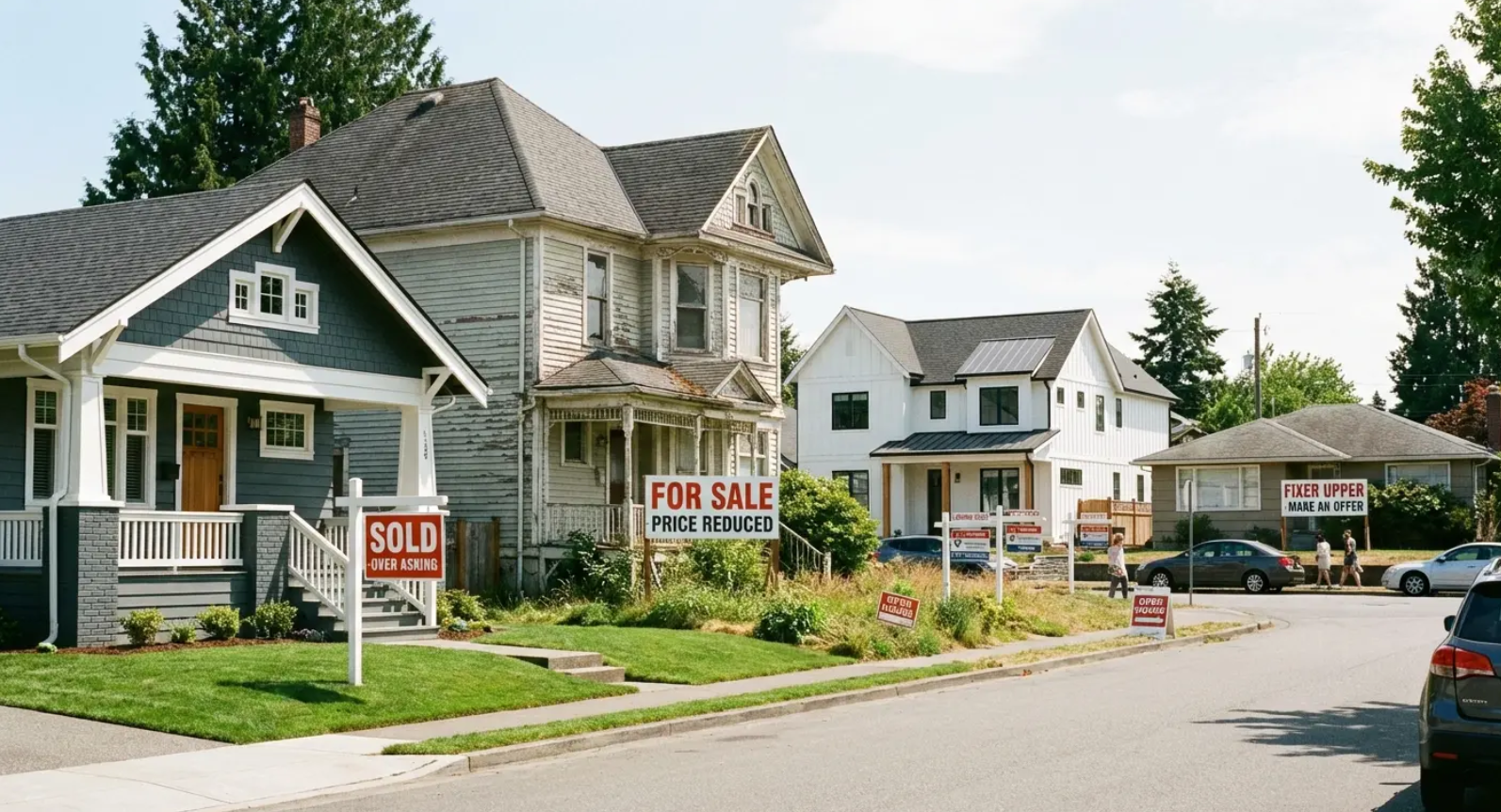
In a hot seller's market with multiple offers and low inventory, buyers are less picky about roof condition because they're competing for limited homes. You can sell with an aging roof and buyers will accept it (or compete to offer you the best terms despite it). Replacing your roof in this environment often means spending money you didn't need to spend.
In a buyer's market with high inventory and slow sales, every flaw becomes a negotiation point. Buyers can afford to be choosy because other options exist. An aging roof gives them leverage to demand price reductions or walk away entirely. In this environment, removing objections by replacing the roof can be smart, not because you'll get the money back, but because you'll get an offer.
You can't control when you need to sell. But you can at least think about whether you're selling into a hot market or a dead one. If you're selling in a slow market, investing in condition makes more sense than if you're selling when inventory is tight.
A seller in Austin, Texas listed their $447,000 home in May 2022 during a red-hot market with a 22-year-old roof showing visible wear. They received four offers within three days, all above the asking price. Two buyers waived the inspection contingency entirely, and the winning offer came in at $471,500 with no repair requests. Had this same seller spent $18,000 on a roof replacement before listing, they would have netted $7,000 less even with the above-asking offers. The market conditions made the roof irrelevant to motivated buyers competing for limited inventory.
The Partial Fix Strategy That Splits the Difference
You don't always need to replace an entire roof to solve your selling problem. Targeted repairs can address the specific issues that would tank your deal while preserving most of your capital.
Partial roof replacement works when damage is localized. If one section of your roof (say, the south-facing slope that takes the most sun exposure) is deteriorating while the rest is fine, replacing just that section costs 30-50% of a full replacement. This approach requires that the existing roofing material is still available and that the repair will blend reasonably well. It's not viable for discontinued products or when color matching is impossible.
What problem are you actually solving? If your issue is visible curling on the front-facing roof slope that's killing curb appeal, replacing just that section solves your problem. If your entire roof is uniformly aged and the inspector will flag the whole thing, partial replacement just kicks the can down the road without addressing buyer concerns.
The High-Impact Repair List
Certain roof repairs deliver outsized returns because they address issues that inspectors always flag or that create visible problems:
Flashing repairs around chimneys, skylights, and roof penetrations are the most common sources of leaks. Properly resealing and replacing flashing costs $400-1,200 depending on complexity and prevents the "evidence of water intrusion" language that kills deals.
Ridge cap replacement addresses the most visible part of your roof (the peak line that's silhouetted against the sky) and is often the first area to show wear. Replacing just the ridge cap costs $800-1,500 and improves appearance significantly.
Ventilation improvements solve a problem many older roofs have (inadequate attic ventilation leading to premature aging) and show buyers you've been proactive about maintenance. Adding ridge vents or improving soffit ventilation costs $600-2,000 and can extend your roof's functional life by years.
Valley repairs address another common failure point where two roof planes meet. Valleys concentrate water flow and often leak first. Repairing or replacing valley flashing costs $500-1,500 per valley.
Get a detailed assessment from a reputable roofer about which specific issues are present, then address only those that inspectors will flag or that create visible problems affecting curb appeal.
Documentation Matters More Than You Think
Buyers want proof that repairs were done correctly, not just assurance that you "fixed it." Get itemized invoices from licensed contractors, keep warranty documentation, and take before/after photos. When buyers see that you've addressed specific issues professionally, they're far less likely to demand full replacement or use the roof as a negotiation hammer.
This documentation also protects you legally. If you've made repairs and can show you addressed known issues with proper contractors, you've fulfilled your disclosure obligations and reduced liability for problems that might emerge after sale.
| Repair Type | Typical Cost | Visual Impact | Will This Actually Help? | Best For | ROI Potential |
|---|---|---|---|---|---|
| Professional Roof Cleaning | $300-$600 | High - removes algae stains | Cosmetic only | Functional roofs with appearance issues | 5X or better |
| Flashing Repair/Replacement | $400-$1,200 | Moderate | Yep, prevents leak flags | Roofs with penetration issues | 3-4X |
| Ridge Cap Replacement | $800-$1,500 | High - most visible roofline | Big time | Roofs with visible peak wear | 2-3X |
| Valley Repair | $500-$1,500 per valley | Low to Moderate | High - common leak point | Roofs with complex geometry | 2.5-3.5X |
| Partial Section Replacement | $3,000-$7,000 | High if front-facing | Moderate to High | Localized damage on visible areas | 1.5-2X |
| Ventilation Improvements | $600-$2,000 | Low | Shows maintenance | Any roof, especially in hot climates | 1-1.5X |
| Full Roof Replacement | $12,000-$25,000+ | Highest | Removes all concerns | Failing roofs, luxury markets, FHA buyers | 60-107% |
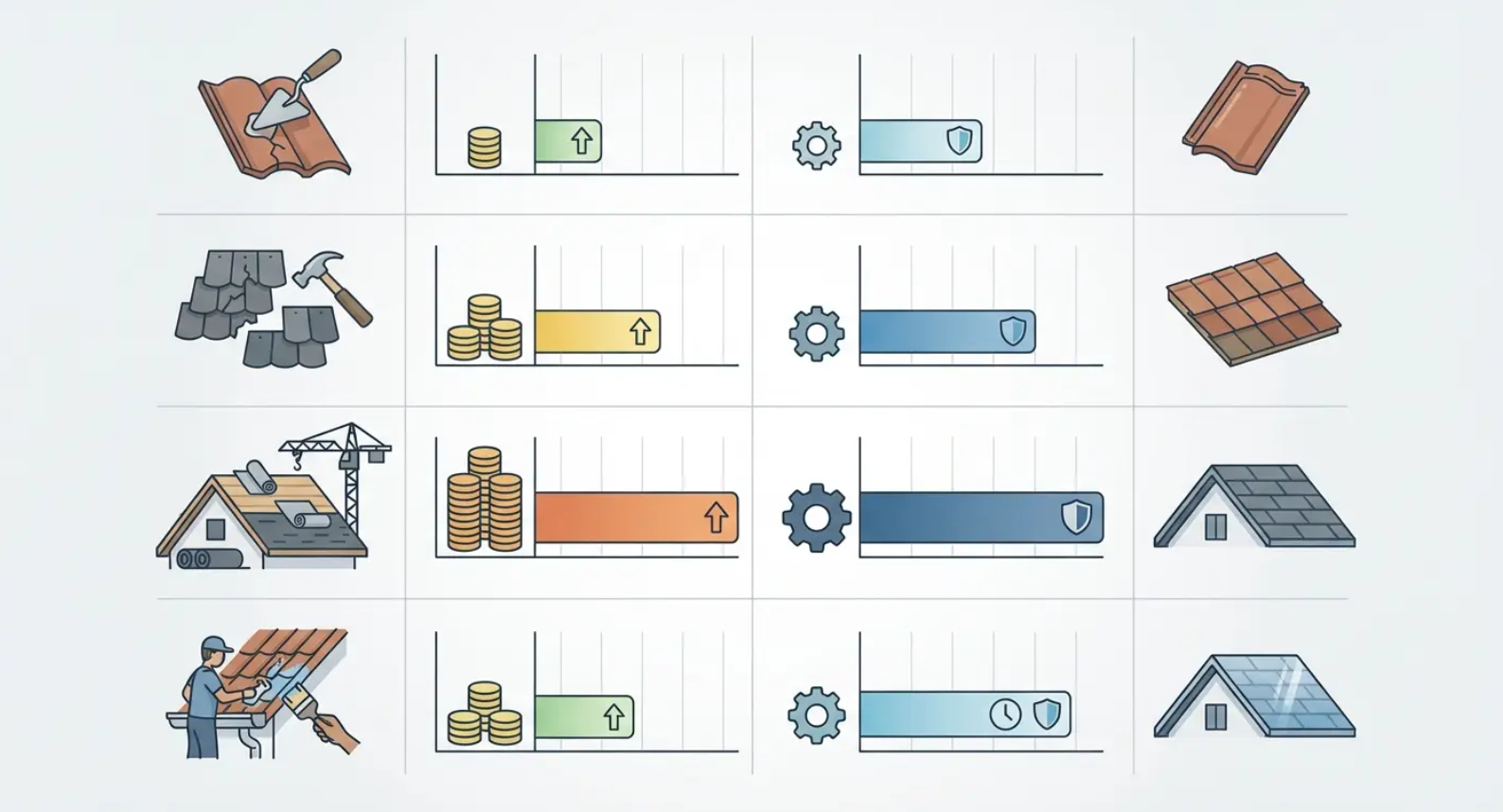
A homeowner in Denver received three roof assessments before listing their 18-year-old home. Contractor A said the roof needed immediate replacement and quoted $22,000. Contractor B said the roof had 3-5 years remaining and recommended monitoring plus minor flashing repairs costing $800. Contractor C said the roof was fine and needed nothing. The homeowner paid $400 for an independent roof consultant who identified that the south-facing slope had significant granule loss and recommended replacing just that section for $6,500, while the north-facing slopes were in good condition. They made the partial replacement, sold the home three months later, and the inspection report noted "recently replaced south roof section, remaining sections in good condition." Total investment: $6,900 versus the $22,000 full replacement quote.
The Disclosure Dilemma: What You're Legally Required to Reveal
Every state has different disclosure laws, but they all boil down to the same thing: if you know something's wrong, you have to tell buyers. The tricky part is defining "wrong."
If your roof is simply old, that's not a defect. Age is observable and buyers can assess it themselves. If your roof has leaked and you've repaired it, that's a known issue you must disclose. If you've had a roofer tell you the roof needs replacement within a year, that's knowledge you can't un-know.
Some sellers avoid getting inspections so they can claim ignorance. This is stupid for two reasons: (1) Buyers will find the same problems during THEIR inspection, and (2) courts are catching on to the "I didn't know because I didn't look" defense.
Better strategy: get the inspection, find out what's wrong, then decide whether to fix it or disclose it. At least you're making decisions with real information instead of crossing your fingers.
Recent HOA disputes, as reported in The Palm Beach Post, highlight how architectural standards and roof replacement requirements are evolving. While HOAs can't typically force premature replacement of functional roofs, they can set new architectural standards for future replacements. This creates disclosure complications for sellers in HOA communities: you may need to disclose not just your roof's condition, but also any pending HOA requirements that could affect the buyer's future replacement options or timelines.
How to Disclose Without Killing Your Deal
Disclosure doesn't mean you can't sell your home. It means you need to be honest about known issues while framing them appropriately. There's a massive difference between these two disclosure approaches:
Approach 1: "The roof leaks and needs to be replaced immediately."
Approach 2: "The roof is original to the home (installed 2005, architectural shingles rated for 25-30 years). We had a minor leak near the chimney flashing in 2022 which was professionally repaired by ABC Roofing. No leaks since repair. Recent inspection indicates the roof is aging but functional. We're providing a $5,000 credit toward future roof replacement or repairs."
Both statements disclose the same essential facts, but the second provides context, demonstrates you've been responsible, and offers a solution. Buyers can work with this. What they can't work with is discovering problems you hid or feeling you've been deceptive.
Reading Your Roof's Actual Condition (Not Just Its Age)
Your roof's age is almost meaningless without context. A 15-year-old roof in Phoenix with intense UV exposure and poor ventilation might be shot. A 22-year-old roof in Seattle with quality installation and good maintenance might have 8 years of life remaining.
Material quality matters enormously. Basic three-tab shingles are rated for 20-25 years. Architectural (dimensional) shingles are rated for 30 years. Premium architectural shingles claim 50-year lifespans (though they rarely achieve this in practice). Metal roofing can last 50+ years. Knowing what's on your roof is step one.
Installation quality often matters more than material quality. The best shingles improperly installed will fail prematurely. Poor flashing, inadequate underlayment, incorrect nailing patterns, and improper ventilation all shorten lifespan significantly. If you don't know who installed your roof or whether they were qualified, that's a risk factor.
The Visual Inspection You Can Do Yourself
You don't need to climb on your roof to assess its condition (and you probably shouldn't for safety reasons). Binoculars and a walk around your property reveal most issues:
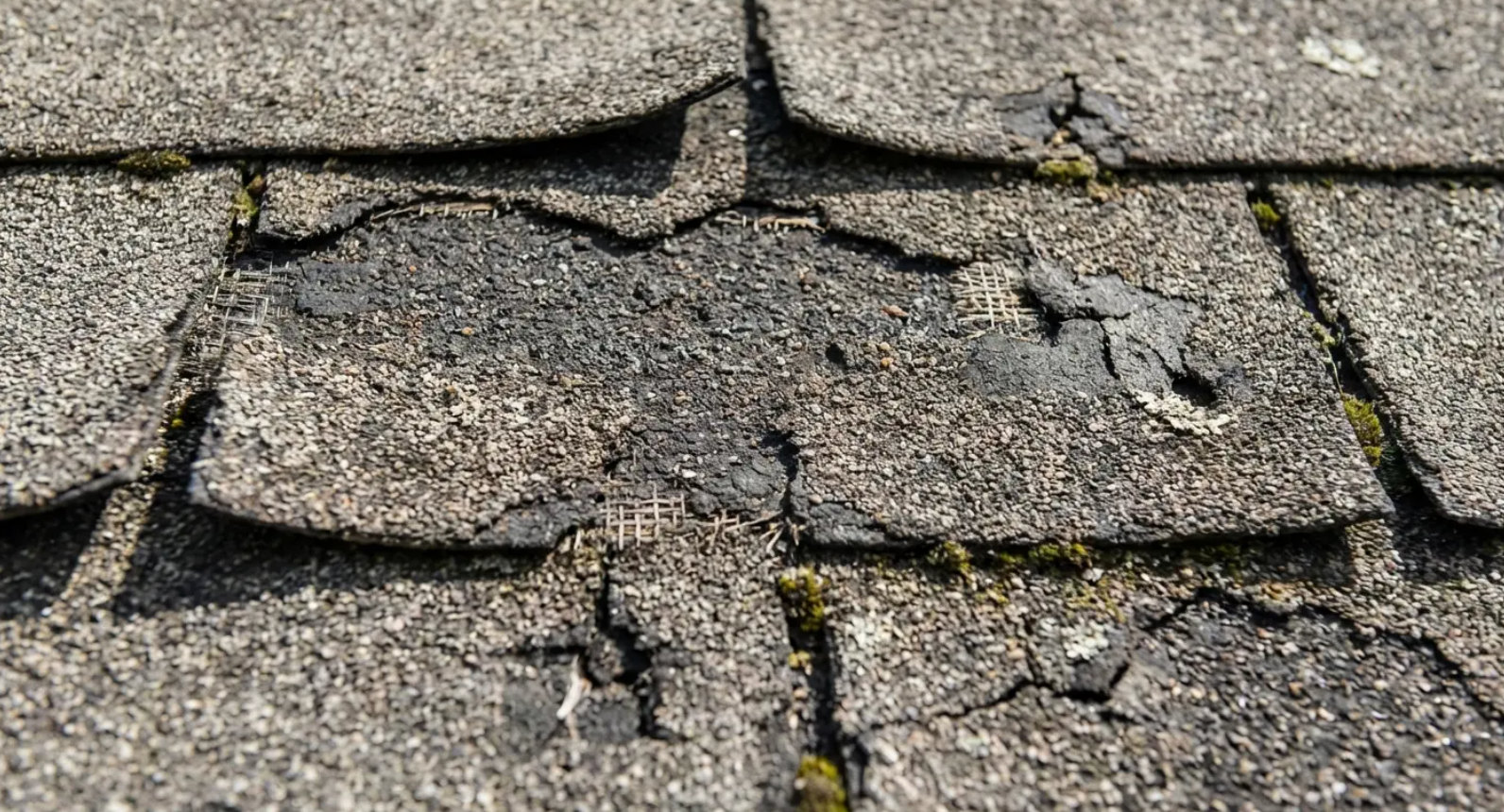
Shingle condition: Look for curling edges, missing granules (shingles that look darker or have shiny spots where granules have worn away), cracked or broken shingles, or shingles that are cupping or warping.
Flashing integrity: Check around chimneys, vents, and roof edges for flashing that's lifted, rusted, or has gaps where it meets the roofing material.
Sagging or unevenness: Any dips or sags in your roofline suggest structural issues underneath that go beyond just replacing shingles.
Moss or algae growth: Not necessarily a functional problem, but indicates moisture retention that can accelerate aging.
Granules in gutters: Asphalt shingles shed granules as they age. Excessive granules in your gutters or downspout discharge indicates advanced wear.
Look for this stuff and you'll know whether your roof is aging gracefully or falling apart.
Getting Honest Assessments From Contractors
Roofers want to sell you a roof. Shocking, I know. This makes it hard to get straight answers. Here's how to get reliable information:
Get multiple opinions (at least three). If two contractors say your roof has 5-7 years remaining and one says it needs immediate replacement, you're probably looking at a sales pitch from the outlier.
Ask specific questions: "What specific damage or wear do you see?" "What's the consequence of waiting 6-12 months?" "If this were your house and you were selling next month, what would you do?" These questions force contractors beyond their standard pitch.
Request documentation: Ask contractors to photograph specific problem areas and explain what you're looking at. This helps you distinguish between "this will be a problem eventually" and "this is a problem now."
Consider paying for an independent inspection from a roofing consultant who doesn't do installation work. They have no incentive to recommend unnecessary replacement and can provide objective assessment for $300-500.
The ROI Reality Check: Wha
t the Data Actually Shows
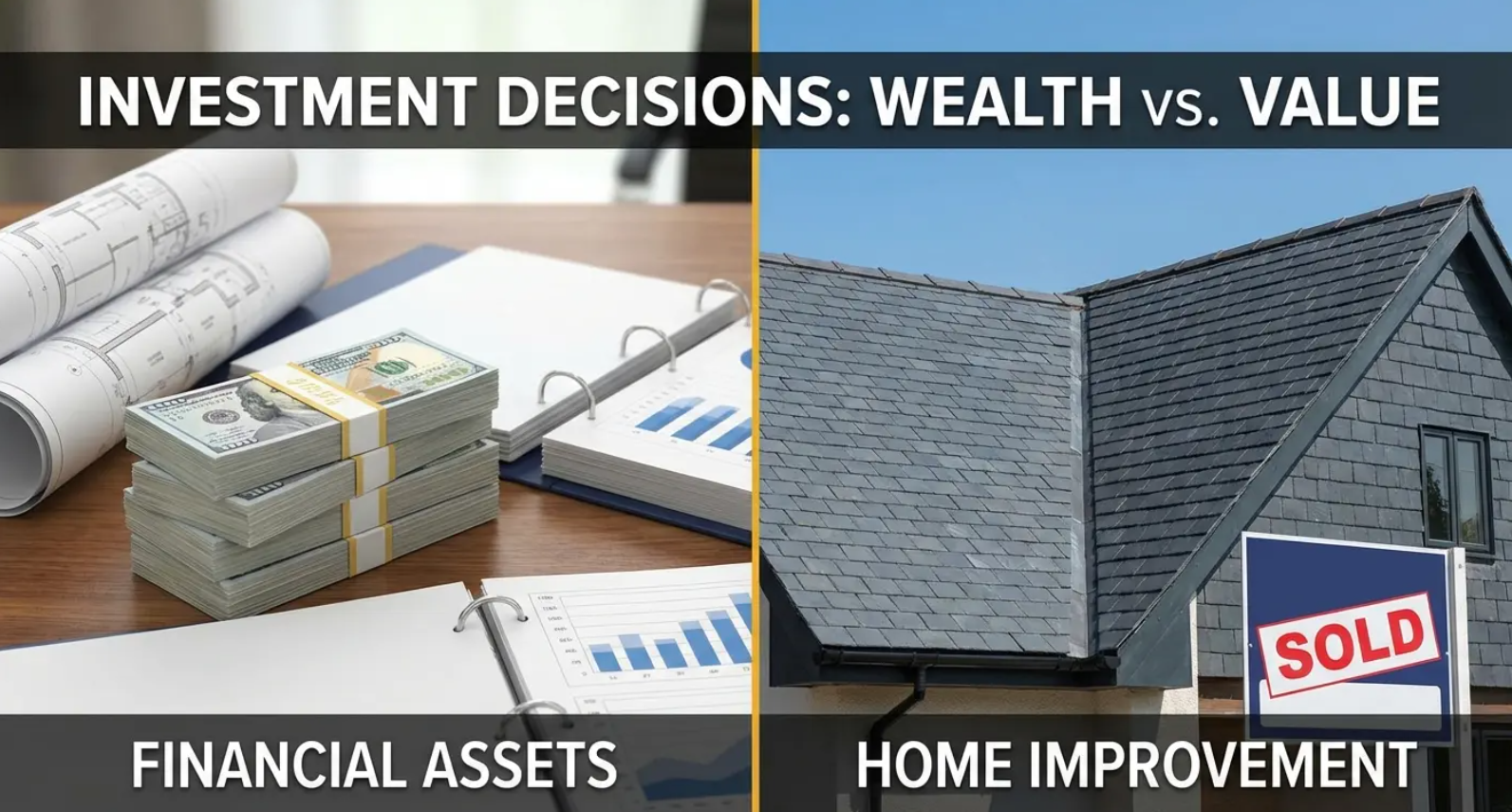
You've probably seen the statistic: roof replacement returns 107% of its cost at resale. This number comes from Remodeling Magazine's annual Cost vs. Value Report and gets cited constantly in real estate advice. It's also deeply misleading for most sellers.
First, it assumes you sell immediately after replacement. Every month you own the home after replacing the roof, you're paying carrying costs (mortgage, insurance, utilities, taxes) on that increased value. If you replace your roof then take three months to sell, you've spent $15,000 plus three months of carrying costs (say, $3,000) for an $18,000 total investment to recoup $16,000 in added sale price.
You're underwater.
The Break-Even Analysis You Should Actually Run
Here's the calculation that matters:
Cost of replacement + carrying costs during replacement + opportunity cost of capital = Total investment
Increase in sale price - negotiation concessions you would have made without replacement = Actual return
If the actual return exceeds the total investment, replacement makes financial sense. If it doesn't, you're better off selling as-is and negotiating.
Most sellers discover that the math only works in specific scenarios: when their roof is actively problematic (not just old), when they're in a market segment that demands pristine condition, or when replacement removes a barrier that would prevent any sale at all.
The opportunity cost calculation matters especially if you're using home equity or savings to fund the replacement. That $15,000 could be your down payment on your next home, allowing you to avoid PMI or secure a better rate. It could be invested in the market. It has alternative uses that generate returns.
When the Numbers Actually Work
Roof replacement makes financial sense in these specific scenarios:
Your roof is visibly failing and would force price reductions of $20,000+ to account for immediate replacement needs. In this case, spending $15,000 to avoid a $20,000 price cut is clearly profitable.
You're in a hot market with multiple comparable homes, and yours is the only one with an aging roof. The replacement removes a competitive disadvantage that would prevent offers entirely.
Your buyer pool is exclusively FHA/VA borrowers who can't close on a home with a roof nearing end of life. The replacement expands your pool from zero potential buyers to many.
You're selling a premium home where buyers expect perfection and won't consider properties with deferred maintenance regardless of price adjustments.
Notice what's missing: "my roof is 20 years old" isn't on this list. Age alone doesn't create the conditions where replacement makes financial sense.
Quick side story: My friend Dave replaced his roof in March. $16,200 after they found some dry rot. Listed in April. First showing, the buyer's wife said the shingles were "too brown" and she wanted gray. They walked. I'm not making this up. Dave spent sixteen grand and lost a buyer over aesthetics.
Making the Call: A Decision Framework That Works
You need a system that accounts for your specific situation rather than generic advice. Here's how to make this decision without losing your mind:
Step one: Assess actual condition, not age. Get a professional inspection that tells you specifically what's wrong, what's aging normally, and what needs attention. Cost: $200-400. This is the foundation of every other decision.
Step two: Identify your likely buyer pool. Are you selling a starter home to first-time buyers, a move-up property to experienced buyers, or a premium home to affluent buyers? Each group has different expectations and tolerance for roof issues.
Step three: Evaluate your market conditions. Check current inventory levels, average days on market, and whether you're in a buyer's or seller's market. This determines how much negotiating power you have and whether buyers can afford to be picky.
Step four: Calculate your timeline and carrying costs. How quickly do you need to sell? What are your monthly carrying costs? Can you afford to wait for the right buyer or do you need to move fast?
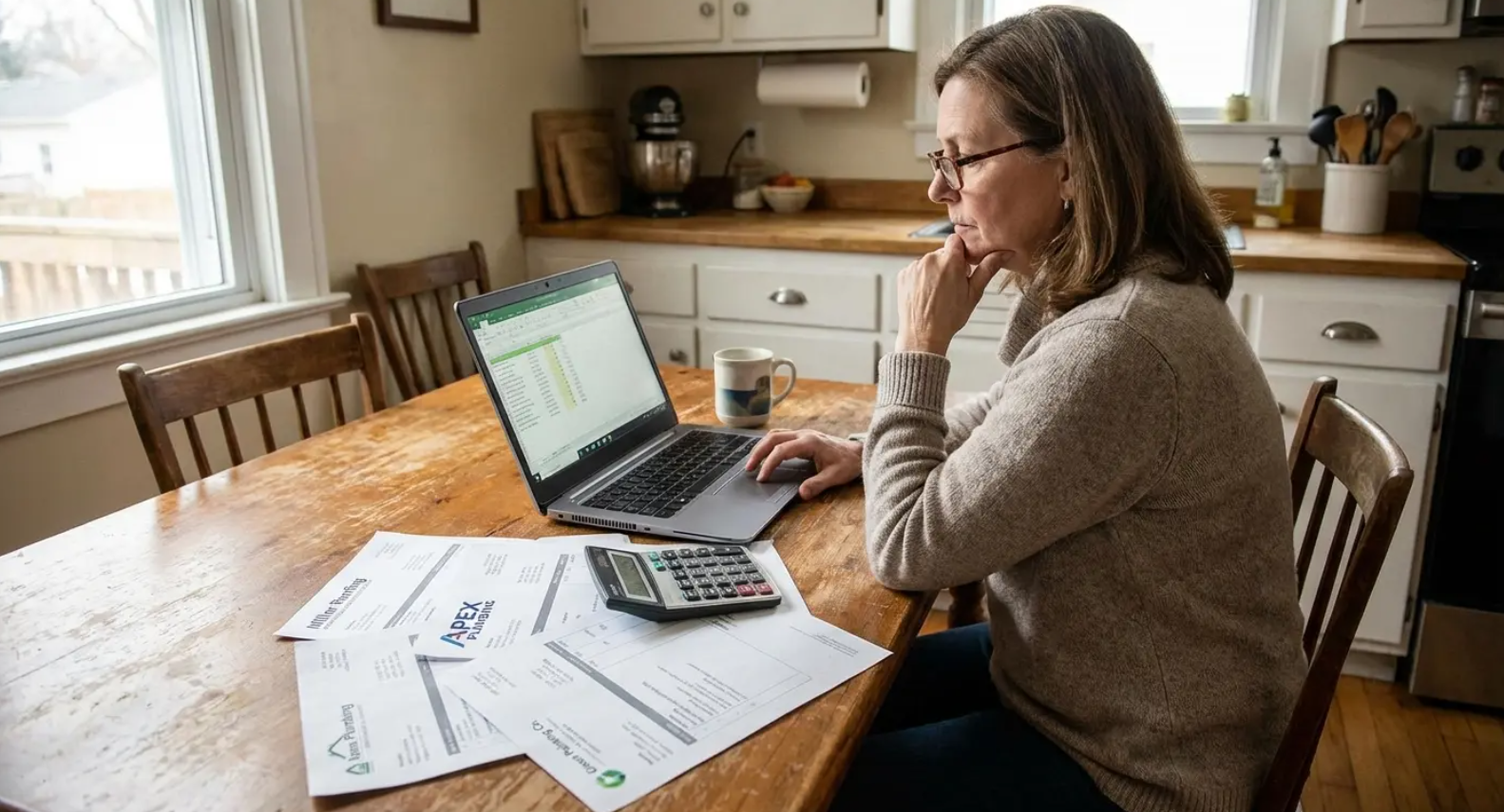
Step five: Run the actual numbers. What would replacement cost? What price reduction would buyers likely demand if you sell as-is? What are your carrying costs during replacement? Do the math specific to your situation.
The Decision Matrix
Based on this framework, you'll fall into one of these categories:
Replace before listing: Your roof has active problems, you're in a competitive market segment, your buyer pool demands pristine condition, and the math shows you'll recoup the investment.
Make targeted repairs: Your roof has specific visible issues but overall decent condition, and repairs costing 10-30% of replacement will solve the problems buyers will care about.
Offer a credit or price reduction: Your roof is aging but functional, your buyer pool is comfortable with some work, and you're in a market where this approach is common. You avoid the upfront cost and let buyers handle replacement on their terms.
Sell as-is to investors or cash buyers: Your roof needs replacement and you don't want to invest in it. You'll get a lower price but avoid the hassle, timeline, and capital outlay of replacement.
The right answer depends entirely on which combination of factors applies to your situation. There's no universal solution, which is why the blanket "always replace" advice is so problematic.
The Contingency Plan
Whatever you decide initially, build in flexibility. If you list as-is and aren't getting offers after 30 days, you can always replace the roof then. You've lost nothing by testing the market first. If you're getting offers but they all demand roof replacement or massive credits, you have market data showing that replacement is necessary in your situation.
This staged approach lets the market tell you what's required rather than guessing based on general advice. You might discover that buyers in your area are fine with an aging roof if you price appropriately. Or you might learn that your market segment absolutely requires a new roof to be competitive. Either way, you're making decisions based on real market feedback rather than assumptions.
Here's something nobody talks about: sometimes a new roof actually hurts your sale. I've seen this happen. You put on a builder-grade roof in a neighborhood where everyone has architectural shingles. Now your house looks cheap compared to the comps. Or you pick a color that doesn't match the neighborhood aesthetic. Congratulations, you just spent $15K to make your house less appealing.
My cousin sold her house with a 24-year-old roof. Everyone told her to replace it. She listed as-is and disclosed everything. Got three offers in five days. The winning offer was from a contractor who wanted to customize the whole exterior anyway. He didn't care about the roof. She saved $18K by ignoring the "experts."
Final Thoughts
So should you replace your roof before selling? After all this, my answer is: probably not. But maybe. It depends. (I know, super helpful.)
The roof replacement question isn't really about your roof. It's about maximizing your net proceeds when you sell, which requires understanding your specific market, buyer pool, timeline, and actual roof condition. Should I replace my roof before selling? The answer depends on running the numbers for your unique situation rather than following one-size-fits-all advice.
Most sellers approach this decision with anxiety, feeling pressured to spend money they're not sure they need to spend. That pressure usually comes from well-meaning but financially misaligned advice from agents who want quick sales or contractors who want installation work. Neither party is optimizing for your maximum profit.
Look, I get it. You're stressed. You're trying to move, maybe you've already bought another place, maybe you're going through a divorce or dealing with a job relocation. The last thing you want is your sale falling apart because of your roof. So the safe move feels like: just replace it and eliminate the problem.
But safe isn't always smart. Sometimes safe is just expensive.
You now have a framework that lets you make this decision based on actual data about your situation. Get the inspection that tells you what's really wrong.
Understand who's buying homes in your price range and market. Run the numbers on replacement cost versus likely negotiation concessions. Factor in your timeline and carrying costs. Make the decision that maximizes your net proceeds, not the one that makes you feel you've checked a box.
Some of you will discover that replacement is clearly the right financial move. Others will find that targeted repairs solve your problem for a fraction of the cost. Many will realize that selling as-is with appropriate pricing is the profit-maximizing strategy. All of these outcomes are valid depending on your circumstances.
The worst decision is spending $15,000 because you think you're supposed to, without understanding whether it improves your financial position. You're not preparing your home for a magazine photoshoot. You're executing a financial transaction, and every dollar you spend should generate a positive return or solve a problem that would prevent the sale entirely.
Trust the process. Get the data. Run the numbers. Make the decision that works for your situation, not the situation your agent's last client was in or the generic advice you found online. Your roof decision should be as unique as your home, your market, and your financial goals.
One last thing: Whatever you decide, decide based on YOUR numbers, not your agent's timeline or your contractor's sales pitch. This is your money. Your house. Your decision.
And if you do replace your roof and then sell to a cash buyer who was planning to gut the place anyway? Don't email me. I'll just say I told you so.
Good luck out there. You're gonna need it.