
January 4, 2026
Gutter Replacement: The Unsung Hero of Your Home’s Defense
Author
When your gutters start overflowing, sagging, or pulling away from the house, it’s more than just an eyesore—it’s a warning sign. A proper gutter replacement protects your foundation, prevents basement leaks, and keeps water damage from creeping into the bones of your home. From choosing the right gutter materials to upgrading to 6-inch seamless gutters, the decisions you make now determine how well your home handles the next big storm. This guide breaks down what really matters: materials, sizing, installation, fascia repair, and the true cost of a new gutter system—so you can upgrade confidently and keep water where it belongs.
Table of Contents
- Materials: It's More Than Just Color Matching
- Size Matters: Why Bigger is Usually Better
- The Tear-Off: Inspecting the Bones of the House
- The Bottom Line: What Is This Going to Cost?
- Our Approach to Water Management
- Final Thoughts
The "In a Nutshell" Version
Let’s be honest: nobody wakes up on a Saturday morning excited to buy gutters. Most homeowners don't even look up at their roofline until they see a waterfall pouring over the front door during a storm. But a proper gutter replacement isn't just about swapping old metal for new metal; it’s about making sure your basement stays dry and your foundation stays put.
Here are the main things you need to know if you're skimming:
- Material Choice: Aluminum is the reliable workhorse. Copper is beautiful but pricey. Vinyl? We generally tell folks to steer clear.
- Go Seamless: Old-school sectional gutters leak at the seams. Seamless gutters are made on-site and eliminate those headaches.
- Size Up: The old standard was 5-inch gutters. Nowadays, with the weather we’re seeing, 6-inch is usually the smarter play to handle the volume.
- Check the Wood: You can't hang new gutters on rotting fascia boards. We have to fix the wood underneath first.
- The Pitch: There’s an art to hanging them so water flows, but they don't look crooked to the naked eye.
We see it all the time in the field. Systems put up thirty years ago just can’t keep up anymore. There’s an industry saying that"99% ofguttersfail eventually". It sounds dramatic, but it’s true. Metal fatigues, fasteners pull loose, and sealants dry out. Eventually, you have to rip the band-aid off and replace the system to protect the structure of the house.
Materials: It's More Than Just Color Matching
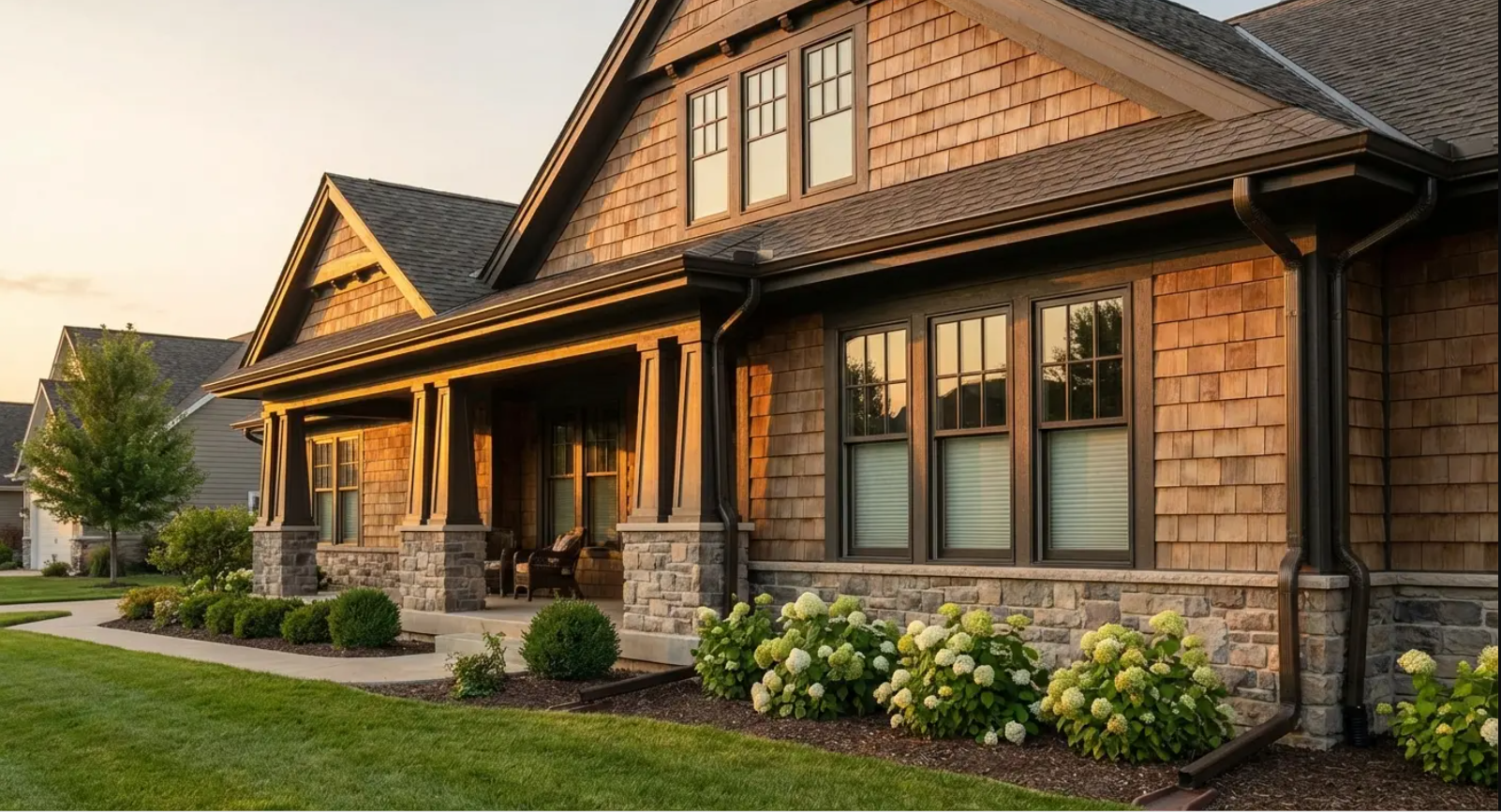
When people call us, the first thing they usually ask is, "Can you match my trim color?" While aesthetics are important (nobody wants an ugly house), the material you pick is actually the biggest factor in the success of your gutter replacement and how long you’ll go before needing to do this again. We have to balance how long it lasts with what your budget looks like.
Timing matters, too. We’ve noticed a trend recently where everyone waits until the leaves start falling to call. AsConifer Gutter Service noted recently, the demand for "same week" installs goes through the roof right before the rainy season. Our advice? Don't wait until the forecast calls for a week of rain to schedule your gutter installation.
If you're standing in the yard wondering if you can squeeze another year out of your current setup, check out our guide onknowing when to replace your gutters. It’ll help you spot the warning signs.
The Metal Matters
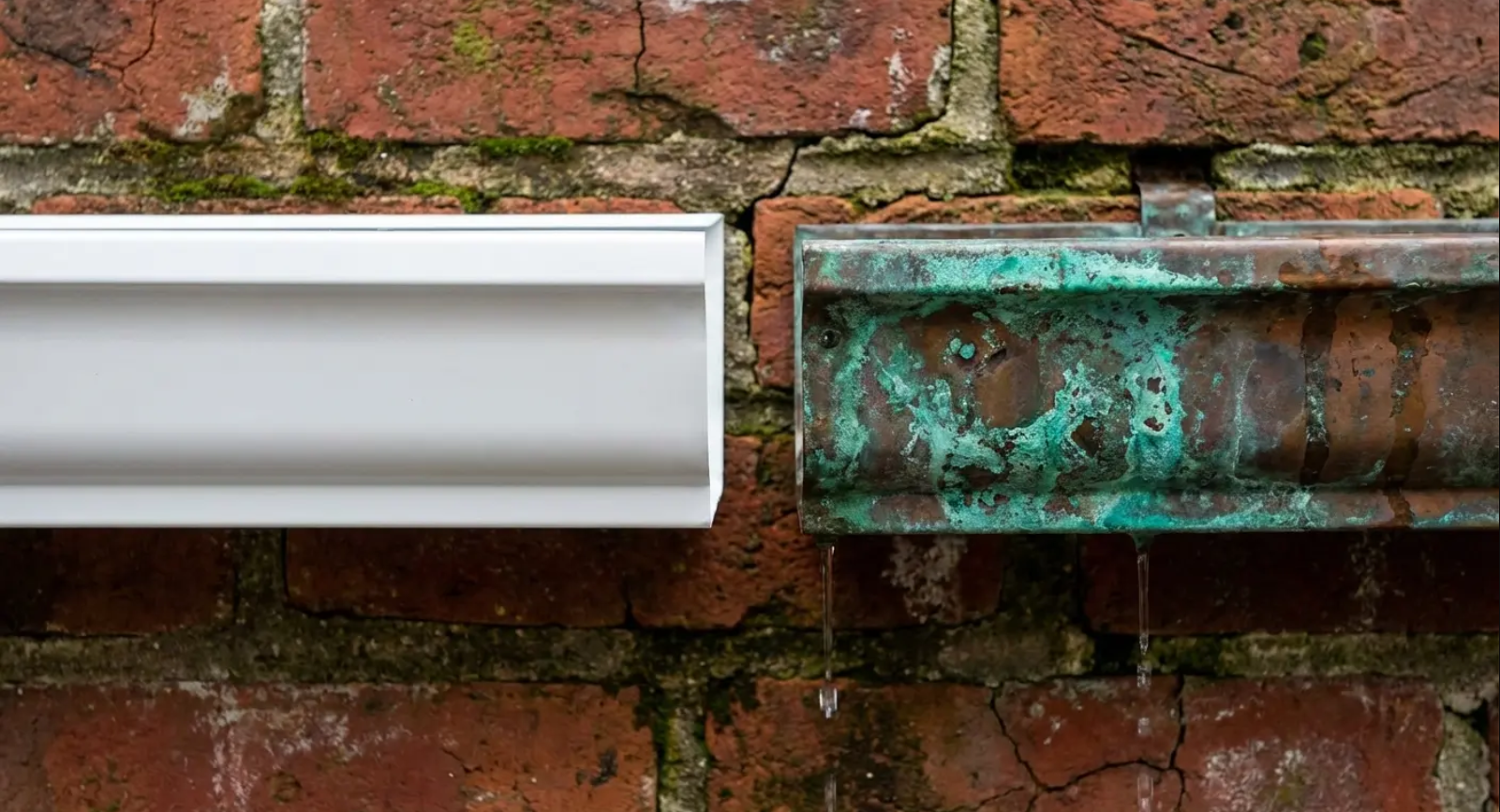
Not all metals are created equal. We want you to know exactly what you’re paying for so you aren’t surprised by rust five years down the road. As a general rule,galvanized steel might get you 20 years, while copper can outlive the homeowner.
| Material | Why We Like It | The Downside | Best For |
|---|---|---|---|
| Aluminum | Doesn't rust, light, affordable | Can dent if you hit it with a ladder | Most Homes |
| Copper | Lasts 50+ years, looks incredible | Expensive (material & labor) | Historic Homes / Accents |
| Galvanized Steel | Tough as nails | Rusts the second it gets scratched | Commercial Buildings |
| Vinyl | Cheap upfront | Cracks in the cold, fades in the sun | DIY / Sheds |
Aluminum: The Standard
This is what we install 90% of the time. It doesn't rust, it comes in a million colors, and it does the job. We stick to .032-inch thickness. Anything thinner feels like a soda can and will warp under heavy snow.

Copper: The Premium Choice
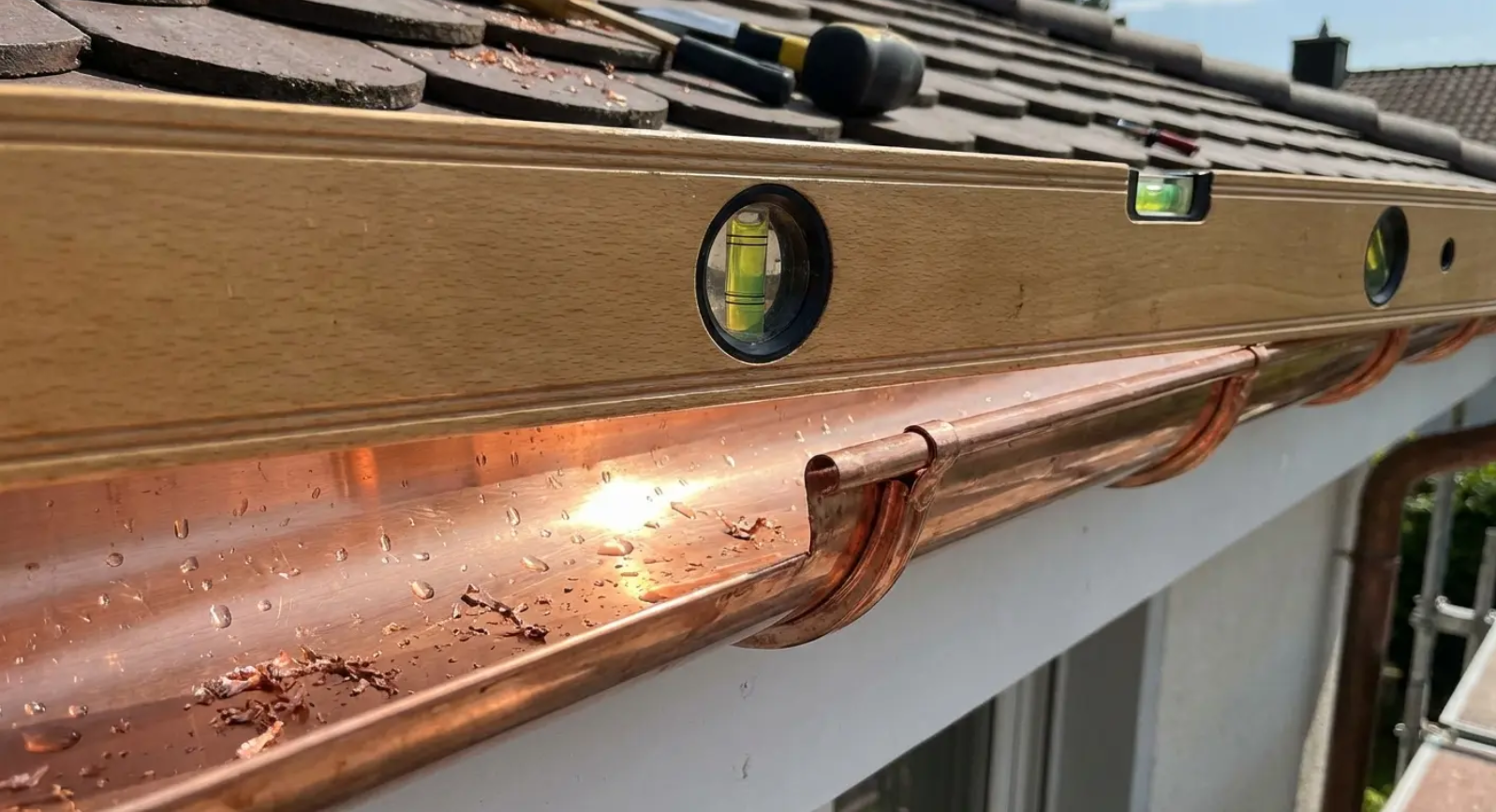
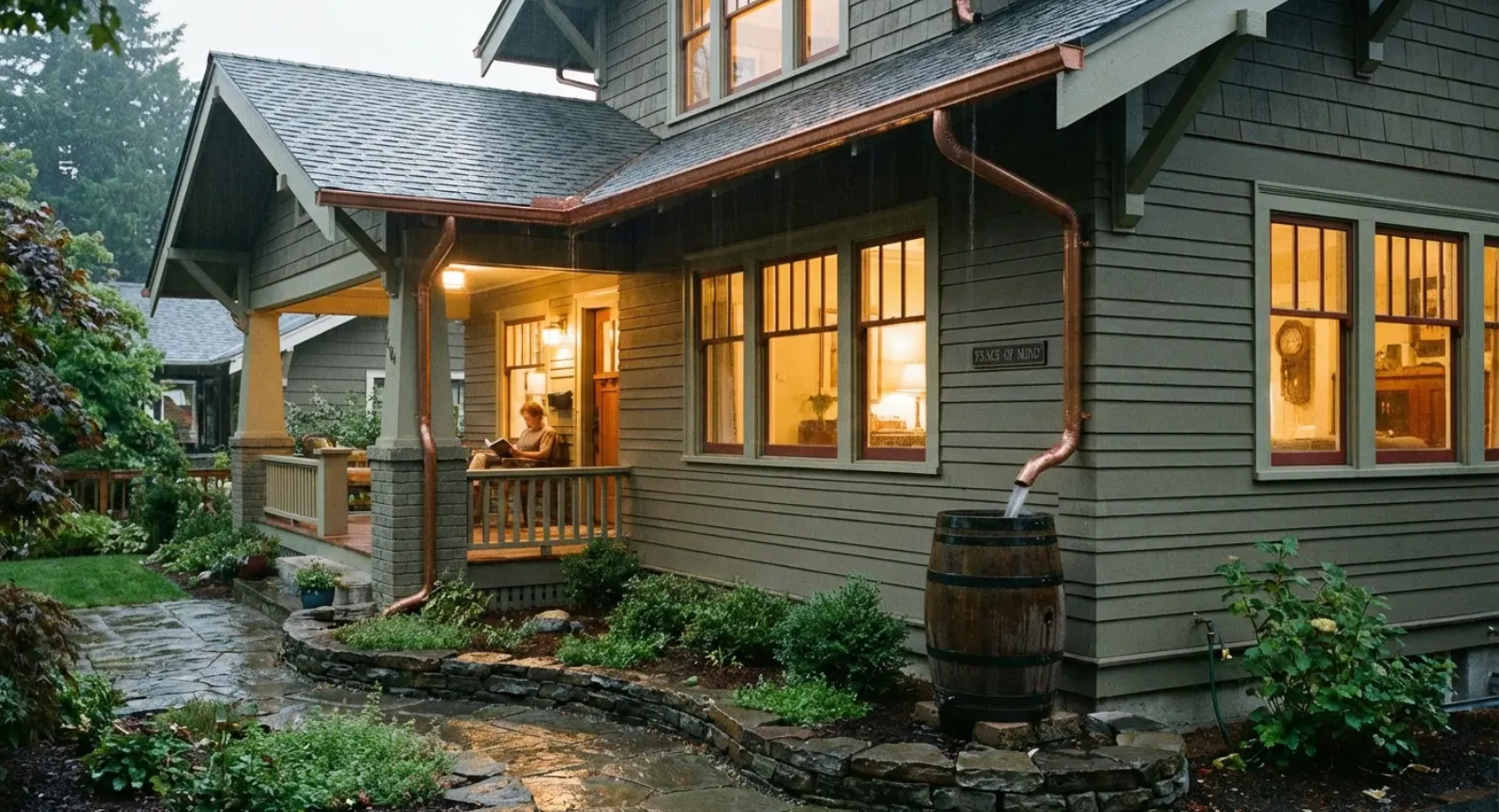
If you love that green patina look and want a gutter system that your grandkids won't have to replace, copper is it. It requires soldering, so it’s a craft to install, but it adds serious character to a home.
Shape and Function: K-Style vs. Half-Round
The shape of the gutter isn't just about style; it changes how the water flows. If you're torn between the two, read our comparison of K-gutters vs. half-round gutters.

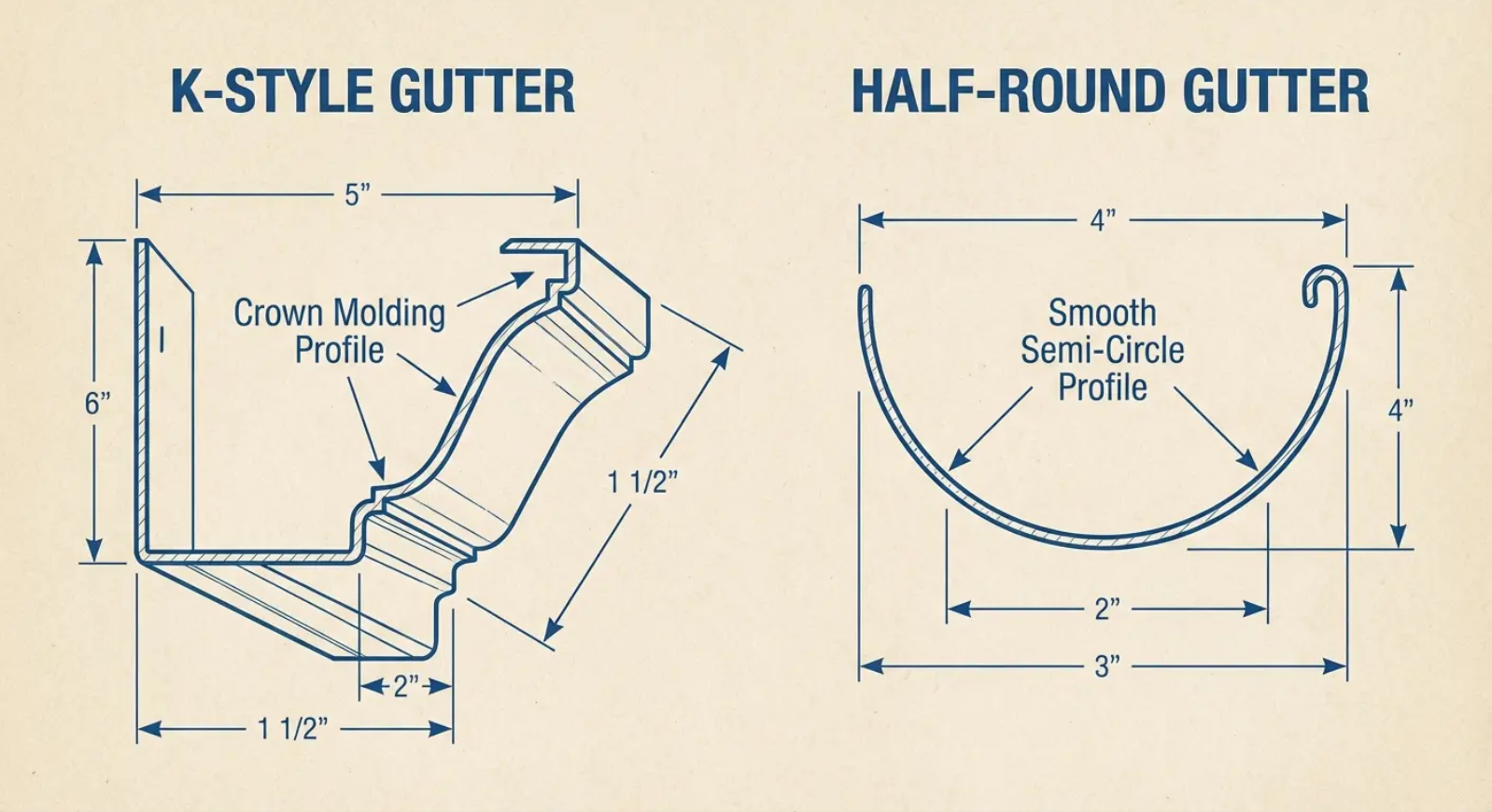
K-Style is the one that looks like crown molding. It sits flush against the house and, frankly, it holds more water. That's why you see it everywhere.
Half-Round looks like a tube cut in half. It’s smoother inside, so debris washes out easier, but it doesn't hold quite as much water. We usually use this on older, Victorian-style homes or when a client wants that specific architectural look.
Seamless vs. Sectional: Why We Don't Use Kits
If you go to a big box store, you buy gutters in 10-foot sections. That means every 10 feet, you have a seam. And every seam is a place where a leak will eventually happen.
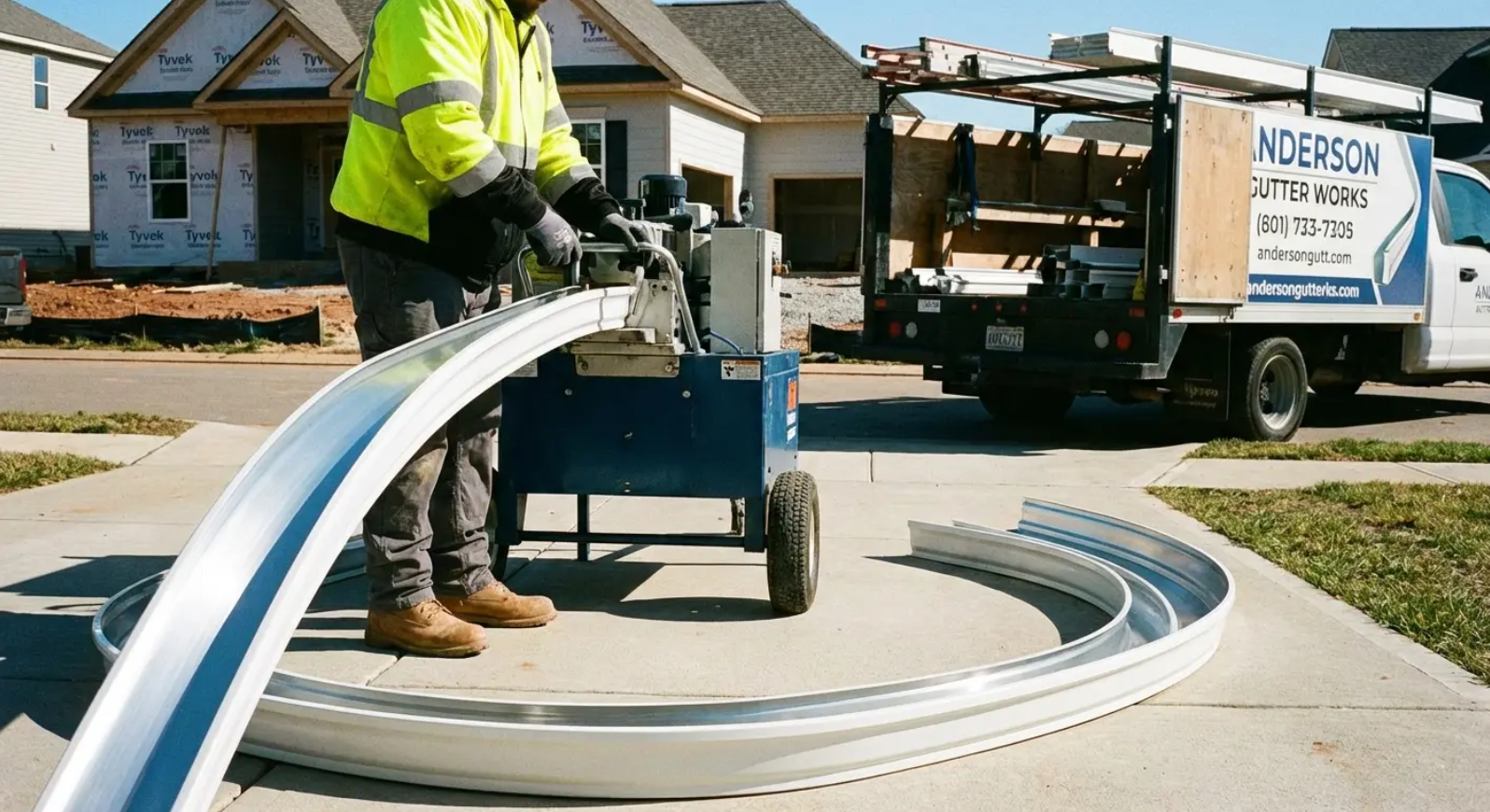
We use a portable machine right in your driveway that rolls out the gutter to the exact length of your roof. Whether your roof is 20 feet or 80 feet, it’s one continuous piece of metal. No seams means no leaks (except at the corners, which we seal heavily). It looks cleaner and lasts longer, making seamless gutters the superior choice for longevity. You can see more about our seamless process here.

Size Matters: Why "Like-for-Like" Usually Fails
A common mistake homeowners make is assuming the builder who built the house 20 years ago picked the right size gutter. Often, they just picked the cheapest one.
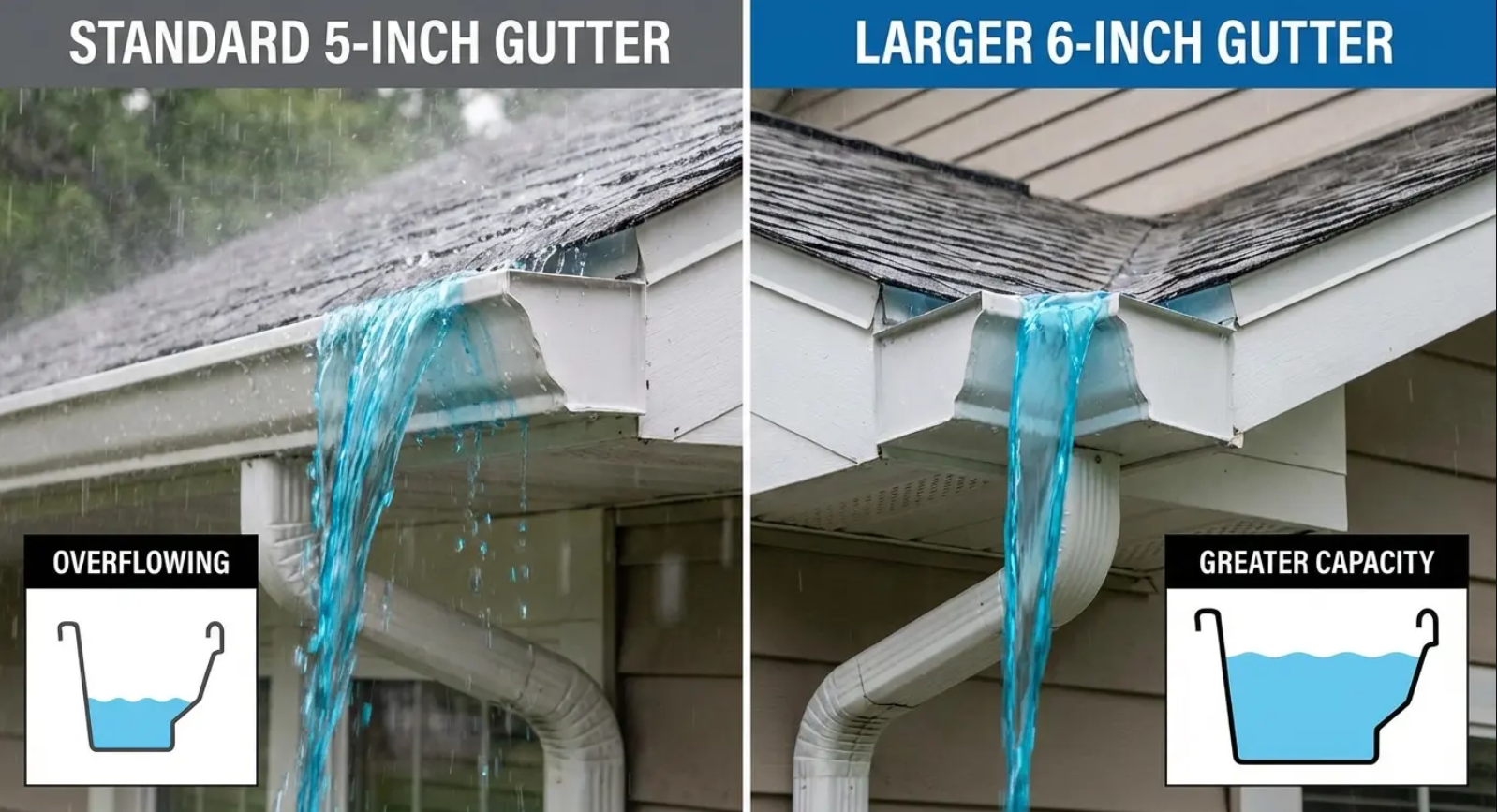
When we come out to quote, we look at the roof area and how steep it is. If you have a massive, steep roof, rain comes barreling down like a freight train. A standard 5-inch rain gutter can’t catch that fast-moving water—it just overshoots the edge and dumps on your foundation. By bumping up to a 6-inch gutter, you get a bigger "mouth" to catch the water and 40% more capacity to carry it away. It’s a small upgrade cost-wise, but it makes a huge difference in performance.

Getting the Water Away from the House
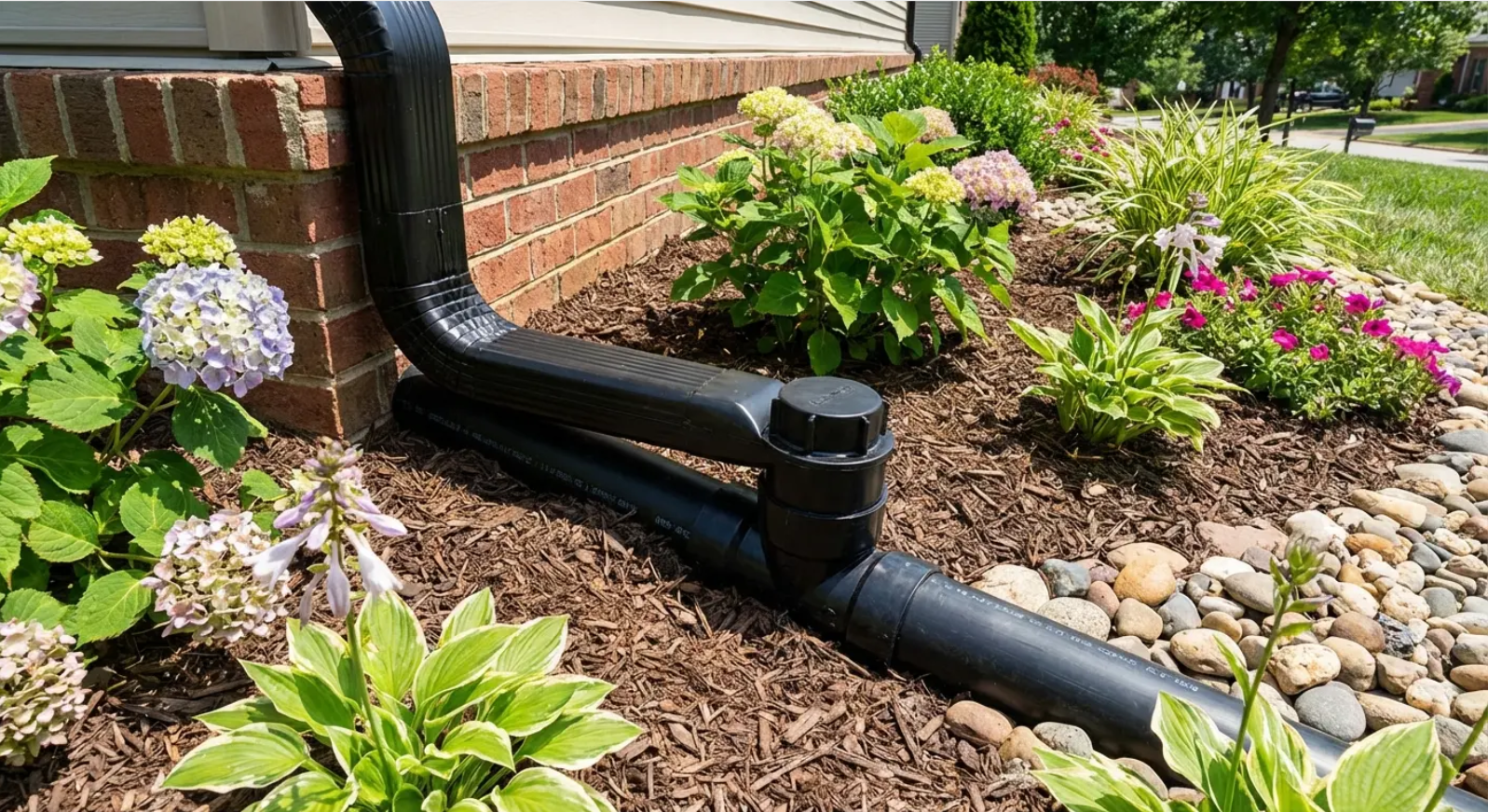
The gutter catches the water, but the downspout has to get rid of it. If your downspout just dumps water right at the corner of your foundation, you haven't solved the problem; you've just moved it. We want that water at least 10 feet away. Check out our drainage tips for ideas on how to hide those extensions so you aren't tripping over them.
The Tear-Off: Inspecting the Bones
Gutter replacement is a bit like minor surgery for your home exterior. We have to take the old stuff off to see what’s going on underneath.
The "Rot Check"
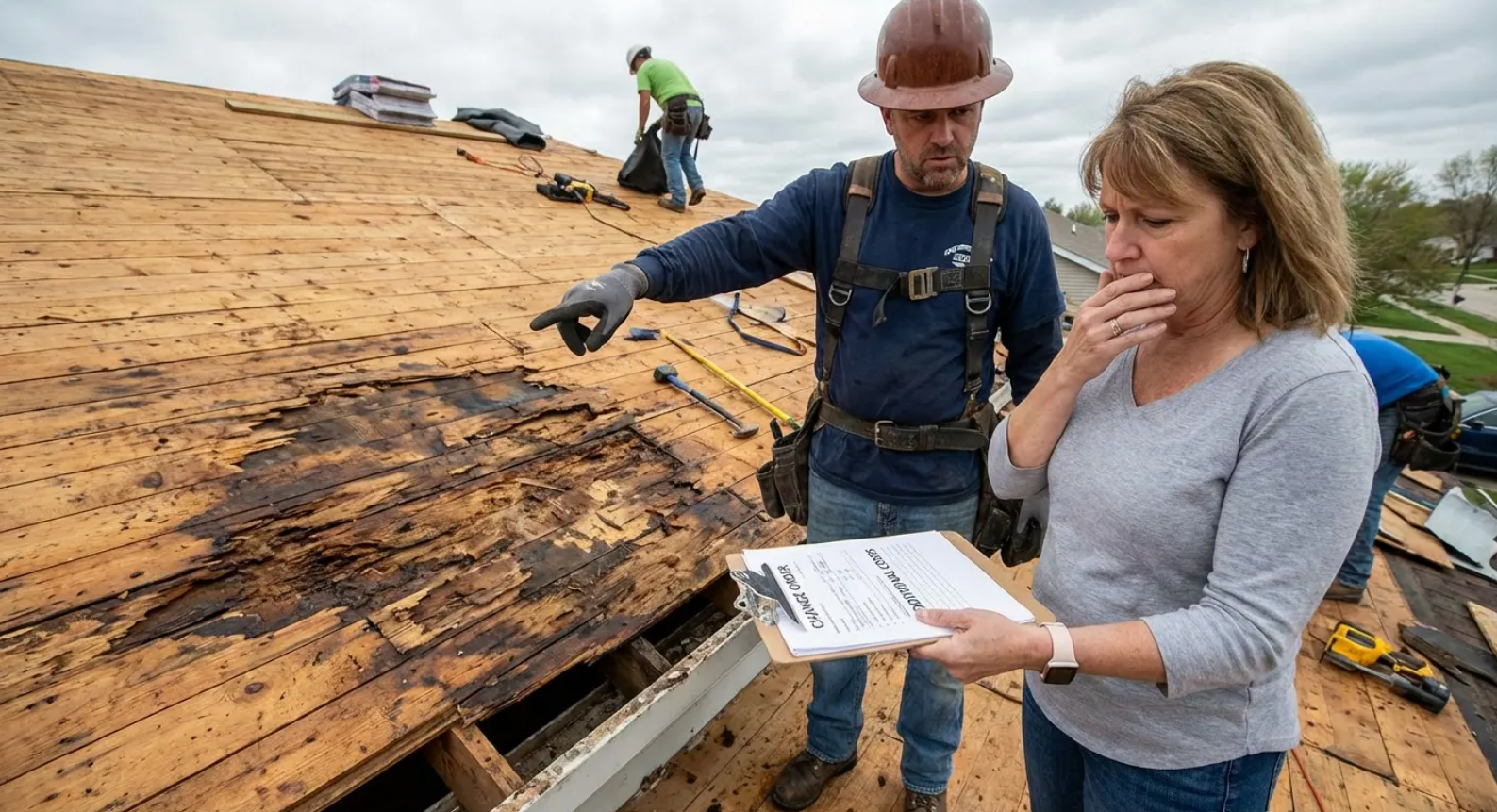
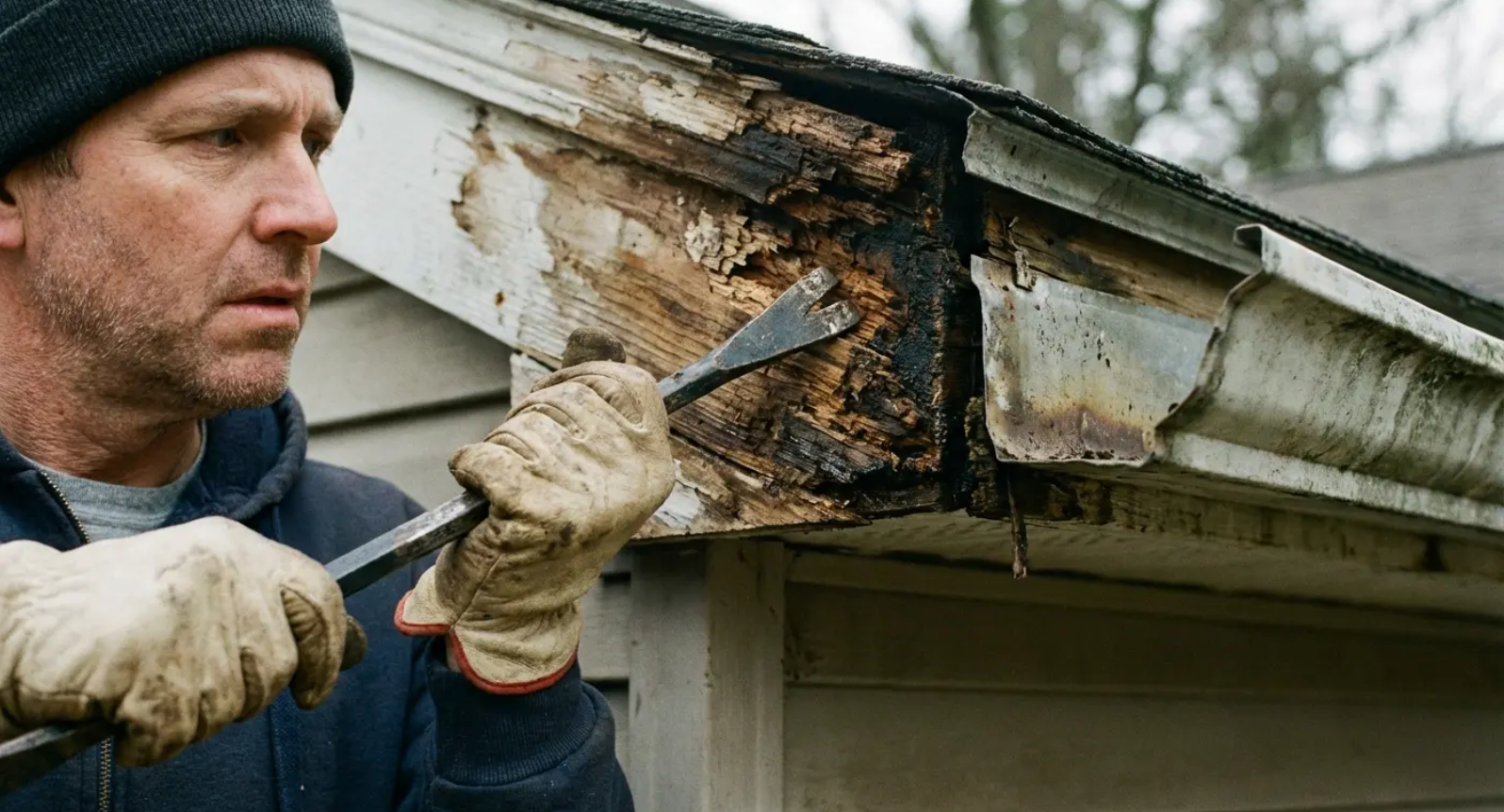
You can't screw a heavy, water-filled gutter into soft, rotting wood. It’ll just rip right out. When we tear off the old gutters, we inspect the fascia board (the board the gutter hangs on). If it’s soft or rotted, we replace it. No exceptions.

We also check your ventilation while we’re up there. If your soffit vents are painted shut or blocked by insulation, that causes ice dams in the winter. And ice dams will destroy even the best gutter installation.
The Gravity Game
Gutters need to slope to drain, but if they slope too much, your house looks crooked. We aim for about 1/4 inch of drop for every 10 feet. It’s enough to keep the water moving (so you don't breed mosquitoes) but subtle enough that you can't see it from the street.

To Guard or Not to Guard?
This is the million-dollar question. Do gutter guards work? Yes, but they aren't magic. We wrote a whole breakdown on whether you should install gutter guards, but here is the short version:
- Mesh Screens: Cheap, keep big leaves out, but grit gets through. You still have to clean them occasionally.
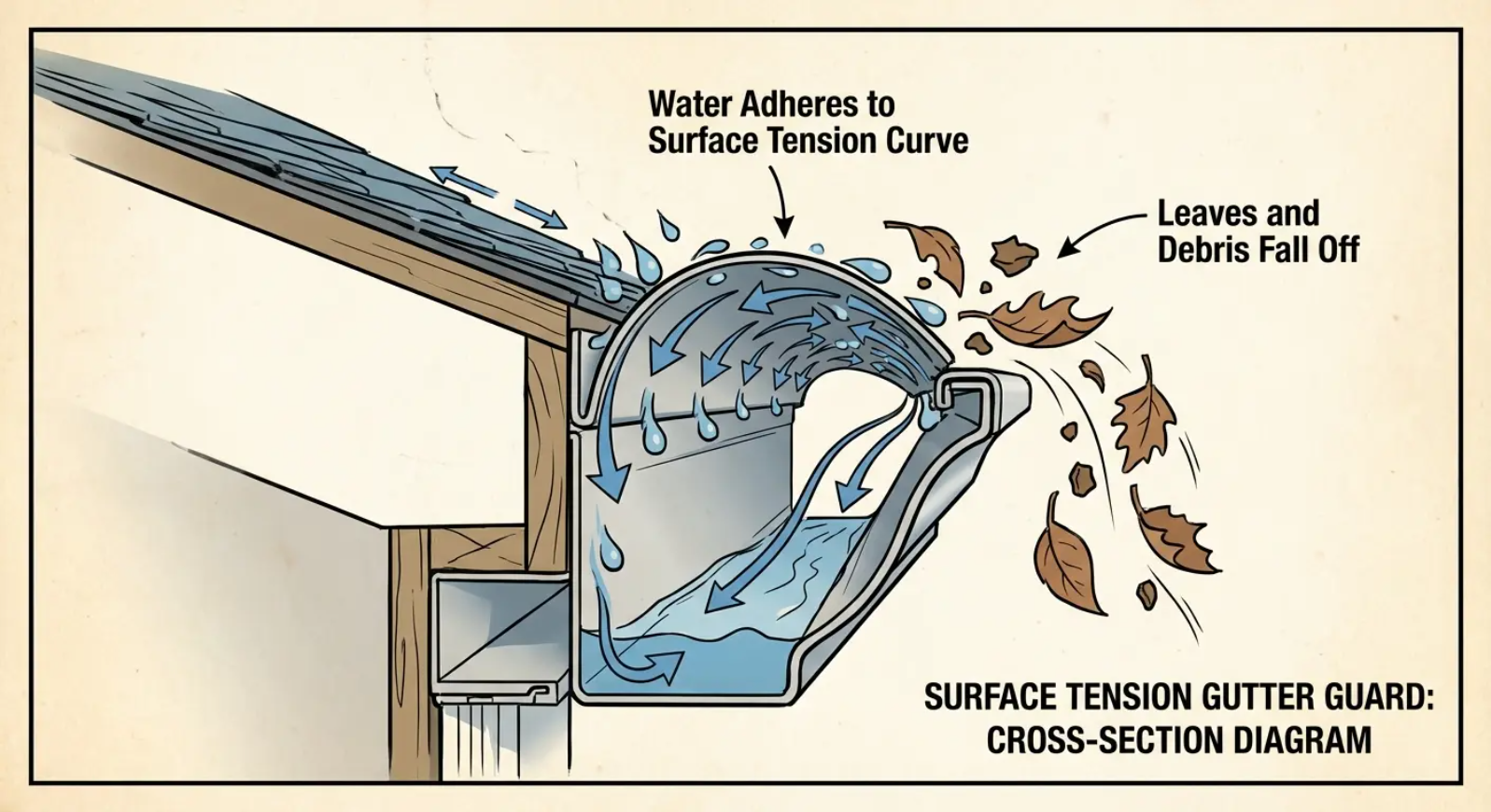
- Hoods/Helmets: Water sticks to the curve, leaves fall off. They work great but are pricey.
- Brush Inserts: Honestly? They usually just turn into a clogged mess of bristles and pine needles.

Just remember: "Maintenance-free" is a myth. Even with guards, you'll occasionally need to brush off the tops.
The Bottom Line: What Is This Going to Cost?
We know price is the big question. According to data aggregated by Leaf Filter, average costs in the US usually land between $2,600 and $4,700. But that’s just an average.
Think of it this way: A simple ranch house with easy access is going to be on the low end. A three-story Victorian with twelve corners, steep roofs, and tricky landscaping is going to cost more because the gutter installation takes more time and skill to do safely.
Is It Worth It?
It’s not the most glamorous renovation. You won't show off your new gutters at a dinner party like you would a new kitchen. But as recent reports on property value trends suggest, smart homeowners are realizing that water management is asset protection. Just ask anyone who has had to pay for foundation repair—new gutters are a fraction of that cost.

Our Approach to Water Management
We don't just slap metal on the house and leave. We look at the whole picture.
For example, we recently had a job where the old downspout was dumping right into a basement window well. The basement flooded every spring. We didn't just replace the gutter; we rerouted the downspout around the corner and buried a pipe to carry the water out to the yard. Problem solved.
We generally recommend 6-inch seamless gutters because they handle modern storms better. And we never, ever cover up rot. If the wood is bad, we fix it so your new gutters stay secure.

Final Thoughts
Water is the biggest enemy your home has. A solid gutter system is your first line of defense. Take the time to pick the right material, get the sizing right, and make sure the install team checks the wood underneath. You’ll sleep a lot better during the next thunderstorm knowing your home is handling it.