February 7, 2026
Roof Replacement Cost: What Your Contractor Isn't Telling You About the Real Price Tag
Author
You've been putting this off for six months, maybe longer. Spending $15,000 to $40,000 on your roof feels absurd when you could finally redo the kitchen instead. I get it. If you're unsure how roofing systems actually fail over time, it helps to understand the science behind roof repair before the costs spiral.
Here's the math that should bother you: every year you wait costs roughly 2-4% in material inflation alone. On a $30,000 project, that's $600 to $1,600, compounding annually. And honestly, inflation is the least of your problems.
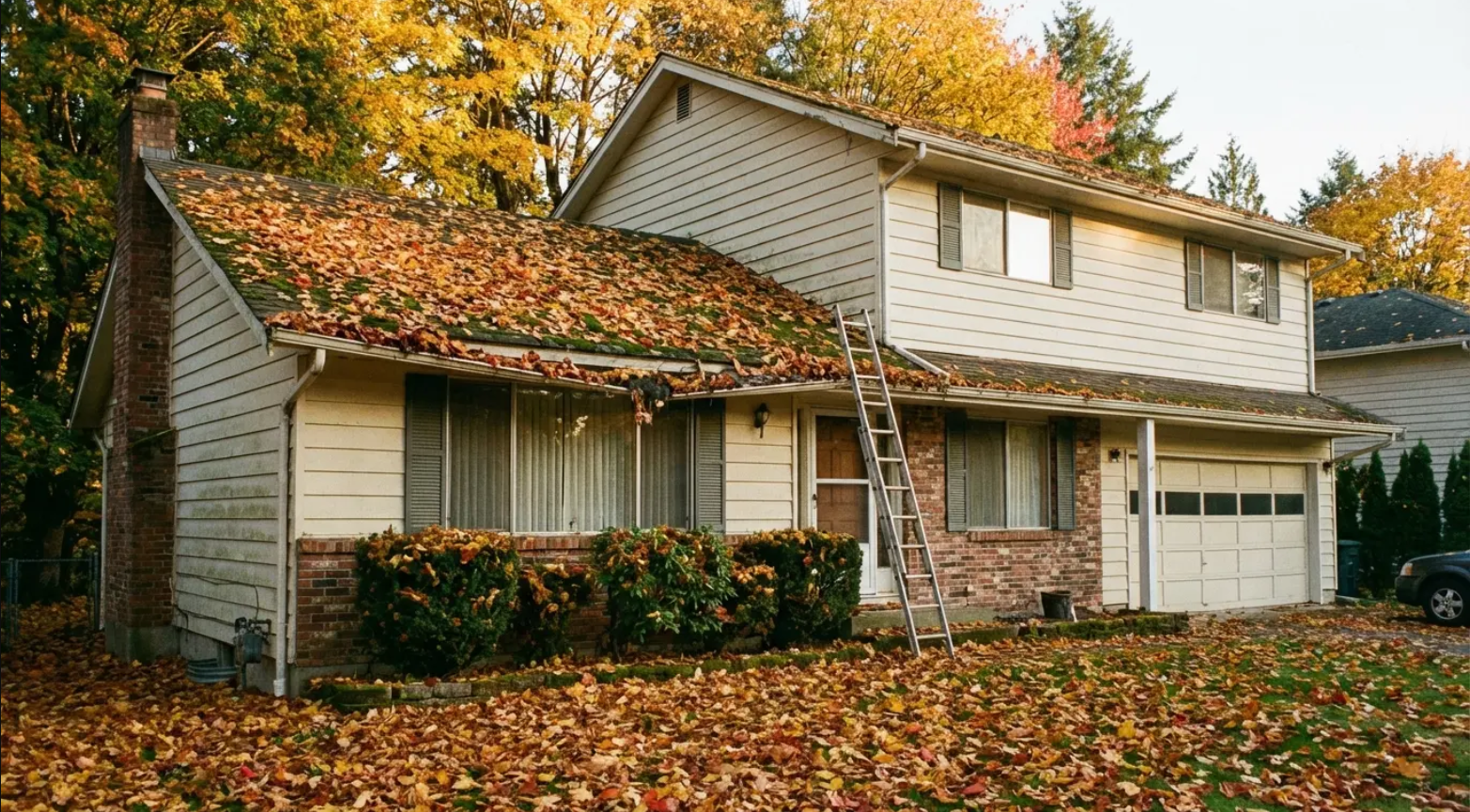
The real expense? It's what happens while you're waiting. That small leak you've been monitoring is wicking moisture into your decking right now. Every rain event degrades the plywood underneath your shingles. Replacing rotted decking adds $2-$7 per square foot to your project. On a 2,000 square foot roof, you're looking at $4,000 to $14,000 in costs that literally didn't exist when you first noticed the problem.
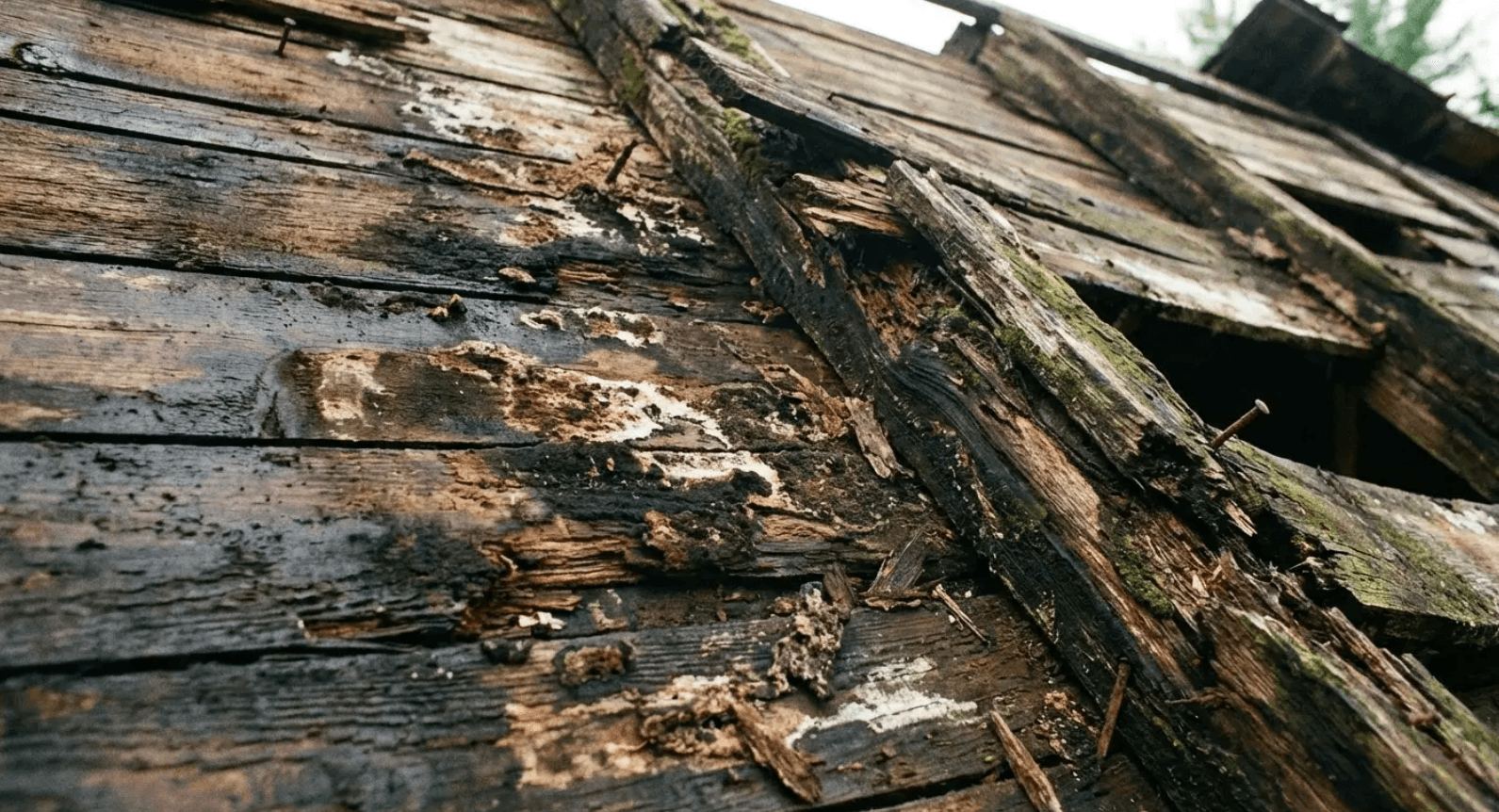
Emergency tarping after a storm runs $500-$2,000. Interior water damage remediation averages $2,700 per incident according to restoration industry data. You might spend more managing the crisis than you would've saved by waiting.
I've watched homeowners delay a $22,000 replacement only to face a $31,000 bill 18 months later after decking replacement, increased material costs, and drywall repairs. The timeline tax is real.
Table of Contents
- TL;DR
- The Hidden Timeline Tax Nobody Warns You About
- Why Your Neighbor’s Quote Means Absolutely Nothing
- The Insurance Adjuster’s Playbook (And How It Affects Your Bottom Line)
- Material Costs Are Only Half the Story
- The Subcontractor Shuffle and Your Wallet
- What “Lifetime Warranty” Actually Costs You
- Permit Fees, Dumpsters, and Other Line Items That Sneak Up
- The Real Cost of Choosing the Wrong Season
- Why Financing Terms Matter More Than the Sticker Price
- When Cheaper Actually Costs More (And When It Doesn't)
- What This All Means for Your Actual Project
TL;DR
- Roof replacement isn’t expensive because shingles cost a lot. It’s expensive because everything around them does.
- Waiting too long quietly compounds costs through material inflation, hidden water damage, and insurance limitations that shift more of the bill onto you. What started as a $22,000 project can easily become $30,000+ once decking repairs, labor changes, and code upgrades enter the picture.
- Two homes on the same street can see wildly different quotes because roof pitch, geometry, penetrations, ventilation requirements, and hidden structural issues all change the scope of work. Labor, tear-off, disposal, and accessories now represent more than half of the real project cost.
- Insurance rarely covers what homeowners assume it will, financing terms can add thousands if misunderstood, and the cheapest bid often hides shortcuts in the parts of the roof you’ll never see.
- The real key isn’t finding the lowest price. It’s understanding what actually drives the cost so you know which numbers matter—and which ones don’t.
The Hidden Timeline Tax Nobody Warns You About
Asphalt shingles don't decline the way you'd expect. They don't lose 5% effectiveness per year over 20 years in some neat, predictable way. They hold relatively stable until year 15-18, then fall apart fast.
Once you're in that rapid decline phase, each weather event causes exponentially more damage than it would've three years earlier. Your roof isn't aging predictably. It's getting more expensive to replace every single month.
Granule loss accelerates water penetration. Curling shingles create wind uplift points. Compromised sealant strips turn your roof into a sail during storms. Each of these conditions multiplies the scope and cost of proper replacement.
Here's where it gets expensive: most insurance policies cover sudden, catastrophic damage but exclude gradual deterioration. That distinction costs you thousands when you're trying to figure out if storm damage qualifies for coverage.
Wait too long and adjusters argue your roof failed due to age and poor maintenance rather than covered storm damage. You lose your insurance backstop right when you need it most, converting a potentially $1,000-$2,500 deductible expense into a full out-of-pocket replacement.
WOWT reports that homeowners facing severe weather season are now dealing with insurance deductibles as high as $8,000. Marc Rollag from Pyramid Roofing notes that "some people will have an $8,000 deductible and they've never been planning on that." That's a brutal surprise when you thought insurance would handle most of it.
The sweet spot? Replace your roof at 70-80% of its rated lifespan. You've gotten your money's worth, but you're still early enough that insurance will cover storm damage if something happens. Wait too long and adjusters start blaming age instead of weather.
Why Your Neighbor's Quote Means Absolutely Nothing
Your neighbor got their roof done for $18,000 last summer. You're seeing quotes for $26,000. Same square footage, same shingle style, same street.
The difference isn't contractors padding estimates. It's roof complexity, which varies dramatically even between identical floor plans.
Roof pitch changes everything. A 4/12 pitch roof (that's 4 inches of rise per 12 inches of run) costs 15-20% less to replace than an 8/12 pitch. Same square footage, totally different price. Steeper roofs need additional safety equipment, slow down installation, and create more material waste due to cutting angles.
Your neighbor's simple gable roof has two planes and one ridge. Your hip roof with dormers, valleys, and multiple intersections has 40% more linear feet of flashing, more complex underlayment installation, and higher labor hours. Those valleys alone add $15-$25 per linear foot compared to open roof planes.
| Roof Complexity Factor | Cost Impact | Why It Matters |
|---|---|---|
| Simple Gable (2 planes) | Baseline | Straightforward installation, minimal flashing |
| Hip Roof (4+ planes) | 14.75 | More ridge lines, additional flashing points |
| Dormers (per unit) | #ERROR! | Complex valleys, custom flashing required |
| Valleys (per linear foot) | #ERROR! | Hand-cut shingles, critical waterproofing |
| Steep Pitch (8/12 or higher) | 14.8 | Safety equipment, slower work, material waste |
| Penetrations (skylights, chimneys) | #ERROR! | Custom flashing, precise integration work |
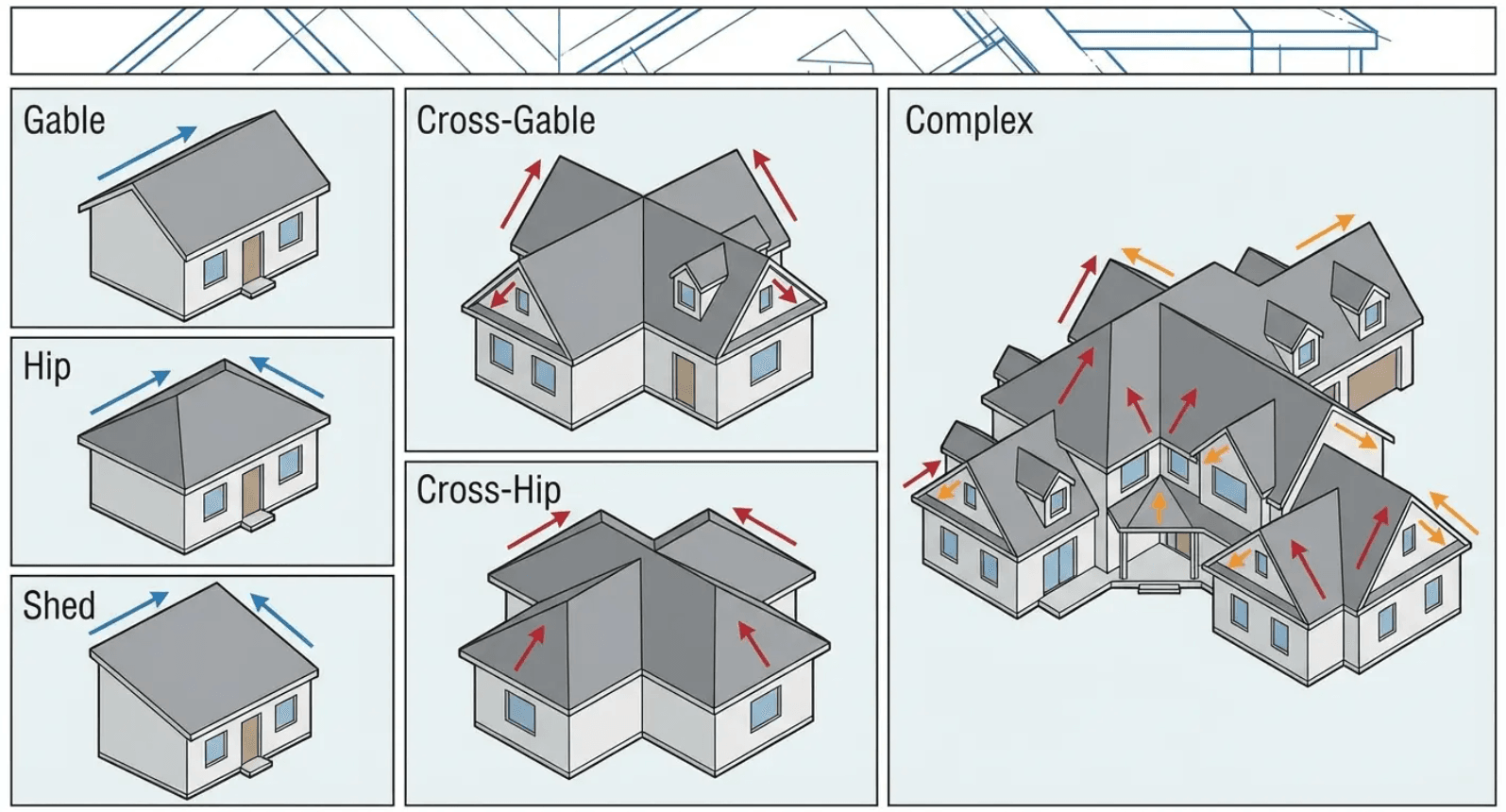
Roof penetrations matter enormously. Every skylight, chimney, plumbing vent, and HVAC penetration requires custom flashing and careful integration. A roof with eight penetrations versus three might cost $2,000-$4,000 more despite identical square footage.
Not all underlayment costs the same. Standard 15-pound felt runs $0.15-$0.25 per square foot. Synthetic underlayment costs $0.40-$0.70 per square foot but offers way better tear resistance and water protection.
Some homes require ice and water shield across the entire roof deck due to low pitch or climate conditions. That upgrade alone adds $1.50-$2.50 per square foot, or $3,000-$5,000 on a 2,000 square foot roof.
Two homes on the same street in Minneapolis, right? Home A has a 6/12 pitch roof and gets standard ice and water shield only in valleys and eaves. That's maybe a 20-foot coverage area costing roughly $600. Home B has a 3/12 pitch that building code requires full ice and water shield coverage across all 2,000 square feet. That adds $3,000-$5,000 to the project. Same neighborhood, same square footage, completely different underlayment requirements based solely on pitch.
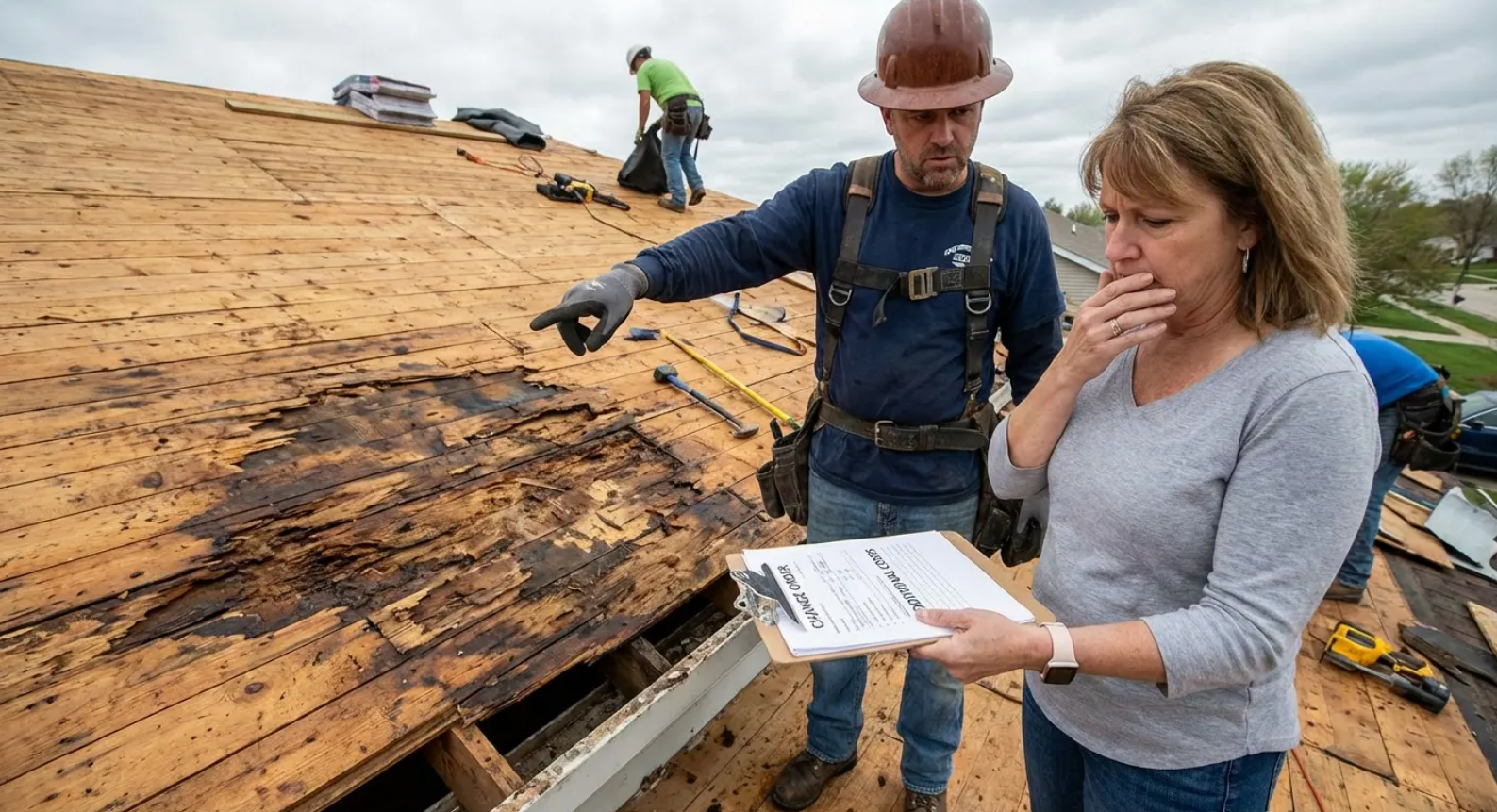
You won't know what's under your shingles until they come off. Your neighbor might've had pristine decking that required zero replacement. You might have 600 square feet of water-damaged plywood that needs replacing at $3-$7 per square foot installed.
Rafter spacing, decking thickness, ventilation adequacy... all of it varies between homes, even in the same subdivision. Bringing your roof up to current code (which responsible contractors must do) might require sistering rafters, adding ventilation baffles, or installing additional decking support. Your neighbor's roof might've already met code.
Quotes that seem high often reflect contractors accurately estimating probable issues based on roof age and visible indicators. Quotes that seem low? Those might be from contractors planning to address problems with change orders after the job starts.
The Insurance Adjuster's Playbook (And How It Affects Your Bottom Line)
Your insurance adjuster doesn't work for you. They work for the insurance company. Keep that in mind when they're explaining why your claim is worth 25% of what you expected.
Adjusters calculate replacement cost, then subtract depreciation based on your roof's age. A 15-year-old roof on a 20-year shingle might face 75% depreciation, meaning you receive 25% of replacement cost initially.
You'll get the depreciation holdback after replacement is complete and you submit final invoices, but you need to cover that gap upfront. On a $25,000 replacement, you might receive $6,250 initially and wait 30-60 days for the remaining $18,750 after completion.
That cash flow gap surprises people who expected insurance to "cover" their roof. You're still financing the bulk of the project temporarily.
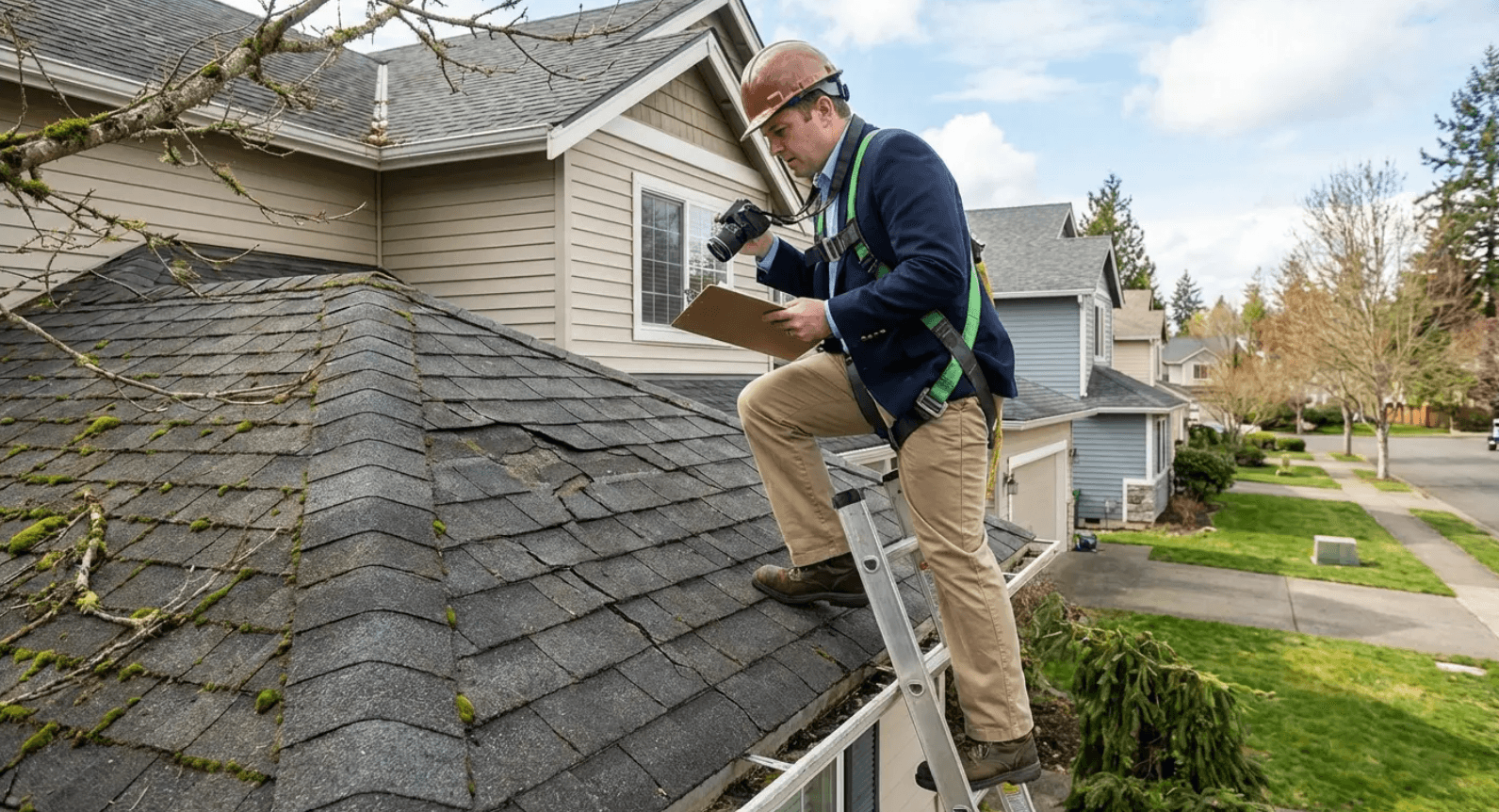
Adjusters often approve only specific line items they deem storm-related. They might cover shingle replacement but exclude underlayment, flashing upgrades, or ventilation improvements.
The insurance landscape has shifted. According to Verisk's 2024 report, roof repair and replacement cost value totaled nearly $31 billion last year. That's up nearly 30% since 2022. Wind and hail were the predominant drivers, accounting for more than half of all residential claims. Insurance companies are getting stingy because claim volumes are surging.
Contractors know current building codes require certain components for proper installation. The gap between what insurance approves and what's legally or practically required becomes your responsibility. That gap frequently runs $3,000-$8,000.
You're not obligated to accept the initial estimate. You can request re-inspection, provide competing estimates, or hire a public adjuster (who typically charges 10-15% of the final settlement but often increases payouts by 40-70%). Whether fighting for additional coverage costs more in time and stress than paying the gap yourself... that's the question.
Insurance policies typically cover only the damaged portion of your roof. If hail damaged your south-facing slope but not your north slope, they'll approve replacement of only the damaged section.
Shingle matching is nearly impossible with discontinued colors or aged materials. You'll face a visible patchwork roof, or you'll pay out-of-pocket to replace the undamaged sections for aesthetic consistency. That self-funded portion might represent 40-60% of total project cost.
Some policies include "matching" endorsements that cover full replacement when partial replacement would create obvious mismatches. Most don't. Check your policy before you file.
Material Costs Are Only Half the Story
You can price shingles online. Architectural shingles run $90-$150 per square (100 square feet). Metal roofing costs $400-$900 per square. Tile runs $600-$1,200 per square. Those numbers look solid.
Problem is, material costs now represent only 40-45% of total roof replacement cost in most markets. Labor has become the dominant expense, and it varies way more than materials ever could.
Skilled roofing crews are in short supply. A qualified crew (not just guys with nail guns) commands $50-$85 per hour per worker. A four-person crew working two days on your roof represents $3,200-$5,440 in labor alone before factoring in supervision, insurance, and overhead.
Geographic location creates wild labor swings. The same roof replacement costs 30-40% more in Boston or Seattle than in Dallas or Phoenix, almost entirely due to labor rate differences. Material costs are relatively consistent nationally. Labor isn't.
| Cost Component | Percentage of Total | National Range | What Drives Variation |
|---|---|---|---|
| Materials (shingles, underlayment) | 40-45% | $4,500-$9,000 (2,000 sq ft) | Material grade, manufacturer, warranty level |
| Labor (installation) | 40-50% | $5,000-$12,000 (2,000 sq ft) | Regional rates, crew experience, roof complexity |
| Tear-off & Disposal | 8-12% | $1,200-$3,000 | Layers to remove, local dump fees, access difficulty |
| Permits & Inspections | 1-3% | $150-$800 | Municipality requirements, project value |
| Accessories & Flashing | 5-8% | $800-$2,000 | Roof penetrations, ventilation needs, code compliance |
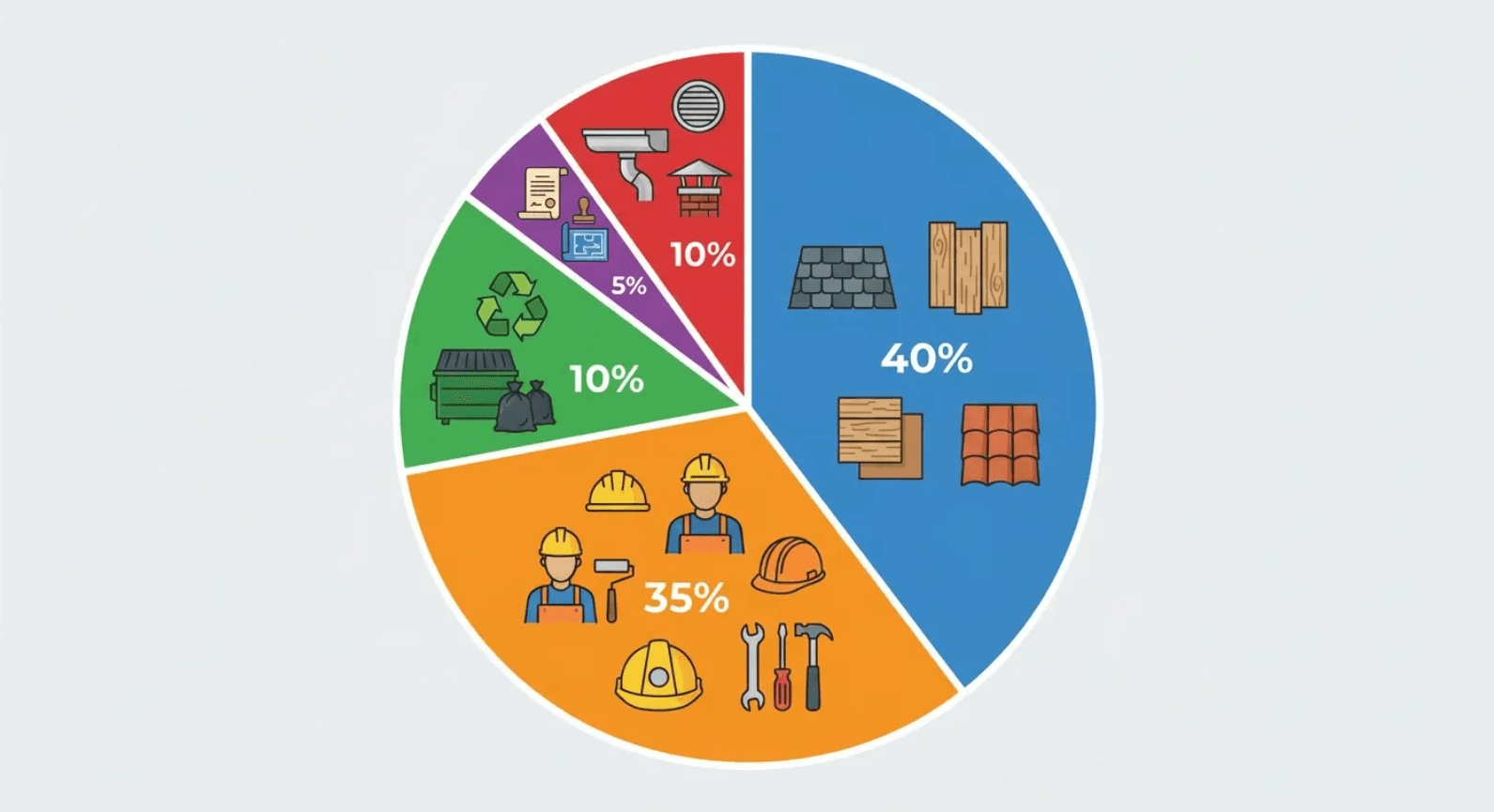
Crew experience determines how much material gets wasted, how quickly problems get identified, and whether your roof will last its rated lifespan. Cheap labor often means inexperienced crews who waste materials, miss critical details, and create callbacks that cost contractors money (which they'll eventually recoup through higher baseline pricing or corner-cutting elsewhere).
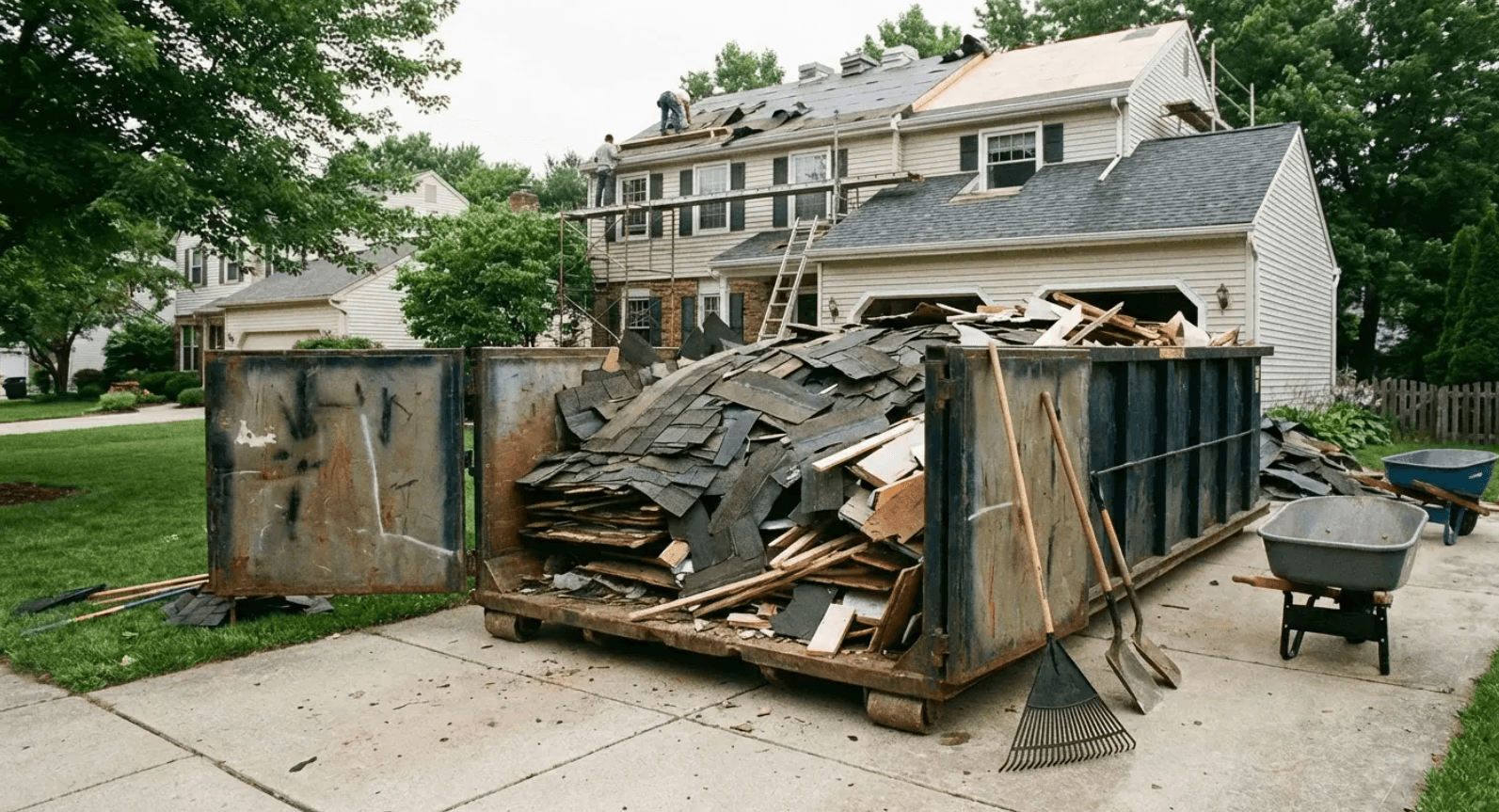
Your old roof has to go somewhere. Dumpster rental and disposal fees run $300-$900 depending on roof size and local dump fees. Some municipalities charge by weight, others by volume. Disposal costs have increased 25-40% over the past five years as landfill capacity tightens.
Tear-off labor (removing your existing roof) costs $1-$2 per square foot. On a 2,000 square foot roof, that's $2,000-$4,000 before any new materials touch your house. You're paying substantially just to undo what's already there.
I watched a homeowner in Portland discover their 1960s ranch had three layers of shingles. Each previous owner had just overlaid new shingles rather than tear off the old ones. The original quote assumed one layer at $1 per square foot ($2,000 for tear-off). The three-layer removal cost $2.50 per square foot ($5,000), plus an additional $400 in disposal fees due to weight. The "simple" roof replacement started $3,400 higher than quoted before a single new shingle was installed.
Multiple layer tear-offs cost more. If your home has two or three layers of shingles (common in older homes where previous owners did overlay installations), you're looking at $1.50 -$3 per square foot for removal. That's $3,000-$6,000 in pure demolition cost.
Drip edge, ridge vents, pipe flashings, valley flashing, step flashing, counterflashing... none of that is included in that "$90 per square" shingle price you found online. These accessories add $2-$5 per square foot depending on roof complexity.
Ventilation components (ridge vents, soffit vents, gable vents) cost $3-$15 per linear foot installed. Proper attic ventilation requires 1 square foot of ventilation per 150 square feet of attic space. Upgrading inadequate ventilation adds $800-$2,500 to your project but prevents premature shingle failure and ice damming.
You can't skip these components without voiding warranties and creating future problems. They're not optional add-ons.
The Subcontractor Shuffle and Your Wallet
Most roofing companies don't employ crews directly. They contract with installation crews who work across multiple companies. This keeps overhead low but creates cost variables you need to understand.
Top-tier crews charge roofing companies $400-$600 per square installed . Mid-tier crews charge $250-$350 per square. Bottom-tier crews charge $150-$225 per square. The roofing company's choice of which tier to use directly impacts your final cost and your roof's longevity.
You usually can't specify which crew you want (though you can ask about crew experience and certifications). What you can do is understand that extremely low bids often signal bottom-tier crew usage. These crews work fast, cut corners on flashing and underlayment, and create callbacks.
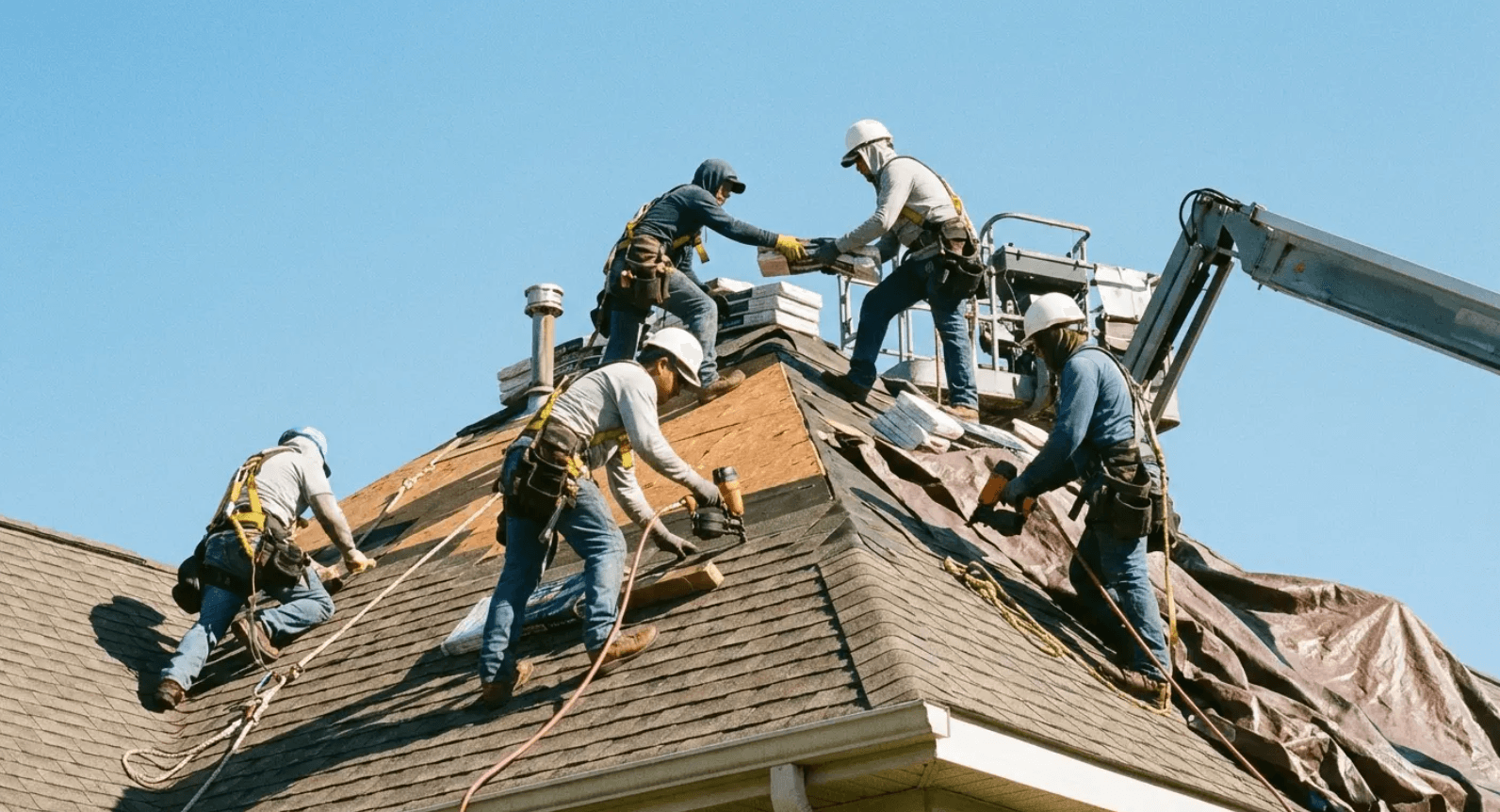
Callbacks cost roofing companies money, so established companies with reputations to protect tend to use higher-tier crews despite the cost. New or fly-by-night companies often use whoever's cheapest, then disappear when warranty issues arise.
During peak season (late spring through early fall in most climates), quality crews are booked solid. Roofing companies compete for their availability, and crew rates increase 15-25% due to demand.
Companies that can't secure their preferred crews face a choice: delay your project until their good crews are available, or use whatever crews they can find. Projects that start during peak season with "we can start next week!" promises often use lower-quality crews. The good ones are booked months out.
The cost implications aren't always visible in the quote. They show up in workmanship issues, longer installation times (which increases your disruption), and higher callback rates that might not surface until year two or three.
Legitimate subcontractors carry workers' compensation insurance and liability coverage. That insurance costs them $3,000-$8,000 annually, which they pass through in their rates. Uninsured crews charge less but expose you to liability if someone gets injured on your property.
Your homeowner's insurance might cover worker injuries, or it might not depending on your policy and state laws. Finding out after a crew member falls off your roof is an expensive way to learn about insurance gaps.
What "Lifetime Warranty" Actually Costs You
Shingle manufacturers offer tiered warranties: 25-year, 30-year, 50-year, and "lifetime" (which typically means 50 years with different coverage terms). Upgrading from a 30-year architectural shingle to a "lifetime" designer shingle costs $45-$90 more per square, or $900-$1,800 on a 2,000 square foot roof.
That warranty upgrade sounds appealing until you read the fine print.
Most "lifetime" warranties provide full replacement coverage for 10-15 years, then switch to prorated coverage based on remaining life. By year 20, you might receive 40% coverage. By year 30, you're at 20% coverage.
The warranty covers manufacturing defects, not weather damage, improper installation, or normal wear. Manufacturing defect rates on quality shingles run below 0.5%. You're paying $900-$1,800 for protection against something that probably won't happen, and even if it does, you'll likely be past the full-coverage window.
The reality of roof longevity varies dramatically by region. Verisk reports that asphalt shingles are used on 80% of roofs in the U.S., but in hail-prone states like Missouri and Kansas, roofs often don't last eight years. Meanwhile in western states like Nevada, Arizona, and Utah with less severe weather, the average roof lifespan extends to 22 years. This regional variance makes warranty value highly dependent on your location and weather exposure.
Manufacturer warranties often require "certified" installers and specific installation methods. If your contractor isn't certified with that manufacturer (certifications cost contractors $500-$2,000 annually), your warranty might be void regardless of what you paid for premium shingles.
Workmanship warranties from contractors typically run 2-10 years. That coverage matters more than material warranties because installation errors cause more roof failures than material defects. A contractor offering a 10-year workmanship warranty with mid-grade shingles might provide better real-world protection than a contractor offering 2-year workmanship with "lifetime" shingles.
Many premium shingles include algae-resistant granules that prevent the black streaking common in humid climates. This upgrade costs $8-$20 per square, or $160-$400 on a 2,000 square foot roof.
Algae doesn't damage your roof structurally. It's purely aesthetic. You're paying hundreds for curb appeal, which might matter if you're selling soon but offers zero functional benefit otherwise. Zinc or copper strips installed at the ridge accomplish the same thing for $100-$200 total.
Standard architectural shingles carry 110 mph wind ratings. Upgraded shingles offer 130 mph ratings, costing $15-$35 more per square. Unless you're in a hurricane zone where building codes require higher ratings, you're paying for protection you don't need.
Check your local building code requirements before paying for wind rating upgrades. Plenty of homeowners in moderate climates spend $500-$1,000 on 130 mph shingles when their code requires only 90 mph ratings and their actual wind exposure rarely exceeds 70 mph.
Permit Fees, Dumpsters, and Other Line Items That Sneak Up
The quote says $24,500 for your roof replacement. You budget $25,000 to leave some cushion. Then the final invoice arrives at $27,800, and you're scrambling to understand where the extra $3,300 came from.
Those "minor" line items add up faster than you'd expect.
Building permits for roof replacement run $150-$800 depending on your municipality and project value (many jurisdictions charge a percentage of project cost). Some areas require separate electrical permits if you're adding solar mounts or upgrading attic ventilation fans.
Permit fees aren't negotiable, and skipping them isn't advisable. Unpermitted work can complicate insurance claims, create issues during home sales, and result in fines if discovered during unrelated inspections. Some contractors include permit costs in their base quote; others list them separately. Always clarify which approach your quote uses.
The Ashland Source reports that Ashland County, Ohio approved a $411,000 roof replacement for their county office building. Commissioner Denny Bittle noted the county has maintained a systematic roofing program for the past decade, inspecting and prioritizing buildings to prevent the need for multiple simultaneous replacements. That's a strategy homeowners can learn from to avoid financial strain.
Tarps to protect landscaping, plywood to cover AC units, magnetic rollers to collect fallen nails, and final site cleanup aren't always included in base quotes. These items cost $300-$700 collectively but make the difference between a professional job and a disaster zone.
Dumpster rental runs $300-$900 as mentioned earlier, but placement matters too. If your driveway can't accommodate a dumpster and it needs to sit in the street, you might need a city permit ($50-$200) and traffic cones or barricades ($75-$150 rental). Narrow streets or HOA restrictions sometimes require smaller dumpsters with more frequent emptying, increasing total disposal costs by 30-50%.
Building codes evolve. Your roof was installed under 2005 code requirements; replacement must meet current code. That might mean adding ventilation, upgrading flashing methods, installing drip edge where none existed, or improving fire ratings in wildfire-prone areas.
Code compliance means your 2005 roof needs to meet 2024 standards. That usually means verifying current ventilation meets the 1:150 ratio (1 square foot of ventilation per 150 square feet of attic space), confirming drip edge installation on all eaves and rakes (required in most modern codes), checking ice and water shield requirements for your climate zone, verifying flashing methods meet current standards (especially around chimneys and valleys), confirming fire rating requirements for your area (Class A, B, or C), checking if additional roof deck attachment is required for high-wind zones, verifying proper attic insulation depth meets current energy codes, and confirming proper integration with existing gutter systems.
Code upgrades aren't optional, and they're not the contractor padding the bill. They're legal requirements that add $800-$2,500 to projects where existing roofs don't meet current standards. Older homes face higher code upgrade costs than homes built in the past 10 years.
Roof accessibility affects cost significantly. A single-story ranch with clear driveway access costs less than a three-story colonial with mature trees blocking truck access. Contractors might need to hand-carry materials from the street, use smaller equipment, or employ additional safety measures.
Difficult access adds 10-25% to labor costs. On a $25,000 project, that's $2,500-$6,250. Contractors should identify access issues during estimates, but sometimes they're not apparent until work begins.
The Real Cost of Choosing the Wrong Season
Roofing companies offer seasonal discounts during their slow periods (typically late fall and winter in most climates). Those discounts run 10-20%, or $2,000-$6,000 on a $30,000 project. Sounds like a no-brainer, right?
Weather delays erase those savings quickly.
Winter and early spring installations face higher weather delay risks. Your two-day roof replacement might stretch to five days with weather interruptions. Each delay day costs you in several ways.
You're paying for temporary weatherproofing between work sessions ($200-$500 per occurrence). You're managing an open roof longer, increasing water intrusion risk. You're dealing with extended disruption to your household. Contractors might need to make multiple mobilization trips, and some pass those costs through.
Extended timelines also increase your exposure to price fluctuations. Material costs can change between order and delivery if the project stretches beyond 30 days. You might've locked in November pricing only to face February price increases when weather finally permits completion.
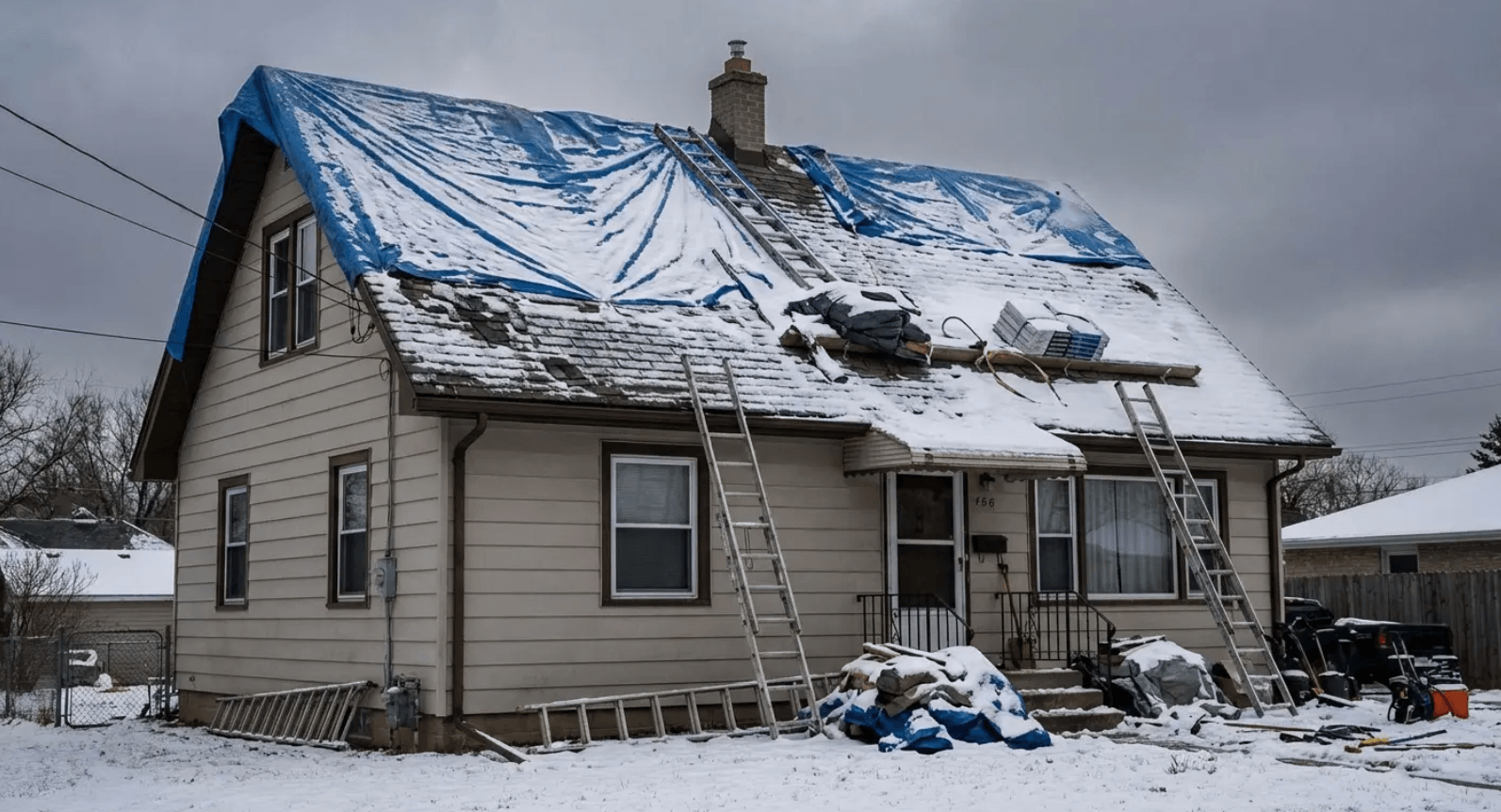
Asphalt shingles require specific temperature ranges for proper installation. Below 40°F, shingle sealant strips don't activate properly, compromising wind resistance. Contractors can use hand sealant, but that adds $0.50-$1.25 per square foot in labor and materials.
Some manufacturers void warranties on cold-weather installations unless specific protocols are followed. Those protocols cost money (heated storage for materials, hand sealing, extended installation time). Your "discounted" winter installation might include warranty restrictions or additional costs that negate the seasonal savings.
Last winter, a guy in Columbus accepted a $19,500 winter quote (20% discount from the $24,500 summer price) for installation in January. Nice guy, engineer, thought he had it all figured out. Three weather delays required temporary tarping at $350 per occurrence ($1,050 total). Cold-weather hand sealing added $0.75 per square foot ($1,500 on their 2,000 square foot roof). The project stretched from the quoted 2 days to 8 days across three weeks, requiring him to take additional time off work. Final cost: $22,050, plus lost wages. He saved maybe $2,000 but was ready to murder someone by the end.
Top crews stay busy year-round. They're not sitting idle in January hoping for work. Contractors offering steep winter discounts might be using that season to keep lower-tier crews employed rather than laying them off.
You might save 15% on price but get a crew that's 30% less experienced than the summer crew would've been. That quality difference shows up in installation speed, detail work, and long-term performance.
Late spring (after rain season but before peak heat) and early fall (after summer but before winter) offer the best balance. Weather is reliable, quality crews are available but not completely booked, and pricing sits between peak-season premiums and off-season discounts.
You'll pay 5-10% more than winter pricing but avoid weather delays and access top crews. Projects proceed on schedule, reducing your disruption and risk. That middle ground often delivers the best total value even if it's not the lowest sticker price.
Why Financing Terms Matter More Than the Sticker Price
Two quotes sit in front of you: $26,000 with 18 months same-as-cash financing, and $24,500 with payment due at completion. The $24,500 quote looks better until you examine what financing actually costs you.
Same-as-cash promotions typically carry 17-27% deferred interest. Pay off the balance before the promotional period ends, and you pay zero interest. Miss the deadline by one day, and you owe interest retroactively on the entire original balance.
On a $26,000 project at 24% APR for 18 months, that retroactive interest totals $4,680. Your "same-as-cash" deal just became a $30,680 project. Contractors and financing companies count on a certain percentage of customers missing the payoff deadline. That's how they profit from these promotions.
Standard financing at 8-12% APR costs more monthly but eliminates the retroactive interest trap. On a $26,000 project at 10% APR over 60 months, you'll pay $4,200 in interest total. That's less than the deferred interest penalty and spreads payments over a longer period.
Contractors often offer 3-5% discounts for cash payment. On a $26,000 project, that's $780-$1,300 in savings. Sounds great until you consider opportunity cost.
If paying cash depletes your emergency fund, you're one unexpected expense away from high-interest credit card debt. If that $26,000 could earn 5% annually in investments, you're giving up $1,300 per year in returns. After two years, the opportunity cost exceeds the cash discount.
Cash discounts make sense if you have excess liquidity and no better use for the funds. They're expensive if they strain your financial cushion or prevent you from capturing better returns elsewhere.
Home equity lines of credit currently run 7-10% APR. You're borrowing against equity you've already built, interest might be tax-deductible (consult your tax advisor), and you control the repayment timeline .
HELOC closing costs run $0-$500 for most lenders. On a $26,000 roof replacement, you'd pay $1,820 in interest over 24 months at 8% APR. That's competitive with contractor financing and offers more flexibility. You can pay it off early without penalties, draw additional funds if needed, and potentially deduct the interest.
The downside? You're securing debt against your home. Miss payments, and you risk foreclosure. HELOC rates are often variable, so your payment could increase if rates rise.
Most contractors require 10-20% upfront, 40-50% at material delivery, and the remainder at completion. That payment structure protects them but offers you leverage.
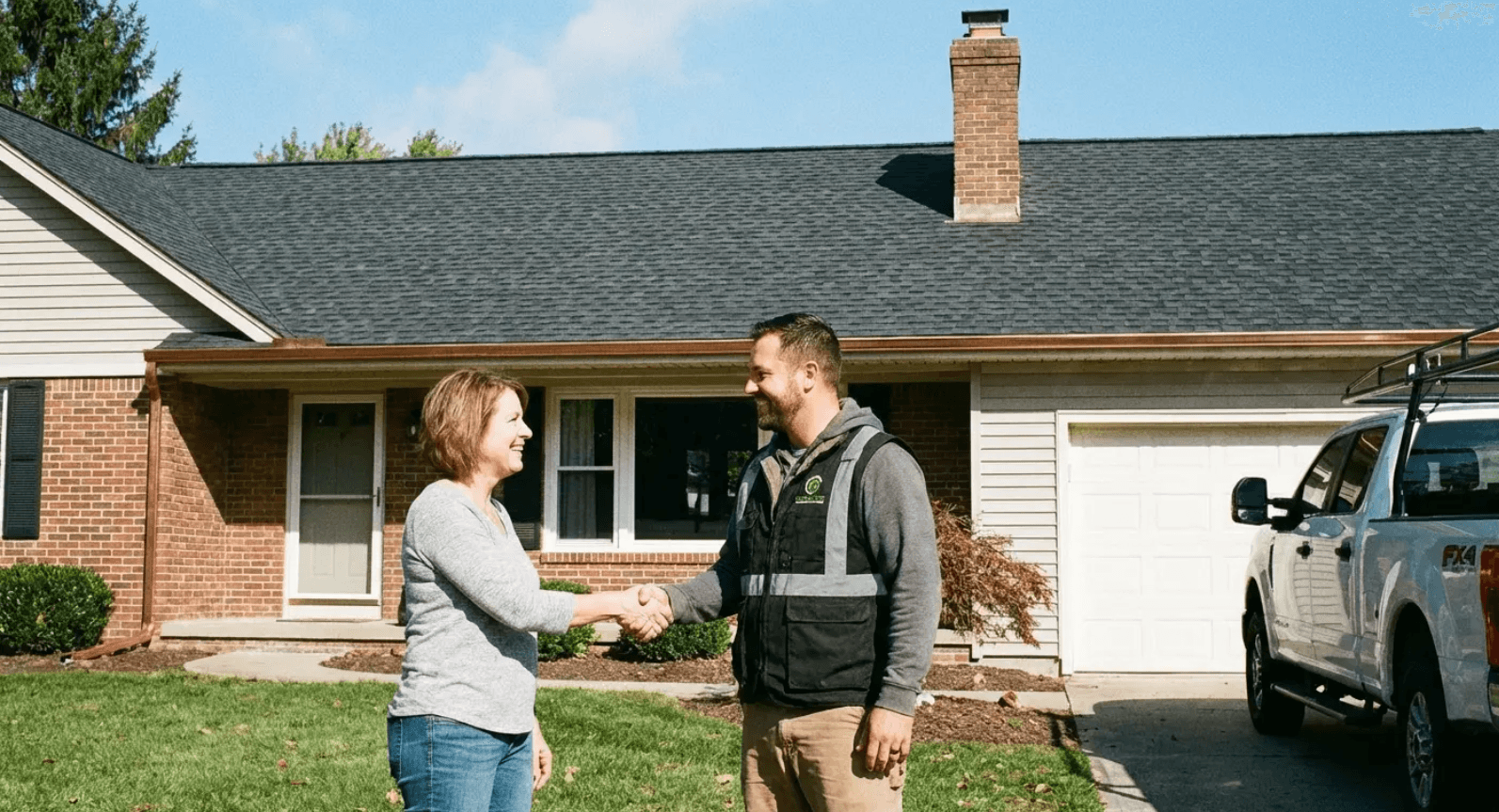
Withholding final payment until you've inspected the work and confirmed everything meets contract specifications gives you negotiating power if issues arise. Contractors who demand full payment before completion or unusually large upfront deposits might be managing cash flow problems. That's a red flag.
Some contractors offer completion-based payments (25% at tear-off, 25% at underlayment installation, 25% at shingle installation, 25% at final inspection). This structure aligns payments with work progress and protects both parties. It costs you nothing extra but provides much better oversight.
When Cheaper Actually Costs More (And When It Doesn't)
The lowest bid isn't always the worst choice, and the highest bid doesn't guarantee quality. But you need to know what you're looking at.
Detailed quotes listing specific materials (brand, model, grade), labor hours, and individual cost components signal transparency. Lump-sum quotes ("$24,500 for complete roof replacement") hide where your money goes and make comparison shopping impossible.
Itemized quotes let you identify where contractors differ. One might quote premium underlayment while another quotes standard felt. One might include ventilation upgrades while another assumes your existing ventilation is adequate. Those differences justify price gaps and help you make informed decisions.
Contractors who resist providing itemized quotes are either hiding something (inferior materials, unlicensed labor, skipped steps) or don't know their costs well enough to break them down. Either way, it's a problem.
Contractors should provide recent references (within the past 12 months) and photos of completed projects similar to yours. A contractor who's done 50 simple ranch roofs might not have experience with your complex Victorian with multiple dormers and valleys. Call those references. Ask about timeline accuracy, cleanup quality, how the contractor handled unexpected issues, and whether the final cost matched the quote. References who hesitate or provide vague positive responses might be friends or family rather than actual customers.
Check online reviews, but weight recent reviews more heavily. A company with great reviews from 2019 but mediocre reviews from 2023-2024 has changed (new ownership, different crews, declining standards). Current performance matters more than historical reputation.

Contractor licenses cost $500-$2,000 annually depending on the state. General liability insurance costs $1,500-$4,000 annually. Workers' compensation insurance costs $3,000-$8,000 annually. Legitimate contractors carry these and pass the costs through in their prices.
Unlicensed, uninsured contractors undercut licensed competitors by 20-30% because they're not carrying those costs. You're not getting the same service for less. You're getting a fundamentally different (and riskier) service.
Verify licenses through your state licensing board (online databases are usually searchable). Request certificate of insurance and call the insurance company to confirm coverage is active. Contractors who can't or won't provide this documentation should be eliminated regardless of price.
Some contractors deliberately low-ball quotes, then use change orders to reach market rates. Their initial quote excludes items they know you'll need (like decking replacement or ventilation upgrades), and they "discover" these needs after work begins.
Quotes should specify what happens if decking replacement is needed. Good contractors include language like "decking replacement billed at $4.50 per square foot as needed, with customer approval required before proceeding." That protects you from surprise bills while giving the contractor a clear path to address unexpected issues.
Contractors who refuse to discuss potential additional costs or who claim "we won't know until we start" are setting up change order scenarios. Experienced contractors can estimate probable additional costs based on roof age, visible sag, and staining patterns. They should be willing to share those estimates even if they're not guaranteed.
What This All Means for Your Actual Project
Look, $25,000 hurts. For most people, that's a car. That's a year of daycare. That's not money you just have sitting around. Which is exactly why you need to understand where every dollar is going.
Roof replacement cost extends far beyond the per-square shingle price you can Google in five minutes. The real expense hides in timeline delays that compound damage, in labor markets that vary wildly by region and season, in insurance adjusters who work from depreciated values, and in financing terms that can add thousands to your final cost.
Your neighbor's quote means nothing because roof geometry, underlayment requirements, and structural conditions vary dramatically even between similar homes. Your specific situation matters. Your roof's complexity, pitch, penetrations, and hidden structural needs that won't be visible until tear-off begins.
The cheapest bid frequently signals corner-cutting on the invisible components (ventilation, flashing, underlayment) that determine whether your roof lasts 15 years or 30. Metal roof replacement cost, for instance, runs significantly higher upfront than asphalt but can deliver 50+ years of performance when properly installed, making the total cost over time potentially lower than multiple asphalt replacements.
The most expensive bid doesn't guarantee quality unless you verify licenses, check recent references, and review itemized quotes that show exactly what you're paying for.
When evaluating the average roof replacement cost in your market, remember that "average" includes simple gable roofs and complex multi-plane designs, pristine decking and rotted plywood requiring replacement, peak-season installations with top crews and off-season work with whoever's available. Your specific project cost should reflect your unique circumstances, not a national average that may have little relevance to your situation.
The bottom line: your roof is more complicated than you thought, and that's exactly why contractors can get away with vague quotes. Now you know what questions to ask. Use them.