
Quick answer
K-style gutters are the practical choice for most residential homes. They can be formed on-site in long seamless runs, use hidden hangers, and generally cost less than half-round gutters.
Half-round gutters have a smooth, semicircular shape and a more traditional appearance. They are commonly chosen for historic homes, specialty exteriors, and projects where the gutters are meant to become part of the home’s design. They also require different hardware and generally cost more to install.
Both styles can manage water effectively when the gutter size, downspouts, pitch, attachment, and drainage plan are appropriate for the house.
K-style vs. half-round gutters at a glance
| Feature | K-Style Gutters | Half-Round Gutters |
|---|---|---|
| Shape | Flat back and bottom with a curved decorative front | Smooth trough shaped like half of a circle |
| Typical use | Most residential homes | Historic, traditional, and specialty exteriors |
| Common Joyland sizes | 5-inch and 6-inch | 5-inch and 6-inch |
| Attachment | Commonly installed with hidden hangers | Uses hangers and components designed for the rounded profile |
| Appearance | Blends into the fascia and roof edge | More visible and often treated as an architectural feature |
| Upfront price | Lower | Higher |
| Joyland material options | Primarily aluminum | Aluminum or copper |
| Best reason to choose it | Practicality, value, and broad compatibility | Traditional appearance and specialty materials |
What is a K-style gutter?
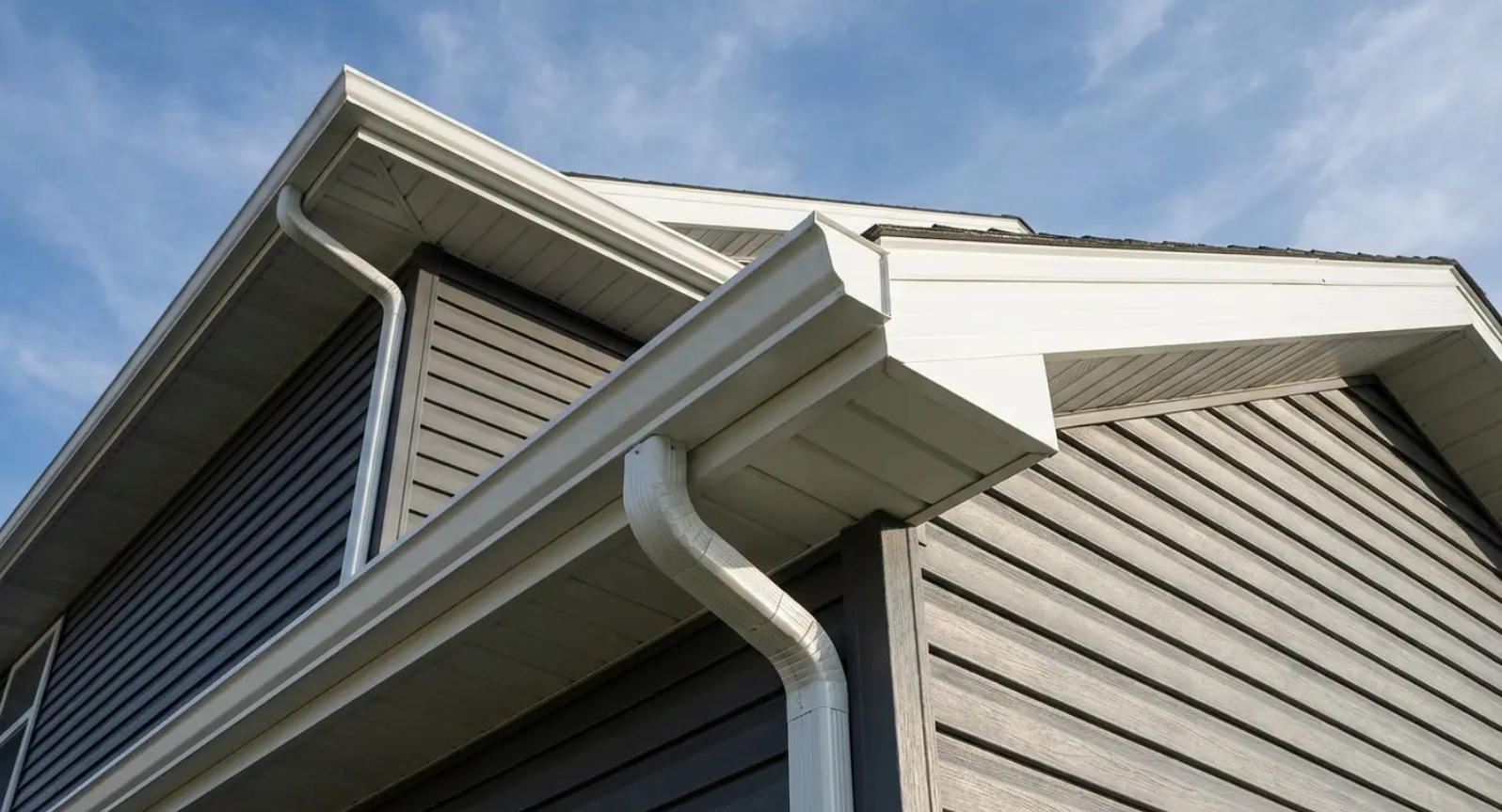
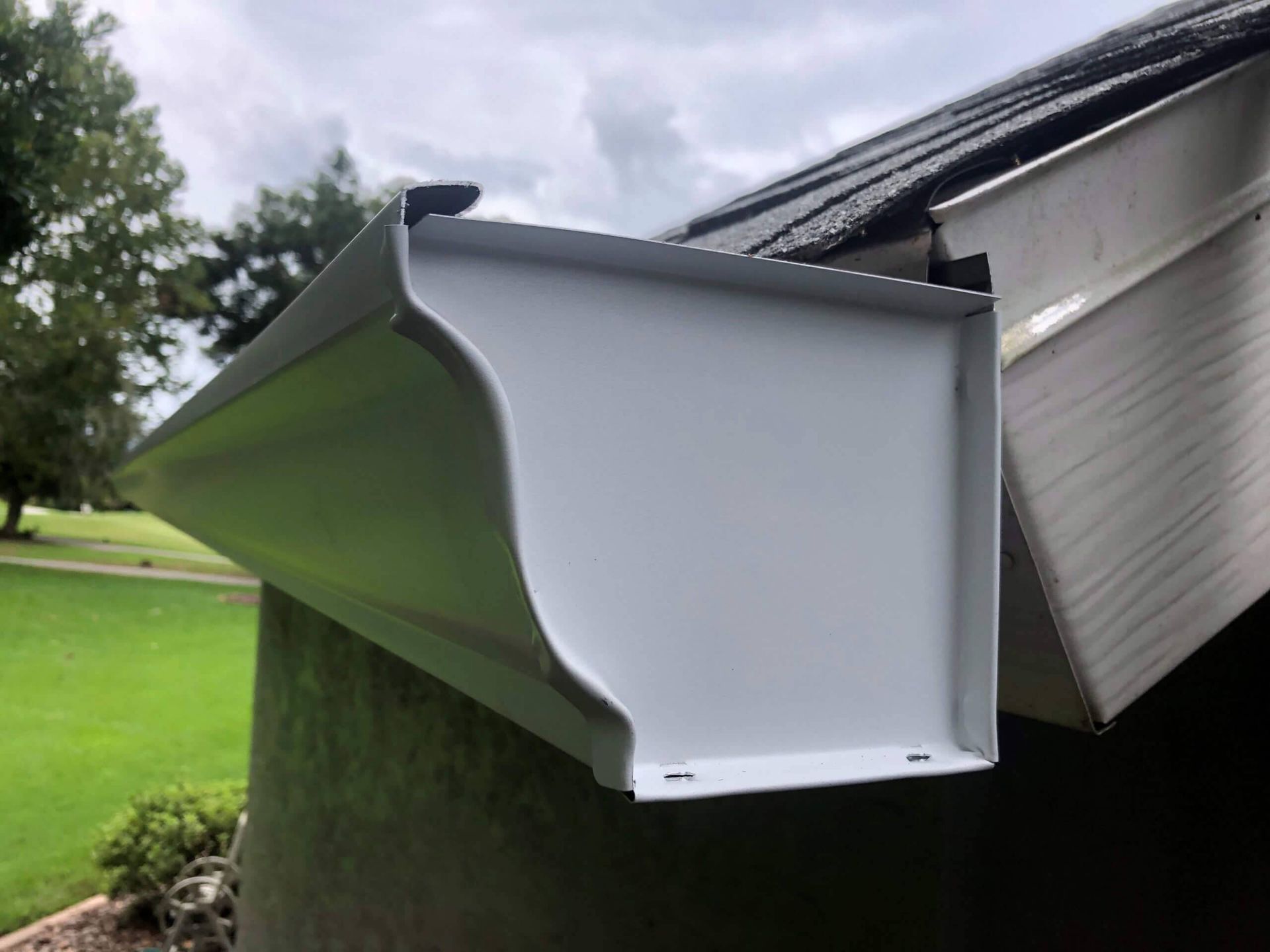
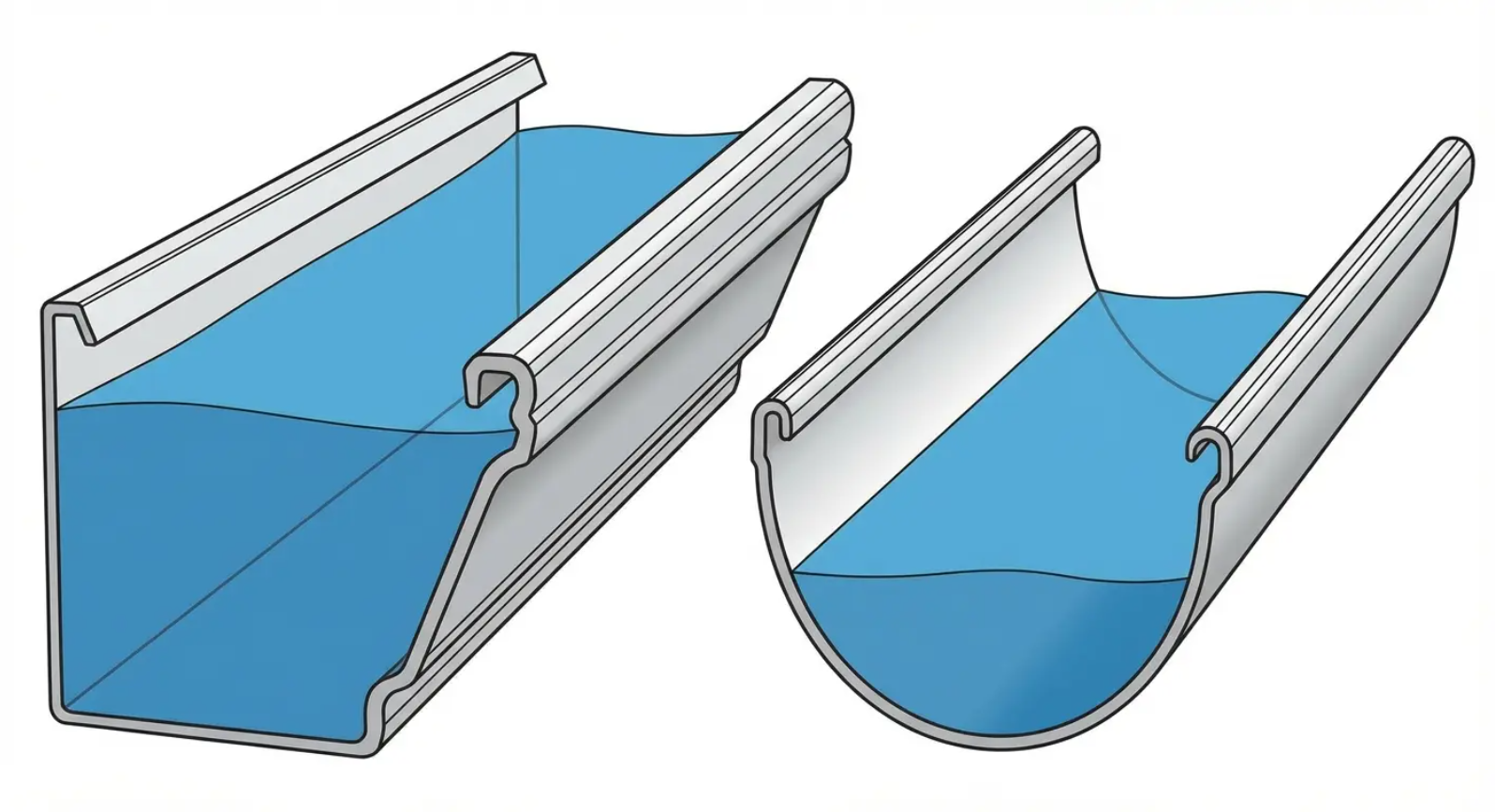
A K-style gutter has a flat back that sits against the fascia, a relatively flat bottom, and a decorative front profile.
It is the gutter most homeowners picture when they think about a conventional residential gutter system.
As John demonstrates in the video, aluminum K-style gutters can be roll-formed from a coil at the property. The installer produces a continuous piece sized for that particular roof edge. This reduces the number of joints along a straight run.
K-style gutters are commonly installed using hidden hangers. The hanger clips into the gutter and is fastened through the fascia into suitable framing. The hardware sits inside the gutter, so it is difficult to see from the ground.
Joyland offers two common residential sizes:
- 5-inch K-style gutters, commonly paired with 2-by-3-inch downspouts
- 6-inch K-style gutters, commonly paired with 3-by-4-inch downspouts
Those pairings are not universal rules. The correct gutter and downspout sizes depend on the house and the amount of water each roof section must manage.
Advantages of K-style gutters
They are practical for most homes. K-style gutters work with many common residential rooflines and fascia configurations.
They can be formed in continuous runs. Fewer joints along a straight section means fewer locations that need to be sealed.
The hangers are concealed. The attachment hardware is mostly hidden inside the gutter.
They generally cost less. K-style aluminum is the more budget-friendly of these two options.
There are many color and gutter-guard options. K-style gutters are widely available and compatible with numerous accessories.
Disadvantages of K-style gutters
The shape is common. That is helpful when you want the gutters to blend in, but it may not provide the distinctive appearance you want for a historic or custom home.
Corners can collect debris. The flat bottom and interior angles can hold leaves, roof granules, and other material if the gutter is not cleaned.
They are not automatically right for every roof. A 5-inch K-style system may still overflow if it is undersized, poorly pitched, or paired with inadequate downspouts.
What is a half-round gutter?
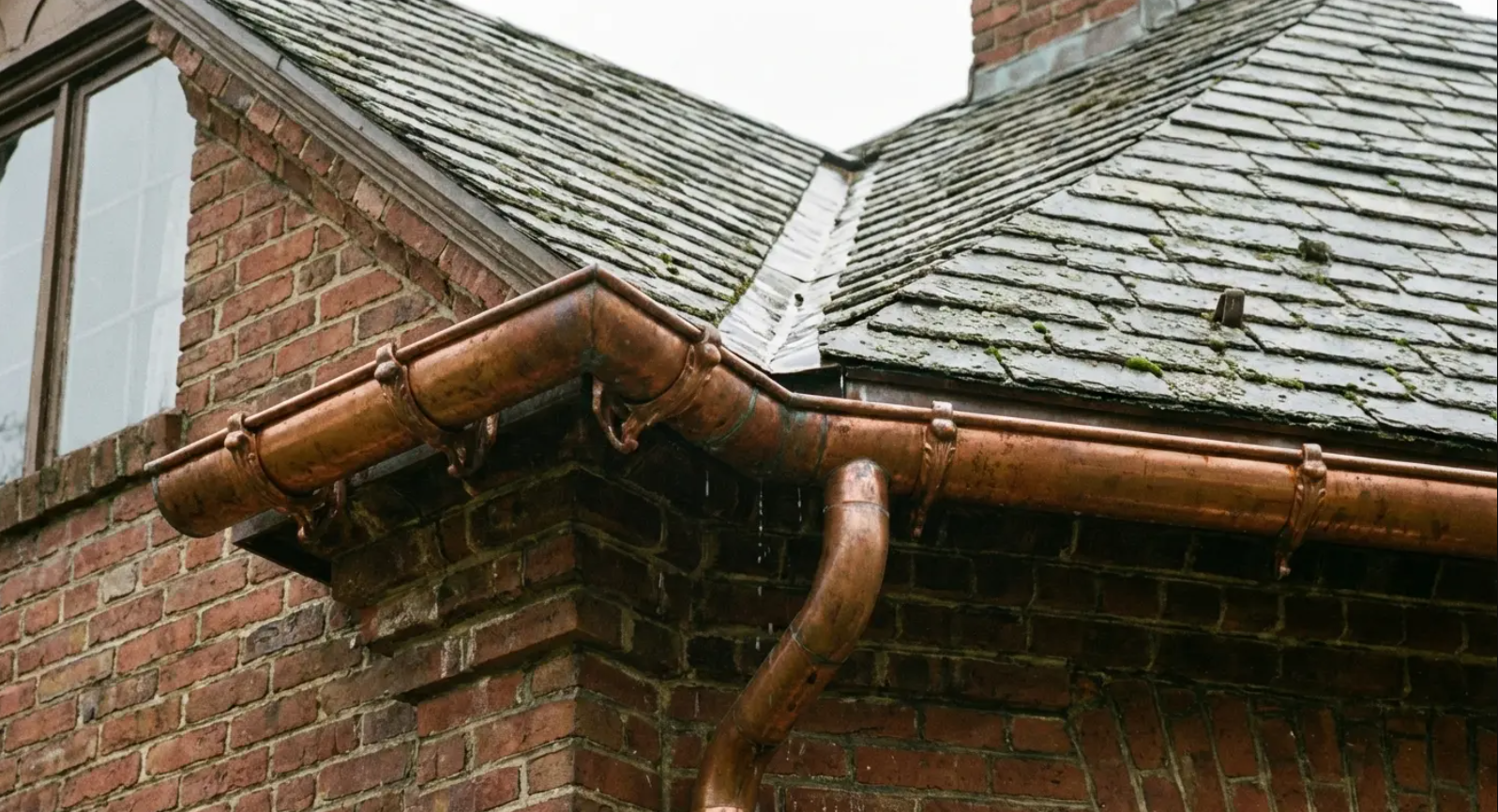
A half-round gutter looks like a tube cut lengthwise. The smooth, rounded profile gives it a noticeably different appearance from K-style.
Half-round gutters are often chosen for:
- Historic homes
- Traditional farmhouses
- Colonial and Victorian-inspired exteriors
- Homes with slate or cedar roofing
- Stone and brick exteriors
- Projects using copper gutters and downspouts
Those are design preferences, not construction requirements. A historic home does not automatically need half-round gutters, and a newer home is not prohibited from using them.
Half-round systems use hangers and components designed for the rounded profile. The hardware can be more noticeable than the concealed hangers used with K-style gutters. On the right home, that visible craftsmanship is part of the appeal.
Advantages of half-round gutters
They have a classic appearance. Half-round gutters can complement historic and traditional architecture without looking like an ordinary replacement gutter was added as an afterthought.
They are available in aluminum and copper. Aluminum provides color options, while copper creates a more distinctive premium exterior.
The interior is smooth. The rounded shape has fewer corners where debris can settle, which may make the gutter easier to rinse and clean.
That does not make it self-cleaning. Leaves have never respected architectural elegance.
Disadvantages of half-round gutters
They cost more. The gutter material, specialized components, and additional installation time increase the price.
The hardware is different. Half-round gutters require hangers, outlets, end pieces, and other accessories designed for their shape.
Not every gutter guard fits them. Compatible guards are available, but the options depend on the exact gutter size and system.
The look is more noticeable. Half-round gutters are often selected because they stand out. That can look excellent on the right house and awkward on the wrong one
Which gutter style handles more water?
K-style gutters generally have greater capacity than half-round gutters of the same nominal width due to their deeper profile. However, a profile alone does not determine whether a gutter system will handle a storm.
A complete drainage plan should consider:
- The roof area draining into each gutter run
- Roof pitch
- Valleys that concentrate water
- Local rainfall intensity
- Gutter size
- Downspout size and quantity
- Downspout placement
- Gutter pitch
- Where the downspouts discharge
The International Plumbing Code bases gutter sizing on the flow coming from the roof surface. Berger’s gutter and downspout sizing guide likewise accounts for roof area and local rainfall.
A properly sized half-round system can effectively manage water. An undersized K-style system can overflow. There is no magic winner based solely on shape.
Are half-round gutters easier to clean?
They can be.
The smooth interior of a half-round gutter has fewer corners where sediment and roof granules can settle. That can make rinsing easier during cleaning.
However, both styles can clog when exposed to:
- Leaves
- Pine needles
- Twigs
- Seed pods
- Roof granules
- Bird nests
- Debris caught near the downspout outlet
Tree coverage, gutter pitch, downspout layout, and cleaning frequency usually matter more than the gutter profile.
If your home is surrounded by trees, compare the options in our guide to decide whether gutter guards are worth it.
How much do K-style and half-round gutters cost?
Half-round gutters cost more than K-style gutters, but the difference depends on the material, house, roofline, and installation details.
For a simple 2,000-square-foot house, Joyland’s current lists these planning ranges:
- 5-inch K-style aluminum: $2,100 to $3,500
- 6-inch K-style aluminum: $2,400 to $3,800
- Half-round aluminum: $6,000 to $8,000
- Half-round copper: $7,000 to $10,000
These are planning examples, not guaranteed quotes. Your price can change based on:
- Total linear footage
- Number of stories
- Roof and eave complexity
- Corners and transitions
- Downspout quantity and routing
- Fascia repairs
- Aluminum or copper selection
- Removal of the existing gutters
- Gutter guards
- Access around the property
Which gutter style is right for your house?
K-style may be the better fit if:
- You have a typical residential home.
- You want the more affordable option.
- You prefer gutters that blend into the roof edge.
- You want a broad selection of colors and gutter guards.
- You need 5-inch or 6-inch aluminum gutters formed for the roofline.
Half-round may be the better fit if:
- You own a historic or traditionally styled home.
- You want the gutters to become part of the exterior design.
- You are considering copper.
- You like visible brackets and rounded downspouts.
- You are comfortable with the higher installation cost.
John’s summary in the video is still the most useful answer: K-style is the practical choice for most ordinary single-family homes. Half-round makes sense when the home or homeowner calls for a more historic or specialty look.
Get the right gutter system for your home
Choosing a gutter profile is only one part of the job. The system still needs to be sized, pitched, attached, and drained correctly.
Joyland Roofing installs and repairs K-style and half-round gutter systems throughout Lancaster, Harrisburg, Mechanicsburg, Lebanon, York, and the surrounding areas of south-central Pennsylvania.
We can inspect the roofline, evaluate where the water is moving, compare gutter styles, and explain the actual price difference for your property.
Schedule a free gutter inspection and estimate or call 717-459-3499.
Frequently Asked Questions
Are K-style gutters better than half-round gutters?
K-style gutters are the more practical and affordable choice for most residential homes.
Half-round gutters can perform just as well when properly sized and installed. They are usually selected for their traditional appearance, specialized hardware, and availability in copper.
Do K-style gutters hold more water?
A K-style gutter generally has more capacity than a half-round gutter of the same nominal width.
Actual performance still depends on gutter size, roof area, rainfall, valleys, pitch, downspouts, and installation.
Do half-round gutters clog less?
Their smooth interior has fewer corners where debris can settle, which may make them easier to clean.
They are not clog-proof or self-cleaning. Leaves, pine needles, roof granules, and other debris can obstruct either style.
Why are half-round gutters more expensive?
The material and components generally cost more, and the installation requires hardware designed specifically for the rounded profile.
Copper adds another substantial increase compared with aluminum.
Can half-round gutters be aluminum?
Yes. Joyland offers aluminum half-round gutters in multiple colors as well as premium copper half-round systems.
Can gutter guards be installed on half-round gutters?
Yes, but the guard must be compatible with the gutter’s size, shape, and attachment system.
Not every product designed for K-style gutters will fit a half-round system.
Should I choose 5-inch or 6-inch gutters?
That depends on the amount of roof water entering the gutter, not simply the size of the house.
Large roof sections, steep slopes, valleys, and concentrated runoff may call for larger gutters, larger downspouts, or additional downspouts. The system should be evaluated as a whole.
John Esh | CEO & Master Installer
- 25+ Years Experience: From ground crew to Master Certified Installer.
- Local Roots: Serving Lancaster, Harrisburg, and SEPA since 1991.
- Credentials: GAF Master Certified (ME27586); Licensed in PA (PA124258) & MD (#137952).
- The "Why":
Obsessed with "radical transparency" to remove the fear factor from home improvements.
James Wesser | Content Producer
- Background: Former local news digital producer and journalist.
- The Mission: Turning complex roofing jargon into clear, "fluff-free" answers for homeowners.
- Local Tie: When not filming on-site, he’s likely roaming Hersheypark or building digital worlds.