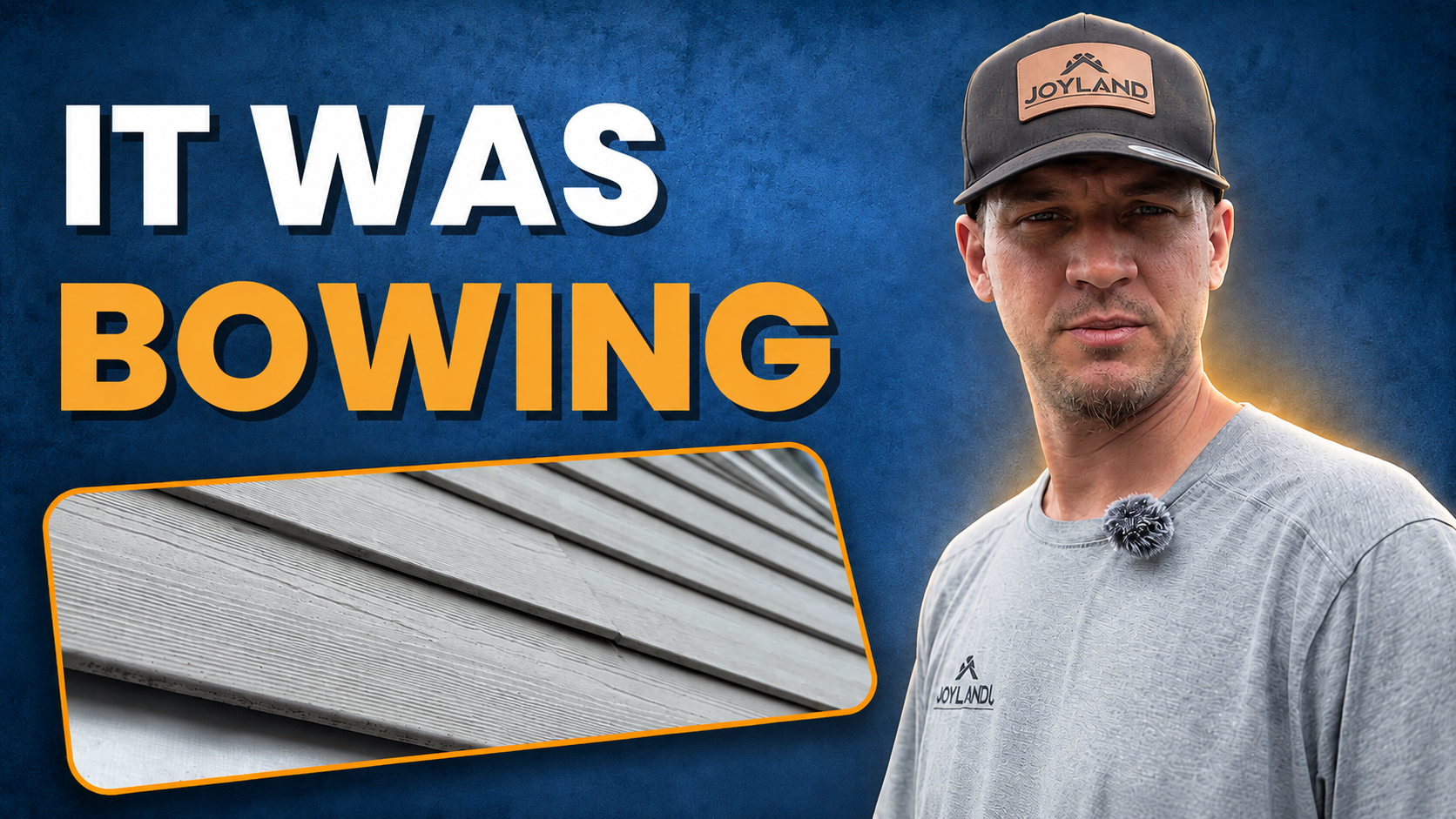
Should I Install Gutter Guards? 7 Questions to Ask First
John Esh
January 3, 2026

You should consider installing gutter guards if leaves, pine needles, seed pods, or other debris repeatedly clog your gutters. They can reduce how often the gutters need to be cleaned and limit how frequently someone has to work from a ladder.


You may not need them if your home has few nearby trees and the gutters have stayed clear without much attention.


The existing gutter system also matters. Guards should not be installed over gutters that sag, leak, hold standing water, or cannot handle the water coming from the roof. Repair or replacement should come first.


Gutter guards reduce maintenance. They do not eliminate it, and no single product is the best fit for every house.

The better question is not simply, “Are gutter guards good?” It is, “What problem would gutter guards solve on my house?”


Before you spend the money, work through these seven questions.

1. What type of debris reaches your roof?

Start by looking at the trees around the house and the material that actually ends up in the gutters.


Common debris in south-central Pennsylvania includes:

  • Maple, oak, and sycamore leaves
  • Pine needles
  • Seed pods and tree tassels
  • Small twigs
  • Roof granules
  • Dirt and organic material
  • The size of that debris affects which type of guard may work best.


A perforated aluminum guard can be a practical choice when larger leaves and twigs cause most of the trouble. A micro-mesh guard may be better around pine trees or where smaller debris routinely enters the gutter.


If very little debris reaches the roof, installing guards may not solve a meaningful problem. Gutters that have been quietly doing their job for years do not need a new hobby.


For a deeper product-by-product comparison, read our guide to whether gutter guards are worth it.

2. How often do your gutters actually clog?

There is a difference between finding a handful of leaves in a gutter and dealing with repeat blockages that stop water from reaching the downspout.


Gutter guards may make sense when:

  • The gutters clog several times during the year.
  • Water regularly spills over the front because debris blocks the flow.
  • Downspout outlets repeatedly become obstructed.
  • Cleaning requires access to a tall or difficult roofline.
  • You are paying for frequent professional cleanings.

If your gutters only need attention every few years, the cost of guards may be difficult to justify.


Ladder access should be part of the decision. The U.S. Consumer Product Safety Commission’s ladder-safety advice specifically includes gutter cleaning and recommends placing the ladder on solid, level ground and having another adult act as a spotter.


If you are not trained, properly equipped, and comfortable working from a ladder, hire a professional instead.

3. Are your current gutters working correctly?

A gutter guard only covers the gutter opening. It cannot correct problems elsewhere in the drainage system.

Before adding guards, inspect the gutters for:


  • Sagging or sections pulling away from the fascia
  • Loose or missing hangers
  • Leaking seams and end caps
  • Rust, corrosion, cracks, or holes
  • Standing water after a storm
  • Poor pitch toward the downspouts
  • Clogged or undersized downspouts
  • Overflow where roof valleys concentrate water
  • Soft or rotted fascia behind the gutter
  • Downspouts that discharge too close to the house


A guard installed over a failing gutter is just a nice lid on the wrong problem.

Before you install
Is a gutter guard the right fix?
What you see at the roofline can point to very different solutions.
What you notice
What it may mean
Guard first?
Leaves and twigs fill the gutter each season
Recurring debris is blocking an otherwise functional system.
Likely yes
Pine needles pass through an existing screen
The current openings are too large for the surrounding debris.
Try micro-mesh
Water shoots over the gutter at a roof valley
Concentrated runoff, poor sizing, or a blocked outlet may be the cause.
Inspect first
The gutter sags or pulls away from the fascia
Hangers, fascia, or the gutter itself may be failing.
Repair first
Water remains in the gutter after the storm
The pitch may be wrong or the downspout may be restricted.
Correct drainage
The gutters stay clear and drain normally
There may be no active debris or drainage problem to solve.
Probably skip

4. Can gutter guards be installed on existing gutters?

Yes, many gutter guards can be installed on existing gutters when the system is structurally sound and properly sized.

The gutters should first be:

  • Completely cleaned
  • Flushed through the downspouts
  • Re-pitched where necessary
  • Re-secured with proper hangers
  • Resealed at leaking joints and end caps
  • Checked for adequate capacity at valleys and large roof sections

Those steps are not optional fine print. GutterRx’s official warranty information, for example, requires the gutters to be clean, properly sloped, and connected to clear downspouts and drains before the product can perform as intended.


Installation methods also vary. Some guards attach to the gutter or fascia without disturbing the roof. Other systems may use an under-shingle mounting method.


The installer should follow the current instructions for the guard, roofing material, and complete the roof-and-gutter assembly.


If the gutters are nearing the end of their service life, replacing them before adding guards is usually the cleaner long-term decision. Learn more about Joyland’s seamless gutter options.

5. Which type of gutter guard fits your house?

There is no universal winner. The right product depends on the debris, roof, gutter profile, water volume, and budget.


Perforated aluminum guards

Perforated aluminum products, such as GutterRx, are designed to block larger debris while allowing water to pass through small openings.

GutterRx says its system can be installed on new or existing gutters without fastening into the roof shingles. It also states plainly that the product is not maintenance-free.

Tree coverage, wind exposure, and debris affect how often the surface needs attention.

This can be a practical option for many homes dealing primarily with leaves and larger debris.


Micro-mesh guards

Micro-mesh products use much smaller openings to block pine needles, roof granules, pollen, and other fine material.

The manufacturer of Xtreme Gutter Guard describes it as stainless-steel micro-mesh secured to an aluminum body. It is available in different sizes and mounting configurations, which makes it useful for more difficult debris or roof conditions.

The tradeoff is cost. Micro-mesh generally costs more and may still require brushing or rinsing the top surface when fine material accumulates.


Solid or reverse-curve guards

Solid systems direct water around a curved edge while leaves and larger debris fall away.

They can work, but they are more sensitive to roof pitch, installation angle, heavy runoff, and concentrated water at valleys. They also tend to cost more than perforated aluminum or micro-mesh products.


Foam, brush, plastic, and clip-on guards

Lower-cost DIY guards may appear attractive because they are easy to purchase and install.

They are also more likely to shift, deteriorate, retain organic material, or allow smaller debris to enter the gutter.

They can be useful as a short-term experiment, but we generally would not treat them as a permanent solution for a home with repeat drainage problems.

6. What maintenance will still be required?

No gutter guard has earned the right to be forgotten forever.


Maintenance may include:

  • Checking the guard after the heaviest seasonal leaf drop
  • Removing material that collects on the surface
  • Clearing debris where the roof valleys meet the gutter
  • Confirming that downspouts remain open
  • Watching for water spilling over the front during rain
  • Inspecting fasteners, seams, and end caps
  • Cleaning beneath a removable section when fine material accumulates


The official GutterRx FAQ states that the product is not maintenance-free, and its warranty terms place responsibility on the homeowner to prevent debris from accumulating on the surface.


That is an important correction to the old promise that a good guard should provide years of zero maintenance.

A quality system should reduce the amount of cleaning. It should not be sold as magic aluminum that makes leaves disappear from the zip code.

7. Does the cost make sense for your home?

Joyland’s current planning ranges are:

  • Professional gutter cleaning without guards: $4 to $6 per linear foot per visit
  • GutterRx installed on existing gutters: $12 to $16 per linear foot
  • Xtreme micro-mesh installed on existing gutters: $17 to $19 per linear foot
  • Fully enclosed guards installed on existing gutters: $25 to $30 per linear foot


For a house with approximately 200 linear feet of gutters, that works out to:

  • Professional cleaning: $800 to $1,200 per visit
  • GutterRx: $2,400 to $3,200 installed
  • Xtreme micro-mesh: $3,400 to $3,800 installed
  • Fully enclosed system: $5,000 to $6,000 installed


These are planning examples, not guaranteed quotes. Roof pitch, height, access, gutter condition, valleys, corners, and repair work can change the final price.


The math makes more sense when a home needs frequent cleaning or the gutters are difficult to access.

Buying guards for a house that rarely collects debris is an expensive way to solve a problem that has not introduced itself.


See the complete Pennsylvania gutter pricing guide for current gutter, guard, repair, and cleaning ranges.

Should you install gutter guards now, wait, or skip them?


Install them now when:

  • Repeated debris causes clogs or overflow.
  • The existing gutters are in good condition.
  • The selected guard matches the debris around the house.
  • Cleaning requires frequent ladder access.
  • The installation cost makes sense compared with continued cleaning.


Wait when:

  • The gutters sag, leak, hold water, or pull away from the fascia.
  • The roof or gutters will be replaced soon.
  • Overflow is caused by undersized gutters or concentrated valley runoff.
  • The downspout and ground-drainage plan still needs to be corrected.


Skip them when:

  • The property has little nearby tree coverage.
  • The gutters have stayed clear with minimal maintenance.
  • You are only considering guards because someone said every home needs them.
  • The available products do not fit the gutter style or roof conditions.

Other common gutter guard questions

Do gutter guards cause ice dams?

Gutter guards do not cause the heat loss that leads to ice dams.

The University of Minnesota Extension’s ice-dam guidance explains that ice dams form when uneven roof-surface temperatures, heat loss, snow cover, and freezing outdoor temperatures interact.

Guards can become covered with snow or ice, as with other exterior materials, but installing or removing them does not correct the underlying problem of attic and roof temperatures.


Should I install gutter guards before replacing my roof?

If the roof replacement is coming soon, coordinate the projects before installing guards.

The roofing crew may need to remove or work around certain guard systems. Waiting can prevent duplicated labor and make it easier to confirm that the new roof edge, drip edge, gutters, and guards work together.


Will gutter guards void my roof warranty?

Not automatically.

The answer depends on the roofing product, guard, mounting method, and installation. A guard that attaches to the gutter or fascia may not interact with the shingles at all.

A system designed for under-shingle mounting must be installed without lifting, cutting, or fastening the roofing in a way prohibited by the roof manufacturer.

Ask the installer which current instructions apply and how the installation will affect both the roof and gutter warranties.


How long do gutter guards last?

There is no honest universal lifespan.

Material, installation, weather exposure, maintenance, and warranty terms all matter. GutterRx offers a registered 20-year limited performance warranty, but that coverage includes installation, registration, and maintenance requirements.

A manufacturer’s warranty period should not be presented as a guaranteed service life for every product or every house.


Can gutter guards be installed on half-round gutters?

Yes, but the product must be compatible with the gutter’s rounded profile, size, and hanger system.

Not every guard designed for K-style gutters will fit a half-round system. Our K-style vs. half-round gutter guide explains how those gutter profiles differ.

Man in a cap beside bold text “IT WAS BOWING” and a close-up of warped metal siding.
By James Wesser August 5, 2026
A Mechanicsburg, Pennsylvania, homeowner had James Hardie siding bowing and coming loose around the exterior. See what caused it and how Joyland repaired it.
Joyland Roofing promo for “The Big Reveal,” cedar shake finished, with roof photos and Wrightsville, PA location
By James Wesser July 8, 2026
Joyland wraps up Part 3 of a cedar shake roof replacement in Wrightsville, PA. See the finished roof, stone chimney tie-ins, valleys, and the full transformation
Joyland customer review graphic with smiling woman and quote, “It was tremendous.”
By James Wesser June 15, 2026
Quick answer: Why did this Enola homeowner choose Joyland Roofing?

Quick answer

John Esh | CEO & Master Installer

  • 25+ Years Experience: From ground crew to Master Certified Installer.
  • Local Roots: Serving Lancaster, Harrisburg, and SEPA since 1991.
  • Credentials: GAF Master Certified (ME27586); Licensed in PA (PA124258) & MD (#137952).
  • The "Why": Obsessed with "radical transparency" to remove the fear factor from home improvements.

James Wesser | Content Producer

  • Background: Former local news digital producer and journalist.
  • The Mission: Turning complex roofing jargon into clear, "fluff-free" answers for homeowners.
  • Local Tie: When not filming on-site, he’s likely roaming Hersheypark or building digital worlds.

Meet The Experts