Are Gutter Guards Worth It? A Roofer’s Honest Answer
John Esh
December 31, 2025

Quick answer

Gutter guards are worth it when leaves, pine needles, seed pods, or other debris repeatedly clog your gutters. They can reduce cleanings, prevent many common blockages, and limit how often someone needs to work from a ladder.

They are not automatically worth installing on every house.


If your home has few nearby trees and the gutters have stayed clear for years, you may be better off keeping your existing system and inspecting it periodically.


The product matters, too. A well-made guard matched to your roof and surrounding trees can be a useful investment. A flimsy guard that shifts, clogs, or restricts water can leave you with the same problem plus an extra layer of material to remove.


No gutter guard should be treated as completely maintenance-free. The goal is fewer clogs and less cleaning, not a lifetime exemption from looking at your gutters.

The video above has become one of Joyland’s most-watched gutter videos. In it, John Esh physically compares several common gutter guards and explains which designs he would use, which ones he would approach cautiously, and which ones he would leave on the store shelf.


Here is the deeper homeowner-friendly breakdown.

Do gutter guards actually work?

Yes, good gutter guards work when the product is appropriate for the house and installed correctly.

Their main job is to keep larger debris from entering the gutter while allowing water to pass through. Depending on the guard, that may include:

  • Leaves
  • Pine needles
  • Oak tassels
  • Seed pods
  • Small twigs
  • Roof granules
  • Bird and squirrel nesting material


However, a guard does not correct every gutter problem.


It cannot make an undersized gutter larger, add missing downspouts, repair a sagging gutter, correct poor pitch, or redirect water that is discharging beside the foundation.


A guard can also collect material on top. Wet leaves, pollen, dirt, and organic growth may eventually restrict the openings if the surface is never inspected.


A better way to describe gutter guards is maintenance-reducing, not maintenance-eliminating. Even GutterRx’s own product guidance says exterior products require occasional maintenance.

How to tell if gutter guards are worth it for your house

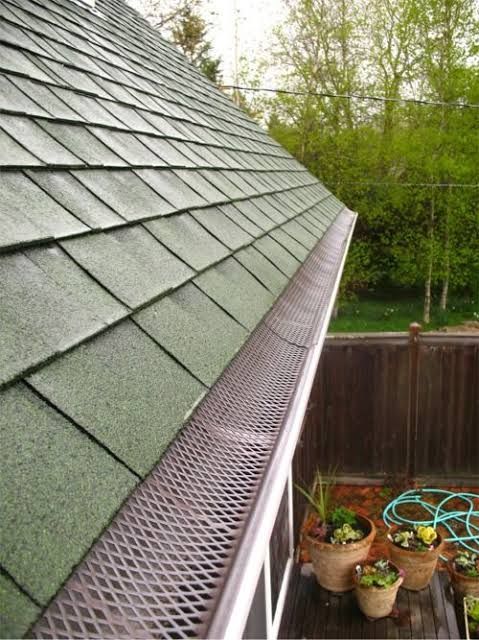
Rain-soaked green shingle roof with a metal gutter and a deck below, bordered by trees and a wooden fence

Gutter guards are usually worth considering if:


  • Trees hang over part of your roof.
  • Taller trees are close enough for the wind to carry debris onto the house.
  • Your gutters have clogged or overflowed during recent storms.
  • You regularly find pine needles, seed pods, oak tassels, or leaves near the downspout openings.
  • You are paying for gutter cleaning once or several times each year.
  • Your gutters are difficult or unsafe to reach.
  • Roof valleys funnel large amounts of water and debris into specific gutter sections.
  • Birds or squirrels have been nesting in the gutters.
  • You want to reduce the amount of wet organic material sitting inside the system.

You do not need to check every box. One recurring clog in a difficult-to-reach section can be enough reason to investigate a guard.


  • You may not need gutter guards if:
  • There are a few trees around the house.
  • Your gutters have remained clear for several years.
  • You rarely see leaves or other debris on the roof.
  • The gutters are easy to inspect and only need occasional cleaning.
  • The real problem is poor gutter pitch, inadequate downspouts, or bad drainage.
  • Your existing gutters are loose, leaking, damaged, or nearing replacement.

If your gutters have been quietly doing their job without your attention, you do not need to invent a problem just so someone can sell you its solution.
Gutter guard options at a glance

Gutter guard options at a glance
Option Best fit Main advantages Tradeoffs Joyland planning price
No guard Homes with little tree debris No installation cost and easy access for cleaning Recurring cleanings if debris becomes a problem Cleaning: $4–$6 per foot
GutterRx aluminum Leaves, seeds, tassels, and general tree debris Low profile, durable, and strong value Dense pine coverage or unusual water flow may call for finer mesh $12–$16 per foot
Xtreme micro-mesh Pine needles, fine debris, steep roofs, and metal roofs Finer filtration with stainless-steel mesh Higher cost and still needs surface inspection $17–$19 per foot
Solid or reverse-curve cover Product-specific roof and gutter configurations Sheds many larger leaves from the roof edge More expensive, potentially visible, and sensitive to fit $25–$30 per foot
Foam, plastic, or clip-on Short-term or limited-budget applications Low initial cost and simple DIY installation May shift, clog, become brittle, or complicate cleaning Varies by product

GutterRx: a practical option for many homes

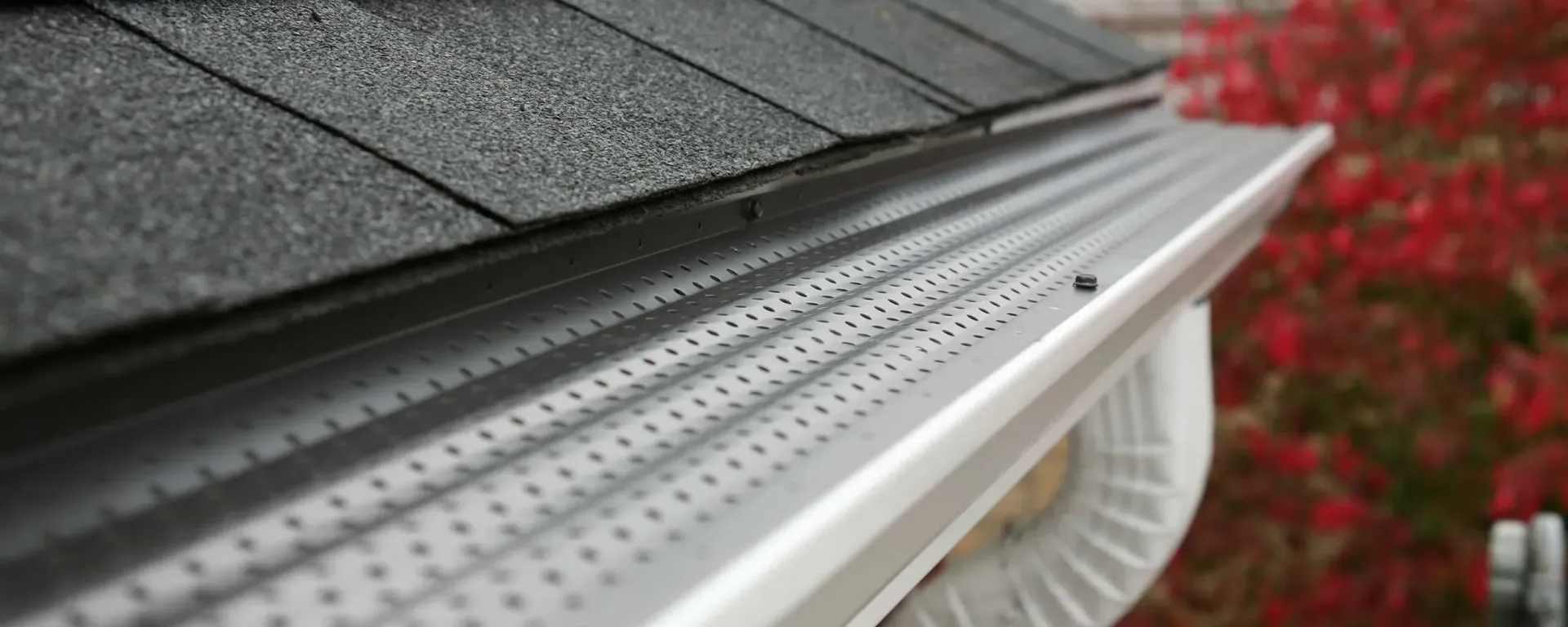
Close-up view of a gray shingle roof featuring white gutters equipped with GutterRx guards and a matching downspout installed along the eaves.

GutterRx is a perforated aluminum guard that sits atop the gutter. It attaches to the gutter and fascia rather than being fastened through the roof.


Its ribbed surface is designed to help leaves dry and move off with the wind. Because the panel lies relatively flat, it is also difficult to see from the ground.


GutterRx is often a practical choice when the primary debris includes:

  • Broad leaves
  • Seed pods
  • Oak tassels
  • Small twigs
  • General tree debris


The manufacturer says its micro-pore design blocks leaves, seeds, and pine needles while allowing individual shingle granules to pass through and wash out.


In our experience, we still tend to recommend stepping up to a finer micro-mesh product when a property has dense conifer coverage, substantial fine debris, a steep roof, or fast-moving water from a smooth metal roof.


The advantage of GutterRx is its balance of price, durability, appearance, and performance. Joyland’s current gutter pricing guide lists approximately $12 to $16 per linear foot installed on existing gutters.


That price varies with roof height, pitch, access, gutter condition, and installation complexity.

Xtreme micro-mesh: better protection for fine debris

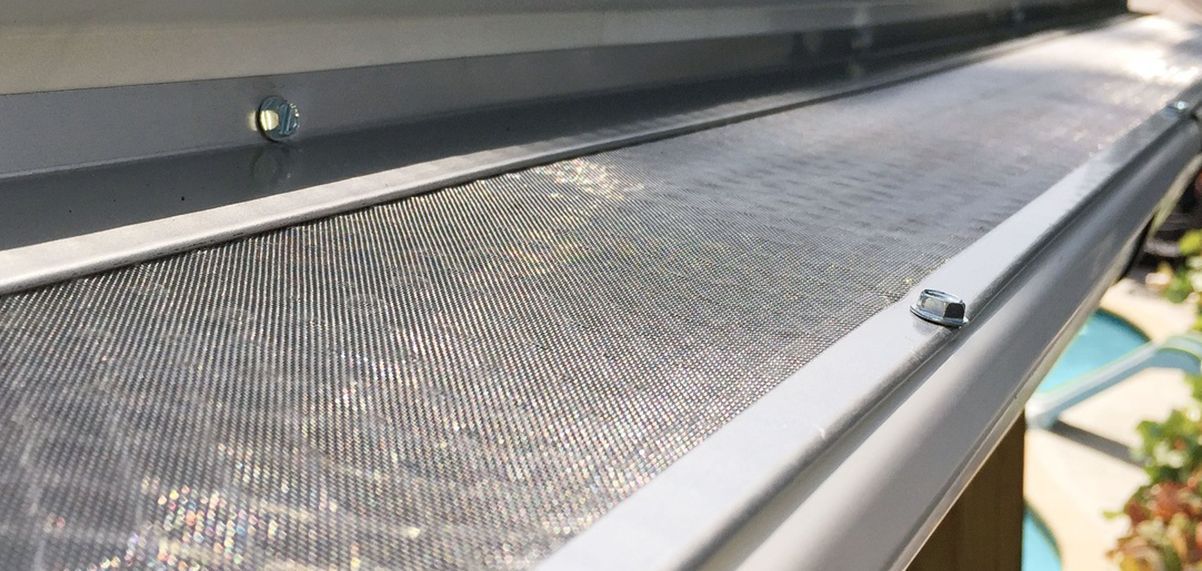
Close-up of a fine mesh insect screen along a window frame outdoors

Xtreme Gutter Guard, sometimes called Gutter Xtreme, combines stainless-steel micro-mesh with an aluminum supporting body.


The finer mesh is designed to block smaller material, including:

  • Pine needles
  • Roof granules
  • Small seeds
  • Insects
  • Oak tassels
  • Fine tree debris


According to the Xtreme product information, the micro-mesh is mechanically attached to the aluminum body and is available in several sizes and installation configurations.


We commonly consider Xtreme when:

  • The home is surrounded by pine or other coniferous trees.
  • Fine material has been getting through a more open guard.
  • The roof has a steep pitch.
  • A metal roof sends water toward the gutter quickly.
  • The homeowner wants a finer level of filtration.
  • Heavy tree coverage makes recurring gutter cleaning especially frustrating.


Xtreme costs more than GutterRx, but it can be the better value when the property needs the additional filtration.

Joyland’s current planning range is approximately $17 to $19 per linear foot installed on existing gutters.


Micro-mesh still needs to be inspected. Pollen, dirt, and wet organic material can collect on the surface and restrict water if they are allowed to remain there indefinitely.

What about solid or reverse-curve gutter guards?

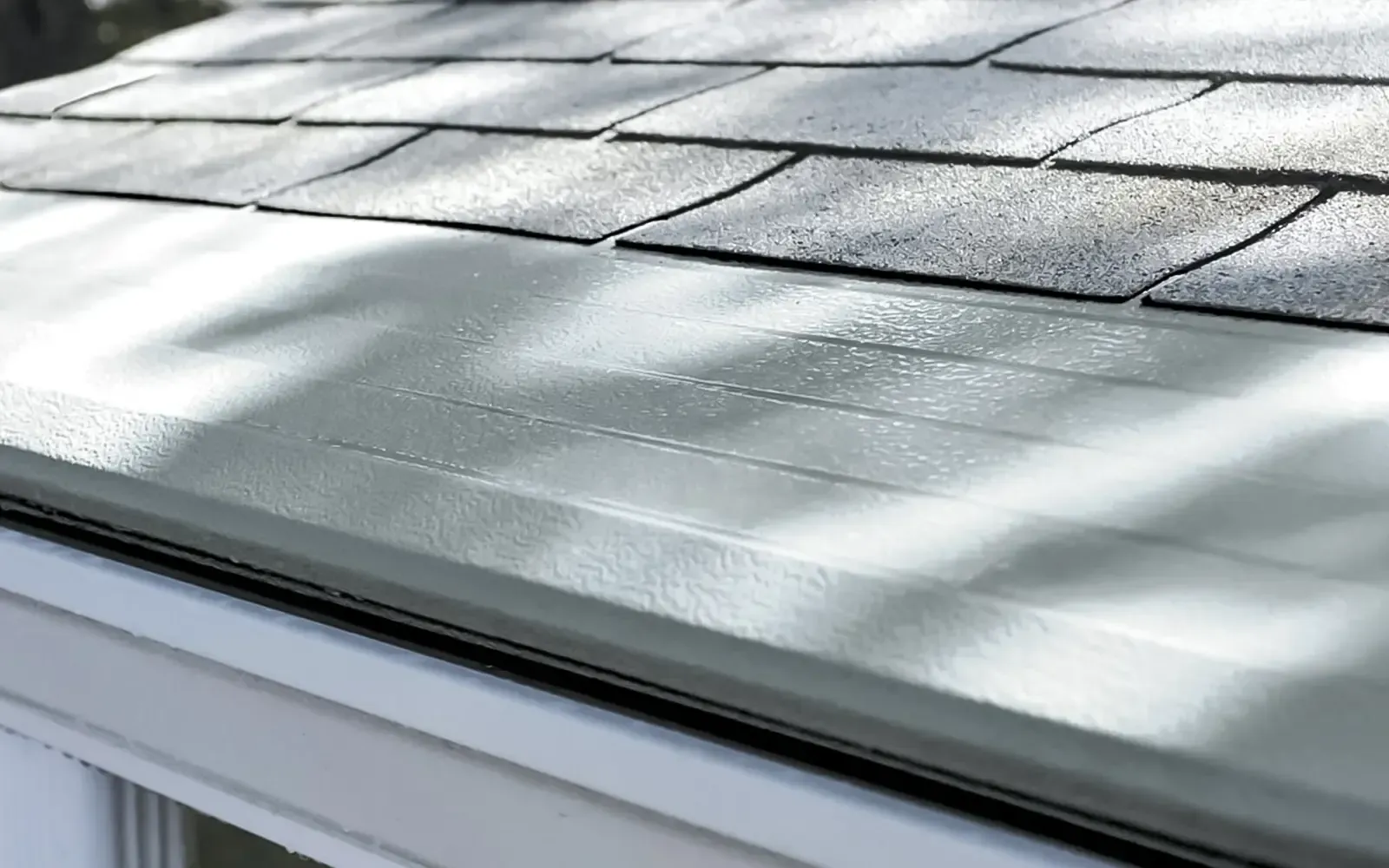
Close-up of a shingled roof with sunlight and shadows over a white soffit edge

Solid gutter covers use surface tension to direct water around a curved front edge and into a narrow opening. Leaves and larger debris are intended to slide over the edge.


These systems can work, but their performance depends heavily on:

  • Roof pitch
  • Water speed
  • Gutter position
  • The size and location of the water opening
  • The type of debris around the house
  • Product compatibility
  • Installation quality


Some hooded products have a rear flange that fits beneath the first course of shingles. That does not automatically make the product bad, but the installer must follow both the gutter-guard and roofing manufacturers’ instructions.

A guard should not be forced beneath shingles, fastened through the wrong location, or installed in a way that unnecessarily disturbs the shingle seal.


Solid covers can also be more visible and expensive than lower-profile guards. Joyland’s current planning range for fully enclosed guards is approximately $25 to $30 per linear foot installed.


They can be appropriate for certain homes, but they are rarely the automatic winner simply because they cost more.

What about cheaper store-bought gutter guards?

Inexpensive guards from a home-improvement store can look attractive when you compare prices.


Common versions include:

  • Foam inserts
  • Plastic screens
  • Thin expanded-metal panels
  • Clip-on covers
  • Brush-style inserts


Some may provide short-term relief in a simple situation. The concern is how they perform after several seasons of sun, freezing temperatures, wind, branches, and accumulating debris.


Foam can collect fine material and organic growth within its openings. Clip-on panels may loosen or flip up. Thin plastic can become brittle. Large openings may stop broad leaves while allowing smaller debris to enter underneath.

Once debris gets below a removable guard, cleaning can become more complicated because the guard must be lifted or removed before the gutter can be cleared.


A low purchase price is not necessarily a good value if you have to replace the product or clean beneath it repeatedly.

How much do gutter guards cost?

Joyland’s current south-central Pennsylvania planning ranges are:

  • GutterRx: $12 to $16 per linear foot
  • Xtreme micro-mesh: $17 to $19 per linear foot
  • Fully enclosed guards: $25 to $30 per linear foot
  • Professional cleaning without guards: $4 to $6 per linear foot per visit


For a house with 200 linear feet of gutters, that creates these rough planning examples:

  • GutterRx: $2,400 to $3,200
  • Xtreme: $3,400 to $3,800
  • Fully enclosed guards: $5,000 to $6,000
  • One professional cleanout: $800 to $1,200

These are comparisons, not guaranteed quotes or promised payback periods.


Actual pricing depends on:

  • Total gutter length
  • Number of stories
  • Roof pitch
  • Access around the house
  • Existing gutter condition
  • Corners and transitions
  • Gutter size and style
  • Guard material
  • Roof and gutter alignment
  • Repairs required before installation


Visit our complete Pennsylvania gutter pricing guide for current planning ranges.

Can gutter guards be installed on existing gutters?

Yes, gutter guards can often be installed without replacing the gutters.

Before adding them, the existing system should be checked for:


  • Loose or missing hangers
  • Incorrect pitch
  • Leaking seams and end caps
  • Sagging sections
  • Damaged fascia
  • Corrosion or physical damage
  • Inadequate downspouts
  • Standing water
  • Existing clogs

The gutters and downspouts should also be cleaned before the guards are installed. Covering debris does not make it disappear. It only makes the next cleaning more annoying.


If the gutters are structurally sound, properly pitched, and securely attached, adding guards may be a reasonable upgrade. If they are already failing, it usually makes more sense to repair or replace the gutters first.


Our K-style and half-round gutter comparison explains how gutter profile, size, attachment, and appearance affect the complete system.

Why can gutters still overflow after guards are installed?

Overflow does not always mean the guard itself has failed.

Possible causes include:


Material sitting on top of the guard

Wet leaves, pollen, pine needles, and dirt can cover the openings and cause water to move over the front.


An undersized gutter or downspout

A guard cannot increase the capacity of the gutter beneath it. Large roof sections and valleys may require 6-inch gutters, larger downspouts, or additional outlets.


Poor gutter pitch

Water will remain in a gutter that is not pitched toward an outlet, whether it has a guard or not.


A blocked downspout

The guard may keep new leaves out while an old blockage remains inside the downspout or underground drainage line.


Incorrect roof-to-gutter alignment

If the gutter sits too low, too far from the roof edge, or at the wrong angle, fast-moving water may overshoot it.


The wrong guard for the roof

A product that works well beneath broad-leaf trees may not be the best option beneath heavy pine coverage or on a steep metal roof.


A proper inspection should evaluate the entire water-management system, not just the material covering the gutter.

Do gutter guards need maintenance?

Yes.


The maintenance is normally easier and less frequent than scooping packed debris from an open gutter, but it is still maintenance.


Depending on the property and product, that may include:

  • Inspecting the guard surface from the ground
  • Watching the gutters during heavy rain
  • Brushing or rinsing debris from the top
  • Checking valleys and inside corners
  • Clearing material near downspout outlets
  • Looking for loose or damaged panels
  • Checking after major wind, snow, or ice events
  • Following the product’s warranty requirements


Our guide to how often gutters should be cleaned explains how tree coverage, roof design, and the type of debris affect the schedule.


If inspecting the system requires climbing a tall or poorly positioned ladder, consider hiring a professional. Our ladder safety guide covers several problems to check before leaving the ground.

Do gutter guards cause ice dams?

Gutter guards do not correct the conditions that cause ice dams.


Ice dams are generally caused by heat escaping into the attic, warming the roof, and then snowmelt refreezing near the colder eaves. A gutter guard cannot repair insulation or ventilation problems.


Snow and ice can still collect around the roof edge and gutter system. Darker guards may warm somewhat in direct sunlight, but color should not be treated as an ice-dam solution.


If heavy ice repeatedly forms along the eaves, the roof and attic conditions should be evaluated separately.

So, are gutter guards worth the money?

They can be.


Gutter guards make the most sense when they solve a problem you already have:

  • Recurring clogs
  • Frequent cleanings
  • Heavy tree debris
  • Pine needles
  • Difficult ladder access
  • Overflow caused by material blocking the gutter
  • Birds or animals nesting in the system

They make less sense when the house has little tree coverage and the existing gutters already remain clear.

The best gutter guard is not automatically the most expensive one. It is the product that fits the roof, debris, gutter system, and homeowner’s expectations.


John’s recommendation from the video remains a useful starting point: GutterRx provides a strong cost-to-benefit balance for many homes, while Xtreme micro-mesh is often the better fit for fine debris, dense tree coverage, steep roofs, and metal roofing.


Neither should be sold as magic. Both should be installed over a sound gutter system and inspected periodically.

Get a gutter-guard recommendation for your home

Joyland Roofing installs, repairs, cleans, and evaluates seamless gutters and gutter guards throughout Lancaster, Harrisburg, Mechanicsburg, Lebanon, York, and the surrounding areas of south-central Pennsylvania.


We can inspect your existing gutters, identify the cause of the clogs, compare guard options, and tell you honestly whether installing a guard would be worthwhile.


If your gutters do not need guards, we will tell you that, too.


Schedule a free gutter inspection and estimate or call 717-459-3499.

Frequently asked questions

  • Do gutter guards eliminate gutter cleaning?

    No. They can substantially reduce the amount of debris entering the gutter, but the surface still needs occasional inspection and cleaning.

  • What is the best gutter guard for pine needles?

    A quality micro-mesh guard is usually the strongest option for heavy pine-needle exposure because its openings are smaller than those in ordinary screens or perforated panels.


    Water flow, roof pitch, valleys, and installation still need to be considered.

  • Are gutter guards worth it if I have no trees?

    Usually not, unless wind carries debris onto the roof or you have another recurring blockage problem.


    If your gutters remain clear, periodic inspection may be more economical than installing guards.

  • Can gutter guards handle heavy rain?

    A properly selected and installed system can handle heavy rainfall, but the guard is only one part of the drainage system.


    The gutter size, downspouts, roof area, valleys, pitch, and outlet placement must all be adequate for the water entering that section.

  • Can gutter guards be installed on old gutters?

    Yes, if the existing gutters are securely attached, correctly pitched, sealed, and in good physical condition.


    Loose, leaking, sagging, or badly damaged gutters should be repaired or replaced first.

  • Will gutter guards damage my shingles?

    A properly compatible product installed according to current instructions should not damage the roof.


    Problems can occur when a guard is forced beneath shingles, fastened through an improper location, or installed without considering the roofing manufacturer’s requirements.

  • How much do gutter guards cost in Pennsylvania?

    Joyland’s current planning ranges are approximately $12 to $16 per linear foot for GutterRx, $17 to $19 for Xtreme micro-mesh, and $25 to $30 for fully enclosed systems.


    The final cost depends on the house, roof, access, guard, and condition of the existing gutters.

  • Are gutter guards maintenance-free?

    No. Even manufacturers of quality gutter guards acknowledge that exterior products require occasional maintenance.


    A reputable contractor should explain what needs to be inspected, rather than promising you will never think about your gutters again.

John Esh | CEO & Master Installer

  • 25+ Years Experience: From ground crew to Master Certified Installer.
  • Local Roots: Serving Lancaster, Harrisburg, and SEPA since 1991.
  • Credentials: GAF Master Certified (ME27586); Licensed in PA (PA124258) & MD (#137952).
  • The "Why": Obsessed with "radical transparency" to remove the fear factor from home improvements.

James Wesser | Content Producer

  • Background: Former local news digital producer and journalist.
  • The Mission: Turning complex roofing jargon into clear, "fluff-free" answers for homeowners.
  • Local Tie: When not filming on-site, he’s likely roaming Hersheypark or building digital worlds.

Meet The Experts