
October 13, 2025
Chimney Cap Survival Guide: Stop Leaks and Critters Before They Destroy Your Flue
Author
Let's be honest: nobody wakes up excited to buy roofing accessories. But while it might seem like a boring purchase, the cost-benefit analysis is pretty clear. We see expensive repairs all the time that could have been avoided with a simple piece of metal. According to industry data,"A small $60 to $100 investment in a chimney cap can save you thousands of dollars in damage caused by a bird, raccoon, or bat later on."
We want to help you make the right choice for your home. Whether you need a standard cap, a custom solution for a multi-flue setup, or you're just trying to figure out what a chimney cap actually is, this guide has you covered. Let's look at why this simple device is your home's first line of defense.
This guide breaks down everything you need to know to protect your chimney. We’ll walk you through how these devices work, which materials are actually worth your money (and which ones are junk), and how to measure your flue accurately. You’ll also find tips on installation, maintenance, and advice on when you should put the ladder away and call a professional.
Table of Contents
- The Mechanics of Protection
- Material Matters: Durability and Aesthetics
- Logistics: Sizing and Sourcing
- Execution: Installation and Maintenance
- When DIY Becomes Dangerous
- Final Thoughts
TL;DR
In a rush? Here is the gist. If you ignore these points, you're risking water damage, animal infestations, or even a house fire.
- Water Protection: Caps are the main thing stopping rain from destroying your mortar and dampers.
- Critter Control: They stop birds, squirrels, and raccoons from turning your flue into a condo (and causing CO backups).
- Material Choice: Stainless steel is the way to go for longevity; galvanized steel will rust out in a few years.
- Know Your Parts: You have to know the difference between the flue (the hole) and the cap (the cover) to buy the right size.
- Sizing Matters: If you get the wrong size or let the screen clog, you'll ruin your draft and fill your house with smoke.
- Safety First: If you have a steep roof or a damaged cement crown, don't DIY this. Call a pro.
Simply put: A qualified cap keeps the rain out, the animals away, and the sparks inside where they belong.
The Mechanics of Protection
Before you spend a dime, let's establish exactly what this component does. It isn't a hood ornament; it’s a functional necessity for your heating system. If you are still on the fence about whether this is necessary, read our breakdown onwhy you should install a chimney cap to see how it specifically benefits homes in our region.
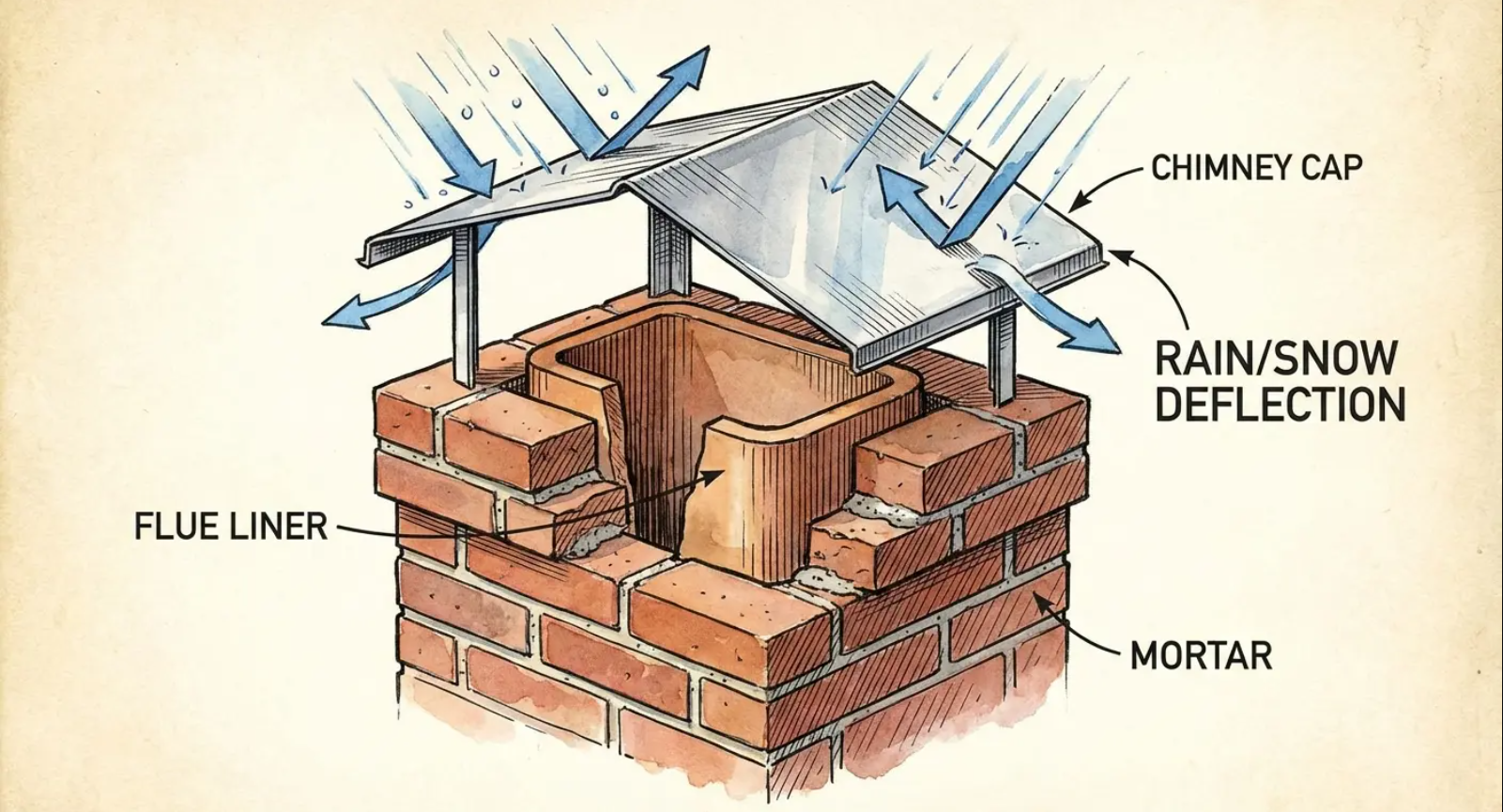
Think of a chimney cap as a hat for your house. It sits at the highest point, taking the brunt of the weather. Without one, your flue is essentially an open bucket collecting rain. We install these to close that specific hole while still allowing smoke to escape. Every cap we recommend features a mesh screen, which acts as a guard against debris and animals. It diverts water away from the liner and keeps your damper dry. For those with open hearths, it also ensures that stray embers don't float out and land on your roof. Bottom line: a damaged cap is as bad as having no cap at all.
Defining the Device and Its Core Functions
There is often confusion about chimney terminology. Let's strip away the jargon and look at the three specific threats a cap neutralizes.
Water Defense
The most critical function is stopping rain, snow, and sleet from falling directly into the chimney liner. Moisture inside the system causes rapid deterioration of the mortar joints, rusts out the damper, and leads to expensive structural repairs.

Consider a home in the Northeast where freeze-thaw cycles are common. Without a cap, rainwater soaks into the porous mortar joints of the inner flue during the day. When the temperature drops below freezing at night, that water expands, cracking the clay liner and compromising the whole stack. Sometimes water leaks aren't the cap's fault—it could be the flashing at the base. You can learn how to check that in our guide on how to recaulk chimney flashing.
Biological Intrusion Barrier
To wildlife, an open flue looks just like a hollow tree. Birds (especially chimney swifts), squirrels, and raccoons love to nest inside unprotected chimneys. A sturdy cap with a mesh screen creates a physical wall that keeps them out, preventing blockages that could force carbon monoxide back into your living space.
Spark Arresting
Burning wood creates floating embers that travel up the flue. The mesh screen serves as a spark arrestor, catching these burning particles before they escape. This prevents them from landing on your roof shingles or dry leaves nearby. As noted by House Digest regarding seasonal risks, "Poor chimney maintenance is responsible for [fires] in the United States each year... making proper preparation vital before your fireplace's first use."
The Flue vs. The Cap
You can't buy the right part if you don't know the difference between the opening and the cover. Here is how these two parts interact.
Understanding the Flue
The flue is the vertical tunnel inside the chimney that vents smoke. The clay liner sticking up out of the top is the flue tile. A standard cap attaches directly to this tile, while a top-mount cap attaches to the cement crown surrounding it.

Airflow and Draft Dynamics
Many homeowners worry that a cap will "choke" the fire. Actually, a properly sized cap improves the draft. It baffles the wind to reduce downdrafts that blow smoke into the room, allowing the thermal updraft to pull smoke out efficiently.
Material Matters: Durability and Aesthetics
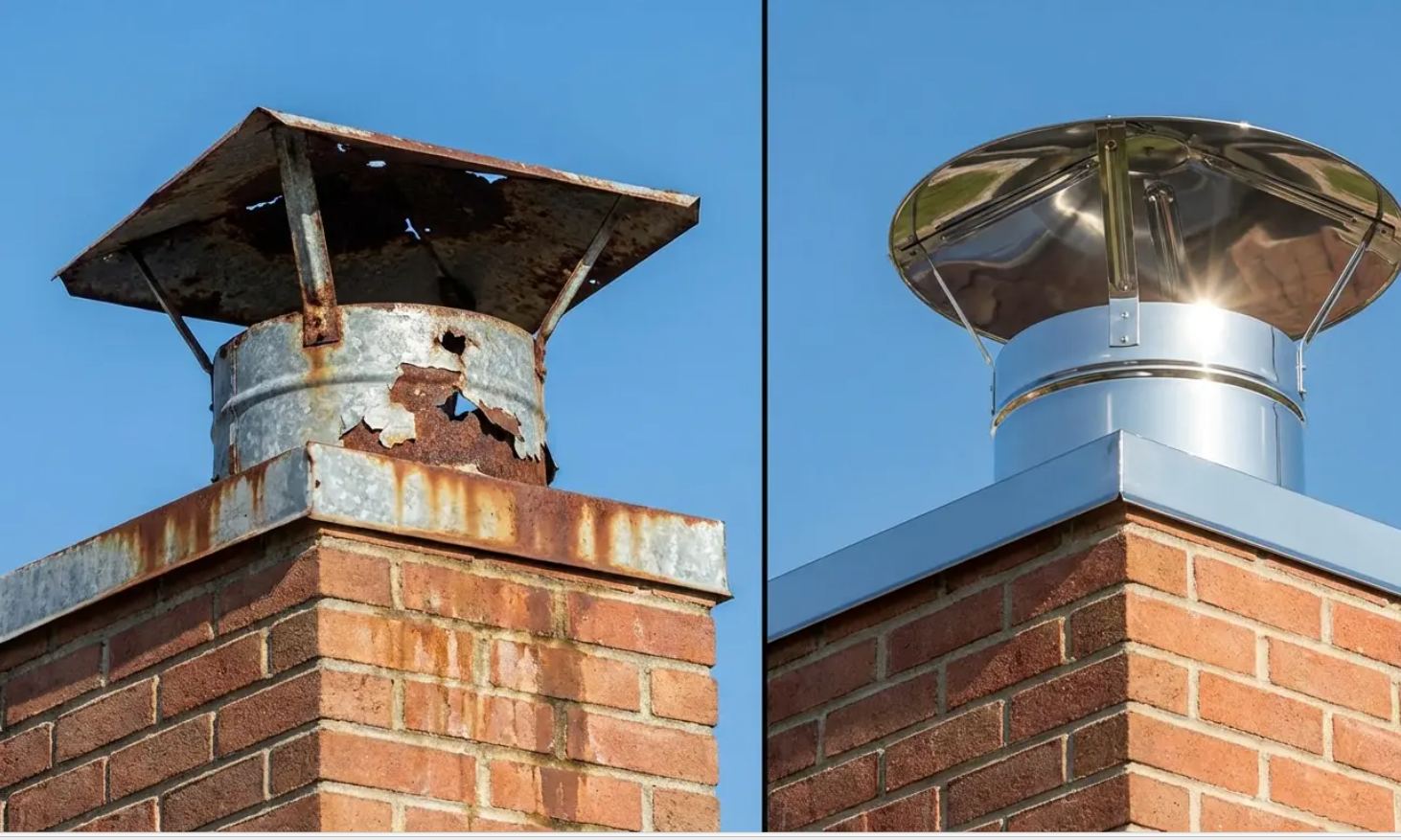
Not all caps are built the same. Here is the hierarchy of materials so you can decide if you want to save money now or invest in a product that lasts a lifetime. Generally, you get what you pay for. We see plenty of cheap galvanized units rust out within a few years, while stainless steel is usually a "one-and-done" purchase. If you live near the coast, corrosion resistance is even more important.
Standard Metal Options
We break down the performance differences between galvanized steel, aluminum, and stainless steel to help you avoid buying a product that will fail in two years.
| Material | Durability | Cost | Best Application |
|---|---|---|---|
| Galvanized Steel | Low (Prone to rust) | $ | Temporary fixes or budget constraints |
| Aluminum | Medium (Heat sensitive) | $$ | Gas log flues (avoid for wood burning) |
| Stainless Steel | High (Lifetime warranty) | $$$ | Standard for wood burning & oil flues |
| Copper | Premium (Patinas over time) | $$$$ | High-end architectural aesthetics |
Galvanized vs. Stainless Steel
Galvanized steel is the budget option you see in big-box stores. It rusts quickly due to the acidic nature of flue gases and weather exposure. Stainless steel is the superior choice, offering resistance to corrosion and usually coming with a lifetime warranty.

Aluminum Constraints
Aluminum is cheap and rust-resistant, but it is too soft for wood-burning fireplaces. High heat can damage aluminum caps. These are generally reserved for gas log flues or intake pipes where temperatures remain significantly lower.
The Copper Patina
Copper offers premium durability and a distinct look. Over time, it develops a green patina that protects the metal from corrosion indefinitely. This is the choice for homeowners who want to add architectural character to their roofline.
Specialty Pipe Caps
Metal chimneys require different hardware than masonry ones. If you have a metal pipe, you need a cap specifically engineered for Class A, B-Vent, or Pellet vent pipes. You must match the manufacturer and diameter exactly to maintain safety listings.
Masonry and Architectural Integration
Sometimes you need to look beyond simple metal boxes, especially for historic homes or properties with specific architectural requirements. If your chimney structure itself requires attention beyond just the cap, our team provides comprehensive masonry services to restore the integrity of your brick and mortar.
The Brick Chimney Cap
Sometimes called a chimney pot, these are clay or stone extensions of the flue. While they look good, they often still require a metal rain cover on top to prevent water from eroding the mortar joints inside the structure.
Custom Multi-Flue Cages
If you have a fireplace flue and a furnace flue side-by-side, a single large top-mount cap is often better than two small ones. These cages cover the entire masonry crown, protecting the brick from freeze-thaw cycles while covering all flues simultaneously.
Cost Analysis and Value
Let's talk numbers. You need to distinguish between the initial sticker price and the long-term cost of ownership if you have to replace a cheap unit multiple times. For a broader perspective on budgeting for roof-related work, check out our breakdown of costs of roof repairs in Central PA.
Prices vary by material and size. A basic galvanized cap might cost you $30-$50, but you will likely replace it soon. Quality stainless steel caps run between $100 and $150. Custom copper or multi-flue stainless steel caps can range from $300 to over a $1,000 depending on the size. Ideally, buy the right one the first time.
Logistics: Sizing and Acquisition
You cannot just guess the size. If it's too small, it won't fit; if it's too big, it'll blow off in the first storm. Here is how to measure correctly and where to find professional-grade products.
The Buying Guide: Measuring and Sourcing
Before you start shopping, you need accurate data. While every home is unique, standardization exists. Manufacturers have found that "four chimney cap sizes... can basically accommodate around 90% to 95% of the chimneys out there: 13” x 13”, 9” x 9”, 9” x 13”, and 13” x 18”."
Step 1: Safety and Access
Do not get on the roof without proper safety gear. You need non-slip shoes and potentially a harness. If the roof pitch is steep or you feel uncomfortable, stop immediately and call a professional.
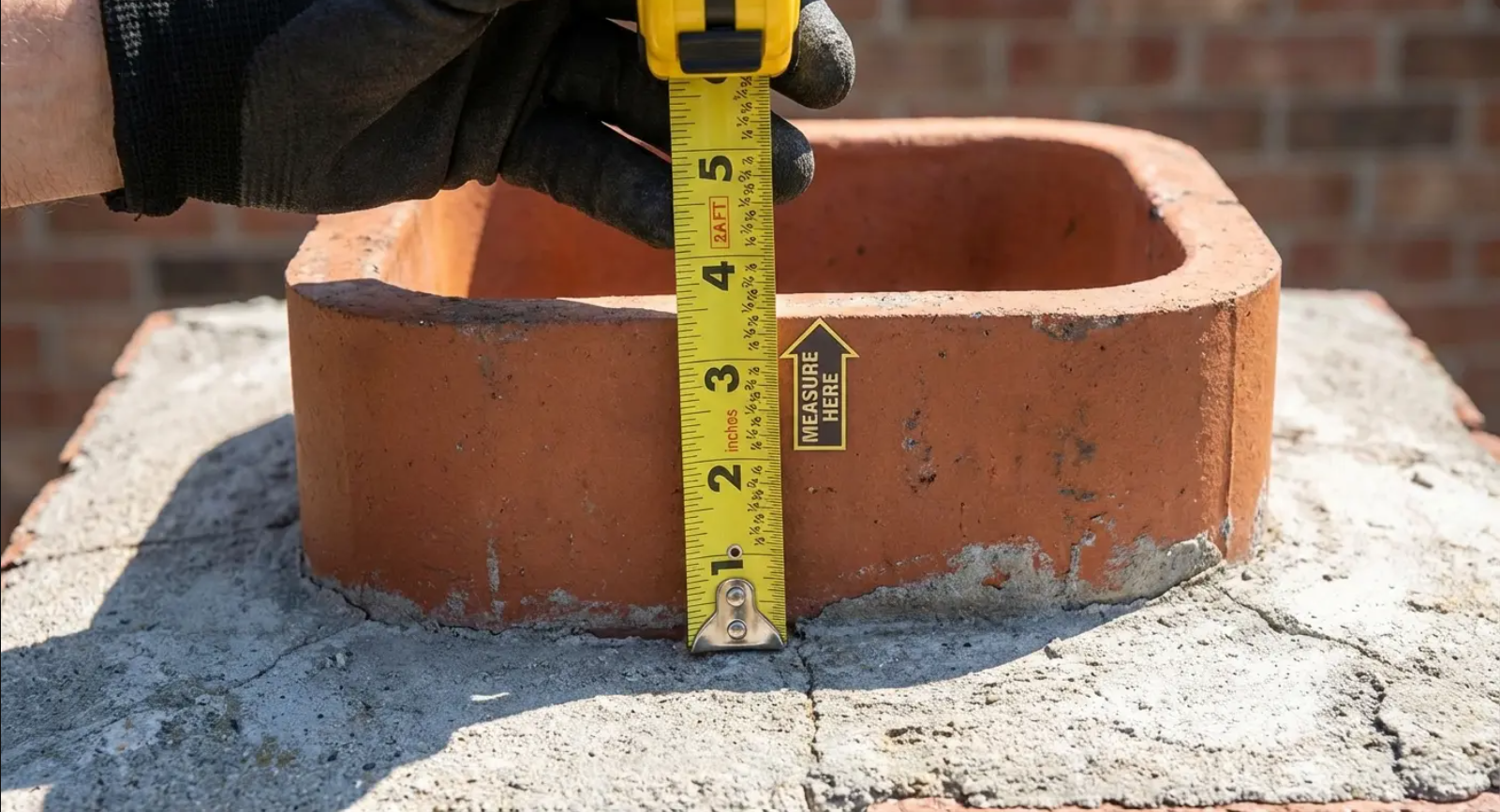
Step 2: Measuring the Flue
For a standard cap, measure the length and width of the outside of the clay flue tile. You also need to measure how high the tile extends above the crown. You generally need at least five inches of clearance for the cap to draft properly. Experts recommend a specific "Screen height : At least 5 inches above flue to ensure proper draft" to prevent smoke from backing up into the home.

Step 3: Measuring for Top-Mounts
If the flue tile is flush with the crown or broken, you need a top-mount cap. Measure the overall length and width of the concrete chimney crown. The cap lid needs to be large enough to drip water away from the masonry.
Checklist: Pre-Purchase Measurements
- [ ] Flue Shape: Square, Rectangular, Round, or Oval?
- [ ] Outside Dimensions: Length and Width of the flue tile.
- [ ] Tile Height: Distance from the cement crown to the top of the tile.
- [ ] Crown Dimensions: (If top-mounting) Total Length and Width of the cement slab.
- [ ] Clearance: Is there at least 5-8 inches between flues (for multi-flue caps)?
Retailer vs. Professional Supply
Home improvement stores are convenient, but they often stock lower-grade materials. Professional chimney supply houses or roofing contractors provide 304-grade stainless steel caps with welded seams. Welded seams last much longer than the riveted ones found on cheaper retail models.
Verifying Code Compliance
Check your local building codes regarding spark arrestor mesh size. Most codes require 5/8" to 3/4" inch mesh. Areas prone to wildfires, like California, have stricter requirements that generic store-bought caps might not meet.
Execution: Installation, Replacement, and Maintenance
Buying the cap is only half the battle. Now you have to get it up there. We’ll walk through the installation, how to remove a rusted old unit, and the maintenance habits required to keep it functioning.
The Replacement Protocol
Replacing an old cap involves removing the seized hardware of the previous unit and securing the new protection without cracking the flue tile.

Removing the Old Cap
Rust often seizes the bolts on old caps. You might need penetrating oil or an angle grinder to remove a rusted galvanized unit. Be extremely careful not to crack the clay flue tile while prying the old cap off.
Securing the New Cap
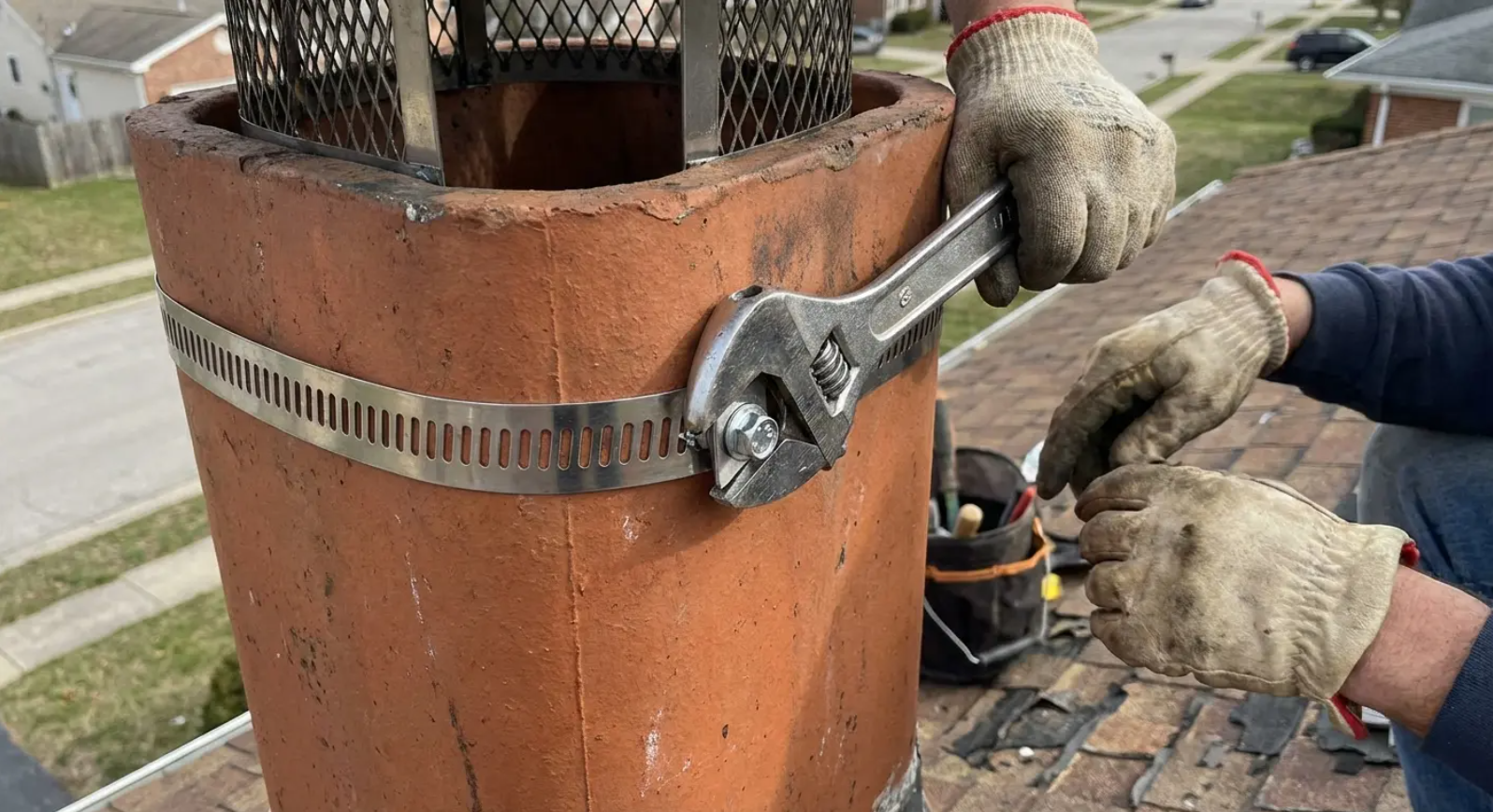
For flue-mounted caps, tighten the screws against the clay tile just enough to grip it. Over-tightening can crack the tile when the metal expands with heat. For top-mount caps, use masonry screws and apply a high-heat silicone adhesive to create a watertight seal against the crown.
| Step | Action | Tools Required |
|---|---|---|
| Prep | Clean the flue tile and crown of debris and moss. | Wire brush, Shop Vac |
| Fit | Place the cap over the flue to verify sizing. | None |
| Secure | Tighten side bolts (flue mount) or drill masonry screws (top mount). | Wrench or Drill with masonry bit |
| Seal | Apply silicone to screw heads or crown base (if top mounting). | Caulking gun, High-heat silicone |
Maintenance Habits
You can't just install it and forget about it forever. You need to inspect it occasionally to ensure it doesn't become a hazard itself. As Russ Dimmitt from the Chimney Safety Institute of America explains, "Routine maintenance and cleaning are best scheduled for spring or early summer when you maintain your fireplace... if your chimney needs any repairs, this gives them time to make those repairs before the colder months hit."
Creosote Clogging
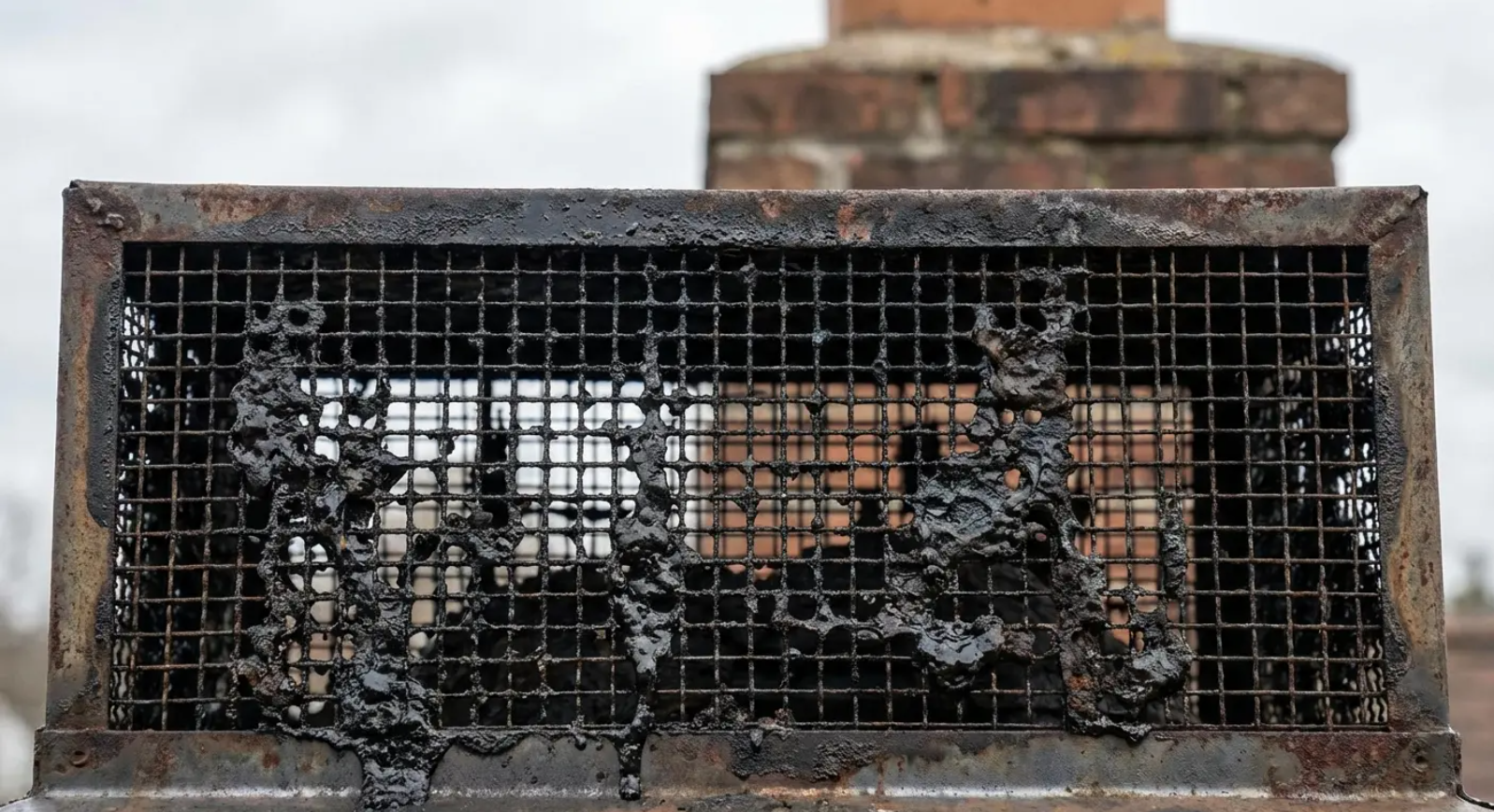
The screen on the cap can get clogged with creosote (unburned fuel particles). This happens frequently with wood stoves burning at low rates. A clogged cap chokes the fire and causes smoke damage. You should scrub it during your annual chimney sweep.

Imagine you have a high-efficiency wood stove. You dampen the fire down to burn overnight. The smoke moves slowly and cools before it exits, depositing sticky creosote on the cap's mesh. Over a few months, this buildup reduces the mesh opening size by 50%, causing smoke to spill back into your living room every time you open the stove door.
Troubleshooting Common Issues
Even with a new cap, you might run into a few hiccups. Here is how to handle noise and ice.
Wind Noise
The mesh configuration or angle of a cap can sometimes create a humming or whistling noise in high winds. Professional installers can adjust the aerodynamics or install wind directional caps to stop this annoyance.
Ice Damming
In very cold climates, moisture from the flue can freeze on the cap's screen, blocking the exit. Insulated caps or caps with larger mesh sizes can help prevent this winter blockage where codes allow. Winter weather brings unique challenges to your roof beyond just the chimney. For solutions to other cold-weather issues, read our answers to common winter roof questions.
When DIY Becomes Dangerous
There is a fine line between a Saturday project and a scenario requiring expert intervention. Here is when you should put the ladder away and call for help.

Complex Roof Geometries
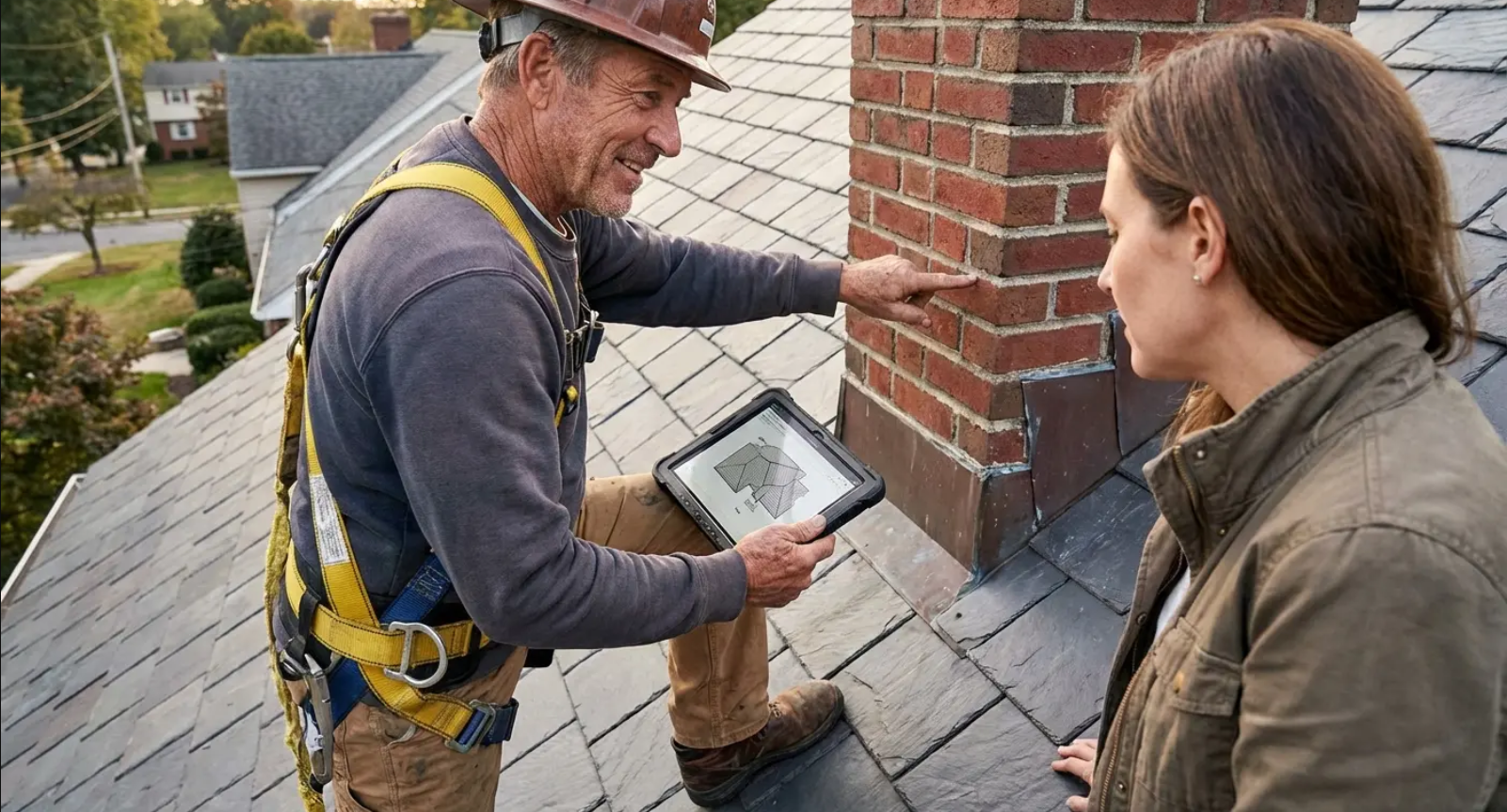
If your chimney is on a steep pitch, is exceptionally tall, or requires a custom-fabricated multi-flue cap, the risk of injury is too high. The money you save on labor is not worth the risk of a fall or improper installation. When you look for a contractor, make sure you are finding safety-certified pros.
Damaged Crowns
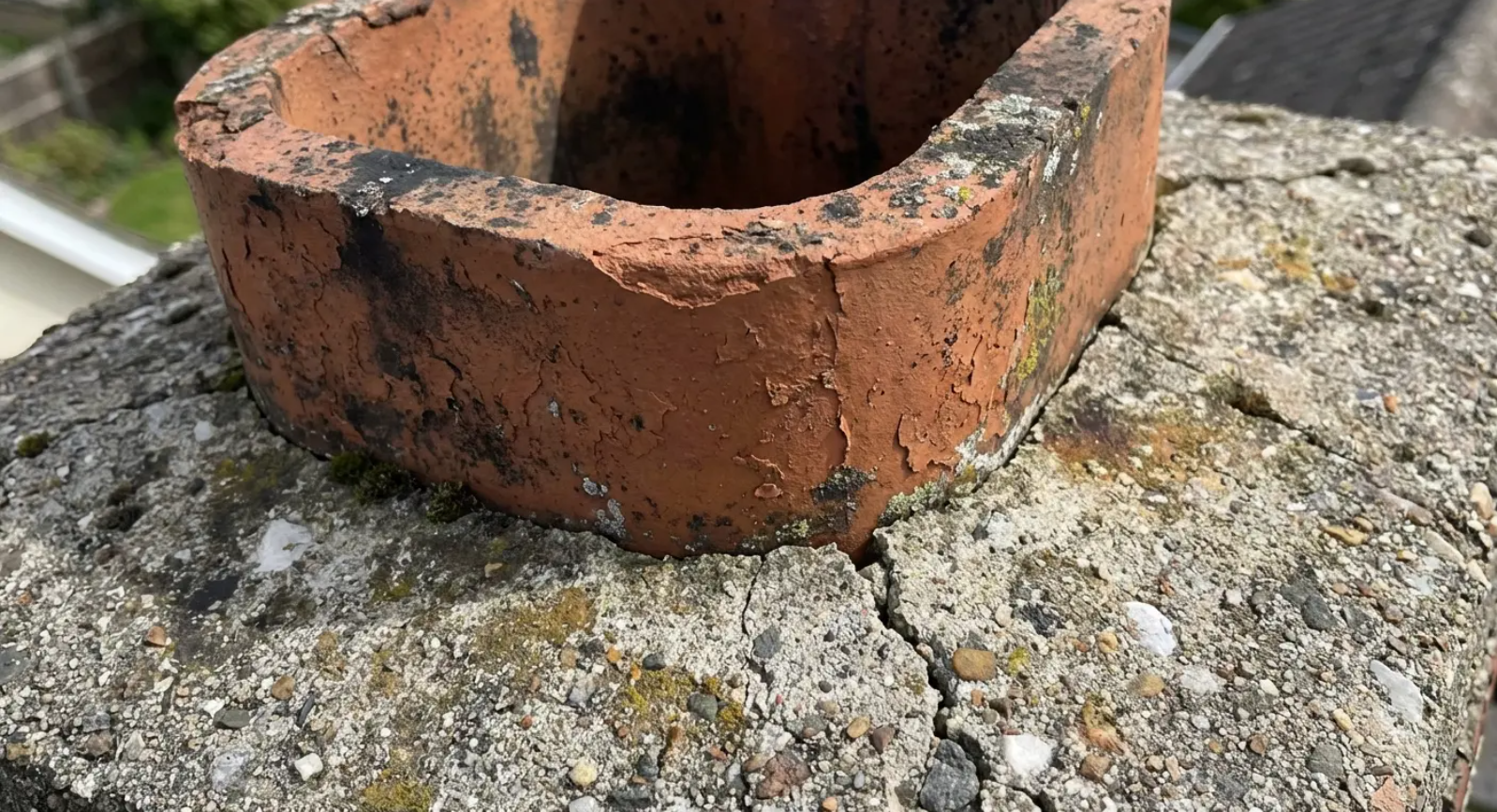
You might climb up to install a cap and notice the cement crown is cracked or crumbling. Putting a cap on won't fix that leak. A professional roofer or mason needs to repair the crown structure first to ensure the chimney is actually watertight. If you just slap a cap over a cracked crown, water will still get in, freeze, and split the chimney further.
The Joyland Roofing Approach
We view the chimney as a vital part of your whole roofing system, not just an isolated silo. Many homeowners attempt DIY installation only to miss cracked crowns or flashing leaks surrounding the chimney. When you work with Joyland Roofing, you get a holistic inspection where the cap, crown, flashing, and surrounding roof are treated as a unified defense system. We can provide custom stainless steel solutions and comprehensive repairs to ensure your home is fully protected.

Final Thoughts
A chimney cap is a small investment that prevents massive headaches. By keeping water and wildlife out, you protect the structural integrity of your home and the safety of your family. Whether you choose to install a stainless steel mesh cap yourself or hire a professional to handle a custom multi-flue cage, the most important action is ensuring your flue isn't left open to the elements.
Take the time to measure correctly, choose the right material, and inspect it annually. It’s a simple piece of metal, but it protects your mortar, your liners, your firebox, and your floors. Don't wait until you have a squirrel in your living room—get your chimney capped today.