January 4, 2026
What Type of Roof Do I Have? (And Why Your Insurance Company Keeps Asking)
Author
You’d think this would be an easy question to ask: “What type of roof do I have?”
But ask most homeowners and the answer is usually something vague like “shingles” or “the normal kind.” That works fine - until your insurance company asks for specifics and suddenly “shingles” isn’t good enough.
Because in roofing, the details matter. A lot.
The difference between three-tab and architectural asphalt, clay versus concrete tile, or standing seam versus corrugated metal can affect your insurance coverage, repair options, and how soon you’ll be writing a five-figure replacement check - something that makes more sense once you understand the parts of a roof and how each component contributes to the whole.
Figuring out what type of roof I have isn’t about becoming a roofing expert. It’s about knowing what’s protecting your house - and why everyone from contractors to insurance adjusters keeps asking about it.
Table of Contents
- TL;DR
- Why Your Roof's Identity Matters More Than You Think
- The Visual Clues You're Probably Missing
- Asphalt Shingle Roofs: The Suburban Chameleon
- Metal Roofing Systems: When Your Roof Speaks in Panels
- Tile Roofs: Clay vs. Concrete (And Why It's Not Obvious)
- Slate Roofing: The Weight Your Attic Knows About
- Wood Shake and Shingle: Spotting the Difference From Ground Level
- Flat and Low-Slope Systems: The Hidden Membrane Mystery
- Architectural Details That Reveal Your Roof Type
- When Your Roof Is Actually Two Different Systems
- The Documentation Trail (And Why It's Probably Lost)
- Getting Professional Confirmation Without Feeling Foolish
TL;DR
You probably can't identify your roof because you're looking at color instead of construction. This matters because insurance companies care, contractors care, and your wallet definitely cares. Asphalt shingles aren't just "shingles" there are types that affect everything from your insurance rate to when you'll need to replace it. Metal roofing isn't one thing either. Tile roofs are heavy (like, structurally-significant heavy). Flat roofs hide what they're made of under coatings and gravel. Most importantly: your house might have multiple roof types, and you need to know about all of them. The good news? You can figure this out from your driveway with binoculars and 20 minutes.
Why Your Roof's Identity Matters More Than You Think
I lived in my house for three years before I realized I couldn't answer a simple question: What kind of roof do I have? The insurance company asked after a hailstorm. I said "shingles." They said "what kind?" I looked up at my roof. I had no idea.
Turns out, neither do most homeowners.
Look, here's the thing: the industry assumes you already know what's on your house. Manufacturers write care instructions for specific products. Contractors give estimates based on existing materials. Insurance adjusters assess damage using material-specific criteria. Everyone expects you to speak the language, but nobody taught you the vocabulary.
The stakes go beyond pride. Apply the wrong sealant to a rubber membrane and you've just voided any warranty that might've existed. Hire someone to "repair your tile roof" when you've got concrete tiles (not clay), and you'll get the wrong replacement pieces that don't match in color or fit.
Call your insurance company and describe your "shingle roof" when you've got architectural laminate versus three-tab, and your coverage calculation just shifted by thousands of dollars. Knowing what type of roof do I have becomes a financial question, not a curiosity.
Your roof's identity determines its expected lifespan. A 25-year asphalt shingle and a 50-year metal panel look surprisingly similar from your driveway, but their maintenance schedules couldn't be more different. One needs replacement planning within a generation; the other might outlast your mortgage.
We're not talking about becoming a roofing expert. You just need to correctly identify what's already there, which requires knowing what to look for instead of guessing based on color or general appearance. Understanding the various types of roofs available helps you recognize what's protecting your home and make informed decisions about maintenance and repairs.
The Visual Clues You're Probably Missing
Grab binoculars. Seriously, I'll wait.
You're going to feel ridiculous standing in your yard staring at your roof like some kind of weirdo, but this is the only way to actually see what's going on up there. Your neighbors will wonder. Let them.
Start with the edges where your roof meets the sky. The profile along your roofline tells you more than the field (the main expanse of roofing). Shingles create a stepped, layered edge. Metal panels show clean lines with visible fasteners or concealed clips. Tiles stack with obvious overlaps and rounded or flat profiles. Slate presents irregular edges because each piece is slightly different.
Here's what you're looking for, in order of "easy to spot" to "you might need better binoculars":
Edge Profile Examination
Note whether edges are stepped (shingles), clean-lined (metal), stacked (tile), or irregular (slate). Take photos from multiple angles. You'll want these later when you're on the phone with your insurance company trying to explain what you're seeing.
Connection Pattern Analysis
How do the pieces connect to each other? Asphalt shingles overlap in a consistent pattern with exposed tabs. Metal roofing either shows raised seams running vertically (that's standing seam), or you're looking at panels with screws everywhere. Tiles? They lock together with channels and ridges, kind of like puzzle pieces but heavier and way more expensive.
Fastener Visibility Check
Can you see nail heads? Count visible fasteners in a 10-foot section if you can. Asphalt shingles show fasteners in regular patterns. Corrugated metal displays obvious screw heads with rubber washers. Standing seam metal hides its fasteners entirely beneath the seams. Tiles hide fasteners under the overlapping pieces, though you might spot them at the edges or ridges.
Ridge Cap Assessment
Look at where two roof planes meet at the peak. Each material handles this junction differently. Asphalt uses special ridge shingles. Metal employs custom-bent caps. Tile features specialized ridge pieces that look distinct from field tiles. These details confirm what you're seeing across the broader roof surface.
Texture and Dimension Study
Pay attention to shadow lines and depth variations. Architectural shingles have visible depth and create shadows. Three-tab shingles lie flat with minimal texture. Stone-coated metal mimics tile or shake patterns. Real slate shows natural variation in thickness and color. Synthetic products try to replicate these characteristics but show more uniformity than natural materials.
Valley Construction Review
The valleys (where two roof planes meet in an inside corner) reveal construction methods. You'll see either woven shingles, metal flashing, or specialized valley materials depending on your roof type and installation era. Understanding these roof styles helps narrow down exactly what covers your home.
Asphalt Shingle Roofs: The Suburban Chameleon
Three-Tab vs. Architectural (And Why Your Insurance Cares)
Three-tab shingles lie flat and uniform. Each shingle shows three distinct tabs separated by cutouts, creating a repetitive pattern across your roof. They're thinner, lighter, and increasingly rare on newer homes. Honestly? They're basically extinct for a reason.
According to Acuity Insurance, a quick way to tell if a roof has 3-tab shingles is by the lines running up the roof from the tabs, and homes with 3-tab shingles may face eligibility restrictions with some insurance carriers due to durability concerns.
Architectural shingles (also called dimensional or laminate) have multiple layers laminated together. This creates random shadow patterns and a more textured appearance. They're heavier, thicker, and currently dominate the residential market.
Your insurance company distinguishes between these because their wind ratings, impact resistance, and expected lifespans differ significantly. A three-tab roof installed in 2005 is likely near the end of its functional life. An architectural shingle roof from the same year might have a decade or more remaining.
Two houses on the same street, both built in 2008. One's about to cost someone $8,000 more than the other because of something nobody thinks about.
Home A received three-tab shingles at construction, while Home B got architectural shingles. When both homeowners filed claims after a 2023 hail storm, the insurance adjuster calculated vastly different settlements. Home A's three-tab roof, already 15 years old and showing significant wear, received depreciated value because it was near the end of its 20-year lifespan. Home B's architectural shingles, rated for 30-40 years, qualified for full replacement value. The difference in payout: nearly $8,000, all because of the shingle type neither homeowner had thought about since moving in.
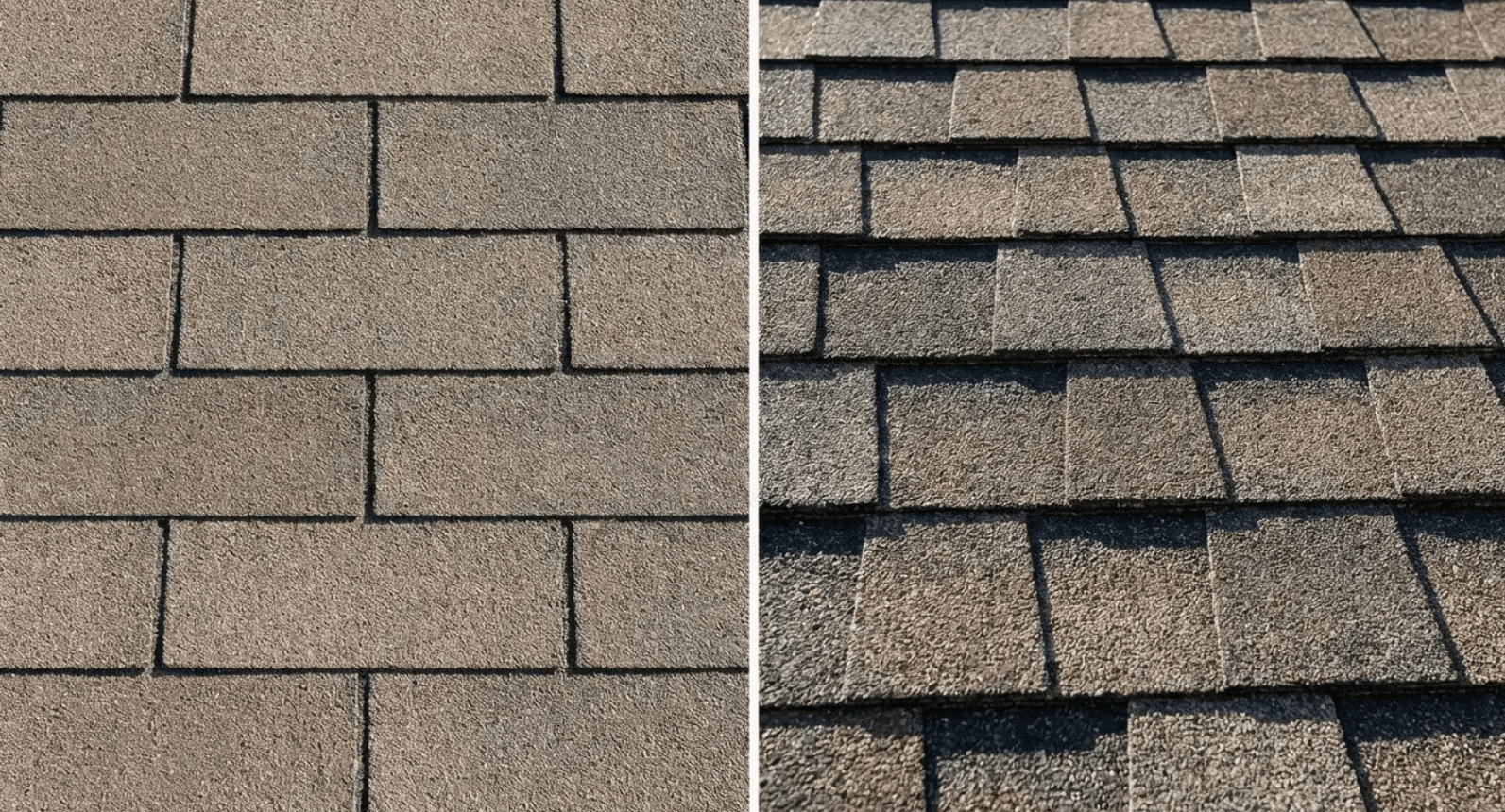
Weight matters here. Pick up a bundle at a home improvement store if you want perspective. Three-tab shingles weigh roughly 200-240 pounds per square (100 square feet). Architectural shingles range from 260-400+ pounds per square depending on the product line. Heavier doesn't always mean better, but it's a pretty good indicator of quality and longer lifespan. When evaluating types of roofs, this weight distinction becomes crucial for structural considerations and long-term performance expectations.
Designer and Specialty Shingles That Complicate Identification
Some asphalt shingles mimic other materials. You'll find products designed to look like slate, shake, or tile while maintaining asphalt composition. These designer shingles use varied shapes, enhanced texturing, and multiple color blends to create convincing replicas.
And this is where it gets annoying, because from the ground, they're really convincing.
Identifying these requires looking at the material itself, not just the appearance. Asphalt shingles have a granular surface (tiny rock particles embedded in asphalt). If you see this texture up close, you're looking at asphalt regardless of how much it resembles slate from the ground.
Impact-resistant shingles include a rubberized modifier (SBS polymer) that makes them more flexible and resistant to hail damage. You can't identify these visually because the modification is internal. You'll need documentation or manufacturer information to confirm IR ratings.
The Color Fade Question
Asphalt shingles fade. Period.
The granules that provide color protection gradually wear away from UV exposure and weather. Significant color difference between sun-exposed and shaded sections indicates an aging asphalt roof.
This fading pattern helps estimate age when you don't have installation records. Dramatic fading suggests a roof that's been in place for 15+ years. Minimal color variation indicates a newer installation or higher-quality granules with better UV resistance.
Metal Roofing Systems: When Your Roof Speaks in Panels
Metal roofing has gained significant attention in Florida's insurance market. According to a January 2025 report from Florida Today, some insurance companies now offer premium discounts for metal roofs because they're more durable and fire- and severe weather-resistant than other roofing materials, with metal roofs lasting more than 40 years in Florida's harsh climate compared to asphalt shingles' 15-20 year lifespan in the same conditions.
Standing Seam: The Vertical Rib System
Standing seam metal roofing features raised vertical seams running from ridge to eave. These seams stand up from the roof surface (one to two inches) and conceal all fasteners. The panels themselves run 12-18 inches wide.
You'll notice the clean, modern appearance with continuous lines. The seams either snap together or use mechanical crimping. No exposed fasteners means no screw holes to leak, which is why standing seam systems often outlast other metal options.
Colors stay consistent because the metal is coated before installation. Fading occurs but much slower than asphalt shingles. Scratches and dents are your bigger concern with standing seam systems. These roof styles offer exceptional longevity when properly maintained.
Corrugated and Exposed Fastener Panels
Corrugated metal shows a wavy, repeating pattern across the entire panel. The waves (called corrugations) provide structural strength and allow water to channel off the roof. Fasteners penetrate through the panels at regular intervals, each with a rubber or neoprene washer.
These systems cost less than standing seam but require more maintenance. Those exposed fasteners eventually need attention as washers deteriorate and screws work loose from thermal expansion and contraction.
You can identify corrugated metal by counting the fasteners. If you see screw heads across the roof field (not just at the edges), you're looking at an exposed fastener system.
Stone-Coated Steel and Metal Shingles
Stone-coated steel panels have a base layer of steel topped with stone chips embedded in an acrylic coating. From the ground, they look remarkably like asphalt shingles, tile, or shake. You need to get closer to identify the metal substrate beneath the stone coating.
Metal shingles are shaped and installed to mimic traditional shingles but use aluminum or steel instead of asphalt. They interlock differently than asphalt products, with visible clips or specialized edge details.
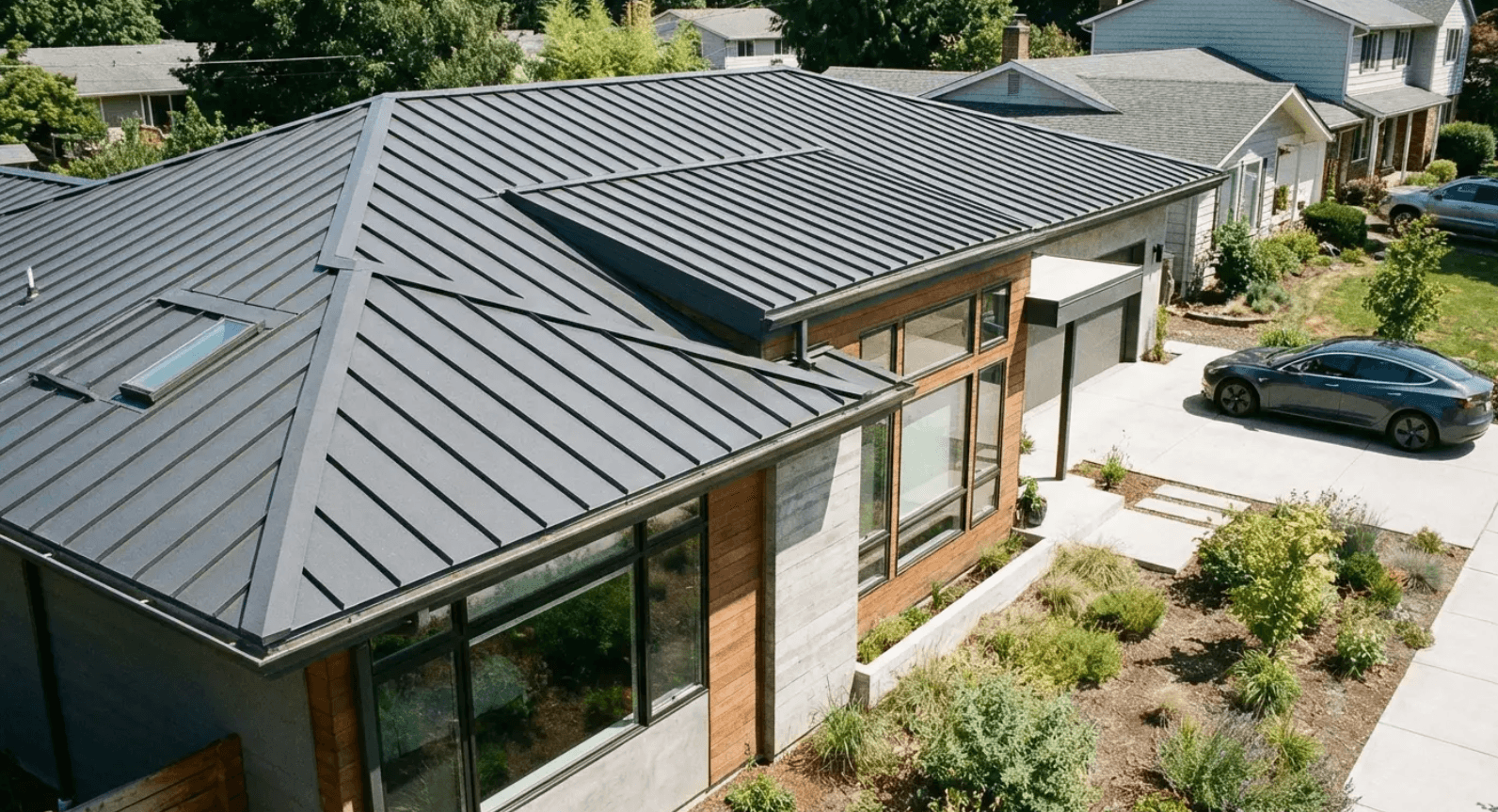
Both of these systems combine metal's durability with traditional aesthetics. Identifying them requires looking at connection points and edges where the metal substrate becomes visible.
| Metal Roofing Type | Visual Identifier | Fastener Visibility | Typical Lifespan | Cost Range (per square) |
|---|---|---|---|---|
| Standing Seam | Raised vertical seams, 12-18" panel width | Hidden beneath seams | 40-80 years | $1,000-$3,500 (but I've seen quotes at $4K+) |
| Corrugated/Exposed Fastener | Wavy pattern, uniform ridges | Visible screws with washers throughout | 30-50 years | $400-$1,200 |
| Stone-Coated Steel | Textured surface, mimics other materials | Hidden or minimal | 40-70 years | $800-$1,800 |
| Metal Shingles | Individual shingle shapes, metal edges | Clips visible at edges | 40-80 years | $300-$1,600 |
These lifespans assume proper installation and maintenance. Your mileage will vary. A lot.
**Prices are all over the place depending on your region and who you call.*
Tile Roofs: Clay vs. Concrete (And Why It's Not Obvious)
Clay tiles come from fired ceramic. They're lighter than concrete, more expensive, and age with a patina that many homeowners value. Concrete tiles are molded from cement and aggregate, heavier, less expensive, and can be manufactured in more color variations.
Tap a tile if you can safely reach one. Clay sounds hollow and higher-pitched. Concrete sounds dense and dull. This acoustic test works but requires access to the actual tiles.
Look at the underside if you can see it (check from inside your attic or at the roof edge). Clay tiles show a consistent terracotta color throughout. Concrete tiles reveal a gray cement interior regardless of their surface color.
Weight tells the story your home's structure knows. Clay tiles weigh 600-900 pounds per square. Concrete tiles weigh 900-1,200 pounds per square. If your home wasn't originally built for tile and someone added it later, you need to know whether your structure was reinforced to handle this load.
Guy I know in San Diego bought a '60s ranch. Previous owner had swapped the original asphalt for concrete tiles... looked great, right? Except nobody reinforced the structure first. Inspector caught it before closing: sagging rafters, cracks in the ceiling. $15K in repairs that should've never been necessary. The previous owner either didn't know or didn't care that concrete tiles weigh four times what as phalt does.
Color consistency differs between materials. Clay tiles fade gradually and often develop desirable weathering. Honestly?
Clay looks better as it ages. Concrete just looks... old. The surface coating sometimes flakes or deteriorates, exposing the gray substrate beneath.
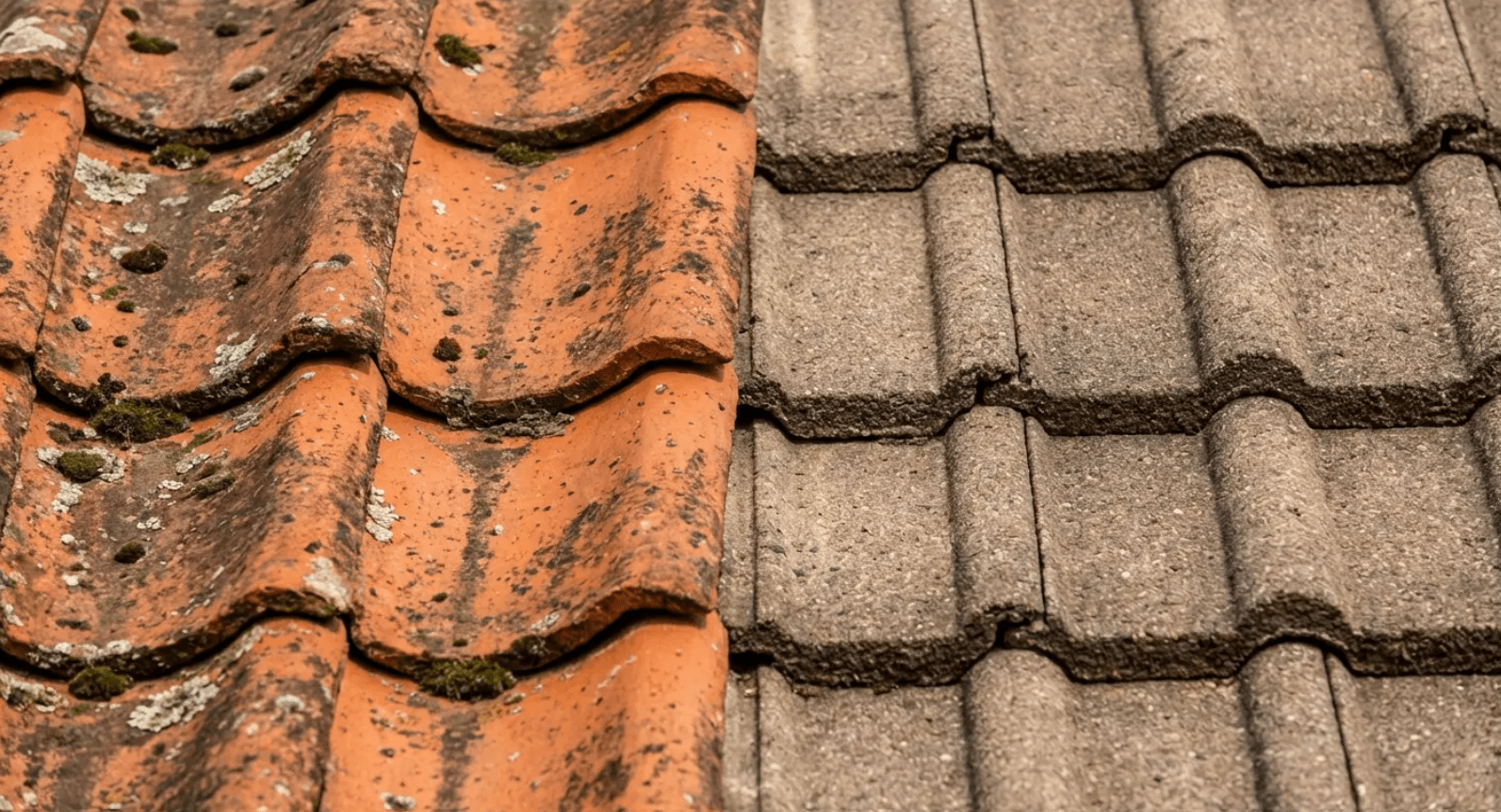
Breakage patterns vary. Clay tiles crack cleanly when broken. Concrete tiles crumble and chip. If you've got broken tiles on the ground from recent weather, examine how they failed. Clean breaks suggest clay; powdery, crumbled edges indicate concrete.
Replacement tiles must match your existing material. Clay and concrete tiles aren't interchangeable, even if they look similar from your driveway. The weight difference affects how they sit on the roof, and the attachment methods differ.
Slate Roofing: The Weight Your Attic Knows About
Real slate is metamorphic rock cut into roofing tiles. It weighs 800-1,500 pounds per square depending on thickness. Your home's framing was either built to handle this load or it wasn't. There's no middle ground with slate.
Synthetic slate products use rubber, plastic, or composite materials to mimic slate's appearance at a fraction of the weight. From the ground, they're convincing. Up close, the differences become obvious.
Check for uniformity. Synthetic slate shows more consistency in thickness, size, and color than natural stone. Real slate varies because it's quarried and split, not manufactured. Each piece has unique characteristics.
Look at broken or damaged pieces. Natural slate breaks along its grain with sharp, clean edges. Synthetic products tear, bend, or show their composite construction when damaged.
Color variation tells you what you need to know. Real slate displays natural mineral variations within each piece and across the roof. Synthetic products achieve color through pigments that distribute more evenly.
Age matters for identification. Slate roofs commonly last 75-150+ years. If your house was built in 1980 and still has its original "slate" roof, you're almost certainly looking at a synthetic product. Real slate from 1980 would show minimal wear; synthetic materials would likely need replacement by now.
The edges where slate meets flashing or trim show the material's true thickness. Natural slate runs 1/4 to 1/2 inch thick (sometimes more on historic homes). Synthetic alternatives are often thinner and show their layered construction at the edges.
Wood Shake and Shingle: Spotting the Difference From Ground Level
Wood shingles are sawn smooth on both sides with uniform thickness and consistent dimensions. They lie flat and create a relatively smooth roof surface.
Wood shakes are split from logs, creating rough, textured surfaces with varying thickness. They're thicker, more rustic, and create deeper shadow lines.
From the ground, look at the texture. Shingles appear more refined and uniform. Shakes show obvious texture variation and irregular surfaces. The shadow patterns differ dramatically, with shakes creating pronounced depth.
Both materials weather to gray if left untreated. Cedar is the most common species, though you'll also find redwood, pine, and cypress in certain regions. The weathering pattern helps identify age but not necessarily the specific product type.
Check your local building codes before planning any work on a wood roof. Many municipalities now prohibit wood roofing or require fire-retardant treatments. Some insurance companies won't cover homes with wood roofs, or they charge significantly higher premiums.
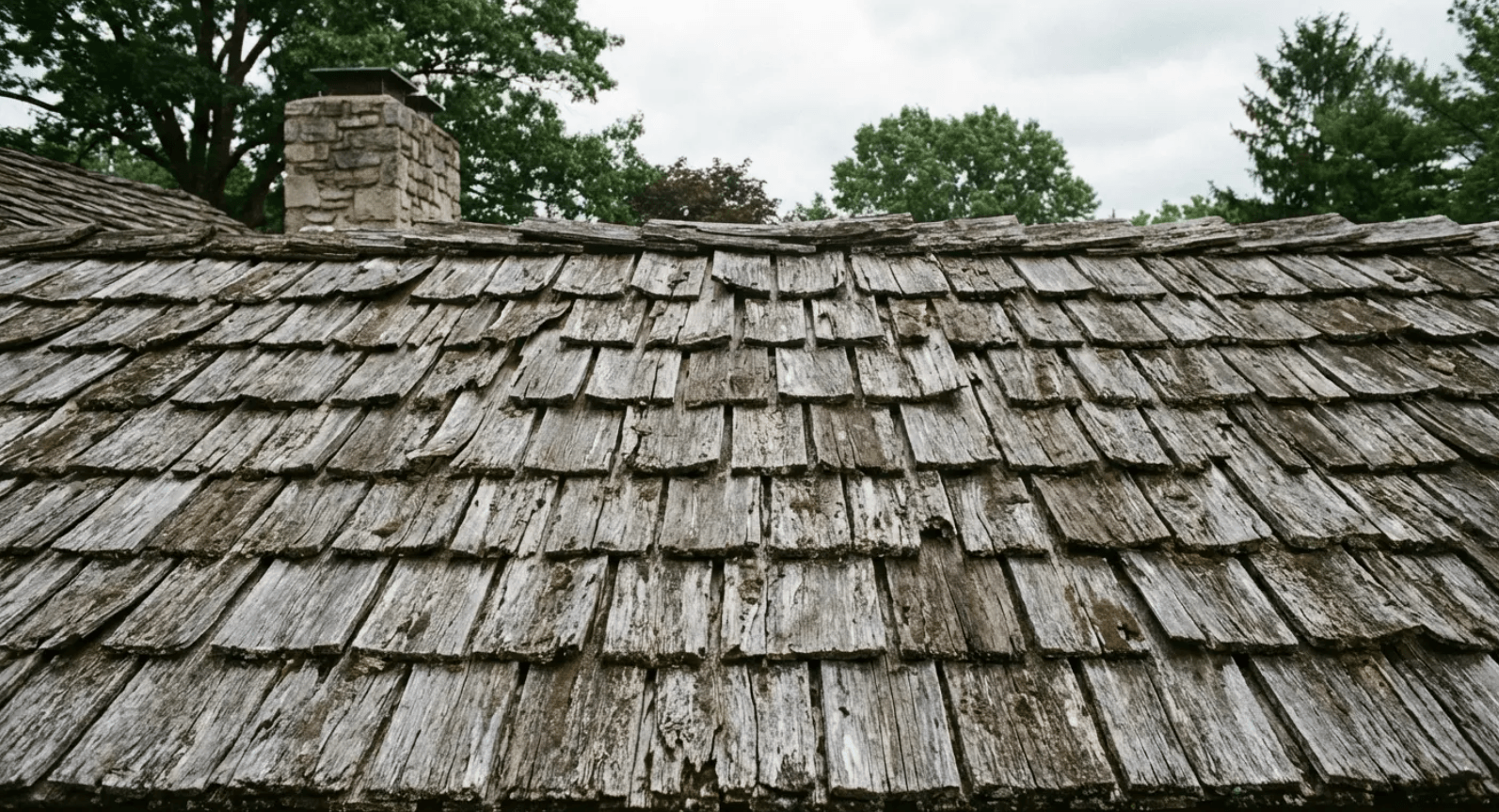
Curling and splitting indicate age and moisture exposure. Shingles curl at the edges. Shakes split along their grain. Both conditions suggest the roof is approaching the end of its functional life (20-40 years depending on climate, maintenance, and wood quality).
Moss and algae growth are more common on wood roofs than other materials. While this doesn't help identify shake versus shingle, it confirms you're looking at wood and indicates moisture retention issues that need attention.
Flat and Low-Slope Systems: The Hidden Membrane Mystery
Flat roofs aren't actually flat (they have slight slopes for drainage), and they hide their true nature beneath protective layers. You might be looking at gravel, a coating, pavers, or a walkway pad without seeing the actual roofing membrane underneath. Figuring out what type of roof do I have becomes particularly challenging with these systems.
EPDM (rubber roofing) appears black when visible. The seams are either taped or glued, creating flat overlaps. If you can see the membrane surface, it has a matte finish that doesn't reflect light. EPDM feels flexible if you can touch it, and it's been the workhorse of commercial flat roofing for decades.
TPO (thermoplastic polyolefin) runs white or light gray. The seams are heat-welded, creating raised beads where panels join. TPO reflects sunlight, which is why it's popular in hot climates. The surface has a slight sheen compared to EPDM's matte finish.
And this is where it gets annoying, because from the ground, TPO and PVC look identical. Same color, same seams, same everything. You can't tell without documentation or getting up there yourself.
PVC roofing looks similar to TPO (white or light-colored with heat-welded seams) but costs more and offers better chemical resistance. You can't reliably distinguish TPO from PVC visually without knowing the installation details or manufacturer markings.
Modified bitumen comes in rolls and creates a smooth, uniform surface. It's black or has a granulated surface similar to asphalt shingles. The seams run in straight lines across the roof where rolls overlap. Some modified bitumen systems use torch application (you'll see slight melting at seams), while others use cold adhesives.
Built-up roofing (BUR) consists of multiple layers of bitumen and reinforcing fabric, topped with gravel. If your flat roof has gravel covering it, you're likely looking at BUR. The gravel protects the membrane from UV damage and provides fire resistance.
Check the edges and penetrations (vents, pipes, HVAC units). These areas often reveal the membrane type because the material must be visible where it wraps up and around obstacles. You'll see the membrane's color, texture, and seam type at these locations even when the main field is covered.
Coatings complicate identification. Many flat roofs receive reflective coatings that obscure the original membrane. A white-coated roof might have EPDM, modified bitumen, or BUR underneath. You'd need to find an uncoated section or consult installation records to know for certain.
| Flat Roof Type | Visible Color | Seam Appearance | Surface Texture | Typical Lifespan |
|---|---|---|---|---|
| EPDM (Rubber) | Black | Flat, taped/glued | Matte, non-reflective | 20-30 years |
| TPO | White/light gray | Raised heat-welded beads | Slight sheen | 15-25 years |
| PVC | White/light gray | Raised heat-welded beads | Slight sheen | 20-30 years |
| Modified Bitumen | Black/granulated | Straight overlap lines | Smooth or granular | 15-20 years |
| Built-Up (BUR) | Gravel-covered | Hidden beneath gravel | Rough, aggregate surface | 20-30 years |
| Spray Polyurethane Foam | White/tan | Seamless | Textured, molded appearance | 20-30 years |
Architectural Details That Reveal Your Roof Type
Flashing tells you what you're working with. Each roofing material requires specific flashing types and installation methods. Metal roofs use metal flashing that matches or complements the panel material. Tile roofs need flexible flashing that accommodates the tiles' irregular undersides. Asphalt shingles work with step flashing, valley metal, and pipe boots designed for shingle integration.
Look at how your roof handles pipe penetrations (plumbing vents, exhaust pipes). Asphalt roofs use rubber or metal boots that slip over pipes and integrate with surrounding shingles. Metal roofs employ custom-fitted flashings or flexible boots designed for metal. Tile roofs feature specialized tile vents or lead flashings that conform to the tile profile.
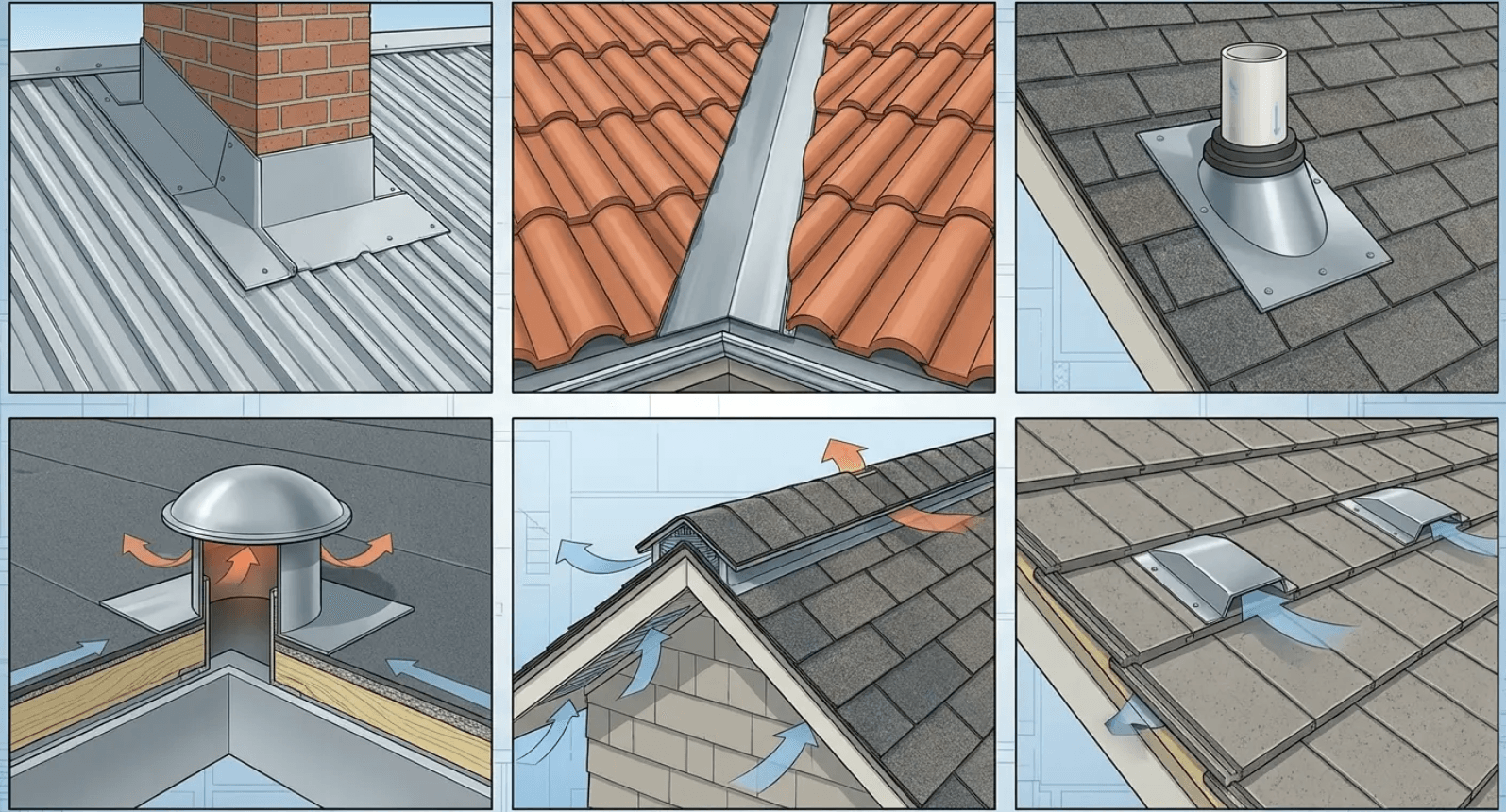
Ventilation systems vary by roof type. Ridge vents on asphalt shingle roofs look different from ridge vents on metal roofs. Tile roofs often use specialized bird-stop vents along the eaves. Flat roofs might have mushroom vents or powered exhaust fans. The ventilation style confirms what you're seeing on the main roof surface.
Gutter attachment methods differ. Roofs with fascia boards attach gutters differently than roofs where the roofing material extends to the edge. Metal roofs sometimes integrate gutter systems into the panel design. Tile roofs require specialized brackets that don't damage tiles.
Ice and water shield (a sticky underlayment) isn't visible on most roofs, but its presence or absence affects how your roof performs. This matters more for identification when you're trying to understand your roof's complete system, not just its surface material. Roofers who work on your home will ask about underlayment, and you'll sound more informed if you understand this layer exists beneath what you can see.
Drip edge (metal trim at roof edges) provides clues about installation quality and era. Older roofs might lack drip edge entirely. Modern installations include it as standard practice. The style and condition of drip edge help date your roof even when you don't know the installation year.
When Your Roof Is Actually Two Different Systems
Your main house might have asphalt shingles while your garage sports metal panels. The porch addition could feature a rubber membrane while the original structure has tile. This isn't unusual, especially on homes with additions or modifications.
Walk around your entire property and examine every roof plane. Additions built in different eras often used whatever roofing material was cost-effective or popular at that time. The result is a patchwork that requires knowing each section's identity separately.
Attached garages frequently have different roofing than the main house. Builders sometimes used less expensive materials on garages, or they chose materials that better suit the garage's lower slope. You might have architectural shingles on your house and three-tab shingles on your garage.
Covered porches and patio extensions present identification challenges because they're often low-slope or flat while your main roof is steeply pitched. These areas might have TPO, EPDM, or modified bitumen while your house has shingles or tile. Insurance companies want to know about each section separately because their lifespans and replacement costs differ dramatically.
Friend of mine outside Atlanta called for a quote on "her roof." Contractor shows up, walks around, comes back with a number that's $4,500 higher than she expected. Turns out she's got architectural shingles on the house, three-tab on the garage, and TPO on the screened porch. Three different roofs, three different prices, three different crews. She had no idea.
Dormers sometimes feature different materials than the main roof. This happens when dormers are added after original construction or when builders chose materials that better suit the dormer's specific geometry and exposure.
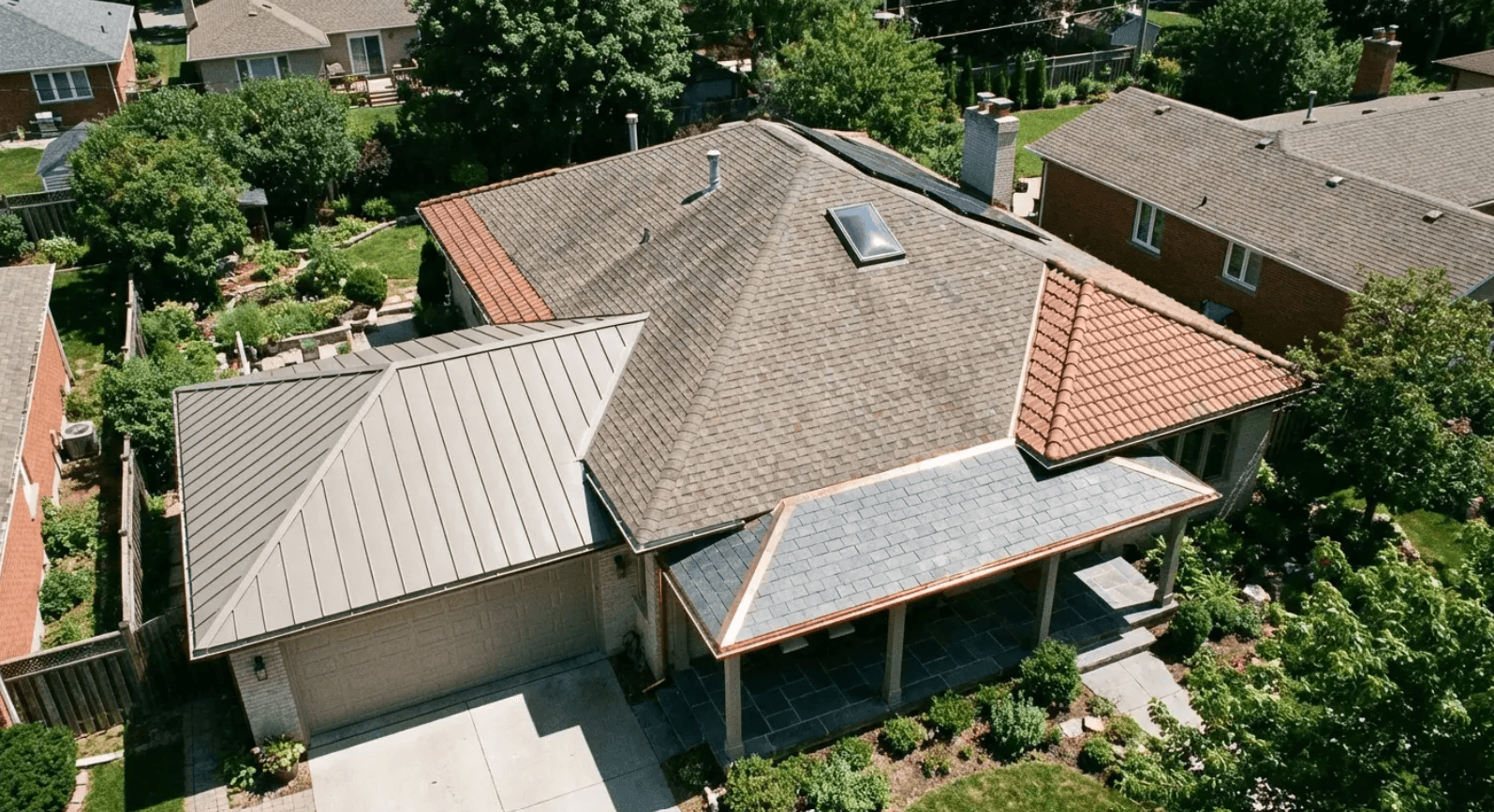
Document each section separately. When you're gathering information for insurance, contractors, or your own records, note that "the main house has X, the garage has Y, and the back porch has Z." This specificity prevents confusion and ensures you get accurate estimates for maintenance or replacement.
Replacement planning gets complicated with mixed systems. Your asphalt shingle roof might need replacement while your metal garage roof has decades of life remaining. Budget for these separately and don't assume everything needs attention simultaneously.
Multi-System Roof Documentation Guide:
Look, I'm going to give you a template here, but real talk... you're probably not going to fill this out. I didn't. But if you're the organized type (or you're dealing with insurance), here's what you need to track:
Property Address: _________________________________
Inspection Date: _________________________________
Main Structure:
- Roof Type: _________________________________
- Size (rough guess is fine): _________________________________
- How old? (best guess): _________________________________
- Current Condition: _________________________________
- When does it need replacing?: _________________________________
Garage/Outbuilding:
- Roof Type: _________________________________
- Size (rough guess is fine): _________________________________
- How old? (best guess): _________________________________
- Current Condition: _________________________________
- When does it need replacing?: _________________________________
Porch/Addition/Extension:
- Roof Type: _________________________________
- Size (rough guess is fine): _________________________________
- How old? (best guess): _________________________________
- Current Condition: _________________________________
- When does it need replacing?: _________________________________
Dormers/Special Features:
- Roof Type: _________________________________
- Size (rough guess is fine): _________________________________
- How old? (best guess): _________________________________
- Current Condition: _________________________________
- When does it need replacing?: _________________________________
Problems I've noticed: _________________________________
Total Roofing Investment Estimate: $_________________________________
Notes/Special Considerations: _________________________________
The Documentation Trail (And Why It's Probably Lost)
Building permits live in your municipal building department's records. Every roof replacement or significant repair should have generated a permit. These documents specify the roofing material, manufacturer, and sometimes even the specific product line.
Call or visit your local building department with your property address. Request copies of roofing permits filed for your address. Some municipalities have digitized records searchable online. Others require in-person visits and might charge nominal fees for copies.
Manufacturer warranties sometimes transfer with home sales. Check the documents you received at closing. Roofing warranties often include product specifications that definitively identify your roof type. These warranties also tell you the installation date and expected lifespan.
Home inspection reports from your purchase include roof sections with material identification. Inspectors note the roofing type, approximate age, and condition. If you bought your home in the last decade, dig out that inspection report. It contains answers you're looking for now.

Seller disclosures might mention roof replacement or repairs. When sellers replaced a roof before selling, they disclosed this work. The disclosure might include receipts, contractor information, or product details that identify your roof type.
Previous homeowner contact information sometimes appears in closing documents. If you can reach the previous owner, they might remember roofing work or have documentation they didn't pass along at closing. This is a long shot but occasionally yields useful information.
Contractor receipts and invoices provide definitive identification. If you've had any roofing work done since moving in, those receipts specify materials used. Even minor repairs include product information that confirms your roof type.
Attic inspection reveals underlayment and decking details that support identification. You can't see the roofing material from inside your attic, but you can see installation methods, ventilation systems, and sometimes manufacturer markings on underlayment that confirm what's on the exterior.
Photographs from different eras show your roof's history. Check old listing photos if you bought recently. Look at Google Street View's historical imagery. Real estate websites sometimes archive old listings. These images help date your roof and confirm whether it's been replaced since the house was built.
Getting Professional Confirmation Without Feeling Foolish
You're not expected to be a roofing expert. Contractors understand that most homeowners can't definitively identify their roof type, especially with newer synthetic products that mimic traditional materials.
You're going to feel dumb asking a roofer to identify your roof. You live under it. You should know, right? Wrong. Ask anyway.
This confusion has intensified as Florida's insurance regulators signal a potential shift away from asphalt shingles. According to a December 2024 report from The Palm Beach Post, Florida's Office of Insurance Regulation commissioner stated at the Florida Chamber of Commerce 2024 Insurance Summit that asphalt shingles often don't last as long as manufacturers claim, suggesting it's "time to start writing them out of the plot in Florida," which means accurate roof identification matters more than ever for insurance coverage and home value.
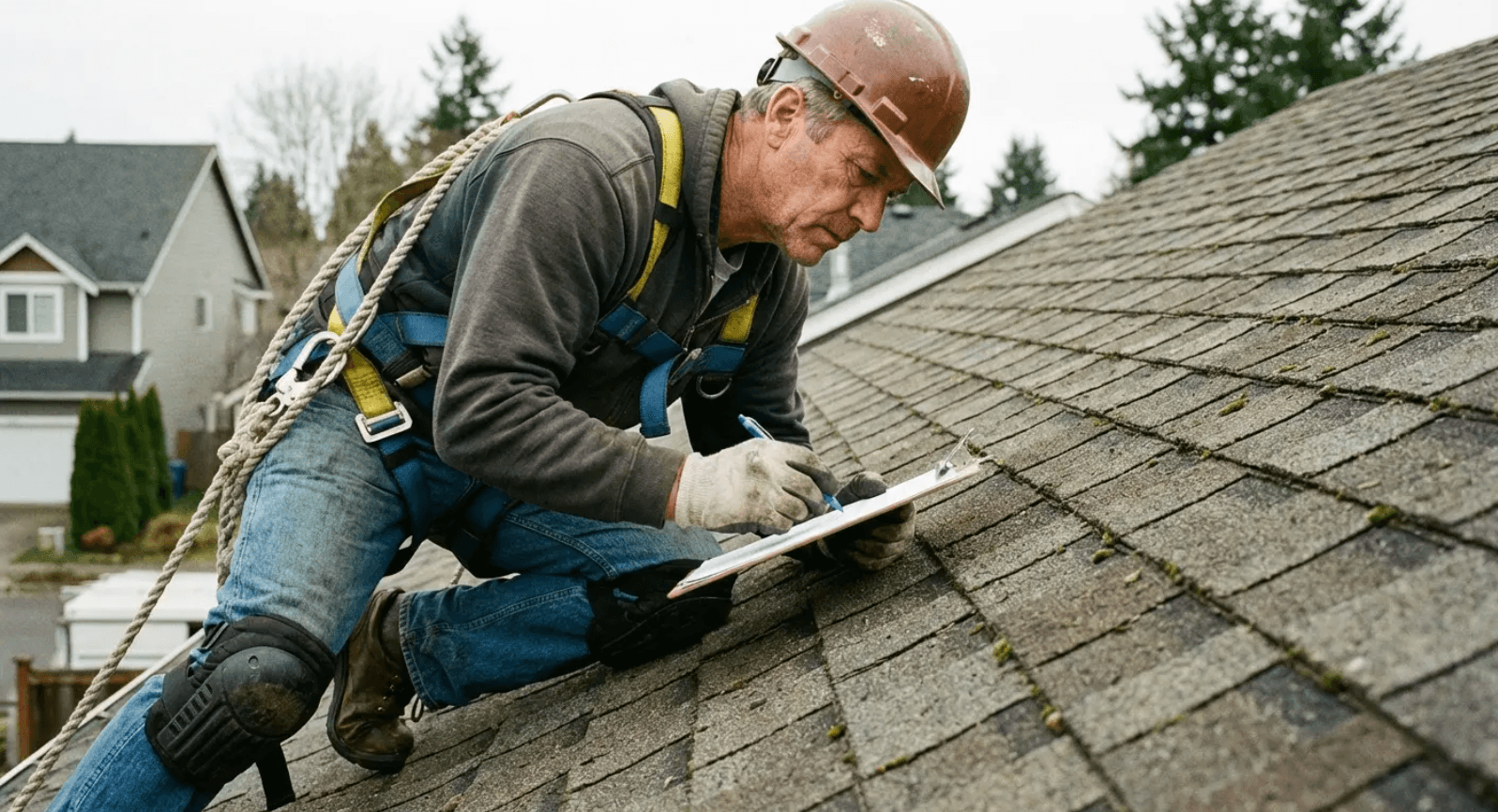
Request a free roof inspection from qualified contractors. Most roofing companies offer complimentary inspections that include material identification, condition assessment, and lifespan estimates. You're not obligated to hire them, and you'll get professional confirmation of what's on your house.
Be direct about your need. Tell the contractor, "I need to know exactly what type of roofing material I have, including the specific product if possible." This clarity helps them provide the detailed information you need rather than general observations.
I called a contractor once who laughed when I couldn't tell him my roof type. I hung up and called someone else. Don't hire people who make you feel stupid for not knowing construction materials.
Ask for documentation. Professional inspectors should provide written reports that specify material type, manufacturer (if identifiable), approximate age, and current condition. This documentation becomes part of your home records for future reference.
Multiple opinions help when you're uncertain. If one contractor says you have architectural shingles and another says you have designer shingles, that discrepancy matters. Get clarification about specific product lines, not just general categories.
Roofing manufacturers sometimes offer identification services. If you have any markings visible on your roof (manufacturer logos on ridge caps, for example), contact that company directly. They can often identify their products from photos and provide detailed specifications.
Insurance agents and adjusters can help identify roofing materials during routine inspections or claims assessments. They see thousands of roofs and can often identify materials quickly. If you're filing a claim or updating your policy, ask the adjuster to specify your roof type in their report.
Home inspectors offer standalone roof inspections separate from full home inspections. If you need professional confirmation without a sales pitch, hire a home inspector for a roof-specific assessment. They'll provide objective identification and condition reporting.
Knowing what type of roof you have isn't just about satisfying curiosity. It's about protecting your investment and making informed decisions when repairs or replacements become necessary.
Final Thoughts
Here's what I wish someone had told me when I bought my house: Take 20 minutes, grab binoculars, and figure out what's on your roof. Not because you need to become an expert, but because the first time someone asks (and they will ask) you don't want to be guessing.
The insurance adjuster won't wait while you Google it. The contractor won't explain it for free. And the repair guy definitely won't tell you when he's using the wrong materials.
Start with what you can see from the ground using the visual markers we've covered. Document your findings with photos and notes. Search for any existing paperwork that might confirm your observations. When doubt remains, get professional identification before making decisions about repairs, replacements, or insurance coverage.
Your roof's identity affects every conversation you'll have about it moving forward. Contractors need this information to provide accurate estimates. Insurance companies require it for proper coverage. Maintenance schedules depend on it. Replacement planning starts with knowing what you're replacing.
This costs you nothing but 20 minutes and maybe some weird looks from the neighbors when you're standing in your yard with binoculars pointed at your own house. But the payoff extends across your entire homeownership experience. You're not just learning what's overhead. You're gaining the language to advocate for your home's needs and make informed decisions when roofing issues inevitably arise.