Roof Insurance Claims in Pennsylvania: What Homeowners Should Know
Roof damage is stressful enough before insurance paperwork enters the picture. Once a claim is opened, homeowners may be trying to protect the house, understand unfamiliar policy language, schedule inspections, and figure out why two estimates do not show the same work.
Here is the most important thing to understand: your insurance policy determines whether damage is covered. A roofing contractor can inspect the physical condition of the roof, document what is visible, explain the work needed, and prepare an estimate. The insurance company evaluates the claim under the terms, limits, deductibles, and exclusions in your policy.
For homeowners in Lancaster, York, Harrisburg, Lebanon, Carlisle, Mechanicsburg, and surrounding parts of south-central Pennsylvania, this guide explains what to do after roof damage, who handles each part of the claim, and how Joyland Roofing can support the roofing side of the process without making promises about insurance coverage.
This article provides general educational information, not legal advice or an interpretation of your individual insurance policy. Contact your insurance company, agent, licensed public adjuster, or attorney when you need guidance about coverage or your rights under a policy.
How Does a Roof Insurance Claim Work in Pennsylvania?
When wind, hail, a fallen tree, or another event damages a roof, the homeowner reports the loss to the insurance company. The carrier opens a claim and assigns an adjuster to evaluate the reported damage. The insurer then determines whether the event is covered and how the policy applies.
A roofing contractor performs a different job. The roofer evaluates the roof itself, identifies visible damage and repair needs, prepares a scope of work, and estimates what it will take to complete the roofing work correctly.
Those two evaluations are related, but they are not the same. The insurance adjuster evaluates the claim for the carrier. The roofer evaluates the roof and proposed construction work. The policy, not the roofing contractor, controls the coverage decision.
Joyland Roofing works with homeowners after storm damage by providing professional roof assessments, emergency assistance when needed, photographs, inspection findings, and roofing estimates. Joyland can also meet with the carrier's adjuster to explain the roof conditions observed during the inspection. Joyland does not guarantee that an insurance company will approve a claim or pay for a particular scope of work.
What Roof Damage May Be Covered by Homeowners Insurance?
There is no honest universal answer because homeowners policies are not identical. Coverage depends on the cause of the damage, the language in the policy, its exclusions, the applicable deductible, the condition of the roof, and any endorsements or roof-specific limitations.
The Pennsylvania Insurance Department explains that dwelling coverage applies to covered damage to the house and attached structures. The department also emphasizes that what is covered depends on the policy. Flood and earthquake damage are common examples of losses that may require separate coverage.
Wind or hail damage may be covered under some homeowners policies, but homeowners should not assume that every wind, hail, leak, or missing shingle automatically qualifies. Some policies have separate wind or hail deductibles. Others may contain roof-age provisions, cosmetic-damage exclusions, or different settlement terms for the roof.
Questions to Ask Your Insurance Company
Before or after a storm, ask your insurance company or agent:
Does my policy cover wind and hail damage to the roof?
Do I have a separate wind, hail, or roof deductible?
Is my roof insured for actual cash value or replacement cost value?
Are there roof-age limitations or cosmetic-damage exclusions?
Does my policy include ordinance or law coverage for required code upgrades?
What is the deadline for reporting damage and submitting documentation?
What temporary repairs am I authorized to make?
What documentation is required before permanent repairs begin?
Do not rely on a neighbor's claim, an online example, or a contractor's general experience to answer policy questions. Two houses on the same street can have different carriers, deductibles, endorsements, and settlement terms.
What Should You Do After Storm Damage to Your Roof?
The first goal is not to build the perfect claim file. It is to keep people safe and prevent the damage from spreading. Documentation matters, but nobody needs to become a rooftop detective during a thunderstorm.
Stay Safe and Inspect From the Ground
Do not climb onto a storm-damaged roof. Wet shingles, loose materials, fallen branches, and damaged decking can make the surface unsafe.
When conditions are safe, look from the ground for shingles or pieces of siding in the yard, lifted or missing roofing, damaged gutters, fallen limbs, exposed decking, or punctures. Inside the house, check for dripping water, ceiling stains, wet insulation, and moisture around chimneys, skylights, vents, or pipe penetrations.
Joyland's Central Pennsylvania storm-damage guide includes a practical list of warning signs and explains why temporary protection may be needed before a permanent repair can be planned.
Document the Damage Before Cleanup
Take photographs or video before cleaning up or making repairs, as long as it is safe to do so. Capture both wide views and closer details from accessible locations. Document interior water damage, damaged belongings, debris, fallen branches, and any temporary protection that is installed.
Write down when the storm occurred, when the damage was discovered, and who you spoke with. Keep copies of emails, claim documents, estimates, invoices, and receipts in one folder.
The Pennsylvania Insurance Department's current storm guidance recommends contacting the insurer promptly, keeping a record of conversations, and taking photos and videos before cleanup or repair.
Contact Your Insurance Company Promptly
Report the damage as soon as reasonably possible and follow the carrier's instructions. Ask for the claim number, the adjuster's contact information, and a list of documents the insurer wants.
If you do not understand a request, ask the adjuster to explain it. Claims have deadlines, but those deadlines are policy-specific. Do not rely on a generic 72-hour rule or a deadline found in someone else's policy.
Prevent Additional Damage
After documenting the damage, take reasonable temporary steps to protect the property. That may include placing buckets under a leak, moving belongings, covering an opening, or having a qualified roofer install emergency protection.
The state's Natural Disaster Insurance Guide advises homeowners to make necessary temporary repairs after documenting the loss, save receipts, and avoid permanent repairs until the insurance company has approved them.
A tarp is temporary protection, not a permanent roof repair. It buys time for the weather to clear, the roof to be inspected safely, and the long-term repair plan to be determined.
Schedule a Professional Roof Assessment
A roofing inspection can document the physical condition of the roof and help determine whether the damage appears repairable or whether a larger scope may be necessary. Not every storm-damaged roof needs to be replaced. Sometimes the appropriate roofing solution is an emergency covering, a focused repair, or further investigation.
The contractor should explain what was observed, what work is being recommended, and what conditions could not be confirmed without removing roofing materials. The inspection should support an honest scope of work, not a promise that insurance will buy a new roof.
Who Does What During a Roof Insurance Claim?
Confusion usually starts when everyone involved gets described as "the adjuster" or "the insurance person." The roles are different, and understanding them makes the process much easier to follow.
The Insurance Company's Adjuster
The carrier's adjuster inspects the reported damage and gathers information for the insurance company. The carrier uses the adjuster's findings, the policy, and any additional documentation to make coverage and payment decisions.
The adjuster may prepare an estimate of covered repairs. That estimate reflects the insurer's assessment. It is not automatically the same as a contractor's construction proposal.
The Roofing Contractor
The roofing contractor evaluates the roof and exterior damage, develops a repair or replacement scope, calculates quantities, identifies roofing-system components, and estimates the construction cost.
Joyland can photograph observed damage, prepare a roofing estimate, answer technical questions about the proposed work, and meet the carrier's adjuster at the property when appropriate. Joyland can also complete emergency protection, roof repairs, and roof replacements.
A roofing contractor does not decide whether a loss is covered and should not promise that insurance will pay for the work. A contractor should also avoid interpreting policy language or presenting itself as the homeowner's claim negotiator unless it is separately licensed and acting in that capacity.
A Licensed Public Adjuster
A public adjuster is hired by the policyholder to assist with the insurance claim and negotiate with the insurance company. This is different from a roofer and different from the adjuster assigned by the carrier.
According to the Pennsylvania Insurance Department's public-adjuster guidance, public adjusters must be licensed in Pennsylvania. Homeowners are not required to hire one for an insurance company to pay a claim, and the homeowner is responsible for the public adjuster's agreed fee.
Pennsylvania also states that someone who is both a public adjuster and a contractor can perform only one function at a time. That separation protects homeowners from unclear roles and conflicting financial interests.
What Is the Difference Between ACV and RCV Roof Coverage?
Actual cash value and replacement cost value describe different ways an insurer may calculate a covered loss. They are not interchangeable, and the difference can significantly affect the amount available for repairs.
Actual Cash Value
Actual cash value, commonly shortened to ACV, accounts for age, wear, and depreciation when calculating the value of damaged property. An ACV settlement may not provide enough to cover the full cost of new roofing work.
Replacement Cost Value
Replacement cost value, commonly shortened to RCV, generally pays the cost of repairing or replacing covered damaged property with materials of like kind and quality, subject to the policy's deductible, limits, and terms.
The National Association of Insurance Commissioners explains that ACV considers depreciation, while RCV uses the cost of repair or replacement with like-kind and quality materials. Your policy may also specify when payments are issued and whether part of the replacement-cost amount is released only after work is completed.
Your Deductible
The deductible is the portion of a covered loss the policyholder is responsible for paying. The Pennsylvania Insurance Department specifically recommends checking for peril-specific deductibles, including separate wind or hail deductibles.
Do not assume the deductible is a fixed dollar amount. Read the declarations page and ask the carrier to identify the deductible that applies to the reported loss.
Why Might the Insurance Estimate and Roofing Estimate Be Different?
A difference between estimates does not automatically mean someone is dishonest. It usually means the documents were created for different purposes or contain different assumptions.
The insurer's estimate may address the work it believes is covered. The roofing proposal may include the contractor's full construction scope. Differences can involve measurements, material specifications, flashing, ventilation, underlayment, disposal, access, permits, code-related work, or damage that becomes visible only after roofing materials are removed.
When the numbers do not match, compare the scopes line by line instead of staring at the totals until they begin to look personally offensive.
Ask:
Are both estimates addressing the same roof areas?
Are the material type and product specifications comparable?
Are removal, disposal, flashing, ventilation, and accessories included?
Does either estimate assume that the roof deck is undamaged?
Are permit or code-related items included, and does the policy cover them?
What documentation does the insurer need to review a legitimate scope difference?
If the roofing contractor identifies a missing or different construction item, the contractor can provide photographs, measurements, product information, and an updated scope. The insurance company decides whether that information changes the claim payment.
How Joyland Helps With Storm-Damage Roof Claims
Joyland is a family-run roofing and exteriors company that has served Lancaster and surrounding Pennsylvania communities since 1991. The company provides residential roof inspections, emergency roof service, roof repairs, and complete roof replacements.
For storm-damage projects, Joyland can:
Inspect the roof and accessible related areas
Document visible roof and exterior damage
Help stabilize urgent roof openings or active leaks
Prepare a written roofing scope and estimate
Meet with the carrier's adjuster when appropriate
Explain the roofing work and answer construction questions
Complete the approved repair or replacement work
Communicate changes if concealed damage is discovered during construction
Joyland serves homeowners across Lancaster, York, Dauphin, Lebanon, Cumberland, Berks, and other Pennsylvania counties. The goal is to make the roofing side of the process understandable and well documented, not to make coverage promises that belong to the insurance company.
What Should You Do If You Disagree With the Claim Decision?
Start with the written documents. Ask the insurance company for an explanation of the decision and the policy language used. Then compare the carrier's scope with the contractor's scope and organize any photographs, inspection findings, receipts, or estimates that support your questions.
The Pennsylvania Natural Disaster Insurance Guide says a homeowner whose claim is denied may review the policy, ask the insurance company's claim manager about an appeal, and contact the state for help if questions remain.
Practical next steps may include:
Ask the adjuster to explain the decision or estimate in writing.
Confirm the policy provisions, exclusions, deductible, and applicable deadlines.
Submit relevant contractor documentation through the carrier's requested process.
Ask whether the insurer offers an internal review or appeal.
Consider speaking with a Pennsylvania-licensed public adjuster or an attorney if you need representation or legal guidance.
Contact the Pennsylvania Insurance Department Consumer Help Center to ask a question or file a complaint.
A roofing contractor can explain roofing conditions and construction costs. It should not provide legal advice or tell a homeowner what the policy legally requires.
How Can You Avoid Storm-Damage Scams?
Large storms attract legitimate repair crews, but they also attract people looking for quick signatures. Slow down long enough to check who is standing at the door.
The Pennsylvania Insurance Department recommends getting more than one estimate, checking references, verifying that a contractor is registered and insured, and getting the cost, scope, timetable, and guarantees in writing.
Before signing:
Verify the contractor's Pennsylvania Home Improvement Contractor registration.
Confirm insurance and request references.
Read every page and do not sign documents with blank sections.
Be cautious with any agreement that transfers claim rights or directs insurance payments.
Do not hire someone solely because they promise the insurance company will pay.
Make sure you understand whether the person is acting as a contractor, a public adjuster, or both.
Roof Insurance Claim FAQs
Does Homeowners Insurance Automatically Pay for a New Roof?
No. The insurer evaluates the cause and extent of the damage under the specific policy. A roofing inspection can document damage and the work needed, but it cannot guarantee coverage or a full replacement.
Should I Call My Insurance Company or a Roofer First?
If anyone is in danger, contact emergency services first. For property damage, document what you safely can and contact the insurance company promptly. If the roof is actively leaking or exposed, contact a qualified roofer for temporary protection while following the carrier's instructions.
Can Joyland Meet With the Insurance Adjuster?
Yes. Joyland can meet the carrier's adjuster at the property when appropriate, point out observed roofing conditions, provide photographs and measurements, and explain the proposed roofing scope. The insurer still makes the coverage and payment decisions.
Is a Public Adjuster the Same as a Roofing Contractor?
No. A public adjuster is hired by the policyholder to assist with and negotiate the insurance claim. A roofing contractor performs construction-related inspections, estimates, repairs, and replacements. Pennsylvania requires public adjusters to be licensed.
What If the Insurance Estimate Is Lower Than the Roofing Estimate?
Compare the scopes line by line and ask both parties to explain the differences. A roofer can provide supporting documentation for construction items, but the carrier decides whether those items are covered or added to the claim.
Does the Age of My Roof Automatically Disqualify a Claim?
There is no universal rule. Roof age may affect how a policy settles a loss or whether special roof provisions apply, but the result depends on the cause of damage and the actual policy language. Ask the insurance company to explain how the roof's age affects your coverage.
Can Joyland Guarantee That My Roof Claim Will Be Approved?
No roofing company can honestly guarantee an insurance decision. Joyland can inspect the roof, document observed damage, prepare a clear construction scope, and answer roofing questions. The insurance company determines coverage under the policy.
Need Your Roof Inspected After a Storm?
If wind, hail, or a fallen tree damaged your home in Lancaster, York, Harrisburg, Lebanon, Carlisle, Mechanicsburg, or another nearby Pennsylvania community, start by protecting the property and contacting your insurance company.
Then have the roof evaluated by someone who can give you a clear answer about the roofing work itself.
Contact Joyland Roofing to schedule a roof inspection, request storm-damage assistance, or ask about emergency roof protection. Joyland can document what is happening on the roof, explain the repair options, and provide a written scope without pretending to control the insurance decision.
Roof Insurance Claims in Pennsylvania: What Homeowners Should Know
Roof damage is stressful enough before insurance paperwork enters the picture. Once a claim is opened, homeowners may be trying to protect the house, understand unfamiliar policy language, schedule inspections, and figure out why two estimates do not show the same work.
Here is the most important thing to understand: your insurance policy determines whether damage is covered. A roofing contractor can inspect the physical condition of the roof, document what is visible, explain the work needed, and prepare an estimate. The insurance company evaluates the claim under the terms, limits, deductibles, and exclusions in your policy.
For homeowners in Lancaster, York, Harrisburg, Lebanon, Carlisle, Mechanicsburg, and surrounding parts of south-central Pennsylvania, this guide explains what to do after roof damage, who handles each part of the claim, and how Joyland Roofing can support the roofing side of the process without making promises about insurance coverage.
This article provides general educational information, not legal advice or an interpretation of your individual insurance policy. Contact your insurance company, agent, licensed public adjuster, or attorney when you need guidance about coverage or your rights under a policy.
How Does a Roof Insurance Claim Work in Pennsylvania?
When wind, hail, a fallen tree, or another event damages a roof, the homeowner reports the loss to the insurance company. The carrier opens a claim and assigns an adjuster to evaluate the reported damage. The insurer then determines whether the event is covered and how the policy applies.
A roofing contractor performs a different job. The roofer evaluates the roof itself, identifies visible damage and repair needs, prepares a scope of work, and estimates what it will take to complete the roofing work correctly.
Those two evaluations are related, but they are not the same. The insurance adjuster evaluates the claim for the carrier. The roofer evaluates the roof and proposed construction work. The policy, not the roofing contractor, controls the coverage decision.
Joyland Roofing works with homeowners after storm damage by providing professional roof assessments, emergency assistance when needed, photographs, inspection findings, and roofing estimates. Joyland can also meet with the carrier's adjuster to explain the roof conditions observed during the inspection. Joyland does not guarantee that an insurance company will approve a claim or pay for a particular scope of work.
What Roof Damage May Be Covered by Homeowners Insurance?
There is no honest universal answer because homeowners policies are not identical. Coverage depends on the cause of the damage, the language in the policy, its exclusions, the applicable deductible, the condition of the roof, and any endorsements or roof-specific limitations.
The Pennsylvania Insurance Department explains that dwelling coverage applies to covered damage to the house and attached structures. Wind or hail damage may be covered under some homeowners policies, but homeowners should not assume that every wind, hail, leak, or missing shingle automatically qualifies. Some policies have separate wind or hail deductibles. Others may contain roof-age provisions, cosmetic-damage exclusions, or different settlement terms for the roof.
Questions to Ask Your Insurance Company
Before or after a storm, ask your insurance company or agent:
- Does my policy cover wind and hail damage to the roof?
- Do I have a separate wind, hail, or roof deductible?
- Is my roof insured for actual cash value or replacement cost value?
- Are there roof-age limitations or cosmetic-damage exclusions?
- Does my policy include ordinance or law coverage for required code upgrades?
- What is the deadline for reporting damage and submitting documentation?
- What temporary repairs am I authorized to make?
- What documentation is required before permanent repairs begin?
Do not rely on a neighbor's claim, an online example, or a contractor's general experience to answer policy questions. Two houses on the same street can have different carriers, deductibles, endorsements, and settlement terms.
What Should You Do After Storm Damage to Your Roof?
The first goal is not to build the perfect claim file. It is to keep people safe and prevent the damage from spreading. Documentation matters, but nobody needs to become a rooftop detective during a thunderstorm.
Stay Safe and Inspect From the Ground
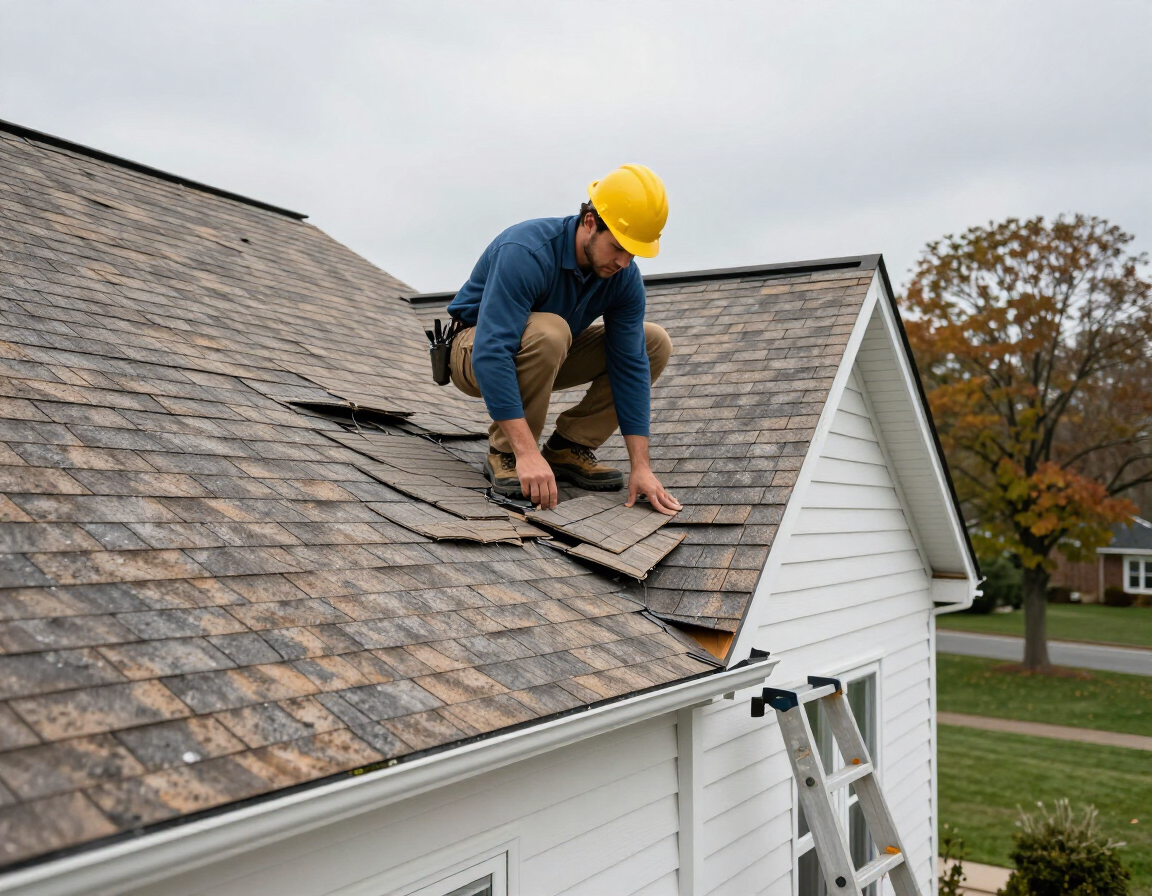
Do not climb onto a storm-damaged roof. Wet shingles, loose materials, fallen branches, and damaged decking can make the surface unsafe.
When conditions are safe, look from the ground for shingles or pieces of siding in the yard, lifted or missing roofing, damaged gutters, fallen limbs, exposed decking, or punctures. Inside the house, check for dripping water, ceiling stains, wet insulation, and moisture around chimneys, skylights, vents, or pipe penetrations.
Joyland's Central Pennsylvania storm-damage guide includes a practical list of warning signs and explains why temporary protection may be needed before a permanent repair can be planned.
Document the Damage Before Cleanup
Take photographs or video before cleaning up or making repairs, as long as it is safe to do so. Capture both wide views and closer details from accessible locations. Document interior water damage, damaged belongings, debris, fallen branches, and any temporary protection that is installed.
Write down when the storm occurred, when the damage was discovered, and who you spoke with. Keep copies of emails, claim documents, estimates, invoices, and receipts in one folder.
The Pennsylvania Insurance Department's current storm guidance recommends contacting the insurer promptly, keeping a record of conversations, and taking photos and videos before cleanup or repair.
Contact Your Insurance Company Promptly
Report the damage as soon as reasonably possible and follow the carrier's instructions. Ask for the claim number, the adjuster's contact information, and a list of documents the insurer wants.
If you do not understand a request, ask the adjuster to explain it. Claims have deadlines, but those deadlines are policy-specific. Do not rely on a generic 72-hour rule or a deadline found in someone else's policy.
Prevent Additional Damage
After documenting the damage, take reasonable temporary steps to protect the property. That may include placing buckets under a leak, moving belongings, covering an opening, or having a qualified roofer install emergency protection.
The state's Natural Disaster Insurance Guide advises homeowners to make necessary temporary repairs after documenting the loss, save receipts, and avoid permanent repairs until the insurance company has approved them.
A tarp is temporary protection, not a permanent roof repair. It buys time for the weather to clear, the roof to be inspected safely, and the long-term repair plan to be determined.
Schedule a Professional Roof Assessment
A roofing inspection can document the physical condition of the roof and help determine whether the damage appears repairable or whether a larger scope may be necessary. Not every storm-damaged roof needs to be replaced. Sometimes the appropriate roofing solution is an emergency covering, a focused repair, or further investigation.
The contractor should explain what was observed, what work is being recommended, and what conditions could not be confirmed without removing roofing materials. The inspection should support an honest scope of work, not a promise that insurance will buy a new roof.
Who Does What During a Roof Insurance Claim?
Confusion usually starts when everyone involved gets described as "the adjuster" or "the insurance person." The roles are different, and understanding them makes the process much easier to follow.
The carrier's adjuster inspects the reported damage and gathers information for the insurance company. The roofing contractor evaluates the roof and exterior damage, develops a repair or replacement scope, and estimates the construction cost. A public adjuster — which is different from both — is hired by the policyholder to assist with and negotiate the insurance claim.
According to the Pennsylvania Insurance Department's public-adjuster guidance , public adjusters must be licensed in Pennsylvania. Pennsylvania also states that someone who is both a public adjuster and a contractor can perform only one function at a time.

Who Does What During a Roof Insurance Claim?
The Insurance Company's Adjuster
The carrier's adjuster inspects the reported damage and gathers information for the insurance company. The carrier uses the adjuster's findings, the policy, and any additional documentation to make coverage and payment decisions.
The adjuster may prepare an estimate of covered repairs. That estimate reflects the insurer's assessment. It is not automatically the same as a contractor's construction proposal.
The Roofing Contractor
The roofing contractor evaluates the roof and exterior damage, develops a repair or replacement scope, calculates quantities, identifies roofing-system components, and estimates the construction cost.
Joyland can photograph observed damage, prepare a roofing estimate, answer technical questions about the proposed work, and meet the carrier's adjuster at the property when appropriate. Joyland can also complete emergency protection, roof repairs, and roof replacements.
A roofing contractor does not decide whether a loss is covered and should not promise that insurance will pay for the work. A contractor should also avoid interpreting policy language or presenting itself as the homeowner's claim negotiator unless it is separately licensed and acting in that capacity.
A Licensed Public Adjuster
A public adjuster is hired by the policyholder to assist with the insurance claim and negotiate with the insurance company. This is different from a roofer and different from the adjuster assigned by the carrier.
According to the Pennsylvania Insurance Department's public-adjuster guidance , public adjusters must be licensed in Pennsylvania. Homeowners are not required to hire one for an insurance company to pay a claim, and the homeowner is responsible for the public adjuster's agreed fee.
Pennsylvania also states that someone who is both a public adjuster and a contractor can perform only one function at a time. That separation protects homeowners from unclear roles and conflicting financial interests.
What Is the Difference Between ACV and RCV Roof Coverage?
Actual cash value and replacement cost value describe different ways an insurer may calculate a covered loss. They are not interchangeable, and the difference can significantly affect the amount available for repairs.
Actual Cash Value
Actual cash value, commonly shortened to ACV, accounts for age, wear, and depreciation when calculating the value of damaged property. An ACV settlement may not provide enough to cover the full cost of new roofing work.
Replacement Cost Value
Replacement cost value, commonly shortened to RCV, generally pays the cost of repairing or replacing covered damaged property with materials of like kind and quality, subject to the policy's deductible, limits, and terms.
The National Association of Insurance Commissioners explains that ACV considers depreciation, while RCV uses the cost of repair or replacement with like-kind and quality materials. Your policy may also specify when payments are issued and whether part of the replacement-cost amount is released only after work is completed.
Your Deductible
The deductible is the portion of a covered loss the policyholder is responsible for paying. The Pennsylvania Insurance Department specifically recommends checking for peril-specific deductibles, including separate wind or hail deductibles.
Do not assume the deductible is a fixed dollar amount. Read the declarations page and ask the carrier to identify the deductible that applies to the reported loss.
Why Might the Insurance Estimate and Roofing Estimate Be Different?
A difference between estimates does not automatically mean someone is dishonest. It usually means the documents were created for different purposes or contain different assumptions.
The insurer's estimate may address the work it believes is covered. The roofing proposal may include the contractor's full construction scope. Differences can involve measurements, material specifications, flashing, ventilation, underlayment, disposal, access, permits, code-related work, or damage that becomes visible only after roofing materials are removed.
When the numbers do not match, compare the scopes line by line instead of staring at the totals until they begin to look personally offensive.
Ask:
- Are both estimates addressing the same roof areas?
- Are the material type and product specifications comparable?
- Are removal, disposal, flashing, ventilation, and accessories included?
- Does either estimate assume that the roof deck is undamaged?
- Are permit or code-related items included, and does the policy cover them?
- What documentation does the insurer need to review a legitimate scope difference?
If the roofing contractor identifies a missing or different construction item, the contractor can provide photographs, measurements, product information, and an updated scope. The insurance company decides whether that information changes the claim payment.
How Joyland Helps With Storm-Damage Roof Claims
Joyland is a family-run roofing and exteriors company that has served Lancaster and surrounding Pennsylvania communities since 1991. The company provides residential roof inspections, emergency roof service, roof repairs, and complete roof replacements.
For storm-damage projects, Joyland can:
- Inspect the roof and accessible related areas
- Document visible roof and exterior damage
- Help stabilize urgent roof openings or active leaks
- Prepare a written roofing scope and estimate
- Meet with the carrier's adjuster when appropriate
- Explain the roofing work and answer construction questions
- Complete the approved repair or replacement work
- Communicate changes if concealed damage is discovered during construction
Joyland serves homeowners across Lancaster, York, Dauphin, Lebanon, Cumberland, Berks, and other Pennsylvania counties . The goal is to make the roofing side of the process understandable and well documented, not to make coverage promises that belong to the insurance company.

What Should You Do If You Disagree With the Claim Decision?
Start with the written documents. Ask the insurance company for an explanation of the decision and the policy language used. Then compare the carrier's scope with the contractor's scope and organize any photographs, inspection findings, receipts, or estimates that support your questions.
The Pennsylvania Natural Disaster Insurance Guide says a homeowner whose claim is denied may review the policy, ask the insurance company's claim manager about an appeal, and contact the state for help if questions remain. Consider speaking with a Pennsylvania-licensed public adjuster or an attorney if you need representation or legal guidance.
What Should You Do If You Disagree With the Claim Decision?
Start with the written documents. Ask the insurance company for an explanation of the decision and the policy language used. Then compare the carrier's scope with the contractor's scope and organize any photographs, inspection findings, receipts, or estimates that support your questions.
The Pennsylvania Natural Disaster Insurance Guide says a homeowner whose claim is denied may review the policy, ask the insurance company's claim manager about an appeal, and contact the state for help if questions remain.
Practical next steps may include:
- Ask the adjuster to explain the decision or estimate in writing.
- Confirm the policy provisions, exclusions, deductible, and applicable deadlines.
- Submit relevant contractor documentation through the carrier's requested process.
- Ask whether the insurer offers an internal review or appeal.
- Consider speaking with a Pennsylvania-licensed public adjuster or an attorney if you need representation or legal guidance.
- Contact the Pennsylvania Insurance Department Consumer Help Center to ask a question or file a complaint.
A roofing contractor can explain roofing conditions and construction costs. It should not provide legal advice or tell a homeowner what the policy legally requires.
How Can You Avoid Storm-Damage Scams?
Large storms attract legitimate repair crews, but they also attract people looking for quick signatures. Slow down long enough to check who is standing at the door.
The Pennsylvania Insurance Department recommends getting more than one estimate, checking references, verifying that a contractor is registered and insured, and getting the cost, scope, timetable, and guarantees in writing.
Before signing:
- Verify the contractor's Pennsylvania Home Improvement Contractor registration.
- Confirm insurance and request references.
- Read every page and do not sign documents with blank sections.
- Be cautious with any agreement that transfers claim rights or directs insurance payments.
- Do not hire someone solely because they promise the insurance company will pay.
- Make sure you understand whether the person is acting as a contractor, a public adjuster, or both.
Roof Insurance Claim FAQs
Does Homeowners Insurance Automatically Pay for a New Roof?
No. The insurer evaluates the cause and extent of the damage under the specific policy. A roofing inspection can document damage and the work needed, but it cannot guarantee coverage or a full replacement.Should I Call My Insurance Company or a Roofer First?
If anyone is in danger, contact emergency services first. For property damage, document what you safely can and contact the insurance company promptly. If the roof is actively leaking or exposed, contact a qualified roofer for temporary protection while following the carrier's instructions.Can Joyland Meet With the Insurance Adjuster?
Yes. Joyland can meet the carrier's adjuster at the property when appropriate, point out observed roofing conditions, provide photographs and measurements, and explain the proposed roofing scope. The insurer still makes the coverage and payment decisions.Is a Public Adjuster the Same as a Roofing Contractor?
No. A public adjuster is hired by the policyholder to assist with and negotiate the insurance claim. A roofing contractor performs construction-related inspections, estimates, repairs, and replacements. Pennsylvania requires public adjusters to be licensed.What If the Insurance Estimate Is Lower Than the Roofing Estimate?
Compare the scopes line by line and ask both parties to explain the differences. A roofer can provide supporting documentation for construction items, but the carrier decides whether those items are covered or added to the claim.Does the Age of My Roof Automatically Disqualify a Claim?
There is no universal rule. Roof age may affect how a policy settles a loss or whether special roof provisions apply, but the result depends on the cause of damage and the actual policy language. Ask the insurance company to explain how the roof's age affects your coverage.Can Joyland Guarantee That My Roof Claim Will Be Approved?
No roofing company can honestly guarantee an insurance decision. Joyland can inspect the roof, document observed damage, prepare a clear construction scope, and answer roofing questions. The insurance company determines coverage under the policy.
Need Your Roof Inspected After a Storm?
If wind, hail, or a fallen tree damaged your home in Lancaster, York, Harrisburg, Lebanon, Carlisle, Mechanicsburg, or another nearby Pennsylvania community, start by protecting the property and contacting your insurance company.
Then have the roof evaluated by someone who can give you a clear answer about the roofing work itself.
Contact Joyland Roofing to schedule a roof inspection, request storm-damage assistance, or ask about emergency roof protection. Joyland can document what is happening on the roof, explain the repair options, and provide a written scope without pretending to control the insurance decision.