
When should leaves on a roof be removed?
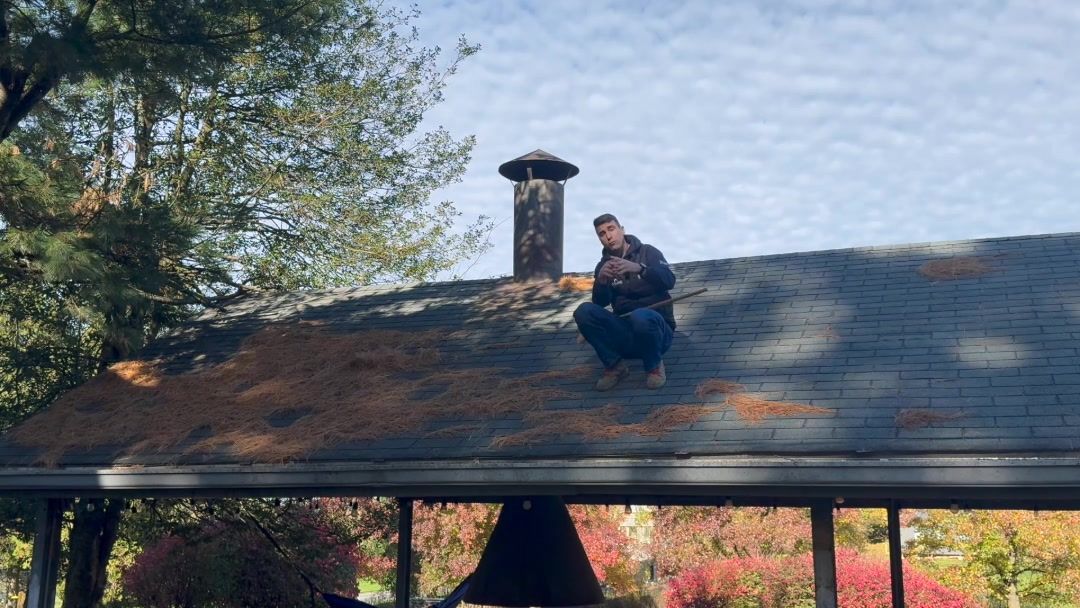
Pay attention to where the debris collects and whether it stays there. Loose leaves passing through are different from the same damp pile sitting in one spot for months.
| What you notice | What it means | Next step |
|---|---|---|
| Loose, dry leaves | They may clear naturally from an open roof surface. | Monitor from the ground. |
| A pile that stays put | Debris may be holding moisture or restricting runoff. | Arrange removal, especially in a valley or on a low-slope section. |
| Needles or leaves packed around cedar shakes | The wood may have trouble drying. | Have a professional clear the buildup. |
| A leak, damaged shingles, or persistent overflow | Cleanup alone may not solve the problem. | Have the roof or drainage system assessed. |
Why can a pile of leaves cause roof problems?
Your roof needs to shed water. A dense layer of leaves, needles, and decomposing material can slow that runoff and hold moisture against the surface. John describes long-term buildup as essentially creating compost on the roof.
Great for a garden. Questionable career move for a shingle.
That does not mean every leaf causes a leak. The concern is persistent buildup that interferes with how the roof drains or keeps materials damp. GAF's guidance on removing roof leaves also distinguishes scattered leaves that blow away from accumulating, wet debris that needs attention.
Roof valleys and low-slope sections deserve a closer look
A roof valley is the inward angle where two sloping roof sections meet. Water runs through that area, and leaves and needles can collect there.
John also points out low-pitched sections where debris does not readily blow or wash away. If the same pile remains through changing weather, it is worth having it cleared. You do not need to wait until it has been there for years.
Cedar roofs need to be able to dry
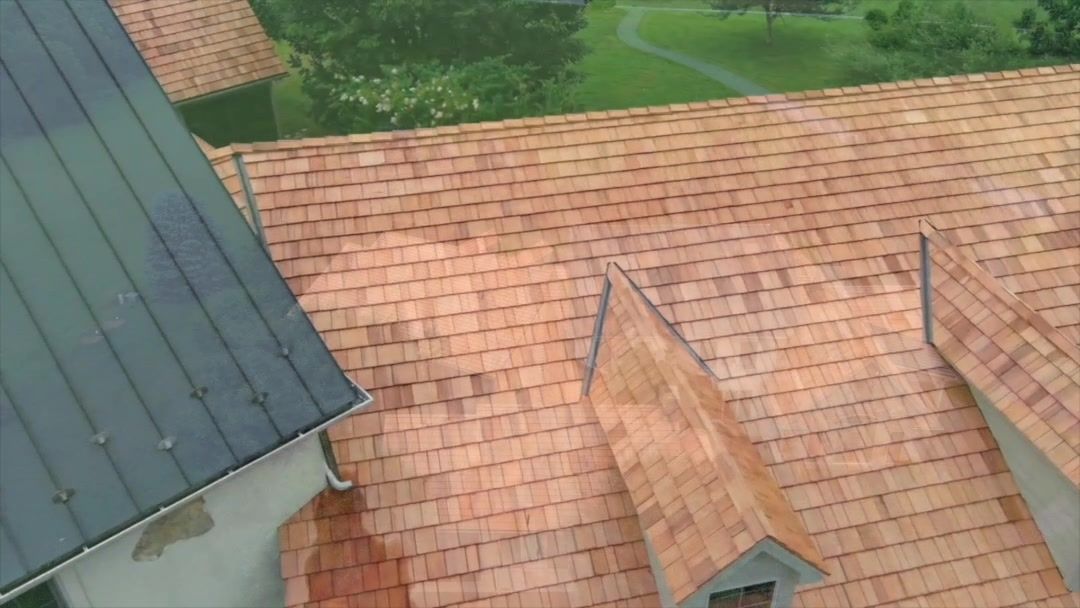
Cedar is wood. Leaves and needles that remain packed against it can retain moisture and increase the risk of decay. Briefly having fall leaves on a cedar roof is different from leaving a damp layer sitting there month after month.
The Cedar Shake & Shingle Bureau's maintenance guidance recommends professional removal of accumulated needles, branches, leaves, and dirt.
How should leaves be removed without damaging shingles?
Start with a look from the ground. Binoculars or your phone's zoom may help you see where debris is collecting. If removal requires getting onto the roof, have a qualified professional handle it. Wet leaves, roof slopes, and ladder access add risks that are easy to underestimate.
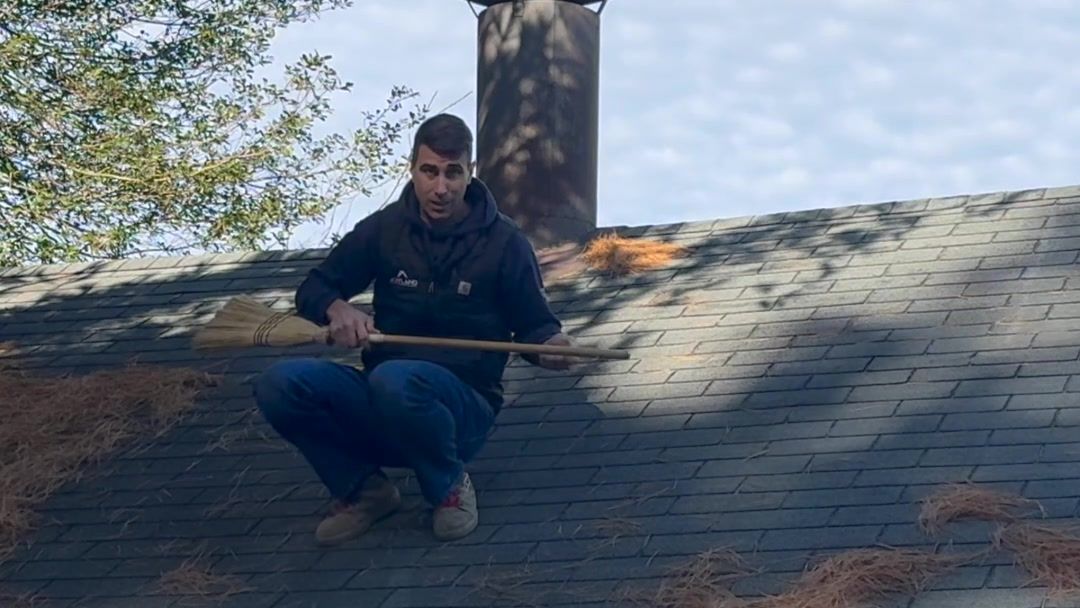
In the video, John discusses using a broom or brush to move loose debris instead of digging at it with a shovel. The distinction matters: gently moving loose leaves is different from scrubbing the shingle surface. The cleaning method still needs to follow the roofing manufacturer's instructions.
- Avoid scraping tools. Shovels and hard edges can gouge shingles or remove protective granules.
- Do not pressure wash asphalt shingles. High pressure can damage the roofing.
- Do not scrub away algae or attached growth. That requires a material-specific cleaning approach, not more elbow grease.
- Do not assume the same method works on metal, slate, or cedar. Follow the guidance for the particular roof system.
The Asphalt Roofing Manufacturers Association's cleaning bulletin (PDF) warns against high-pressure washing on asphalt roofing and against using brushes or brooms to scrub off algae.
What if the leaves are gone but there is still a problem?
Removing debris can reveal damage that was hidden underneath. It cannot restore damaged shingles or fix an existing leak. If you notice damaged roofing, fresh indoor dampness, or water entering the house, have the cause checked.
Our roof repair team can investigate the problem and explain whether a repair is needed. If you are weighing the timing, our guide to whether a roof repair can wait until spring explains what makes some problems more urgent.
And if water is still spilling over the gutters after debris is cleared, leaves may not be the whole story. Read why clean gutters can still overflow for other drainage problems to investigate.
Common questions about leaves on your roof
Should I wait until all the leaves have fallen?
For loose, dry leaves that are clearing naturally, monitoring may be enough. If a wet pile is building up or drainage is restricted, arrange removal instead of waiting for the last leaf to fall.
Are pine needles a problem, too?
They can be. John includes needles in the same advice: scattered debris is different from material packed into valleys, low-slope areas, or spaces around cedar shakes.
How often should I check for buildup?
A practical starting point is a look from the ground during heavy leaf drop and after windy weather. Watch areas where debris repeatedly collects. The amount of tree cover and the roof's shape affect how much attention it needs.
Does leaf buildup mean I need a new roof?
No. The next step may simply be debris removal. If damage is found underneath, an inspection can help determine whether a repair will solve it. Leaves alone are not a reason to replace a roof.
Need help with leaves that are staying put?
We can help remove roof debris and check for damage underneath. For homeowners in Elizabethtown and across south-central Pennsylvania, the goal is straightforward: understand what is happening and take care of the work your roof actually needs.
Ask About Roof Debris Removal