



December 31, 2025

K-Style vs. Half-Round Gutters: Which Design Actually Fits Your Home?

Author

John Esh

Share

Let’s be honest: gutters aren’t exactly the most exciting purchase you’ll make for your home. Most people don’t give them a second thought until they see water pouring over the edge during a storm. But these metal channels are doing some serious heavy lifting to keep your basement dry and your foundation safe. When you finally decide to upgrade, the choice almost always comes down to K-style vs. half-round gutters. It’s not just about picking straight lines or curves; it’s a choice that changes how much maintenance you'll do, how much you'll spend, and how your house handles the next big downpour.


Materials matter, sure, but the shape is the real game-changer. It’s worth mentioning that while something like copper half-rounds can offer insane durability (we’re talking 100+ years if you treat them right), you’re making a long-term commitment to a specific look. You aren't just buying plumbing for your roof; you’re investing in hardware that might honestly outlast the roof itself.


Table of Contents


  •  TL;DR
  • Architectural Compatibility and Aesthetic Profile
  • Performance Mechanics and Water Management
  • Installation Complexity and Cost Analysis
  • Material Nuances and Longevity
  • Final Thoughts


TL;DR


In a rush? We get it. If you just need the quick facts to make a decision, here is the cheat sheet on the trade-offs. If you’re seeing leaks or sagging and wondering is it time to replace my gutters yet? Understanding these shapes is step one.


  • Capacity: K-style gutters are the workhorses; their deep, flat bottoms hold way more water than half-rounds of the same width.
  • Cleaning: Half-rounds are better at self-cleaning. The curved bottom speeds up the water, flushing out silt and gunk easier.
  • The Look: Modern homes with flat fascia boards usually need K-style for that seamless, built-in look.
  • The Vibe: Historic renovations or homes with slate/tile roofs essentially need half-rounds to look period-correct.
  • The Cost: Prepare for sticker shock. Half-rounds can cost 50% to 100% more because the parts and labor are more intensive.
  • Support: K-style uses hidden hangers (clean look), while half-rounds often show off their external brackets (industrial/classic look).


Architectural Compatibility and Aesthetic Profile


Think of gutters as the permanent "eyeliner" for your roof. The battle of K-style vs. half-round gutters usually isn't about what you like better—it's about what the house demands. We always look at the era the home was built. For homeowners looking at other aesthetic upgrades to modernize the exterior, the gutter profile is a subtle detail that makes a huge difference.

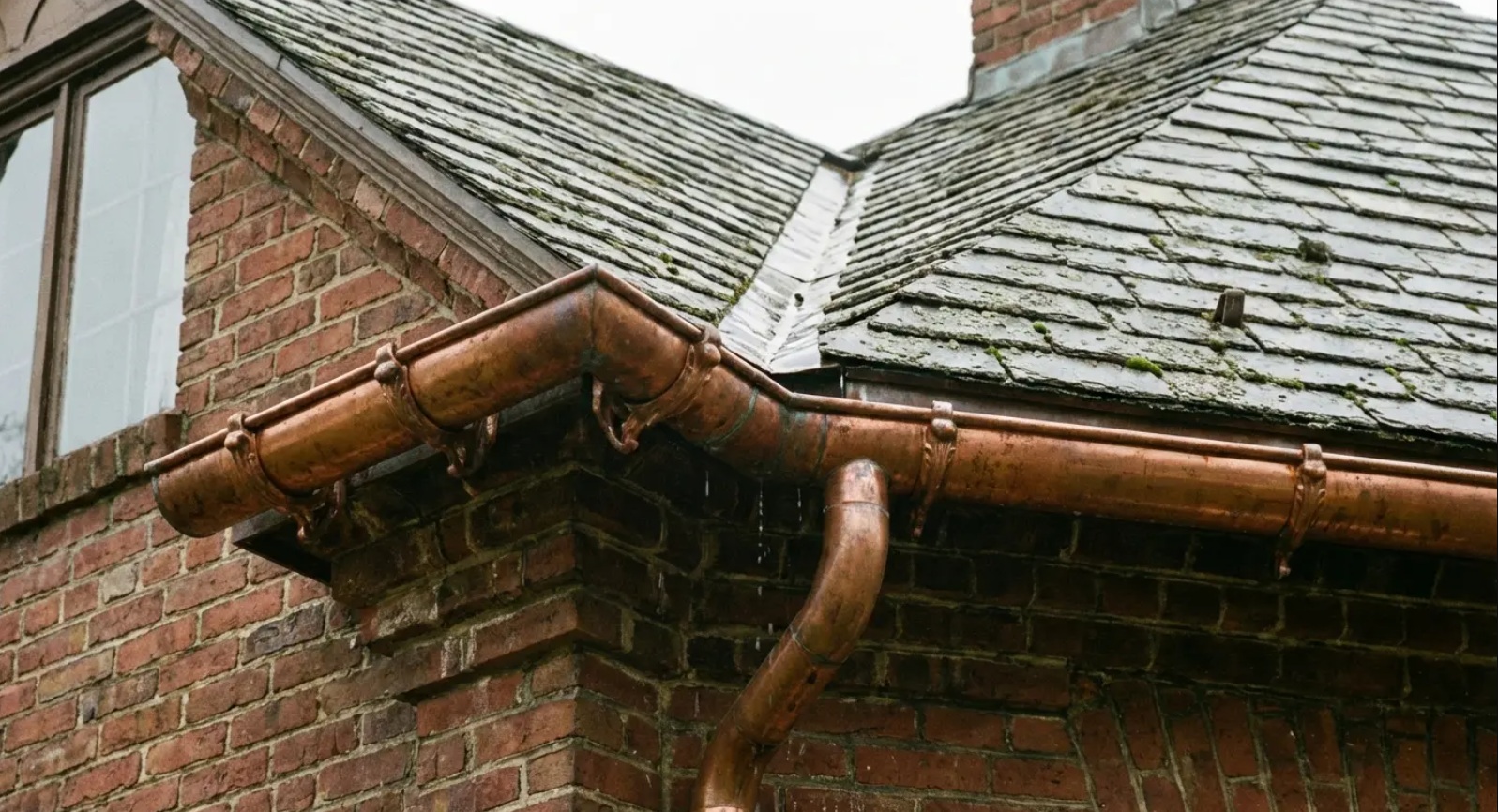
Copper half-round gutters on a home, showing the difference from K-style vs. half-round gutters.

When you boil it down, you are choosing between two popular gutter styles that speak completely different design languages.


The Modern Standard (K-Style)


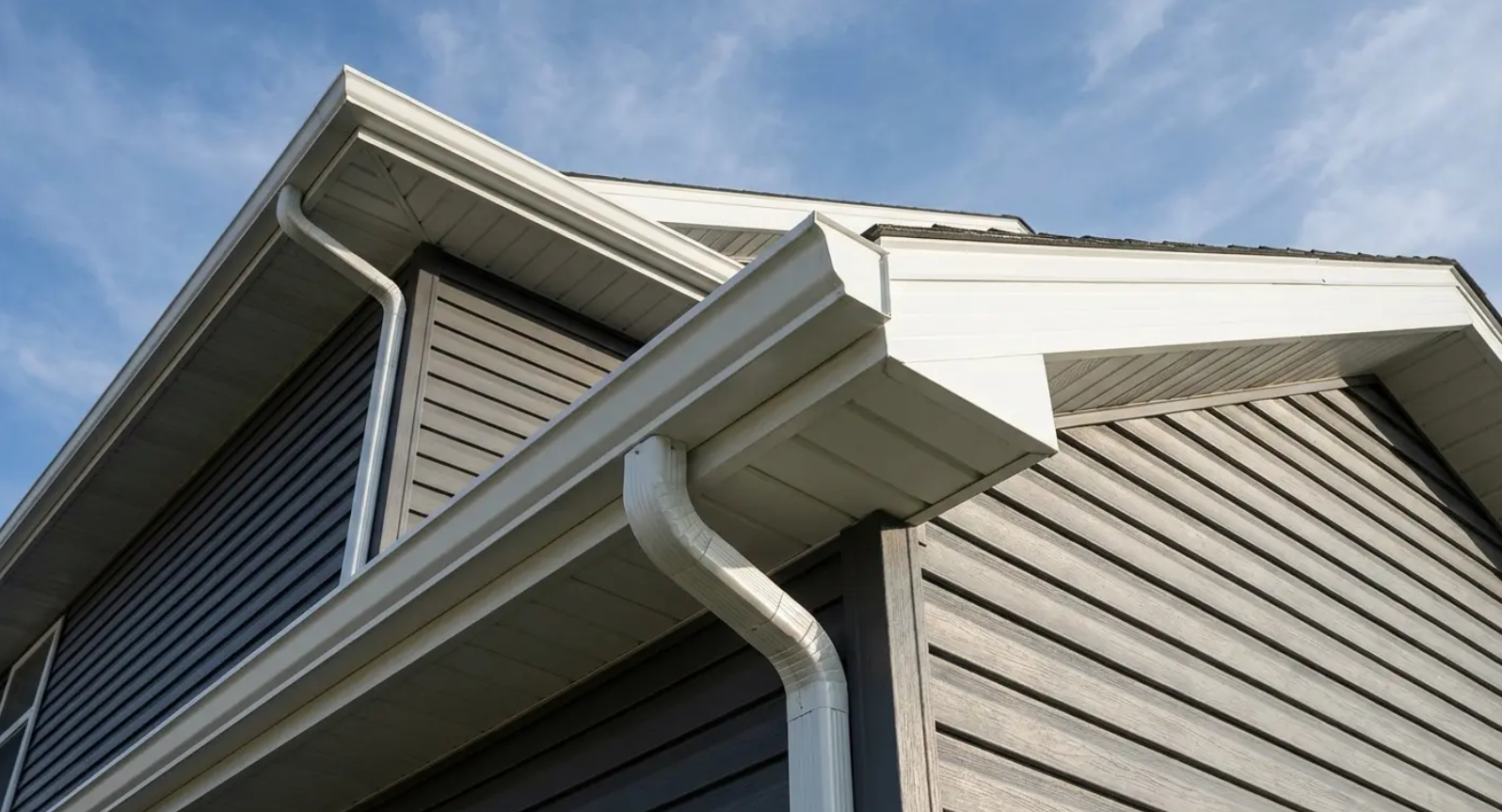
K-style gutters are on almost every North American home built in the last 50 years. Why? Because they were designed to blend in. They mimic the interior crown molding, just on the outside of your house.

White gutters on a gray-sided house against a blue sky.

The "K" Shape Illusion


The name is a bit confusing. The "K" doesn't refer to the shape of the trough; it refers to the side profile. That little "ogee" curve is there to trick the eye. It makes the gutter look like trim rather than a pipe. It’s a functional plumbing fixture disguised as architecture.


Picture a standard suburban home. If you slap a K-style gutter on it, your eye glides right past it. It just looks like the roof edge. But if you put a round pipe (half-round) on that same house, it sticks out. It breaks the straight lines and looks like something was bolted on as an afterthought.


Fitting In with Modern Angles


Modern houses are all about angles and flat fascia boards. The flat back of a K-style gutter sits flush against the house. It’s a tight, seamless fit. Half-rounds, being... well, round, struggle to sit flat against a square board without special hardware pushing them out.


Recognizing that every house is different, franchises like The Brothers that just do Gutters are expanding to offer "a selection of 5\" and 6\" K-Style and half-round gutters" so you aren't forced into a style that clashes with your neighborhood.


Historic and European Elegance (Half-Round)


Half-round gutters are the classics. This is the simple, semi-circular trough you see on pre-1950s homes and European villas. If you are restoring an old house, this is usually the only option that looks "right."

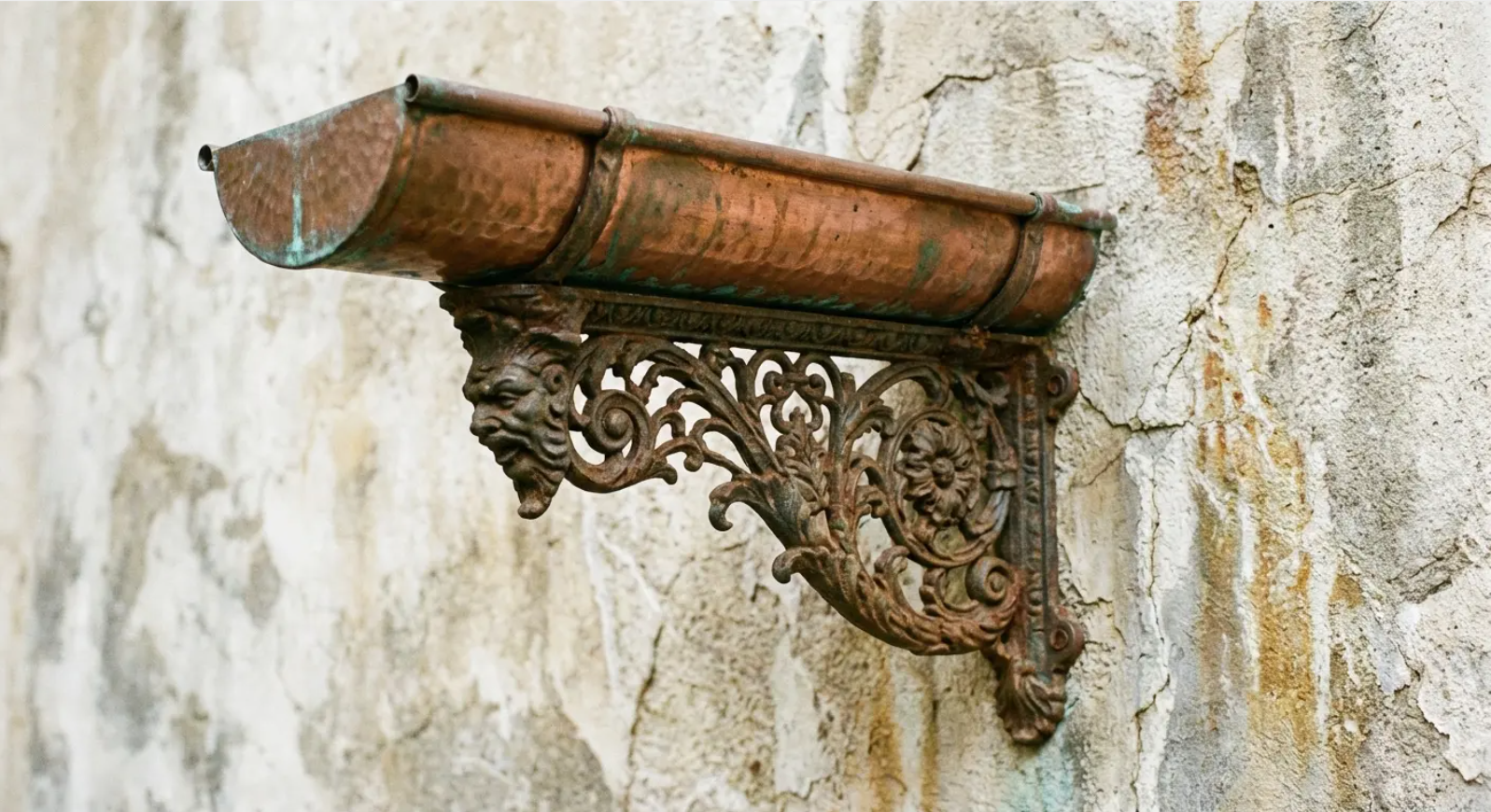
Rusty copper gutter with ornate bracket on weathered stucco wall.

Period-Correct Restoration


If you have a Victorian, Tuscan, or Colonial home, K-style gutters can stick out like a sore thumb. The soft curves of half-round gutters play nice with rounded architectural features and heavy slate or tile roofs.


The Patina Factor


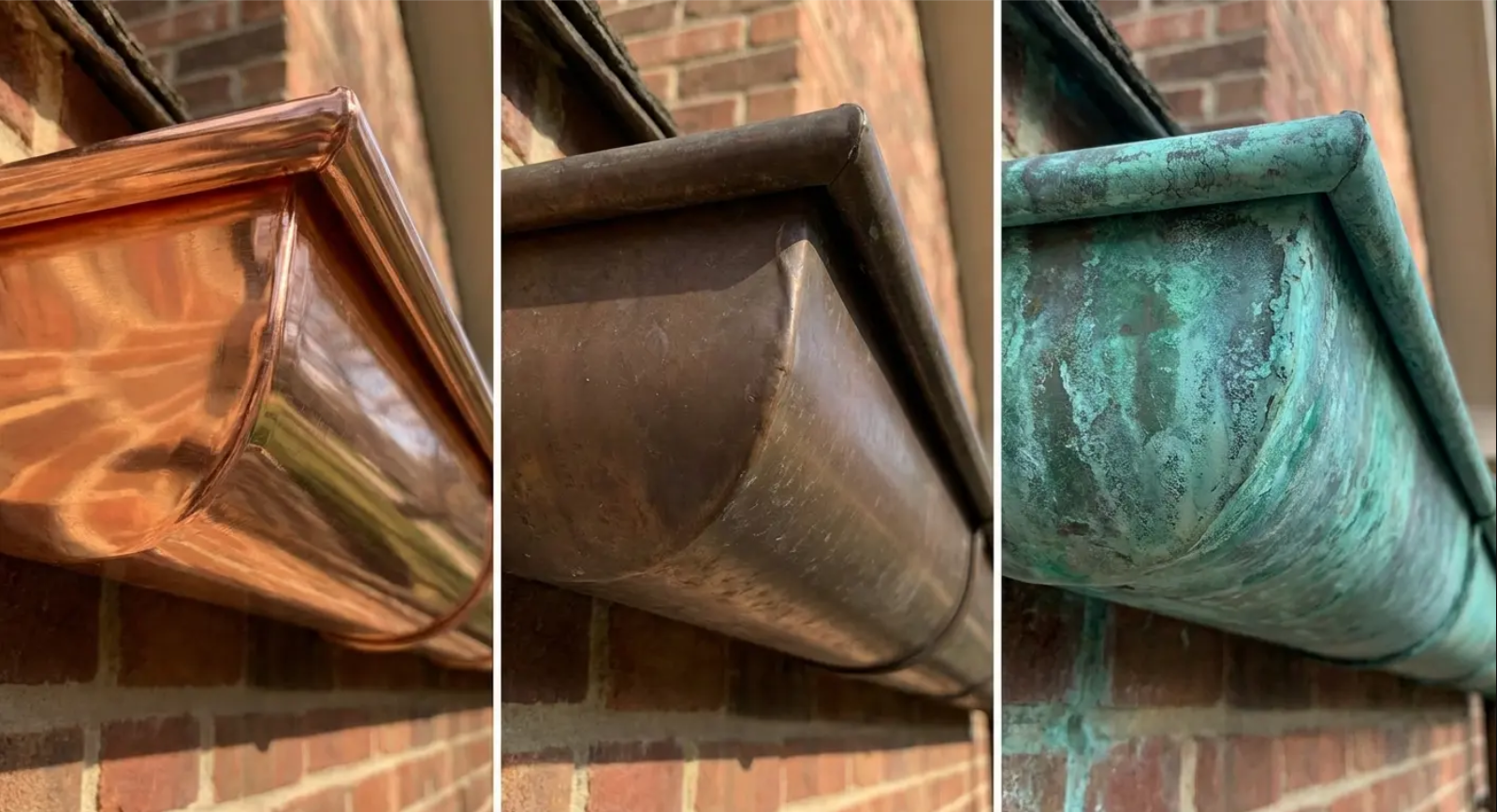
K-style is almost always painted aluminum. Half-rounds, on the other hand, love to show off their metal. They often come in raw copper or zinc. We call the aging process "patina"—it turns the gutter into a feature piece rather than something you try to hide.

Copper gutters in varying stages of patina: shiny orange, dark brown, and green.

Showing Off the Hardware


K-style keeps its hangers hidden inside. Half-round systems let it all hang out—literally. They use external brackets or shanks that are visible from the ground. It adds a layer of craftsmanship and detail that K-style just can’t replicate.


Performance Mechanics and Water Management


Okay, enough about looks. How do they actually work? The shape dictates how much water gets moved and where the debris goes. Let's look at the physics of K-style vs. half-round gutters. Checking out some gutter drainage tips is helpful, but the shape handles the water differently from the start.

Feature K-Style Gutters Half-Round Gutters
Water Capacity High (Deep trough, flat bottom = holds more) Moderate (Shallower curve)
Water Speed Slower (Friction from corners) Faster (Smooth curved bottom)
Clog Resistance Low (Corners trap gunk) High (Self-cleaning shape)
Snow Load Moderate (Depends on the screws) High (If using wraparound brackets)
Leak Potential Low (Often seamless or soldered)

Handling Heavy Rainfall


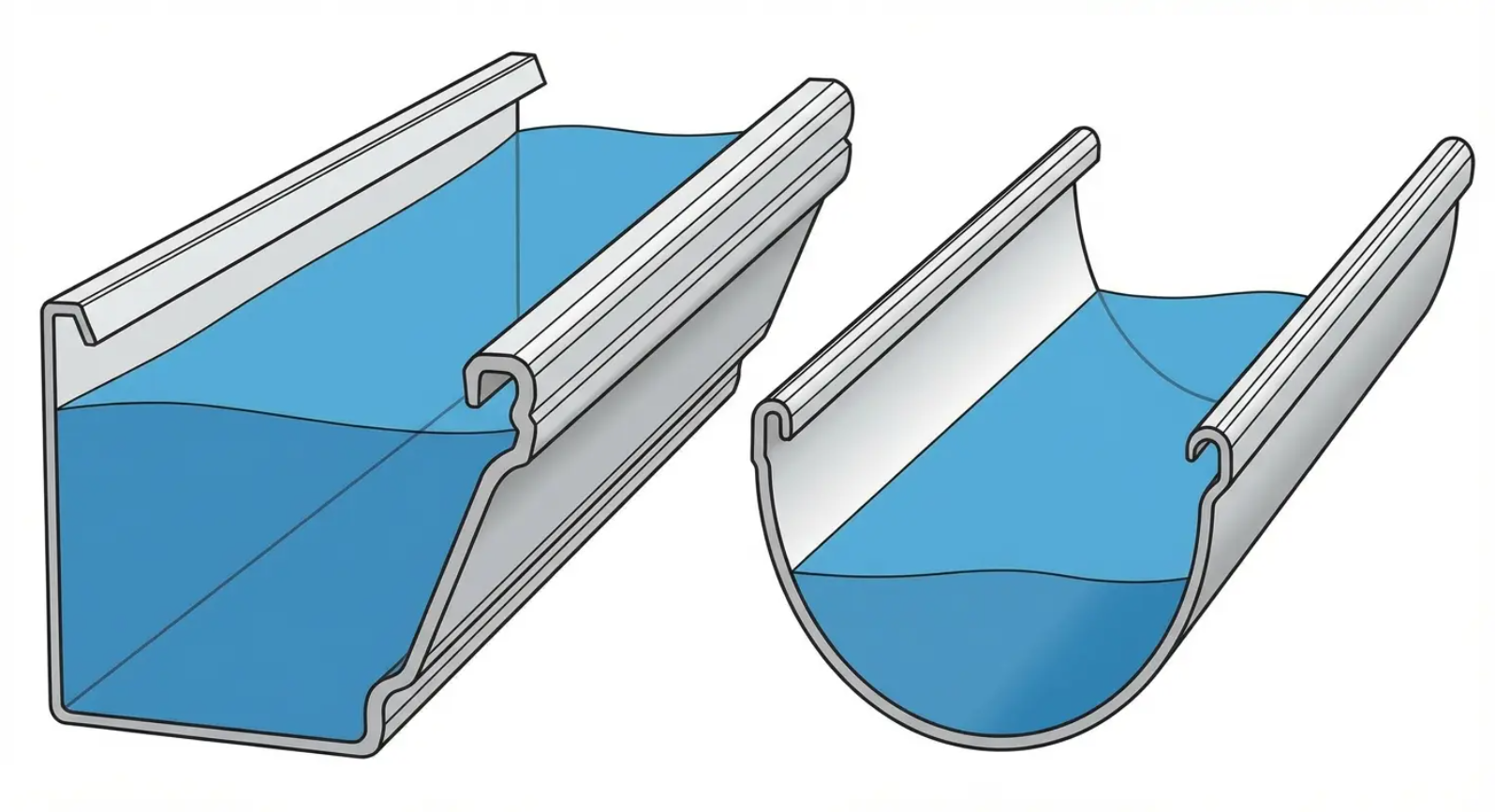
The shape changes how much water the gutter can hold before it spills over. K-style is the heavyweight champion here. Experts note that "half-round gutters may hold four inches of flow when new, whereas a six-inch K-style gutter handles more water." If you live in an area where the sky opens up and dumps rain instantly, capacity is king.


More Room for Water


Because K-style has a flat bottom and corners, it has a larger "cross-section." It simply holds more volume than a round tube of the same width. If you have a steep roof that shoots water down fast, a 6-inch K-style is your best bet to catch it all.

Two gutters, one rectangular, one rounded, both filled with blue liquid.

The Physics of Cleaning


Here is where half-rounds shine. The internal shape changes how likely you are to get clogs.

Water cascading into a rusty, angled drain. Brown, decaying matter is visible.

Velocity and Sediment


The smooth, curved bottom of half-round gutters acts like a waterslide. It speeds the water up, creating a scouring effect that washes away silt and small seeds. They are much better at cleaning themselves out during a storm.


The Sludge Factor


K-style gutters have flat bottoms and sharp corners. Water slows down there, allowing sludge and wet leaves to get stuck in the corners. Over time, that wet muck causes corrosion. Since K-style traps more debris, you need to be realistic about how often you should clean your gutters to keep them flowing.


Annual Gutter Maintenance Checklist:


  • [ ] Inspect Corners: Dig the "gutter muck" out of the K-style corners.
  • [ ] Check Flow: Use a hose to make sure water isn't pooling in flat spots.
  • [ ] Clear Downspouts: Make sure the outlet isn't choked (K-style outlets are smaller and clog easier).
  • [ ] Examine Hangers: Tighten any loose screws on K-style or check if your half-round brackets are sagging.
  • [ ] Look for Rust: Check spots where wet leaves sit for long periods.


Structural Integrity in Harsh Climates


How well does the metal handle a ladder leaning against it or a pile of wet snow?

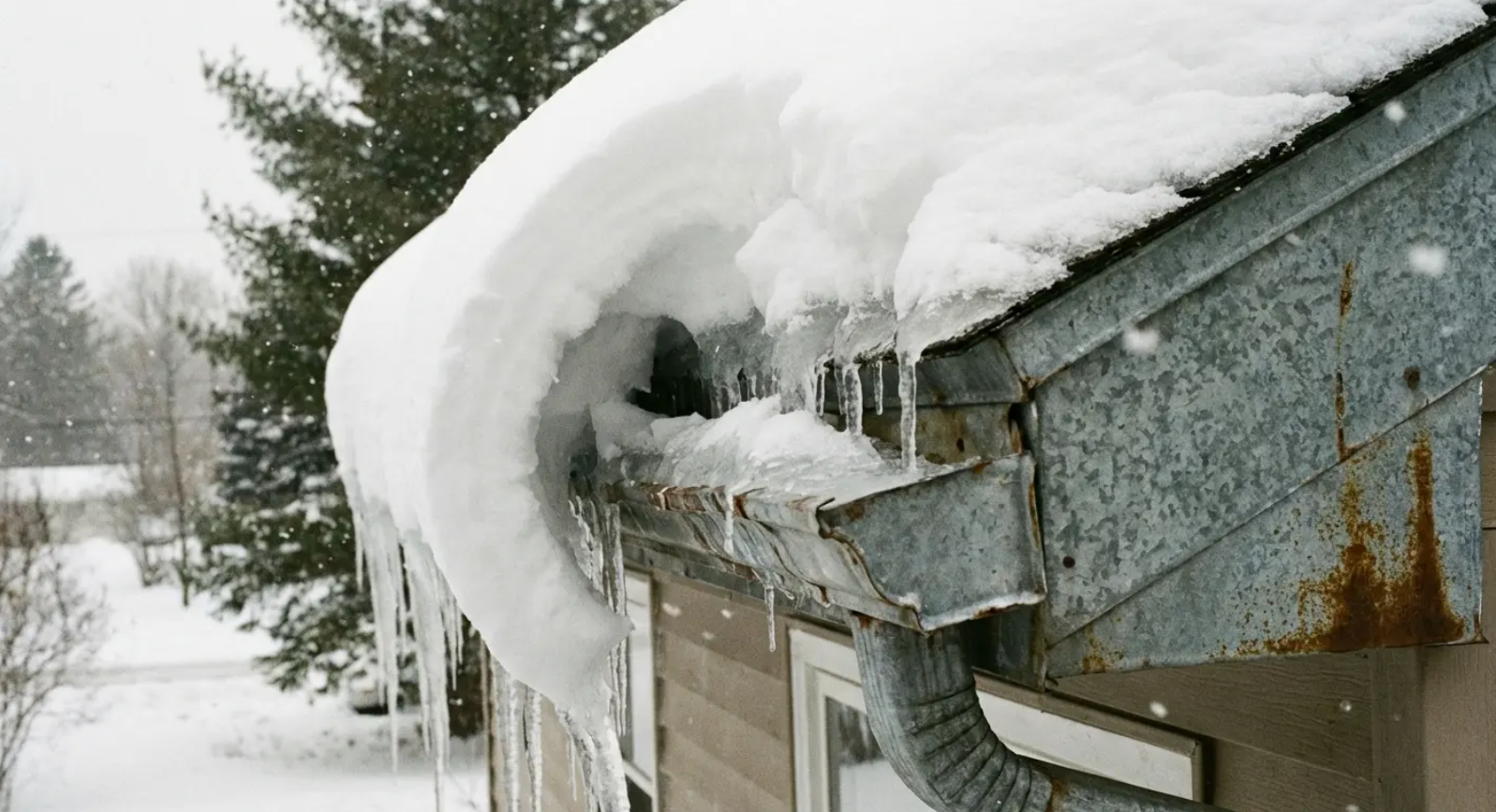
Snow and ice buildup on a roof gutter.

Rigidity vs. Flexibility


The folds and curves in the K-style profile make it stiff. It’s hard to bend. A half-round gutter is more flexible, but that open curve means it's less likely to crease permanently if something hits it.


Handling Ice Expansion


When water freezes, it expands. In a half-round gutter, the ice just pushes up and out of the open bowl. In a K-style gutter, the complex shape can trap the ice, forcing it to push against the metal walls, which can warp the gutter or split the seams.


Installation Complexity and Cost Analysis


Here is where the rubber meets the road: the budget. K-style is the industry standard because it’s fast and cheap to install. Half-round is a premium upgrade that takes specialized labor.

Installation Factor K-Style Gutters Half-Round Gutters
1 Anne Evans
Making them Rolled seamlessly on-site Often stamped or shipped in sections
Difficulty DIY Friendly-ish Call a Pro
Cost $ (Standard) $ (Premium)

Why the Price Jumps


Expect to pay significantly more for half-rounds—usually 50% to 100% more. One of the main distinctions is simply labor. You can't just "zip-screw" half-rounds onto the house like you can with K-style.


The Cost of Accessories


You need threaded rods, shanks, and fancy brackets for half-rounds. Those parts cost way more than the simple hidden clips used for K-style. Plus, if you're wondering should I install gutter guards, realize that curved guards for half-rounds are also more expensive.


Step-by-Step Execution


On a K-style job, a crew shows up, extrudes the metal to the exact length of your roof, and screws it right to the fascia. They can finish a house in a few hours.


For half-rounds, it's an art project. The crew has to set a string line to get the slope right, then install heavy external brackets every 24 inches. Each bracket has to be perfectly placed. Only then can they drop the gutter in. It takes twice as long, and time is money.


The Pitch Problem


Both gutters need to slope toward the downspout. With K-style, the front is high enough to hide the slope. With half-rounds, you can see the water line and the tilt of the gutter. If the installer messes up the pitch, it looks terrible from the street.


Material Nuances and Longevity


The shape starts the debate, but the material ends it. The choice of K-style vs. half-round often dictates what metal you can use.

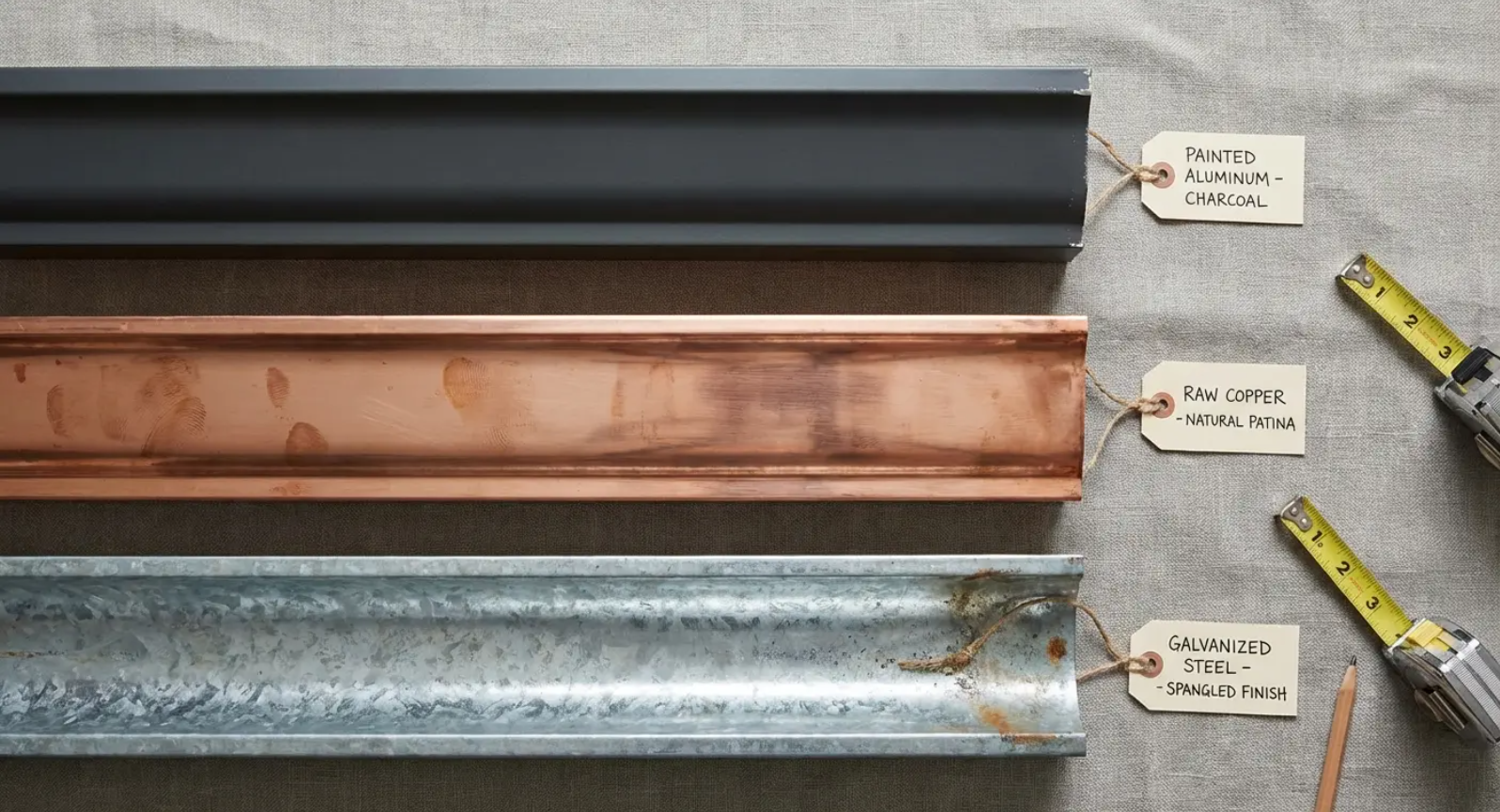
Three metal trim samples: dark gray, copper, and galvanized, with labeled tags and a tape measure.

The Versatile Standard (Aluminum)


Aluminum is king because it doesn't rust and it's light.


K-style aluminum comes in a million colors. You can match your siding perfectly. Half-round aluminum exists, but usually only in white or brown. If you want a specific color to match your trim, K-style is the safer bet.


The Premium Choice (Copper)


Copper is the gold standard (well, bronze standard). It can last 50 to 100 years.


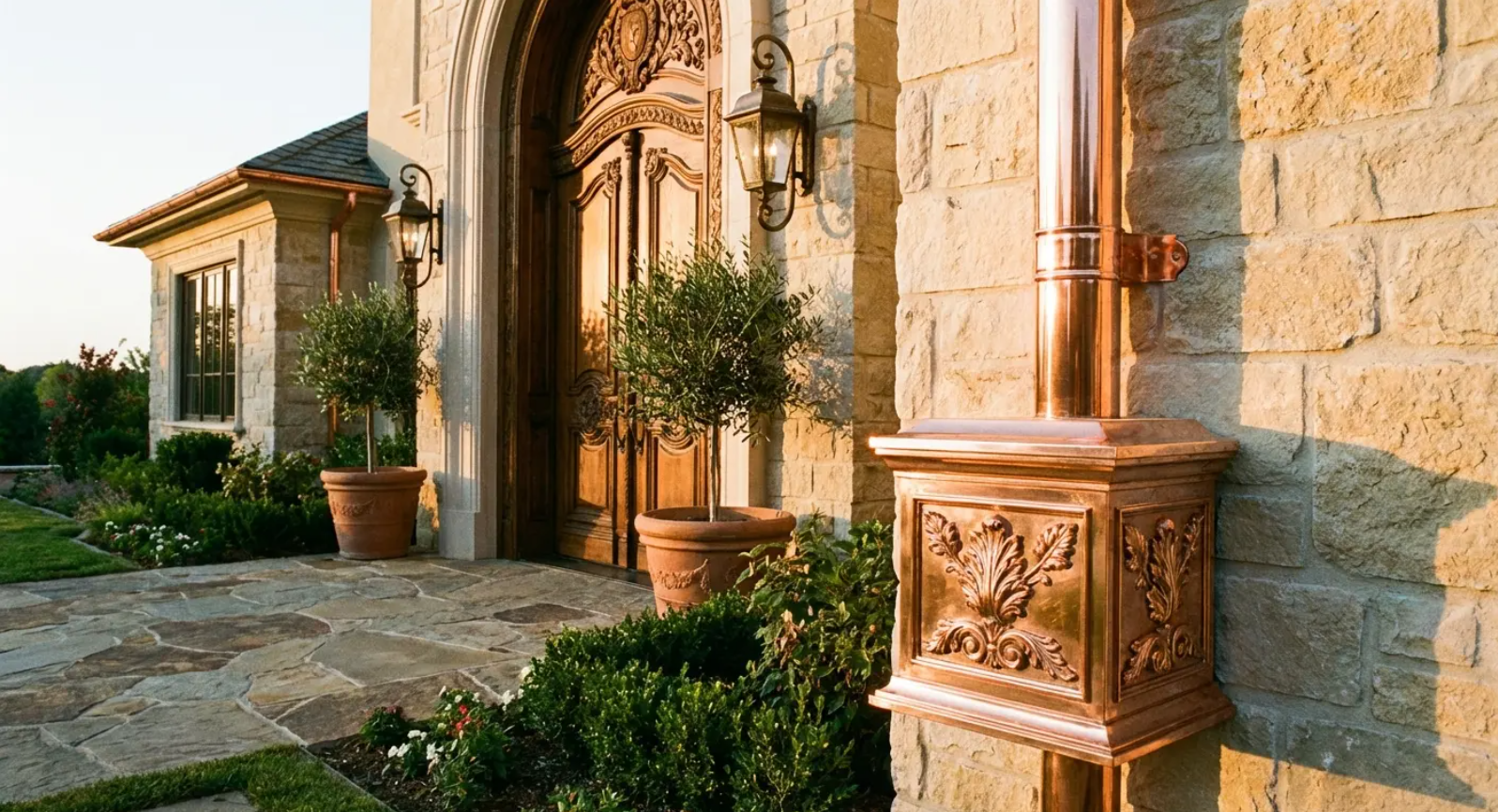
Ornate copper mailbox and downspout on a stone building, front door with potted trees.

Leak-Proofing


High-end copper half-rounds are often soldered at the seams. It creates a permanent bond. K-style aluminum relies on caulk and sealants, which eventually dry out and leak.


Industrial Strength (Steel)


If you live in "hail alley" or have massive oak trees dropping branches, steel is your friend.

Steel half-round gutter mounted on a wall for heavy-duty durability.

The Zinc Look


Galvalume (steel coated with zinc/aluminum) is super popular in half-round profiles right now. It gives you that modern, industrial farmhouse look and fights rust better than plain steel.


Final Thoughts


Your house is a system, not just a bunch of parts glued together. You have to balance the high-capacity performance of K-style against the self-cleaning, classic beauty of half-rounds. When you’re comparing K-style vs. half-round gutters, it really comes down to what your home needs, not just what looks good.


We know this stuff gets complicated. Calculating roof pitch, rainfall intensity, and whether your fascia board is rotten... it's a lot. Maybe you aren't sure if your house can even support the heavy brackets of a half-round system. Or maybe you just need a functional K-style gutter that matches your trim so you can stop worrying about the basement flooding.


Joyland Roofing is here to help you figure it out. We don't do "one-size-fits-all." We’ll help you pick the system that keeps your house dry and looking good. Reach out to us today and let's get it sorted.

A person wearing dark pants and light-colored sneakers stands on the top platform of an aluminum step ladder.
By James Wesser April 13, 2026
A quick ladder check can help prevent a dangerous fall. Learn the basics of ladder setup, footing, placement, and safe climbing
A person gestures toward a gap between brick and siding on a house exterior under the text
By James Wesser April 3, 2026
Winter can leave behind hidden damage. Learn what to check on your roof, gutters, windows, doors, and siding this spring before small issues get worse fast.

A large, uprooted tree lies across a grassy lawn next to a residential street following a storm.
By James Wesser March 26, 2026
Storm hit your roof in Lancaster, PA? Here’s exactly what to do next to spot damage and avoid costly repairs.

Collage of house exteriors with text “JOYLAND 5 YEAR TRANSFORMATION”
By John Esh May 4, 2026
See how one roof repair became a full exterior transformation with TPO roofing, GAF shingles, gutter protection, and James Hardie siding in Central PA today.

Two men on a roof with JOYLAND logo and checklist, text saying “AVOID THE MESS!”
By James Wesser May 1, 2026
Getting a new roof? Use this 5 step roof replacement checklist to prep your home, reduce stress, protect your property, and keep project day smoother.
By Moe Marketing Agency April 28, 2026
This is a subtitle for your new post
NDL warranty promo with van, warning text, and warranty certificate on a dark background
By John Esh April 28, 2026
What does a No Dollar Limit warranty cover on a commercial roof? Joyland Roofing explains NDL warranties for flat roofs in Lancaster County and Central PA.
Worker kneeling on a sloped shingle roof, repairing with tools beside a glass building.
By John Esh April 22, 2026
Joyland Roofing stands behind our roof leak repairs with a Fix It or It’s Free guarantee. Learn how it works and what it means for homeowners.

Man standing on a grassy field beside a thumbnail with text: “JOYLAND DRAINAGE ISSUES TRAVEL”
By James Wesser April 21, 2026
See how drainage issues move from roof to wall to foundation and why small water problems can lead to bigger home repairs across South Central Pennsylvania
A person wearing dark pants and light-colored sneakers stands on the top platform of an aluminum step ladder.
By James Wesser April 13, 2026
A quick ladder check can help prevent a dangerous fall. Learn the basics of ladder setup, footing, placement, and safe climbing

A smiling man stands in front of a house roof while a worker repairs shingles; branding for Joyland and Servants appears.
By James Wesser April 9, 2026
See how roof leaks led to a full roof replacement for a Lancaster County homeowner through a community partnership with Joyland Roofing and Servants.
A person gestures toward a gap between brick and siding on a house exterior under the text
By James Wesser April 3, 2026
Winter can leave behind hidden damage. Learn what to check on your roof, gutters, windows, doors, and siding this spring before small issues get worse fast.

Stressed homeowner facing roofing costs, reflecting financial concerns in Roof Maxx reviews.
By John Esh April 1, 2026
Most Roof Maxx reviews miss the real question. Does it actually save you money? Here’s when it works, when it doesn’t, and what to do instead.