
There's water coming through the ceiling, and now you're trying to answer two questions: Is this a roof emergency, and what happens if I call a roofer right now?
Start with safety. Stay away from wet electrical fixtures and sagging ceilings. Move belongings and catch dripping water if you can do it safely. Then contact a roofer about the active leak. A bucket is a good first move. It just isn't a roof repair.
For homeowners across south-central Pennsylvania, Joyland Roofing provides emergency roof leak repair and regular roof repair services. Here's how to judge the urgency, what to expect when you call, and how to avoid making a stressful situation worse.
- Protect people first. Stay away from water near lights, outlets, wiring, or a ceiling that is bulging or sagging.
- Limit interior damage. Move valuables and use a sturdy container to catch drips when safe.
- Call about the active leak. Joyland's emergency line is 717-459-3499, available 24/7 for emergency requests. Follow the after-hours prompts.
- Leave roof work to professionals. Don't climb onto a wet or storm-damaged roof to install a tarp.
For a more detailed indoor water-containment demonstration, read what to do first when your roof starts leaking, including John's video.
When is a roof leak an emergency?
Not every old ceiling stain calls for an after-hours roofer. But active water, an exposed roof opening, or damage that puts people at risk deserves a faster response. This chart is a starting point, not a substitute for an on-site assessment.
| What you're seeing | How urgent? | What to do next |
|---|---|---|
| Water near lights, outlets, wiring, or a sagging ceiling; a tree or major impact has damaged the roof structure | Immediate safety concern | Keep everyone away. If there is immediate danger, leave the affected area and call emergency services. Request roofing help when it is safe. |
| Water is actively dripping or running into a room, especially if it is spreading or repeatedly filling containers | Emergency roof-service call | Contain water only where safe and call for emergency roof service. Do not wait for the room to get worse. |
| Storm damage has left a visible opening, displaced flashing, or missing roofing where more rain could enter | Prompt assessment | Call a roofer to discuss urgency and whether temporary protection is needed when conditions are safe. |
| An older, dry stain with no fresh dampness and no other warning signs | Schedule an inspection | Arrange a roof-leak assessment and monitor for new moisture. Escalate if active water returns. |
One important detail: a leak that stops dripping has not necessarily been repaired. The rain may have eased, or the water may be taking a less visible path. A roof assessment is still worthwhile.
What should you do while waiting for a roofer?
Your job is not to find the hole in the roof from the living room. It is to keep people safe and reduce further water damage.
- Stay clear of electricity. If water has reached electrical equipment, shut off power only if you can safely access a dry electrical panel. Never enter standing water to reach a breaker. The CDC's electrical safety guidance explains when to involve an electrician.
- Move people and valuables. Keep children, pets, electronics, rugs, and furniture away from the wet area. Avoid standing beneath a bulging ceiling.
- Catch water where safe. A bucket or wide, stable container can protect floors. Empty it before it overflows. Don't enter an unfinished attic unless it has a safe, solid walking surface and no hazards.
- Take photos after the area is safe. Capture the room, the active drip, affected belongings, and any exterior damage visible from the ground.
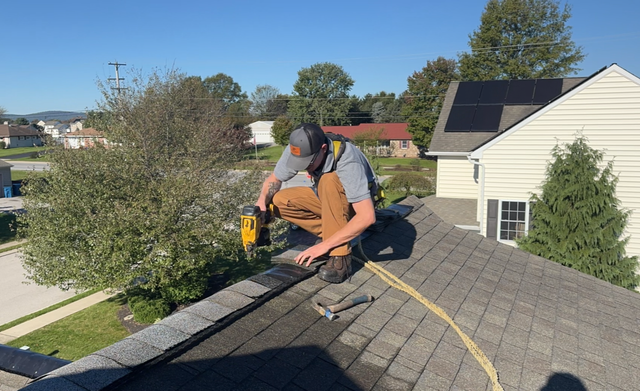
- Don't attempt a roof patch in the rain. A ladder, wet shingles, and storm conditions are a particularly bad combination.
For step-by-step indoor leak-diversion options, see our separate roof leaking emergency guide. It covers temporary containment without suggesting that a homeowner climb onto the roof.
What happens when you call Joyland for emergency roof repair?
Emergency calls work differently from a normal appointment. Joyland's emergency service is available 24/7, including nights and weekends. That doesn't mean every repair can be completed immediately, particularly if the weather makes roof access unsafe.
1. Call and describe what's happening
Call 717-459-3499 and follow the prompts after hours. Explain where the leak is showing up, whether water is still entering, when it started, and whether you see damaged roofing from a safe location. Mention electrical hazards, structural concerns, or a fallen tree right away.
2. Confirm the emergency service charges
Joyland's emergency dispatch involves a nonrefundable dispatch fee, and repair labor and materials are billed in addition. Ask the team to confirm the current charge for your address, how the work will be billed, and what the technician can attempt before authorizing the visit.
3. A technician assesses the water entry
When a technician can safely attend, they may need to see the affected room or attic, inspect accessible roof areas, and decide whether a leak can be stopped with an immediate repair or requires temporary protection. The visible ceiling stain doesn't always line up with the exterior entry point: water can travel along decking, underlayment, or framing.
4. You get a plan for the next repair step
Sometimes the immediate repair is also the permanent fix. Other times, the first visit is about limiting damage until weather, roof access, materials, or the scope of work allow a lasting repair. Ask what was done, what still needs attention, and when a follow-up assessment is appropriate.

Will an emergency tarp stop a roof leak?
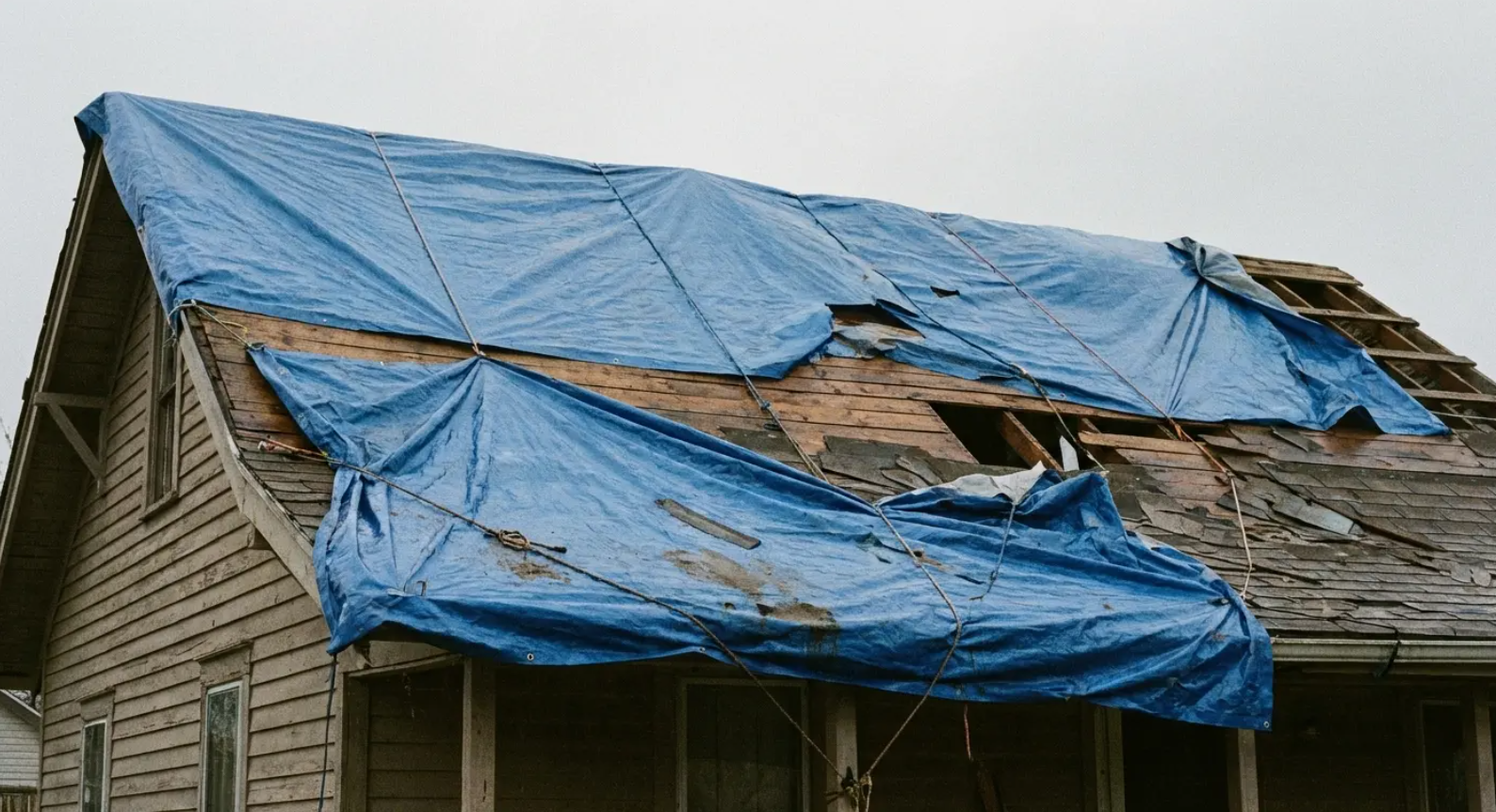
A properly planned tarp may help cover damaged roofing temporarily, particularly after wind or storm damage. But a tarp is not a permanent repair, and it cannot make a severely damaged roof safe to walk on.
Improper fastening, poor coverage, and weather exposure can also create additional problems. Before agreeing to a tarp, ask which area it will protect, how it will be secured, whether it creates penetrations that need to be addressed later, and when the permanent repair can be assessed.
Most importantly, do not climb onto your roof to install a tarp during a storm. OSHA's roof-tarping safety guidance says tarps should never be installed while it is windy or raining.
How much does emergency roof leak repair cost?
There isn't a single reliable price for every active leak. The cost depends on when and where the service is needed, the roof's height and slope, the roofing material, the source of the leak, and whether the work is temporary or permanent.
Joyland's published roof repair pricing guide lists emergency tarping for asphalt-shingle roofs at $800–$1,200 as a budgeting range. That is a specific tarping estimate, not a guaranteed all-in price for an emergency service visit. Dispatch, labor, materials, access, and additional repair work must be confirmed for your situation.
Before approving emergency work, ask these questions:
- What is the nonrefundable dispatch fee for my location?
- What will be billed separately for labor and materials?
- Does today's work stop the leak permanently, or is it temporary mitigation?
- Will a follow-up repair be quoted separately?
For a non-emergency situation, a scheduled assessment may be more appropriate. Our guide to which roof problems should be repaired before winter explains why a missing shingle, failed pipe boot, or damaged flashing may still need attention even without a steady drip.
What if the drip stops but the roof is still wet?
Water can move sideways before showing up indoors. Wet insulation can hold moisture against surrounding materials, and a stain may remain after the rain ends. A roofer's job is to determine how water entered; a water-restoration specialist may be needed if significant interior materials became wet.
The EPA recommends drying water-damaged areas and items within 24–48 hours to help prevent mold growth. That is a reason to act promptly, not a prediction that every roof leak will cause mold within a particular number of hours. Materials may need drying, cleaning, or replacement depending on their condition and whether they can be properly restored.
Will homeowners insurance cover an emergency roof leak?
Possibly, but coverage depends on why the roof leaked and what your policy says. Sudden storm damage can be treated differently from long-term wear, deterioration, or maintenance problems. A roofer can document findings, but your insurer determines coverage under the policy.
The Pennsylvania Insurance Department's disaster guide recommends contacting your insurer promptly, documenting damage when safe, taking reasonable steps to prevent further damage, and saving receipts. Ask your insurer about temporary repairs and approval before major permanent work.
Useful documentation includes wide room photos, close-ups of damage, video of active water, the date you noticed the problem, and invoices for necessary emergency work. No set of photos guarantees an insurance claim will be approved.
How do you choose a trustworthy emergency roofer in Pennsylvania?
A leaking roof puts pressure on your decision. Still, it is reasonable to ask a contractor for proof of insurance, a description of the proposed work, and a clear explanation of charges.
Pennsylvania has a Home Improvement Contractor registration system rather than a general roofing license under that program. You can check a company's status through the Pennsylvania Attorney General's contractor registration search. Joyland Roofing's PA HIC registration number is PA124258. Registration is not a government endorsement of workmanship, so reviews, relevant experience, and clear communication still matter.
If you're dealing with an active roof leak in Lancaster County or a nearby south-central Pennsylvania community, call to discuss emergency roof service. We'll explain the next step and the applicable charges before dispatch.
Call 717-459-3499Emergency requests: call and follow the after-hours prompts. For a non-urgent issue, you can also contact Joyland online. Website messages sent after hours may not receive a response until the next business day.
