
We’ve previously discussed what your home’s roof deck is and how its health. impacts your home. It’s important that your roof deck is in good condition before installing the remainder of your new roofing materials on top. Apart from the shingles, underlayment and drip edge are the materials that protect your roof decking and ensures your home’s security from the elements
What is the Drip Edge?
Drip edge is a strip of metal that transitions water from the roof into the gutter, or down the fascia. It’s installed as a supplemental protection to vulnerable areas, such as where the decking and fascia meet.
If your roof decking and trim is plywood, rather than solid wood, drip edge is required to ensure your roof’s safety. Solid wood could absorb small amounts of water it came into contact with then dry out over time.
If plywood is exposed to water, the glues holding the layers of wood veneer together will break down and deteriorate.
Without the correct drip edge, water will rot the edges of your decking, and run behind your gutters. Drip edge in combination with ice and water shield is the optimal protection from severe weather for areas susceptible to water exposure.
What is Underlayment?
Underlayment, simply enough, is what goes under your shingles. It’s an added layer of protection that is moisture-resistant or moisture-proof. This barrier protects from condensation and severe weather that shingles alone won?t prevent.
Underlayment isn’t something you can see, but it is required by building codes. Even so, many shingle manufacturers’ warranties will be invalid without underlayment.
History of Underlayment
Underlayment has been in the roofing industry for over 100 years. At its inception, it was used to temporarily protect a home or business’s interior in the interim of new shingles. Typically, the existing roofing materials would be removed, then the homeowner would lay tar paper to shelter the decking until the new roof could be installed.
Once shingle manufacturers began making their own underlayment, they deemed it essential to the integrity of the roofing system.
Types of Underlayment
Before you begin the roof replacement process, know that you have a few options when it comes to the type of underlayment being installed on your home.
Tar Paper
Asphalt-saturated felt paper, or tar paper, used to be the standard underlayment on most homes. At its core, this heavy, sticky product is a polyester or fiberglass fleece that is soaked in a water resistant agent. Most roofs over 15 years old still have tar paper under the shingles which is discovered during tear off.
In recent years, tar paper has been almost completely replaced by newer, longer lasting, and more waterproof materials.
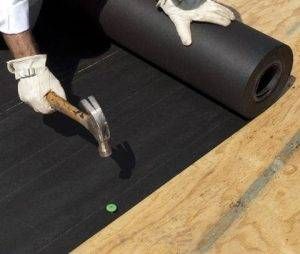
Synthetic Underlayment
Modern underlayment materials resist tearing, and unlike asphalt underlayment, don’t get brittle and break down over time. Synthetic underlayment is made either polyethylene or polypropylene which makes them a lot lighter than tar paper.
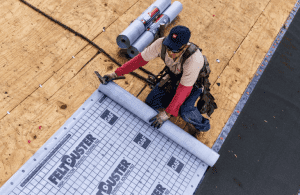
Synthetic underlayment has better traction, making it safer for roof installers, and it has more tear and water resistance. It also lays flatter than the typical tar paper underlayment, which means the shingles will lay flatter and look better, too.
This underlayment option is slightly more expensive than tar or felt paper, but its benefits outweigh the cost.
Ice and Water Shield
Tar paper or synthetic underlayment are valuable roof features, but they can (and should) be combined with ice and water shield. Ice and water is a waterproofing underlayment that is added to protect vulnerable areas of your roof from popular build up and run off sections. It is used at the eaves, as the first run of underlayment, and in the valleys. It goes around any pipes, vents, or skylights on the roof, as well.
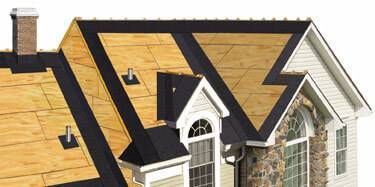
This ice-barrier membrane adheres to the roof deck, guaranteeing a seal against the elements. This material is installed prior to placing the tar paper or synthetic underlayment on top of the ice and water shield.
Discuss Your Options
If you’re getting your roof replaced, make sure you discuss the different options of underlayment and edging with your roofing contractor. Installing low-quality materials may save you and the contractor money up front, but can end up costing you more money to fix in the future.
Our expert roofing consultants are excited to talk to you about the best options for you and your home! We serve Southcentral and Southeastern Pennsylvania, so don’t hesitate to call or fill out a form to tell us about your project.

Editor’s Note: This post was originally published in September 2018 and has been revamped and updated for accuracy and comprehensiveness in Sept. 2024.

John Esh | CEO & Master Installer
- 25+ Years Experience: From ground crew to Master Certified Installer.
- Local Roots: Serving Lancaster, Harrisburg, and SEPA since 1991.
- Credentials: GAF Master Certified (ME27586); Licensed in PA (PA124258) & MD (#137952).
- The "Why":
Obsessed with "radical transparency" to remove the fear factor from home improvements.
James Wesser | Content Producer
- Background: Former local news digital producer and journalist.
- The Mission: Turning complex roofing jargon into clear, "fluff-free" answers for homeowners.
- Local Tie: When not filming on-site, he’s likely roaming Hersheypark or building digital worlds.