
When someone asks how long a flat roof lasts, they usually want one number. The more useful answer is a range, plus the conditions that determine whether a roof reaches the shorter or longer end of it.
For homeowners and building owners in south-central Pennsylvania, freeze-thaw cycles, snow, heavy rain, summer sun, rooftop equipment, and foot traffic all matter. A properly designed, installed, and maintained flat-roof system can serve for decades. A roof with poor drainage or failing details can develop serious problems much sooner.
The short version: many membrane systems are planned around roughly 20 to 30 years of service, but that is not an automatic expiration date. The membrane is only one part of the roof.
How long do flat roofs last?
Joyland's current flat-roof guidance uses these as planning ranges for properly installed systems. The actual service life depends on the membrane thickness, attachment method, roof design, drainage, exposure, building use, maintenance, and the condition of the deck and insulation.
| System | Planning range | What influences the result |
|---|---|---|
| EPDM rubber membrane | About 25–35 years | Thickness, seam and flashing details, drainage, UV exposure, and temperature movement. |
| TPO membrane | About 20–30 years | Weld quality, membrane formulation and thickness, insulation, drainage, and rooftop traffic. |
| Modified bitumen | About 15–25 years | Number of layers, surface condition, puncture and foot-traffic exposure, seams, and maintenance. |
These are budgeting and planning ranges, not a promise about a specific roof. Our roof lifespan guide explains how material life, installation, weather, maintenance, and prompt repairs fit together.
A manufacturer warranty is not the same thing as a guaranteed service life. Warranty terms vary by product, system, installer, and required maintenance. Read what is covered, what is excluded, and whether the warranty applies to the membrane only or to the complete roof system.
The biggest factor is usually drainage
Flat roofs are not perfectly flat. They rely on a small amount of slope, drains, scuppers, and carefully detailed edges to move water away. When water keeps sitting on the roof after rain, the problem deserves attention even if the membrane still looks acceptable.
Ponding can come from clogged drains, settlement, inadequate slope, damaged insulation, or a drainage design that was never right for the building. It can also make winter conditions more difficult when water freezes and expands around vulnerable details.
A New Holland project shows why drainage belongs in the conversation
At Westfield Egg Farm in New Holland, the existing roof had a peeling coating, ponding water, and soft spots in the plywood deck. Joyland installed a reflective TPO overlay, replaced the drainage components, and improved the slope in problem areas so water could move toward the internal drains.
The lesson is simple: asking how old the membrane is does not tell you whether the roof system is healthy. Drainage and the layers underneath it matter too.
A flat roof is a system, not just a membrane
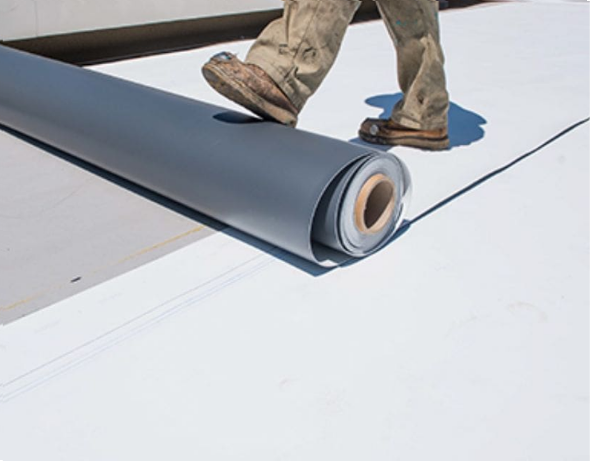
The membrane gets most of the attention because it is the part people can name. But a low-slope roof also includes the roof deck, insulation, cover board, seams, flashings, drains, scuppers, penetrations, edge metal, and rooftop equipment details.
Seams, flashings, and penetrations
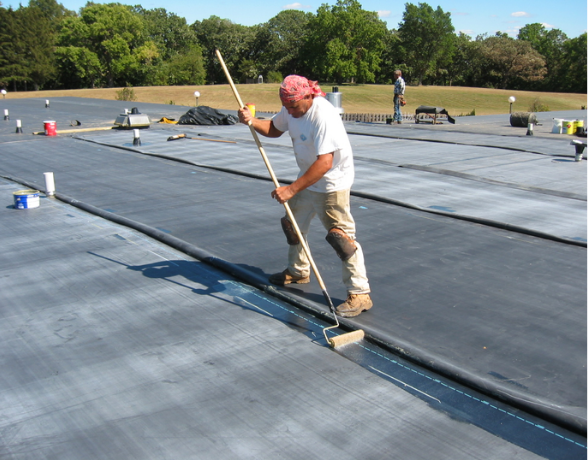
Every pipe, curb, wall, drain, and edge creates a transition that needs to be sealed correctly. EPDM systems commonly rely on adhesive or seam tape details. TPO seams are heat-welded. Neither approach is magic. The workmanship at the detail is what determines whether water stays outside.
Insulation and the roof deck
A membrane can look fine while water has already reached the insulation or deck below it. Wet insulation can change the roof’s performance, and damaged decking can affect how the new system is attached. That is why a serious assessment looks beyond the first visible leak.
Foot traffic and rooftop equipment
HVAC service, antennas, solar work, and routine access can put more traffic on a roof than the original design anticipated. Walk pads and clearly planned access routes can help protect the membrane. Repairs should also use materials that are compatible with the existing system.
A Harrisburg roof shows what ponding can hide
On a commercial office and warehouse roof in Harrisburg, Joyland found an older EPDM system over tar roofing with severe ponding. The project required removing the old layers, replacing damaged boards, adding insulation, and installing a tapered substrate before the new TPO membrane.
A roof can be old without being ready for replacement, and it can be relatively young while already struggling. The inspection has to account for what is happening below the surface.
EPDM, TPO, and modified bitumen: what changes?
There is no single flat-roof material that wins every project. The right choice depends on the building, roof shape, drainage, expected traffic, energy goals, repair plan, and budget.
- EPDM: A flexible rubber membrane with a long track record. It can be a practical fit for smaller residential low-slope sections and complex shapes, but seams, flashing tape, and edge details should be inspected as the system ages.
- TPO: A reflective thermoplastic membrane with heat-welded seams. Its light surface can support cool-roof goals, while the welds and penetrations require accurate installation and quality control.
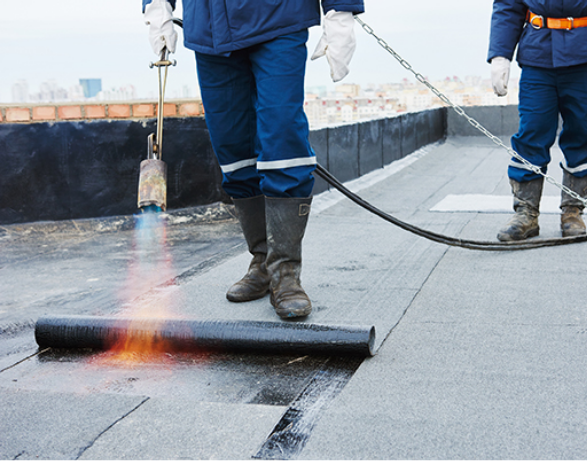
- Modified bitumen: A reinforced asphalt membrane that can make sense where puncture resistance and foot traffic are important. The number of layers, surface condition, and installation method affect its service life.
Our EPDM versus TPO comparison goes deeper into flexibility, seams, energy considerations, and the kinds of projects each system can fit.
Watch John explain the EPDM and TPO tradeoffs
In EPDM vs TPO Roofing: Expert Roofer's Honest Take, John Esh explains how the two membranes differ in installation, seams, maintenance, and typical applications.
A white TPO membrane can reflect more solar energy than a dark roof surface. The U.S. Environmental Protection Agency's cool-roof guidance explains how reflectance and thermal emittance affect roof and building temperatures. Energy performance is one part of the decision, not a substitute for proper drainage and installation.
The roof type should match the building
A material decision should account for how the roof will be used. A small residential roof over a porch or addition may reward EPDM's flexibility. A large commercial roof with open runs and cooling demands may point toward reflective TPO. A section with frequent access or heavier traffic may need modified bitumen, walk pads, or another protection strategy.
The goal is not to choose the material with the flashiest lifespan number. It is to choose a complete system that fits the building and can be maintained.
What shortens a flat roof's life in Pennsylvania?
The most common problems are not mysterious. They are usually a combination of water, details, exposure, and delayed attention.
- Persistent ponding: Water that does not drain can stress seams, flashings, insulation, and the structure below.
- Weak details: Pipes, curbs, parapet walls, edges, drains, and transitions need the same attention as the field of the membrane.
- Unplanned traffic: HVAC work, service visits, tools, and debris can puncture or abrade a membrane.
- Incompatible repairs: A quick patch is only useful if it works with the existing roof system and does not create a new failure point.
- Deferred repairs: A small seam or flashing issue is easier to address before water reaches insulation or the roof deck.
Maintenance that helps a flat roof reach its potential
Maintenance cannot turn a failing roof into a new one, but it can help you find manageable problems before they become system damage. A practical plan includes:
- Keep drains, scuppers, and overflow paths clear of leaves and debris.
- Schedule inspections at least as often as the roof system and warranty require. Seasonal inspections can be useful after winter and before severe-weather seasons.
- Document ponding, seam movement, flashing changes, punctures, and areas around rooftop equipment.
- Use designated walk pads or access routes when people need to reach HVAC units or other equipment.
- Keep records of inspections and repairs so future decisions are based on the roof's history, not guesswork.
The National Roofing Contractors Association's homeowner resources emphasize that actual roof life depends on design, climate, material quality, application, and maintenance. They also note that a leak does not automatically mean the entire roof needs replacement.
When does repair make sense, and when does replacement?
A targeted repair can make sense when the problem is isolated and the surrounding system still has useful service left. A seam, flashing detail, puncture, or drain issue may be repairable without replacing the entire roof.
Replacement deserves a closer look when the membrane is failing in multiple areas, insulation or decking is saturated, ponding cannot be corrected with a practical repair, or the roof has reached the end of its useful service. Repeated emergency repairs can also be a sign that the system needs a broader plan.
Ask the contractor to show you the evidence: photos, moisture findings when available, drainage concerns, the repair scope, and what problems would remain after the work. The right answer should make sense for the roof you actually have.
Joyland's commercial flat-roofing service covers EPDM, TPO, and modified bitumen systems. For residential low-slope sections, our residential flat-roofing service explains how the home, drainage, and material choice fit together.
How Joyland evaluates a flat roof
A flat-roof assessment should look at more than the spot where water appeared inside. Joyland uses inspections, photos, and video reporting to help homeowners and building owners understand the condition of the membrane, seams, flashings, drainage, insulation, roof deck, and rooftop details.
We work with flat and low-slope roofs across south-central Pennsylvania, including residential additions and porches, warehouses, offices, manufacturing facilities, retail buildings, and multifamily properties. The goal is a clear recommendation: repair what can be repaired, replace what has reached the end of its useful life, and explain why.
If you are trying to understand how long your flat roof may last, schedule a flat-roof assessment with Joyland Roofing. We can inspect the system, explain the condition, and help you decide what makes sense next.
The best flat roof is not the one with the biggest number on the brochure. It is the one that drains, seals, and gets looked after before a small problem turns into a very expensive indoor waterfall.