
Follow the Water: Why Drainage Problems Rarely Stay Small in South Central Pennsylvania
James Wesser
April 21, 2026

Lorem ipsum dolor sit amet

Lorem ipsum dolor sit amet, consectetur adipiscing elit. Sed do eiusmod tempor incididunt ut labore et dolore magna aliqua. 

Water has a way of looking harmless right up until it is not.


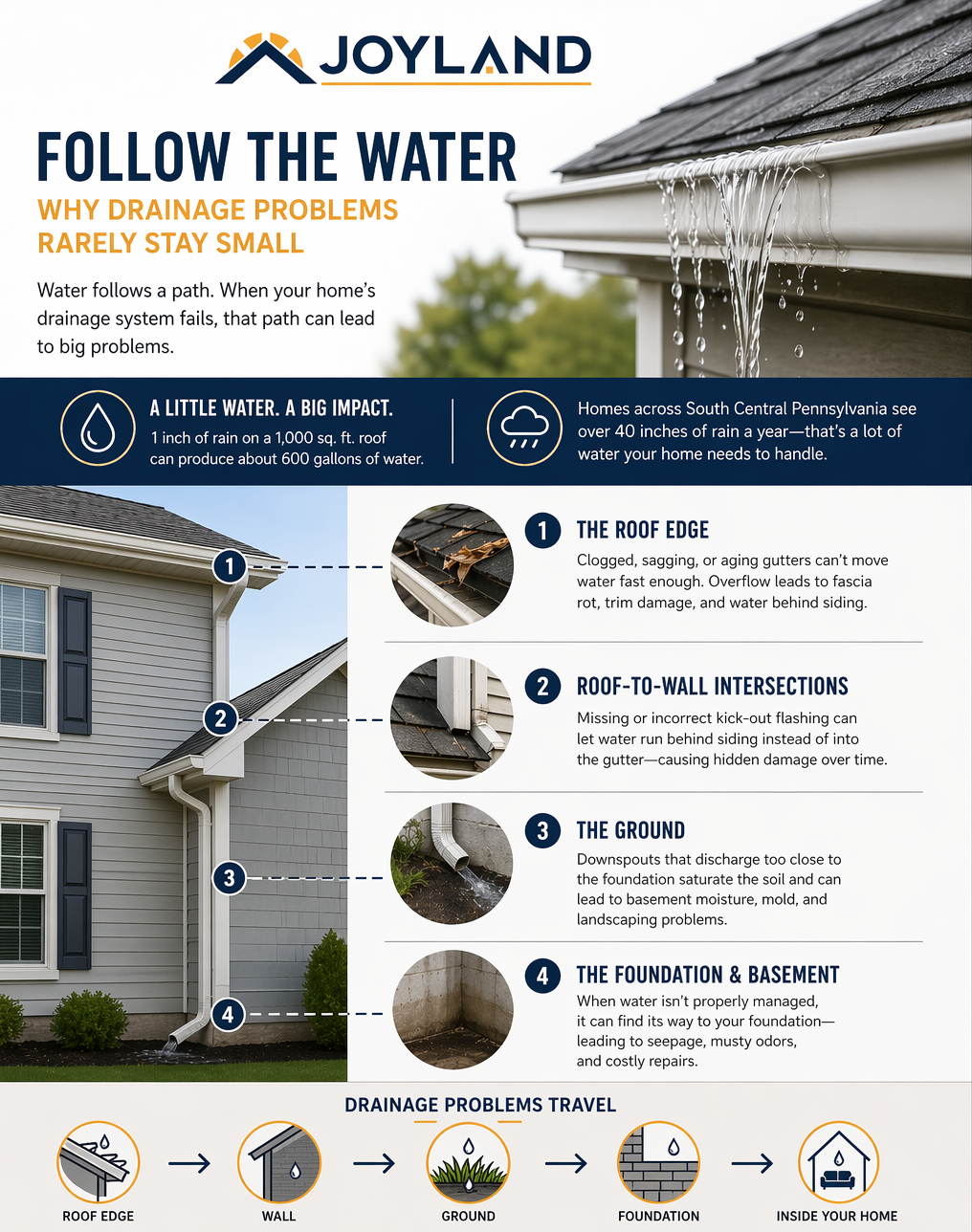
A little gutter overflow does not seem like a major problem. A damp basement corner feels easy to ignore. Some discoloration on the trim might not seem urgent. But in reality, drainage issues rarely stay in one place. They move. They travel from the roof edge to the wall, then to the ground, and eventually to the parts of the home that are much more expensive to repair.


That is why, at Joyland Roofing, we do not just look at where water shows up. We look at the full path it takes.


For homeowners in Lancaster, York, Harrisburg, Lebanon, Carlisle, Mechanicsburg, and surrounding parts of South Central Pennsylvania, that matters more than people think. Our region sees its share of rain, leaves, freeze-thaw cycles, and older homes with aging exterior systems. That combination can turn a small drainage issue into a bigger home problem surprisingly fast.

It Starts at the Roof

Your gutter system  is not just there to catch water. It is there to move a large volume of water off the roof and away from the house, fast.


That sounds simple enough, but a lot of systems are barely hanging on. We see homes across Lancaster and York Counties where the gutters still look passable from the driveway, but the reality is a different story. The pitch is off. The fasteners are loosening. The gutters are holding water. The downspouts are undersized. The whole system is slowly losing control.


And once that starts happening, the house starts paying for it.


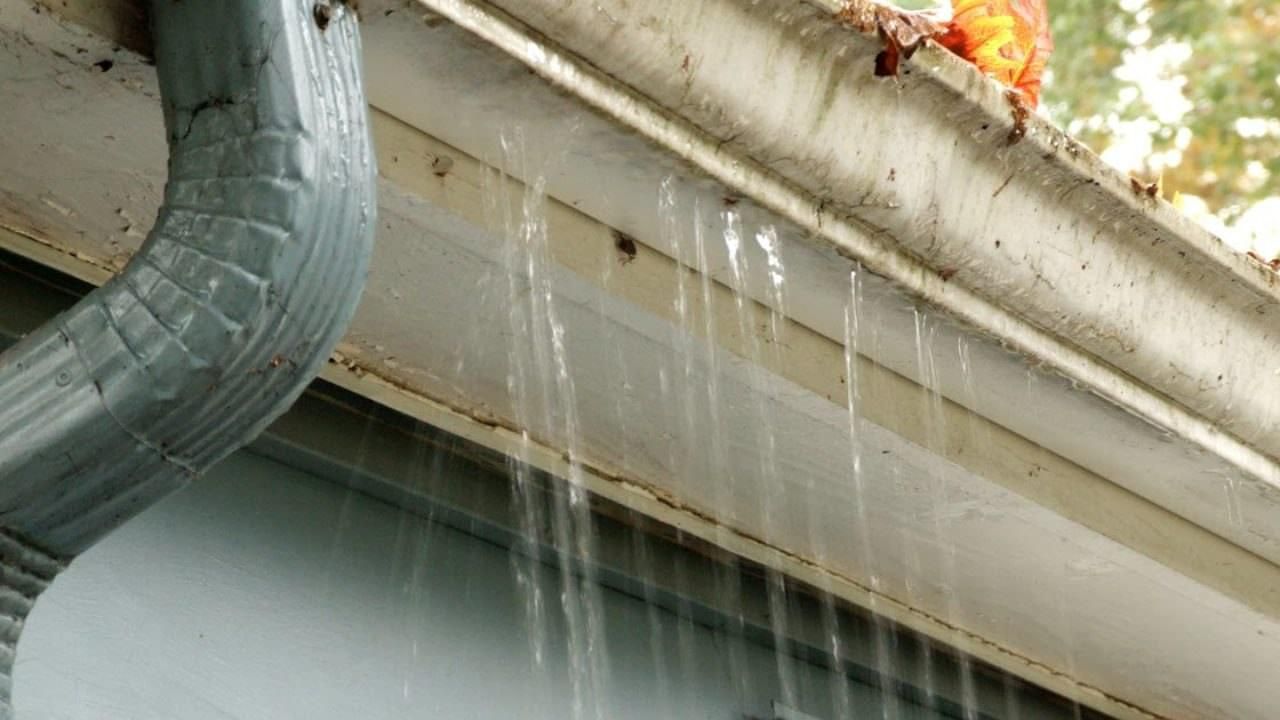
When gutters clog, sag, or overflow during a normal storm, that is not just a maintenance annoyance. That is a drainage system failing at its job. In places like Lebanon, Mechanicsburg, and Carlisle, where mature trees are common in established neighborhoods, gutters can fill up fast in the fall. Then winter rolls in, and what looked like a leaf problem turns into standing water, freeze-thaw stress, and sometimes even ice dam conditions.

If your gutters only work during light rain, they are not really working.

Overflow Is Not Just a Gutter Problem

This is where homeowners often get tripped up.


They think the issue is the gutter itself, when really the gutter is just the first place the failure becomes visible. Once water starts spilling over the edge, it begins affecting everything below it.


That can mean:

  • Rotting fascia boards
  • Peeling paint
  • Stained siding
  • Damaged trim
  • Water working its way behind exterior materials
  • Saturated soil near the foundation

We see this all over older homes in places in the Midstate where exterior systems may have been patched, repaired, or left to age for decades. From the street, the house may look perfectly fine. Up close, the drainage story is often a lot messier.

One of the Sneakiest Trouble Spots Is Where the Roof Meets a Wall

Some of the most damaging water issues do not start in the middle of a roof. They start at transitions.


One of the biggest problem areas is where a roof runs into a sidewall. This shows up often on older farmhouses, colonials, and Victorian-era homes around Lancaster, York, and Lebanon County. These roof-to-wall intersections take a lot of water, and if they are not detailed correctly, that water can keep washing the same vulnerable area over and over again.


That is where kick-out flashing comes in.


Kick-out flashing is designed to send water into the gutter instead of letting it run behind the siding or trim. When that flashing is missing, too small, or installed incorrectly, water can disappear behind the exterior long before a homeowner realizes anything is wrong. At first, the clues are subtle. Maybe the paint starts failing. Maybe the trim softens. Maybe the siding looks stained or swollen. By the time those signs become obvious, the home may have been dealing with repeated water exposure for quite a while.


That is the kind of thing you miss when someone only glances at the roofline and hands you an estimate.

The Ground Matters More Than People Think

A house can have decent gutters and still have bad drainage. That happens when downspouts dump water right beside the foundation.

A common rule of thumb is to discharge roof runoff several feet away from the home.  EPA moisture-control guidance goes further and recommends moving roof drainage at least 10 feet from the foundation when possible.


Why does that matter?


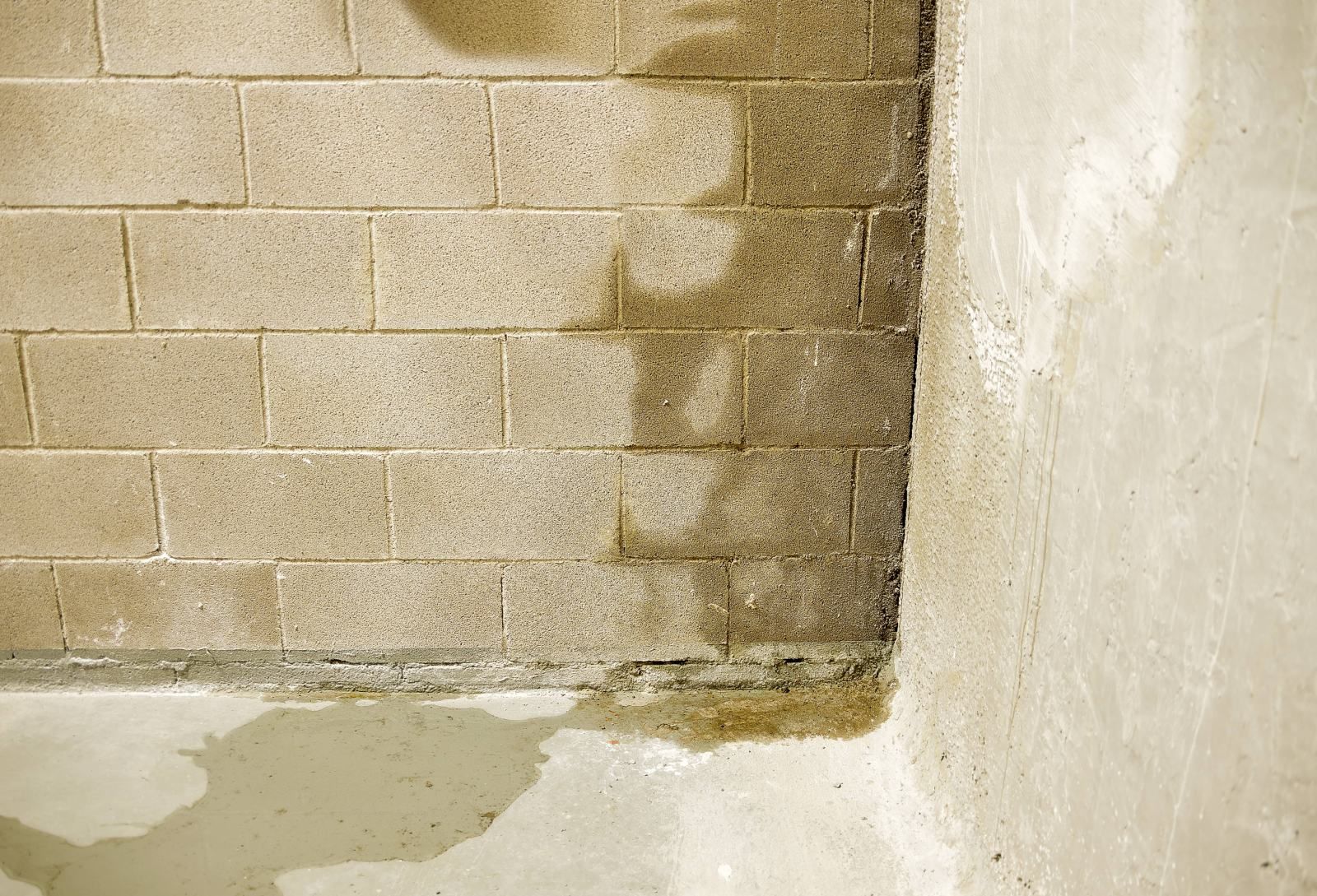
Because water dumped at the base of the home does not just disappear. It saturates the soil nearest the wall, increases water pressure against the foundation, and creates the conditions for basement seepage, crawl space moisture, mold-friendly humidity, and washed-out landscaping.


In clay-heavy soils, which is something that we see in South Central Pennsylvania. That problem can get worse because water drains more slowly. Instead of dispersing efficiently, it tends to linger where you least want it.


So even if the roof and gutter system are technically catching the water, the house still loses if that water is being released in the wrong place.

Then the Water Hits the Ground

And this is where a lot of people stop paying attention, even though they absolutely should not.


A good drainage system does not just get water off the roof. It gets water away from the house. If your downspouts are dumping everything right beside the foundation, you are just moving the problem from one part of the home to another.


We see this across South Central Pennsylvania, especially in areas with older housing stock and full basements. Many homes are more vulnerable to foundation moisture, basement seepage, and recurring wet spots when runoff is discharged too close to the house.


That can lead to:

  • Saturated soil around the foundation
  • Basement moisture 
  • Mold-friendly conditions
  • Landscaping washout
  • Water pressure against foundation walls

So even if the gutters are technically “catching” the water, the system is still failing if that water ends up pooling where it should not.

Drainage Problems Usually Do Not Stay Small

That is really the whole point.


Water rarely damages just one thing. It follows gravity, finds weak points, and keeps going. What starts as an overflowing gutter can turn into trim damage, siding deterioration, foundation moisture, and eventually interior signs like stains, smells, or leaks.

By the time water shows up inside, it has usually been taking that route for a while.


That is why drainage issues need to be looked at as a system, not as isolated symptoms.


At Joyland Roofing, when we inspect homes, we are not just asking whether the gutters are clogged. We are asking where the water is going, where it should be going, and what part of the system is allowing it to go somewhere else.

What a Real Drainage Inspection Should Look For

A real inspection should trace the water path from top to bottom.


That means looking at things like:

  • Gutter pitch and capacity
  • Clogged or slow-draining sections
  • Sagging gutters or weak attachment points
  • Overflow patterns
  • Fascia and soffit condition
  • Roof-to-wall transitions
  • Kick-out flashing and step flashing details
  • Downspout discharge location
  • Grading near the foundation


In other words, you follow the water.


Sometimes the fix is fairly simple. Sometimes the gutter system needs repair or replacement. Sometimes the real issue is hidden in the flashing details or in what is happening at ground level. The point is that you do not know until someone actually traces the full route.

The Bottom Line

Drainage problems usually do not stay small because water does not stay put.


It moves from the roof edge to the siding. From the siding to the ground. From the ground to the foundation. And when it keeps finding the wrong path, the damage tends to spread before it becomes obvious. If your gutters overflow, your trim is deteriorating, your siding shows staining, or your downspouts are dumping water too close to the house, those are not random little annoyances. They are warning signs.


Because when it comes to drainage, the real job is not just spotting the problem.


It is following the water.


Not sure where the water is really going? Joyland Roofing helps homeowners across South Central Pennsylvania find drainage issues before they turn into bigger repairs. Click the button below to get in contact with us, and we can take a closer look for you

Frequently Asked Questions

  • 1. How do I know if my gutters are not draining properly?

    Common signs include overflowing water during rain, sagging sections, standing water in the gutter, loose fasteners, stains on siding, and erosion or pooling near the foundation.

  • 2. Can bad drainage really cause basement moisture?

    Yes. If downspouts discharge too close to the house or water is not being directed away properly, the soil around the foundation can become oversaturated, which may lead to seepage or damp basement conditions.

  • 3. What is kick-out flashing, and why does it matter?

    Kick-out flashing is a small but important flashing detail where a roof meets a wall. It helps direct water into the gutter instead of letting it run behind siding or trim, where hidden damage can develop over time.

  • 4. How far should downspouts discharge from the house?

    A common rule of thumb is at least five feet away from the foundation. The goal is to move roof runoff far enough away that it does not soak the soil right beside the home.

  • 5. Are drainage issues usually a repair or a full replacement issue?

    It depends on the cause. Some drainage issues can be solved with a repair, cleaning, or adjustment. Others may point to aging gutters, missing flashing details, or broader exterior wear that needs more extensive work. A proper inspection helps determine the real issue.

John Esh | CEO & Master Installer

  • 25+ Years Experience: From ground crew to Master Certified Installer.
  • Local Roots: Serving Lancaster, Harrisburg, and SEPA since 1991.
  • Credentials: GAF Master Certified (ME27586); Licensed in PA (PA124258) & MD (#137952).
  • The "Why": Obsessed with "radical transparency" to remove the fear factor from home improvements.

James Wesser | Content Producer

  • Background: Former local news digital producer and journalist.
  • The Mission: Turning complex roofing jargon into clear, "fluff-free" answers for homeowners.
  • Local Tie: When not filming on-site, he’s likely roaming Hersheypark or building digital worlds.

Meet The Experts