
Thinking about putting wood shingles or shakes on your roof? I’ve got everything you need to know before you decide.
I’ve installed many cedar wood roofs and I love the smell and feel of working with this roofing material. Installing cedar roofing takes craftsmanship and care.
I finally took the time here to sit down and really drill down on everything you need to know about cedar roofing from a customer perspective. What’s important, what’s not, and why it matters.
Energy Efficiency
Cedar wood shingles and shakes offer a unique blend of natural beauty, durability, and character. I think they’re especially nice on a stone building. Other things that you definitely should consider when putting on cedar shingles or shakes are half-round gutters and copper flashing. Half-round gutters really add to the old-world look of a stone building, and copper roof flashing should almost be mandatory when using cedar or slate, in my opinion! Technically not a must-have, it’s more just a matter of looks and character. But suit your own taste!
Ok, so let’s get into it! Here’s what I’ll cover:
1. Types of Cedar Roofing
Cedar Shingles
- Definition: Machine-sawn on both sides, giving a smooth, uniform look.
- Thickness: Commonly 1/2″ or 5/8″. I would not use 1/2″ on my house because the thinner shingle is more susceptible to warping and cupping over time. See more on this below.Best Use: Homeowners seeking a neat, crisp aesthetic with a bit more of a uniform look on the roof.
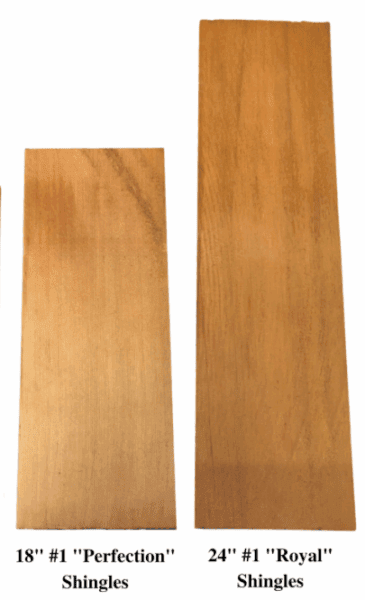
You may hear the terms “Royals” or “Perfections” which simply refers to the total length of the shingle. Royals are 24″ long which allows for a larger face/exposure, and Perfections are 18″ long. Typically on Perfections, you can have an exposure of 5 to 7 inches, whereas with Royals you can bump that up to 10 or 11 inches of exposure for a bolder look.
Hand-Split Shakes
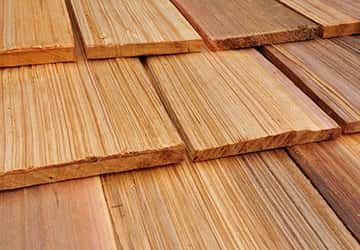
- Definition: Split by hand, thicker and more textured with “deep groove” grain on the face.
- Look: Rustic, irregular, with a lot of shadow and visual depth.
- Best Use: Where natural, artisan character is wanted. It’s more of a uniquely rustic look than the Sawn shingles.
Taper-Sawn Shakes
- Definition: Sawn out of a wood block, still retains some of the woodgrain look with a more uniform thickness
- Look: Rustic, but more uniform that hand-split
- Best Use: Where natural, artisan character is wanted but you’d like to have less of that deep woodgrain look.
Both Shakes and Shingles come in bundles where the pieces vary in width from about 3″ wide to 12″ or 14″ wide.
Here’s a quick and easy table to show the differences between these two styles.
| Feature | Cedar Shingles | Cedar Shakes |
|---|---|---|
| Appearance | Uniform face, smooth, straight | Rough, textured, rustic, variable |
| Manufacture | Sawn on both sides | Hand-split or sawn (one or both sides) |
| Thickness | Thinner (tighter fit) | Thicker (creates shadow lines and texture) |
| Installation | Lays flat; installed in 3 layers | Requires felt interlay or underlayment between courses |
| Cost | Less expensive | More expensive due to added labor and materials |
| Longevity | Around 30 years | Around 40 years (with premium grades) |
2. Cedar Grades & Grading Standards
Cedar roofs are graded by visual clarity, wood type, and structural integrity.
The grade of the cedar you get will greatly determine how long they last on your roof or walls. While lower grades certainly are cheaper, there’s good reason for it and you need to be aware of the risks that come with that lower cost.
Western Red Cedar Grades
Premium/Clear (#1/Blue Label):
- 100% heartwood, 100% edge grain, free from defects.
Heartwood is the inner part of the tree with the most stable and hardest wood. Shingles cut from this are straight and hardy. - Most resistant to decay, warping, and cupping.
- Highest longevity and best appearance.
This is the best cedar shingle you can get. They’re literally hand-graded by a real person to make sure that each shingle is about a 3/4″ wide at the butt end. Only shingles with zero defects like knots and curving grain or sapwood make the cut. These shingles can last 40+ years without warping and cupping like the lower grade shingles would. The entire shingle from top to bottom is clear, straight edge-grain heartwood.
Selects (#2/Red Label):
- Near-premium, may include some imperfections.Still highly durable and recommended for roofing applications.
- The Selects will come with about an 80/20 mix of straight-grain/commons. They have some knots and defects on the upper part of the shingle, but the face/exposure part of the shingle is still clear wood and mostly straight grain. These will be more susceptible to warping or cupping over time on the shingles that are not straight-grained, or come from the sapwood.
Sapwood is the outer parts of the tree trunk where the wood is younger than the heartwood, and therefore isn’t quite a stable. It also tends to include more defects.
Commons (#3/Black label):
- Include sapwood, knots, and flat-grain wood with defects.
- Less durable, much more prone to failure and not recommended for roofs.
This is the lowest grade of cedar shingle. I would honestly not recommend these because they will not last nearly as long as #1 or #2 grade shingles, and they will almost certainly warp and cup over time. You can think of these as kind of being made out of the leftovers of the tree, once all the really good wood is gone.
You could consider using Commons in a siding application, but I’d stay away from them on the roof.
3. Pros & Cons of Cedar Roofing
Pros
- Visual Appeal: Unparalleled, natural, and warm aesthetic—ideal for historic homes as well as design-forward new builds.
- Durability: With premium grades and maintenance, cedar roofs can last 40-50 years.
- Energy Efficiency: Cedar roofs insulate up to 2x better than asphalt, reducing heat/cold transfer and energy bills.
- Eco-Conscious: Renewable resource, low embedded energy to produce, and biodegradable. Sustainable harvesting practices are typical.
- Weather Resistance: Good in storms, hail, wind—even hurricanes.
- Resale Value: Curb appeal and reputation for quality increases home value.
- Termite & Rot Resistance: High, especially in Western Red Cedar heartwood.
Cons
- Upfront Cost: 3–5x the cost of asphalt or synthetic alternatives.
- Maintenance Demand: In shaded areas, they will require cleaning from time to time.
- Variability: Quality varies greatly by grade (low-grade roofs may fail prematurely).
- Flammability: Untreated cedar is not fireproof; fire-retardant treatments or specific fire-rated products required in sensitive areas.
- Color Change: Loss of contrasting wood tones after weathering.
- Installation Complexity: Must be professionally installed for performance and warranty compliance.
4. Longevity and Performance
Expected Lifespan:
- Western Red Cedar: 15-20 years for lower grades. Premium grade up to 50 years.
- Eastern White Cedar: Slightly less durable, but still long-lasting with proper care.
What Affects Lifespan?
- Grade and type of cedar (Clear heartwood = longer life).
- Warping, splitting, and cupping of lower grades will cause system failure.
Quality of installation—ventilation, nailing, exposure settings, correct underlayment use, keyway settings. - Local climate: Moisture, harsh sun, or extreme cold can reduce service life.
- Maintenance: Proper care (see tips below) extends life substantially.
Weather Resistance:
- Naturally resistant to insects, termites, UV, hail, and wind.
- Regular maintenance is required to prevent moss, algae, and weathering.
- Coloring: Western Red Cedar shows significant color variation—reds and browns, where as White cedar comes with a yellower coloring.
- Weathering: Within 6–12 months, roof begins to ‘silver’ or brown over, becoming more uniform and muted, regardless of the wood type.
Installation
Regardless of the grade chosen, cedar shingles or shakes need to be installed correctly to last. I won’t go into all the details here, but the most important factors to get right are:
- Ventilation: Wood which bakes in the sun day after day will split and fail unless it’s allowed to “breathe” effectively. How the shingles are vented varies based on the type of roof deck they are installed on. If they are installed on a solid wood deck like plywood, they need to have a mesh-style “shingle breather” installed under them so that airflow under the shingles can keep them from deteriorating prematurely.
- Underlayment and Keyways: Underlayment should typically be installed over every row of shingles or shakes. This is to prevent water from penetrating the roof in the case that one would split or crack. A Keyway is the vertical space between each shingle. This needs to be monitored as the shingles are installed – you don’t want two keyways aligned within 3 rows of shingles, so the installer must be vigilant by using differing shingle/shake widths to eliminate this risk.
- Fasteners: Use the wrong fasteners with cedar wood, and they can corrode and rust off. Make sure to use stainless steel, ring-shanked nails when installing cedar roofing.
- Copper Ridge Caps and Zinc Strips: This one is not a must, but consider it. Using copper for caps/ridge lines can reduce moss/lichen growth and adds distinctive beauty. The copper oxidizes in the rain, and this chemical release actually kills off the organic growth on the shingles, keeping them much cleaner and in some cases, free of moss and algae. The same thing is true if you use Zinc Strips.
But beware – neither of these things will keep the entire roof moss-free. This only works for maybe 5-7 feet down the roof from the copper or zinc. Any further and this oxidization effect wears out the further it goes from the source.
Maintenance Tips
- Inspect Biannually: Look for cracked, warped, or missing shakes/shingles.
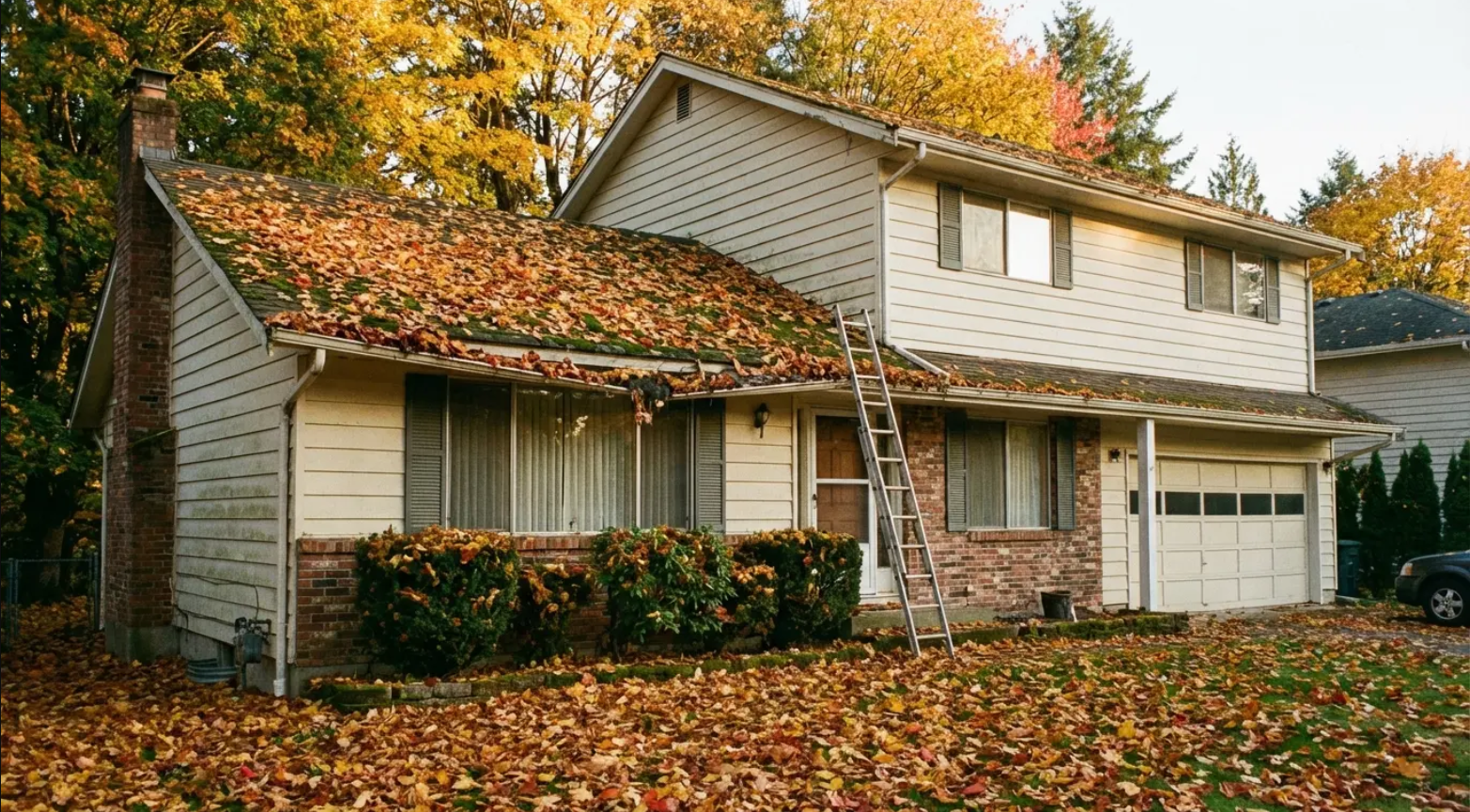
- Clear Debris: Remove leaves, branches, and moss—do NOT pressure wash as this will damage the integrity and longevity of the wood. Some roofing companies provide roof cleaning services. Locally, you can go to Atkins Deck Treatment – I know the owner Rick personally, and he does the job right, with the right kinds of washing solutions.
- Trim Nearby Trees: Prevent debris, promote airflow.
- Seal & Preserve: Apply protective stains/sealants – this is not necessary, but if you want to keep the new look of the shingle (the reddish and brown colors), then you will need to seal them.
- Replace Individual Pieces: Spot-replace damaged areas to prevent leaks.
Choosing the Right Cedar Roof: Pro Tips
- Thicker = Better: 5/8in+ thickness resists cupping/warping, lasts longer.
- Always Use Premium/Clear or Grade 1: Avoid Grades 2 and 3, which are more susceptible to early failure and decay.
- Consider Copper Accessories: For added moss resistance and roof longevity.
- Ask for Documentation: Certi-label, source origin, and fire rating if required by code.
- Expert Installation: Make sure the contractor you choose has real-world experience. I would go so far as to ask for a few houses where they’ve installed cedar, ask for the date of installation, and go take a look to see how the roof looks (the older, the better for this one).
Fire Safety
- Standard cedar is combustible, but pressure-impregnated fire-retardant shakes/shingles meet rigorous code requirements and pass UL 790 or ASTM E108 fire tests.
- Some building codes require only fire-rated cedar roofing products—check local regulations.
- Certi-Guard shingles and shakes are available – these have been pressure-impregnated with fire-resistant polymers to reduce the flamability of the cedar wood.
Conclusion
There you have it – pretty much all I know about cedar roofing. It’s an incredible roofing material, looks awesome on the right building. If you take my points above into consideration, and go with a premium grade product that’s correctly installed, you can enjoy the ooohs and aaaahs from your friends for years to come, leak-free and worry-free.
Ready to do this?
Contact my company and we’ll help you do it right!
John Esh | CEO & Master Installer
- 25+ Years Experience: From ground crew to Master Certified Installer.
- Local Roots: Serving Lancaster, Harrisburg, and SEPA since 1991.
- Credentials: GAF Master Certified (ME27586); Licensed in PA (PA124258) & MD (#137952).
- The "Why":
Obsessed with "radical transparency" to remove the fear factor from home improvements.
James Wesser | Content Producer
- Background: Former local news digital producer and journalist.
- The Mission: Turning complex roofing jargon into clear, "fluff-free" answers for homeowners.
- Local Tie: When not filming on-site, he’s likely roaming Hersheypark or building digital worlds.